There is a container that solves several problems at once, which is why it lasted for two thousand years and why nothing replaced it until very recently.
The problems are these. A vessel for liquid must be watertight, must survive being dropped and knocked, must be movable by one person despite weighing a great deal, must stack and must be repairable.
A pot is watertight and breaks. A sack is movable and leaks. A box made of flat boards leaks at every joint and has no strength in the corners.
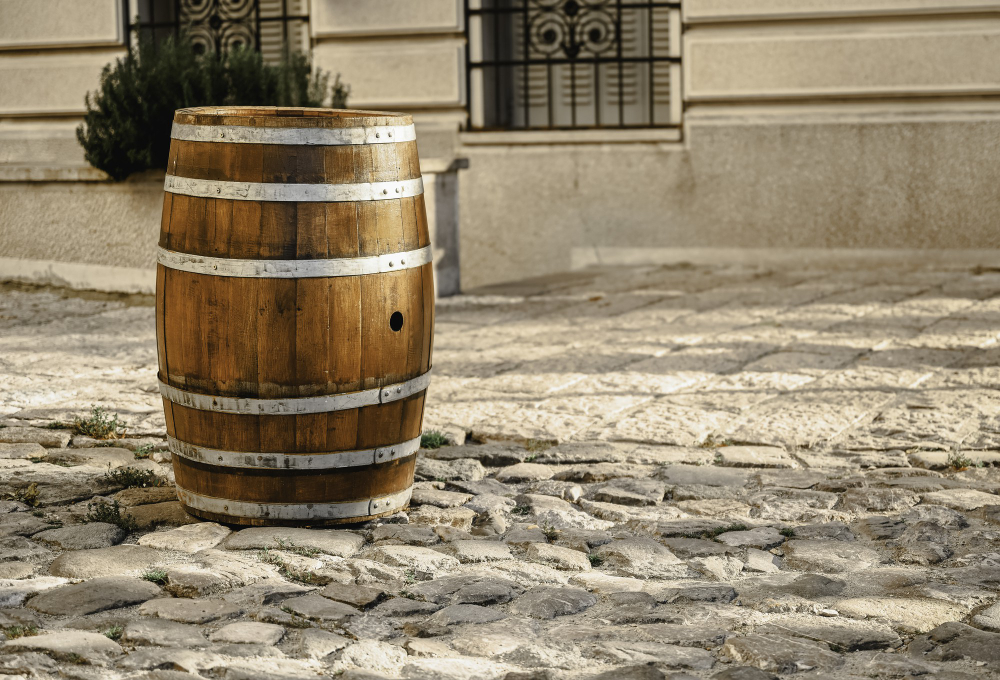
The barrel answers all of them with a single idea: curve the sides, and the whole structure becomes self-tightening, self-supporting and, as a bonus, possible to move by rolling.
Why It Bulges in the Middle
The shape is the cleverest part and it does several jobs at once.
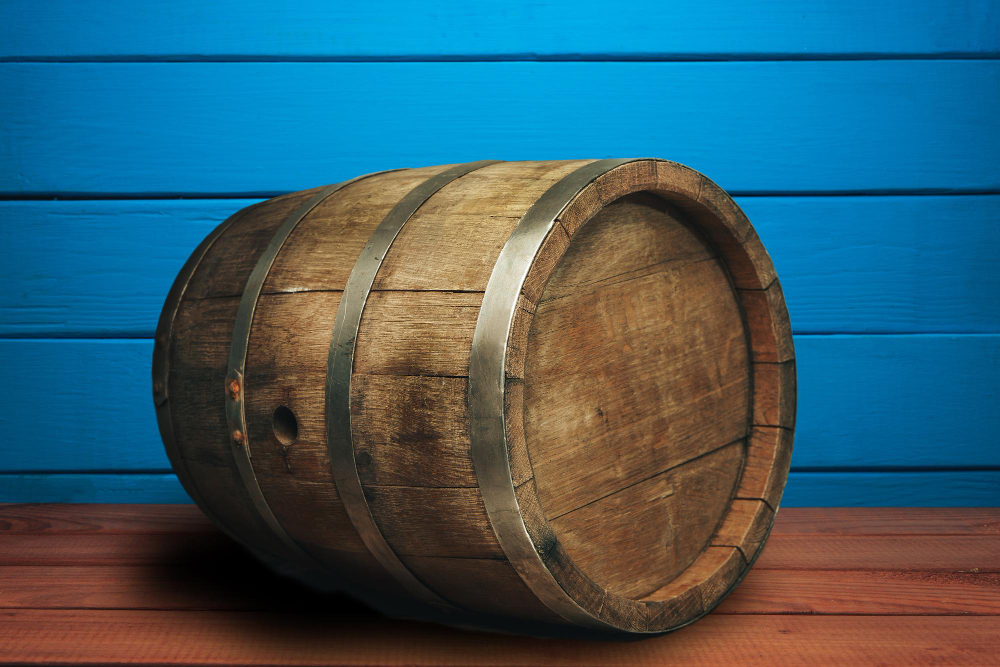
Hoops are driven onto a barrel from the ends toward the middle. Because the barrel is widest at the middle, every hoop gets tighter as it is driven, which is what squeezes the staves together.
A straight-sided vessel cannot do this: a hoop driven onto a cylinder simply slides, and there is nothing to make it grip.
The bulge also means the barrel touches the ground at only a narrow band around its middle, which is why a full one can be turned and steered by one person despite weighing far more than they could lift.
It allows the barrel to pivot in place, so it can be manoeuvred in a confined space by rocking it on its rim and walking it round.
And it makes the structure stronger, because a curved surface resists the outward pressure of the contents better than a flat one, in the same way a curved wall or a dome does.
So the shape solves sealing, handling, manoeuvring and strength simultaneously, which is a great deal of work for one curve.
Like our content? Follow us for more.
How the Staves Fit
The joint between staves is made of nothing but accuracy.
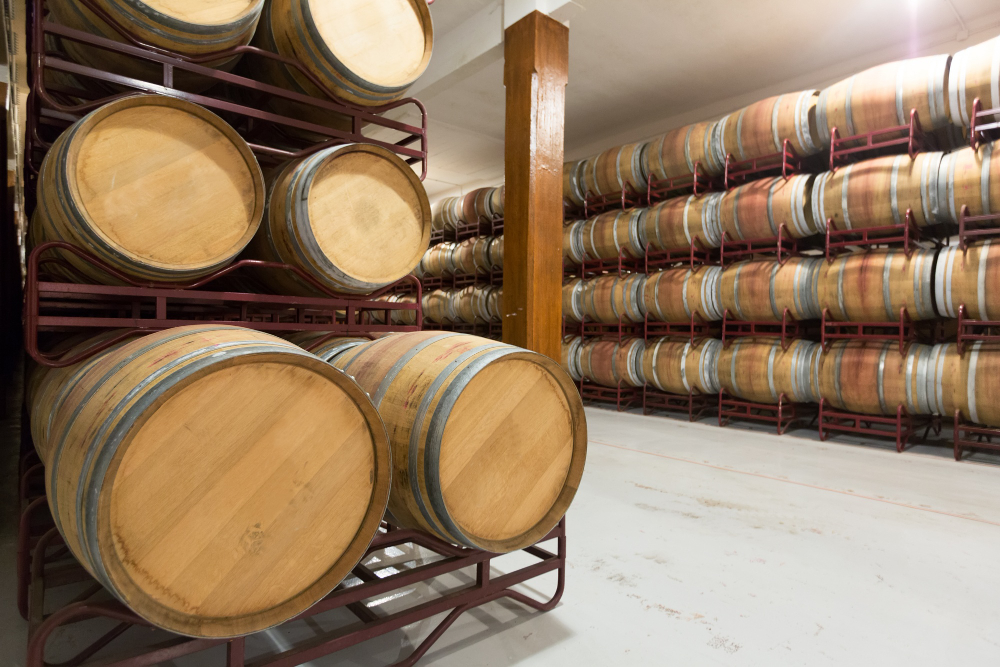
Each stave is cut tapered along its length, so that it is wider at the middle than at the ends, matching the shape of the barrel.
Each is also bevelled along both edges, at an angle that changes along its length, so that when the staves are stood in a ring every edge meets its neighbour flat.
That angle is different for every position and every barrel diameter, and getting it right is the whole difficulty of the trade.
The staves are then heated and dampened so they can be bent inward at the ends, and hoops are driven down to pull them into the final shape.
There is no glue and no gasket. The seal is wood pressed against wood, with the fit accurate enough that liquid cannot pass, and the pressure supplied entirely by the hoops.
There is a rolling point worth adding. Because the contact band is narrow and central, a barrel can be rolled along its side or walked on its rim in small steps, and both methods were standard for moving weights no individual could carry.
Why Wet Wood Helps
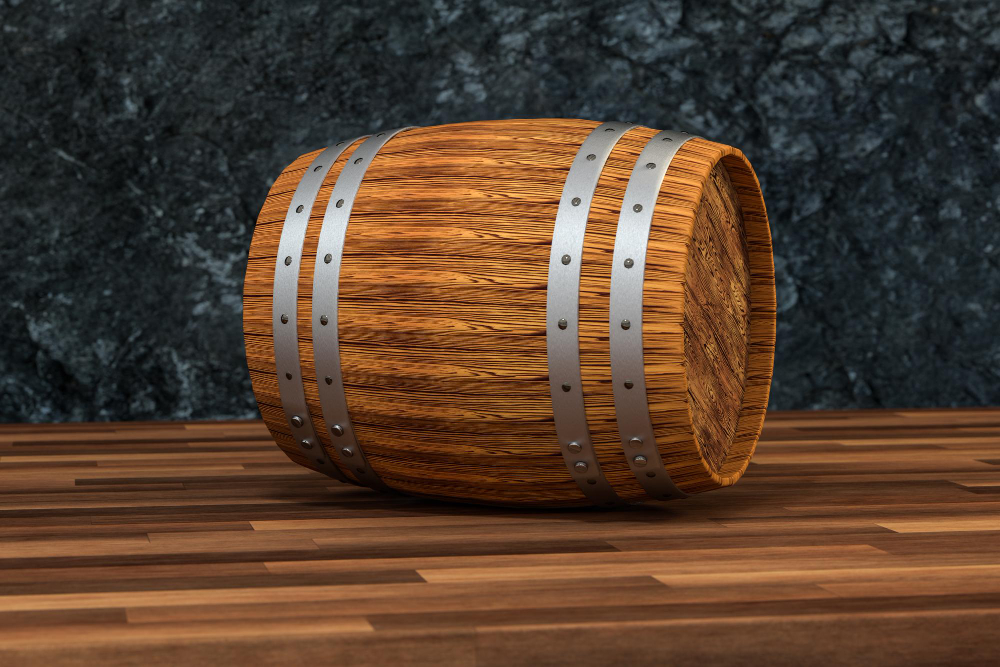
A property that would be a defect anywhere else is used deliberately.
Wood swells when it takes up moisture, across the grain rather than along it, which means damp staves get wider.
In a barrel, that swelling pushes the staves harder against each other and closes any remaining gap, so the vessel becomes tighter the moment it is filled.
That is why an empty barrel left to dry out leaks when refilled and needs to be wetted and allowed to swell before it holds again.
It also explains why barrels were stored wet or with a little liquid in them rather than dried, and why a dried-out one is treated as a problem rather than as clean.
And it is why the grain direction of the staves matters: cut correctly, the swelling works sideways to tighten the joints, and cut wrongly it works in a direction that does nothing useful and may split the stave.
There is a bending point worth adding. Staves are made to curve by heating them over a fire while damp and drawing the open end inward with a rope or a hoop, which sets the curve permanently as they cool.
The heat softens the structure just enough to accept the new shape.
The Hoops Do the Work
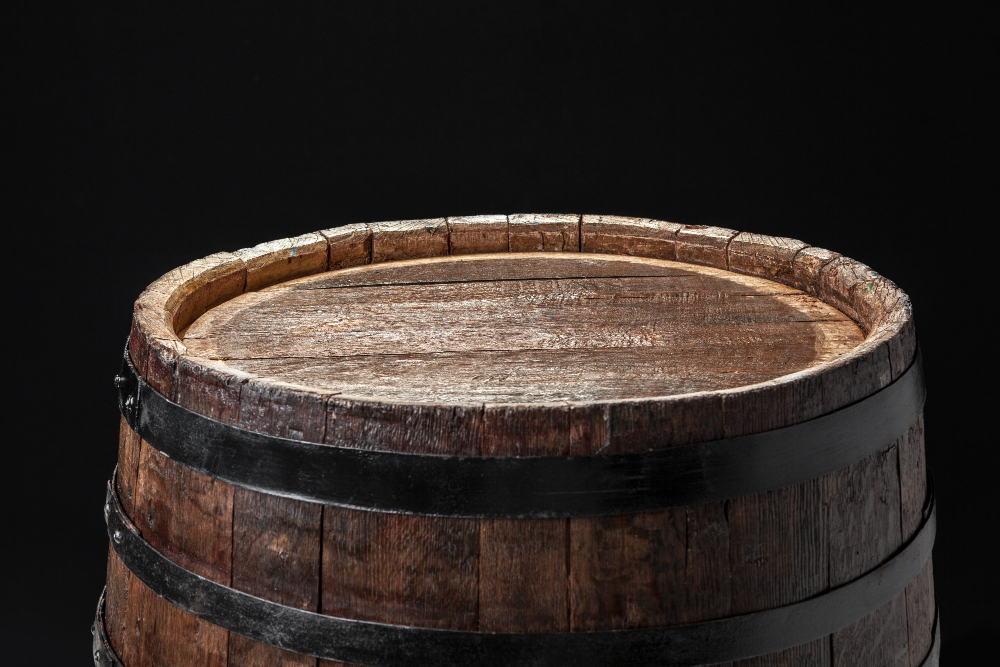
The metal bands are doing more than holding things in place.
Each hoop is a ring slightly smaller than the part of the barrel it sits on, and driving it down forces the staves inward against each other.
The hoops nearest the ends carry the most load, because that is where the staves have been bent most and where the structure wants to spring apart.
A barrel is tightened in service by driving the hoops further down, which takes up any slack from shrinkage and restores the pressure — a repair requiring only a hammer.
That is the property that made barrels repairable in the field rather than only in a workshop, which matters enormously for a container that travelled.
And a hoop that is lost can be replaced without dismantling anything, which is why barrels remained in service for decades and were rebuilt rather than discarded.
Why the Wood Was Chosen
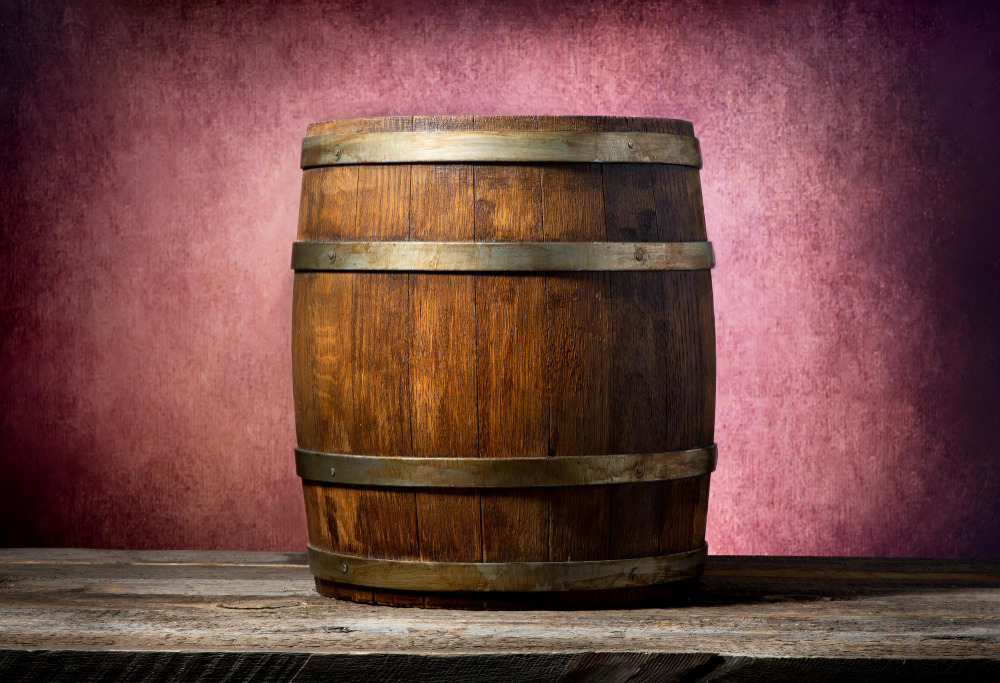
The material was selected for properties that are not obvious.
The wood must be strong along the grain, must bend when heated and dampened, and must be free of the passages that would let liquid seep through it.
That last requirement rules out most timber. Many woods contain open structures running along the grain, which means a stave cut from them will weep, however well fitted.
A small number of species have those passages blocked by internal growths, which makes the wood effectively impermeable along its length, and those are the ones used.
The wood also has to split cleanly along the grain rather than being sawn, because a split follows the natural fibres and leaves them continuous, while a saw cuts across them and opens paths for liquid.
That splitting requirement is why cooperage timber was selected and prepared quite differently from ordinary building timber, and why it was expensive.
Why They Come in Sizes
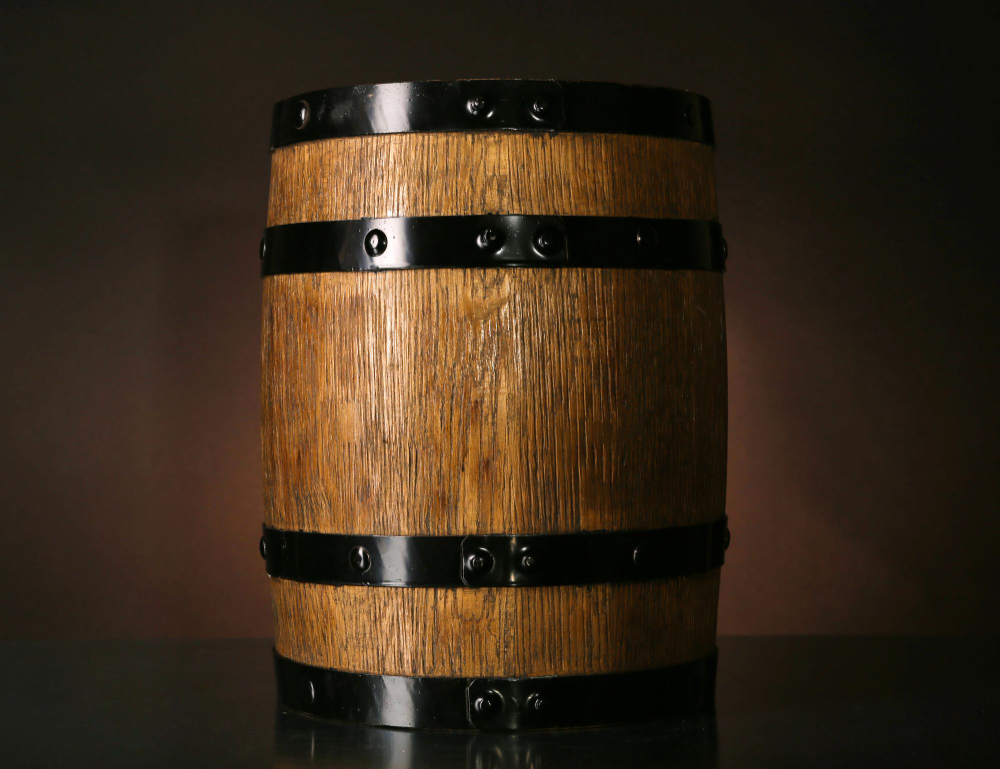
The standard capacities are not arbitrary and they trace back to handling rather than to arithmetic.
A barrel had to be movable by one person, which sets an upper limit on weight, and that limit sets a practical maximum volume for any given liquid.
Below that, sizes settled into a series, each roughly a convenient fraction of the largest, so that quantities could be measured out and accounted for by counting containers rather than by measuring anything.
That is why volumes were reckoned in barrels at all: the container was the measure, and its capacity was checked and regulated because trade depended on it being what it claimed.
Different trades adopted different series for the same reason, sized to what their particular contents weighed and to how they were handled.
The names attached to those sizes survived long after the containers stopped being used for measurement, which is why several units in use today are the capacity of a vessel nobody has handled for generations.
And the shape stayed constant across all of them, because the geometry that makes a barrel work does not change with scale – a small one is the same object as a large one, made by the same trade in the same way.
Why They Have Nearly Gone
The decline follows the containers that replaced them, and the survival is specific.
Steel and plastic containers are cheaper, lighter, need no maintenance, do not impart anything to the contents and can be made to exact volumes, which suits any system that measures and tracks what it moves.
Barrels require skilled making, regular attention, and leak if neglected, and every one is slightly different.
What kept the wooden version alive is that for certain contents the wood is not a container but an ingredient — it contributes flavour and allows very slow exchange of air, which is the entire point in those cases.
Everywhere else the barrel has been replaced, and the object survives mainly as a shape people recognise.
Which is a reasonable end for it. It was never the sealing that made it remarkable — it was that one curved shape made a container watertight, strong, repairable, stackable and movable by one person, and nothing else managed all five for two thousand years.
And that is the test worth applying to any old design that lasted. It is rarely the most obvious property that kept it in use – it is usually the number of separate problems it happened to solve at once, which is far harder to replace than any single one of them.
Like our content? Follow us for more.