

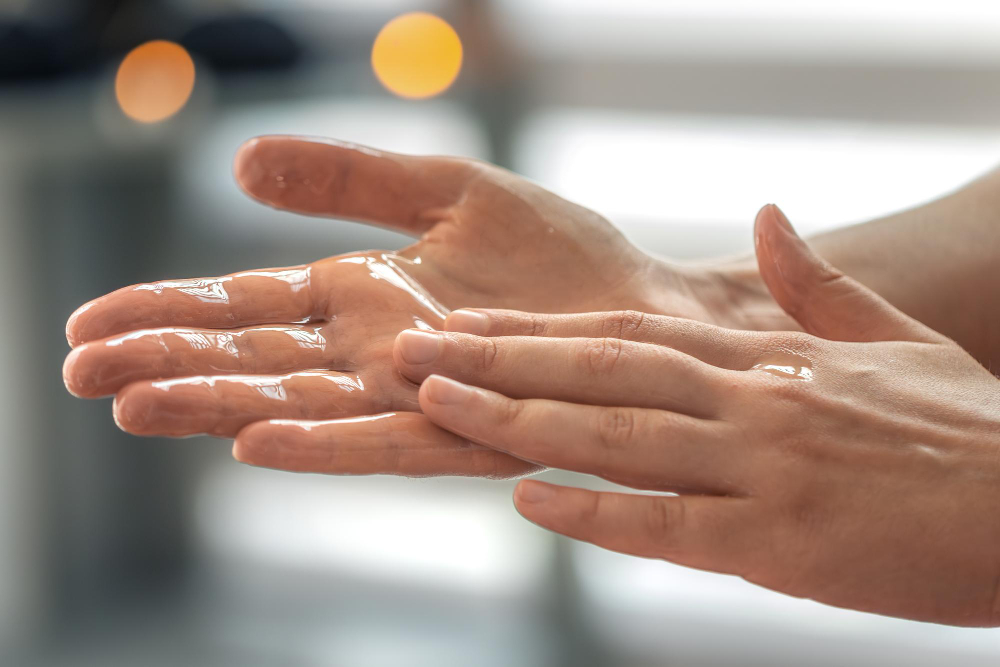
Almost everyone has the explanation for this backwards, and the wrong version is so intuitive that it survives in textbooks. The skin absorbs water, the outer layer swells, and the swelling makes it buckle. It sounds right. It is also easy to disprove, and the actual explanation is stranger and much more interesting than a sponge getting bigger.
The Pattern Gives It Away Immediately
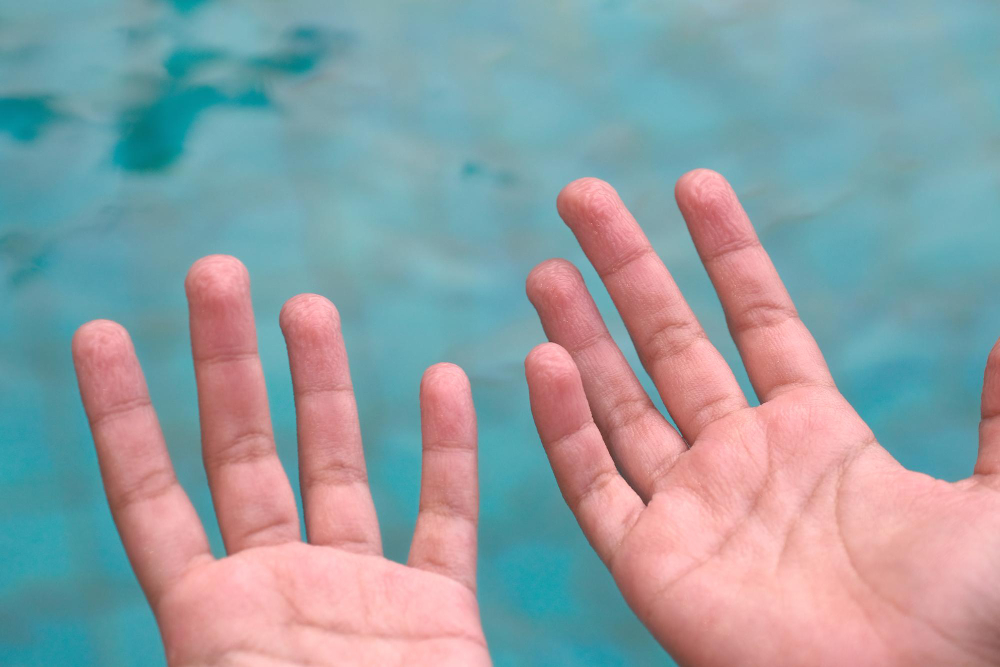
Start with what wrinkles and what does not. It is fingers and toes, on the palm and sole side, and effectively nowhere else. Sit in a bath for an hour and the skin on your back does not develop ridges. Neither does your forearm, your stomach or your face.
If water absorption and swelling were the cause, this makes no sense. The skin on your arm absorbs water too. It should wrinkle as well, or at least do something. It does not.
The skin on the palms and soles is different: it is much thicker, it has no hair follicles and no oil glands, and it has an extremely high density of sweat glands. It also has a dense nerve supply. Those are the areas that wrinkle, and they are the areas built differently from all the rest.
There is also a timing problem with the swelling story. The response takes around three to five minutes of immersion to begin and develops over roughly half an hour. Water diffusing into the outer skin layer would not run on that sort of schedule, and it would not stop where it does.
Like our content? Follow us for more.
The Experiment That Settled It
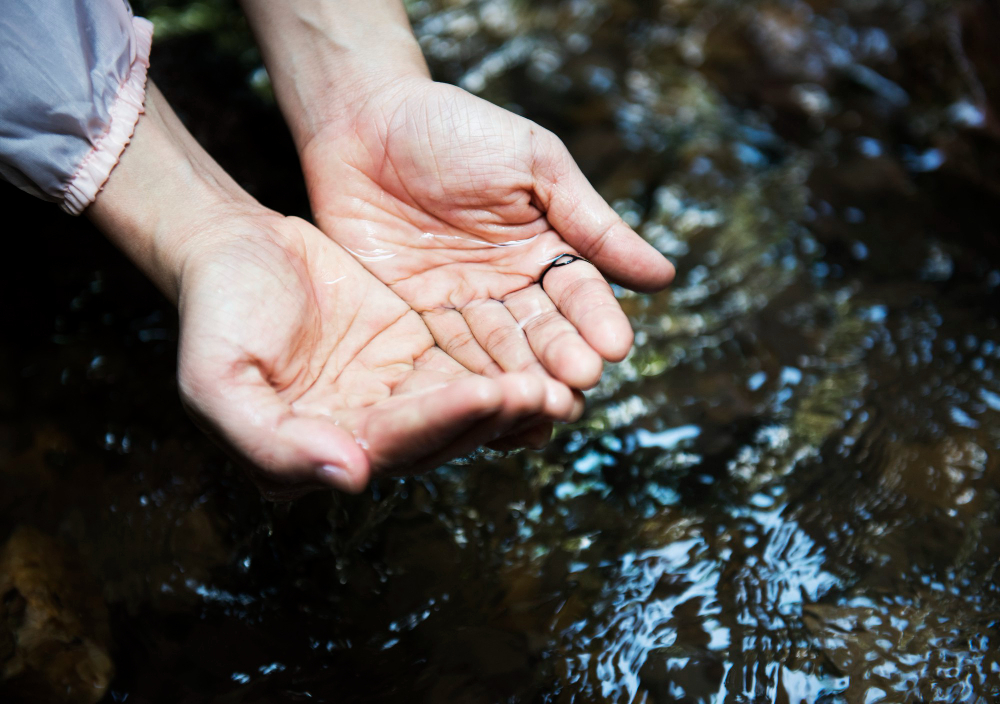
The decisive observation is over a century old and was made in patients with nerve injuries.
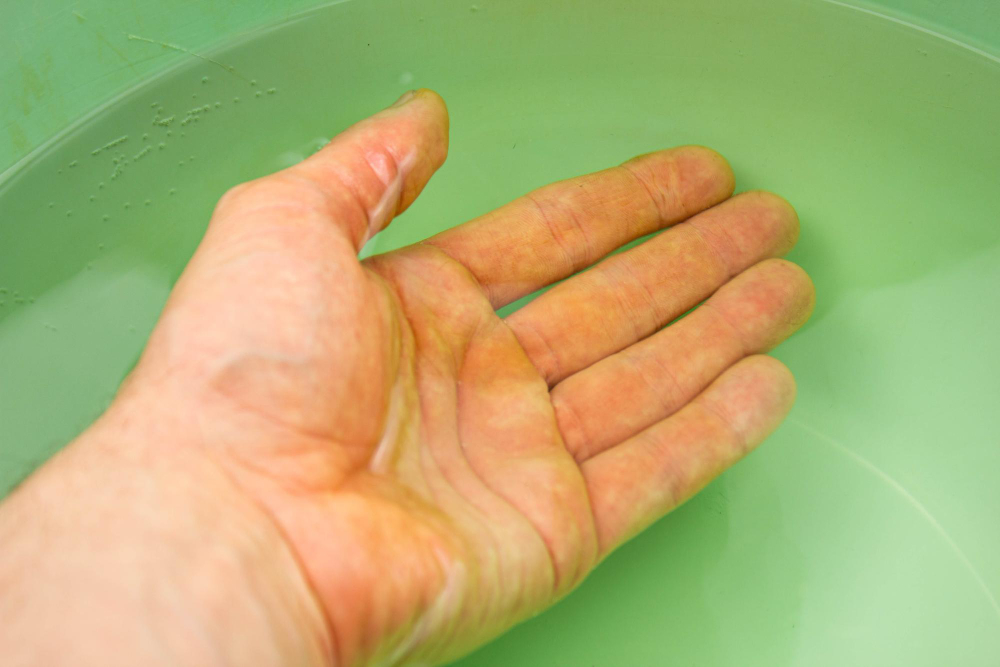
Clinicians noticed that when the median nerve, which supplies part of the hand, was damaged, the fingers served by that nerve did not wrinkle in water. The neighbouring fingers, with an intact nerve supply, wrinkled normally on the same hand, in the same basin, at the same time.
This is about as clean a result as physiology offers. Both sets of fingers were exposed to identical water. If the mechanism were passive absorption, all of them would have responded. Only the ones with working nerves did.
The finding was useful enough that immersion wrinkling was adopted as a simple bedside test of nerve function, particularly in children and in anyone who could not reliably report sensation, and it has been used to assess whether a repaired nerve is recovering. A test that works because the response requires live nerve signalling is a test that proves the response requires live nerve signalling.
What Is Actually Happening
The wrinkling is caused by blood vessels underneath the skin constricting.
When the hands or feet are immersed, the sympathetic nervous system, the same division that handles the fight-or-flight response, signals the small blood vessels in the fingertips to narrow. As they narrow, the volume of tissue beneath the skin drops slightly. The skin on top has not changed area, so it now covers a slightly reduced volume, and something has to give.
What gives is the surface. Because palm and sole skin is firmly anchored to the tissue beneath it at intervals rather than sliding freely, it cannot simply shrink uniformly. It buckles between the anchor points, producing ridges and grooves along lines determined by where the anchoring is.
This is why the pattern on your own fingers looks the same every time. It is not random crumpling. The geometry is set by the underlying architecture, so the same finger wrinkles into approximately the same arrangement on every occasion, which has become an interesting problem for anyone relying on fingerprint recognition after a long bath.
The trigger appears to be the loss of salt from the skin surface. Fresh water sitting on the skin draws salts out through the densely packed sweat ducts, and the change in the local balance is what the nerves respond to. It is consistent with the observation that wrinkling develops faster in fresh water than in water with a salt concentration closer to that of the body.
So Why Would a Body Do This on Purpose
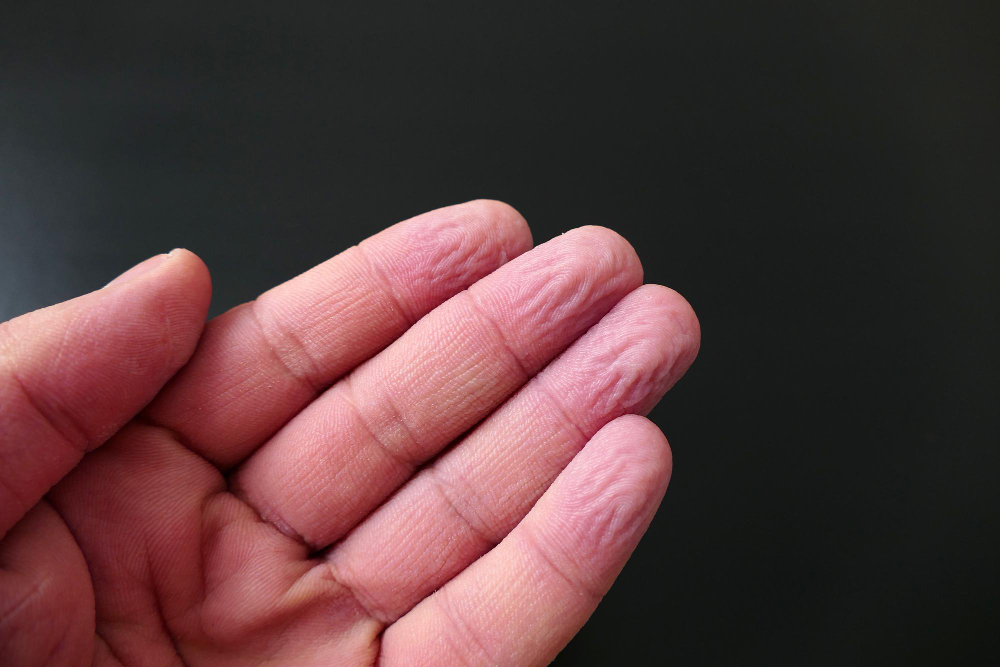
An active, nerve-mediated response that takes several minutes to develop and produces a specific, repeatable surface pattern looks engineered rather than accidental. The question is what for.
The leading proposal is grip. Wrinkled fingertips have channels in them, and the suggestion is that these work in the same way as the tread on a tyre: they give displaced water somewhere to go, letting the raised parts make proper contact with a wet surface instead of skating on a film of water. A smooth fingertip pressed onto a wet object has to squeeze the water out sideways from underneath; a grooved one has ready-made escape routes.
This is supported by the anatomy. The response is confined to exactly the two surfaces used for gripping and for standing, appears nowhere else, and produces channels rather than random bumps.
There is experimental support too, though it is less overwhelming than the idea deserves. A widely reported study found that people moved wet objects faster with wrinkled fingers than with unwrinkled ones, while showing no advantage with dry objects, which is the pattern the grip hypothesis predicts. Subsequent attempts to reproduce the effect have produced mixed results, with some finding no measurable improvement in friction or in handling performance.
So the honest position is that the mechanism is settled and the purpose is not. The nerve control, the vasoconstriction and the buckling are established. The tyre-tread explanation is plausible, anatomically consistent, and supported by some evidence, but not proven.
The Evolutionary Argument, and Its Limits
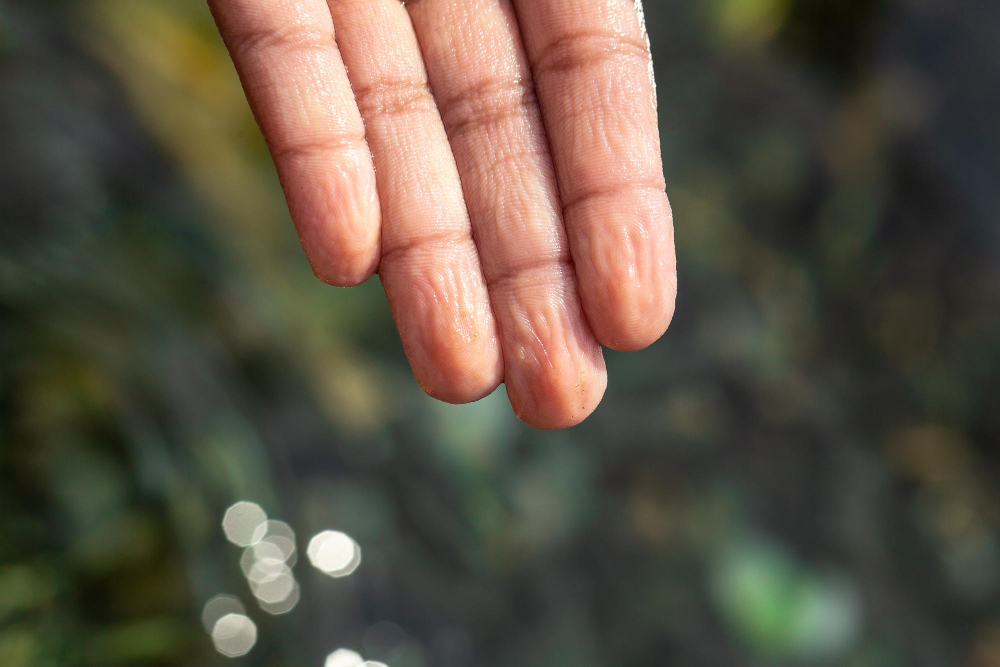
If the function is grip in wet conditions, the follow-up question is what a primate was doing in wet conditions often enough for this to be worth evolving.
The usual suggestions involve foraging in streams and shallow water, moving over wet rock, or handling wet vegetation, all activities where a slip has real consequences and where the delay of a few minutes before the response develops would be no obstacle. The timing actually fits this reading rather well: a response that appeared instantly on contact with any water would be triggered by rain and by every wet object; one that takes a few minutes only engages once you are actually committed to being in water.
It is worth being careful here, because this is the part of the story where speculation is easiest. That the response exists, is nerve-controlled and is confined to gripping surfaces is observation. That it evolved for a particular activity is inference, and the fossil record does not preserve what anybody’s fingers looked like in a stream.
What Else the Same Nerves Do
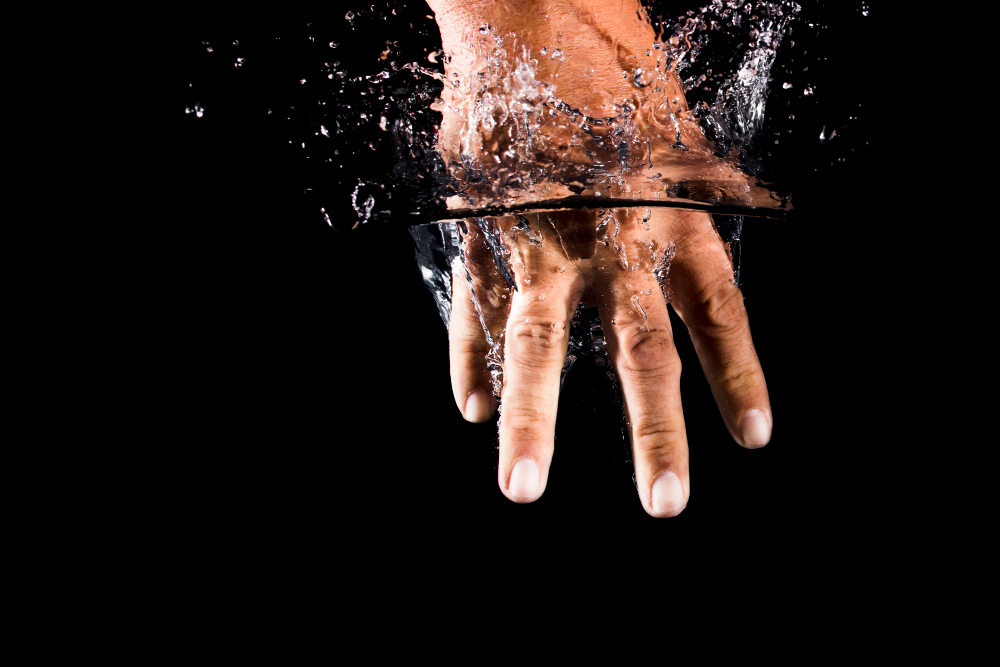
The reason this response is easy to overlook is that it uses ordinary machinery. Sympathetic control of the small blood vessels in the extremities is going on constantly, for reasons that have nothing to do with water.
It is why your hands go pale and cold when you are frightened: blood is being diverted away from the periphery. It is why they change colour in cold air, and why some people’s fingers go white in a much more pronounced way in the cold. The same system produces the clammy hands of nervousness, because the sweat glands in palm skin are under sympathetic control too.
Immersion wrinkling is that everyday system being used for something specific. Nothing exotic was built for it. A pre-existing capability to constrict the vessels in a fingertip, plus skin that is anchored rather than free-floating, gives you a surface that reconfigures itself when it gets wet.
It also means the response is affected by anything that affects those nerves. Wrinkling is reduced in some conditions that damage peripheral nerves, including long-standing diabetes with nerve involvement, and it has been studied as a possible simple indicator of that sort of nerve damage. This is a research interest rather than a diagnostic anybody should be applying in a bathtub, and the absence of wrinkling on its own tells an individual nothing useful.
A Surface That Changes Its Own Texture
It is worth stepping back and noticing what this actually is. Your fingertips detect that they are in water, and respond by changing their surface texture, reversibly, to something better suited to handling wet things. They then change back within minutes of coming out.
Engineers put a great deal of effort into surfaces that adapt to conditions, and the general problem is difficult. The hand does it with a pre-existing blood-vessel reflex and a bit of anchored skin, and it has been doing it so unremarkably for so long that most people assume it is a passive accident of getting wet.
The next time you get out of a long bath, look at your fingertips and then at your forearm. The forearm has been in exactly the same water for exactly as long, and nothing has happened to it. That difference is the whole argument.
Like our content? Follow us for more.
