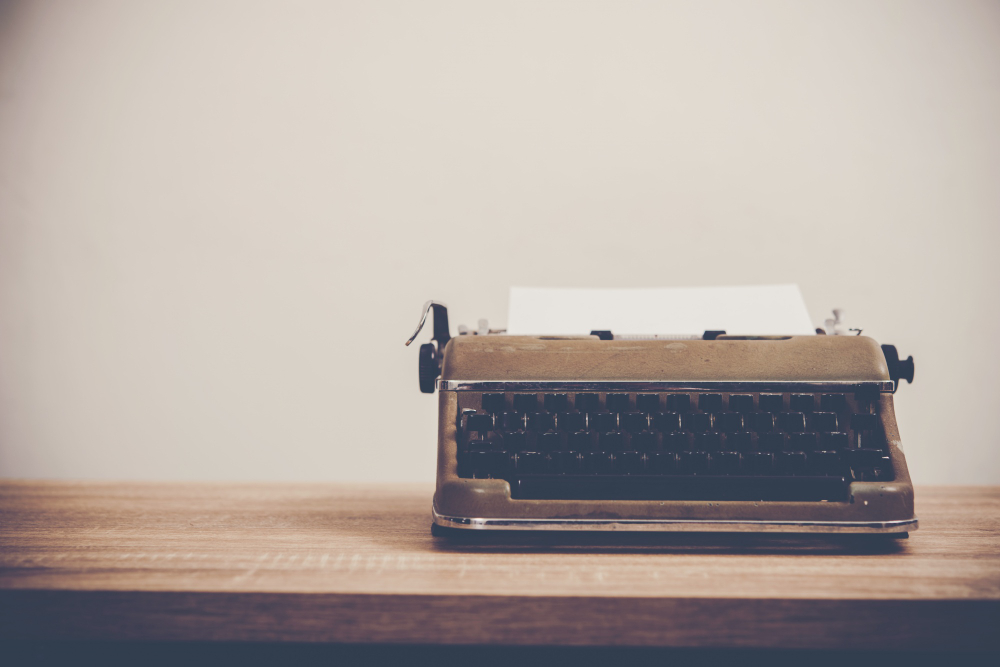
No screen, no undo, a bell that rang early, and no number one. Here are twelve.
1. There Was No Screen, So the Paper Was the Only Record
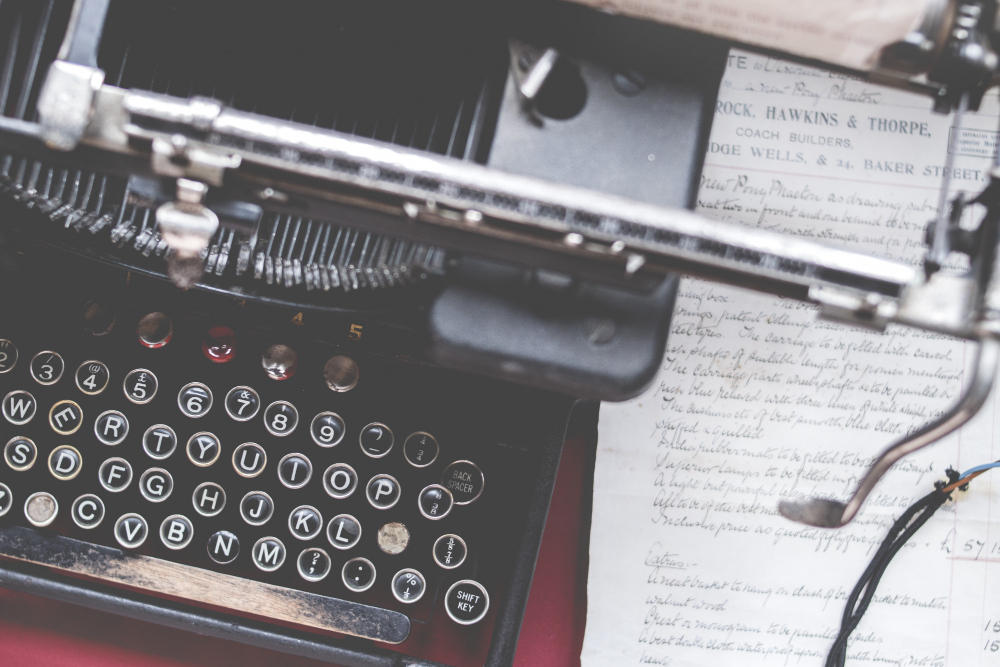
This is the fact that everything else follows from and it is the hardest one to re-inhabit. The document did not exist anywhere except as ink on the sheet in the machine. There was no file, no copy and no previous version.
Which means the paper was simultaneously the draft, the working copy and the finished article. If it was wrong, the object itself was wrong. There was nothing standing between what you did and what existed.
Like our content? Follow us for more.
2. Which Means There Was No Undo, and It Changed How People Wrote
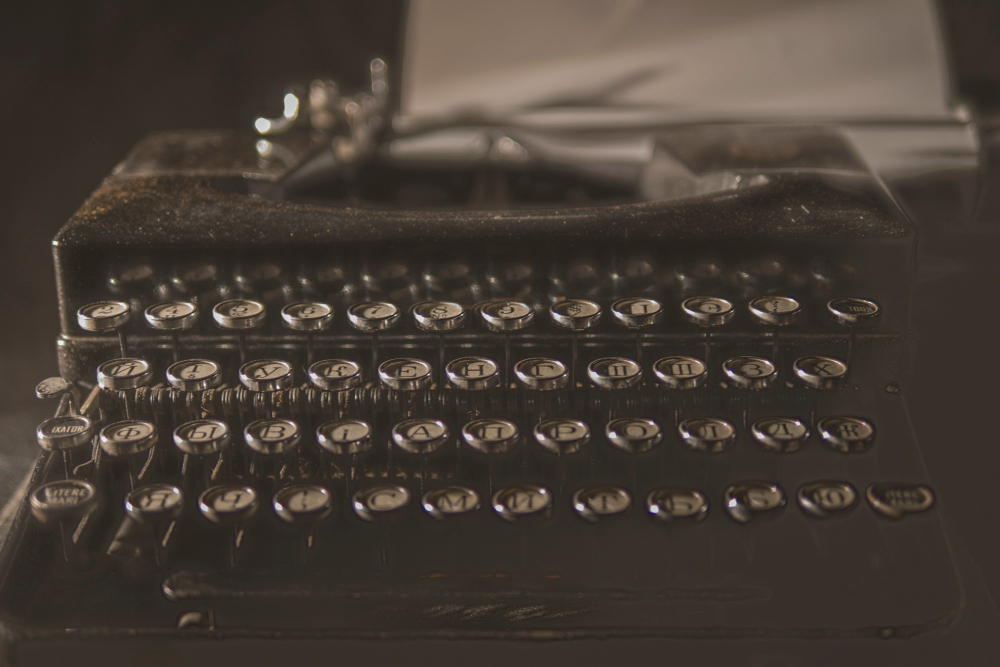
The practical consequence was that composition had to happen before typing rather than during it. You worked the sentence out in your head, or in pencil on a separate sheet, and then committed it.
People who learned to write this way frequently say the same thing: they arrived at the keyboard with the paragraph already finished. The modern habit of typing a rough version and then rearranging it was not available, because rearranging meant retyping the page. A changed mind cost a sheet of paper and ten minutes.
3. Capital Letters Worked by Physically Moving the Machine
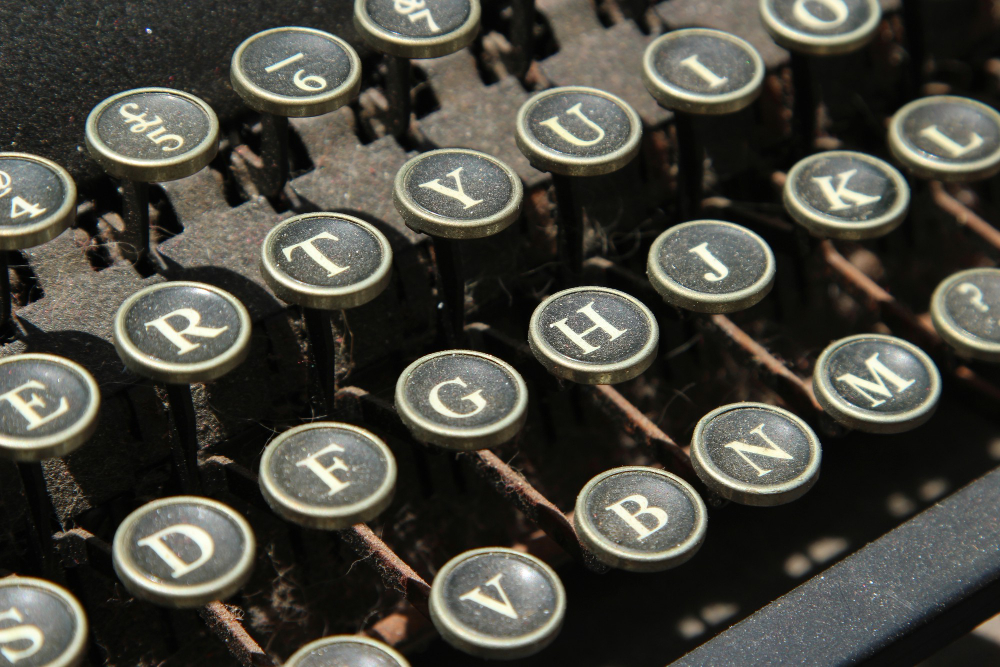
The key marked shift does not get its name from anything abstract. Pressing it mechanically lifted or dropped a substantial part of the mechanism, so that a different part of each type slug met the paper.
Every letter was cast twice on the same piece of metal, capital above and lower case below, and the shift moved the alignment between them. On many machines it was the whole carriage that moved, which is why holding it down took real effort and why typing a long stretch in capitals was physically tiring. There was also a shift lock, for exactly that reason.
4. A Great Many Machines Had No Number One and No Exclamation Mark
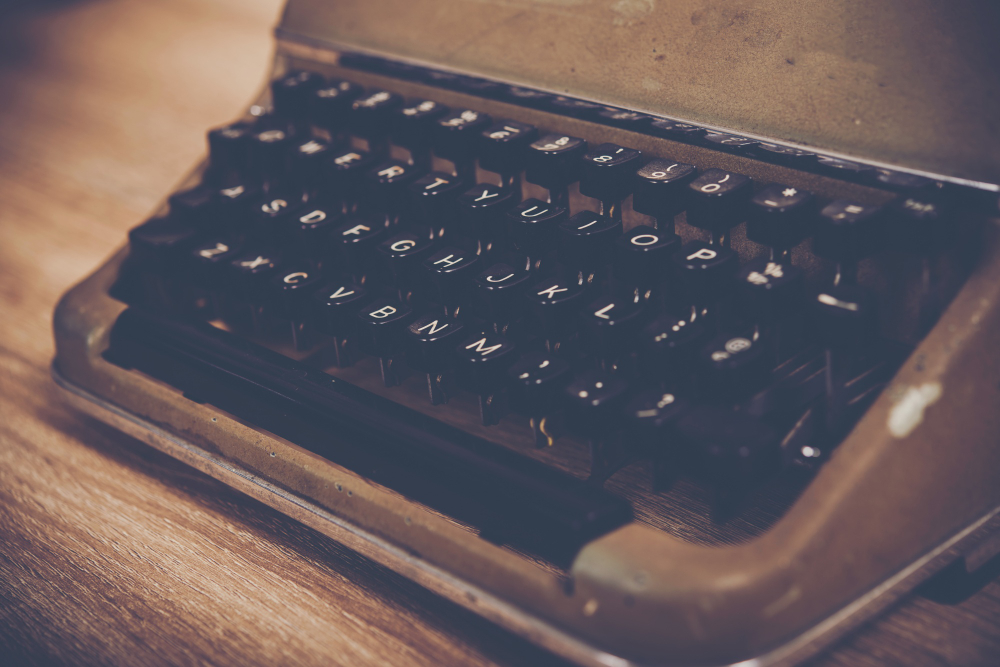
This astonishes people and it is entirely true. On a large number of typewriters, particularly smaller and earlier ones, there is no key for the figure one and no key for an exclamation mark.
You typed a lower-case letter l for the one, which in the typefaces of the period was close enough that nobody noticed. For the exclamation mark you typed an apostrophe, pressed the backspace, and typed a full stop underneath it. Both were standard taught practice. Keys were expensive and space on the keyboard was finite, so the two characters that could be faked were the two that got cut.
5. The Bell Rang Before the End of the Line, Not at It
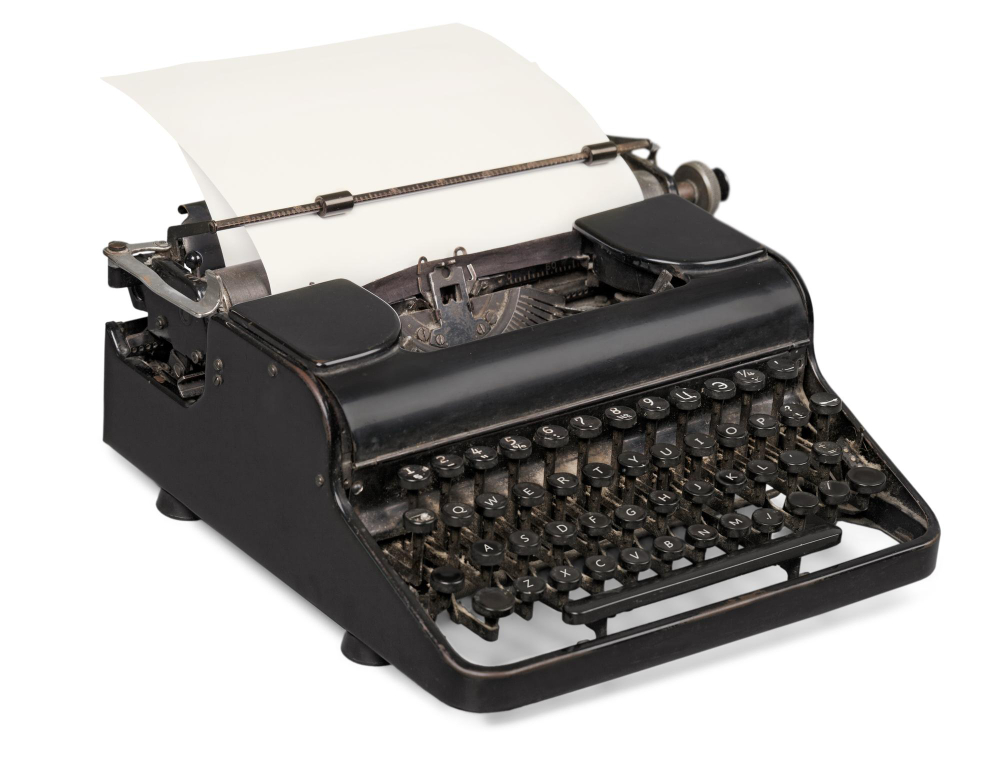
There is a bell, and it does not announce the end of the line. It rings several characters early – commonly around eight – as a warning.
The reason is that you needed time to make a decision. The bell meant you had a few characters left in which to finish the word, hyphenate it, or stop and start a new line, and you had to do that while still typing. Hearing a bell and continuing to the stop meant the machine simply refused to advance and you had a jammed word.
6. The Carriage Return Was a Lever You Swung
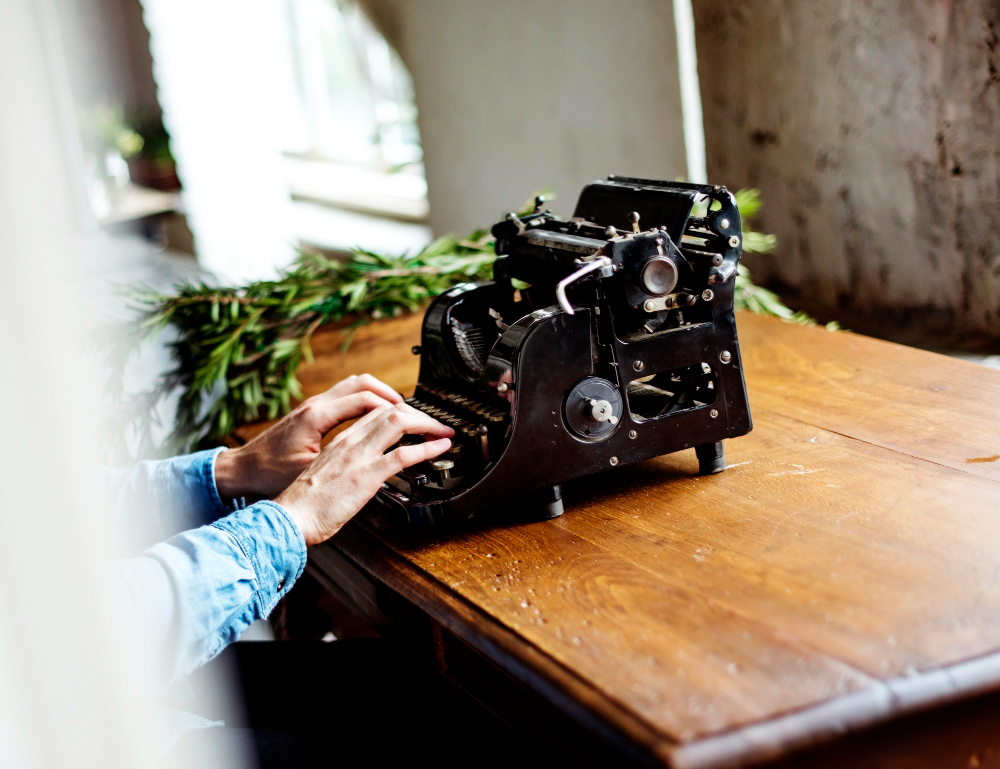
At the left-hand end of the carriage was a long lever. Pushing it did two things at once: it rotated the roller to advance the paper by one line, and it shoved the entire carriage back to the right-hand end of its travel.
It was done with the left hand without looking, in one movement, at the end of every line, hundreds of times an hour. The noise it made – the ratchet, the slide, the thump at the end – is the sound most people actually mean when they say they remember typewriters.
7. Two Keys at Once and It Jammed
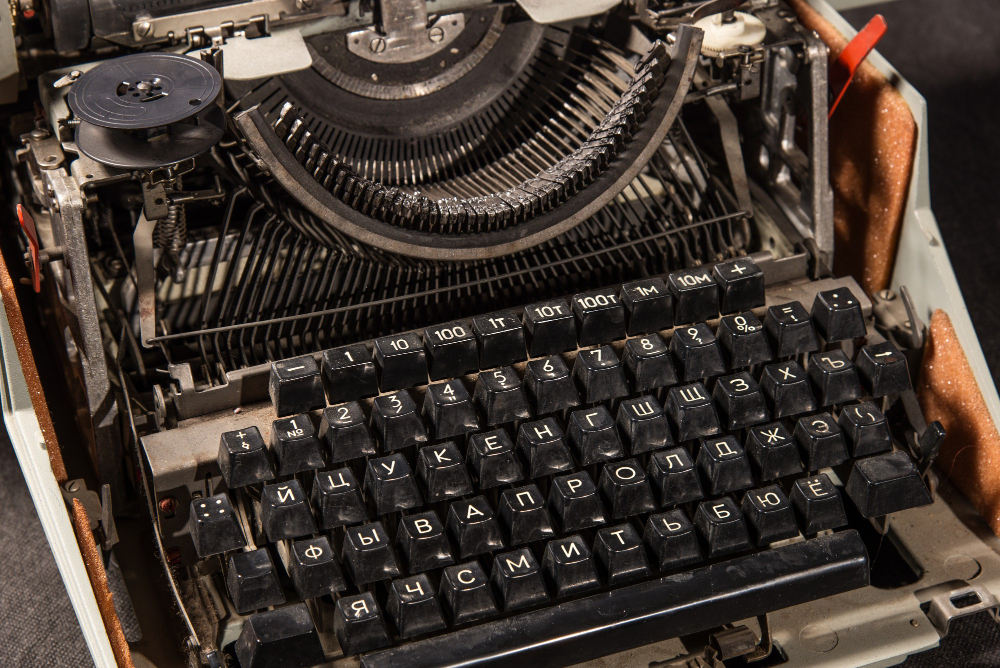
Each key was connected by levers to a metal arm carrying the type, and all of those arms swung up to strike the same small spot. Press two at nearly the same instant and two arms arrived together and locked.
The machine then stopped dead with two arms standing upright in the middle, and they had to be separated by hand, which inked your fingers. Fast typists developed a particular even rhythm specifically to avoid it, and the characteristic staccato of skilled typing is partly a technique for not jamming the machine.
8. Correcting Went Through Four Technologies and All of Them Showed
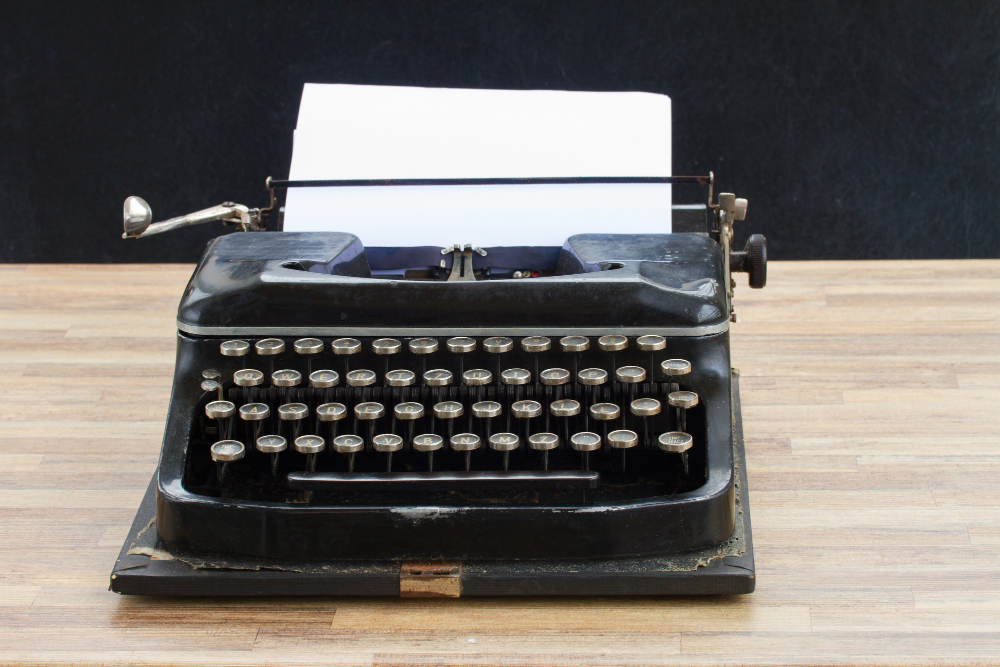
First a hard rubber eraser, used with a stencil-like shield to protect the surrounding letters, which thinned the paper and left a visible rough patch.
Then strips of coated paper, laid over the error and typed through so a chalky layer covered it, which worked until the sheet was handled. Then white fluid in a small bottle with a brush in the lid, which had to dry and which stood slightly proud of the page. Finally, on electric machines, a second ribbon that lifted the character off entirely – the first correction that was completely invisible, and by then the whole technology had about a decade left.
9. Carbon Paper Was the Only Copier, and It Is Why Email Still Says CC
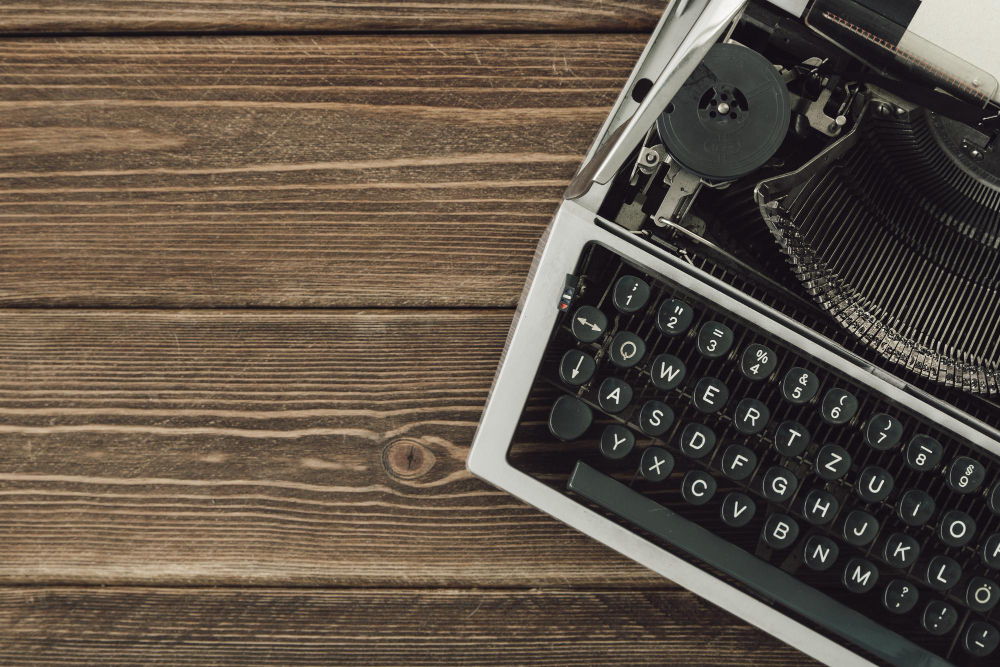
To have a second copy you assembled a sandwich: a sheet of paper, a sheet of carbon paper coated side down, another sheet of paper, and so on, then rolled the whole stack into the machine together.
The impact of each type slug transferred pigment through to the sheets below. Two copies were comfortable, three were poor, four were illegible. The abbreviation at the top of every email – cc – stands for carbon copy, and it is a direct survival of this: a line listing who else was getting one of the sheets further down the stack.
10. The Ribbon Reversed Itself, and Then Gave Up
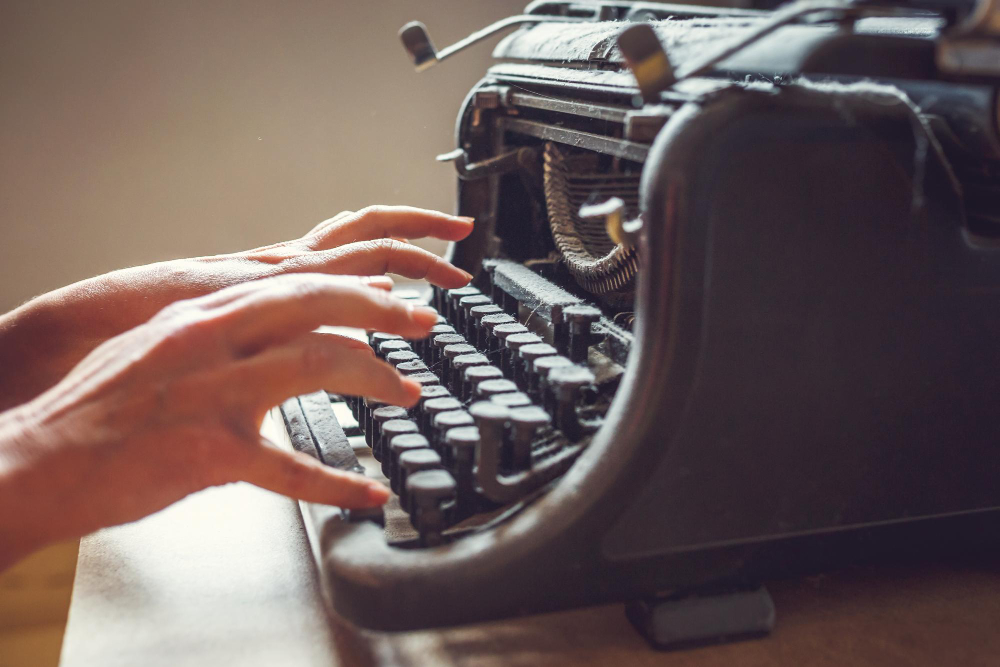
The ink came from a fabric ribbon travelling between two spools, advancing a fraction with every strike. When one spool emptied the mechanism reversed and sent it back the other way.
So it was used over and over, getting progressively fainter, until somebody decided it was too pale to send anything out on. Many ribbons were in two colours along their width, black and red, selectable by a lever, which is why so much period correspondence has one word or figure in red. Changing one was a fiddly job that got ink on everybody.
11. Every Machine Had a Signature, and It Was Used in Court
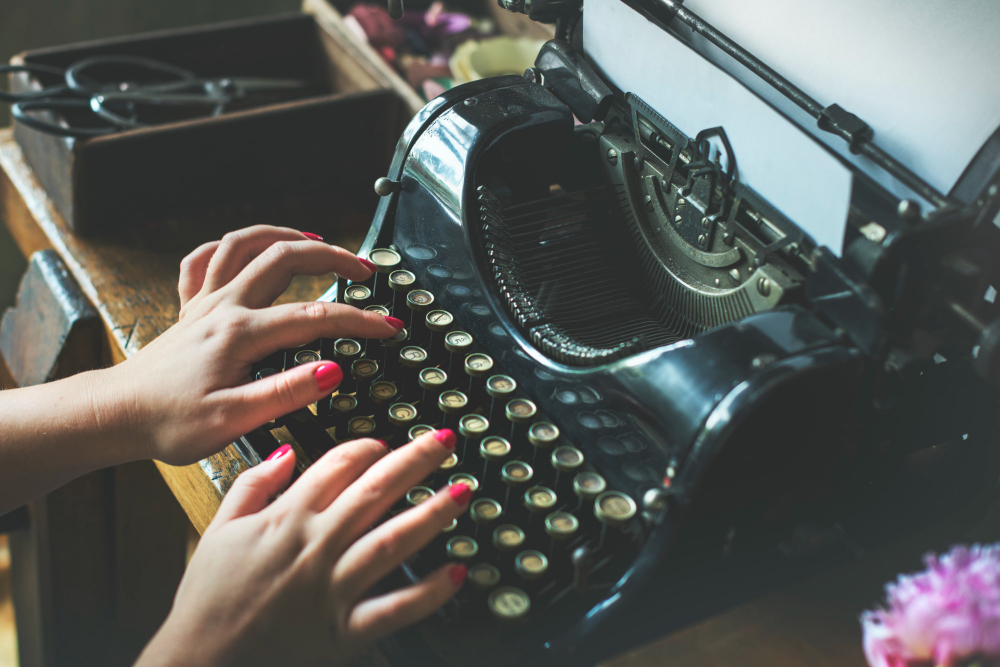
This is the part that sounds invented. Because each character sat on its own piece of metal struck by its own lever, every machine developed its own pattern of faults: one letter sitting slightly high, another rotated a degree, a worn edge on a particular slug, a consistent spacing error.
The pattern was effectively unique and it was stable over time, which means a typed document could be matched to the specific machine that produced it, not merely to a model. This became a recognised branch of document examination and typed evidence was identified this way in a number of significant cases. An anonymous letter could be traced to a desk.
12. You Could Hear Exactly What Somebody Was Doing
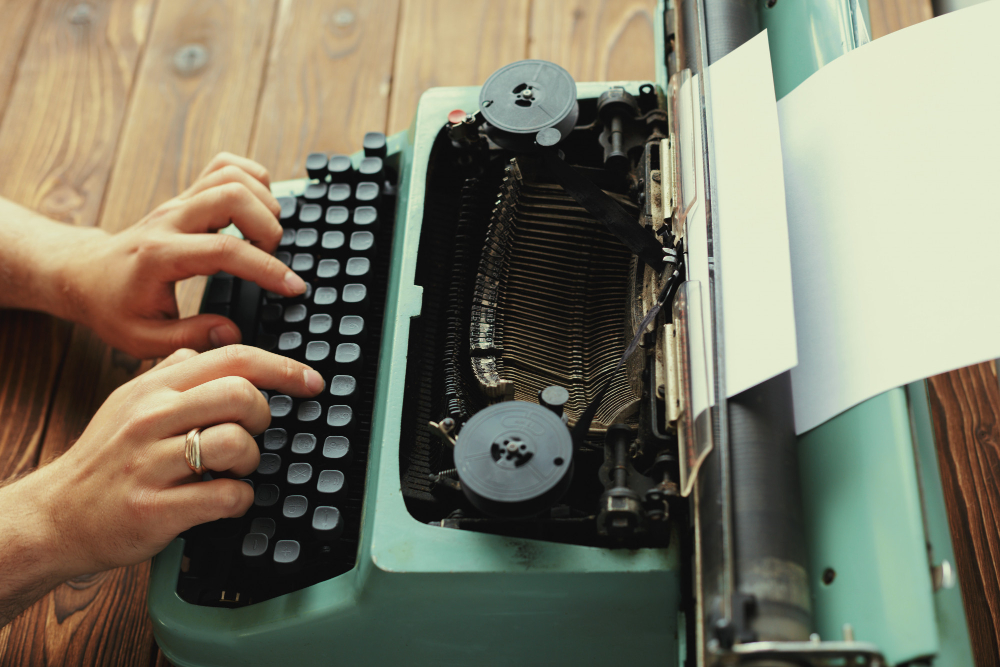
An office full of typewriters was extremely loud, and the noise was informative in a way that no quiet office is. Steady rhythm meant copying from a draft. Bursts with pauses meant composing. Frequent bells and returns meant short lines.
A stop, a wind of the roller, a pause and a restart meant somebody had made a mistake and was correcting it, and everybody within earshot knew. The sound of the room was a live report on what every person in it was doing, and when the machines went quiet the information went with them.
A Machine With No Memory of Anything
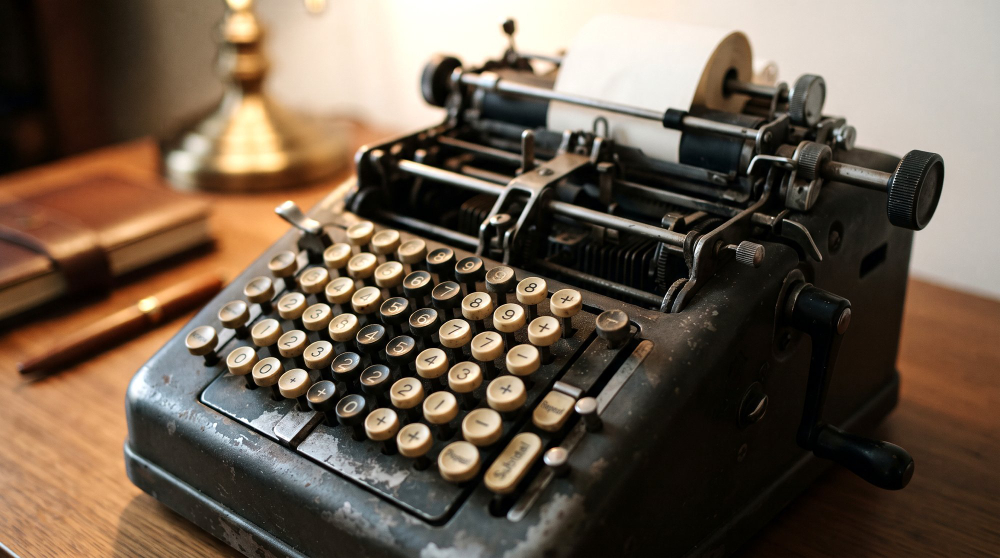
The paper as the only existing copy, composition finished before typing began, a shift key that physically moved the mechanism, a missing number one you faked with a letter, a bell that rang eight characters early, carbon paper surviving as two letters at the top of every email, and a fault pattern that identified the individual machine.
The fourth item is the one nobody believes until they go and look at an old machine. There is frequently no key for the number one and none for an exclamation mark. You typed a lower-case l for the figure, and for the exclamation mark you typed an apostrophe, hit backspace, and put a full stop underneath it. Both were taught as the correct method. Keyboard space was expensive, and the two characters you could counterfeit were the two left off.
Like our content? Follow us for more.