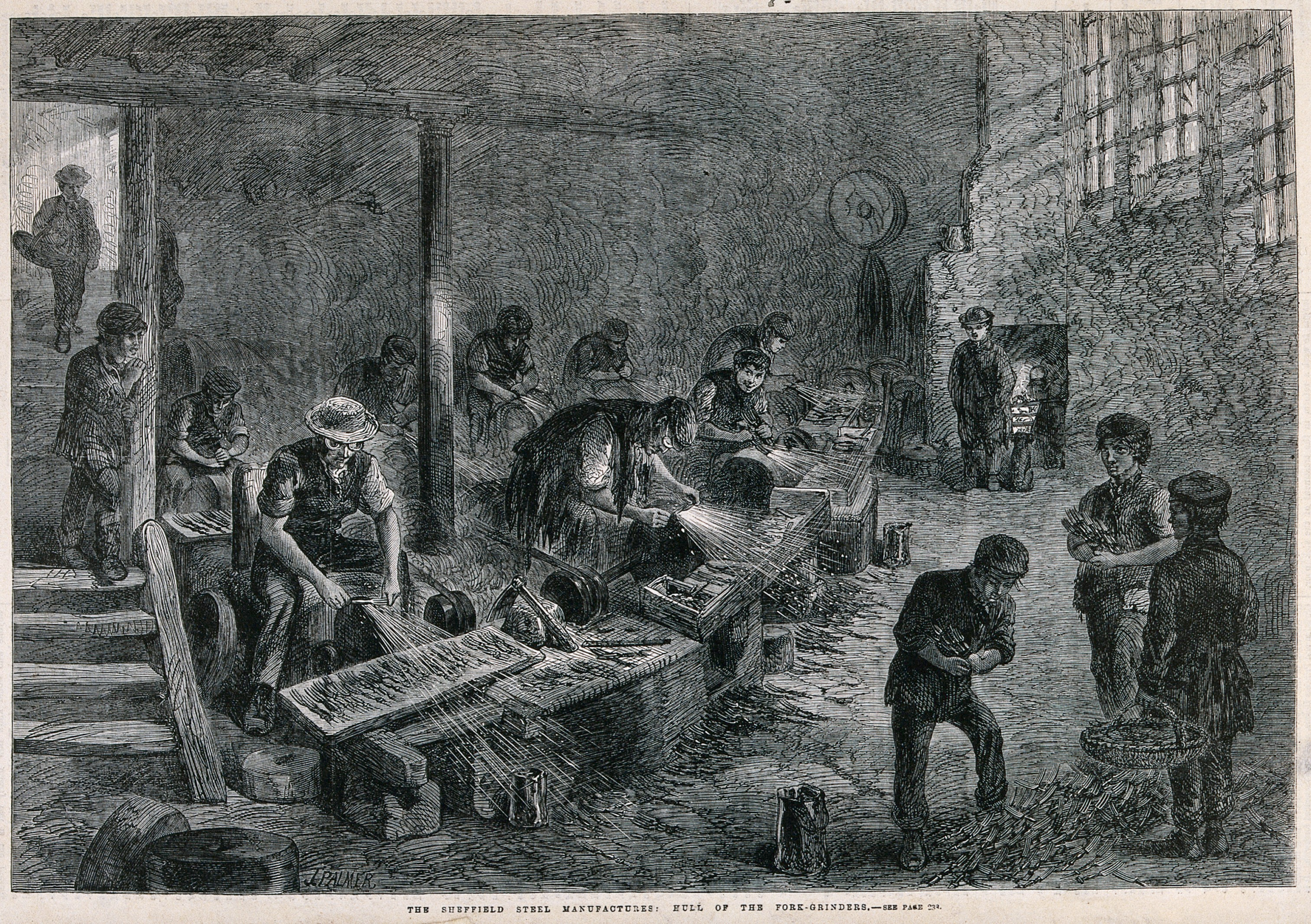
In 1960 a knife blade was forged, then ground by a man lying forward over a spinning sandstone wheel with his face close to the work, then hafted by a different trade, then buffed by another.
The grinder frequently owned his own stones and rented his place at the wheel. The dust from dry grinding filled the room. And every man in the shop knew somebody a wheel had burst on.
Here are fourteen things that were ordinary in a cutlery works in 1960, and what became of each one.
1. The Grinder Lay Face Down Over a Spinning Stone
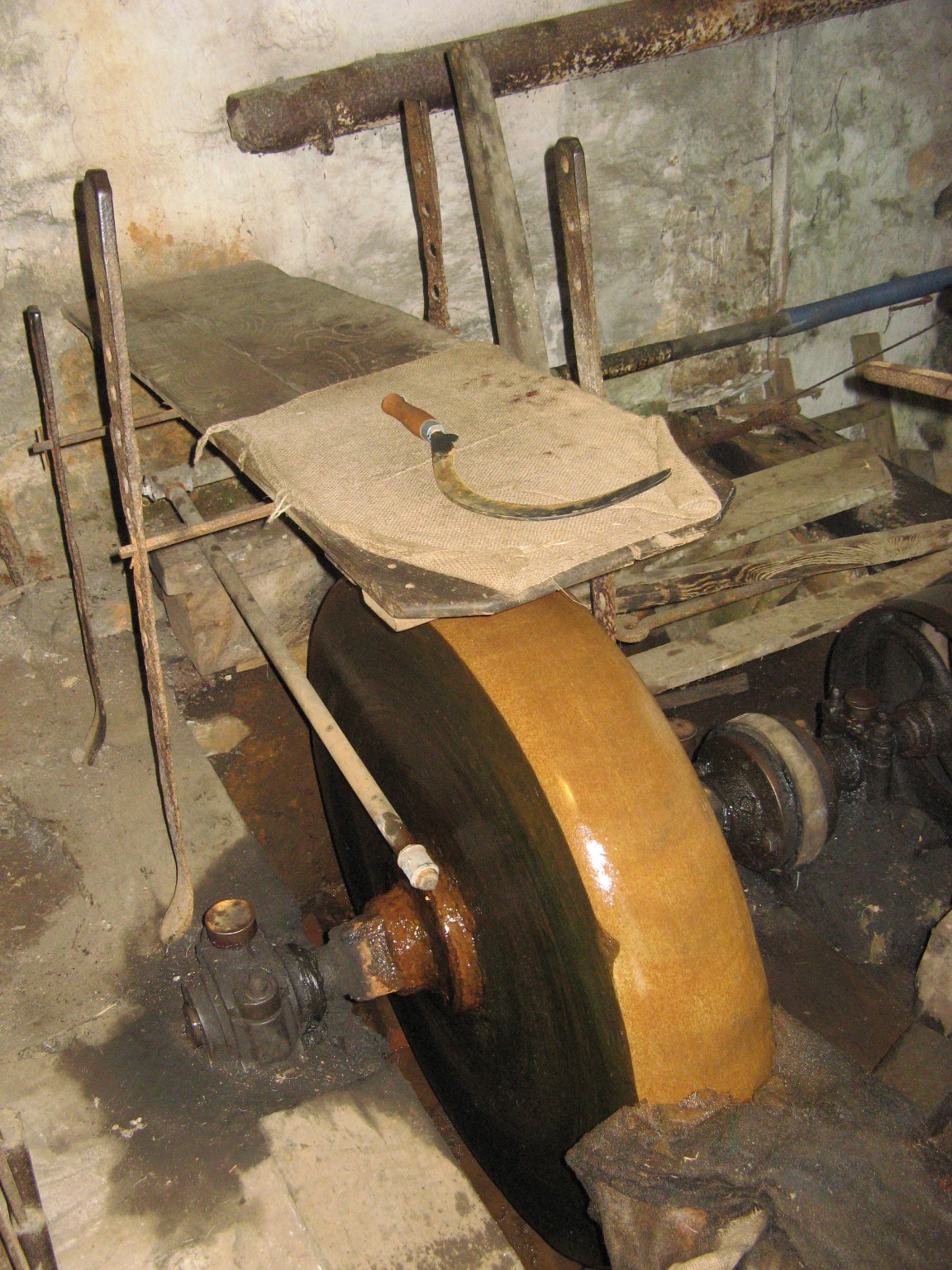
Blades were ground on large natural sandstone wheels, with the grinder lying forward over the stone on a wooden horse, face close to the work, holding the blade against the rotating surface.
Enclosed machine grinding, belt systems, guarding, extraction and automated profiling replaced it completely. The posture was dictated by needing to see and feel the contact precisely, and it was held for a whole working day, which is one of the reasons the trade was known for what it did to the men in it.
Like our content? Follow us for more.
2. Dry Grinding Filled the Room With Stone and Steel Dust
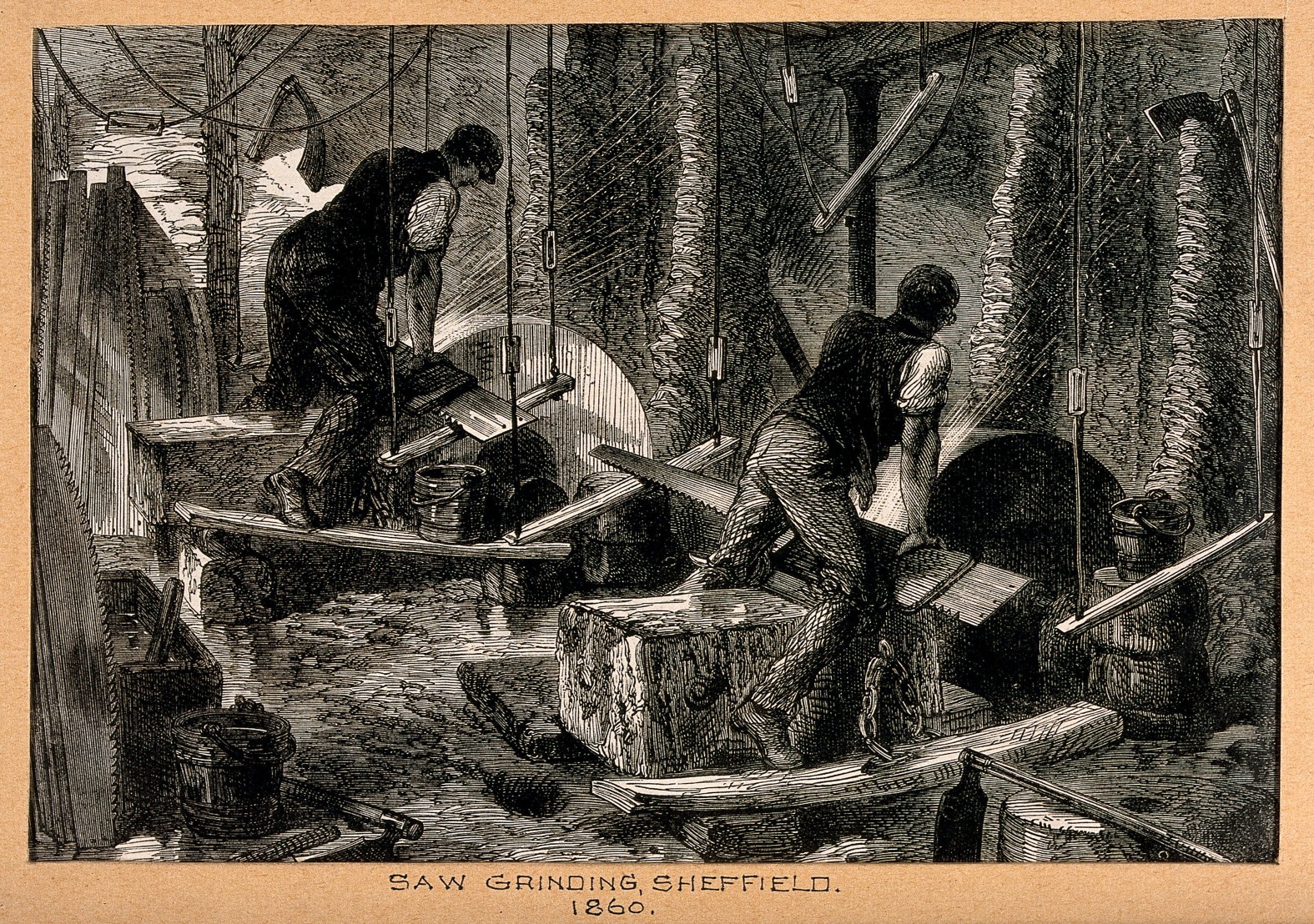
Some operations were done dry, and dry grinding throws off a fine mixture of stone particles and metal, continuously, into the air of a room where several men worked at adjacent wheels.
Wet grinding where possible, enclosure, extraction at the wheel and respiratory protection are now standard, and the dry process as it was practised does not exist. The respiratory consequences of this work were documented in the nineteenth century, were widely known in the trade, and were the subject of early industrial health investigation. This is stated as occupational history only – anybody with that work history should raise it with their own doctor rather than with an article.
3. The Stones Burst, and Everybody Knew Somebody It Had Happened To
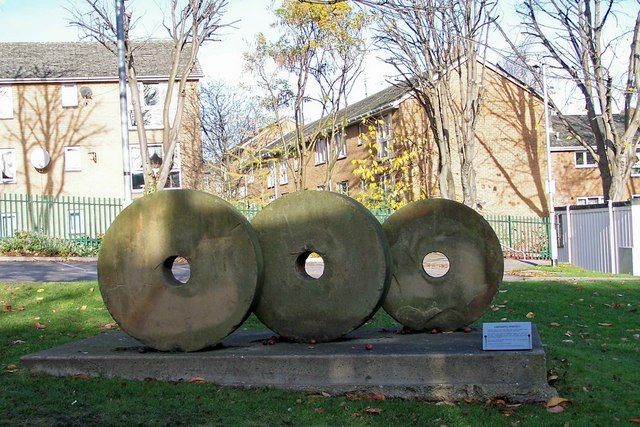
A natural sandstone wheel several feet across, rotating at speed, contains flaws. If one let go, the fragments left at the rim speed in the direction of whoever was leaning over it.
Manufactured abrasive wheels with specified maximum speeds, mandatory mounting and inspection procedures, speed testing and full guarding transformed this. Wheel bursting is one of the oldest recognised machinery hazards and the rules governing abrasive wheels today are a direct lineal descendant of what happened in grinding shops.
4. The Men Owned Their Own Tools and Rented Their Place at the Wheel
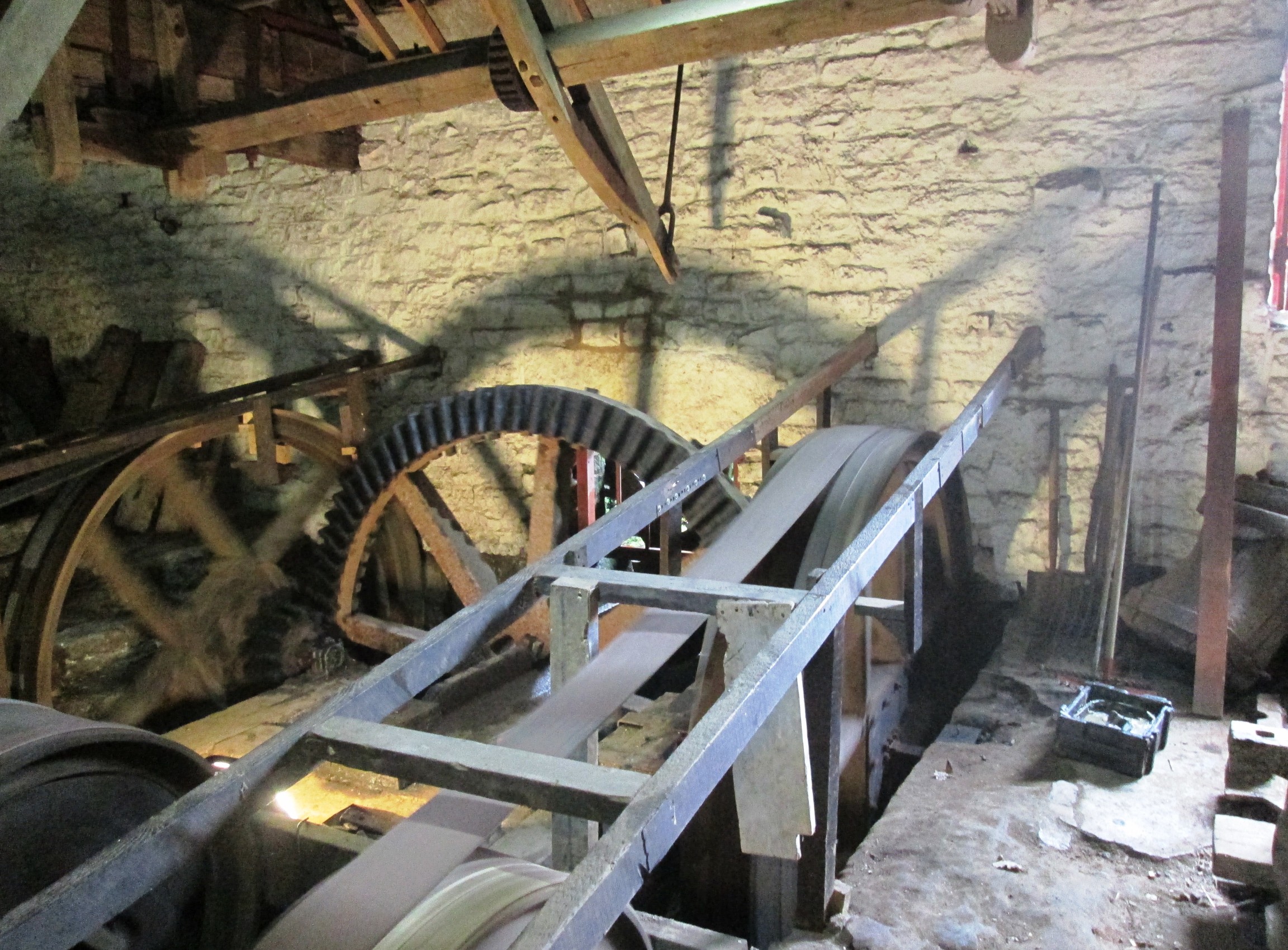
A grinder frequently owned his stones and equipment and rented power and floor space in a works owned by somebody else, selling his output by the piece – which made him a self-employed contractor inside a factory.
Direct employment replaced the arrangement. It meant the man took the commercial risk, bought his own consumables, had no sick pay and no security, and in exchange answered to nobody about how he worked – a trade-off that was defended fiercely by the men themselves.
5. Hand Forging Set the Shape Before Anything Was Ground
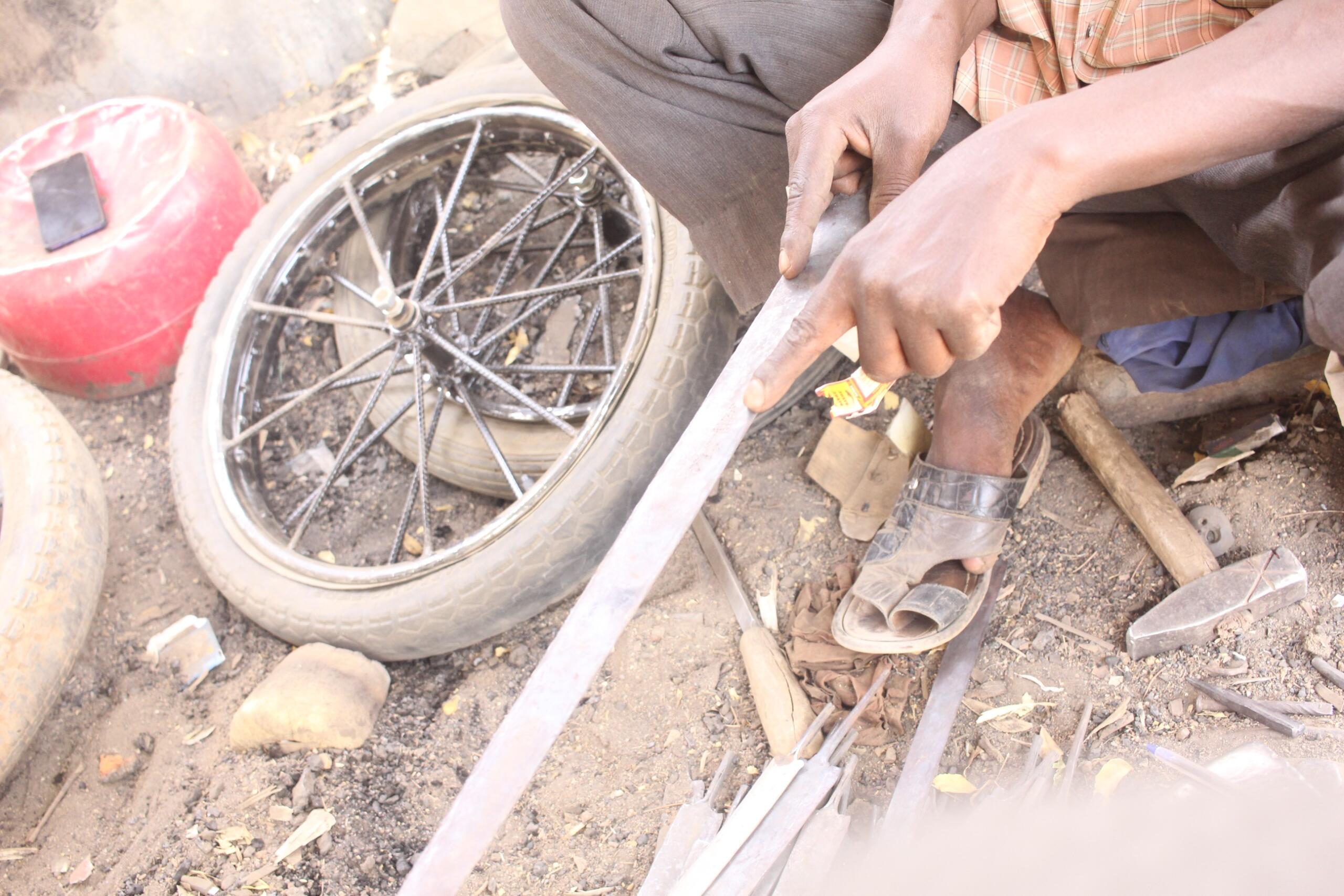
Blades were forged – heated and hammered to shape, by hand or under a tilt hammer – before grinding, and the forging determined the grain structure and therefore how well the blade would take and hold an edge.
Drop forging, stamping from strip and precision blanking replaced hand forging for all volume production. The distinction between a forged blade and one stamped from flat stock is still a meaningful one in quality cutlery and is still used as a selling point, which is unusual for a manufacturing detail from this period.
6. Hafting Was a Separate Trade and the Handles Were Anything
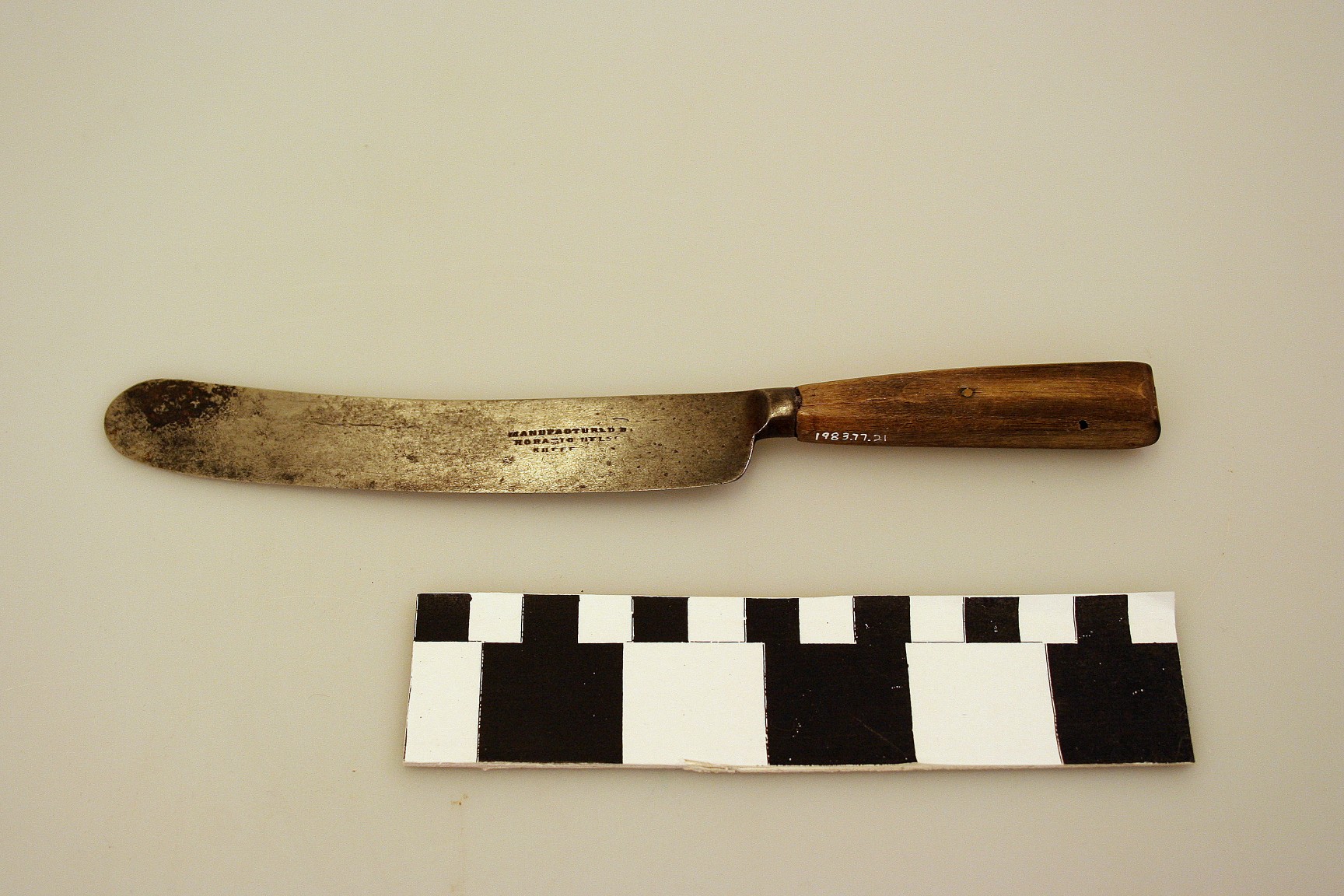
Fitting handles was its own skilled job, and the materials included bone, horn, wood, ivory and early plastics, each requiring different working methods, adhesives and finishing.
Moulded polymer handles and full-tang riveted construction dominate now, and several traditional materials are restricted or prohibited outright. The hafter’s skill was in making a joint that would survive years of washing and handling, which is precisely where cheap cutlery still fails.
7. Buffing Was the Dirtiest Job in the Building
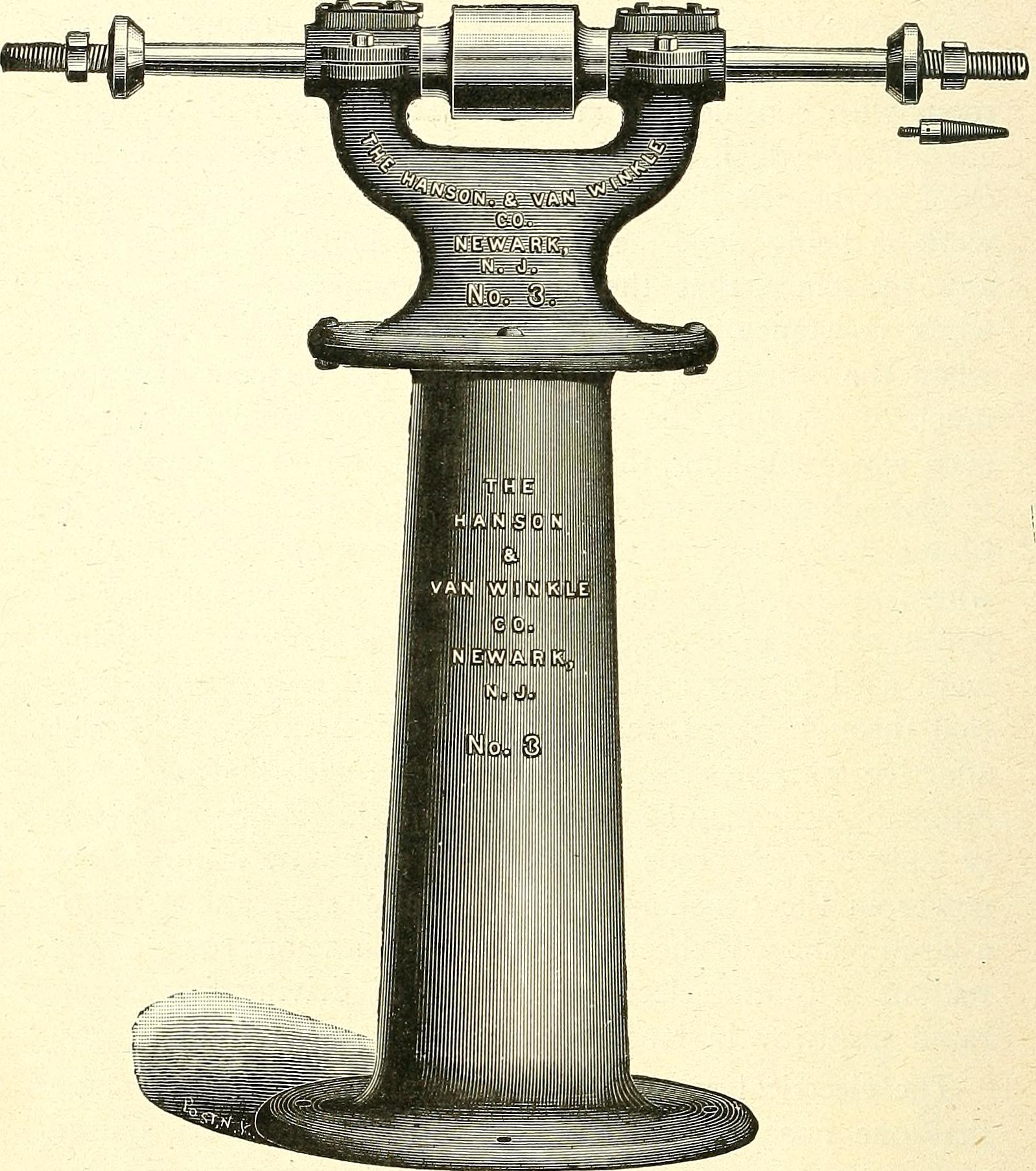
Final polishing was done against rotating cloth mops charged with abrasive compound, which threw off a fine mist of compound and metal that coated the operator and the room.
Extraction, enclosure, automated polishing and protective equipment have changed it. Buffing was commonly done by women, was paid less than grinding despite being comparably unpleasant, and produced an appearance of finish that the customer judged the whole product by.
8. The Trade Was Organised by Specialism and Nobody Did Two Jobs
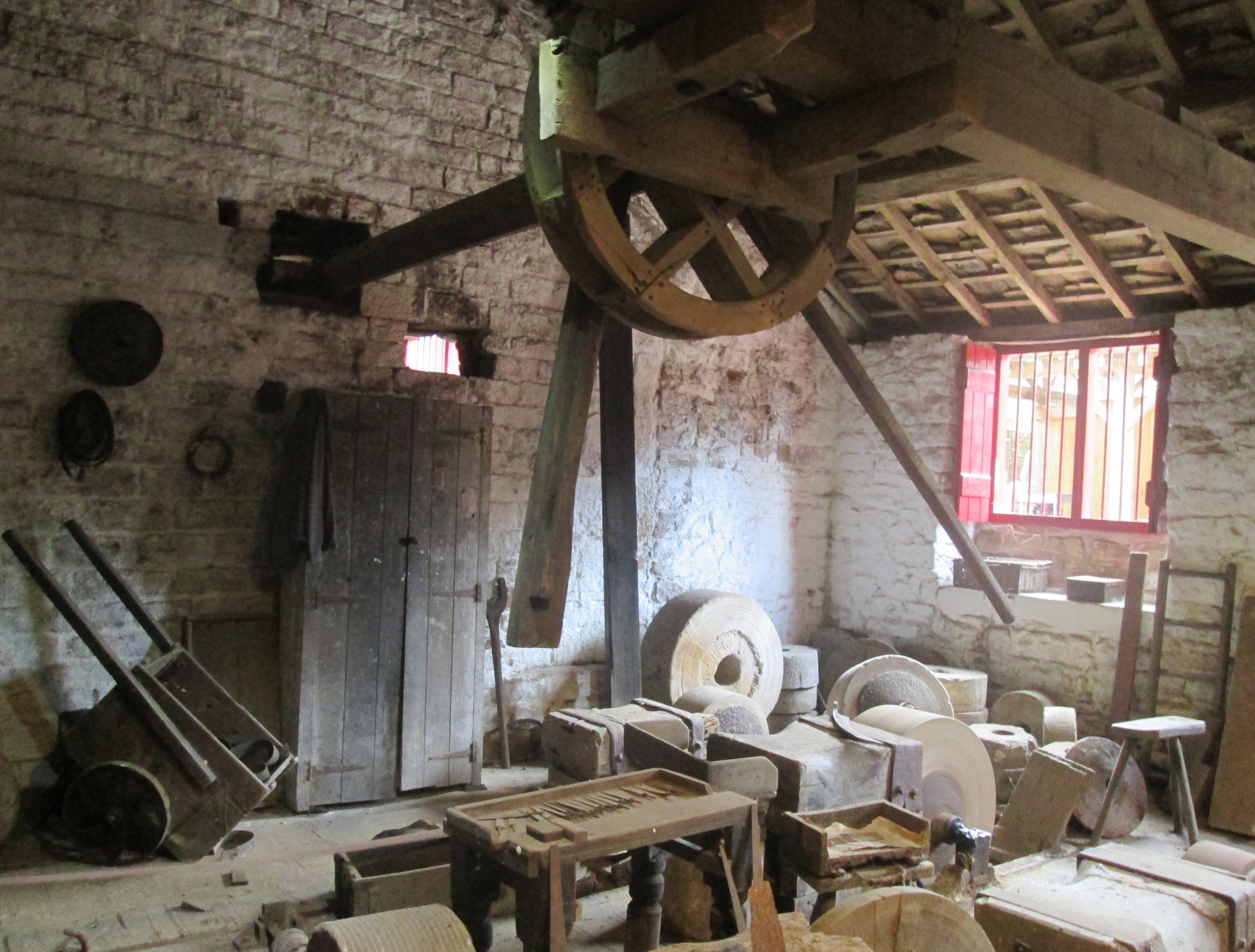
A works was a sequence of separate trades – forger, grinder, hafter, buffer, cutler assembling the finished article – each with its own apprenticeship, its own rates and its own standing, and crossing between them was not done.
Integrated production and multi-skilled operation replaced the demarcation. The specialisation produced extremely high individual skill and made the whole operation inflexible, and it is a recurring finding across these industries that the two came as a package.
9. A Great Deal of the Work Was Done in Small Workshops in Back Yards
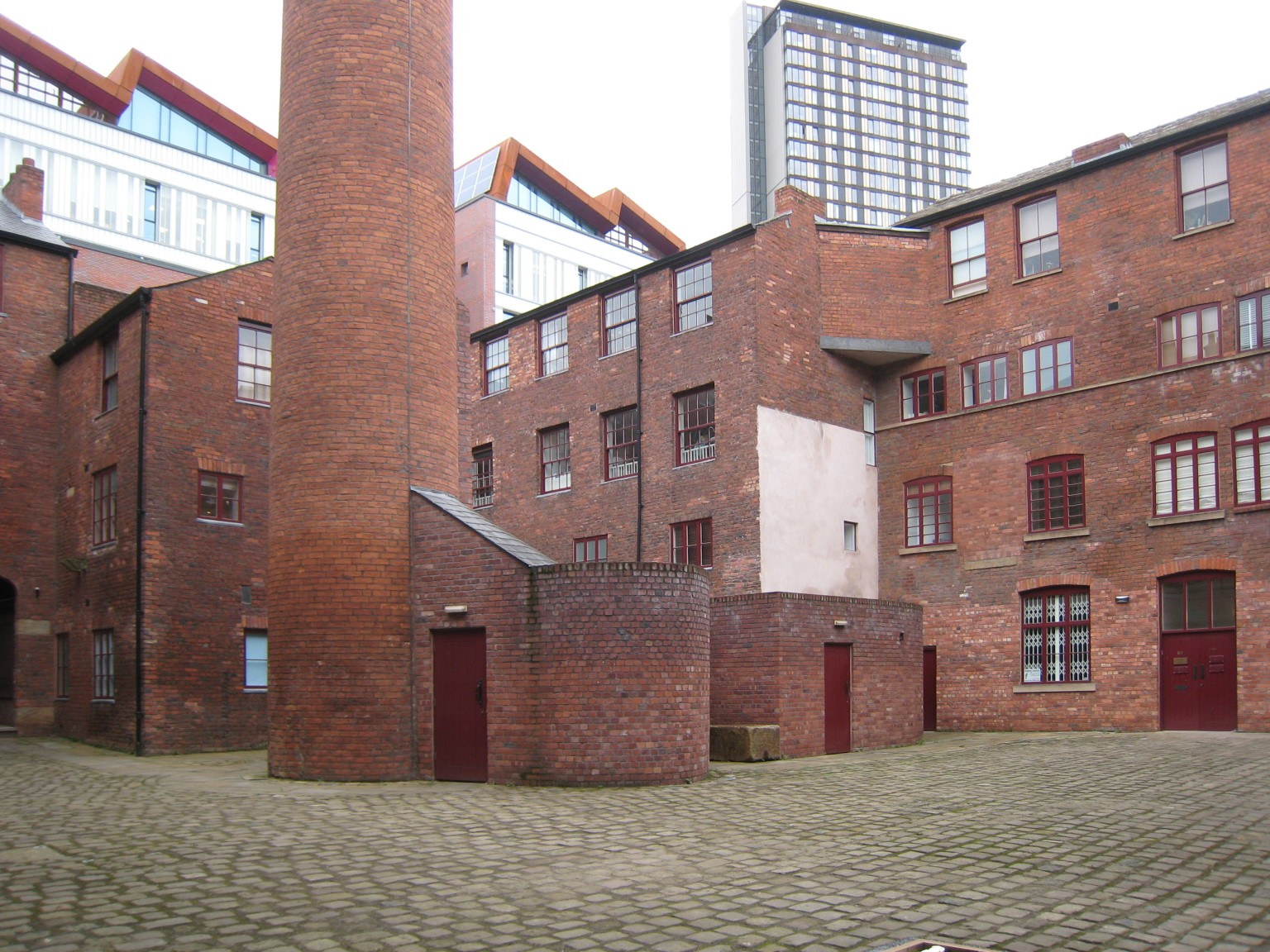
Production was not concentrated in large factories. An enormous number of small workshops, some with a handful of men, operated in yards and upper floors across a district, supplying and subcontracting to each other.
Consolidation and then collapse removed almost all of it. The district model meant a specialist could exist on the work of many firms, which made the whole thing flexible and made it fail from the edges inward when volumes dropped – the same pattern as the shoemaking districts.
10. Marks on the Blade Were the Whole Reputation System
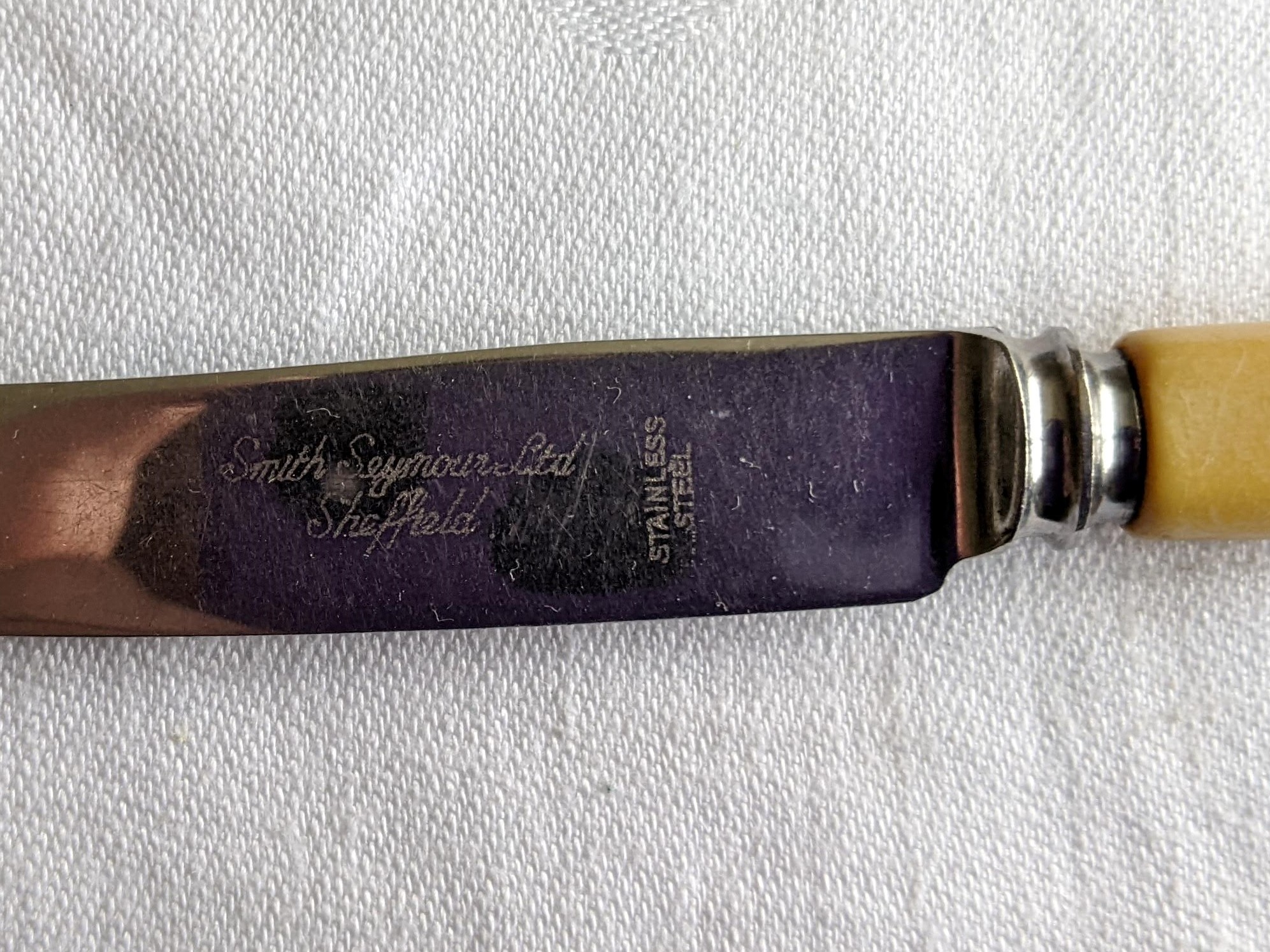
A maker’s mark stamped into the blade was the guarantee of origin and quality, protected by local trade regulation, and marks were valuable assets passed on and fought over in court.
Trade marks, standards and labelling regulation now serve the same purpose with broader legal backing. The mark system predates almost every other consumer protection mechanism and worked because the district was small enough that a bad mark was known about quickly.
11. Stainless Steel Was Still Settling In and Carbon Steel Was Everywhere
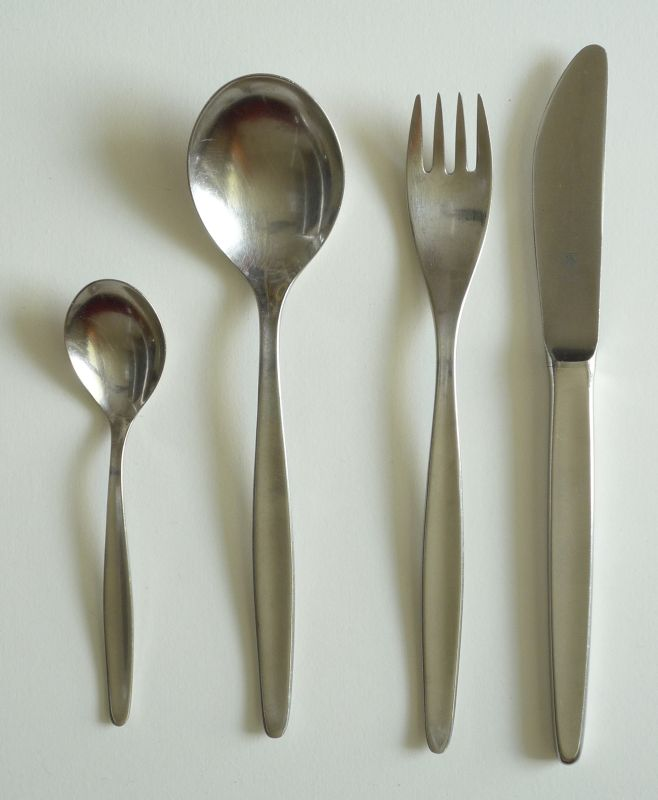
Carbon steel blades took a better edge and rusted, stained and reacted with food, requiring drying and care. Stainless was established but still displacing them in the general market.
Stainless is now effectively universal for domestic cutlery and carbon steel survives in professional kitchens and among enthusiasts who accept the maintenance for the edge. The changeover removed a daily domestic chore that nobody now remembers having to do.
12. Electroplating Was Done in Open Tanks With Cyanide Chemistry
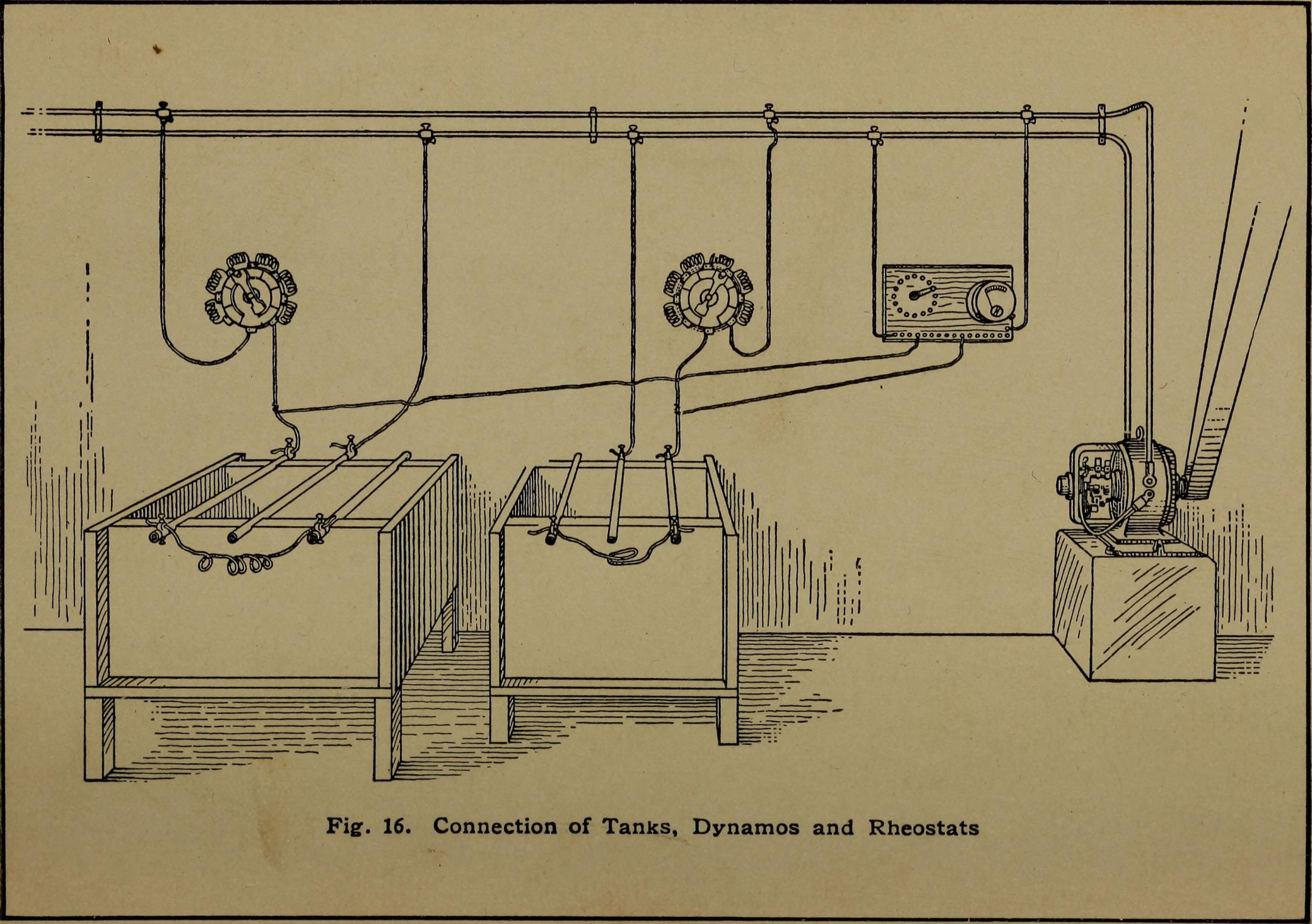
Silver plating of base metal cutlery used plating baths whose chemistry included highly toxic compounds, in open tanks, with manual handling of work in and out of the solution.
Enclosed plating lines, extraction, effluent treatment, substitution where possible and tightly controlled handling replaced it, and the effluent from these operations is now treated rather than discharged. Stated as occupational and environmental history; no substance handling detail is given.
13. Nobody Thought Imports Could Compete on Quality
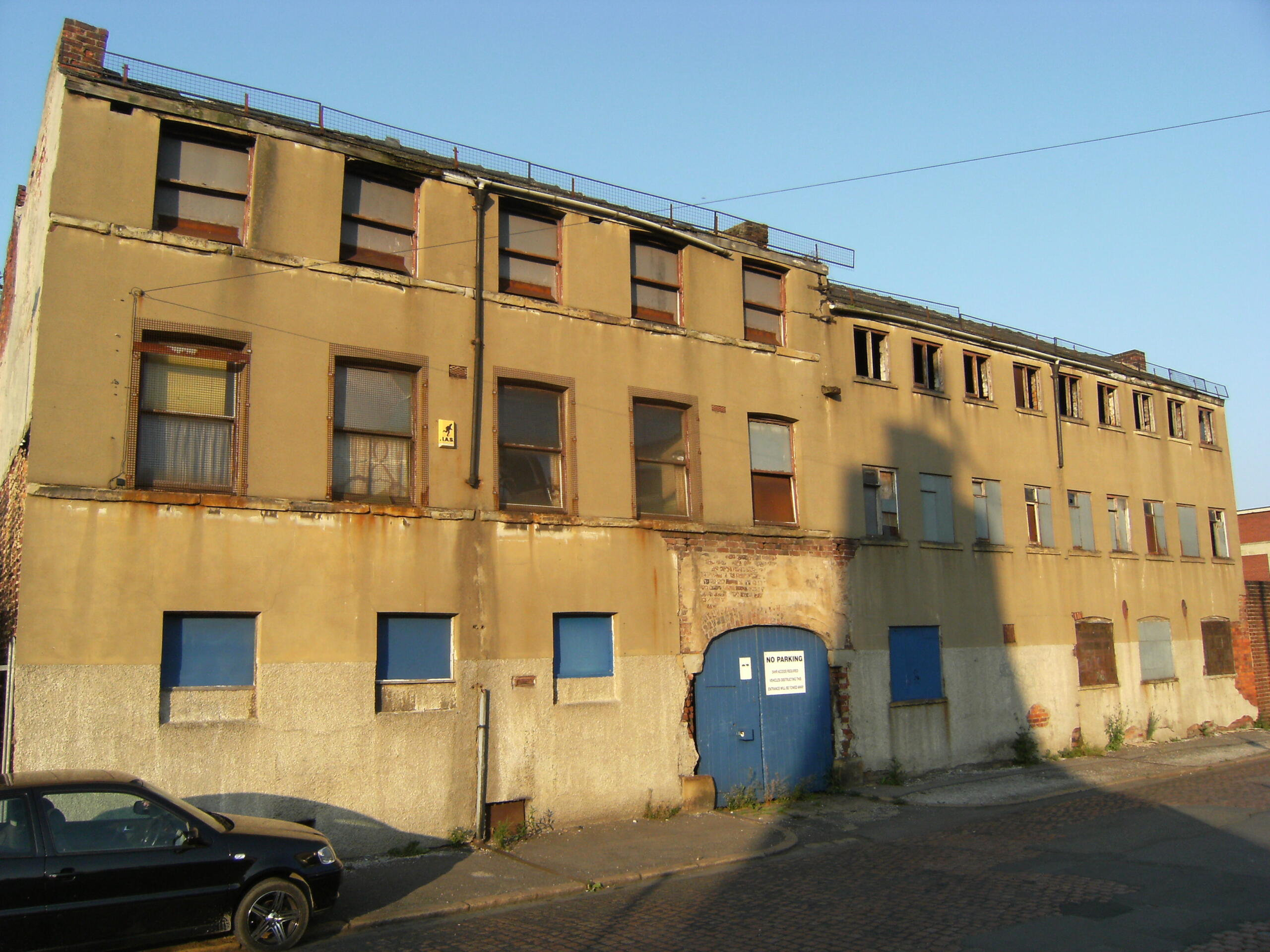
The district’s position rested on the belief that volume producers elsewhere could make cheap goods but not good ones, and that the skill was not transferable.
It was transferable, and the quality gap closed within about two decades while the price gap did not. The trade’s confidence in its own irreplaceability is the single most repeated feature of these industrial collapses, and it was sincere – the skill really was extraordinary, and that turned out not to be the thing that decided it.
14. The Knives Are Still in Drawers and They Still Work
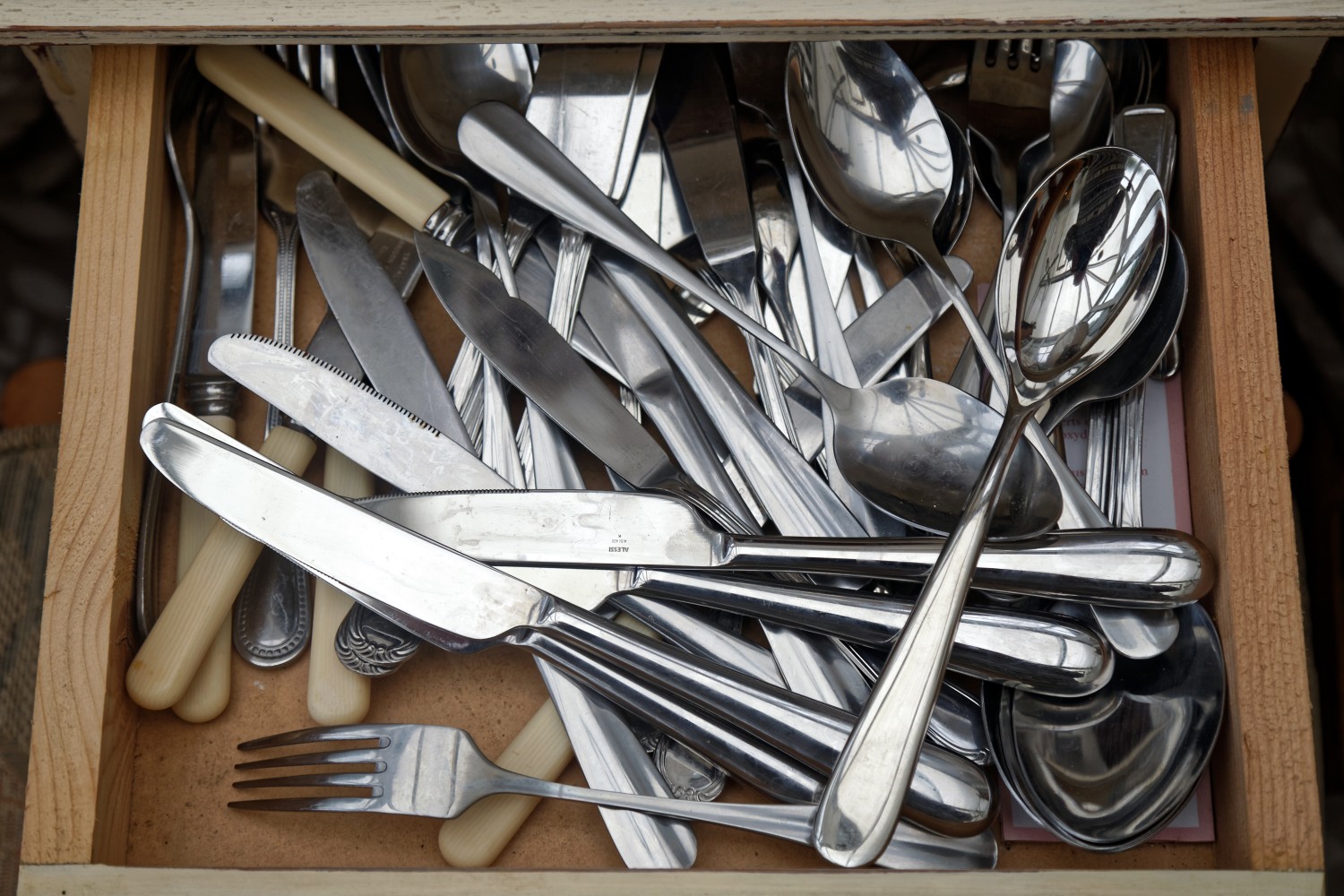
Cutlery from this period is in enormous quantities in household drawers, in second-hand shops and in boxes in lofts, and most of it is entirely serviceable.
Which is part of the problem the industry faced: a well-made knife lasts a lifetime and then somebody else’s lifetime, so the replacement market for quality goods is small. The trade was destroyed partly by cheaper competition and partly by having made a product too durable to need buying twice – and the evidence of that is sitting in a drawer in most houses.
They Made It Too Well to Sell Twice
The last item on the list is the one that deserves the most thought, because it describes a trap that good manufacturers walk into repeatedly.
A properly made knife, forged and ground and hafted by people who knew what they were doing, will last fifty years of household use and then be perfectly serviceable for the next owner. There is an enormous quantity of mid-century cutlery still in circulation, still functioning, being sold second hand for very little and being used daily.
Every one of those is a sale that did not happen.
An industry making a durable product in a saturated market is selling only replacements for loss, breakage and changes in fashion, and those are small numbers compared with the volume needed to keep a district of specialist workshops occupied. Growth has to come from new households, from exports, or from persuading people to replace something that still works.
Cheaper competition then attacks from precisely the right direction. It does not need to match the quality, because the customer is not replacing a worn-out item – they are buying a first set, or a second set, or replacing something lost, and at that moment price is doing most of the work and durability is a claim that cannot be tested for twenty years.
So the trade’s greatest strength became commercially irrelevant at exactly the moment it was tested. The skill was real, the product was better, the knives are still in the drawers, and none of that was the thing that decided it.
Which is worth remembering whenever somebody explains that quality will win in the end. It frequently does not, and the reason is usually sitting in a kitchen drawer, still working perfectly, forty years after the firm that made it closed.
If your family was in the trade, you will know which operation and whether he owned his own stones.
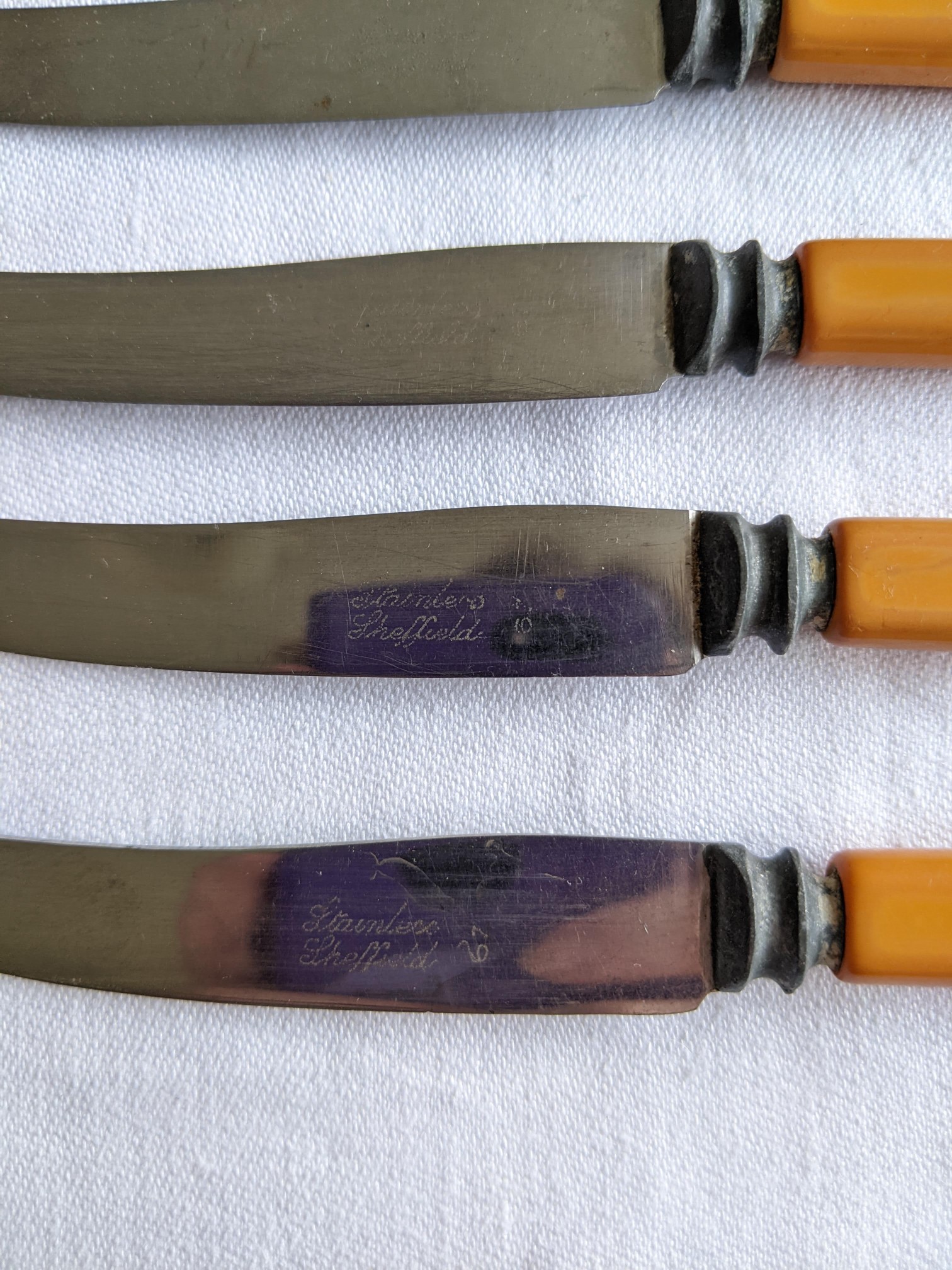
And if there is old cutlery in a drawer at home, have a look for the mark on the blade.
Like our content? Follow us for more.