

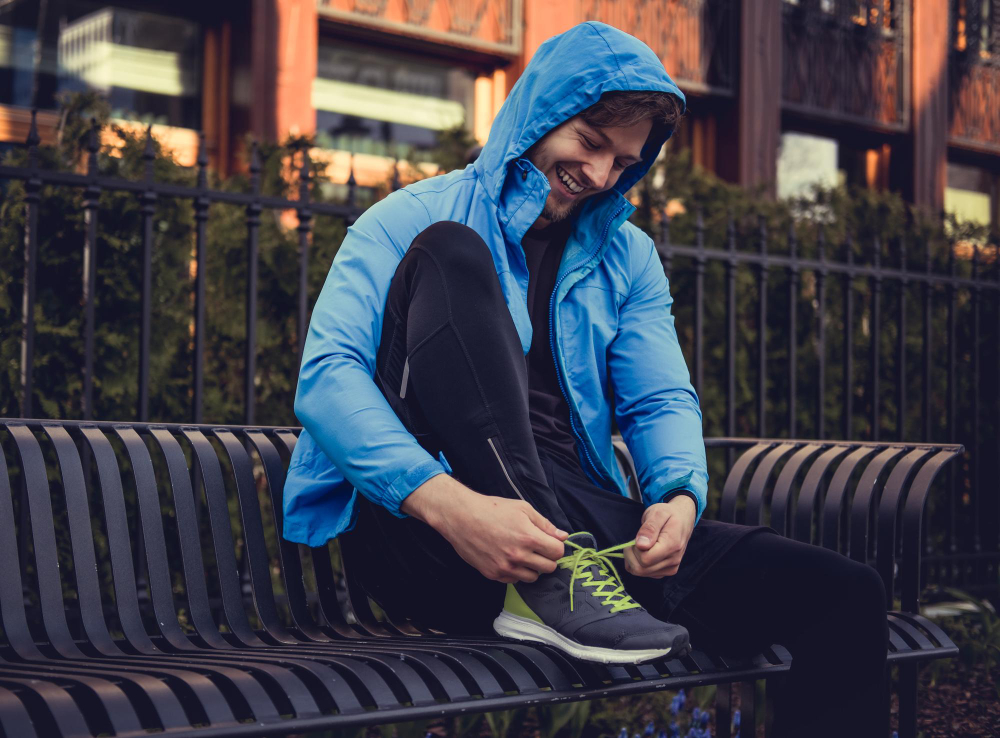
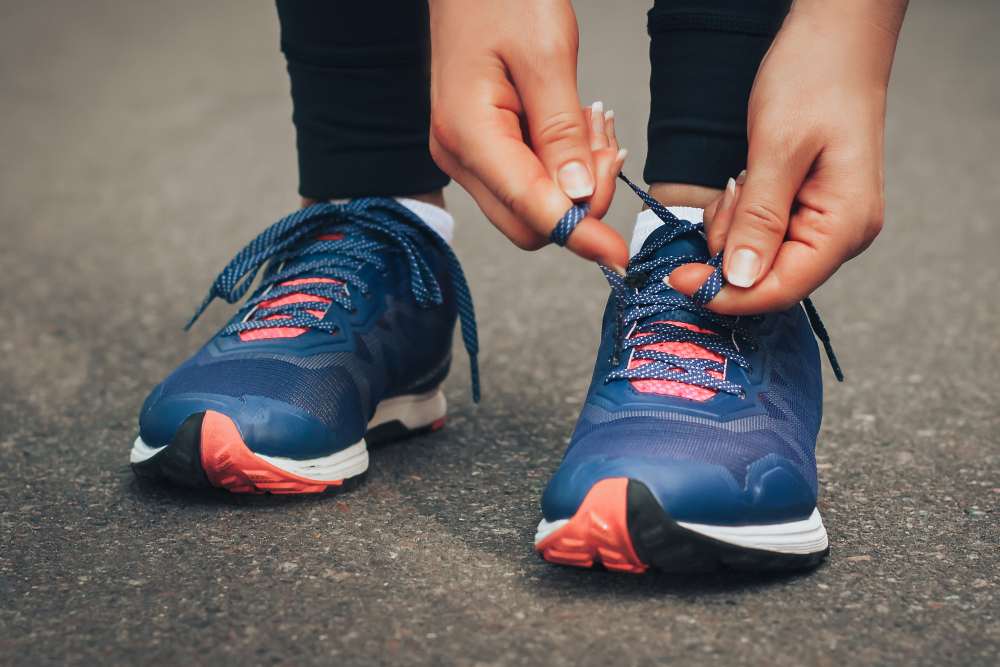
Look at the top of a pair of trainers and there is frequently an extra pair of lace holes, set slightly back and apart from the rest, which the laces do not go through.
A great many people assume they are spares, or a manufacturing oddity, or there for a different size of foot.
They are there for a specific lacing technique that locks the heel into the back of the shoe, and it is the single most useful thing most people do not know about their own footwear.
The Problem It Solves Is the Foot Sliding Forward
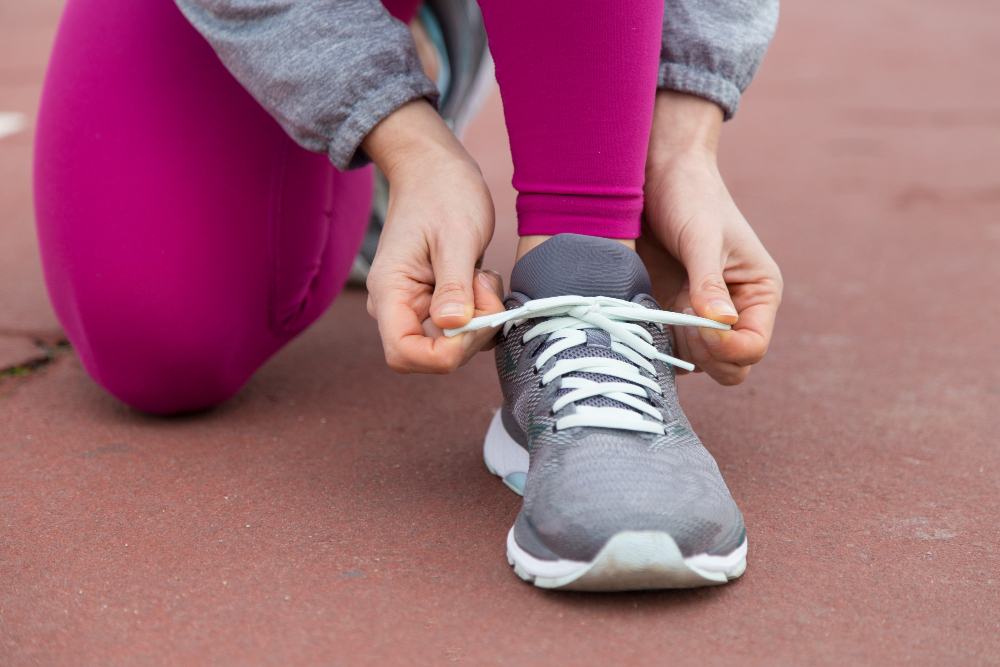
A shoe laced normally holds the foot down onto the sole but does nothing much to stop it travelling forward inside the shoe.
Running downhill, walking down a long slope, or simply running at any pace, the foot slides forward on each step. Two things follow. The toes hit the front of the shoe repeatedly, which is what produces bruised and blackened toenails and is the reason runners lose them. And the heel lifts and rubs against the back of the shoe on each stride, which is what produces heel blisters.
Both of those are usually treated as a sizing problem, and people buy a size smaller, which makes the toe contact worse rather than better.
They are not a sizing problem. They are a retention problem – the shoe is the right length and the foot is not being held in position within it – and the extra eyelets are the manufacturer’s provision for fixing exactly that.
The distinction matters because the two have opposite remedies. A length problem is solved by changing the shoe. A retention problem is solved by changing how the shoe is held on, and no amount of shopping will fix it.
Like our content? Follow us for more.
How the Heel Lock Actually Works
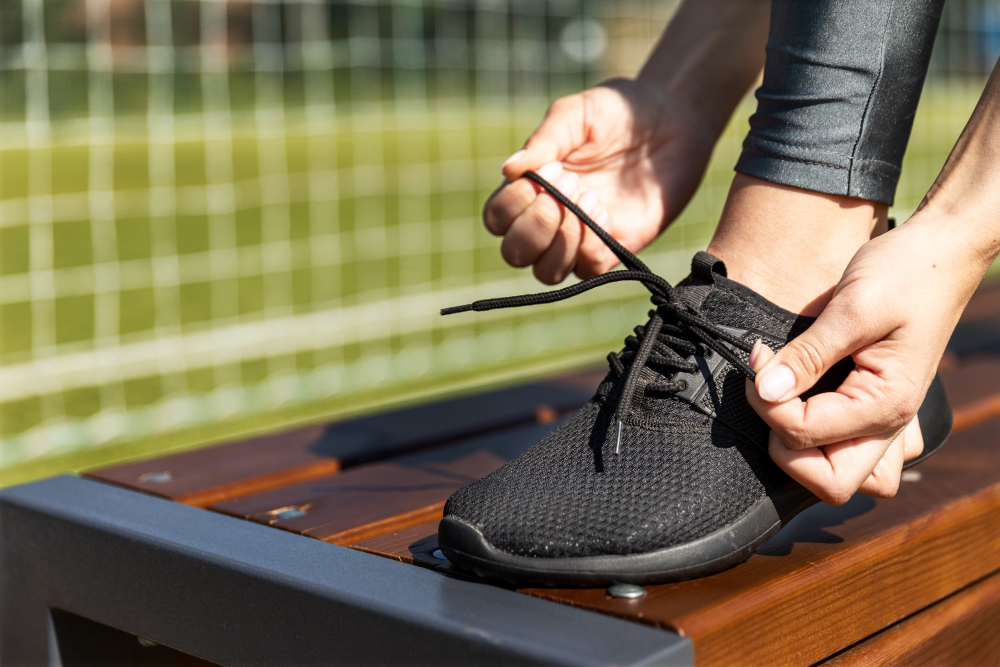
The technique has several names – heel lock, lace lock, runner’s loop – and the geometry is the point rather than the particular variant.
Instead of crossing the laces straight through the top holes, each lace goes up through the extra set-back eyelet on its own side, which leaves a short vertical loop of lace on each side of the shoe. Each lace end is then passed through the loop on the opposite side, and the two are pulled and tied.
What that produces is tension running backwards and downwards across the top of the foot near the ankle, instead of straight across. The pull is directed towards the heel rather than simply down onto the instep, which holds the heel into the back of the shoe and stops it lifting.
The crossing of each lace through the opposite loop is what locks it – the two loops cinch against each other, so the tension stays where you set it rather than loosening over the first mile.
It takes about twenty seconds once, the shoes can then be put on and off normally for weeks without redoing it, and it costs nothing.
The reason it is not simply the default lacing is that it is not always wanted. The heel lock holds the ankle firmly, which is correct for running, walking downhill and anything where the foot moves inside the shoe, and is unnecessarily restrictive for standing, cycling or wearing the shoes casually. Having it available rather than built in is the right arrangement – the eyelets cost the manufacturer essentially nothing and the user decides.
It Is Not the Only Thing the Eyelet Pattern Can Do
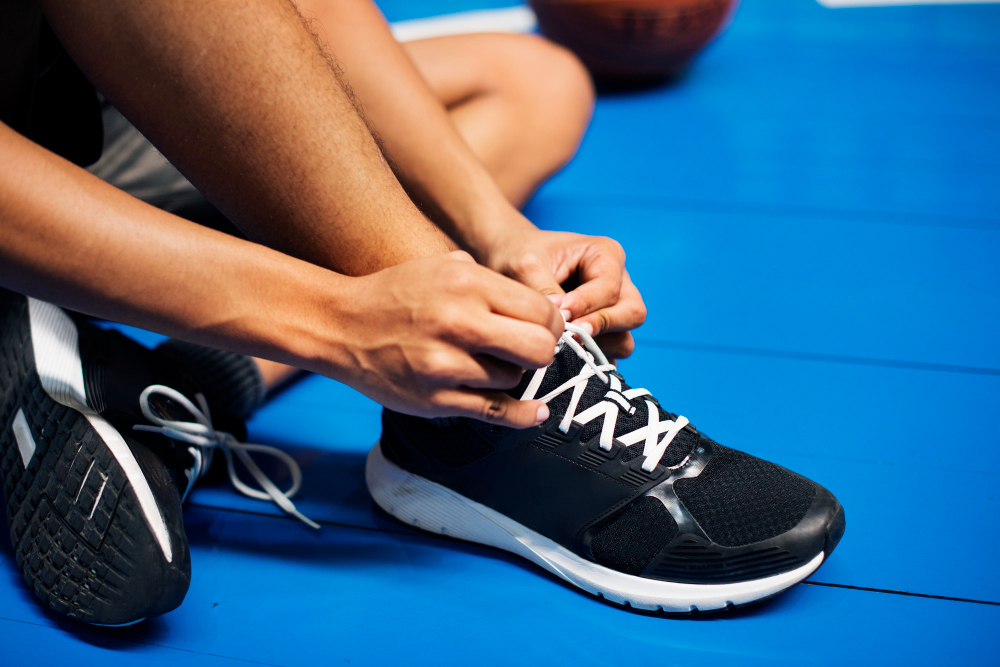
Lacing is an adjustable system and most people use one setting of it for the life of the shoe.
A foot that is wide across the ball can be given room by skipping the crossover at that point and running the laces straight up the sides for one or two holes, which releases pressure across the widest part without loosening the rest.
A high instep that the laces press on painfully can be relieved by leaving out the crossover at exactly that point, creating a window of no tension over the sore spot.
A narrow foot that swims in the shoe can be drawn in more tightly by using a different crossing pattern that increases the overlap.
And a toe that needs more vertical room – a bruised nail, a bunion, a toe that rubs on the upper – can be given it by lacing the lowest crossover from the inside and pulling it up, which lifts the front of the upper slightly.
None of those require any equipment. All of them are available on any shoe with more than three pairs of holes, and the overwhelming majority of people have never adjusted lacing in their life beyond how tight they pull it.
Shoes Are Fitted at the Wrong Time of Day
Since the subject is retention rather than size, the sizing question is worth settling because it interacts with everything above.
A foot swells during the day and swells further with activity, by an amount that is easily enough to change which size fits. A shoe fitted first thing in the morning on a cold foot will be tight by evening and tighter still during a run, which is why shoes that felt right in the shop produce problems in use.
The standard advice in fitting is to try shoes at the end of the day, or after walking, and to allow a thumb’s width of clearance in front of the longest toe – which is frequently not the big toe, and which people routinely measure from the wrong one.
The other half is that the two feet are rarely the same size. A difference of half a size between them is common, the shoe should fit the larger one, and the smaller one is then adjusted with lacing rather than by splitting the difference and having neither fit.
All of which means the correct shoe is usually slightly longer than people expect, held in place by how it is laced rather than by being tight. That is the opposite of the instinct, which is to buy the snuggest shoe that goes on, and it is the reason the eyelets exist at all.
Why Nobody Is Told
The shoes are made with the provision and sold with no explanation, which is the pattern this whole category follows.
There is a specific reason here though. Lacing adjustments solve problems that are individual – your foot, your gait, your specific rubbing point – and a manufacturer cannot print a single instruction that applies to everybody. The useful advice is conditional, and conditional advice does not fit on a swing tag.
Specialist running shops do teach this, as a routine part of fitting, which is a substantial part of what the fitting service is actually for and is the main argument for buying shoes somewhere with staff who watch you walk.
Beyond that the knowledge spreads through runners, physiotherapists and podiatrists rather than through packaging, which means it reaches people who have already developed a problem and almost nobody before.
So the extra eyelets sit on hundreds of millions of shoes, unused, available, and awaiting a blister.
The one group who reliably know about it are people who have already had the problem badly enough to go looking for a solution, which is the worst possible distribution for a piece of preventive knowledge and is exactly how most practical knowledge travels.
The Laces Themselves Are Doing More Than They Look
A last point, because it affects whether any of the above holds.
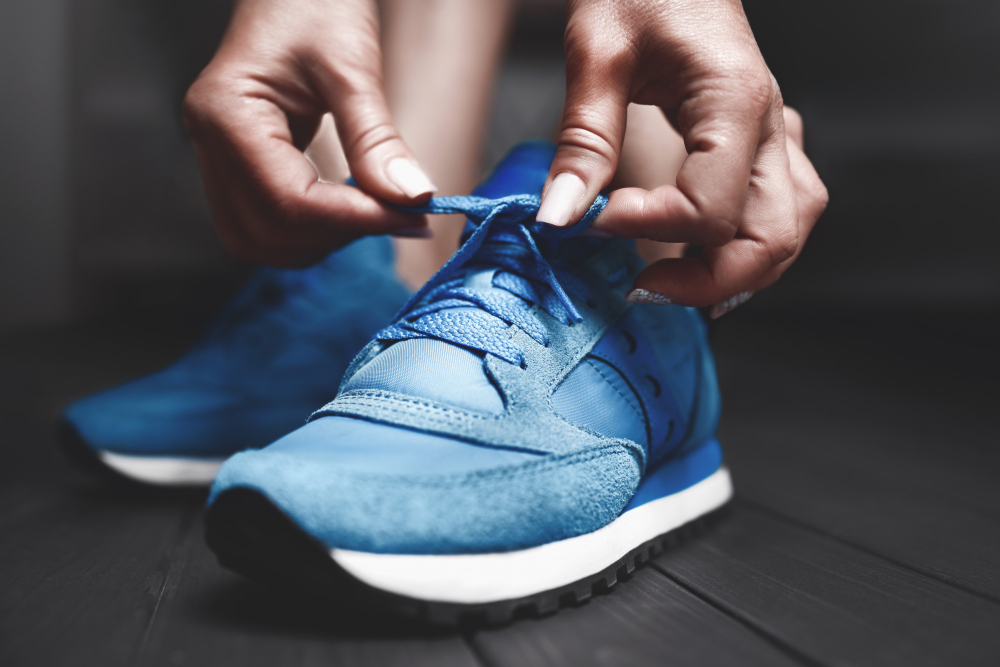
Flat woven laces hold a knot considerably better than round ones, because the contact area in the knot is larger and the friction is higher. Round laces of slippery synthetic material come undone, which is not the fault of the knot being tied badly.
Lace length matters for the same reason. A heel lock uses up lace, and a shoe laced that way with the original laces frequently ends up with ends too short to tie properly – which is a reasonable argument for a slightly longer pair if you intend to use the technique.
And the knot itself is worth a thought. The standard bow is frequently tied as a granny knot – the second crossing in the same direction as the first – which sits skewed, works loose and comes undone. Reversing the direction of the second crossing produces a flat square knot that sits across the shoe instead of along it and holds dramatically better.
Those three things – flat laces, enough length, and the crossing direction – between them eliminate most undone shoes, and all three are free. The crossing direction in particular is a thing most people have been doing one way since they were five, without ever being told there were two ways.
Find the extra eyelets on your own trainers and try the heel lock on one shoe only.
Then walk down a hill and compare the two.
It is the quickest demonstration available of anything in this category – one shoe adjusted, one not, the same feet, the same slope, and a difference you can feel within about fifty metres.
Like our content? Follow us for more.
