
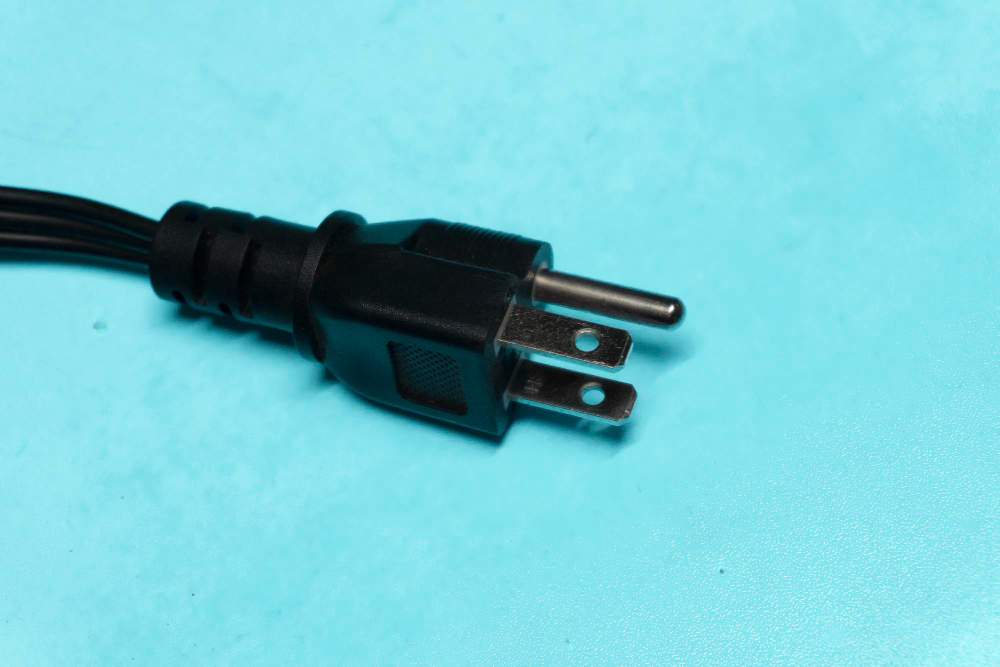
On the flat pins of a plug there are usually small round holes near the tip.
They are not there for anything you are supposed to do with them, they do not need to be there for the plug to work, and the explanations people offer – that they are for a padlock, or for wiring something through, or to save metal – are mostly wrong.
They are a manufacturing feature that acquired a second function once sockets were designed to use them.
The Original Reason Is That Something Has to Hold the Pin

Making a plug means forming the pins and then assembling them into a moulded body, and during that sequence each pin has to be held in a known position very precisely – while it is formed, while it is plated, and while the body is moulded around it.
A hole gives the machinery something positive to locate on. A pin can be picked up, indexed, carried through a process and held against rotation by a pin passing through that hole, which cannot be done reliably by gripping a smooth flat tab.
The same holes also let pins be strung onto a wire or a rack for plating, so that every surface is exposed to the bath and no part of the pin is masked by whatever is holding it.
That is the original purpose and it is entirely unglamorous: the hole is a fixture point, and it exists because an automated process needs somewhere to hold the part.
Features of this kind are everywhere on manufactured goods and are almost never explained. The small raised pip on a moulded plastic part is where the material was injected. The faint circular marks on the inside of a bucket are where the ejector pins pushed it out of the tool. The flat on a shaft is where it was held while being machined. All of them are the fingerprints of the process rather than anything the designer wanted the user to see.
Like our content? Follow us for more.
Then Sockets Started Using Them
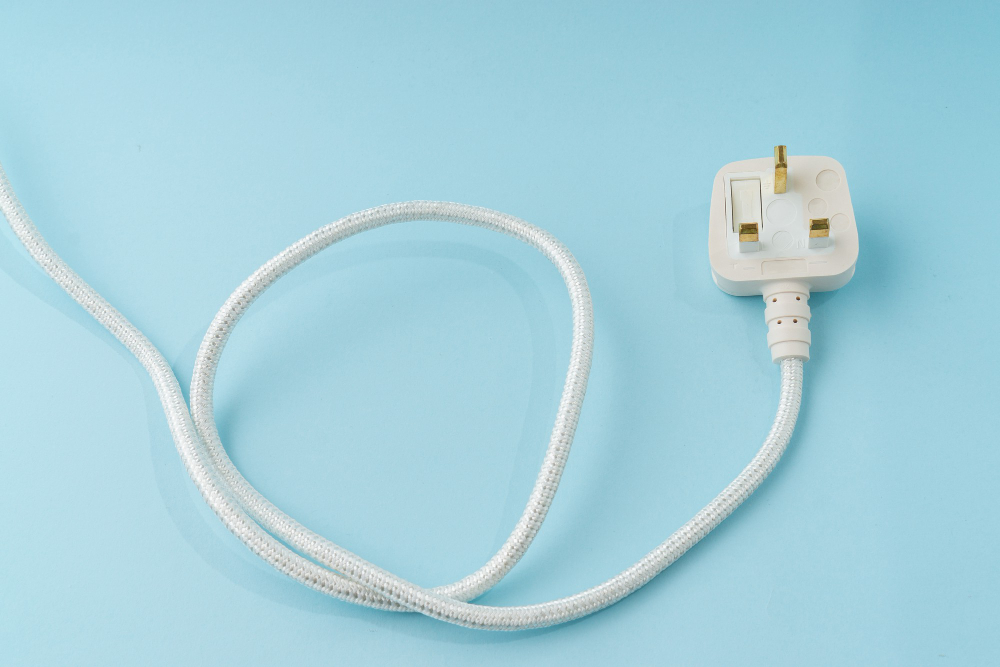
Once the holes were universally present, socket designers had something to work with.
Many sockets contain small spring-loaded bumps or detents on the contacts, positioned so that when a plug is fully inserted the detent drops into the hole in the pin. That produces the small click you feel, and it does two things: it tells you the plug is fully home, and it resists the plug being pulled out by its own weight or by a tug on the cord.
A plug that falls half out of a socket is a genuine problem, because a partially engaged pin makes a poor contact, a poor contact gets hot, and exposed live metal above the socket face is exactly what nobody wants.
So the hole went from being a thing the factory needed to a thing the connection uses, and the retention it provides is the reason the feature has been kept rather than engineered away.
It is worth being clear that this depends entirely on the socket. Plenty of sockets have no detent at all, and in those the hole does nothing whatsoever – which is why people who have looked for a purpose and found none in their own sockets have reasonably concluded there isn’t one.
The Padlock Explanation Is Not the Reason and Is a Real Practice
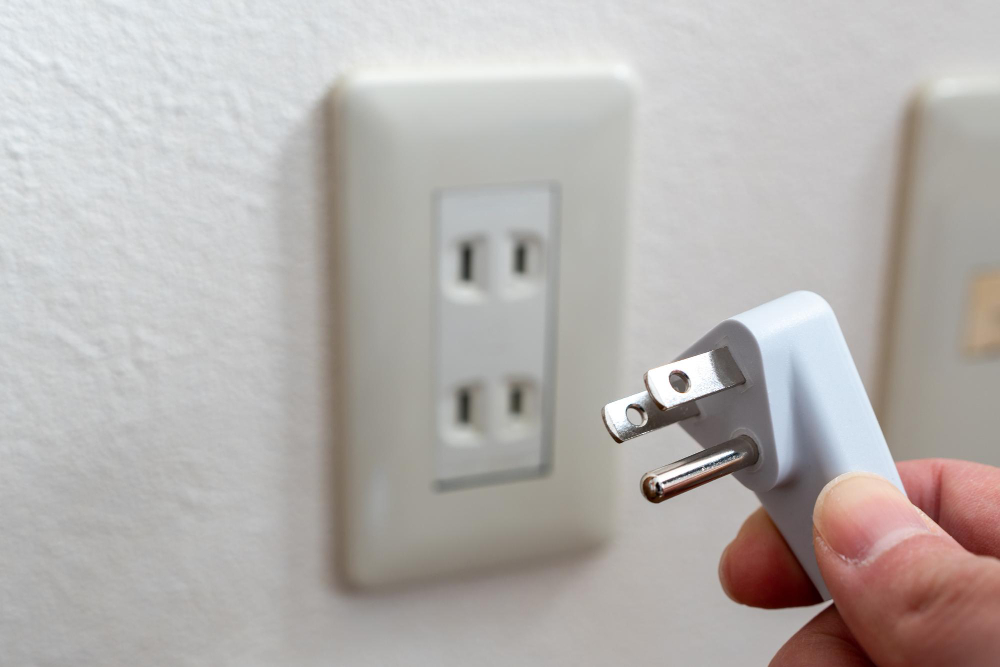
The claim that the holes are for locking out a plug deserves separating into its two halves.
As an explanation of why the holes exist, it is wrong – they predate and are independent of that use.
As a practice, it is real. Lockout procedures in workplaces do involve physically preventing equipment being energised, and devices exist that enclose a plug or pass through a pin hole so that it cannot be inserted while a padlock is fitted. That is a recognised industrial safety practice with its own equipment and its own rules.
So somebody who has seen it done is not imagining it, and somebody who says the holes were made for it has the causation backwards. The feature came first and the application was built on it, which is the same order of events as the lash tab and the file on a nail clipper lever – a feature put there for one reason, noticed by somebody with a different problem, and pressed into a service nobody had designed it for.
Anything to do with isolating equipment is a procedure governed by rules and training in the places where it matters, and is not something to improvise from an article.
The Fuse Is the Other Thing in There
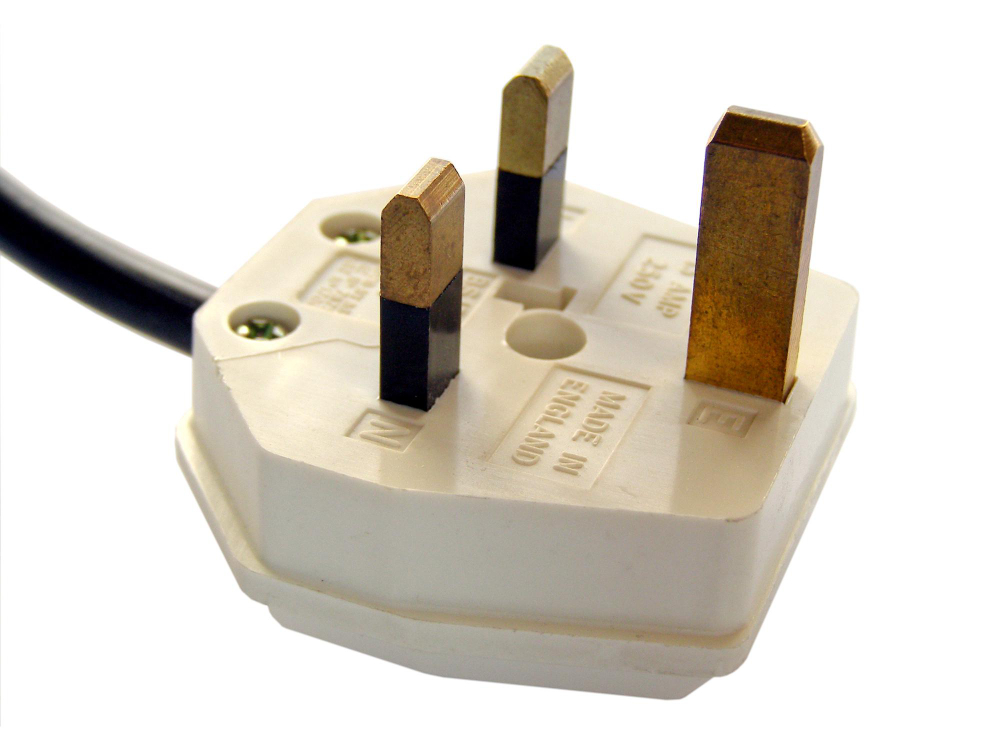
On plug types that contain a fuse, that component is the more consequential thing inside the moulding and is also widely misunderstood.
A fuse in a plug does not protect the person and it does not primarily protect the appliance. It protects the flexible cord between the plug and the appliance, which is thinner than the fixed wiring in the wall and therefore cannot carry as much current safely. The circuit breaker in the consumer unit is sized for the house wiring and will happily allow a current that would overheat a thin flex, so something closer to the appliance has to be rated for the flex.
That is why fuse ratings in plugs are specified by the appliance rather than chosen, and why fitting a higher-rated one than the appliance requires removes the protection for the cord while leaving everything looking normal.
Plug types without an integral fuse achieve the same protection differently, through circuit arrangements and cord sizing set by their own wiring standards, which is the reason the feature exists in some systems and is unnecessary in others rather than one approach being safer.
Any question about a specific appliance, fuse or cord belongs with its instructions or with a qualified electrician, and the point here is only what the component is for – because an enormous number of people believe it is there to protect them, and it is there to protect a piece of wire.
Pin Design Is Full of Decisions Nobody Notices
The holes are one of several features on a pin, and the others are worth a look since the plug is in your hand.
The sleeve or insulation along part of the pin on some designs stops a finger touching live metal while the pin is partly inserted, which addresses exactly the hazard described above.
The slight taper or chamfer at the tip guides the pin into the contact rather than requiring it to be aligned perfectly, which is what makes a plug go in without being fiddly.
The surface finish is a plating chosen as a compromise between conductivity, corrosion resistance and cost, because a contact that corrodes develops resistance, and resistance in a connection carrying current means heat.
And the pin spacing and dimensions are fixed by standard rather than by the manufacturer, which is the only reason any plug fits any socket – and the reason plugs differ so completely between regions is that those standards were set separately before anybody was coordinating, and by the time coordination was conceivable every region had millions of sockets already in the walls.
Why This Feature Is a Good Example of How Standards Accumulate
The holes are a small case study in how a standard ends up containing things nobody designed deliberately.
A manufacturing convenience became universal because every manufacturer faced the same problem. Once it was universal, equipment was designed assuming it would be there – sockets with detents, lockout devices, automated assembly for cords and appliances. Once equipment depended on it, removing it became impossible regardless of whether the original reason still applied.
At that point it is effectively part of the specification, and it will be in every plug made for as long as that plug type exists, because the cost of its absence now falls on everybody else.
That is how a great deal of any standard comes to exist: not from a committee deciding something was a good idea, but from an accident becoming load-bearing.
That is worth holding onto, because it is the general answer to why so much of the manufactured world contains details nobody can account for. Which is also why standards are so hard to improve. Every feature in a mature one has something depending on it, and nobody can say reliably what – so the safe assumption is that the odd little detail with no obvious purpose is holding something up somewhere, and the person who removes it will find out what.
Look at the pins on something plugged in near you and find the holes.
Then push the plug in slowly and feel for the click.
If there is no click, your sockets have no detents, the holes in your plugs are doing nothing at all in your house, and they are still there – because a feature that is useless in your particular wall is load-bearing in somebody else’s, and the plug has no way of knowing which it is going into.
Like our content? Follow us for more.