The Thing Everybody Has Experienced
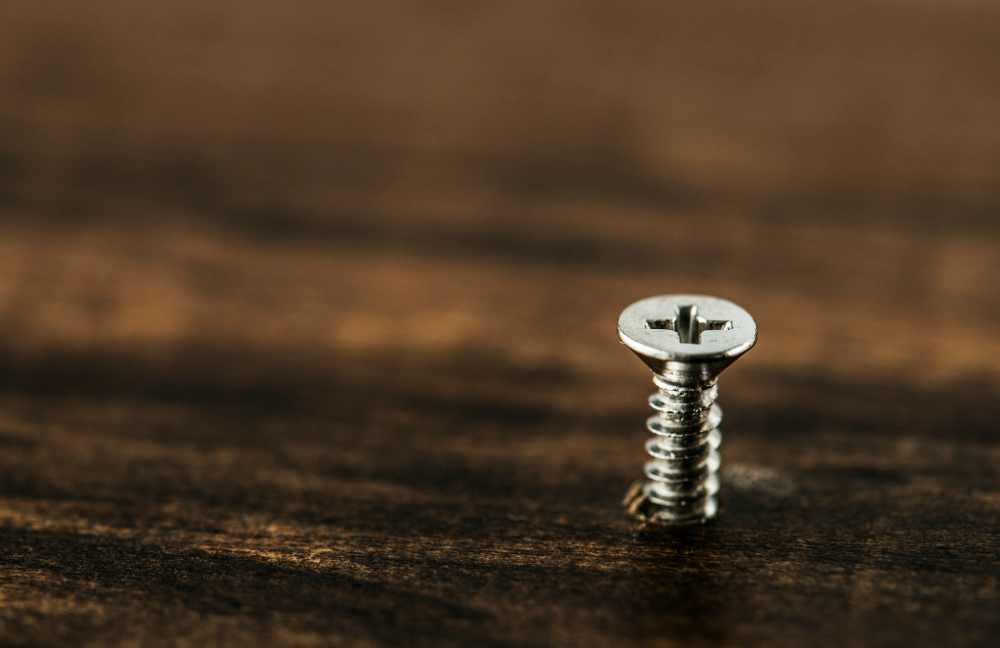
Everybody who has ever assembled flat-pack furniture or taken the back off an appliance knows the sensation. You lean on the screwdriver, the screw is nearly home, and the tip rides up out of the slot with a sudden jolt – sometimes taking the corners of the recess with it, sometimes taking a chunk out of your knuckle, sometimes both.
The trade calls this cam-out, and it is not a defect in your screwdriver or in that particular screw. It is a direct consequence of the shape of the recess. The cross-shaped slot has tapered, sloping walls rather than vertical ones, which means the force you apply has a component pushing the driver back out of the hole. Past a certain torque, that component wins.
The usual conclusion people draw is that the design is simply bad – that somebody drew a poor shape and the world has been stuck with it ever since. That is not quite the story. The tapered recess was solving a specific problem that no longer exists, and for a few decades it solved it extremely well.
The problem was that nobody had a good way of telling a machine to stop tightening.
Like our content? Follow us for more.
What the Recess Was Actually For
The cross-head recess arrived in the 1930s, and the context was mass production – specifically, powered screwdrivers on assembly lines fitting thousands of fasteners a shift.
A slotted screw is a poor thing to drive with a machine. The driver has to be aligned by hand, it slips sideways out of the slot constantly, and the slot’s open ends let the tip wander off and score the work. A single straight slot gives the driver nothing to locate against.
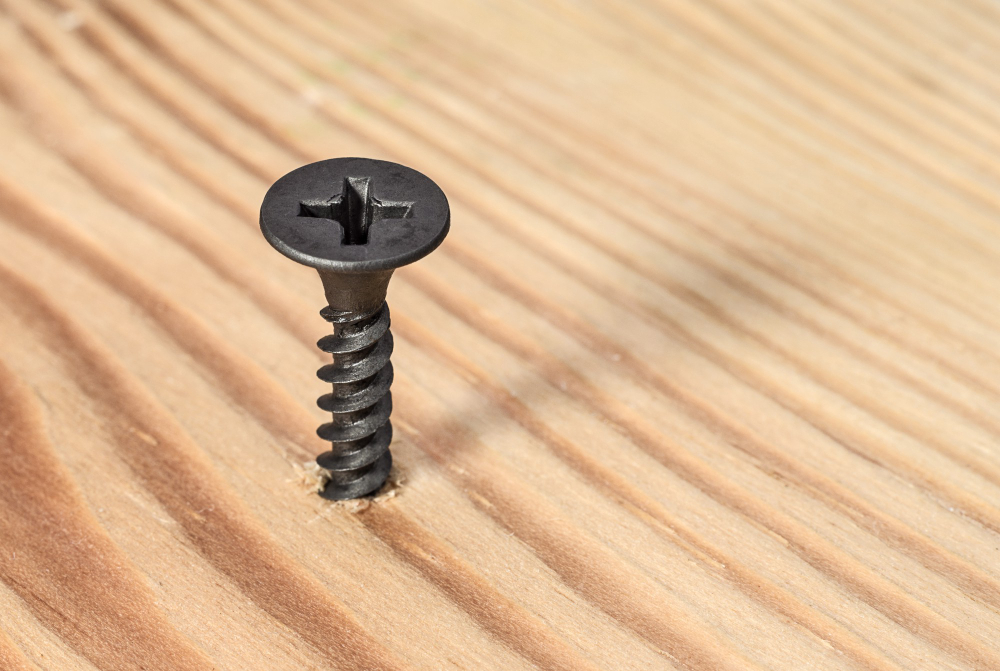
The cross-head recess fixed that. The four arms and the tapered walls pull the driver tip into the centre of the screw as soon as it engages, so an operator – or a machine – can bring the driver down and have it find its own position. That self-centering was the stated purpose in the patents and the feature the system was sold on, and it is the reason the design spread so fast. It made powered assembly practical.
Cam-out came along with it. A tapered recess that pulls the driver in when you push also pushes the driver out when you twist hard. The two behaviours are the same geometry seen from different directions.
Whether the Slipping Was Deliberate Is Genuinely Disputed
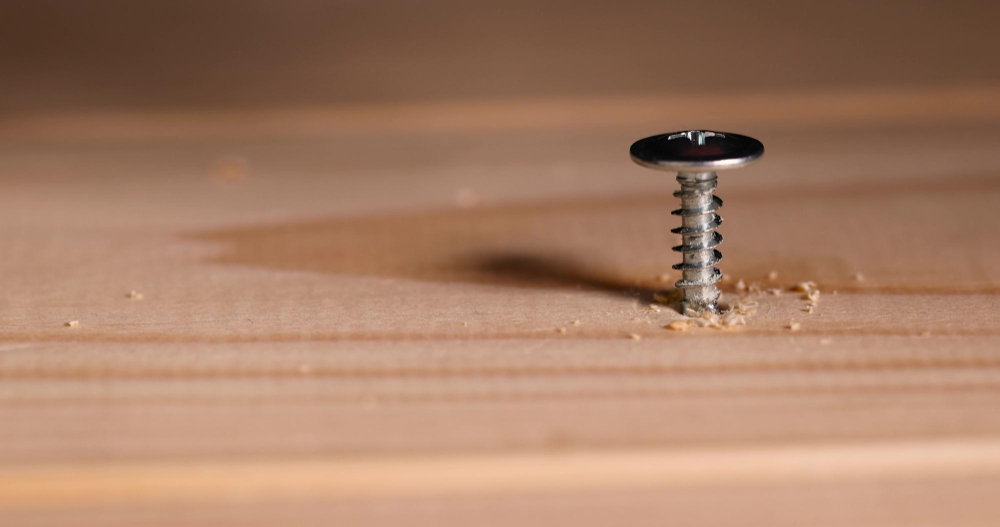
Here the story gets more interesting than the version usually told.
The popular account is that cam-out was designed in on purpose, as a crude torque limiter: the screw tightens until the driver pops out, and the fastener cannot be over-tightened or its threads stripped. This is a satisfying explanation and it is widely repeated.
Engineers who have looked at the patents tend to be more cautious. The documentation emphasises self-centering, ease of engagement and suitability for power driving. It does not present cam-out as the objective. The careful reading is that cam-out was an understood and accepted consequence of the geometry rather than its purpose.
What is not in dispute is that the industry made use of it. On a production line in the 1930s and 1940s there were no torque-limiting drivers, no clutches calibrated to a specified figure, no sensors. A screw driven by a powered tool was driven until something stopped it. A recess that released the driver at a reasonably consistent torque meant assemblies were fastened to roughly the right tightness by thousands of operators of varying care, without any of them having to judge it.
So whether or not it was the intention, it functioned as the limit – and that is why the trade tolerated a fastener that fights back.
There Was a Better Design and It Lost
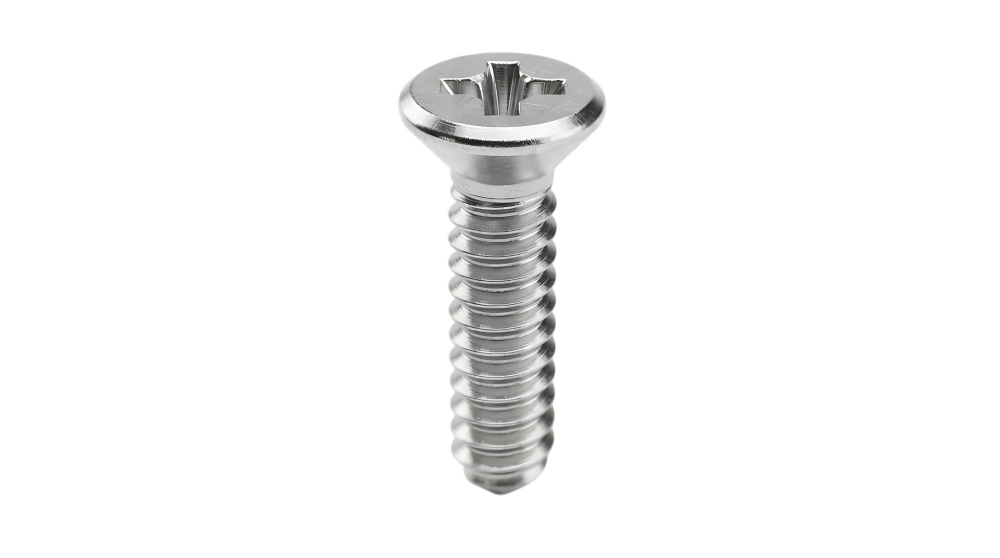
The frustrating part of this history is that a recess which does not cam out existed first.
The square-socket screw – a simple square hole with parallel walls – predates the cross-head by a couple of decades. Parallel walls mean no component of force pushing the driver out, so it does not cam out. It also holds the screw on the end of the driver well enough to work one-handed, which anybody who has tried to start a screw in an awkward place will recognise as a significant advantage.
It did not win, and the reasons were commercial rather than technical. The square-socket design was licensed restrictively by its originator, which made manufacturers reluctant to build production around it. The cross-head was licensed widely and aggressively, and it became available everywhere, in every size, from every supplier. Once the drivers were in every toolbox and the screws in every bin, the question was settled.
The square socket survived regionally and in specific trades, where it remains popular with people who have used both and have an opinion. It is a clear case of a technically superior fastener losing on availability.
The Lookalike That Ruins Screws
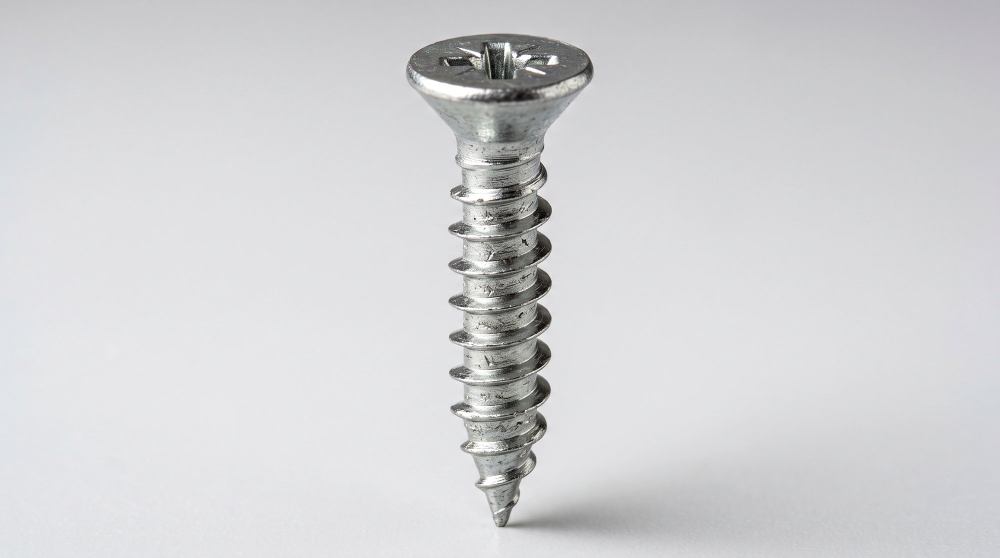
There is a second cross-head standard that looks almost identical and is not interchangeable, and it is responsible for an enormous amount of damage.
It was developed specifically to address cam-out, with a modified recess geometry – straighter walls and additional shallow ribs between the main arms – that transmits much higher torque before releasing. Its drivers have correspondingly different tip geometry.
The identifying mark is small: four fine lines on the screw head, set at forty-five degrees between the arms of the cross. Most people have never noticed them.
Put an ordinary cross-head driver into one of these screws and it will engage, it will turn, and it will cam out early and chew the recess, because the tip is the wrong shape and is bearing on a small part of the wall. Put the matching driver into an ordinary cross-head screw and it fits badly in the other direction.
This single mismatch – two standards that look the same, feel the same going in, and destroy each other under load – is behind a large share of the wrecked screw heads in the world. If you have ever had a screw that seemed determined to strip no matter how carefully you worked, it is worth looking at the head for those four extra lines.
Then Torque Became Something You Could Set

The reason cam-out stopped being useful is that the problem it addressed was solved properly.
Powered drivers acquired adjustable clutches that release at a set torque, independent of the recess shape. Assembly plants acquired tools that measure the torque applied to every fastener and record it. A cordless drill from a hardware shop has a numbered collar on it doing a cruder version of the same thing.
Once the tool can be told how tight is tight enough, a fastener that releases the driver at an approximate torque has stopped being a feature and become purely a nuisance. Which is why the recesses that have gained ground since are all designed to resist cam-out rather than to permit it: the six-lobed star recess, hex sockets, square sockets, and the various combination heads.
What those have in common is near-vertical driving surfaces and a larger contact area, so torque goes into turning the screw rather than into pushing the driver out of it.
The cross-head remains everywhere, because the installed base of screws, drivers and bits is vast and the design is perfectly adequate for the modest torques of household work. But nothing new is designed around it when the torque matters.
Why the Old Design Is Still in Your Toolbox
So the cross-head screw you are fighting with is a fastener optimised for a production constraint that disappeared seventy years ago.
It was never meant to be driven by a person leaning on a hand screwdriver at the limit of the thread. It was meant to be found automatically by a machine, driven quickly, and released when it had gone far enough – and for that job it was a considerable improvement on what came before.
The practical consequences are worth knowing. Use the largest driver that properly fills the recess, because a tip that is too small concentrates the load on a fraction of the wall. Push hard along the axis of the screw rather than merely twisting, because axial force is what keeps the tip seated against the taper. Check the head for the four fine lines before you blame yourself. And if the recess is already damaged, stop and get the screw out with a gripping method rather than continuing to grind it away.
There is also a reason the problem feels worse than it used to. Screws in household goods and flat-pack furniture have got smaller and are increasingly driven into chipboard, particle board and thin sheet metal rather than into solid timber, all of which demand a firm final tightening into a material that offers little grip. So the modern user applies the highest torque of anybody in the chain, by hand, to the smallest recess, in the least forgiving material – which is close to the exact opposite of the conditions the recess was shaped for.
None of which is the screw’s fault, exactly. It is doing precisely what it was shaped to do.
It is simply that nobody asked it to stop.
Like our content? Follow us for more.