The Stripe Everybody Assumes Is Decoration
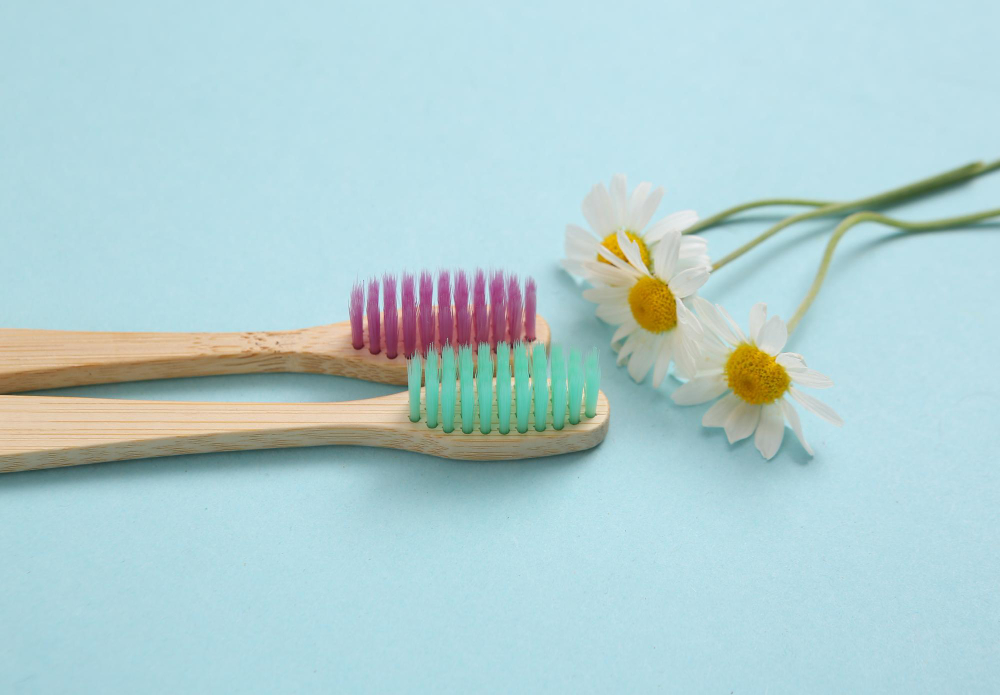
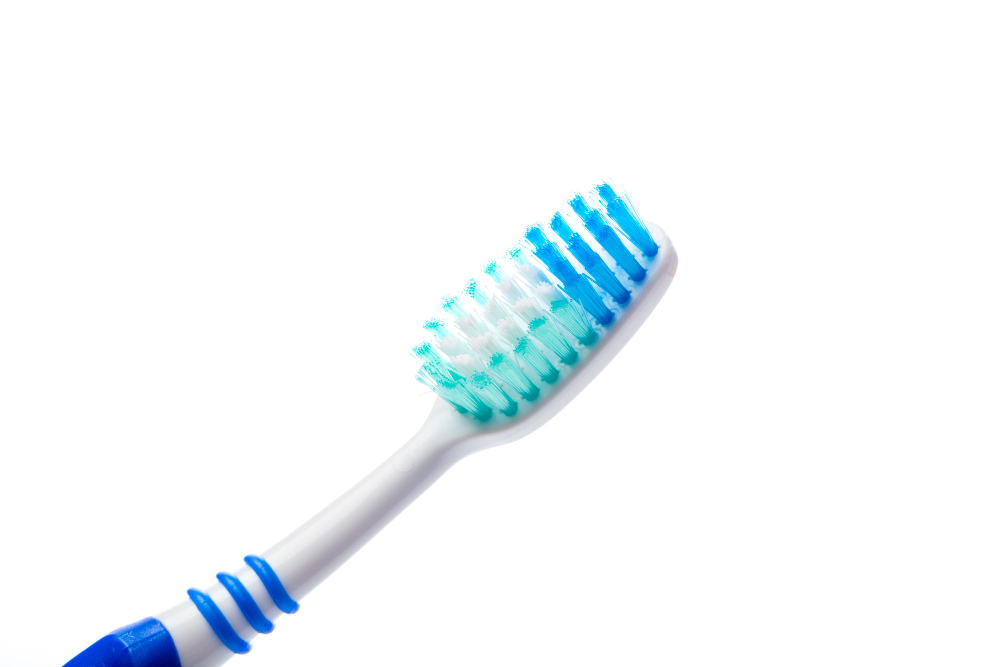
Most toothbrushes have a block or a stripe of coloured bristles set among the white ones, usually down the centre of the head or in a band across it. It looks like branding, and that is how nearly everybody reads it.
It is an indicator. Those bristles are made with a dye distributed through the upper part of the filament rather than all the way down, so the colour wears away as the bristle tips abrade with use. When the coloured section has faded to roughly half its original intensity, the brush has done about three months of twice-daily brushing and should be replaced.
The idea is simple and slightly clever: rather than asking people to remember a date, it puts the clock on the object itself and runs it off the same wear that makes the brush worse. A brush used gently lasts longer and the colour fades more slowly. A brush used hard wears out sooner and fades sooner. The indicator tracks actual use rather than elapsed time.
Whether people notice is another matter. The feature has been on brushes for decades and a great many users have never been told what it is for.
Like our content? Follow us for more.
Why a Worn Brush Stops Working
The reason the three-month figure exists at all is that the bristles do not simply get shorter – they change shape.
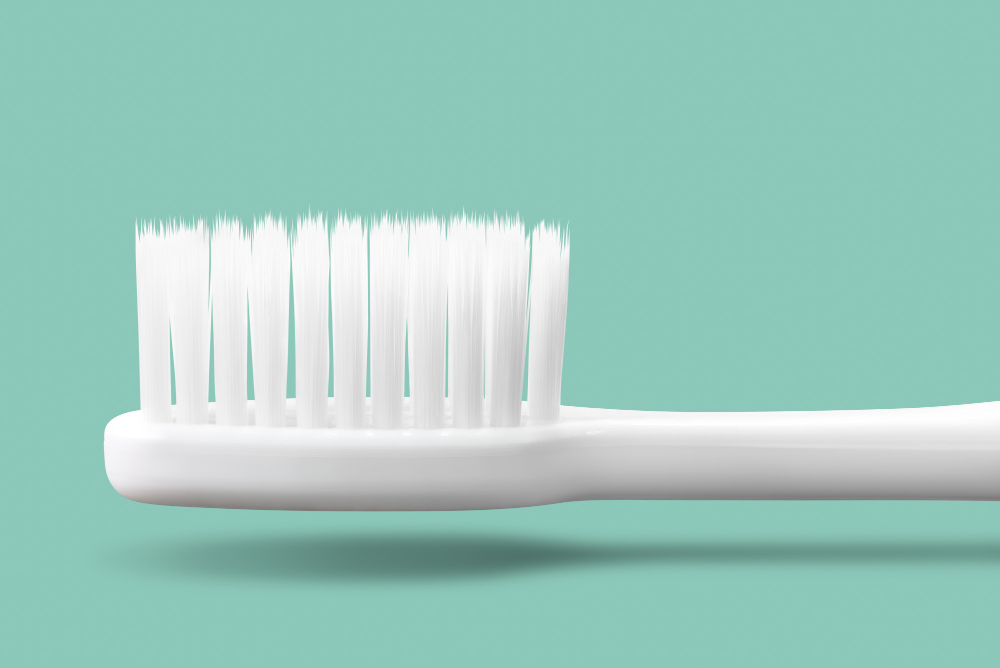
A new filament has an end that has been rounded in manufacture, and the filament is straight and stiff enough to stand up to being pressed against a tooth and flex back. With use, the tips splay outwards and the filaments take a permanent bend. A splayed brush head is wider and softer-looking, which is why worn brushes feel gentler, and that feel is misleading.
What matters in brushing is the bristle tip reaching the junction between tooth and gum and sweeping along it. A tip that is bent sideways presents its length rather than its end, so it slides over the area instead of working into it. The brush covers more surface and does less at the places that matter most.
Splayed filaments also stop reaching between teeth and into the grooves of the biting surfaces, which is where the brush does its work. So the brush does not gradually get a bit less effective – it keeps feeling pleasant while losing the specific capability it was bought for.
Three Months Is a Rule of Thumb, Not a Measurement
The three-month figure that dental bodies generally recommend is a practical average rather than a finding about a specific brush.
It assumes brushing twice a day for about two minutes with moderate pressure, which is the behaviour the advice is aimed at encouraging in the first place. Somebody who brushes hard will wear a brush out in six or eight weeks. Somebody who brushes gently, briefly or only once a day may have a brush that still looks respectable after five months – though in that case the brushing itself is the thing to look at rather than the brush.
The indicator bristles exist precisely because the interval is variable. A date written on a calendar is wrong for most people in one direction or the other. A dye that wears at the same rate as the bristles is, in principle, right for everybody.
In practice the indicator is a rough guide too – dyes vary between makers, there is no common standard for how fast they fade, and the colour change is not always easy to judge. It is better than nothing and it is not a laboratory instrument.
The Other Thing That Happens to a Used Brush
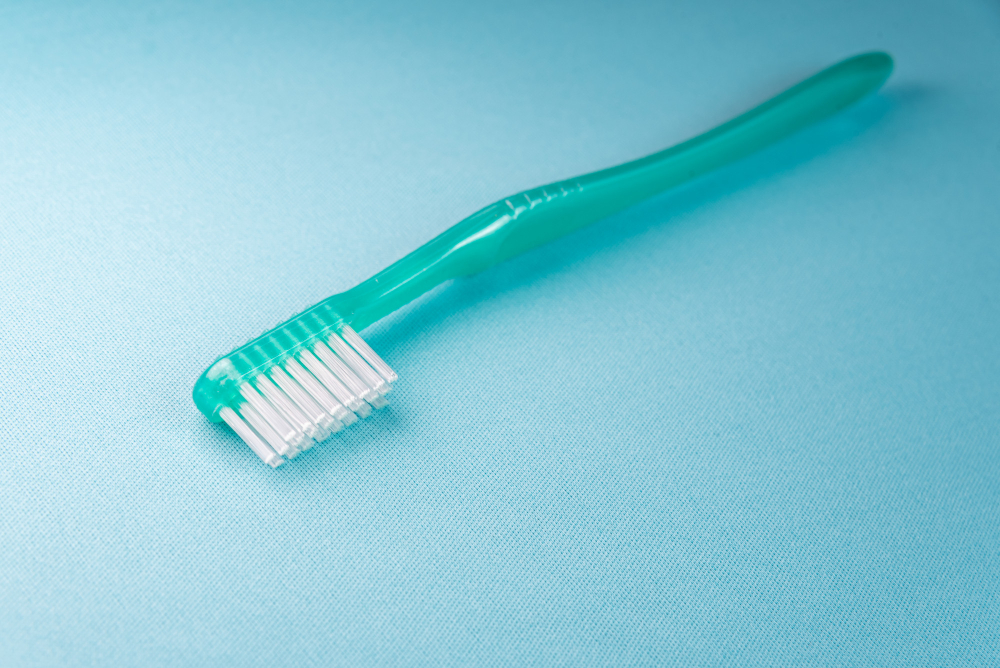
There is a second reason for replacing a brush that has nothing to do with the bristles’ shape.
A toothbrush kept in a bathroom is wet, warm and exposed, and it accumulates bacteria from the mouth, from the air and from the surroundings. This is generally not a problem – the organisms involved are mostly the user’s own and a healthy mouth deals with them – but it becomes relevant after an illness, when a brush can hold onto organisms from the infection.
The standard advice is to replace a brush after any significant throat or mouth infection, and that advice is independent of how worn the bristles are. A two-week-old brush with full colour in its indicator should still be thrown out after a bout of something.
The related guidance is about storage rather than replacement: rinse the brush thoroughly after use, stand it upright so it can drain and dry, and avoid airtight travel caps for everyday storage, because a cap keeps the head damp. Brushes kept in a crowded pot touching other people’s brushes are also worth separating.
None of this is dramatic. It is just a different clock running alongside the wear one.
How to Judge a Brush With No Indicator at All
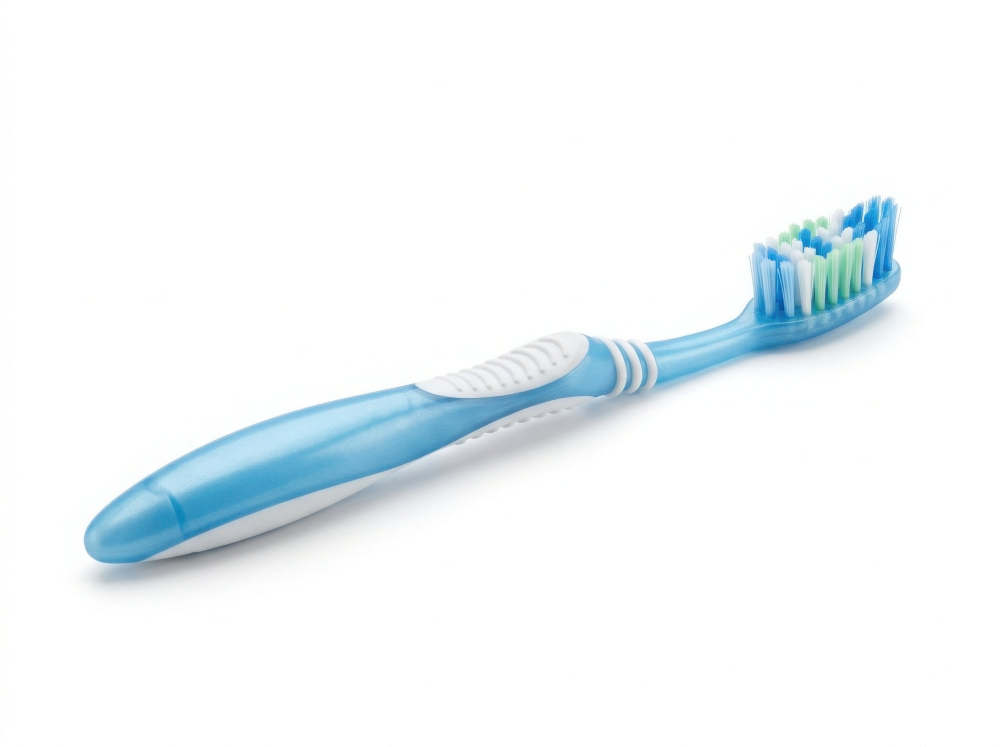
Plenty of brushes have no coloured section, and the physical tests are more reliable than the dye anyway.
The first is to look at the head end-on, down the length of the handle, against a light background. A new head has a clean, defined outline with the filaments standing roughly parallel. A worn one has a visibly ragged edge where the outer rows have bent outwards, and the overall shape has gone from a neat block to something closer to a fan.
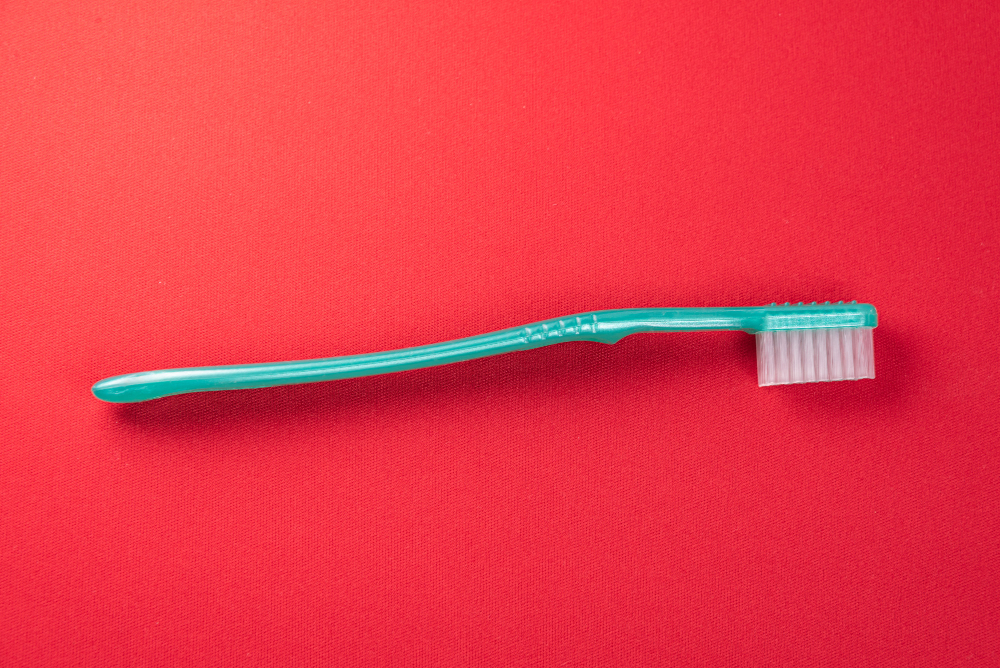
The second is to look at the head from the side and check whether the filaments still stand at right angles to the base. Permanent bend is the thing that matters, and once a row is leaning it will not recover, whatever you do to it.
The third is to compare it with a new one. This sounds obvious and it is the test that actually convinces people, because the change happens slowly enough that the eye adjusts to it. Hold a three-month-old brush next to a fresh one of the same model and the difference is usually startling – most people discover their brush was further gone than they thought.
There is also a straightforward negative test. If the head still looks new after four or five months of what you believe is twice-daily brushing, then either the brushing is briefer or lighter than it feels, or it is not happening as often as remembered. A brush that never wears out is not evidence of a gentle technique so much as of a brush that is not doing very much.
Nobody Agrees on How Hard You Should Press
The indicator bristles reveal something people are often surprised by, which is that brushing harder is actively worse.
Firm pressure splays the filaments faster, so the indicator fades sooner and the brush has a shorter life – but the brush is the minor casualty. Heavy brushing with a stiff brush abrades the tooth surface over years and, more importantly, pushes the gum margin back. Receded gums do not grow back, and the exposed root surface beneath is softer than enamel and more sensitive.
This is why nearly all dental guidance now recommends a soft or medium brush used with light pressure and a small circular or short sweeping motion, rather than a firm brush scrubbed back and forth. The intuition that a harder scrub must clean better does not hold, because the plaque being removed is soft and does not require force – it requires the tip of a bristle to reach it.
A brush whose indicator fades unusually fast is therefore worth taking as information. It is not telling you that you are brushing thoroughly. It is telling you that you are pressing too hard.
Why the Indicator Is Not on Everything
Not every brush has one, and the pattern of which do is commercial rather than technical.
Indicator filaments cost more to make than plain ones, because the dye has to be laid into the filament to a controlled depth during extrusion rather than applied to the surface. On a brush sold at the lowest possible price that cost is not worth carrying, so budget brushes and most of the ones given away by hotels and airlines have plain bristles.
They are also absent from many electric brush heads, where the head is designed to be replaced on a schedule anyway and the packaging says so – although a number of makers do include the fading band, for the same reason as on a manual brush.
And there is a commercial logic that cuts the other way: a feature that tells the customer to buy a new brush every three months is good for the people selling brushes. That does not make the advice wrong – the dental recommendation exists independently and the physical wear is real – but it is worth noticing that the interests happen to align neatly here, which is not always the case with things printed on packaging.
Either way, the stripe is not a logo. It is the only part of the brush that is keeping track.
Like our content? Follow us for more.