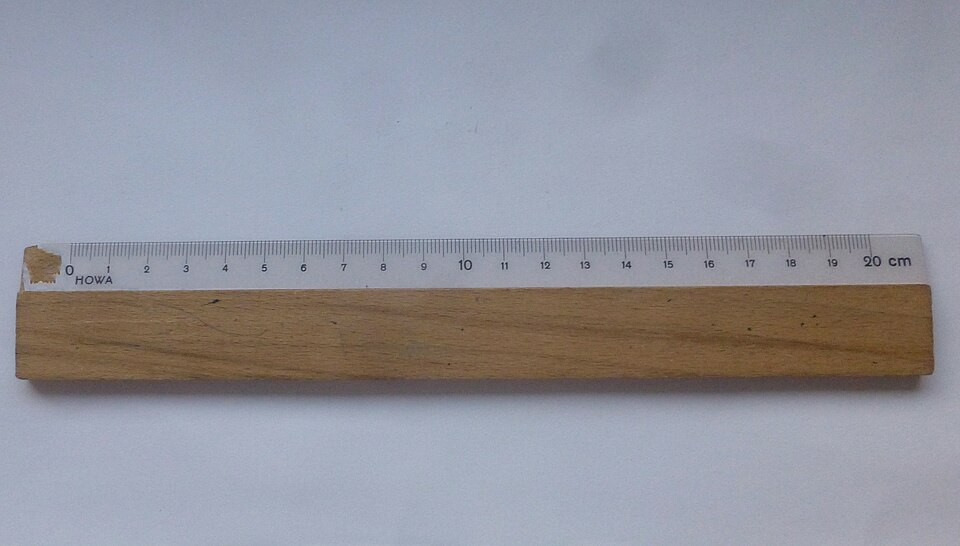
In 1964 it was the only thing you owned that measured anything, and that singularity gave the object a standing nothing else a child owned could match. Everything else was for making marks, holding things or carrying things; this one answered questions – a different category of object entirely, recognised as one by children who could not have explained the distinction. It was consulted far more than it was needed, too: children measured things that did not require measuring, repeatedly, simply because the capability existed. Here are fourteen things every kid remembers about the ruler in their school desk in 1964, and what classrooms replaced it with.
1. It Was the Only Thing You Owned That Measured Anything
A child’s possessions contained exactly one instrument, and this was it.
That singularity gave the object a standing nothing else a child owned could match. Everything else was for making marks, holding things or carrying things, and this one answered questions – which is a different category of object entirely and was recognised as one by children who could not have explained the distinction.
It was consulted far more than it was needed. Children measured things that did not require measuring, repeatedly, simply because the capability existed and nothing else they had could do it.
Like our content? Follow us for more.
2. The Markings Wore Off the End First

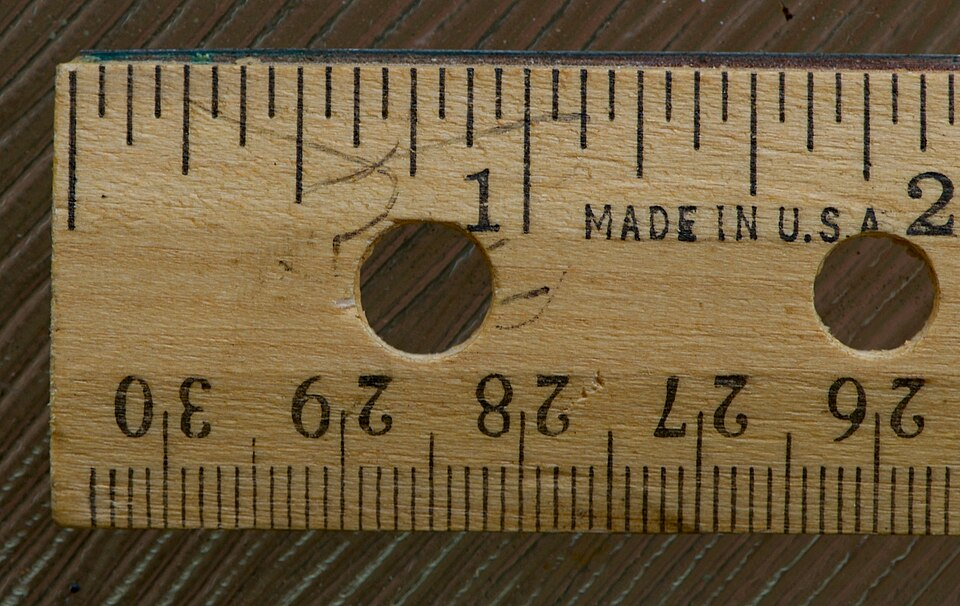
The numbers nearest the edge disappeared before anything else, which made the object progressively less useful from one direction.
The wear pattern is entirely predictable in hindsight. The end is what contacts every surface, takes every knock and is held during every use, which means the printing there is subjected to far more than the printing in the middle.
Children compensated rather than complaining. Starting from a different point and subtracting is a workaround a surprising number of eight-year-olds arrived at independently, and most of them never mentioned that their instrument had become unreliable.
3. You Used the Edge Far More Than the Numbers

The straight side did most of the work, and the measuring capability was almost incidental.
The use balance was heavily one-sided. Drawing a line requires a straight edge and nothing else, and a child drew a great many lines and measured almost nothing – which means the object’s actual daily function had very little to do with what it was designed to tell you.
This is why the condition of the edge mattered more than the numbers. A chip in the side ruined the object for its main purpose while leaving its stated purpose entirely intact, and children assessed theirs accordingly.
4. Everybody’s Had a Chip in It

The edge developed a defect, and the defect transferred into every line afterwards.
The damage was unavoidable over a school year. An object carried loose, handled constantly and dropped occasionally acquires a notch, and that notch then appears as a small deviation in every single line drawn with that part of the edge.
Children learned where their own chip was. The whole length was mapped by use, and a child drawing something that mattered used the good section, which is a quiet accommodation nobody was ever taught to make.
5. The One With a Metal Edge Was the Best and Hardly Anybody Had One

A small proportion of these objects had a reinforced side, and their owners were aware of the advantage.
The reinforcement solved exactly the problem the plain version had. A metal strip does not chip, which means the edge stayed true for the object’s whole life and the lines drawn with it stayed true as well.
These were borrowed constantly. A child with a reinforced edge spent a certain amount of every lesson handing it to other people, which is a social position produced entirely by a material difference nobody had chosen.
6. Lending It Was a Transaction With Rules

Requests to borrow were made, granted and tracked according to an understood system.
The system existed because the stakes were real. An object that comes back chipped is permanently worse, which means a lender had something to lose and a borrower had an obligation – and children handled that without anybody establishing a procedure.
Non-return was the serious offence. A child who had failed to hand one back acquired a reputation that affected subsequent requests, and the reputation outlasted the incident by a considerable margin.
7. Your Name Was On It Somewhere

These objects were marked by their owners, usually several times over.
The marking was a response to a real problem. Thirty identical objects in one room produce constant confusion about ownership, and the only available solution was to write on yours – which every child did, in whatever way occurred to them.
The marks accumulated. A child who had lost confidence in one marking added another, which means a well-used instrument carried the same name two or three times in different places and different hands.
8. It Was Never Used for Anything It Was Not Meant For

That is stated plainly rather than left to inference.
Instruments of this kind are sometimes associated with practices of that period that are rightly prohibited now, and nothing of the sort appears anywhere in this piece. No child in it is struck, no adult in it uses anything as an implement of any kind, and the subject here is measuring and drawing lines.
Everything about current practice is better and it is not in dispute. The complete prohibition on anything of that nature in any school is correct, the reasons behind it are not arguable, and nothing in this piece should be read as describing anything other than a child’s own instrument used for its own purpose.
9. You Measured Yourself With It Constantly

The object was applied to a child’s own hands, fingers and reach with great frequency.
The self-measurement was about establishing facts rather than about anything else. A child with an instrument and a body available immediately works out the length of their own hand span, and then checks it periodically to see whether it has changed – which it had, slowly, over years.
The results were remembered precisely. People can still state the figures they established about their own hands at eight years old, which is a strange thing to retain and reflects how often the measurement was repeated.
10. It Did Not Fit Anywhere Properly

The object was longer than the spaces available to put it in.
The mismatch was structural. A straight rigid object of a standard length does not fit into containers designed around other things, which means it stuck out of whatever a child kept their possessions in and was permanently the item that prevented a lid from closing.
This is why so many were damaged. An object that cannot be contained is an object that gets caught, trodden on and bent, which accounts for the condition of almost every one of these by the end of a year.
11. Breaking It Was a Minor Disaster

The object failed completely rather than partially, and the failure was immediate.
The material explains the suddenness. A thin rigid strip under bending stress does not deform gradually; it goes in one event, which means a child went from having an instrument to having two useless pieces with no warning at all.
The replacement took time. A broken one had to be reported at home, and the gap between the breaking and the replacing was a period in which a child had to borrow for everything, which is remembered as considerably worse than the breaking itself.
12. The Broken Halves Were Kept Anyway

Nobody discarded the pieces, which continued to serve a purpose.
The retention was practical rather than sentimental. A short straight edge still draws a short straight line, and a child with no instrument at all was worse off than a child with a fragment – so the fragment stayed in use for months.
Children were slightly embarrassed by them. Producing a broken half in front of other people was a visible admission, which meant the fragments were used quietly and put away quickly.
13. You Still Know What Length It Was

People retain the dimension of the object with complete confidence sixty years later.
The retention follows from the self-measurement. An instrument applied to your own hands hundreds of times becomes a reference you carry rather than a thing you own, which means the dimension was internalised in a way that the object itself was not.
It is one of the few childhood measurements people still trust. A great many people can estimate a length accurately to this day and attribute the ability, correctly, to an object they last held in primary school.
14. Then Children Stopped Carrying One

Different equipment, different teaching, digital tools, printed materials and a complete change in what a child’s own possessions contain ended the single personal instrument entirely.
Most of that is an improvement. Equipment provided where it is needed, in good condition, rather than one worn and chipped object carried everywhere by each child, is better in every respect.
What went with it is a capability. The only thing a child owned that answered a question rather than making a mark, consulted constantly for no reason at all, and applied so often to a child’s own hands that the dimension is still carried around by people who last held one sixty years ago.
What It Was Actually Used For

Read in order, the fourteen keep pulling away from the obvious answer. The straight side did almost all the work: drawing a line requires an edge and nothing else, and a child drew a great many lines and measured almost nothing – which means the object’s daily function had very little to do with what it was designed to tell you. That is why the condition of the edge mattered more than the numbers, and why a chip ruined the thing for its real purpose while leaving its stated purpose intact.
The wear was entirely predictable. The markings went at the end first, because the end contacts every surface, takes every knock and is held during every use – and children compensated by starting from a different point and subtracting, a workaround a surprising number of eight-year-olds arrived at independently and most never mentioned. The edge developed a notch over a year, which then appeared as a small deviation in every line drawn with that section, and children mapped their own instrument by use and saved the good part for anything that mattered.
The reason they were all in that condition is simpler than carelessness. A straight rigid object of a standard length does not fit into containers designed around other things, so it stuck out of whatever a child kept their possessions in, permanently prevented a lid from closing, and consequently got caught, trodden on and bent.
And the self-measurement is where the object left its real mark. A child with an instrument and a body available works out their own hand span and then rechecks it periodically over years – which is why people can still state figures they established at eight, and why a great many people estimate lengths accurately to this day and attribute the ability, correctly, to something they last held in primary school.
One thing is stated plainly rather than left to inference. Instruments of this kind are sometimes associated with practices of that period that are rightly prohibited now, and nothing of the sort appears anywhere above. No child in this piece is struck, no adult in it uses anything as an implement of any kind, and the subject throughout is measuring and drawing lines. The complete prohibition on anything of that nature in any school is correct, the reasons behind it are not arguable, and nothing above should be read as describing anything other than a child’s own instrument used for its own purpose.
What went with it is a capability – the only thing a child owned that answered a question rather than making a mark.
Like our content? Follow us for more.