Come straight back. Four words, issued at a door, several times a week, to a child who had already started moving. No household of that period sent a child anywhere without them, and no child of that period can recall a single occasion on which the instruction was explained, justified or discussed.
What makes it interesting sixty years later is how much work four words were doing. They were not about the route, and children who assumed they were about the route had misunderstood the whole thing. They were about a clock nobody could see, and the clock was running from the moment the door closed.
It Was Never About the Way You Went
The instruction concerned duration rather than geography, and children took several years to work that out.
A child who had gone directly and still taken forty minutes had broken the rule. A child who had wandered and arrived back in twelve had not. The two outcomes were treated completely differently by every household, which tells you that what was being measured was elapsed time and nothing else – and that the word straight was doing something other than what it appeared to.
Nobody ever corrected the misunderstanding. Children were not told that the instruction was about a clock, so most of them spent years believing their route was under surveillance when in fact nothing about it was being monitored at all.
Like our content? Follow us for more.
The Expected Duration Was Known to Everybody and Stated by Nobody

Every destination had a time attached to it, held in the head of the adult who had sent you and in the head of the child who went.
The figures were remarkably consistent. The near house was six minutes, the one across the main road was eleven, the far one was twenty – and both parties operated on the same numbers without either of them ever having said one out loud. A child who came back inside the figure was simply back; a child outside it had some explaining available to them if anybody asked.
How those numbers got established is genuinely unclear. Nobody timed anything, no adult had walked the route recently, and yet the estimate in the adult’s head and the estimate in the child’s matched closely enough that the system functioned for years without dispute.
Nothing Happened When You Were Late
The instruction had no stated consequence, and no consequence was ever applied.
This is the part that surprises people most. A rule issued several times a week, for years, with complete seriousness, was backed by nothing – a child who returned twenty minutes over was asked where they had been, gave an answer, and the matter ended there. No sanction existed, none was threatened, and none was ever delivered.
The rule worked anyway, which is the interesting finding. Compliance was high because the instruction carried obvious weight rather than because anything enforced it, and children of that period complied with a great many things on exactly that basis.
The Question on Your Return Was Always the Same
Where have you been. Four words again, and the symmetry was not noticed by anybody at the time.
The question was asked without heat and was answered without much thought. A child supplied a short account – an explanation of a delay, a mention of somebody who had talked to them, occasionally nothing at all – and the account was accepted whatever it contained, because the purpose of asking was to establish that the child was back rather than to audit the interval.
Children who understood this answered honestly. There was no advantage in a better story when any story would do, and people describe telling the plain truth about twenty wasted minutes with complete confidence that it would not matter.
It Meant Something Different in the Dark

The instruction acquired real force at one point in the day, and only at that point.
Everybody involved understood the distinction. Four words at two in the afternoon were a formality; the same four words at six in the evening were a different communication entirely, and children registered the change in tone instantly even though the wording had not altered.
That is the one version children actually obeyed precisely. An errand with the light going was completed at a pace nobody applied to an afternoon one, and the return was inside the expected figure rather than merely near it.
You Said Yes Without Hearing It
The response was automatic on both sides, which means the exchange stopped being an exchange.
The instruction and the acknowledgement had both become reflexes. An adult said four words they were not thinking about and a child agreed to something they had not processed, and both of them would have been unable to report thirty seconds later that the conversation had occurred.
This is why nobody can remember the first time they were told. The phrase arrived too early and was repeated too often to have a beginning, which puts it in the same category as a great many other things a household transmitted without anybody noticing the transmission.
The Instruction Followed You Into Other People’s Houses
Children applied the rule where no adult could see them, which is the clearest evidence of what it actually was.
A child who had been offered a reason to stay somewhere longer declined it, frequently, on their own, with nobody present to enforce anything. The four words had been internalised to the point of operating in the adult’s absence, which is a considerably more effective result than any amount of supervision would have produced.
Children also used it as cover. A child who wanted to leave somewhere had a ready-made and entirely unchallengeable reason, and a great many people describe deploying it for their own purposes well before they understood that was what they were doing.
Nobody Said It About Going Out to Play
The phrase was attached to errands specifically and was absent from everything else.
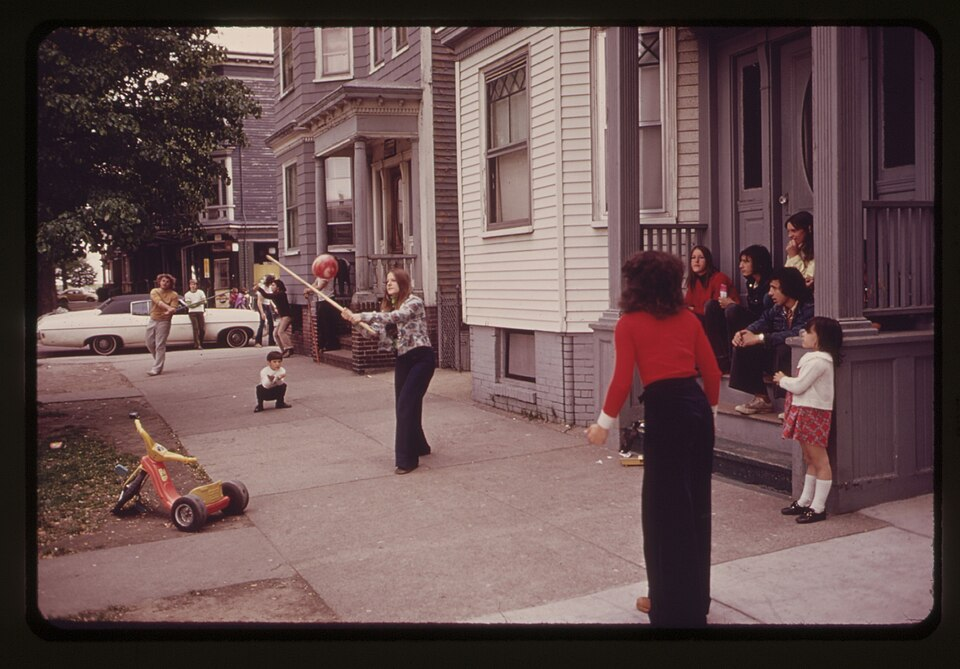
A child leaving the house with no task was given something different, or more often nothing at all, and could be gone for three hours without any instruction having been issued. The same child leaving with a message to deliver got four words.
The distinction reveals what the words were for. An errand had a purpose with somebody waiting at each end, which made its duration part of the household’s arrangements; unstructured absence had no such property and therefore required no clock.
Older Children Got It Less and Resented That More
The instruction thinned out as a child got older, and the thinning was never announced.
A twelve-year-old was given the four words considerably less often than an eight-year-old, and eventually stopped being given them at all. Nobody marked the transition, nobody mentioned that it had happened, and most people cannot say at what age the phrase stopped being aimed at them.
What is odd is that the withdrawal was unwelcome. Children who had found the instruction tedious discovered that no longer receiving it registered as something being taken away rather than something being granted, which is a reaction almost nobody expected and a great many people report.
The Phrase Was Identical in Every Household

Children discovered by visiting that the wording was not their own family’s.
The uniformity was complete. Four words, the same four, in the same order, with the same intonation, used by households that had never discussed any aspect of child-rearing with each other – which suggests something considerably older than any of the families using it.
Nobody found this remarkable at the time. A child who heard somebody else’s household issue the identical phrase registered only that the rule was general, which was reassuring in the way that discovering any of your own household’s rules to be universal was reassuring.
You Still Say It

People who were on the receiving end of this in 1964 produce the same four words, unchanged, to their own children and grandchildren.
The survival is almost total. A phrase transmitted without explanation, acknowledged without thought and enforced by nothing has outlasted the circumstances that made it necessary by half a century, and people using it generally have no recollection of having decided to.
What has not survived is the clock. The four words now mean something closer to an expression of care, because the thing they were originally managing – a household with no way of knowing where anybody was for twenty minutes at a time – no longer exists anywhere.
Then the Uncertainty It Managed Disappeared
Mobile contact, the ability to establish where anybody is within seconds and a complete change in how households keep track of each other removed the condition the instruction existed to handle.
Every part of that is an improvement. Knowing where a child is, being able to reach them and not having to run a household on mutually held estimates of walking times are better in every respect than four words and an unspoken figure.
What went with it is a small piece of trust that had to do all the work. A household that could not check anything said four words instead, a child agreed without listening, and the arrangement held for years on nothing but both parties believing the other was keeping to it.
Like our content? Follow us for more.