It Fitted in a Hand and Came With One Earphone
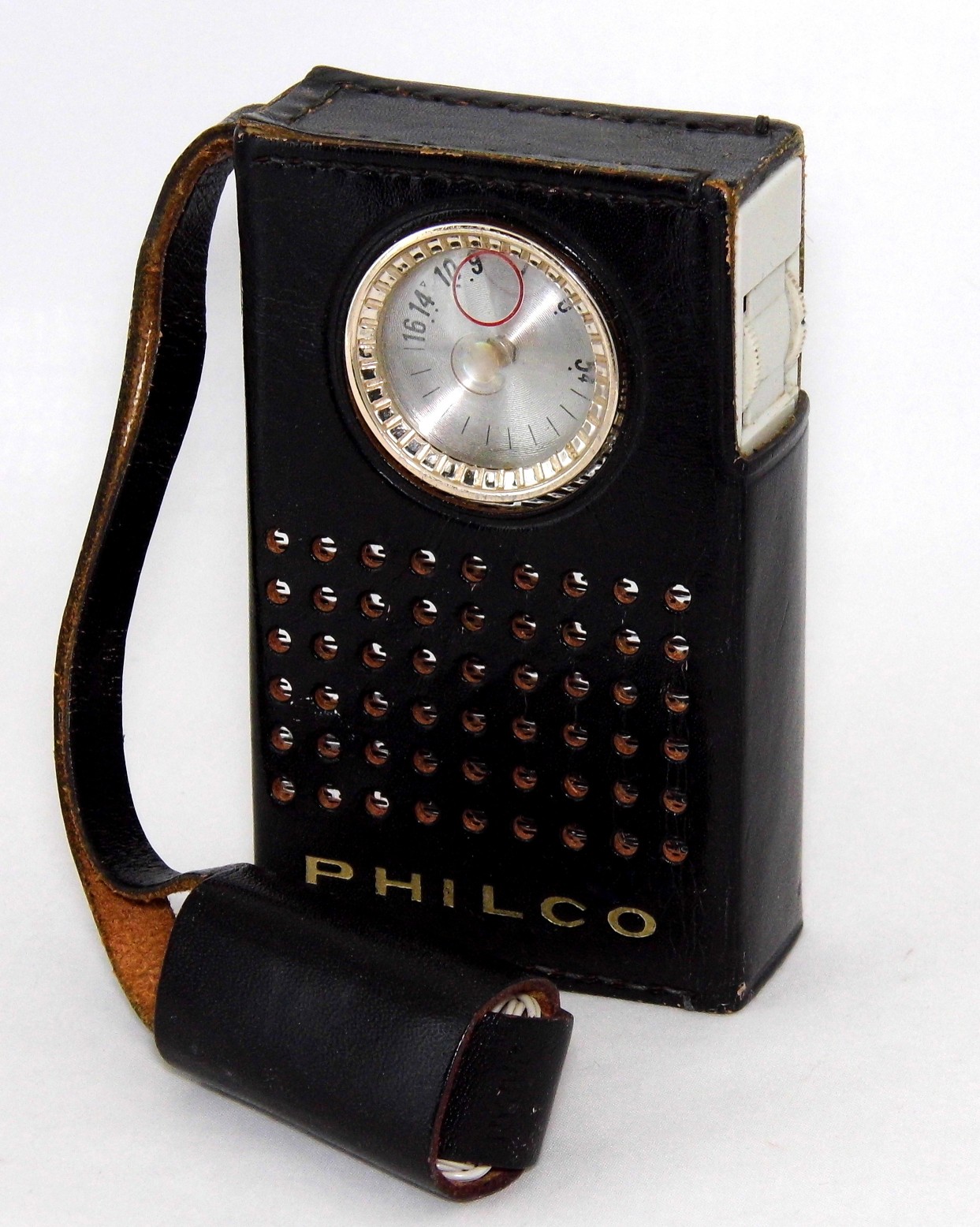
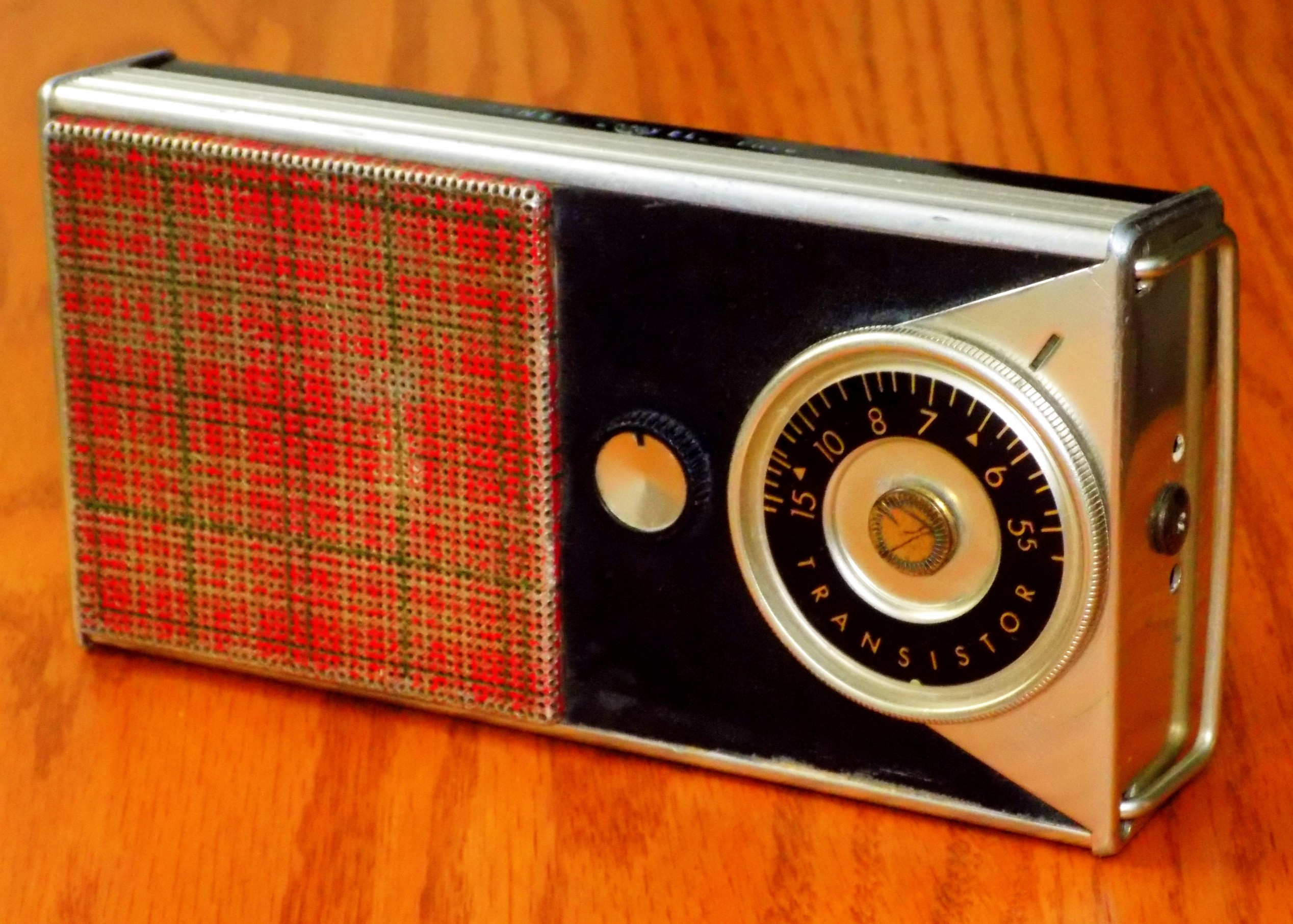
It was about the size of a pack of cards, in a plastic case with a perforated grille on the front, a serrated thumbwheel on the side for tuning, another for volume, and a dial printed with numbers behind a window.
It came in a leather or vinyl case with a wrist strap, and in the box there was a single earphone – one, not two – with a short cord and a plug, and a small cardboard sleeve to keep it in.
It ran on a nine-volt battery, the rectangular kind with two snap terminals on top, and it ran on it for a surprisingly long time.
Like our content? Follow us for more.
What Actually Changed Was the Size of the Audience
The radio was not new. By 1960 most American households had owned a radio for thirty years, and in many cases several. What the transistor set changed was not whether you could hear a broadcast but how many people had to hear it with you.
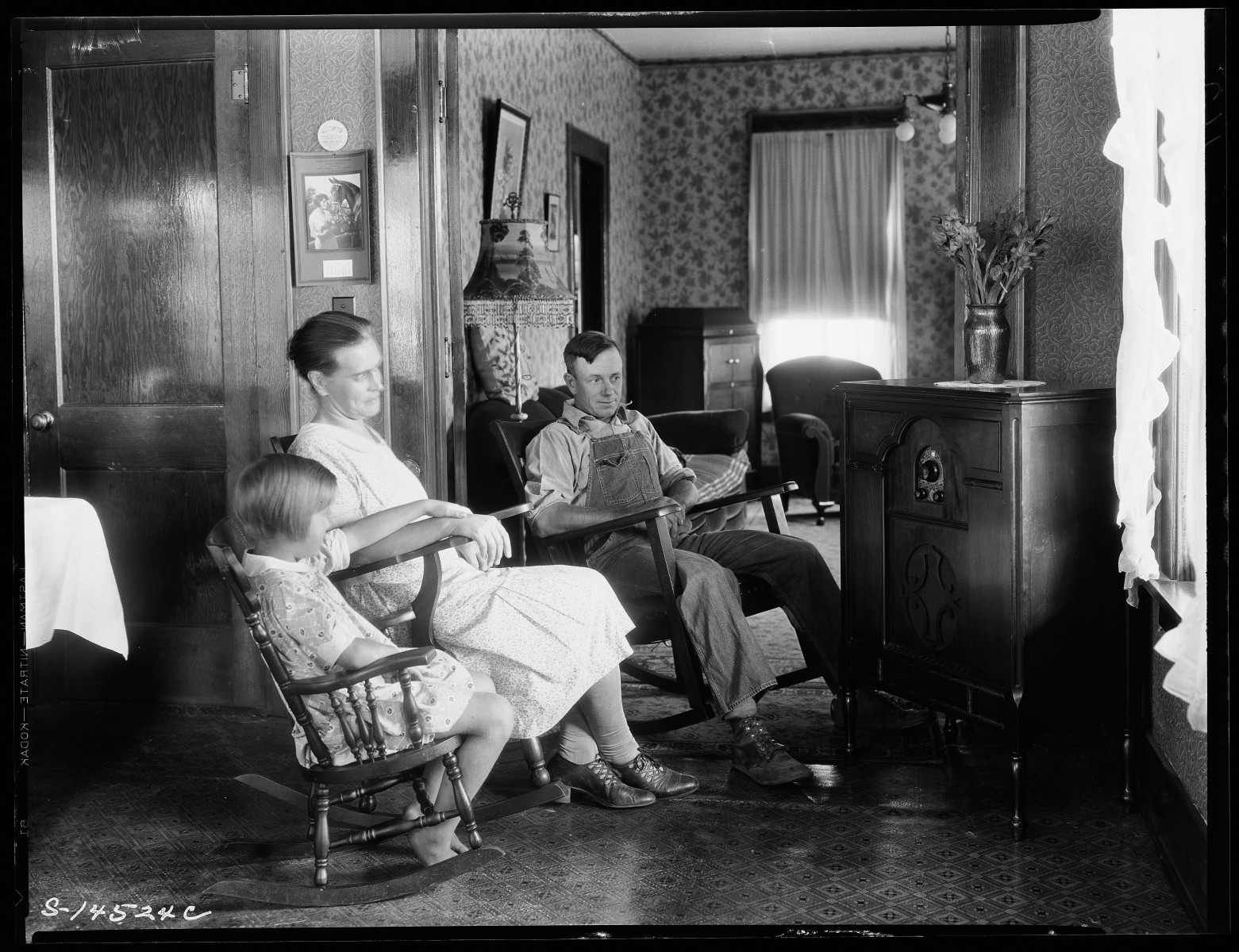
A household radio of the 1940s was furniture. It stood in a room, it ran on house current, it had a speaker big enough to fill that room, and anything playing on it was playing for everybody within earshot. Which meant the family listened together to a programme somebody had agreed on, and what a teenager listened to was a matter of household negotiation.
A pocket set with an earphone removes all of that. One person, one broadcast, no speaker, no negotiation and nobody else in the room even knows what station it is on.
That is the change, and it is a large one. It is the first time in history that an individual could carry a continuous stream of music and talk around with them, privately, for hours, without anybody’s permission.
Which Is Why It Was So Closely Associated With One Age Group
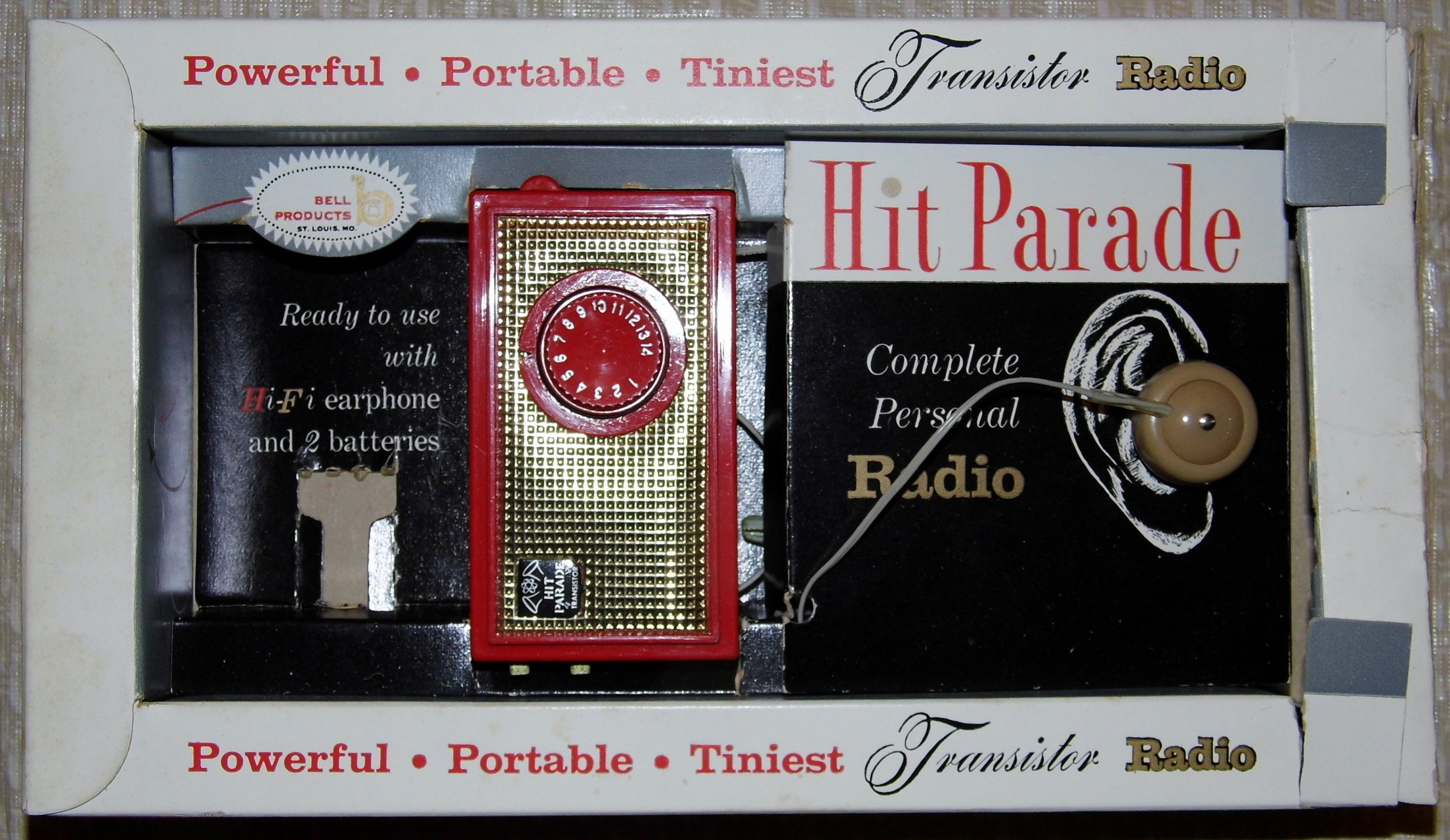
The consequences showed up fastest among teenagers, and the reason is structural rather than cultural.
A 1962 American household contained one television and one or two radios, in shared rooms, controlled by adults. A teenager who wanted to hear a particular kind of music had to negotiate for the family set, in the family room, at a volume everybody could hear, playing something the adults could veto.
A set that cost a modest amount of money – well within reach of babysitting, a paper route, or yard work – removed the entire negotiation. The music went directly into one ear, in a bedroom, outdoors, in bed after lights out, on a bus, at a beach, with nobody listening in.
So the commercial format of the period – the tightly formatted popular music station with a disc jockey, a short playlist and a chart – and the pocket transistor radio are not two separate phenomena. The station had an audience of individuals rather than households for the first time, and it programmed accordingly.
The Earphone Was Terrible and Nobody Minded
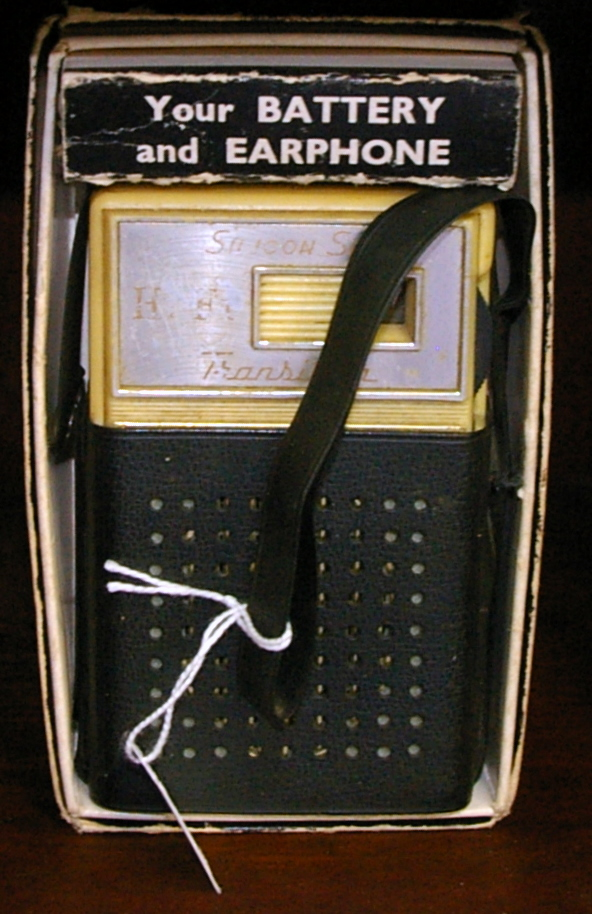
It is worth being honest about the sound, because it was poor by any standard.
The earphone was a small magnetic transducer in a hard plastic shell that sat in the outer ear rather than sealing into it. It reproduced almost nothing below the middle of the range, it was monophonic, it leaked sound outward, and it fell out.
The set’s own speaker was little better: a two-inch cone in a plastic box, producing a thin, bright, bass-free sound that is instantly recognisable to anybody who grew up with it.
None of that mattered, and it is a useful corrective to the idea that audio quality drives adoption. People accepted dramatically worse sound than their parents’ console radio produced, in exchange for being able to carry it and listen alone. The same trade has happened at least twice since, in both cases with the same objections from the same kind of listener and the same outcome.
The Battery Was the Running Cost and It Taught a Lesson
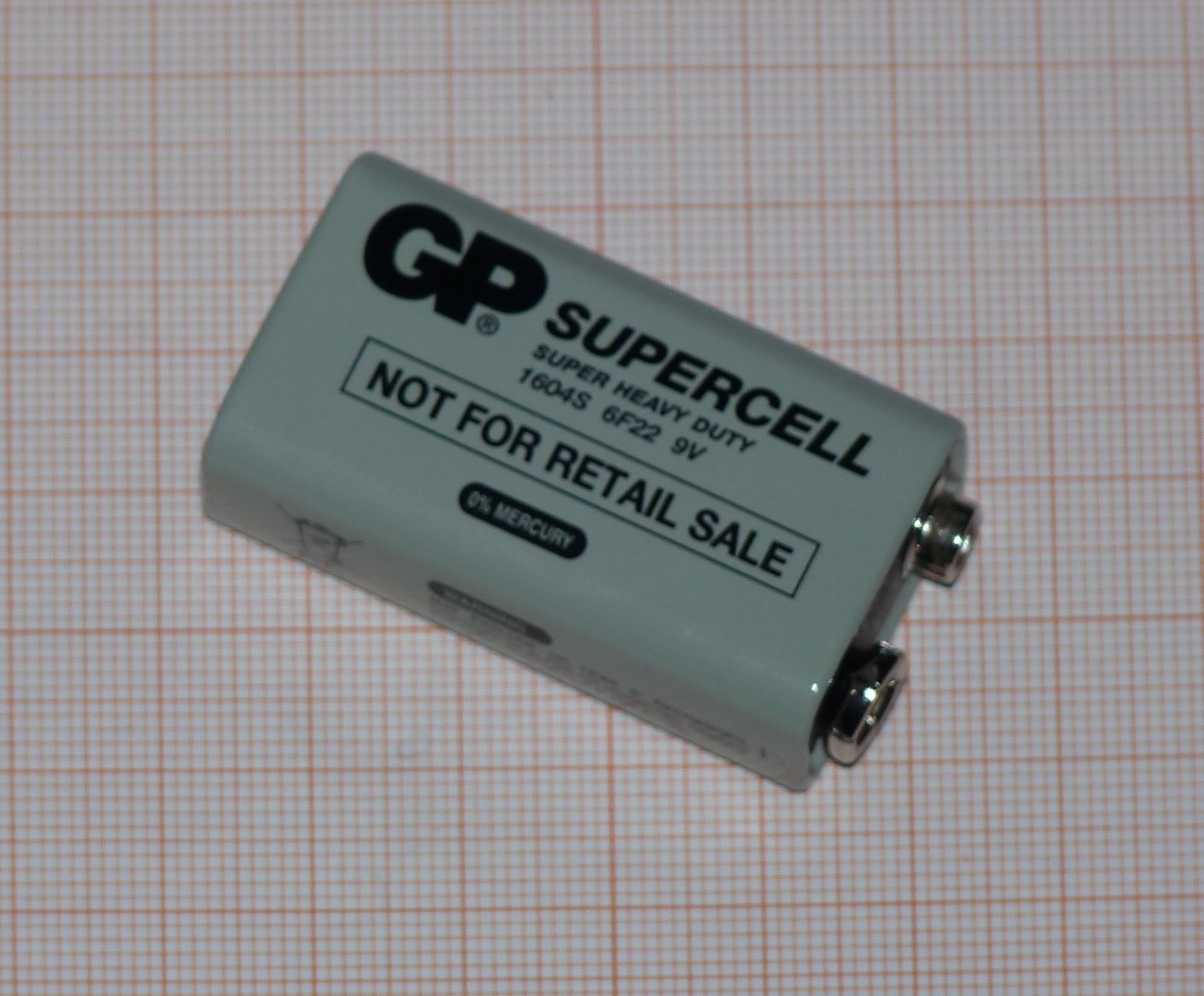
The nine-volt battery is one of the more interesting parts of the object, and the reason it was chosen tells you about the engineering.
A valve radio needed a high voltage and a lot of power, which is why it plugged into the wall. A transistor circuit works at low voltage and draws very little current – which is the entire reason a portable radio became possible, and why the technology mattered enough to put its name on the product.
Nine volts in a compact rectangular package with snap terminals was the convenient way to supply that, and the battery became so tied to the format that it is still called a radio battery by people of a certain age.
It also introduced a whole generation to the economics of a disposable power source. The set worked for weeks, then went quiet and distorted at the same time, and the replacement cost a noticeable fraction of what the radio itself had cost – which is a relationship anybody with a cordless device now understands intimately.
You Listened to Distant Stations at Night, by Accident

There was a second thing these sets did that nobody advertised and everybody discovered.
The band they were best at – the lower, longer-wavelength broadcast band – behaves differently after dark. During the day its signals are absorbed in the upper atmosphere and travel only as far as the ground will carry them. At night that absorbing layer thins out, the signals bounce off a higher layer instead, and stations hundreds or thousands of miles away arrive in places that cannot hear them at noon.
So a child lying in bed with an earphone in, turning the thumbwheel slowly through the static, would come across a station in a city they had never been to – identifying itself, playing different music, reading different news, selling different things.
That experience is reported by a very large number of Americans who grew up in this period, and it was the first contact many of them had with the idea that elsewhere was a real place that sounded different. It happened because of atmospheric physics and because the radio was small enough to be in bed.
It Also Went Everywhere Else
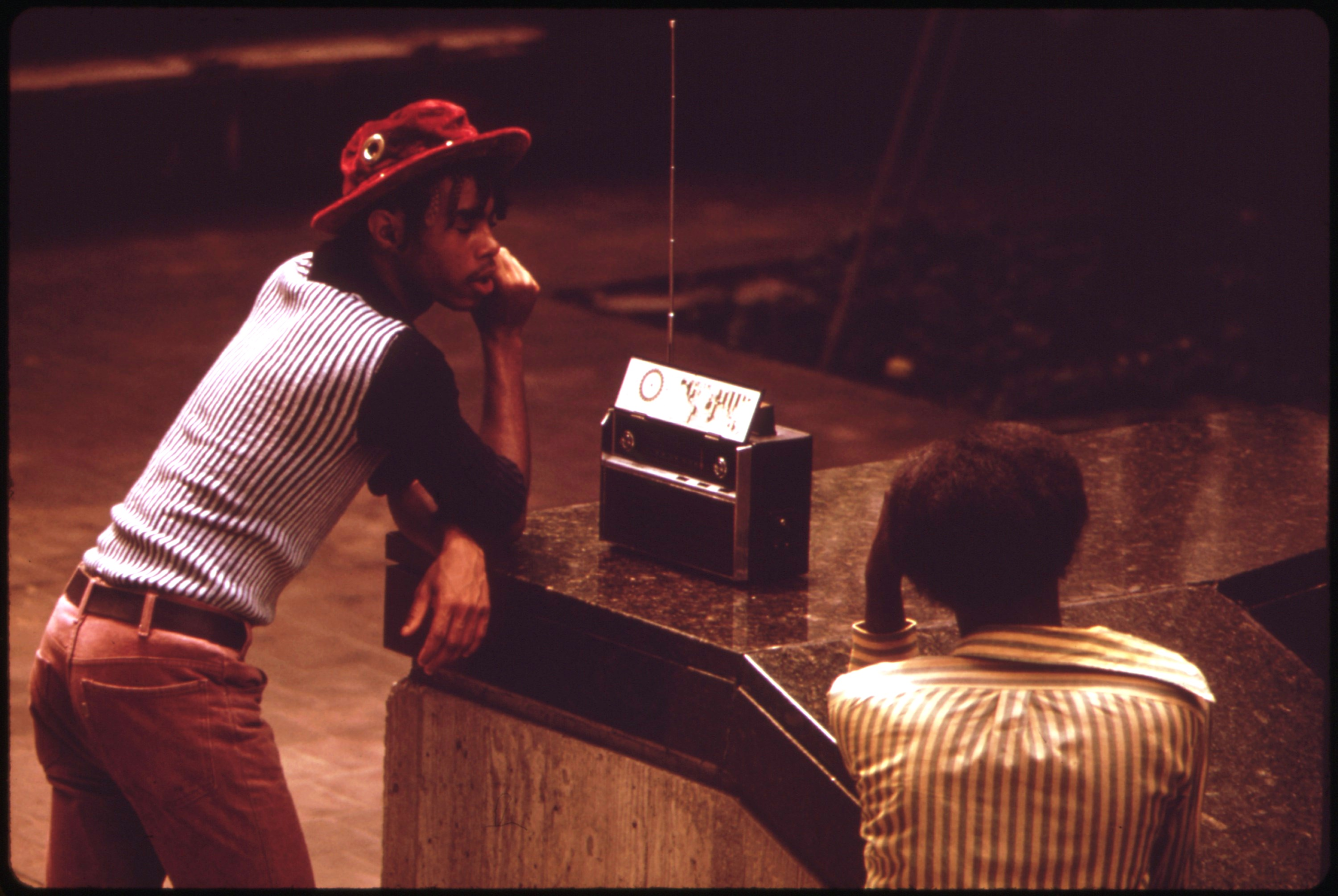
Beyond the bedroom, the object simply attached itself to whatever people were already doing.
To the beach, where it was the only music. To the yard and the garage, propped on a shelf. To the ballgame, where listening to the commentary while watching the game in front of you became and remains a genuine habit. Into a shirt pocket at work. Under a pillow. Onto a boat. Into a tent.
And into one specific American ritual: the portable radio carried to a school or a workplace on an afternoon when something was happening – a contest, a launch, a result – and passed around so a group of people could hear something live that no other device in the building could deliver.
It Was Cheap Because the Whole Industry Was New and Competing Hard
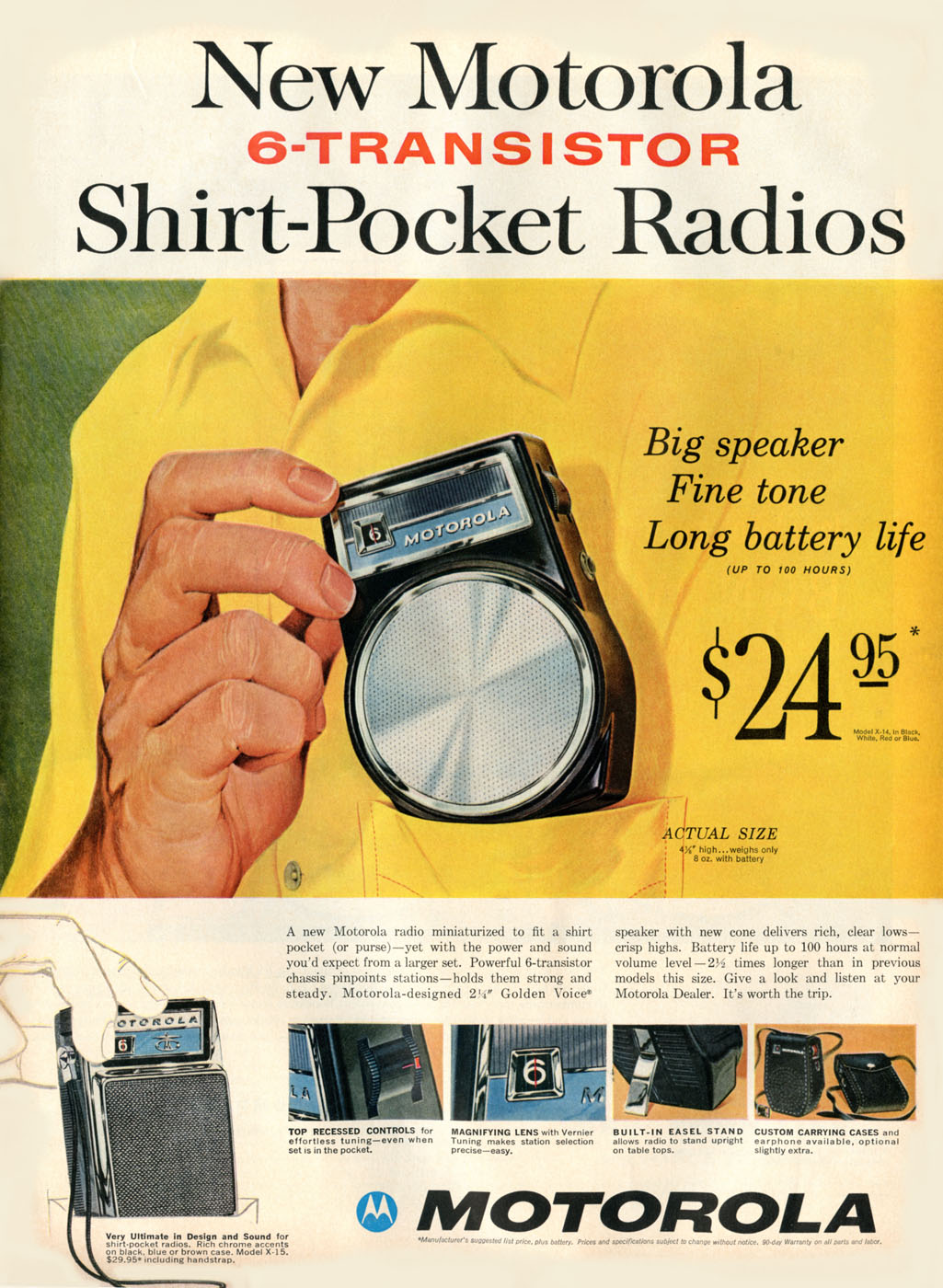
The price is worth a paragraph, because it is the reason a fourteen-year-old could own one.
Transistors were a new component, and through the late 1950s and 1960s the manufacturing cost of them fell steeply and continuously as volumes rose and yields improved. A radio needs only a handful of them, which made the pocket set one of the first consumer products to ride that curve all the way down.
At the same time an enormous number of manufacturers entered the category at once, because the barriers were low – a circuit anybody could license, a plastic case, a speaker, a dial and a battery clip. Sets were sold at every price point from serious to almost disposable, under hundreds of names, and a great many of them were given away as premiums, prizes and promotional items.
Which is why these radios turn up in drawers in such numbers and why so few people remember what theirs cost. For a large share of American households the first one did not arrive as a purchase at all. It arrived as a gift, a prize, or a thing somebody at a store handed over with something else.
The Tuning Was Analogue and You Learned the Dial by Feel
One more detail that has no modern counterpart.
Tuning was a variable capacitor turned by a thumbwheel, and the printed dial was approximate. Finding a station meant turning slowly until it emerged out of the hiss, then adjusting fractionally either side to get it as clean as it would go – and the best position was never exactly where the number said it should be.
So a regular listener did not tune by number. They tuned by feel, with the set in a pocket and a thumb on the wheel, by the amount of travel from one familiar station to the next. Children could find their station in the dark, in seconds, without looking, having never once read the dial.
And the station drifted. Temperature changes moved it, knocking the set moved it, and carrying it around moved it, so the adjustment was continuous rather than a single act. Listening involved a small ongoing physical relationship with the device that choosing from a list does not.
The Twist: The Object Lost and the Behaviour Won Completely
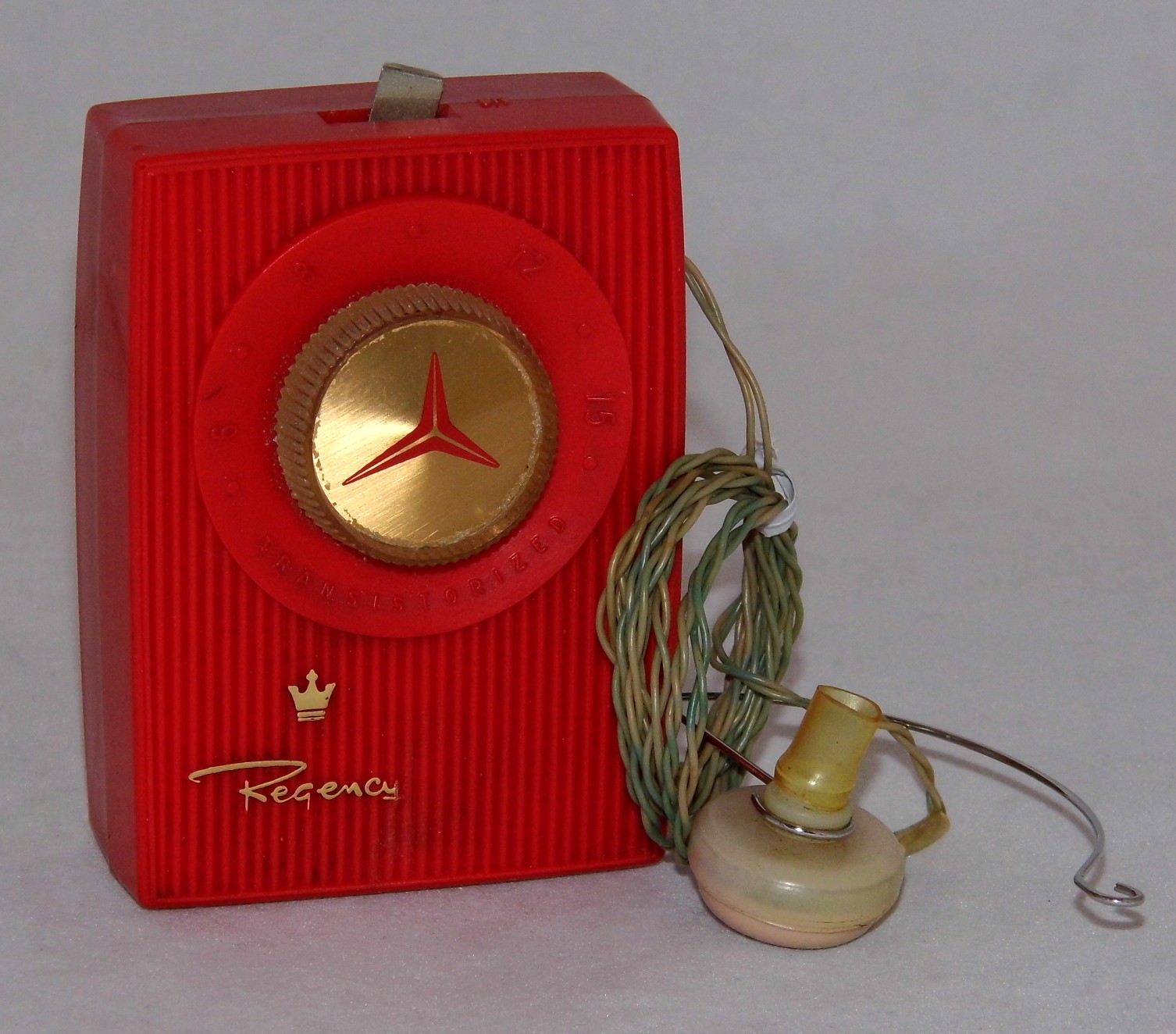
The pocket radio itself is effectively gone. Standalone broadcast receivers are a small category sold mainly for emergencies, and a great many people now own none at all.
But look at what it introduced, because almost every element of it is now universal.
Private listening, through something in your ear, chosen by you, with nobody else aware of the content. A continuous personal audio stream that travels with you. Listening while walking, working, riding, lying in bed and falling asleep. An audio device small enough that it is simply always present. And programming aimed at one listener rather than at a household.
Every single one of those is now the default condition of audio, not the exception. The modern version has better sound, no cord, no battery anxiety and unlimited choice – but it is doing precisely what a transistor set with a single earphone was doing in 1962, for precisely the same reason, with the same social consequence of removing listening from shared rooms.
So the right way to read the object is not as a primitive radio. It is as the first device that made listening a private act, and the cultural shift it started has gone so far that the shared condition it replaced now sounds exotic. The idea that a family would gather in one room to hear a broadcast together, at a volume everybody shared, having agreed on it first, is now the strange arrangement.
The one thing that genuinely did not survive is the accident. A modern listener gets what they asked for, every time, from anywhere on earth, on demand.
Nobody turns a thumbwheel slowly through the static at eleven at night any more and lands on a city they have never heard of.
Like our content? Follow us for more.