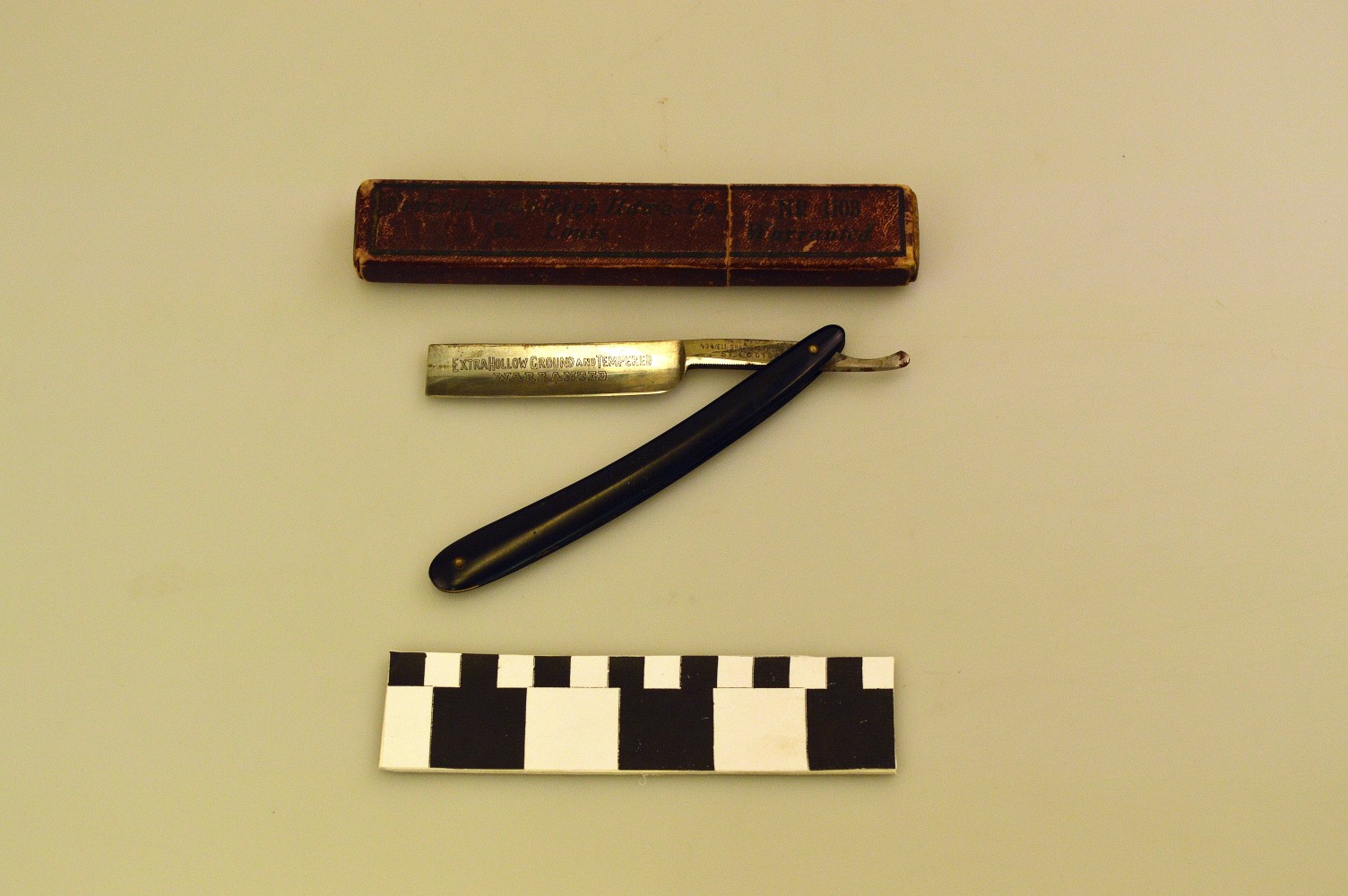
There Was One Razor and It Lasted a Lifetime
It was a single piece of steel, hollow-ground, hinged into a handle of bone, horn, celluloid or wood, folding shut so the edge sat inside the scales.
It did not come with blades because it did not take any. The razor was the blade, permanently, and a man bought one in his twenties and used that one.
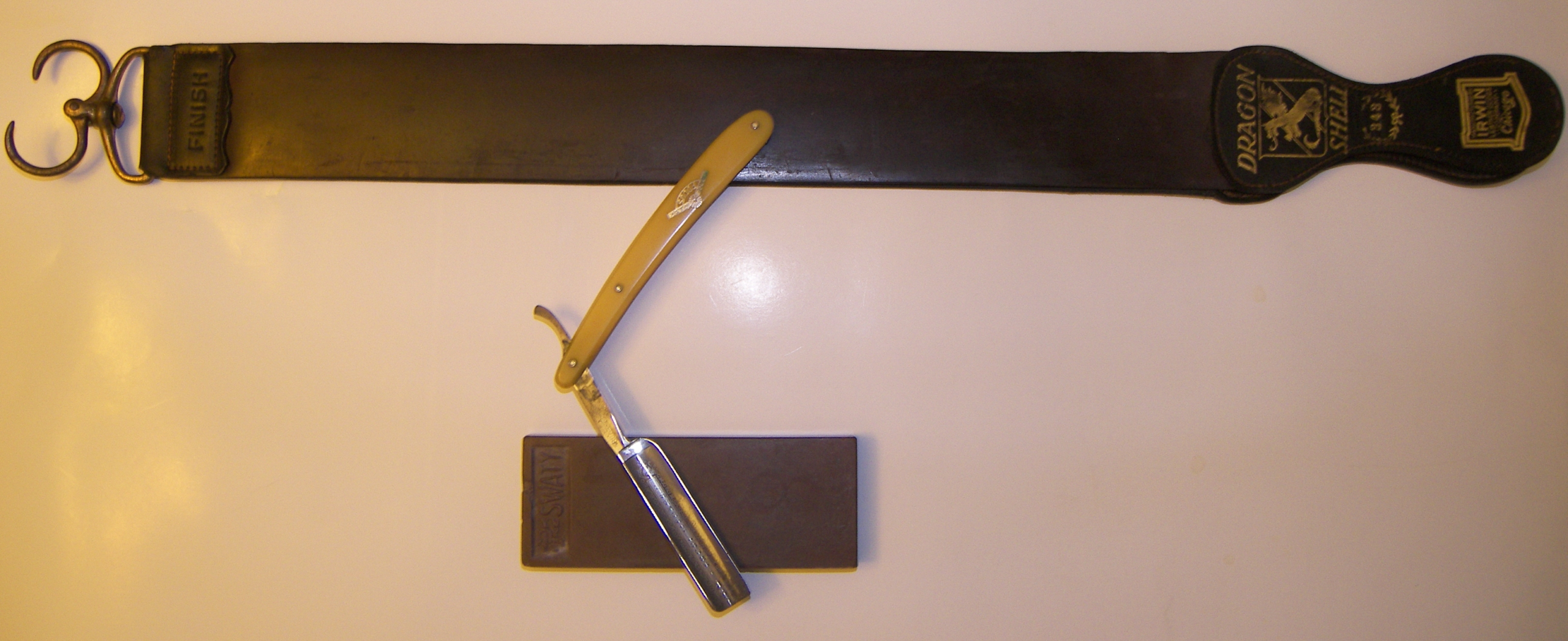
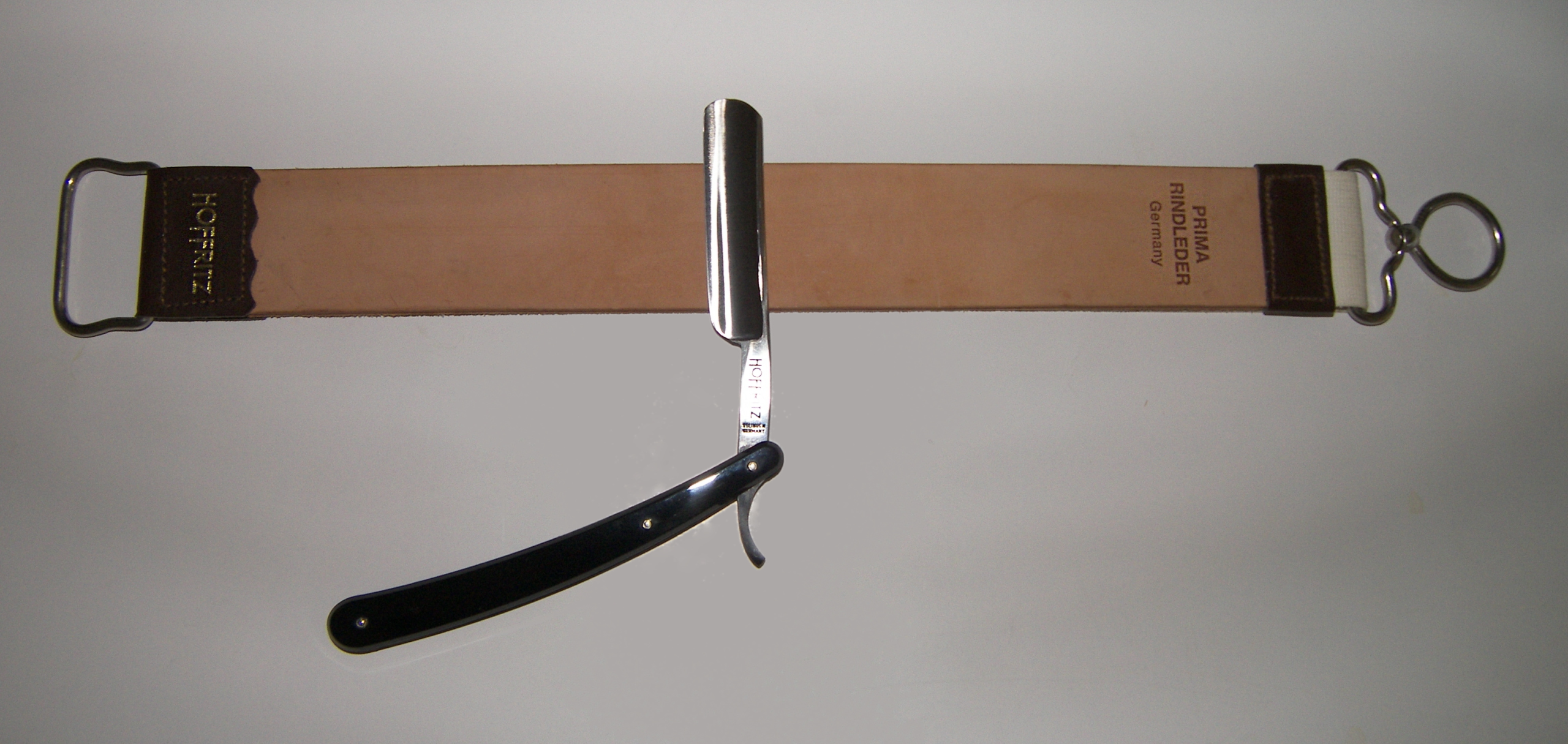
Beside it on the washstand sat a leather strop hanging from a hook, a stoneware mug with a puck of hard soap in it, and a brush with a wooden handle. The whole kit sat out in the open where everybody could see it, because it was used every single morning in the same place.
Like our content? Follow us for more.
The Edge Was Maintained by the User, Daily and Weekly
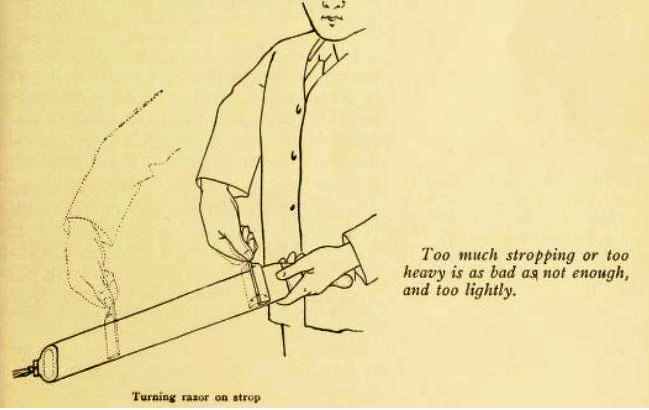
This is the part that explains everything else, and it is two separate operations that people frequently confuse.
Stropping is done before every shave. The leather does not sharpen anything. Drawing the blade across it – edge trailing, flat against the leather, with no pressure – realigns the very fine edge, which rolls over microscopically with use, and polishes it. It takes thirty seconds and it has to happen every time.
Honing is different and much less frequent. Once the edge has genuinely dulled, after weeks or months, it is reground on a stone – a coarse one if it is badly gone, then finer and finer, with the angle held constant across the whole stroke.
The difference matters because they fail differently. A man who skipped stropping had a razor that pulled. A man who never learned to hone had a razor that got worse and worse and eventually had to be sent out to somebody who could do it.
Learning It Took Months and Everybody Learned the Same Way
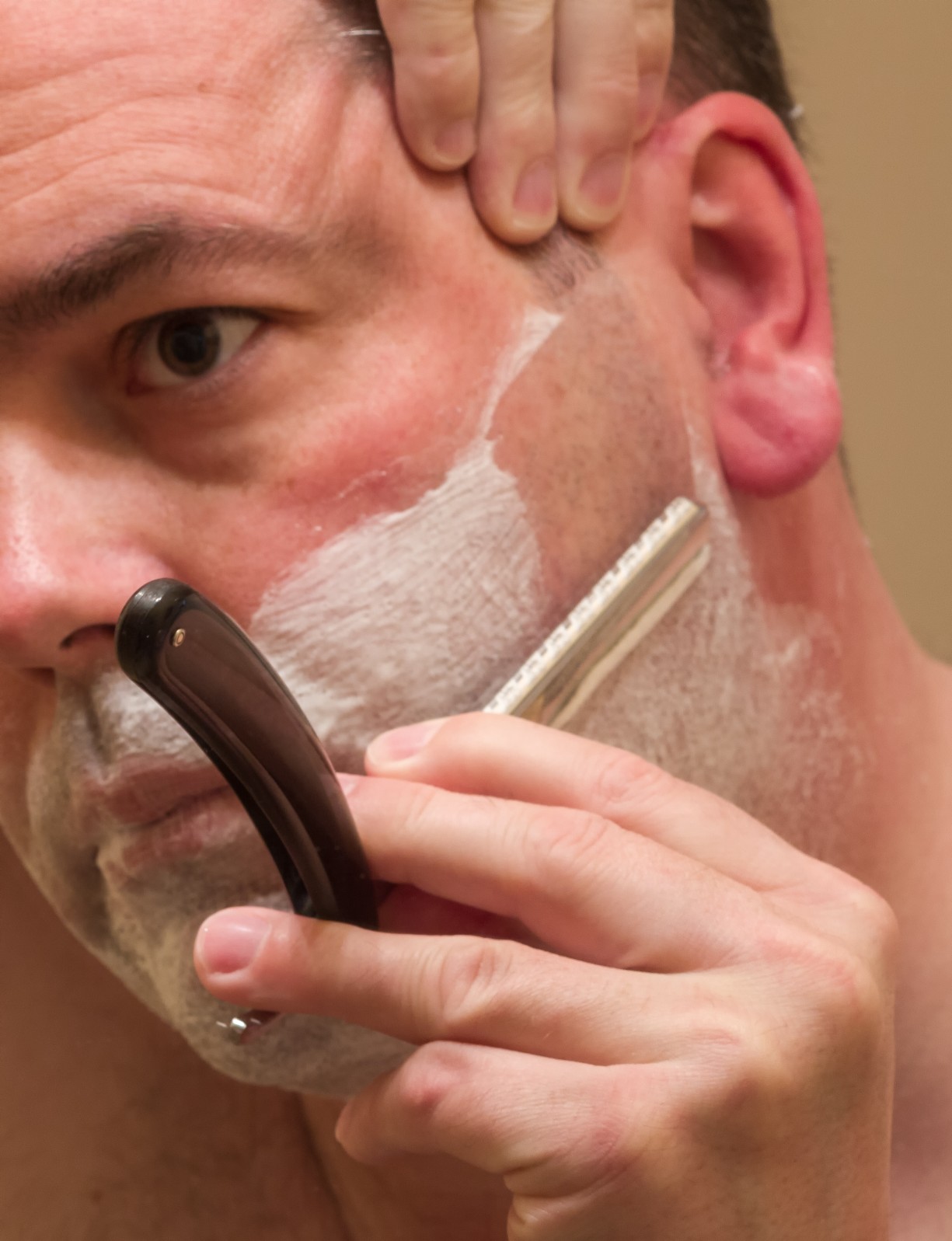
Nobody read how to shave with a straight razor. They were taught, by a father or an uncle or an older brother, standing at a mirror, over a period of weeks.
The things that had to be learned were specific. The angle – around thirty degrees off the skin, which feels alarmingly flat the first time. No pressure whatsoever; the weight of the blade is the pressure. Short strokes. Skin pulled taut with the free hand. The order of the face, worked out so the blade is always travelling in a direction the hand can control. And the two passes: with the grain first, then across or against it for the close finish.
It took months to become reliable and years to become good, and in the meantime there was blood – routinely, in small quantities, which is why an alum block or a styptic pencil sat beside the mug.
That apprenticeship is the single most important fact about the object, and it is the thing that disappeared.
The Lather Was Made in the Mug and It Took Time
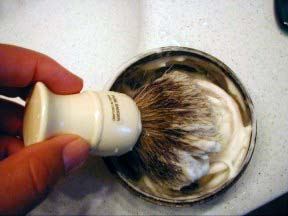
Shaving soap came as a hard puck pressed into a mug, or as a stick rubbed onto wet skin. The brush was soaked, shaken, and worked into the soap in circles until it loaded.
Then the lather was built – on the face directly, or whipped in the mug first – for a minute or more, working it into the beard rather than spreading it on top.
The purpose was not slipperiness, which is what people assume. It was water. A beard hair is dramatically easier to cut when it has absorbed water and swollen, and the job of a long brush-built lather is to hold hot water against the hair for long enough for that to happen.
Which is why the whole ritual was slow by design, why hot towels were used in barber shops and sometimes at home, and why a man who rushed the lather had a bad shave regardless of how sharp the razor was.
The Strop Was Also a Threat
It has to be said because it was universal, and it belongs in any honest account of the object.
A leather strop hanging in plain sight in the bathroom or the kitchen was, in a great many American households of this period, the implement used to beat children – and it was referred to that way, openly, as a warning.
That use is recorded in an enormous quantity of family memory from this era, it was not considered remarkable at the time, and attitudes to physical punishment of children have changed completely and for good reason. The object is remembered fondly by some people and not at all fondly by others, and the reason is this.
The Safety Razor Arrived and Changed Who Held the Skill
The replacement was not a better edge. It was a different arrangement of responsibility.
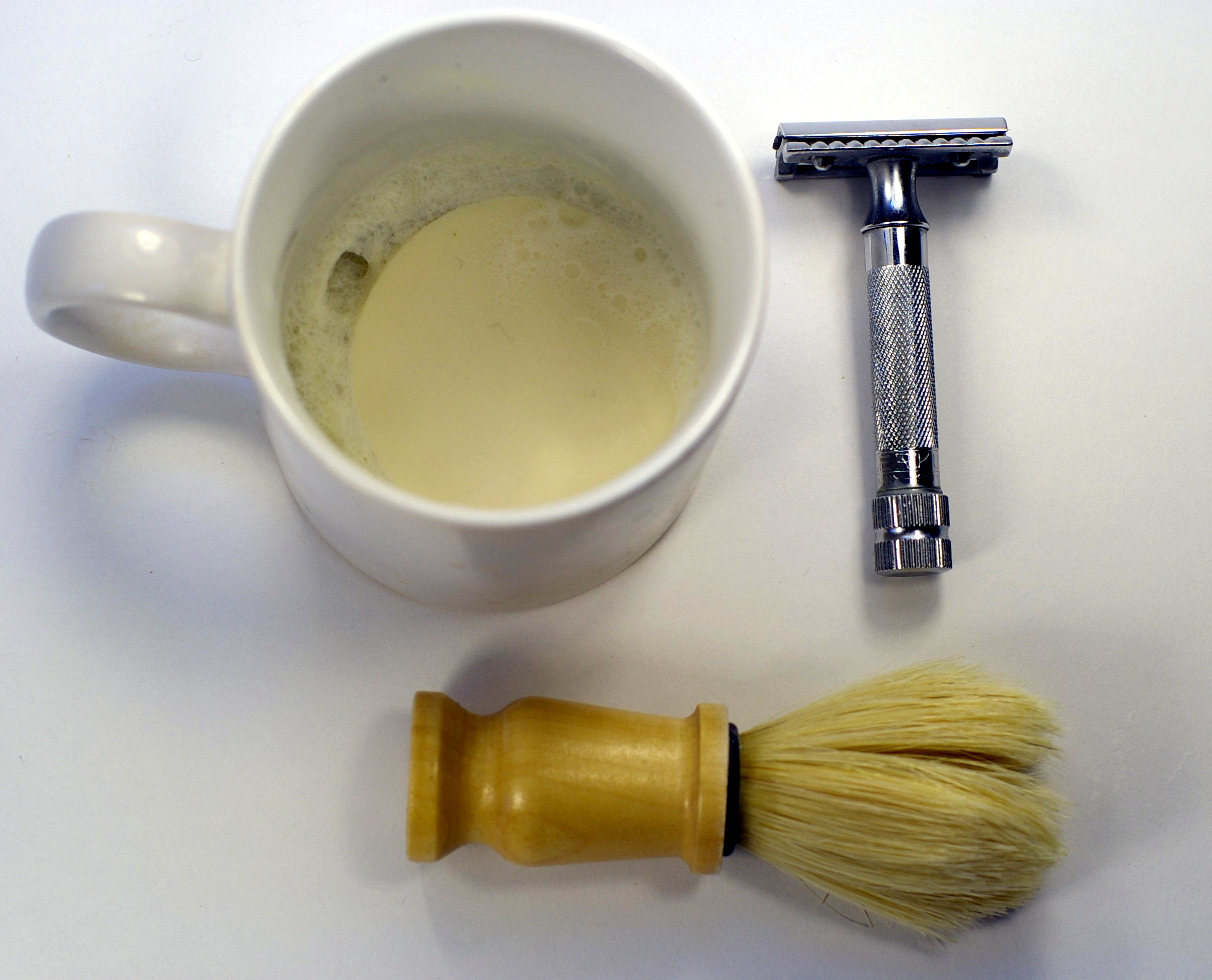
A safety razor clamps a thin disposable blade in a head that fixes the angle mechanically and exposes only a small portion of the edge. The user cannot hold it wrong, cannot cut themselves deeply, and cannot dull it through neglect – because when it dulls, they throw it away and fit another.
That is a razor which is perfectly sharp every single time, for everybody, forever, with no skill whatsoever.
And it is worth being precise about the trade. A genuinely well-honed straight razor, in competent hands, shaves closer and more comfortably than a safety razor does – this is not nostalgia, it is the consistent report of people who can use both. But very few men ever got their razor genuinely well honed, because honing is hard. So the comparison that mattered was not the best straight shave against a safety shave; it was the average straight shave, with a neglected edge, against a factory edge that was identical for everyone.
The Blade Was the Business
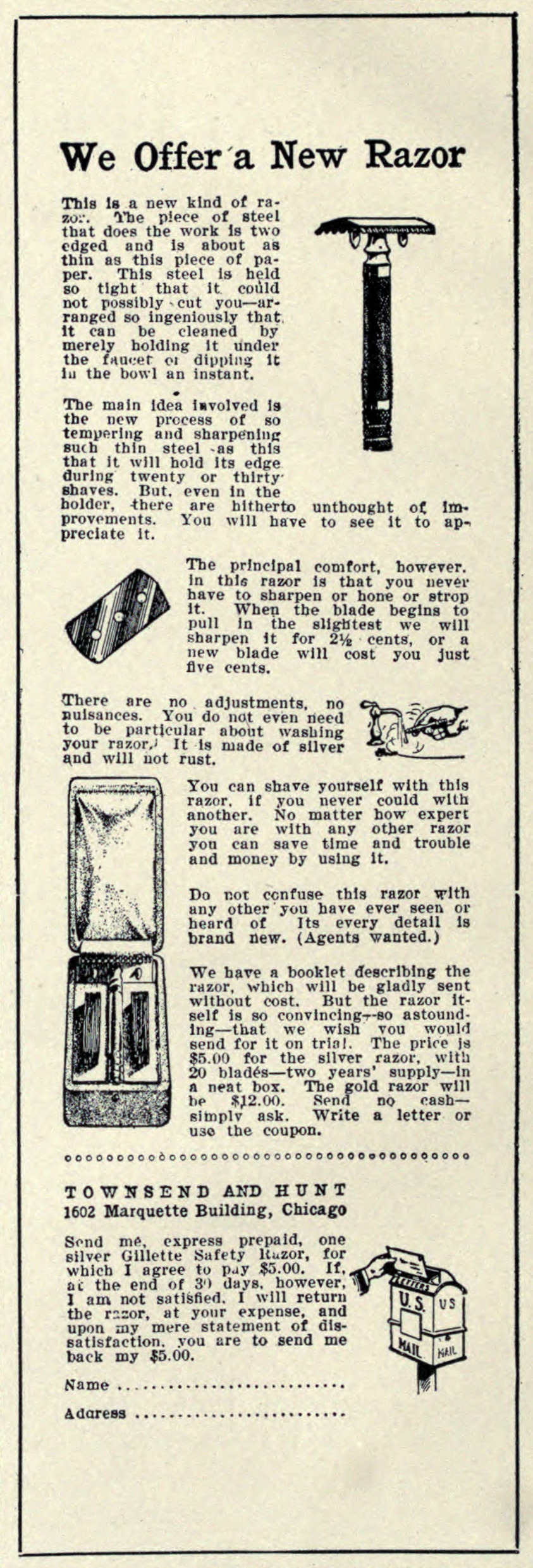
The commercial logic is worth naming because it is the template for an enormous amount of what came afterwards.
A straight razor is sold once, to a man, for his lifetime. There is no repeat revenue, no consumable and no reason for him ever to return.
A safety razor is sold cheaply, sometimes given away, and then the blades are sold forever. The manufacturer’s income does not come from the device at all; it comes from the stream of small purchases the device requires – which means the business wants the hardware in as many hands as possible, as cheaply as possible, and will practically donate it.
That model, once demonstrated, was applied to everything. The relationship between a device and its consumable supply is now the default commercial structure of a dozen industries, and shaving is where American consumers first learned it.
Then the Electric Razor Took the Rest of the Argument
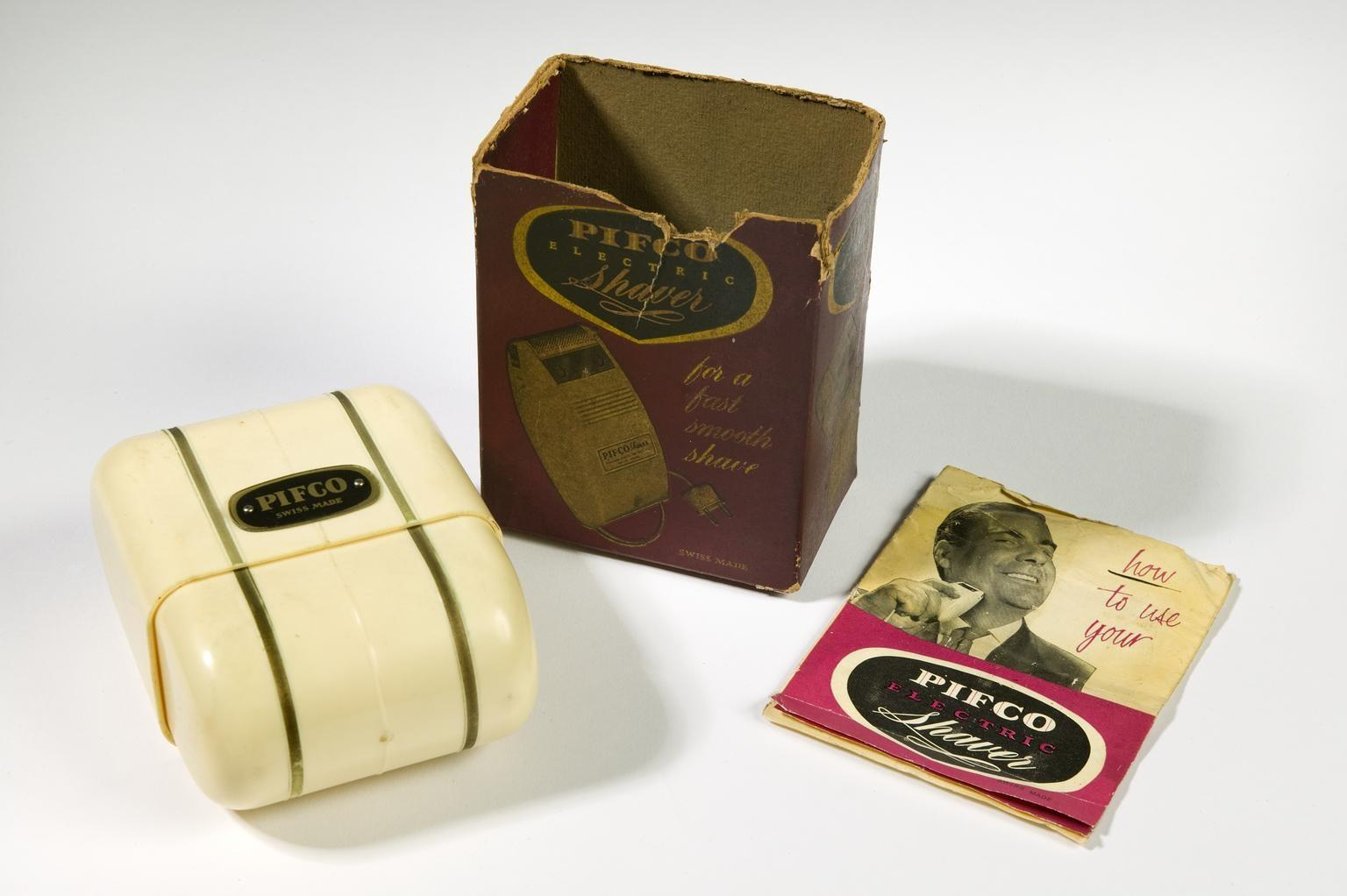
A third option arrived and took a substantial share of the market on a completely different proposition.
An electric shaver does not use water, soap, a brush, a blade change or a basin. It does not cut as closely as either blade razor and everybody who uses one knows it. What it offers instead is speed and dryness: a shave in two minutes, standing anywhere, in a car, without a sink, without a towel, without anything.
For a man leaving for work at six in the morning that was a genuinely attractive trade, and the split that resulted has been stable for decades – a closer shave that takes time and water, or a faster one that takes neither.
The Twist: The Skill Was Moved Into a Factory
The usual way to tell this story is that shaving got easier. It did, and that is not the interesting part.
What actually happened is that a skill which had lived in millions of individual men’s hands was relocated into a manufacturing process, and the object was redesigned so that no skill was required at the point of use.
Look at what the straight razor demanded. A daily stropping technique with the correct angle, no pressure and the edge trailing. A periodic honing operation on progressively finer stones, holding an angle by feel. A lathering procedure that had to run long enough to swell the hair. A shaving technique with a specific blade angle, specific stroke length and a worked-out order across the face. And the judgement to know when the edge needed honing rather than stropping. All of that learned over months from another person, maintained for life, and lost if neglected.
Now look at the safety razor. The angle is fixed by the head. The sharpness is fixed by the factory. The maintenance is replacement. There is nothing to learn, nothing to practise, nothing to maintain and nothing to lose.
That is deskilling in its purest form, and it was an unambiguous gain in outcome: every man got a good shave instead of a few men getting an excellent one and most men getting a poor one. Nobody should wish it undone.
But notice what it required. The skill did not evaporate – it was absorbed into industrial grinding and heat treatment, performed once, at scale, by people and machines the user never sees, and then delivered as a disposable object. The user’s competence was replaced by somebody else’s, at a distance, in exchange for a small payment repeated forever.
And the clearest proof that this is what happened is the revival. Straight razors are being bought again, in quantity, by people who are learning to strop and hone from videos – and not one of them is doing it to get a closer shave. They are doing it because acquiring the skill is the point, which means the thing that was taken away was never the shave.
The razors themselves are nearly indestructible, so they are all still out there. A man’s razor outlived him by design, and a great many of them are in a drawer with his initials on the scales and an edge nobody has touched in fifty years.
Like our content? Follow us for more.