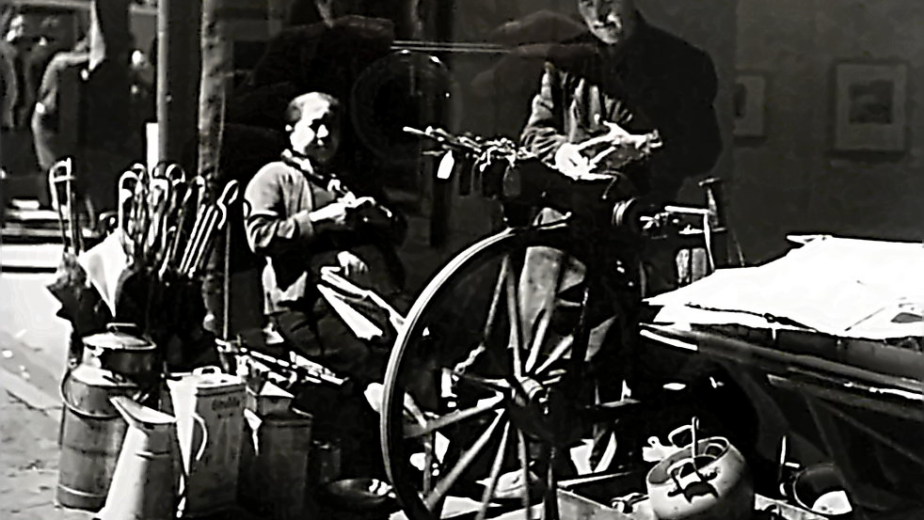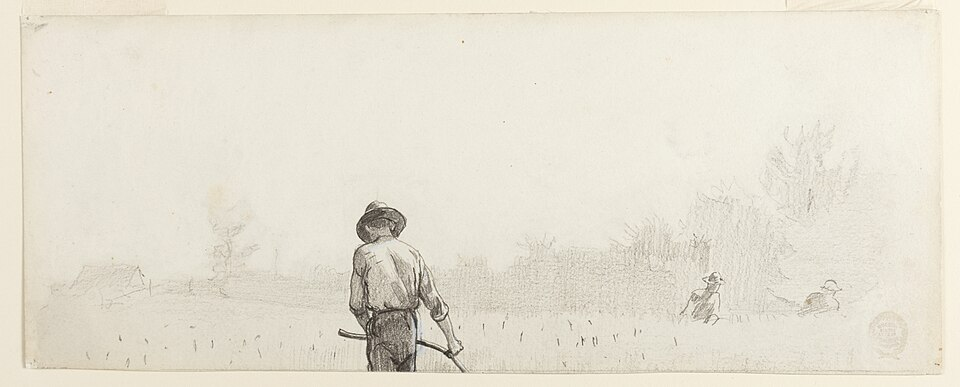
The blade does not chop. It slices, and that single fact shapes the whole tool.
A scythe blade is drawn sideways through standing stems close to the ground, cutting them by sliding along their length. A slicing blade needs very little force and an extremely keen edge, where a chopping one needs force and tolerates bluntness – so everything about the tool is built around keeping a long thin edge sharp enough to part a stem by sliding.
Even the curve is doing work. As the mower swings, the point of contact travels along the curved edge, which keeps the cutting angle constant through the whole stroke – where a straight blade swung in an arc meets the crop at a changing angle and cuts badly through most of it. And the handles were adjustable, set to the individual mower’s height and arm length before the tool was used at all. Here are fifteen things every American mower knew.
1. The Blade Did Not Chop, It Sliced
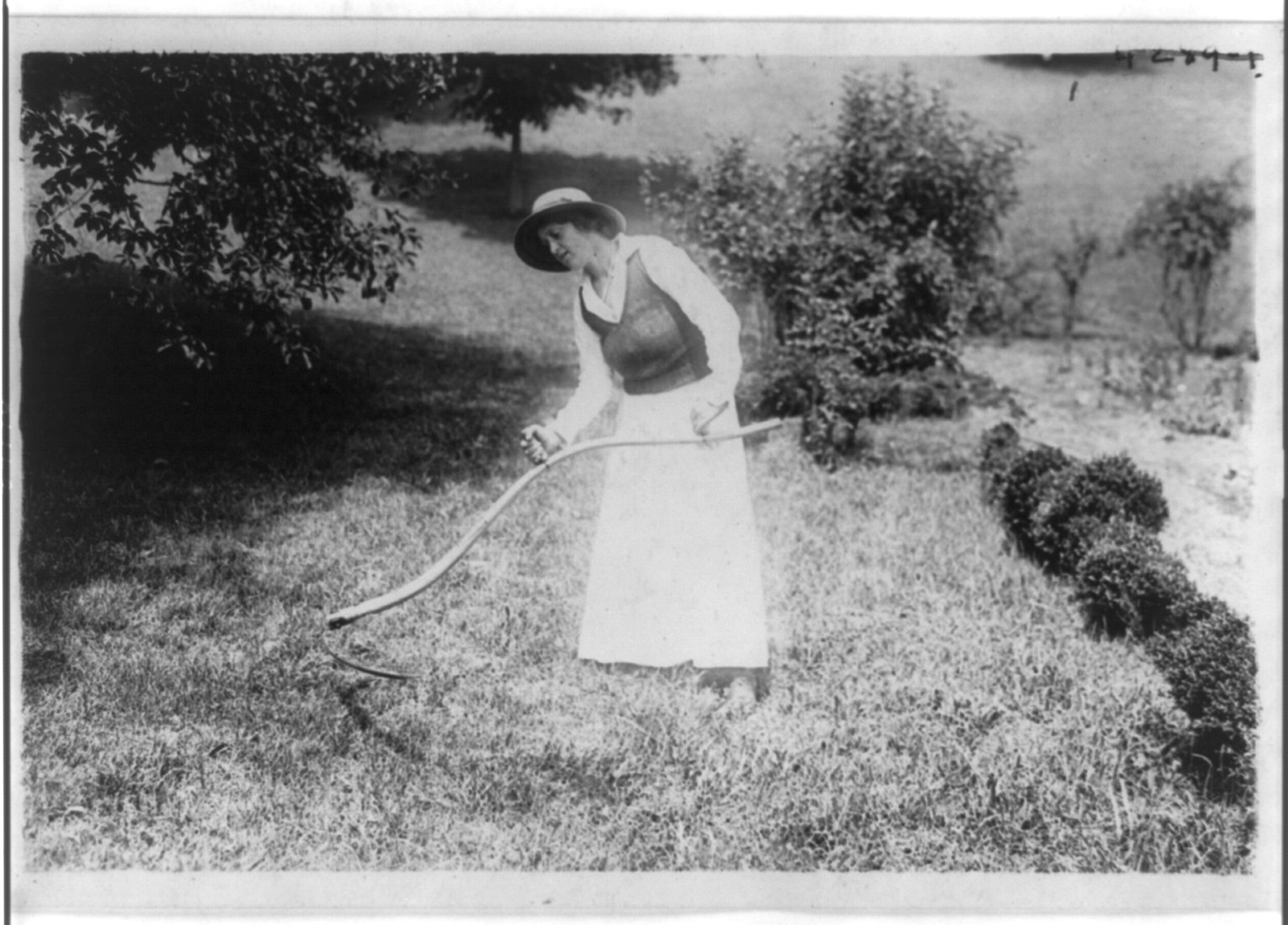
A scythe blade is drawn sideways through standing stems close to the ground, cutting them by sliding along their length rather than striking them.
Mechanical mowers cut by shearing or impact at speed.
Start with the cutting action because everything about the tool follows from it. A blade that slices needs very little force and an extremely keen edge, while a blade that chops needs force and tolerates bluntness – so the whole design is built around keeping a long thin edge sharp enough to part a stem by sliding.
Like our content? Follow us for more.
2. The Curve of the Blade Was Doing Geometry
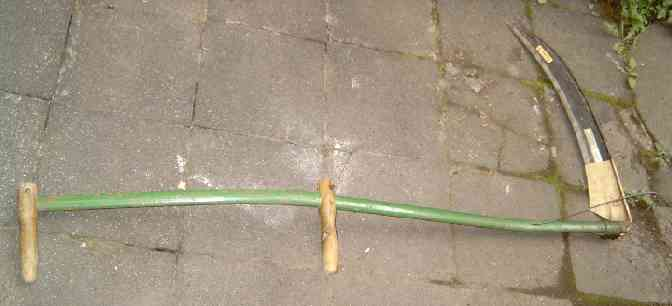
The blade curves so that as the mower swings, the point of contact travels along the edge, which keeps the cutting angle constant through the whole stroke.
Not applicable in the same way.
This is the part that reveals how well understood the tool was. A straight blade swung in an arc meets the crop at a changing angle and cuts badly through most of the stroke, while a curved one presents the same slicing angle from start to finish – which means the shape is a solution to the geometry of swinging.
3. The Handle Was Fitted to the Person
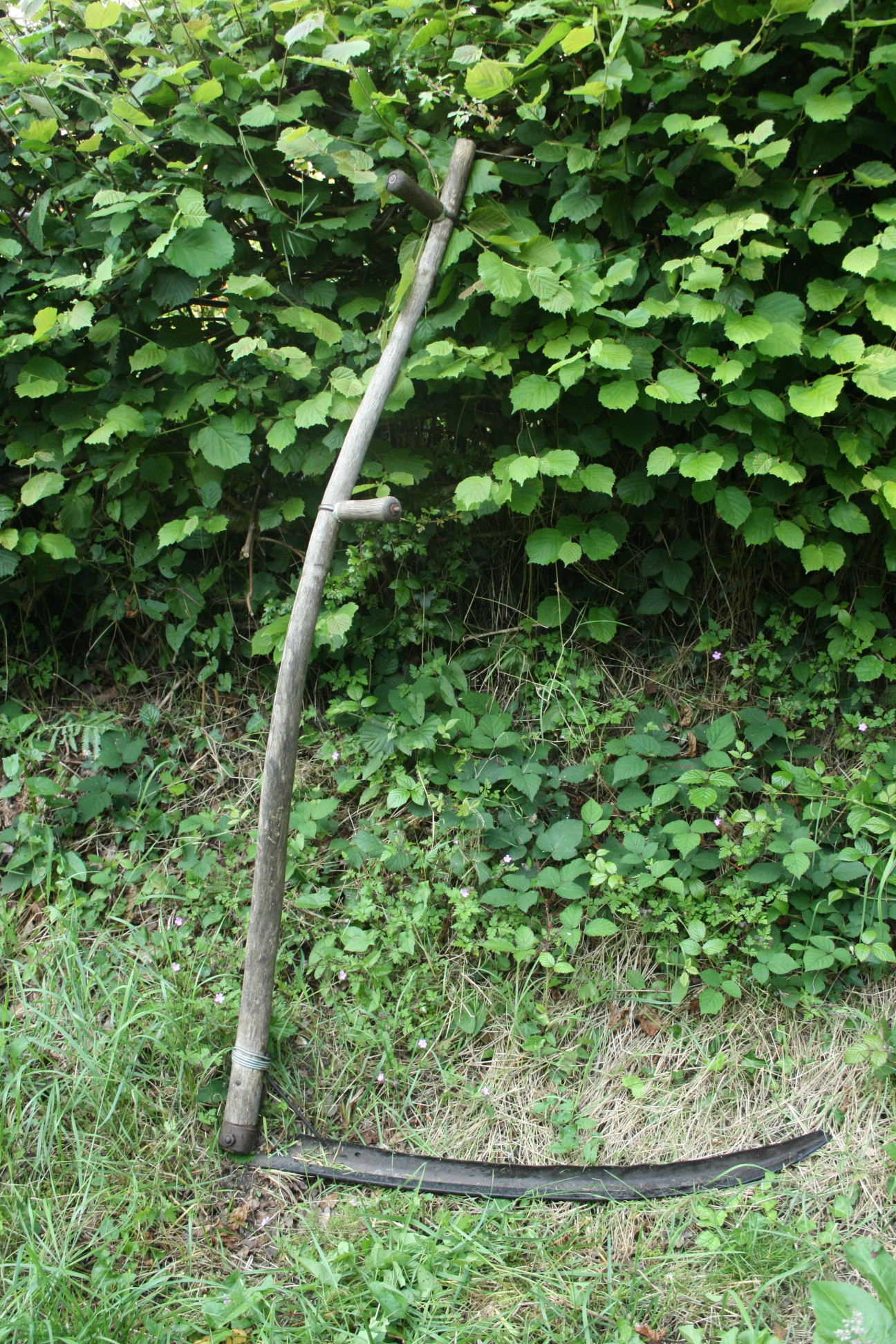
The two grips on the shaft were adjustable, and they were set to the individual mower’s height and arm length before the tool was used.
Not applicable.
The fitting is the detail that makes the tool personal. A scythe set wrongly either lifts the blade off the ground or drives it into the soil, and the correct setting depends on the body using it – so a scythe was somebody’s scythe in a way that most farm tools were not.
4. The Field Was Walked Before It Was Cut
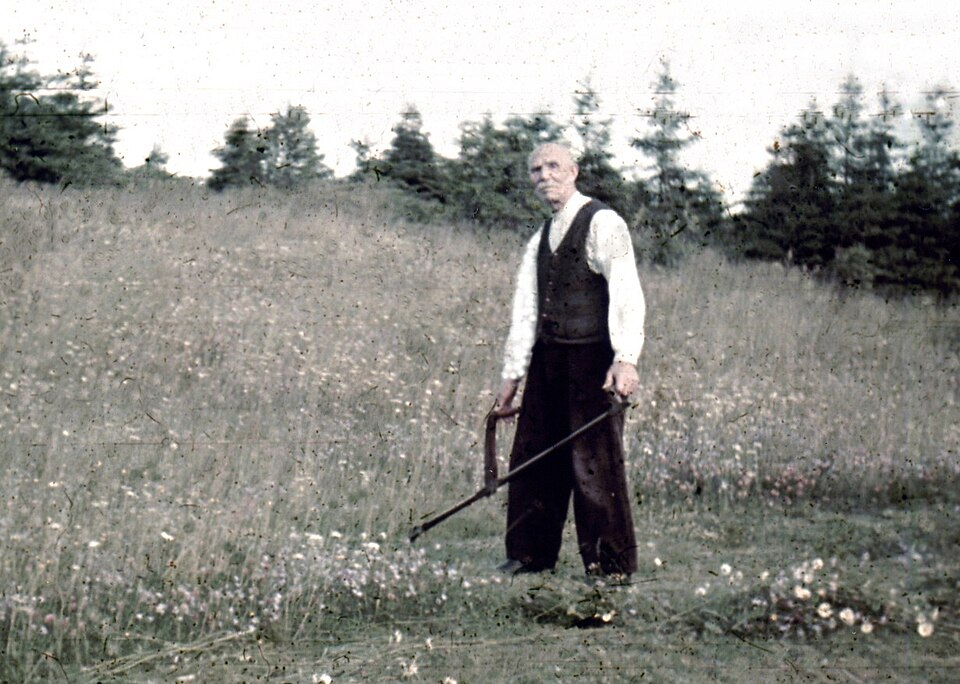
A mower went over the ground beforehand looking for stones, roots, holes and anything else that would catch a blade travelling at ankle height.
Mechanised cutter bars are damaged by the same obstacles and fields are still cleared.
The preliminary walk is the step that explains why farms were so obsessive about clearing stone. A blade sliding along at ground level meets anything standing above the soil, and a single buried stone can ruin an edge in one stroke – so the field had to be known before it could be mowed, and that knowledge was built up over years on the same ground.
5. The Blade Rode on the Ground
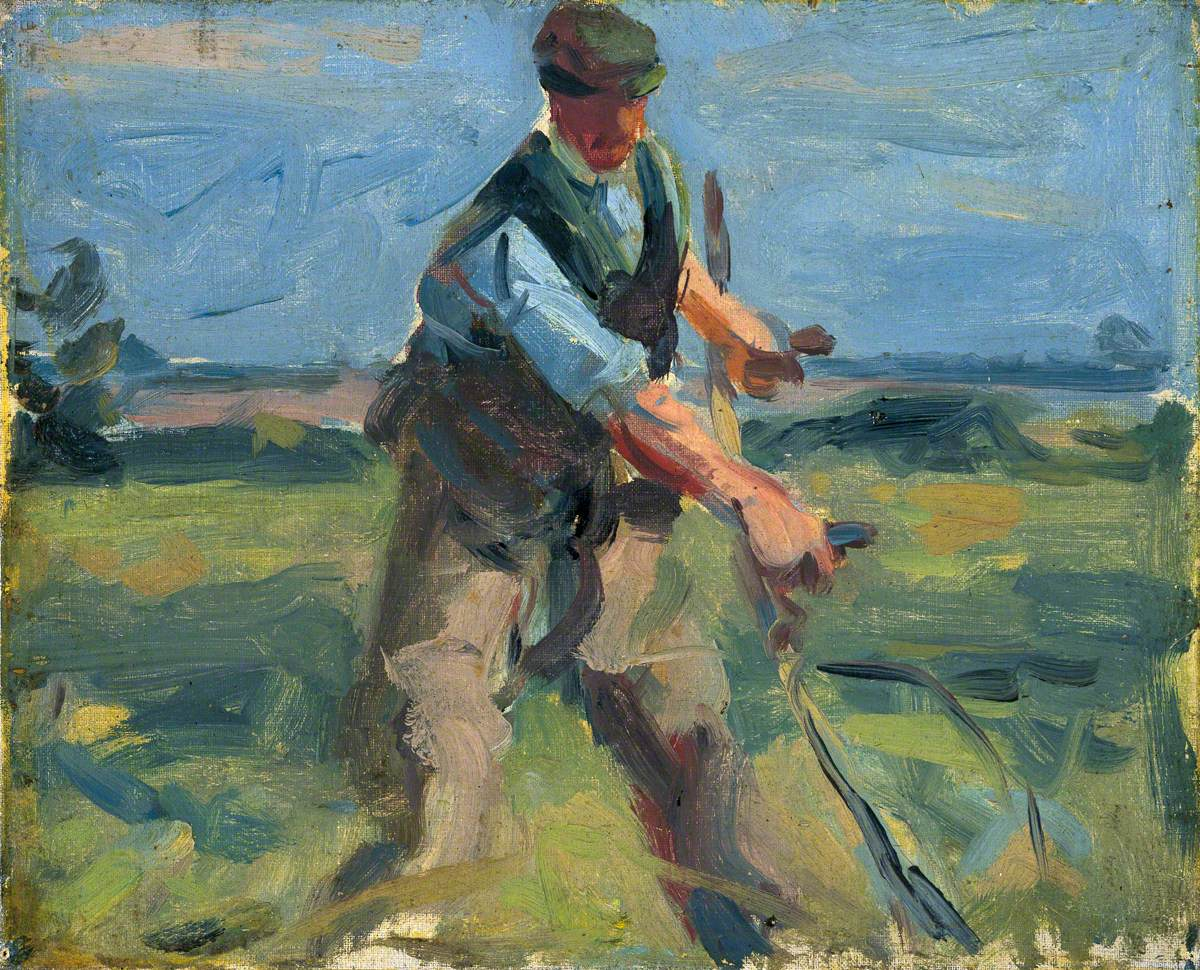
The tool was swung so that the blade travelled just above the soil, supported by its own geometry rather than held up by the arms.
Not applicable.
Understanding this corrects the usual picture of the work. A mower is not lifting and swinging a heavy blade – he is rotating his body while the blade skims the surface at a constant height, which is why a skilled man could mow all day and an unskilled one was exhausted within an hour.
6. It Was a Rotation From the Hips, Not an Arm Swing
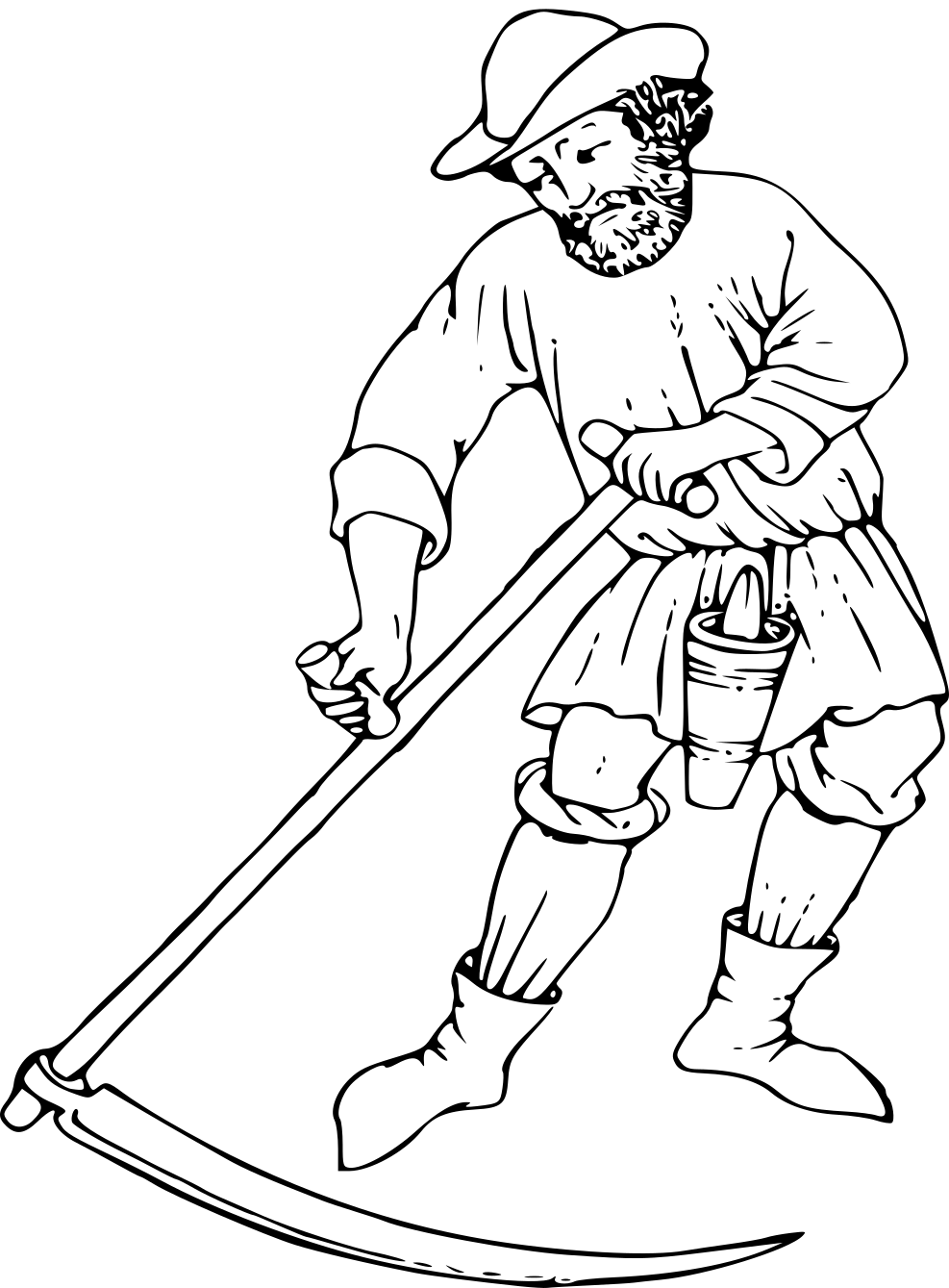
The power came from turning the trunk, with the arms largely holding position, and the mower advanced one step with each stroke.
Not applicable.
The technique is the whole difference between work and struggle. Using the large muscles of the torso and letting the tool do the cutting produces a slow sustainable rhythm, while using the arms to hack produces a fast unsustainable one – and every account of learning to mow is an account of being told to stop using your arms.
7. The Swath Fell in a Neat Row Because the Blade Was Angled
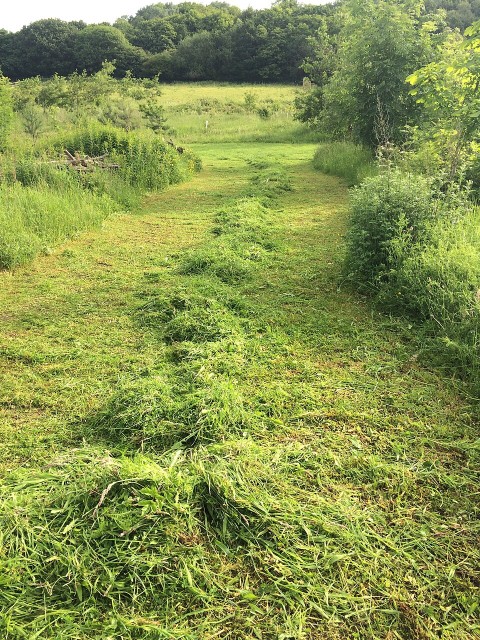
Cut stems were laid over in a tidy line to one side rather than scattered, which is a consequence of how the blade carries the crop through the stroke.
Mechanised with the same objective.
The orderly swath is not tidiness for its own sake and it mattered a great deal. Crop laid in an even row dries evenly, can be raked up cleanly and loses far less in the field – so a good mower was producing a usable windrow at the same time as cutting, which is two jobs in one motion.
8. Mowing Stopped Every Few Minutes to Sharpen
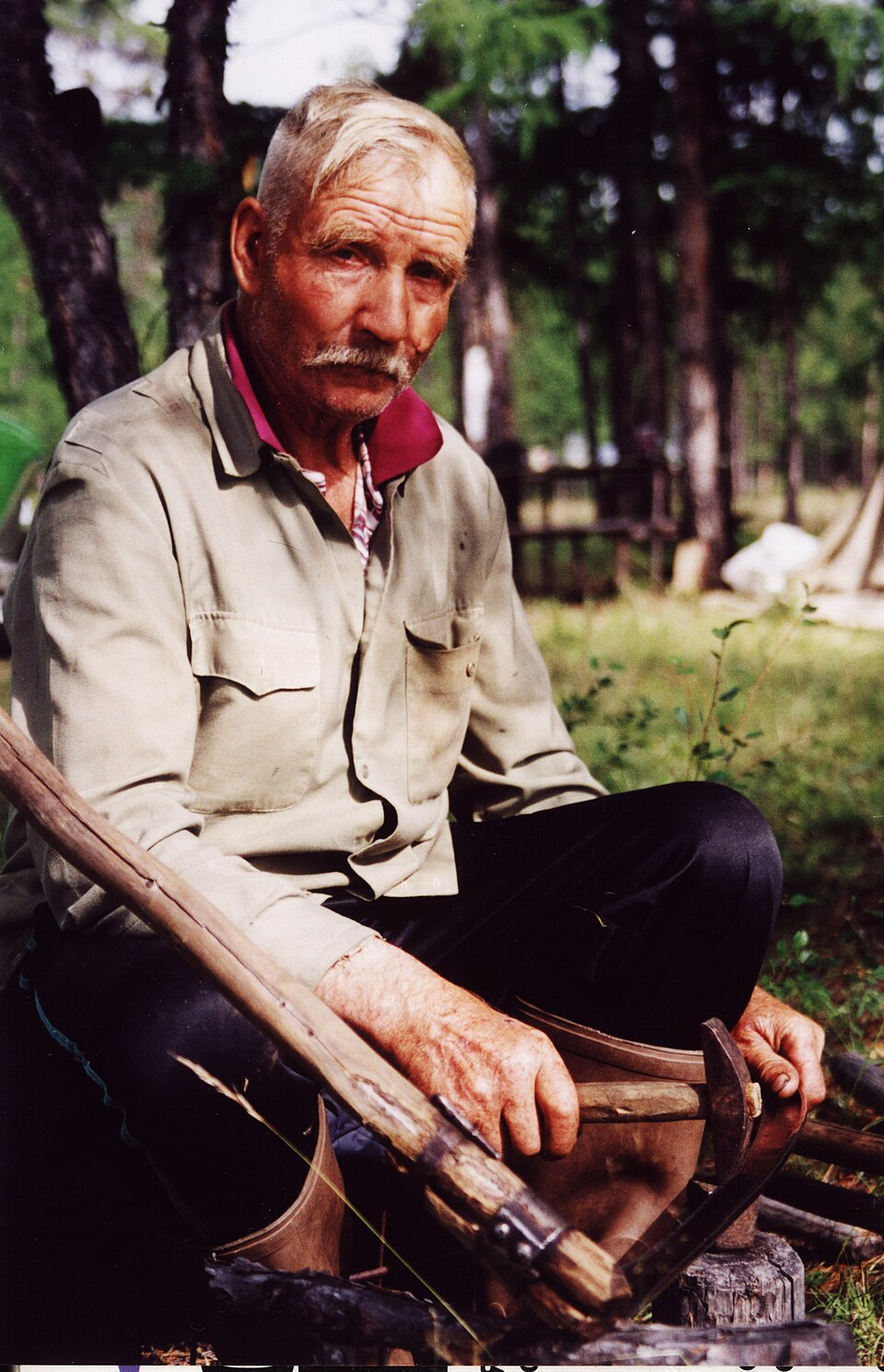
The mower carried a stone in a holder at his belt and touched up the edge constantly, without putting the tool down.
Not applicable.
The frequency of sharpening is the fact that surprises people most. A slicing edge in contact with soil, stones and silica-bearing stems dulls within minutes, so a working mower stopped to stone the blade several times an hour – which means the rhythm of the day was cutting and sharpening in alternation rather than continuous work.
9. The Blade Was Hammered Thin Before the Season
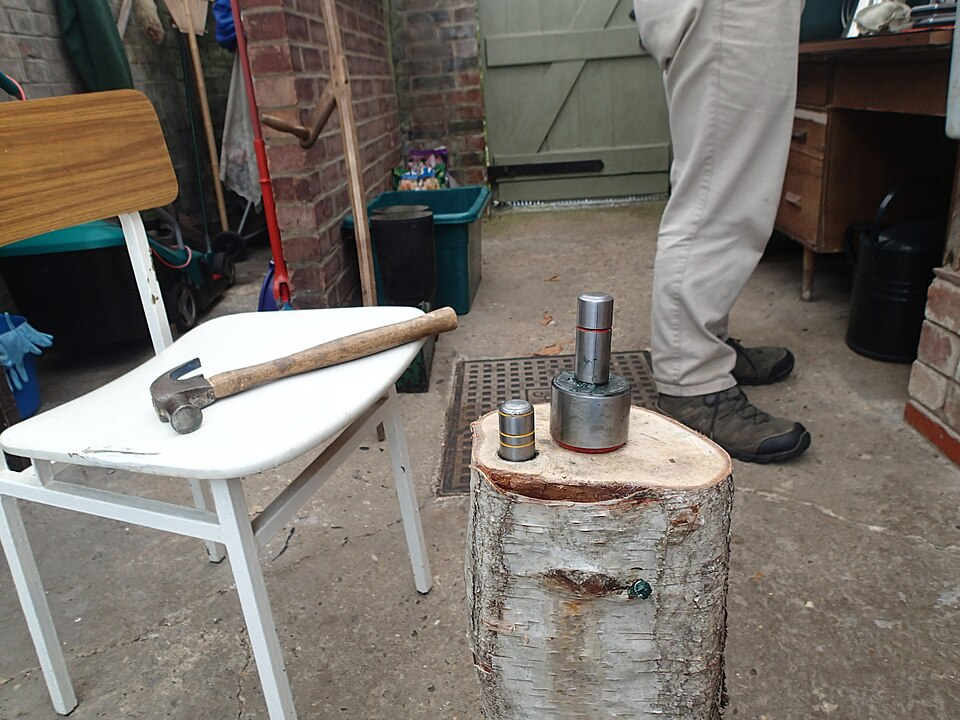
Periodically the edge was peened – hammered on a small anvil to stretch and thin the metal – which restored a keen edge that stoning alone could not produce.
Not applicable.
Peening is the skilled maintenance task and it is a genuinely sophisticated piece of metalwork. Hammering the last fraction of the edge draws the steel out thinner, which gives a sharpness no amount of abrasion could reach – and doing it badly ruins a blade permanently, so it was a job for somebody who knew exactly what they were doing.
10. Men Mowed in a Line and the Order Mattered
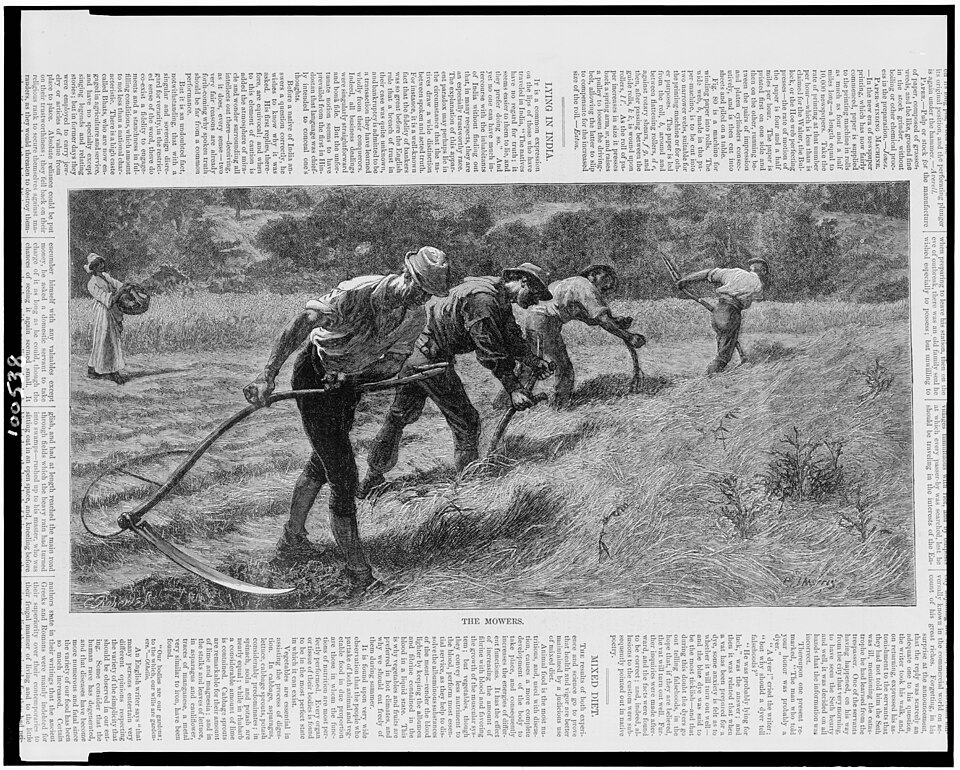
A crew of mowers worked diagonally across a field in sequence, each following the one ahead, and position in that line was a statement about ability.
Not applicable.
The formation was both practical and competitive. Working in echelon means nobody is cutting into standing crop another man needs, and the fastest mower led – which made the arrangement a visible public ranking of every man present, maintained for the whole of a long day.
11. The Cradle Turned a Scythe Into a Grain Harvester
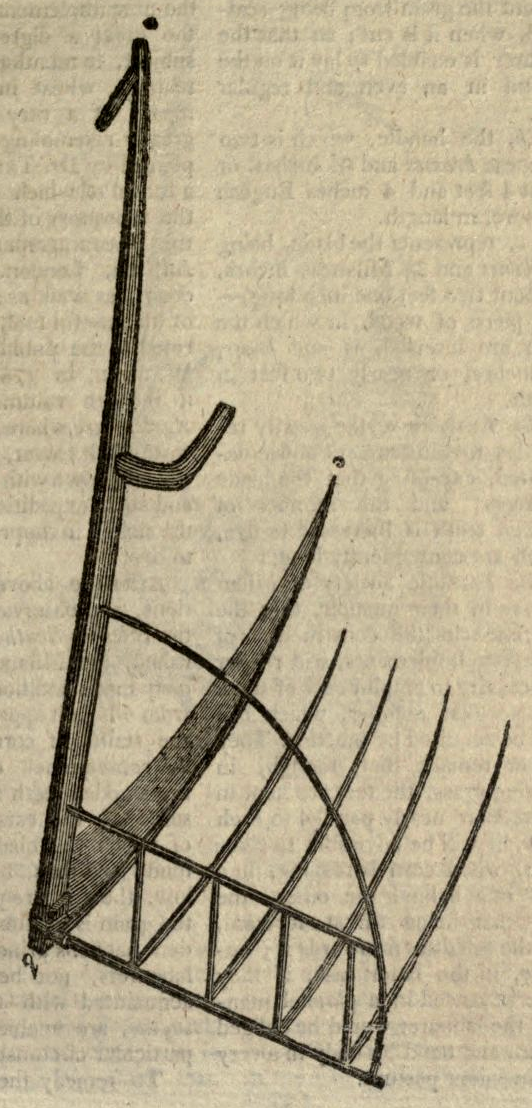
For small grain, a framework of wooden fingers was fitted above the blade to catch the cut stalks so they could be laid down in bundles rather than scattered.
Combines.
The cradle is a simple addition that changes the tool’s purpose entirely. Hay can be left where it falls, but grain has to be gathered with the heads aligned so it can be bound and shocked – and a set of fingers that holds the cut stalks until the mower deposits them solves that without any mechanism at all.
12. A Cradle Was Much Harder Work
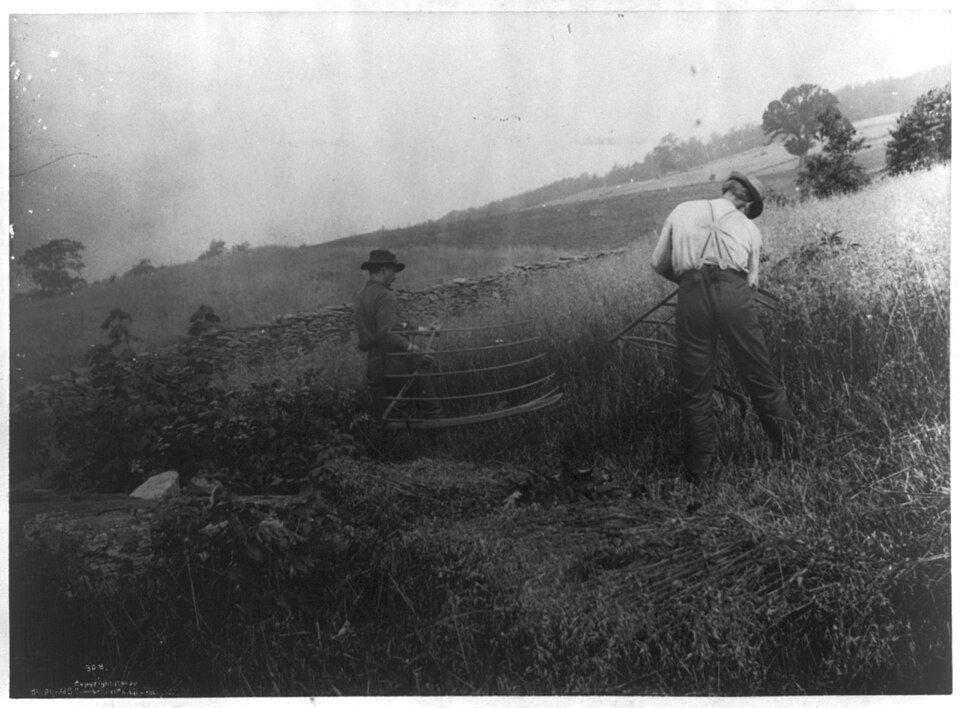
The frame added weight and wind resistance, and the mower had to control where each gathered bundle was placed, which made grain cradling the heaviest hand harvesting there was.
Not applicable.
This is worth noting because the two jobs get run together. Mowing hay is a sustainable rhythm; swinging a cradle full of grain and setting it down deliberately is a far more demanding version of the same motion, and the men who could do it all day were a recognised category.
13. The Work Was Done at Dawn
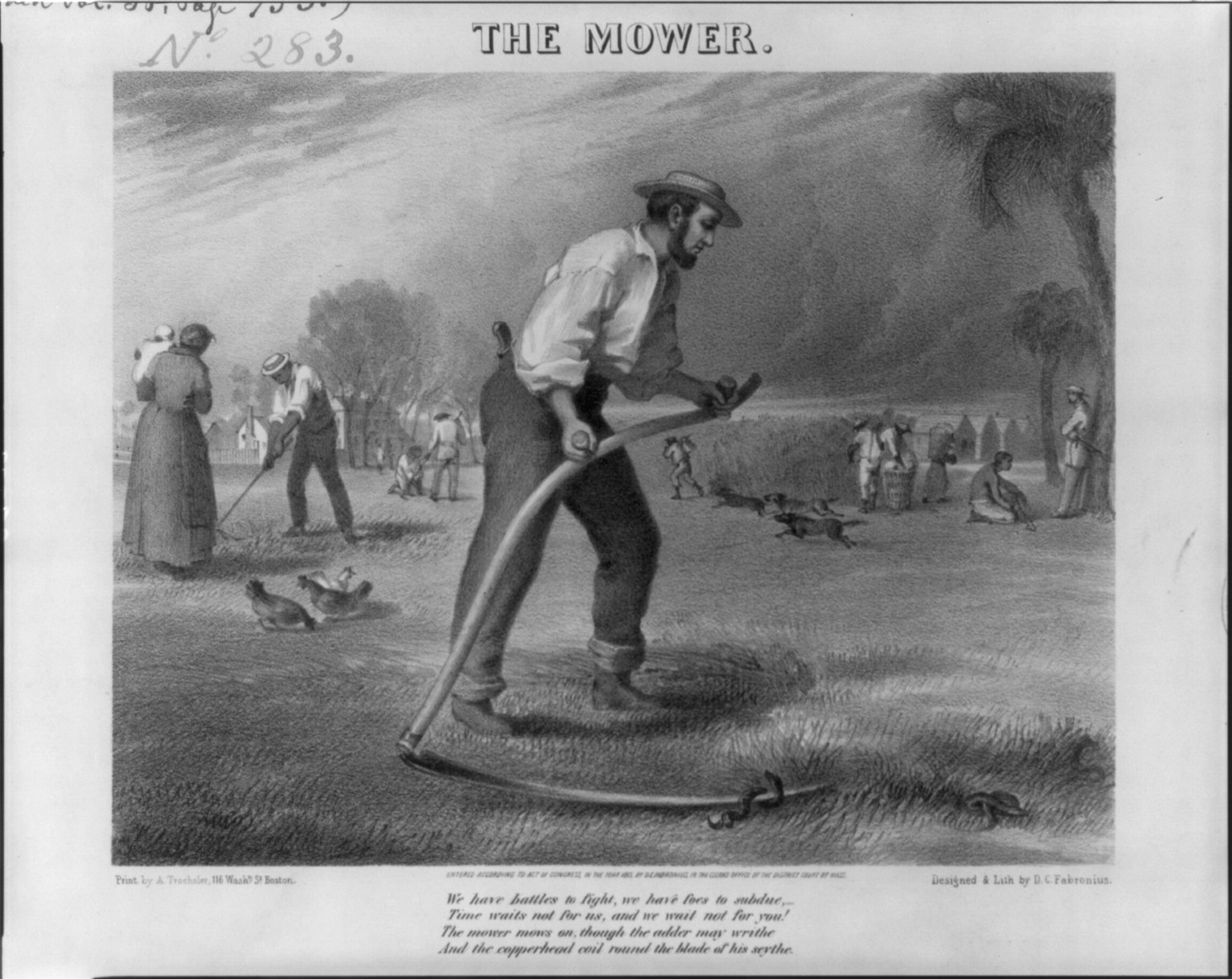
Mowing began at first light and stopped by late morning, because damp stems cut more easily and cleanly than dry ones.
Not applicable in the same way.
The timing has a physical reason that is easy to miss. A stem holding moisture is stiffer and parts more cleanly under a slicing blade, while a dry brittle one bends away and tears – so the best mowing was in the dew, which also happens to be the coolest part of the day.
14. Then the Horse Mower Replaced Twenty Men
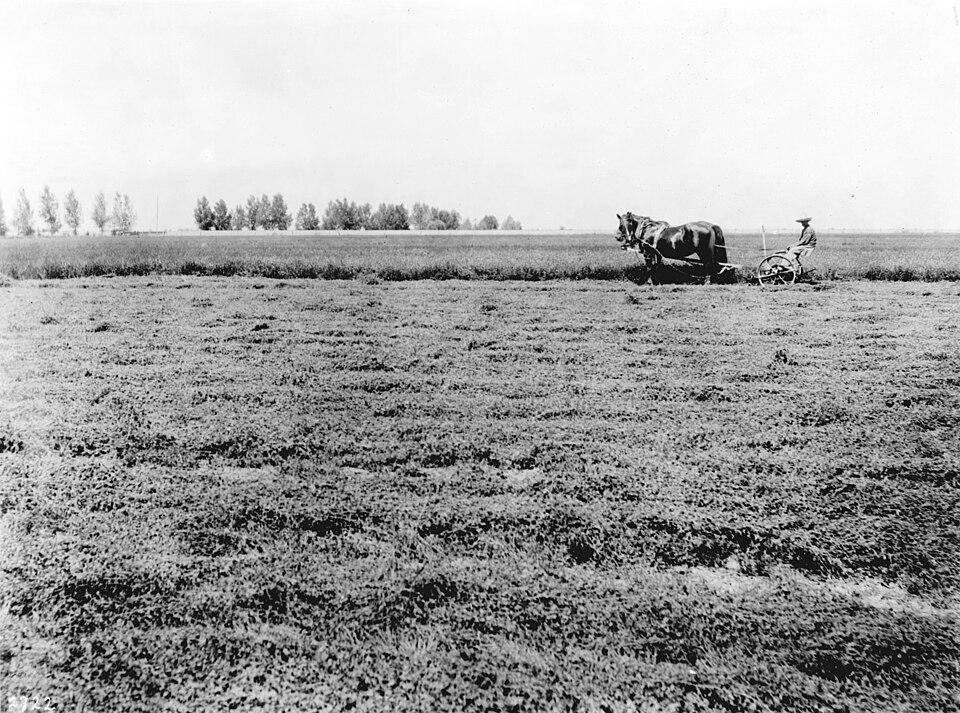
A machine with a reciprocating cutter bar drawn by horses cut a far wider swath far faster, and one man driving it outpaced a whole crew.
Standard, at vastly greater scale.
The horse-drawn mower is the decisive replacement and it ended the crew rather than the tool. A cutter bar shears the crop between moving blades rather than slicing it, which needs no keen edge and no technique – so the entire body of skill in the hand tool became unnecessary in a single generation.
15. And by 1964 the Scythes Were Hanging in Barns
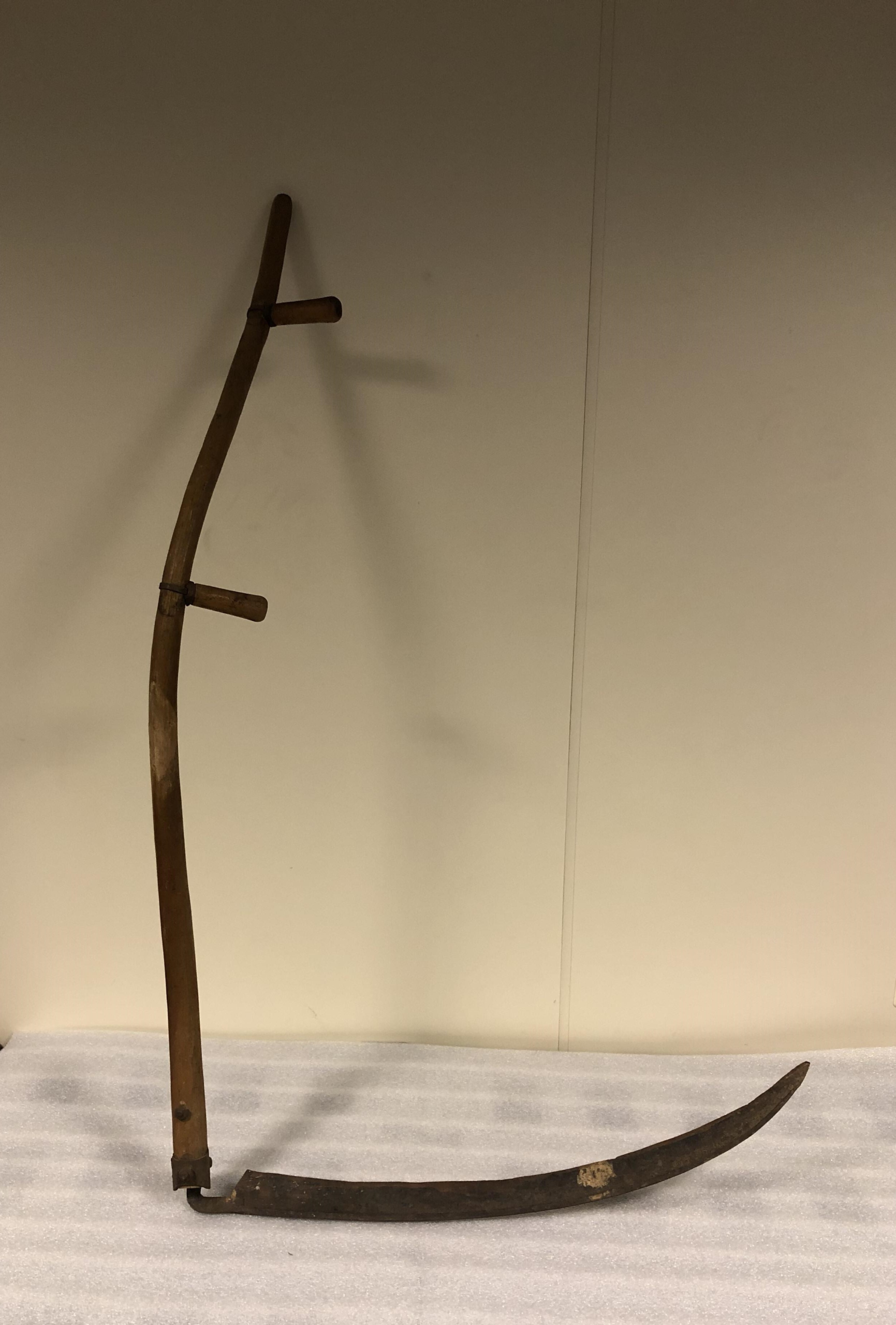
Scythes survived everywhere as rusted tools on barn walls, kept for trimming odd corners that machinery could not reach, with the technique mostly forgotten.
A deliberate revival exists, and the tools are made and used by people who seek them out.
And what deserves the last word is how much knowledge was packed into a stick with a blade on it. An American mower understood that his tool sliced rather than chopped, that its curve kept the cutting angle constant through the stroke, that the handles had to be set to his own body, that the blade rode on the ground rather than being held up, that the power came from his hips rather than his arms, that the swath had to fall in an even row to dry properly, that the edge needed stoning several times an hour, that the blade needed hammering thin before the season, and that the whole job was best done in the dew before the sun came up. He also knew where he stood in the line of men crossing the field. Not one piece of that was written down for him. A horse-drawn cutter bar made every bit of it unnecessary, because shearing needs no edge and no technique – which is why the tools survived on the walls and the knowledge did not.
A Stick With a Blade on It, and All of This Inside It
A scythe looks like the simplest tool on a farm and it contains a surprising quantity of understanding, none of which was ever written down for the men using it.
Start with the cutting action, because the whole design follows from it. The blade slices – drawn sideways through standing stems, parting them by sliding along their length rather than striking them. A slicing edge needs very little force and must be extremely keen; a chopping edge needs force and tolerates bluntness. Everything else is a consequence.
The curve of the blade is solving a geometry problem. Swung in an arc, a straight blade meets the crop at a constantly changing angle and cuts badly through most of the stroke. A curved one moves the contact point along the edge as the swing progresses, keeping the slicing angle constant from start to finish.
The handles were fitted to the person. Both grips were adjustable and were set to the mower’s own height and arm length, because a scythe set wrongly either lifts the blade off the ground or drives it into the soil. So a scythe was somebody’s scythe in a way most farm tools were not.
And then the technique, which is where the usual picture of this work is wrong.
The blade rode on the ground, supported by its own geometry rather than held up by the arms. And the power came from rotating the trunk, with the arms largely holding position, the mower advancing one step per stroke. A skilled man was not lifting and swinging a heavy blade – he was turning his body while the blade skimmed the surface at a constant height. Which is exactly why a skilled man could mow all day and an unskilled one was finished within the hour, and why every account of learning to mow is an account of being told to stop using your arms.
The result was a neat swath, laid over in a tidy line to one side rather than scattered – and that mattered a great deal. Crop in an even row dries evenly, rakes up cleanly and loses far less in the field, so a good mower was producing a usable windrow and cutting the crop in the same motion.
Two things about the edge, which was the tool’s permanent weakness.
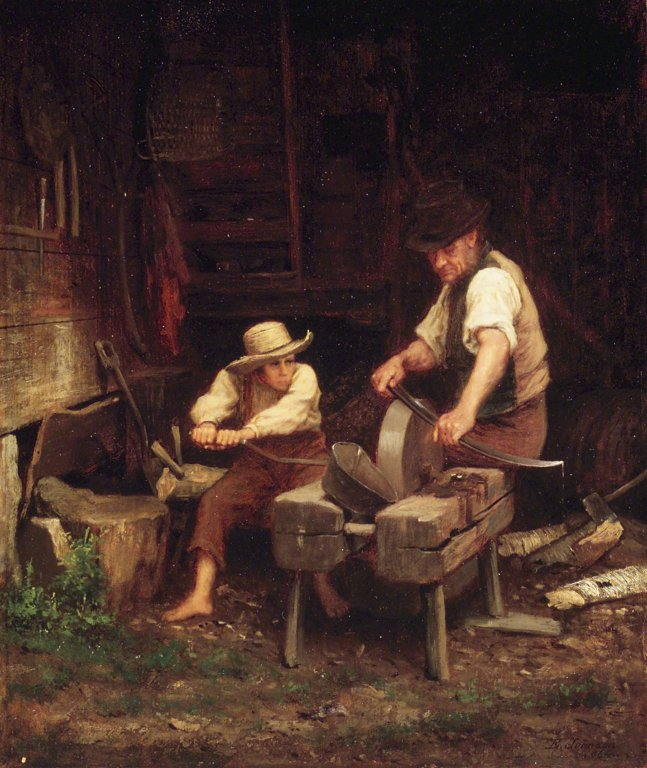
Mowing stopped every few minutes to sharpen. A slicing edge in contact with soil, stones and silica-bearing stems dulls within minutes, so the mower carried a stone at his belt and touched up the blade several times an hour without putting the tool down. The rhythm of the day was cutting and sharpening in alternation.
And periodically the blade was peened – hammered on a small anvil to stretch and thin the metal, which restores a keenness that abrasion alone cannot reach. That is genuinely sophisticated metalwork, and doing it badly ruins a blade permanently, so it belonged to somebody who knew exactly what they were doing.
The social arrangement was as fixed as the technique. Crews mowed diagonally across a field in sequence, each following the one ahead, which means nobody cuts into standing crop another man needs – and the fastest mower led. So the formation was a visible public ranking of every man present, maintained all day.
For small grain the tool changed character. A framework of wooden fingers fitted above the blade caught the cut stalks so they could be laid down in aligned bundles rather than scattered, because grain has to be gathered with the heads together to be bound and shocked. That solves the problem with no mechanism at all – and it made the work far heavier, since the frame added weight and wind resistance and every gathered bundle had to be placed deliberately. The men who could cradle grain all day were a recognised category.
One more thing everybody knew: the work was done at dawn and stopped by late morning. A stem holding moisture is stiffer and parts cleanly under a slicing blade, while a dry brittle one bends away and tears – so the best mowing was in the dew, which happens also to be the coolest part of the day.
The horse-drawn mower ended all of it, and the interesting part is why. A reciprocating cutter bar shears the crop between moving blades rather than slicing it, which needs no keen edge, no peening, no stoning and no technique whatever. One man driving a machine outpaced an entire crew.
So the tools stayed, hanging on barn walls, kept for trimming corners machinery could not reach.
And the knowledge inside them – the slicing action, the constant cutting angle, the fitted handles, the blade riding on the ground, the rotation from the hips, the even swath, the stone every few minutes, the hammered edge before the season, the dew before sunrise, and where a man stood in the line – went with the crews.
If a scythe in your family still has its handles set, that spacing is somebody’s measurements.
Like our content? Follow us for more.