Hay had to go up, which is the hardest direction there is.
A loaded wagon stands at ground level and the crop has to end up at the top of the barn – several tons of loose material raised twenty or thirty feet, repeatedly, in the hottest weeks of the year. Moving hay along the ground is easy; lifting it is not.
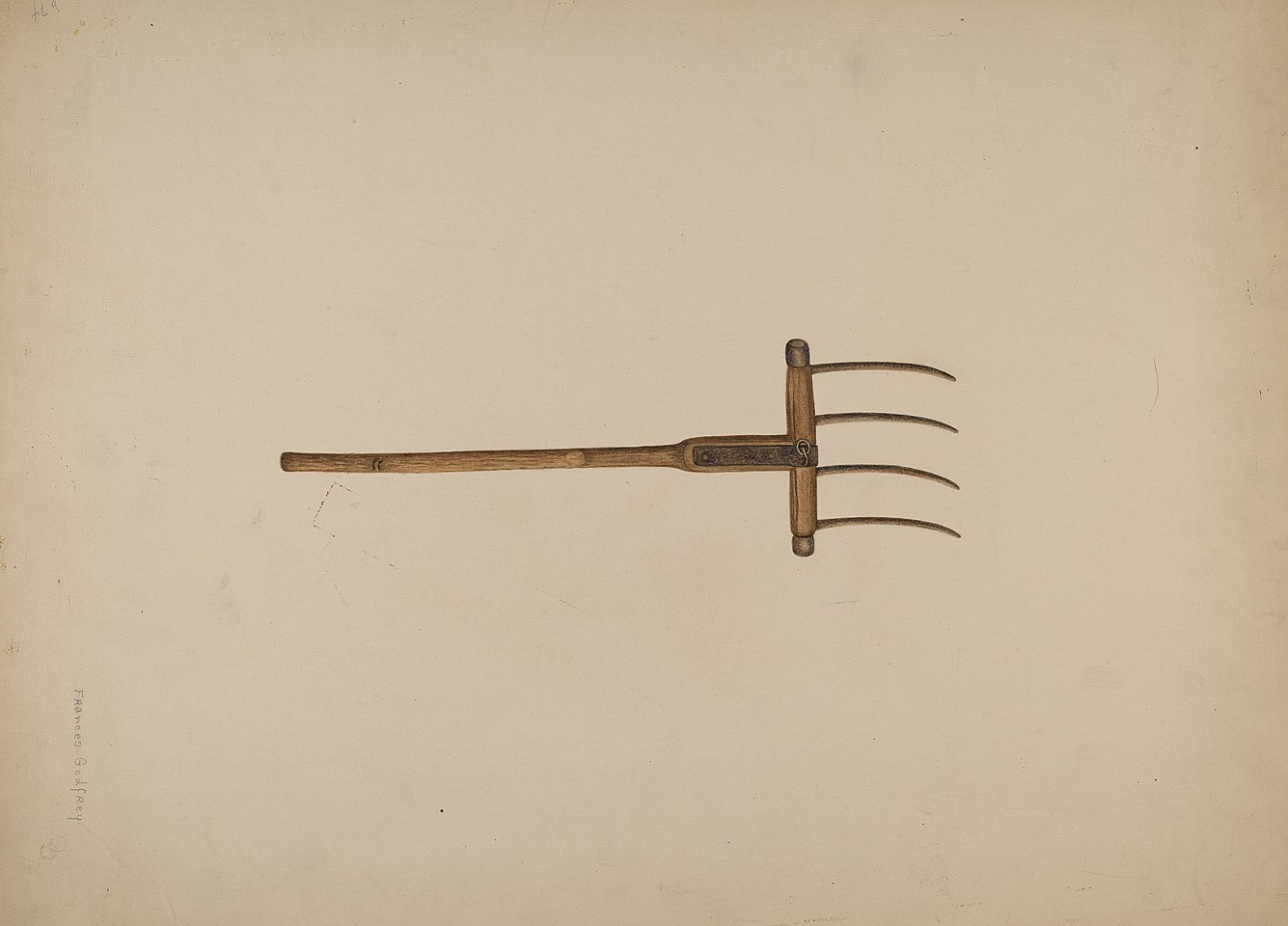
The answer was a steel rail bolted under the peak of the roof, running the whole length of the barn with a wheeled carrier on it. A set of curved tines was driven into the load on the wagon and locked, taking several hundred pounds in one grip – which is the clever part, because loose hay is not a bale and has nothing to grab. And the lifting was done by a horse walking away from the building in a straight line, with a rope over pulleys converting that horizontal pull into a vertical one. Here are fifteen things every American farm boy knew.
1. Hay Had to Go Up, and That Is the Hardest Direction
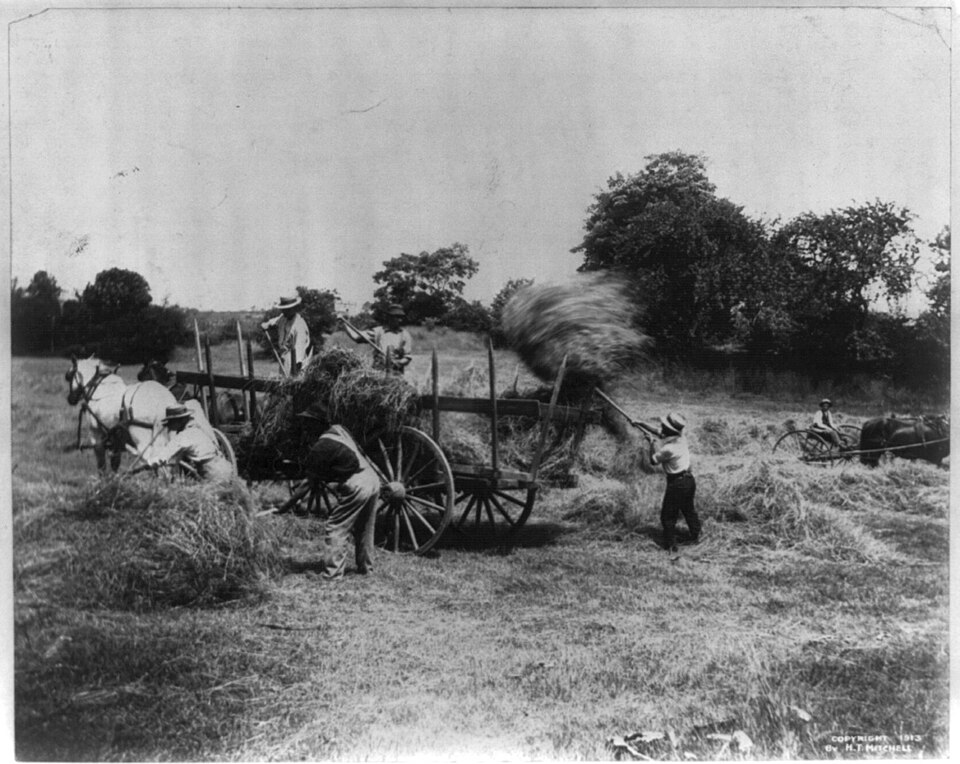
A loaded wagon stands at ground level and the hay has to end up at the top of a barn, which means lifting several tons of loose material twenty or thirty feet.
Baled or chopped hay is handled mechanically from start to finish.
Start with the direction, because that is the entire problem. Moving hay along the ground is easy and moving it upward is not, and a barn stores it high on purpose – so every farm needed a way of raising an enormous bulk of light material to the top of a building, repeatedly, in a hurry, in the hottest weeks of the year.
Like our content? Follow us for more.
2. The Track Ran the Length of the Ridge
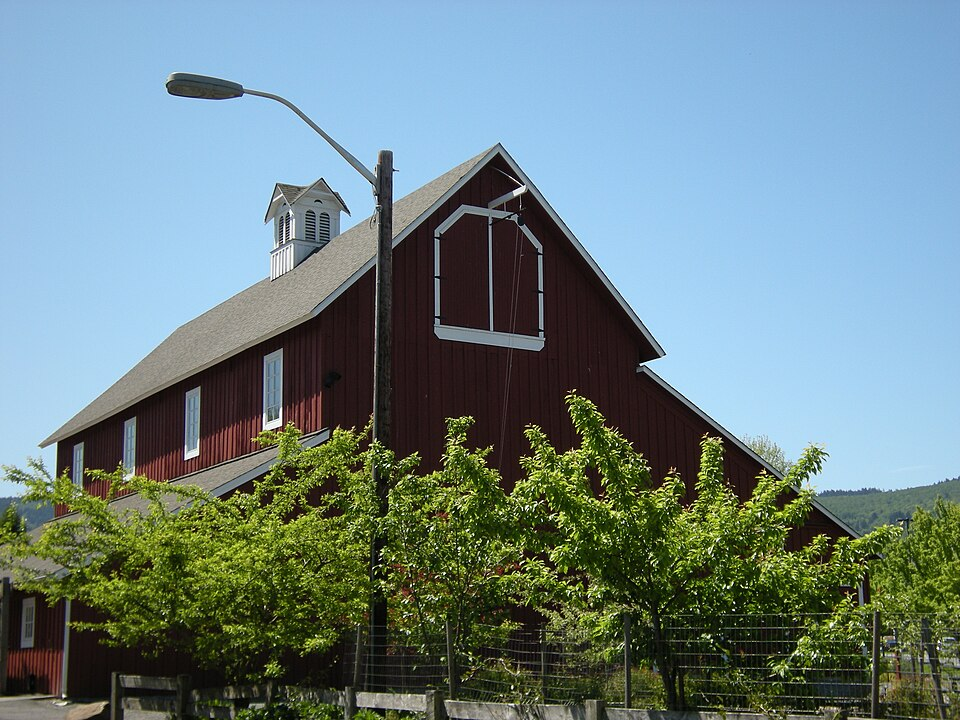
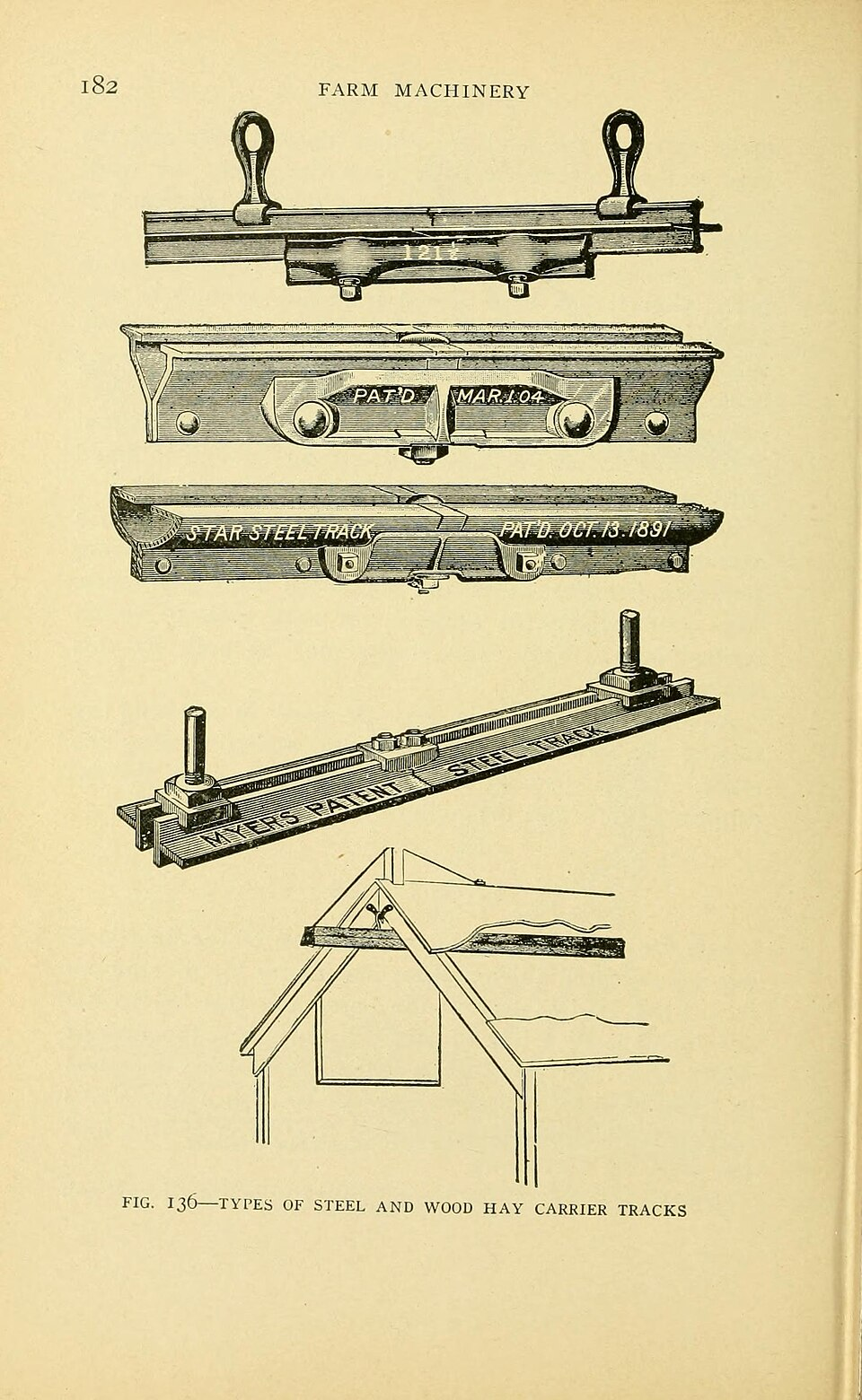
A steel rail was bolted under the peak of the barn roof, running from one gable end to the other, with a wheeled carrier running along it.
Not applicable.
The track is the piece of farm engineering people notice and cannot identify. A rail at the very top of a barn’s interior, with a carriage that runs its whole length, means a load can be lifted at the door and then moved to any point in the building – which is the difference between a hoist and a distribution system.
3. The Fork Took a Bite of Loose Hay
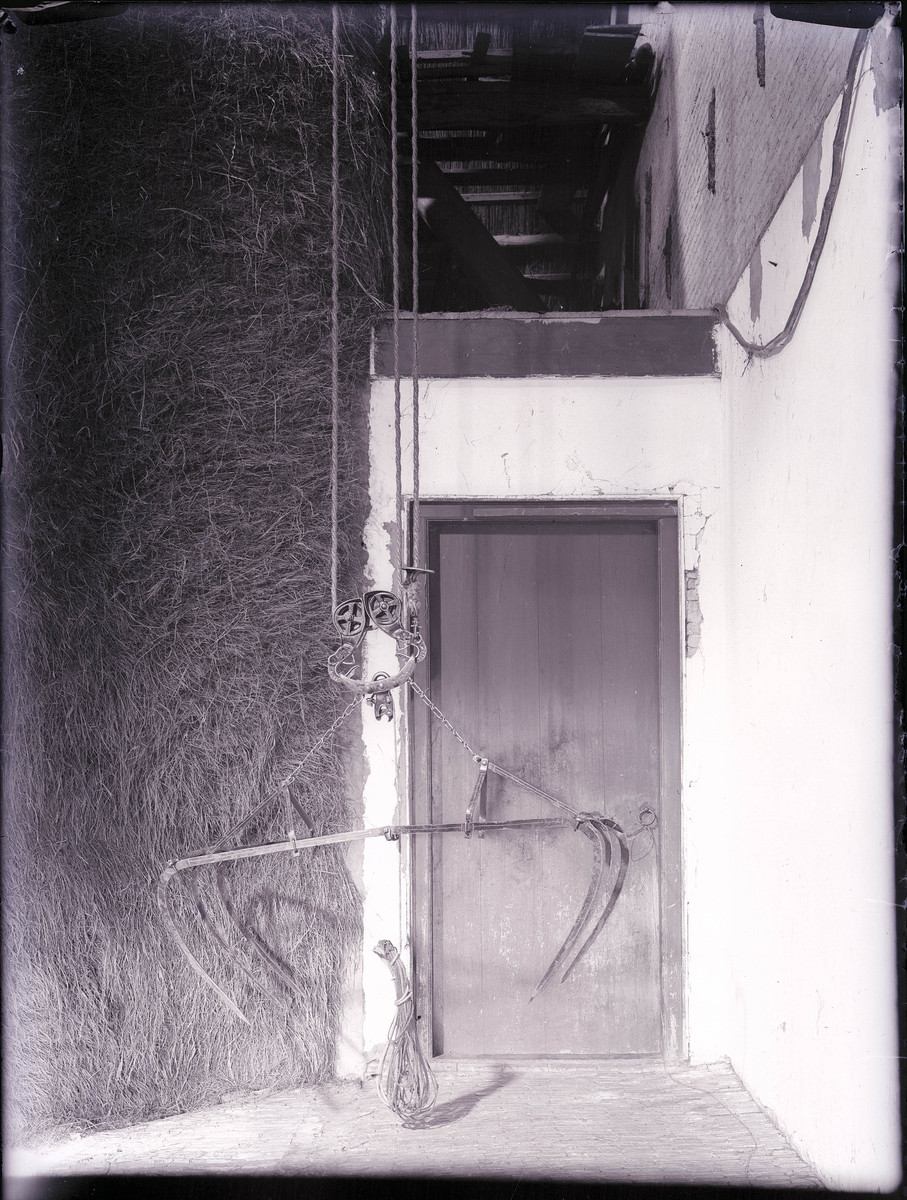
A set of curved tines was driven into the load on the wagon and locked, gathering several hundred pounds of hay in one grip.
Not applicable.
The fork is the clever part and the difficulty it solves is real. Loose hay has nothing to grab – it is not a bale and has no structure – so the tool had to penetrate the load, close on it from several directions and hold it against its own weight all the way up without the operator being anywhere near it.
4. The Horse Did the Lifting
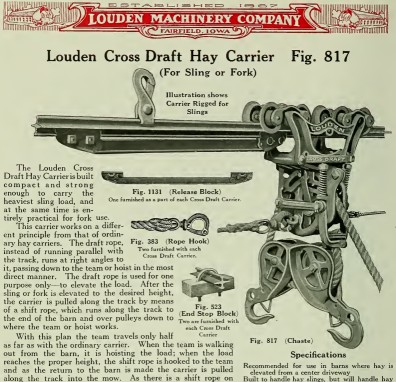
A rope ran from the fork, up over pulleys, along the track and out through the far end of the barn, where a horse walking away from the building hauled the load up.
Hydraulics and engines.
The horse arrangement is a beautiful piece of practical mechanics. The animal walks in a straight line on the ground, away from the barn, and the rope and pulleys convert that horizontal pull into a vertical lift – which means the power source never has to go anywhere near the thing being lifted.
5. A Boy Usually Led the Horse
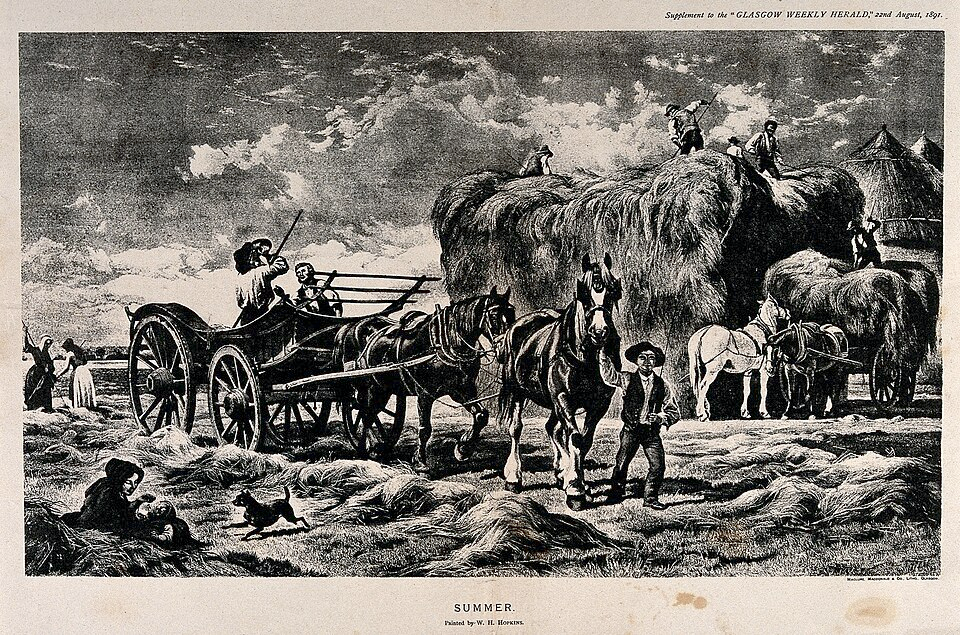
Driving the horse away from the barn and bringing it back for the next lift was a child’s job, done many times an hour.
Not applicable.
The job allocation tells you how the work was organised. Leading a horse in a straight line and backing it up again requires no strength and complete reliability, which makes it ideal work for a child – and the whole hoisting cycle depended on that child being attentive for several hours.
6. The Carrier Locked, Then Carried, Then Released
When the fork reached the top, the carrier caught it, the load ran along the track to where it was wanted, and a trip rope released the fork to drop the hay.
Not applicable.
The sequence is what makes the system more than a pulley. A carrier that latches the load at the top and then rolls along means a single rope and a single horse can place hay anywhere in a very large building – and the whole operation is controlled from the ground by one rope.
7. Somebody Was Up There in the Heat
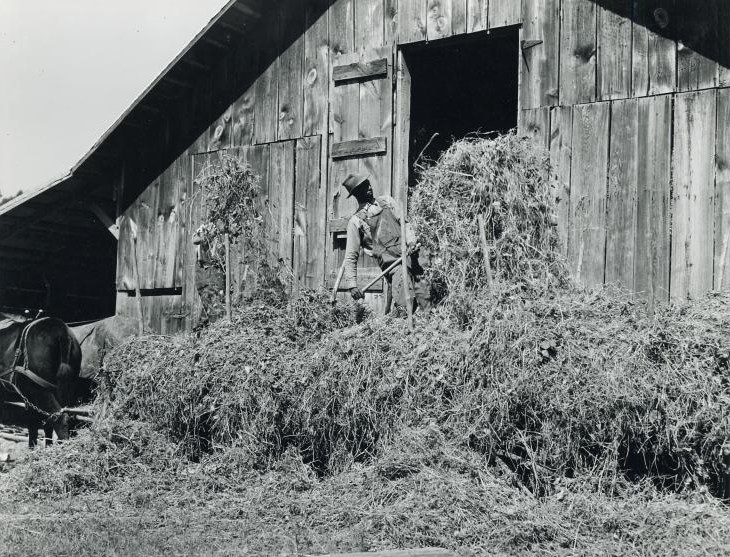
A man or boy worked in the mow spreading and treading the dropped hay into the corners, in still air under a metal roof in July.
Not applicable.
This was the worst job on the farm and it should be said plainly. The upper part of a barn in high summer is extremely hot, the air is full of dust and chaff, and the work is heavy – and it had to be done, because hay dropped in a heap wastes space and does not keep properly.
8. Packing It Properly Was the Point
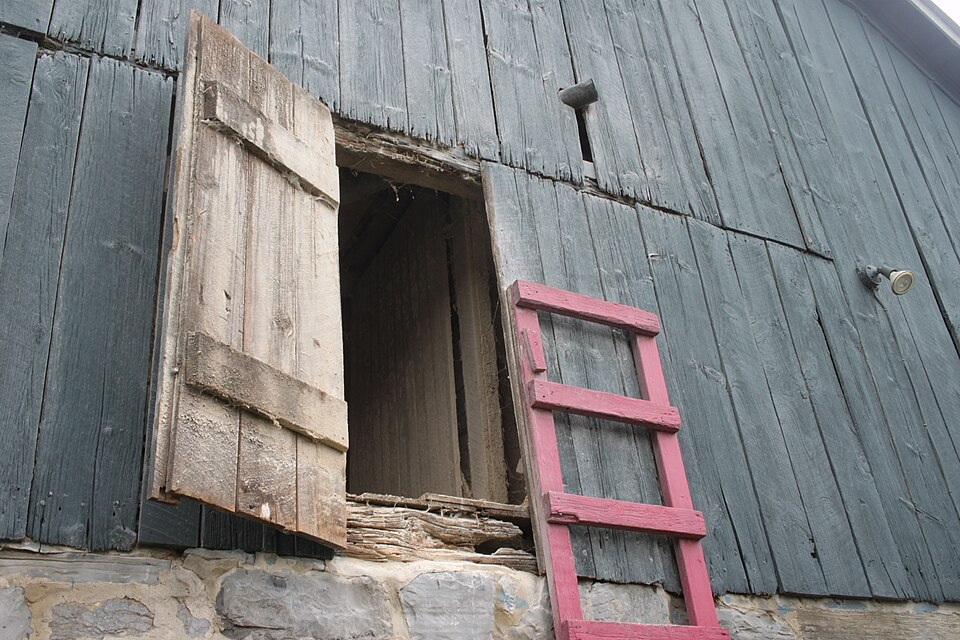
Hay had to be spread evenly and trodden down, because a well-packed mow holds far more, sheds water better and keeps the crop in condition.
Mechanised.
The packing is the hidden skill in a job that looks like brute labour. Loose hay is mostly air, so how tightly it is laid decides how much a barn holds, and an uneven mow leaves hollows that collect moisture – which means the man in the roof was doing something that determined whether the crop survived the winter.
9. Hay Could Heat and Catch Fire by Itself
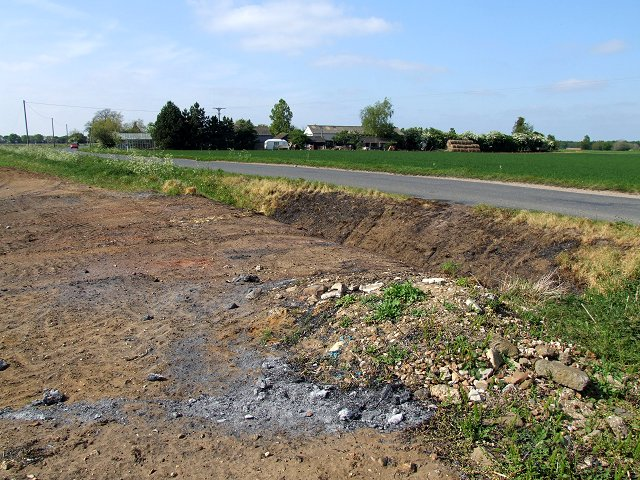
Hay stored damp generates heat as it breaks down, and in bad cases that heating can continue until the stack ignites without any outside source.
Understood, monitored and managed with testing and moisture control.
This has to be stated plainly because it is the single most serious thing about the whole subject. Damp hay in a barn is a genuine fire risk through self-heating, farmers understood it well enough to be frightened of it, and the only defence available was putting the crop up dry. This file gives no method for judging or managing any of that.
10. The Whole Operation Was a Race Against Weather
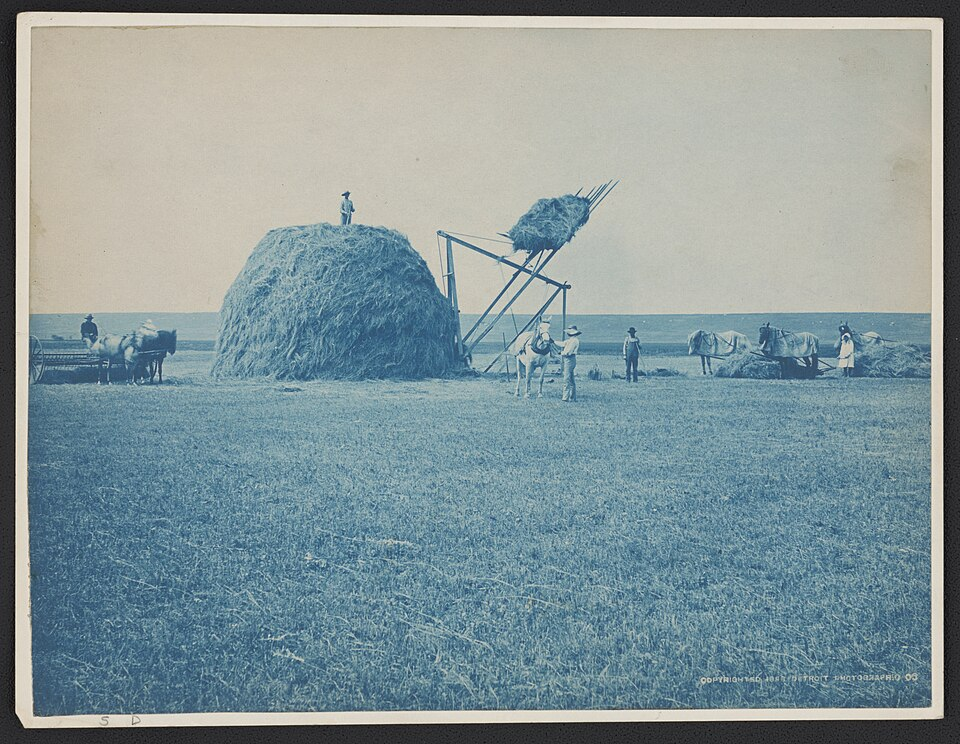
Cut hay has to be dried in the field and then got under cover before rain, which meant the hauling and hoisting happened at maximum speed for a few days.
Still weather-dependent, at vastly greater speed.
The time pressure explains the intensity of everybody’s memory of it. A crop lying in a field is at risk until it is in the barn, so the work ran from early morning until dark with no slack – and a thunderstorm arriving mid-afternoon was a genuine disaster rather than an inconvenience.
11. The Equipment Was Dangerous in Specific Ways
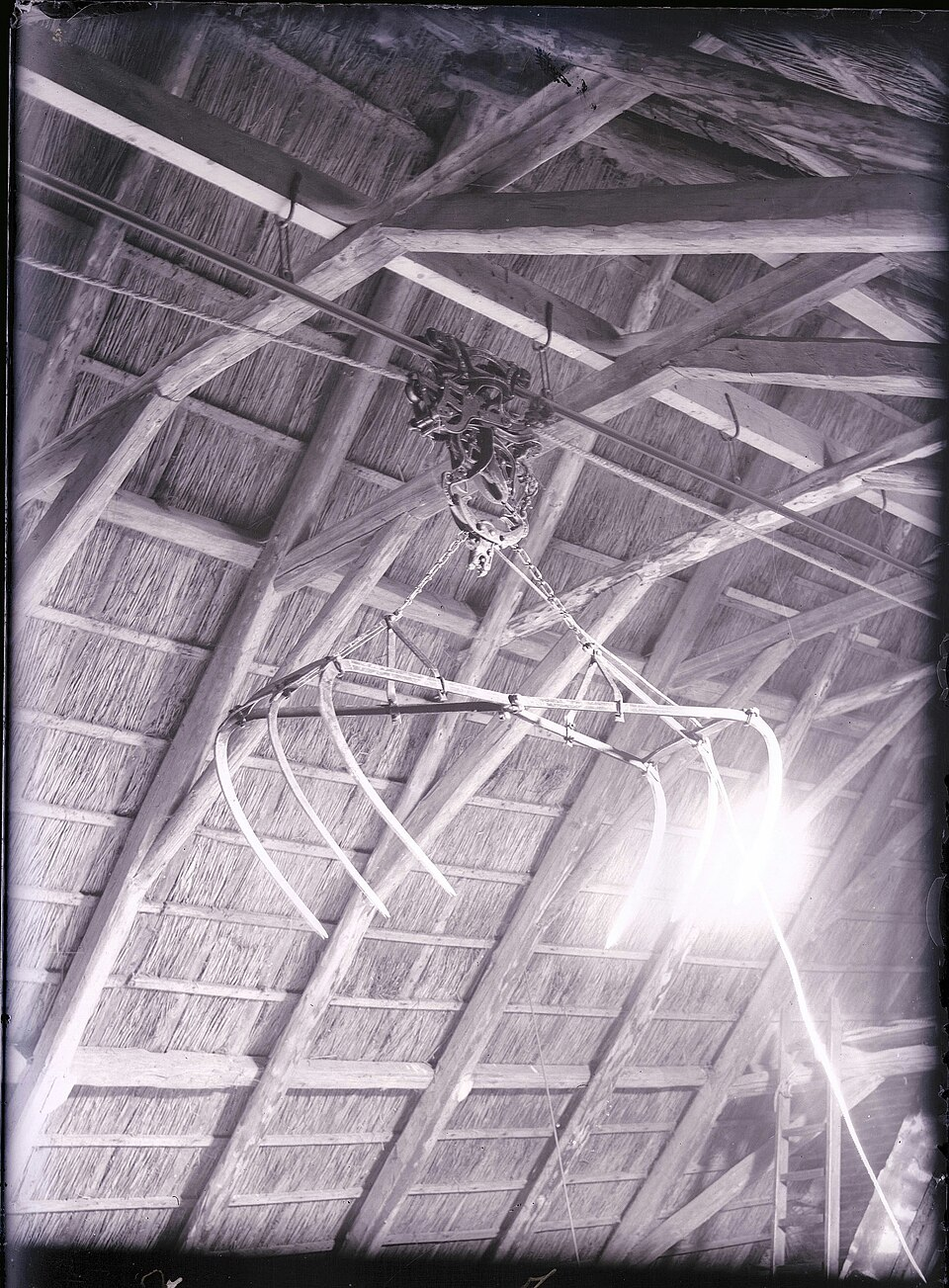
Ropes under enormous tension, a heavy load overhead, a moving carrier and a working horse, all operating around people including children.
Regulated and engineered to an entirely different standard.
This needs stating without detail. A suspended load of several hundred pounds, a rope under great tension and a horse that cannot see what it is doing are a combination the people involved treated with respect, and the positions were assigned accordingly. This file describes no procedure and gives no instruction.
12. Neighbours Worked Together on It
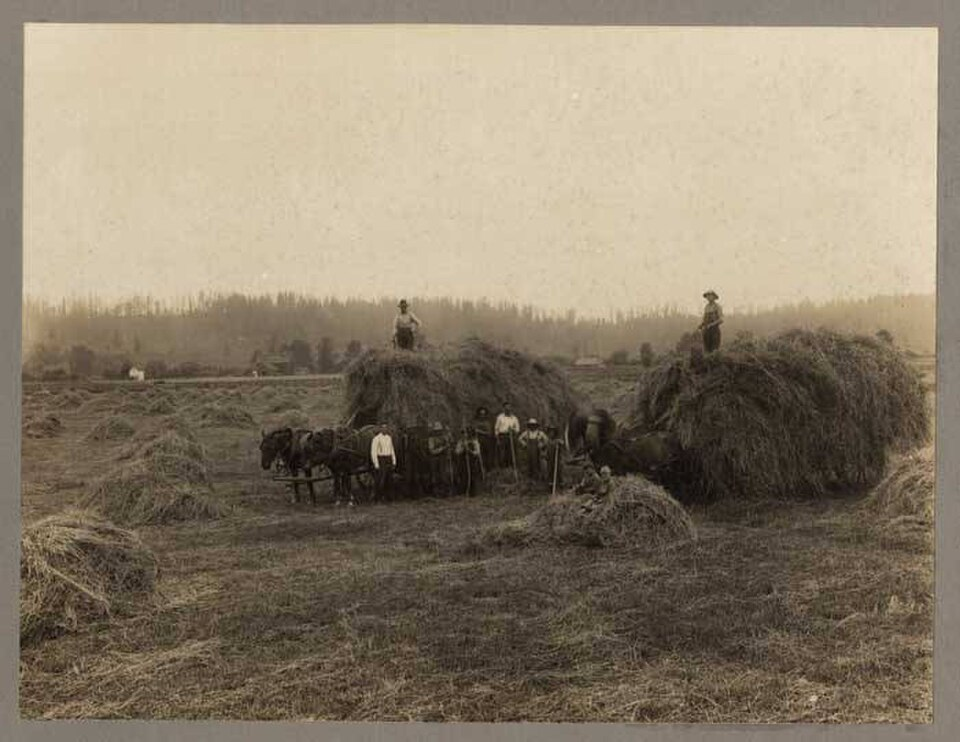
Haying generally required more hands than one farm had, so families exchanged labour across several farms in sequence.
Not applicable.
The reciprocity was the same arrangement as every other large farm job and it worked for the same reason. A task needing eight people for three days in a hurry cannot be staffed by one household, so the neighbours came – and the obligation was returned when their own crop was ready.
13. Then the Baler Changed What Hay Was
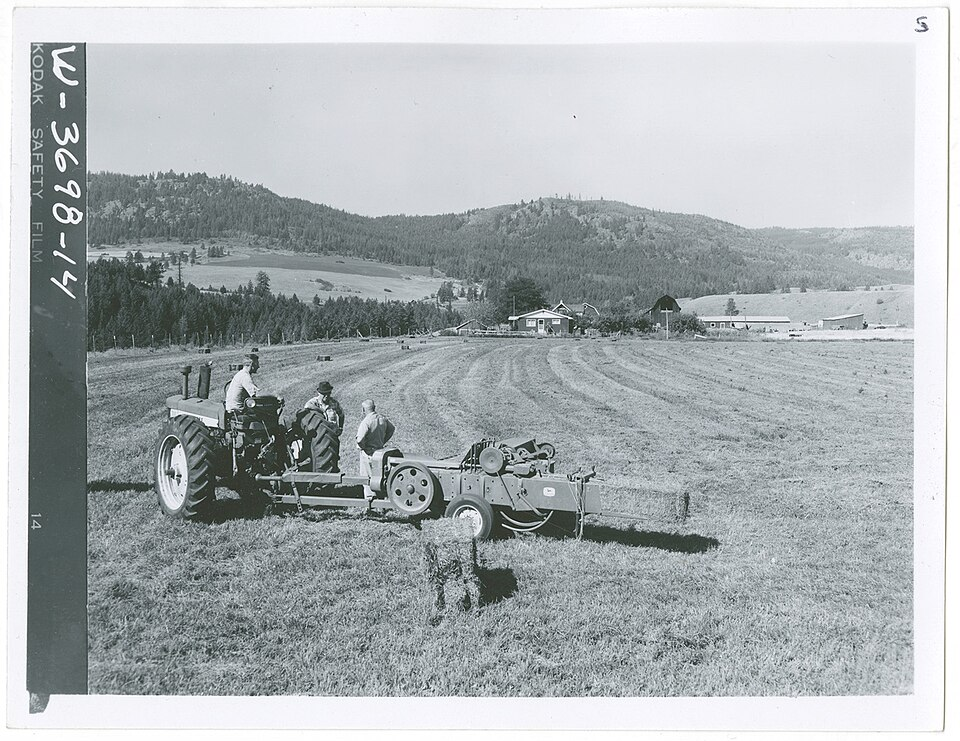
A machine that compressed hay into dense tied bales in the field turned a bulk material into discrete handleable units that could be stacked, carried and thrown.
Standard, with large round and square bales now handled entirely by machine.
The baler is the decisive change and it is a change in the material rather than the machinery. Once hay arrives as a solid rectangular object with strings on it, the problem of gripping loose bulk disappears entirely – and with it the fork, the track, the carrier, the horse and the boy leading it.
14. Then the Elevator and Then the Big Bale Finished It
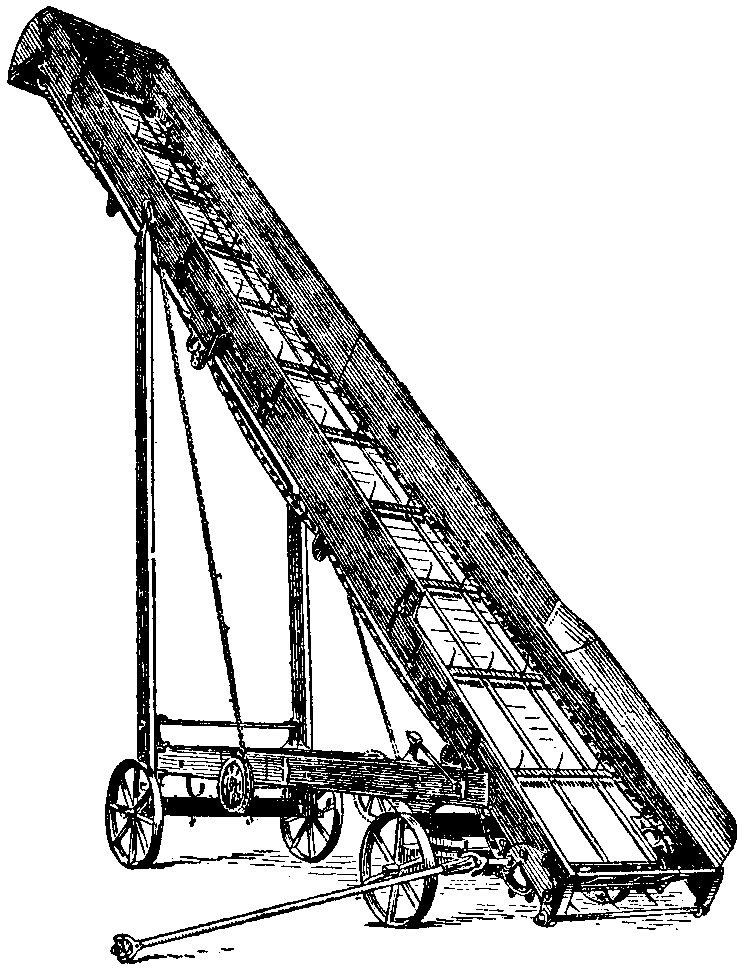
Powered elevators carried bales up a ramp into the mow, and later very large bales were left outside and handled by tractor-mounted equipment.
Standard.
Each step removed more people. An elevator replaces the horse and the hoist, a tractor with a loader replaces the elevator and the man in the mow, and a bale left in the field removes the barn from the process – so the labour requirement fell at every stage until one person did the whole job alone.
15. And by 1964 the Tracks Were Still There With Nothing on Them
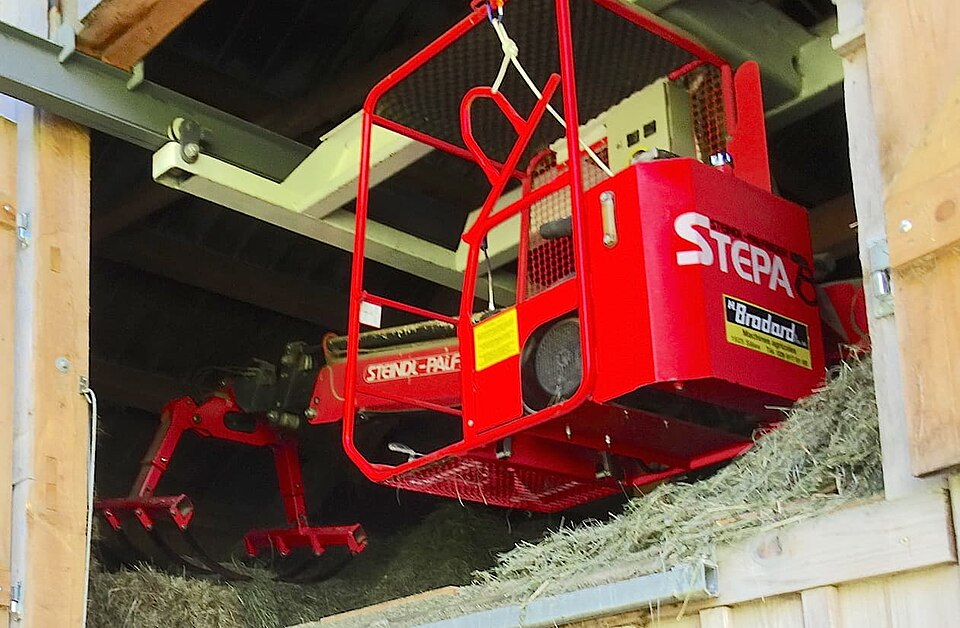
The rails remained bolted under barn roofs across the country long after the forks, ropes and pulleys had been taken down, and most of them are still up there.
Still present in enormous numbers in surviving barns.
And what deserves the last word is that the rail is still bolted to the ridge of an enormous number of American barns, and almost nobody looking up at it knows what it is. It was the top of a system that lifted a loose, structureless, several-ton crop thirty feet into the air using a horse walking away from the building in a straight line, a rope over pulleys, a fork that could grip material with nothing to grip, a carrier that latched the load and rolled it to where it was wanted, a child leading the horse, a man in the roof treading it into the corners in July heat, and the neighbours, who had come because their own hay would be ready next week. The baler abolished the entire problem by turning the crop into blocks – which is better in every respect and removed every one of those jobs. The rail stayed because taking it down was work and leaving it was not.
The Rail Is Still Up There and Nobody Knows What It Is
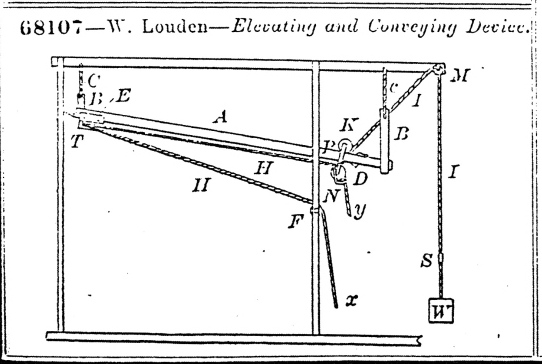
There is a steel rail bolted under the ridge of a great many American barns, and the system it belonged to solved a genuinely hard engineering problem with a horse and a rope.
The problem is direction. A loaded wagon stands on the ground and the hay has to end up at the top of the building – several tons of loose, light, structureless material lifted twenty or thirty feet, over and over, in the hottest weeks of the year. Moving hay horizontally is easy. Lifting it is the hard part.
The system had four pieces and each one solves something specific.
The track ran the full length of the barn under the peak, with a wheeled carrier on it – which means a load could be lifted at the door and then moved to any point in the building. That is the difference between a hoist and a distribution system.
The fork solved the gripping problem. Loose hay has nothing to hold onto, so a set of curved tines was driven into the load and locked, closing on several hundred pounds from several directions and holding it against its own weight all the way up, with nobody near it.
The horse supplied the power, and the arrangement is beautiful. A rope ran from the fork, up over pulleys, along the track and out through the far gable, where a horse walking away from the barn in a straight line hauled the load up. The animal works on the ground, in a straight line, and never goes near what it is lifting.
And the carrier completed it: at the top it latched the fork, the load rolled along the rail to where it was wanted, and a trip rope released it. So one rope and one horse could place hay anywhere in a very large building, all controlled from the ground.
The people were arranged around the machinery.
A boy usually led the horse, out and back, many times an hour – work needing no strength and complete reliability, which makes it ideal for a child, and the whole cycle depended on his attention for hours at a stretch.
And somebody was up in the mow spreading and treading the dropped hay into the corners. That was the worst job on the farm: still air under a roof in July, dust and chaff, heavy work. It had to be done because hay dropped in a heap wastes space and does not keep – and the packing was a real skill rather than brute labour, since loose hay is mostly air and how tightly it is laid decides how much the barn holds, while an uneven mow leaves hollows that collect moisture.
Which connects to the most serious thing in the whole subject. Hay stored damp generates heat as it breaks down, and in bad cases that heating continues until the stack ignites with no outside source at all. Farmers understood this well enough to be frightened of it, and the only defence available was getting the crop in dry. This file gives no method for judging or managing any of it.
Everything about the work was a race. Cut hay dries in the field and then has to be under cover before rain, so the hauling and hoisting ran from early morning until dark for a few days with no slack – and a thunderstorm arriving mid-afternoon was a disaster rather than an inconvenience.
It was also dangerous in specific ways, and that should be said without detail: a suspended load of several hundred pounds, ropes under enormous tension, a moving carrier overhead and a working horse that cannot see what it is doing, all operating around people including children. The positions were assigned with that in mind.
And it needed more hands than one farm had, so families exchanged labour across several farms in sequence – the same reciprocity that governed every other large job, returned when their own crop came ready.
The baler ended all of it, and the change was in the material rather than the machinery. Once hay arrives from the field as a dense tied rectangular object, the problem of gripping loose bulk simply does not exist – and the fork, the track, the carrier, the horse and the boy go with it. Then powered elevators replaced the horse and hoist, tractors with loaders replaced the elevators and the man in the mow, and very large bales left outside removed the barn from the process entirely. Each step took out more people, until one person did the whole job alone.
So the rail stayed, bolted to the ridge, with nothing on it.
It was the top of a system that lifted a structureless several-ton crop thirty feet in the air using a horse walking in a straight line, a rope over pulleys, a fork that could grip material with nothing to grip, a carrier that latched and rolled, a child leading the horse, a man in the roof treading it into the corners in July, and the neighbours – who had come because their own hay would be ready next week.
Taking the rail down was work. Leaving it was not.
If you are ever inside an old barn, look up at the peak.
The rail is almost certainly still there, and that is what it was for.
Like our content? Follow us for more.