

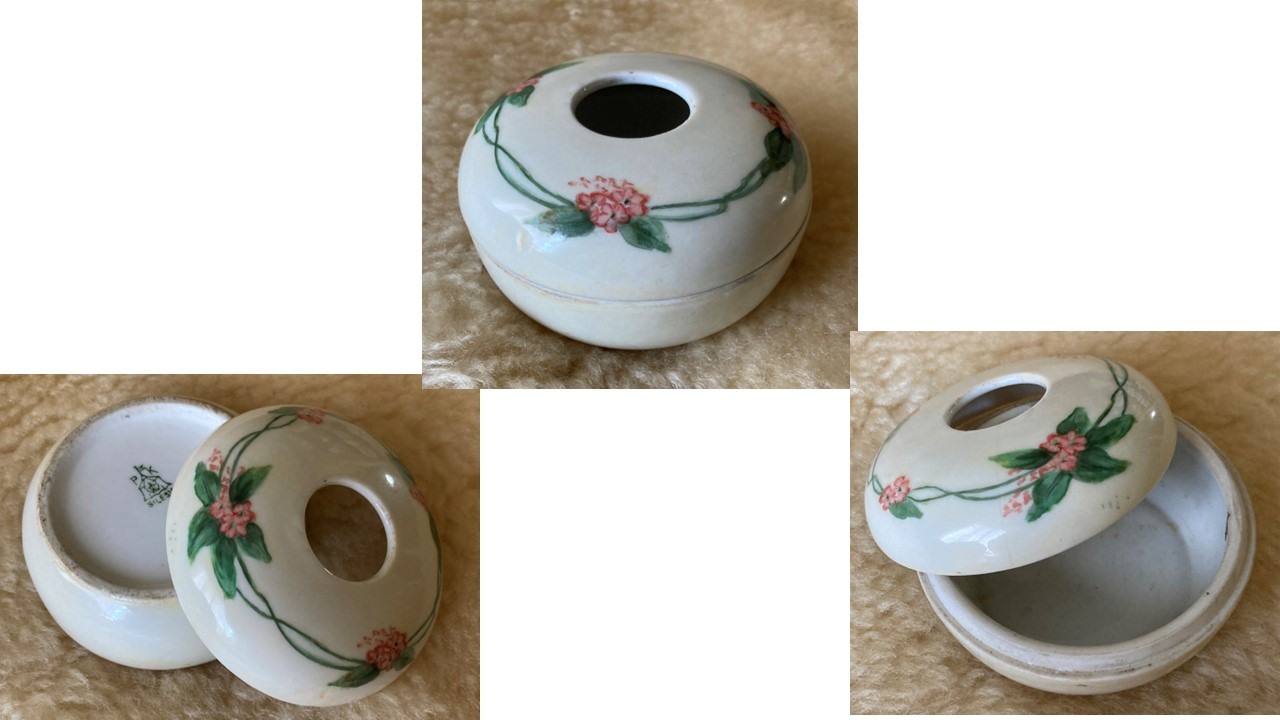
There was a small china pot on my great-aunt’s dresser with a round hole in the middle of the lid, and I spent years assuming it was a vase for a single flower. It is not. It is a hair receiver, the hole in the lid is where you push the hair from your brush, and once somebody explained what it was for I had to sit down and reconsider a great deal about the period.
The Rule Was That Hair Did Not Get Cut
Everything here follows from one social fact.
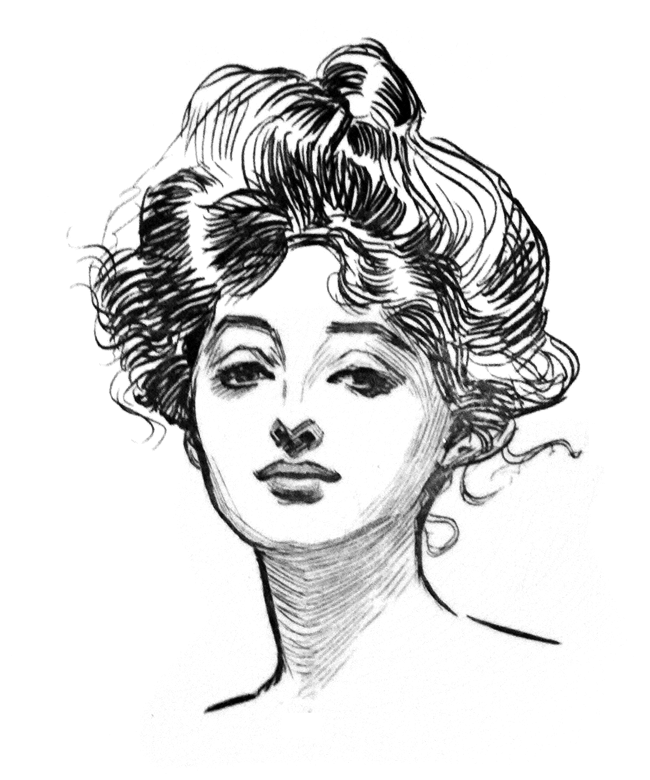
An adult woman of that period did not cut her hair. It grew to whatever length it reached, it was brushed and dressed every day, and the quantity of it was substantial. Hair that long is also heavy, and arranging it took time and skill every single morning.
And hair sheds. Everybody loses some every day, and brushing a long head of hair collects it in the brush in visible amounts. Over a year that adds up to a genuinely useful quantity of material.
A household that threw nothing else away was not about to throw that away either.
Like our content? Follow us for more.
What the Hair Was For
The primary use is the one that explains the whole object.
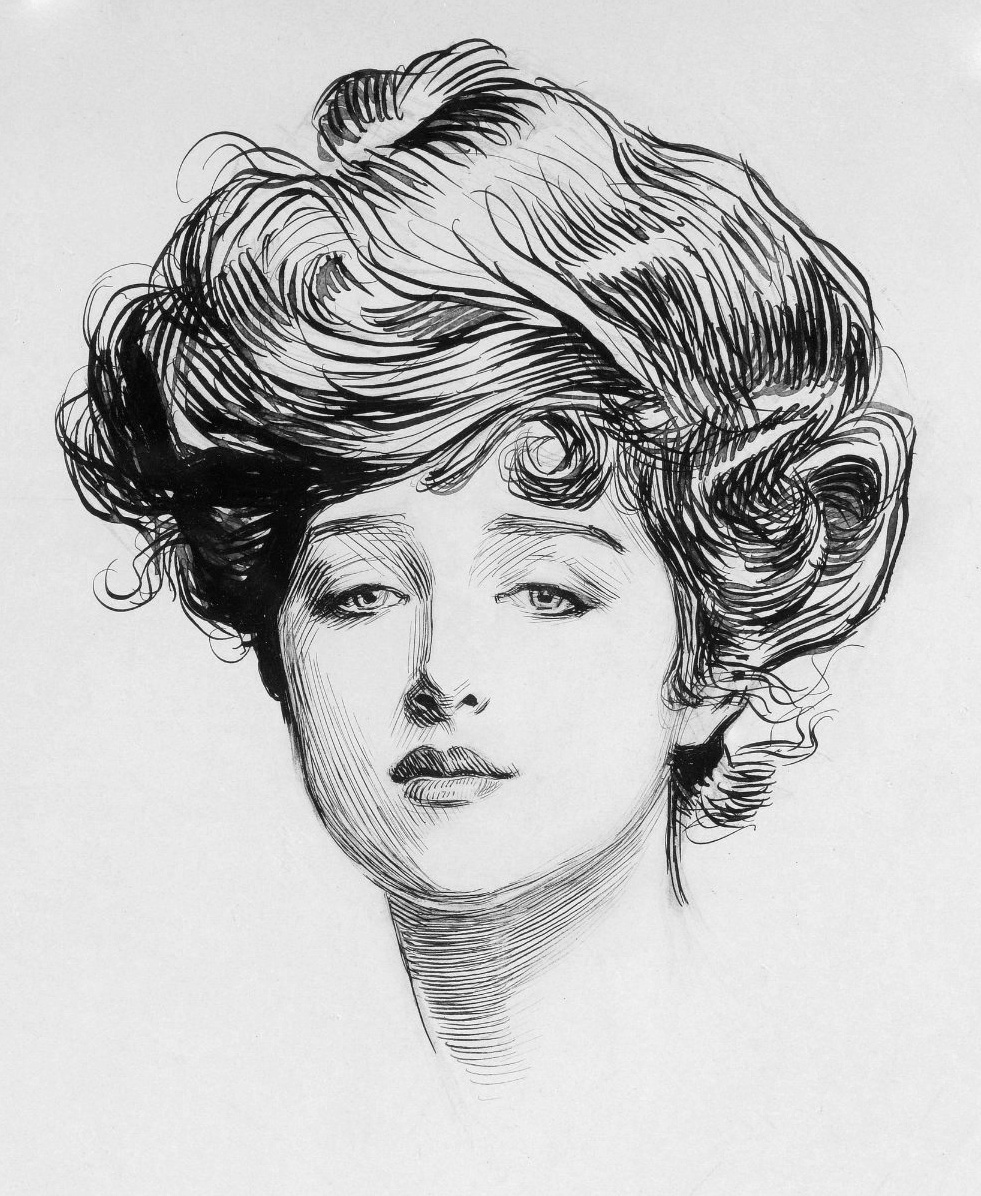
Fashionable hairstyles of the period were large – built up, rolled, and given volume that the wearer’s own living hair could not supply on its own. The solution was to pad the style from underneath with a form made of saved hair, over which the real hair was dressed. These pads were called rats, and almost every woman who dressed her hair in that style had one or more.
So the receiver is the first stage of a manufacturing process carried out on a dresser. Hair goes in over months, is taken out, cleaned, and worked into a pad stuffed into a net or bound with thread, and the pad then goes back under the hairstyle it came off.
Which means the volume in those photographs is, in part, the wearer’s own hair from two years ago.
The Receiver Had to Keep It Dry and Contained
Now look at the design, because it is not arbitrary.
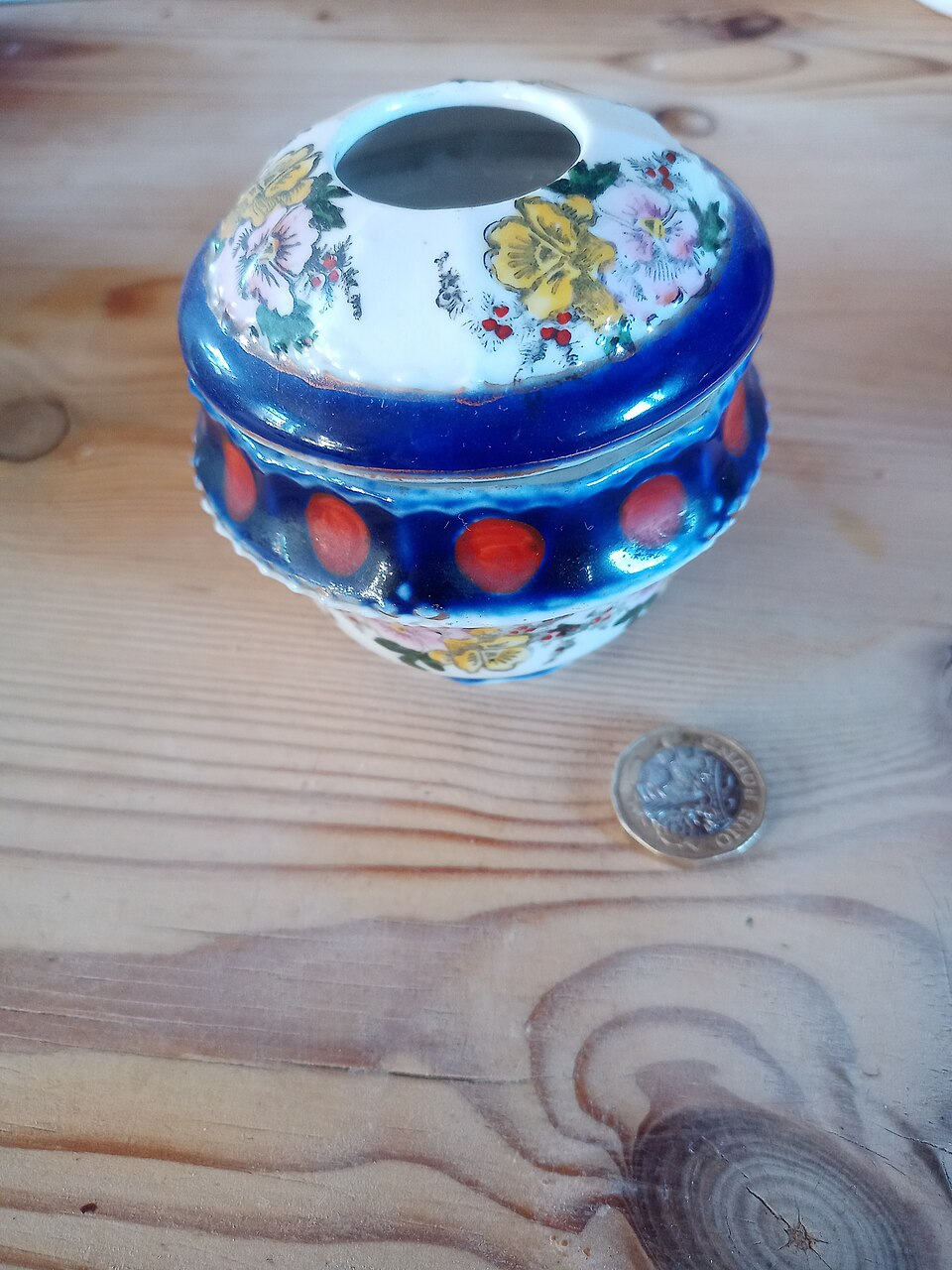
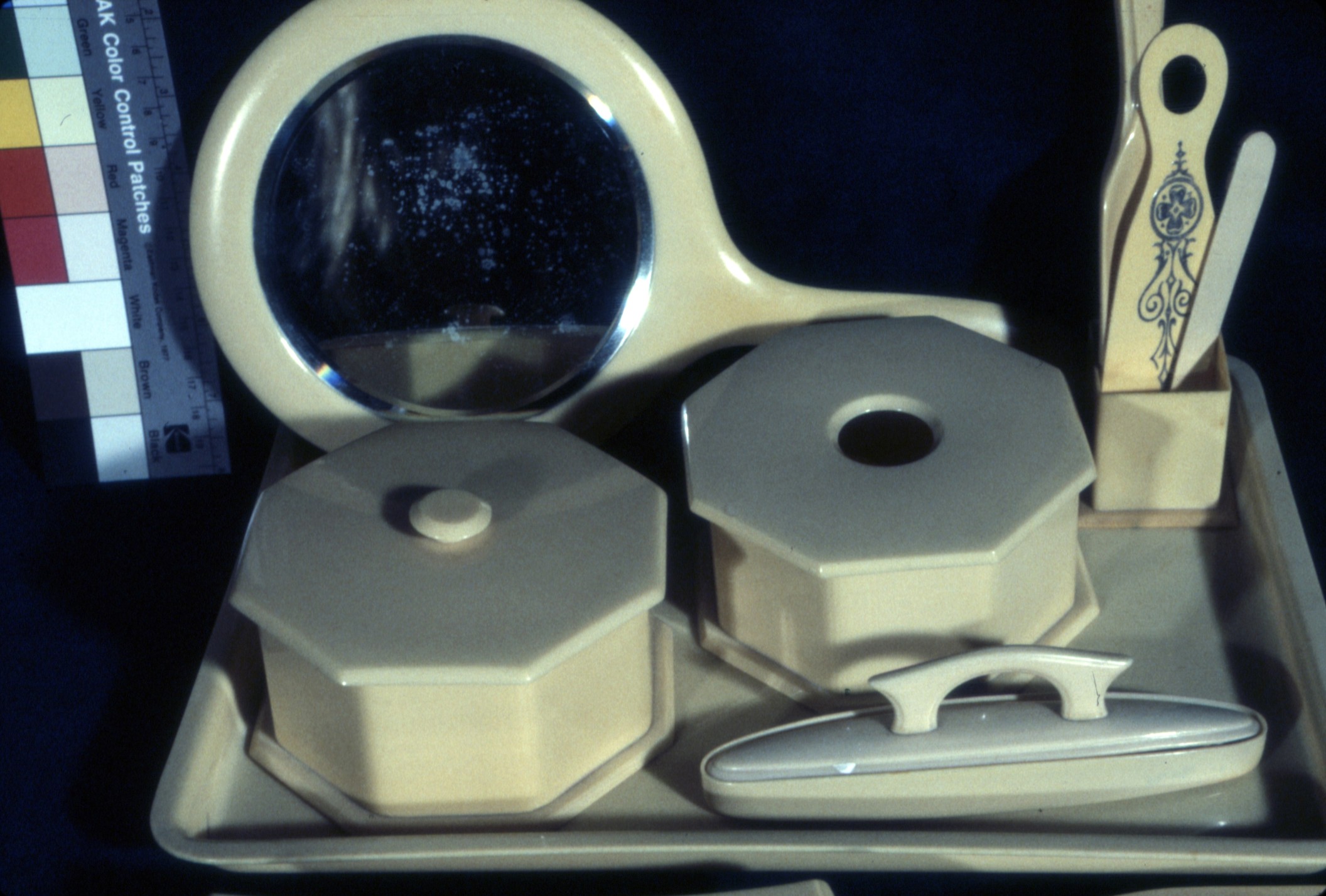
The vessel is small, it has a lid, and the lid has one hole in the centre – large enough to push a handful of hair through with a finger, small enough that nothing comes back out and that very little air exchanges. Hair in a closed pot stays dry and does not blow about; hair in an open dish ends up on the floor and on everything else on the dresser.
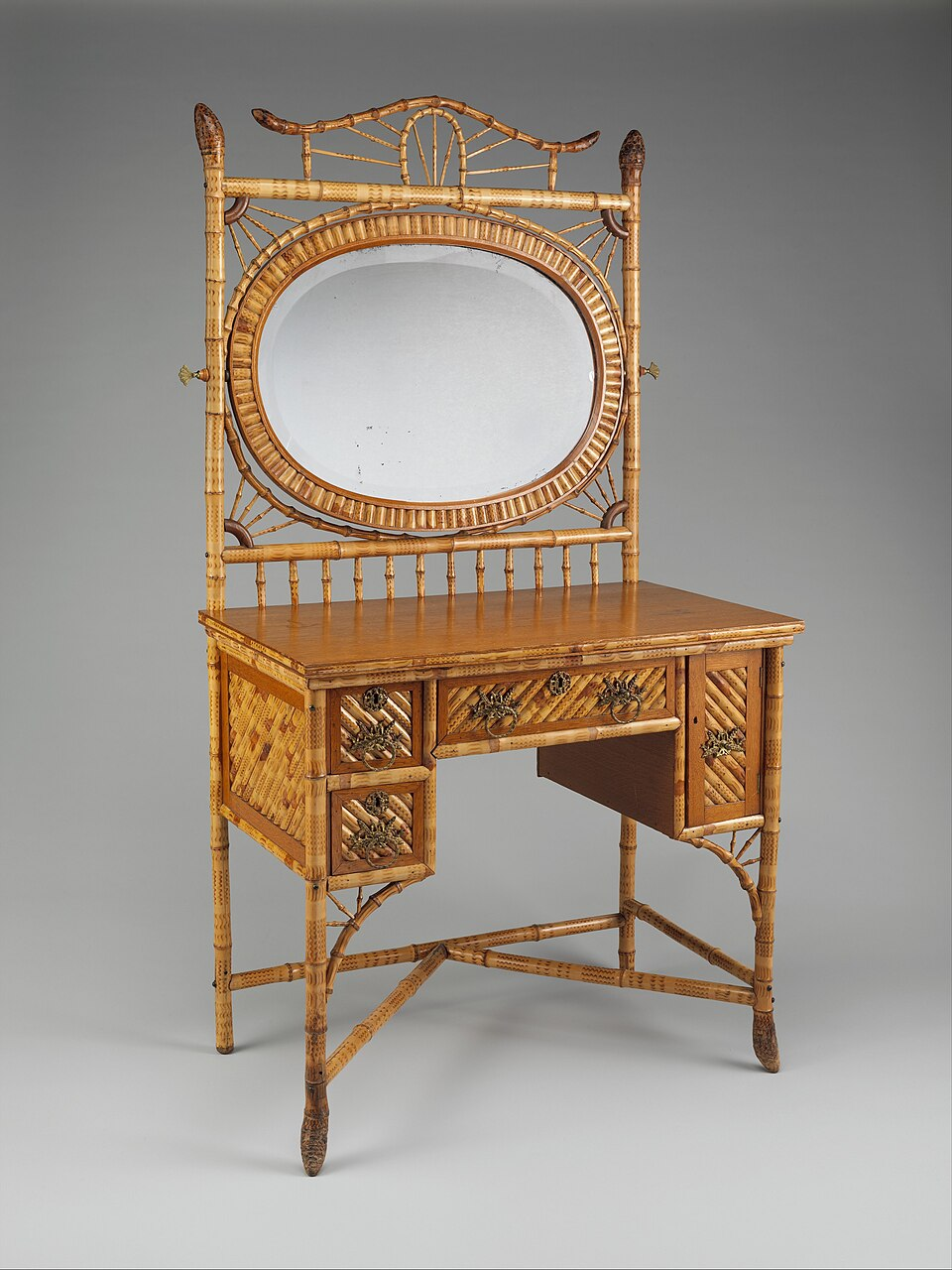
Most were china, matching the other pieces of a dresser set, because the receiver sat in plain view alongside the brush, the comb, the pin tray and the powder box. It was not hidden. Saving hair was an entirely ordinary thing to be seen doing.
Some had no lid at all but a narrow neck instead, which does the same job with fewer parts.
Hair Work Was a Real Craft
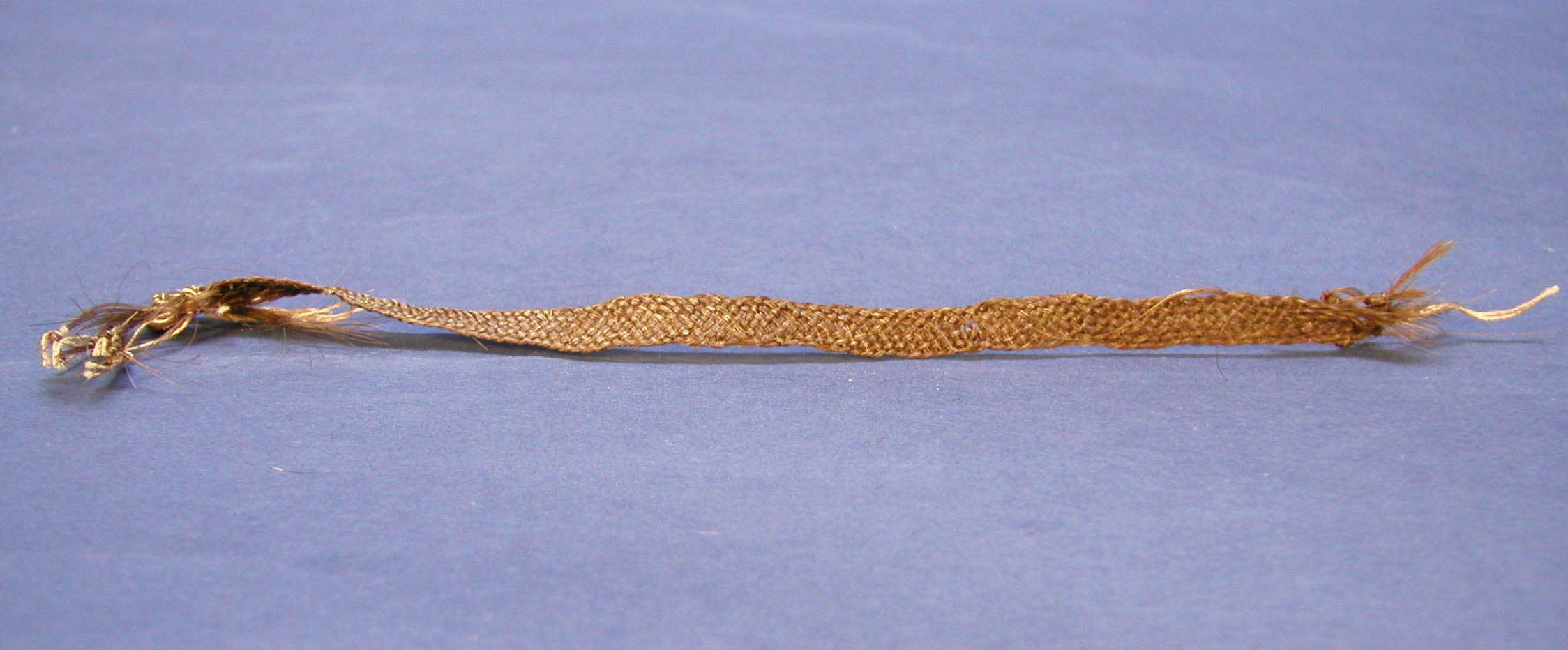
Beyond the padding, saved hair was worked into objects, and this is the part modern readers find strangest.
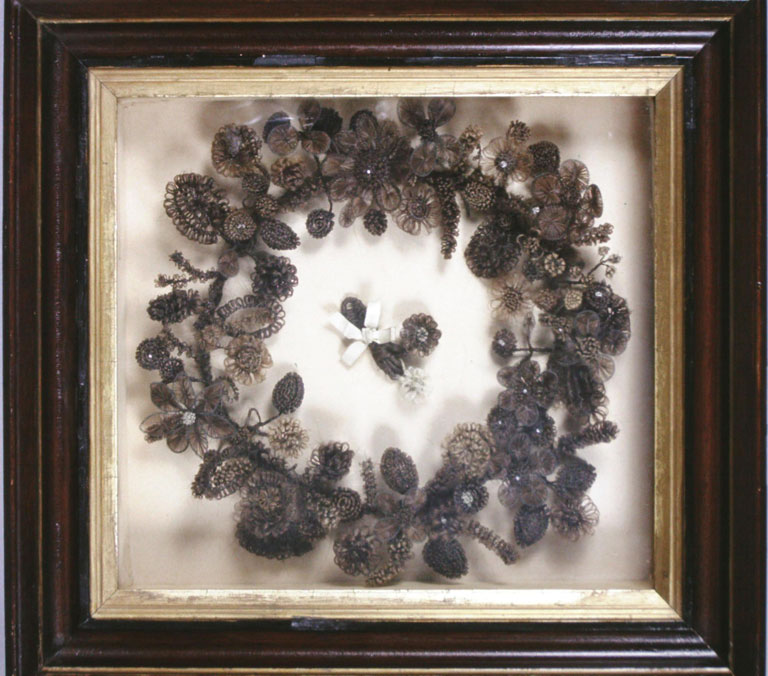
Hair can be braided, woven over a form, coiled and set into mounts. It was made into watch chains, bracelets, rings, brooches and framed wreaths and flowers under glass. The technique was taught, written about in women’s magazines, and practised at home as a parlour accomplishment alongside needlework.
I want to be careful here, because there are two quite different things that get run together. A great deal of hair work was simply decorative craft using an available material, made from living people’s hair and worn as ordinary jewellery. A separate and smaller category was made deliberately from the hair of somebody who had died, as a keepsake. The second kind is what people now think of first, and it was never the majority of it.
The Keepsake Kind Deserves to Be Taken Seriously
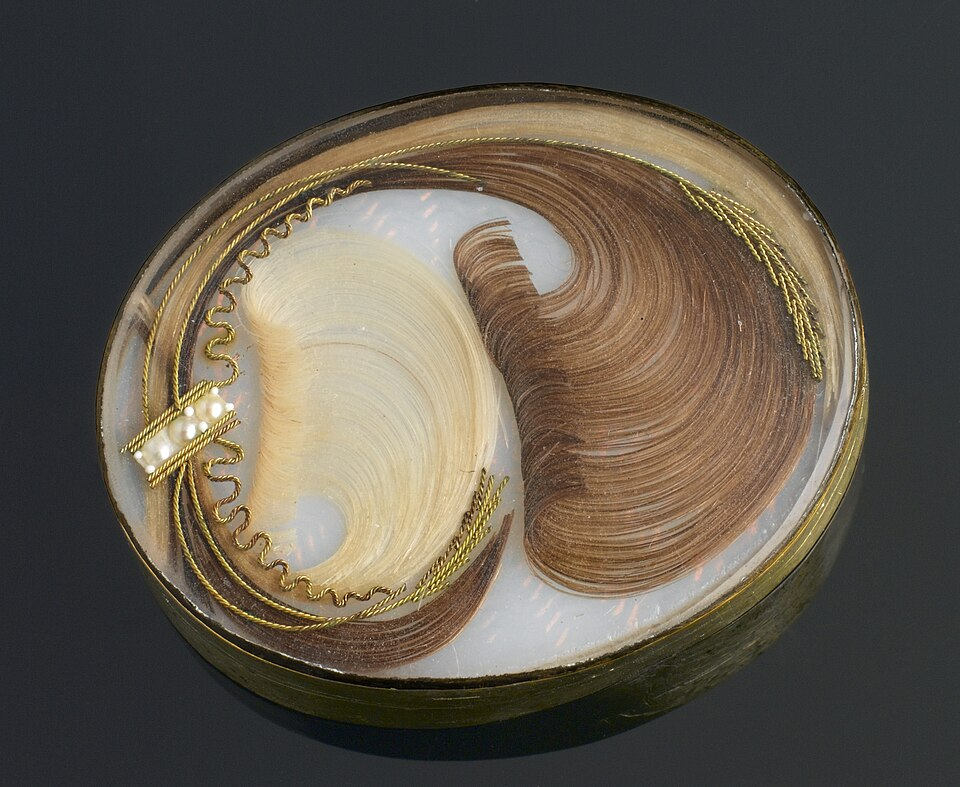
Still, that second category is worth treating properly rather than as a curiosity.
Photography was expensive and uncommon for much of the period. A great many families had no picture of a person at all. What they could have was something physical that had been part of that person and had not changed – which is a different kind of memorial from an image, and arguably a more direct one.
People now find it morbid. I think that reaction says more about how far we have moved from a period when death was constantly present in ordinary households than it does about the practice. A lock of hair in a locket is the same impulse, and nobody finds that strange.
It Was Also Worth Money
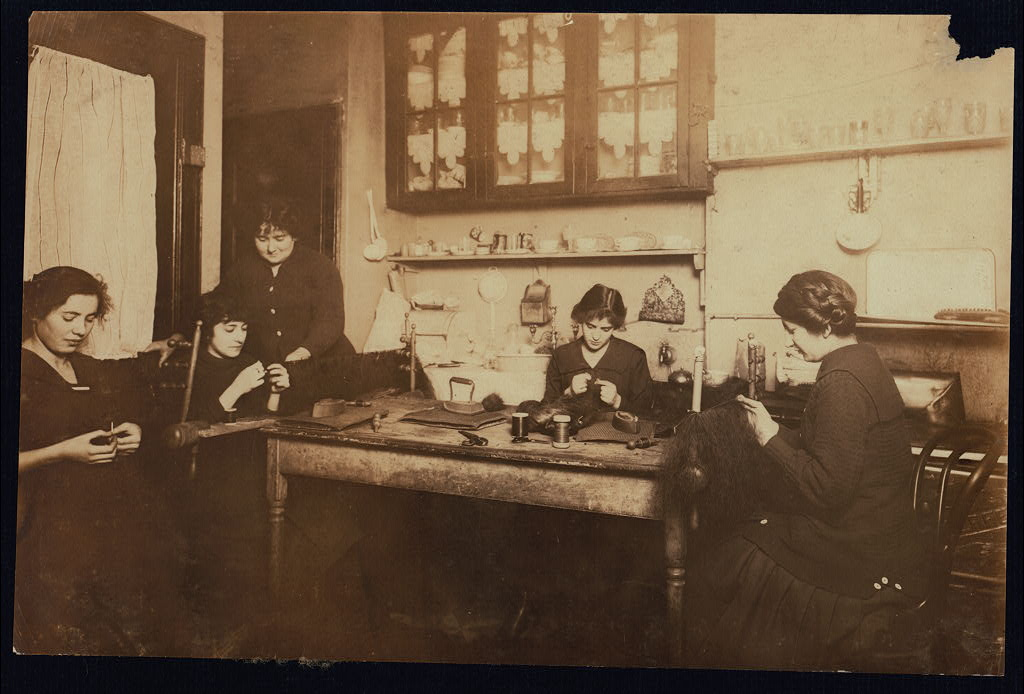
There was a trade, and the receiver fed into it.
Human hair was bought, sold, graded by length and colour, and made up commercially into switches, braids, puffs and wigs. Buyers travelled, dealers advertised, and a woman with a quantity of saved hair of good colour had something she could sell.
That is the plainest answer to why the pot sat on the dresser. It was not sentiment and it was not thrift for its own sake. A long-haired woman shed a saleable commodity every morning, and the alternative to saving it was giving it away to nobody.
Everybody’s Was Different and Nobody Mixed Them
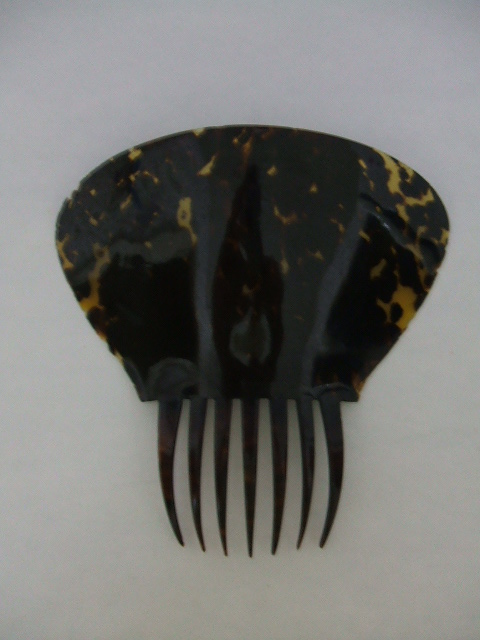
Hair is individual, and the whole system depended on that.
A pad made from your own hair matches your own hair, which is the entire point – a rat of the wrong shade shows through. So each woman kept her own receiver, and in a household of several women there were several pots on several dressers and no question of pooling them.
Children’s hair was sometimes saved separately, and the first cutting of a child’s hair was frequently kept on its own. That is a different impulse again, and it is the one that survives in the present day in a way none of the rest does.
Washing It Was the Awkward Part
The practical difficulty of the whole business is one nobody advertised.
Hair collected from a brush is not clean. It carries scalp oil, dust and whatever dressing was used on it, and it has to be washed before it can be worked – which means a basin, soap, careful handling to avoid tangling, and drying without heat. It is fiddly, slow work on a material that snarls if you look at it wrongly.
Which is presumably why the commercial trade existed at all, and why the mail-order houses sold ready-made pads and switches to anybody who did not want to do it herself.
Then the Hair Was Cut Off
And then, within a very few years, the entire thing stopped making any sense.
When women began cutting their hair short, three things happened at once. There was no longer a large style to pad out, so the rat had no function. There was far less hair shedding into the brush each day, so the raw material dried up. And a short cut was a deliberate rejection of the whole aesthetic the padded style belonged to, so nobody wanted the look anyway.
The commercial trade in hair for switches and wigs continued, because wigs continued. But the domestic practice of a woman saving her own hair in a pot on her own dresser to pad her own head ended almost completely, and it ended fast.
Then Nobody Knew What the Pot Was
Which is how I came to think it was a vase.
The receivers themselves survived in large numbers, because a small decorative china pot is pleasant and nobody throws those away. They came down through families, were put on shelves, had flowers put in them and pins put in them and buttons put in them, and the knowledge of what the hole was for went out of the household within about two generations.
If you see one in an antique shop now it will frequently be labelled as something else. The hole is the identification: a sugar bowl has a notch for a spoon, a powder jar has a plain lid, and a vessel whose lid has a single round opening in the middle of it is for hair.
What It Tells You
I find this one of the most revealing objects in any American house of that period, for a reason that has nothing to do with hair.
It is a vessel, bought as part of a matched dresser set, displayed openly, for the purpose of accumulating a by-product of daily grooming over a period of months so that it could be processed and put back into use. Nobody thought this remarkable. It was sold in catalogues alongside the soap dish.
That is a household in which material of any kind was simply not discarded while it still had a use, and in which the labour to recover it was not counted as a cost. Everything about the period’s thrift is in that pot – and it went obsolete not because anybody decided it was unhygienic or peculiar, but because women cut their hair and the supply stopped.
Like our content? Follow us for more.
