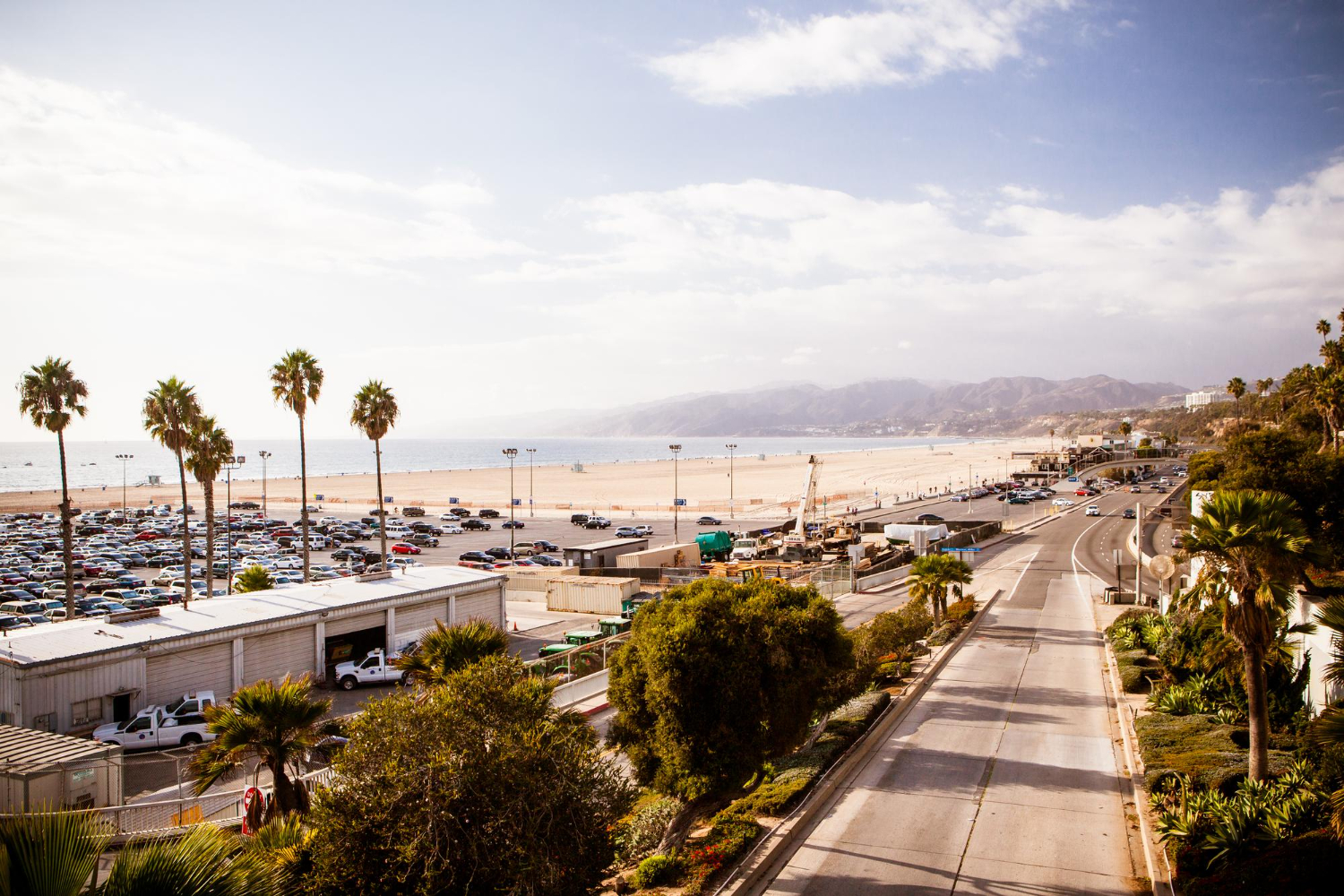
Carmel-by-the-Sea, California has no McDonald’s, no street addresses, no streetlights outside the downtown core, and a permit requirement for wearing high heels. The town’s residents wouldn’t have it any other way.
About two hours south of San Francisco, on the Monterey Peninsula, sits a town of roughly 3,200 people that has spent the better part of a century making itself deliberately strange. There are no chain restaurants. No streetlights outside the downtown commercial core. No paved sidewalks in residential neighborhoods. No street addresses on any house — a 1916 ordinance that residents continue to defend, requiring deliveries and visitors to identify destinations by name (“the green house with the white shutters on Lincoln near 5th”) rather than number. There’s a permit requirement for wearing high heels, technically still on the books, that the town hands out as souvenirs. And until Clint Eastwood was elected mayor in 1986 and overturned it, there was a law against eating ice cream on a public street.
This is Carmel-by-the-Sea, and it is, depending on whom you ask, either the most charming town in California or one of the most exclusive. The two answers are related.
How the chain restaurant ban actually works

Carmel-by-the-Sea was one of the first American cities to formally restrict chain restaurants — what local zoning law calls “formula businesses.” The exact origin date is debated; some sources cite the mid-1970s, others say the formal ordinance came in the mid-1980s. What’s clear is that by the 1980s, the town had codified strict commercial zoning rules under what is now Chapter 17.56 of the Carmel-by-the-Sea Municipal Code, titled “Restricted Commercial Uses.”
The stated purpose of these regulations, according to the code itself, is to “preserve Carmel’s character as a residential village” and “promote the establishment of unique, quality commercial uses that serve the intellectual, social, material, and day-to-day needs of the local community.”
In practice, the rules limit how many of certain types of businesses can operate downtown — restaurants, hotels, real estate offices — and effectively prevent national chains from opening. There were exceptions in the early years (older residents recall a Sambo’s, a Golden West, and an Orange Julius operating in Carmel during the 1960s), but those were grandfathered out as the regulations tightened. Sambo’s eventually moved out to the corner of Highway 1 and Rio Road, where a Starbucks now stands — outside the city limits.
The town has fought legal challenges to the formula business restrictions multiple times, and the rules have generally held up. The Coastal Commission, which has authority over much of California’s coastal land use, has endorsed Carmel’s approach as consistent with state coastal preservation goals. The result, as Carmel’s tourism marketing materials accurately note, is a downtown where every restaurant is independently owned and most are run by their owners.
The other rules that come with the package

The chain restaurant ban is the most famous Carmel ordinance, but it’s not the strangest. Several other unusual local laws are still on the books:
No street addresses. Houses in Carmel are identified by descriptive names, the corner intersection they’re nearest to, or by names the owners have given them. The Post Office is the official mail-receiving point for the town — early 20th-century town planners deliberately designed the system this way to encourage residents to meet at the post office and form a tight community. The system still works. Residents check mail at PO boxes, and the post office remains a social hub.
Permit requirement for high heels. A 1920s-era ordinance technically requires women to obtain a permit before wearing shoes with heels higher than two inches or with a base smaller than one square inch. The reason was practical: Carmel’s downtown sidewalks are uneven from tree roots — particularly the towering Monterey cypress and pine roots that the town also famously protects from development — and city officials feared liability for falls. Nobody has ever been cited under this ordinance. The City Hall hands out permits free of charge to anyone who asks; tourists collect them as souvenirs.
No streetlights outside downtown. The residential areas of Carmel have no street lighting and no sidewalks. The result is that residential neighborhoods are extremely dark at night and effectively unwalkable except by people who know where they’re going. Residents have voted multiple times to keep it this way.
Trees protected over buildings. Carmel has some of the strictest tree protection ordinances in California. A homeowner cannot cut down a significant tree on their own property without city approval, and the city routinely denies the permits. Roads in Carmel curve around individual trees rather than the trees being removed for road straightening. This is a major contributor to the uneven sidewalk problem mentioned above — but residents consistently rank tree preservation as more important than walkability.
Strict architectural review. Building anything new in Carmel — or substantially modifying anything existing — requires approval from the city’s design review process, which has aesthetic standards that have been criticized as deeply subjective. The result is that nearly every building in town is in one of a handful of approved architectural styles: storybook English cottage, Spanish colonial, or mid-century modern.
Clint Eastwood’s mayoral term

The most famous chapter in Carmel’s recent civic history is Clint Eastwood’s two-year term as mayor, beginning in 1986. Eastwood ran on a platform of frustration with the town’s restrictive building rules; he had personally been blocked from making certain modifications to property he owned. His campaign slogan was “Bringing the Community Together,” and he won decisively against the incumbent.
In office, Eastwood was less of a deregulator than his campaign suggested he might be. He successfully overturned the ice-cream-eating ordinance — which had genuinely prohibited buying or eating ice cream on public streets, a 1916 law passed because of complaints about cones dripping on sidewalks — but he largely left the chain restaurant ban, the high heel ordinance, and the other unusual rules alone. He continued the town’s no-chain-restaurant policy explicitly. He served one two-year term and didn’t seek re-election.
Eastwood remains a longtime resident of the area. He owns the historic Mission Ranch Hotel & Restaurant just outside the city limits, which he saved from development in 1986 and operates as a hotel and restaurant to this day.
What it costs to live there
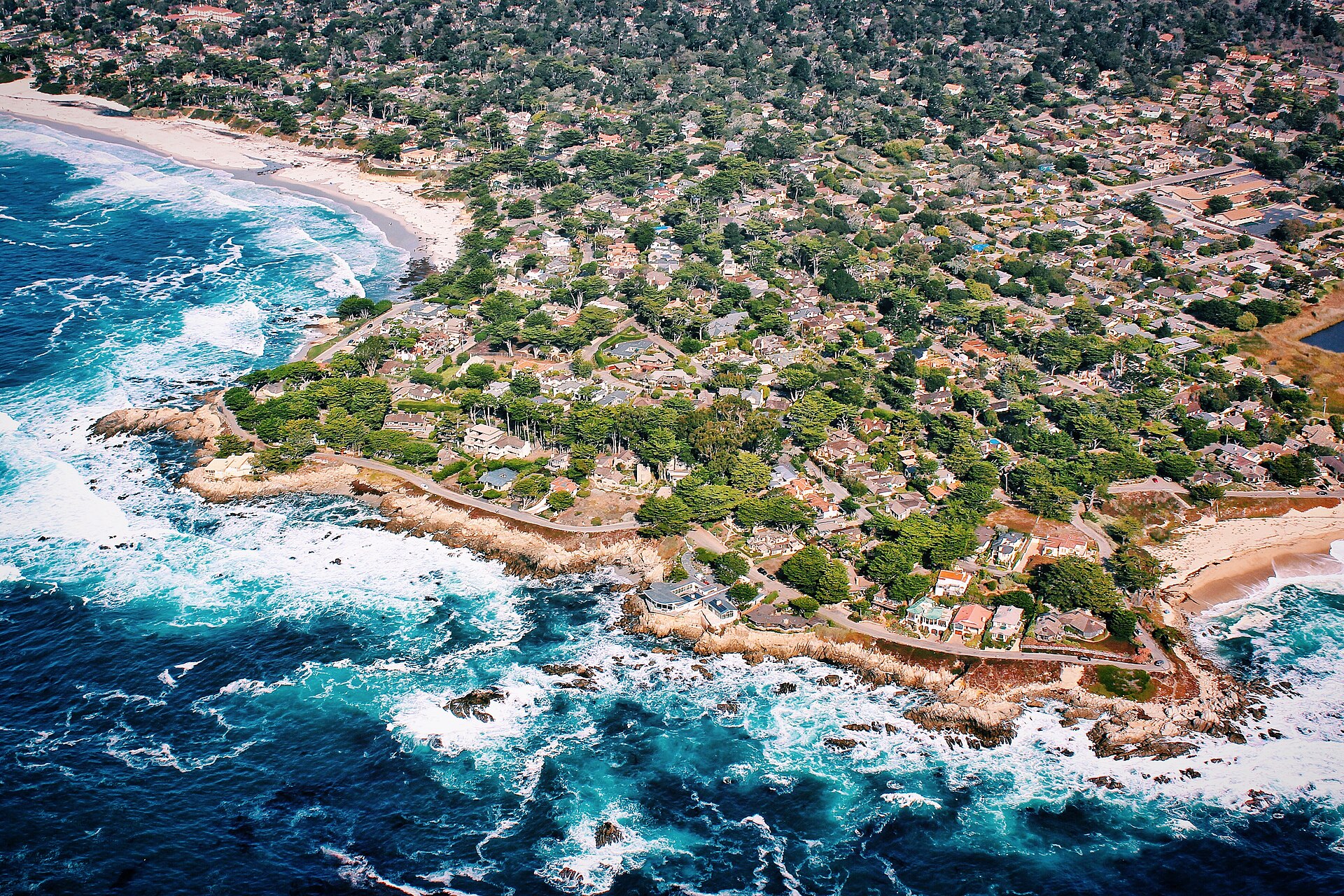
The Carmel rules have produced a town that residents and visitors widely describe as charming, distinctive, and unlike anywhere else in America. They have also produced a town that is extraordinarily expensive to live in.
According to recent real estate data, the median home sale price in Carmel-by-the-Sea is approximately $4.25 million as of 2025. Year-over-year median sale prices have appreciated roughly 47%. There are typically only 15-25 homes for sale at any given time, reflecting both the town’s small size (about 3,200 residents in roughly 1.1 square miles) and its tight inventory.
The same restrictions that have preserved Carmel’s character have also locked out essentially everyone except the wealthy. Most of the people who staff Carmel’s restaurants, shops, and services commute in from neighboring towns where housing is more affordable — Pacific Grove, Seaside, Marina. The town has a small permanent working-age population and a much larger second-home and retiree population.
This is the genuine tradeoff at the heart of the Carmel story, and residents are mostly aware of it. The chain-restaurant ban prevents the kind of corporate retail that produces affordable food and goods. The architectural review process drives up construction costs. The tree protection rules limit density. The result is a place that maintains its character precisely by being inaccessible to most Americans.
Why people defend it anyway

Despite the affordability problem, Carmel residents — and a substantial portion of California voters who pay attention to coastal land use — continue to support the town’s restrictive approach. The argument they make is consistent: most American towns now look interchangeably similar, with the same chain restaurants, the same big-box stores, the same architectural patterns. Carmel is one of the few American towns that doesn’t. That distinctiveness, in their view, is worth the tradeoffs.
Several other American towns have adopted versions of Carmel’s chain-restaurant ban, including Ogunquit, Maine (where 72% of voters approved a 2006 ordinance after rumors that a Dunkin’ Donuts was planning to open) and Bar Harbor, Maine. Several towns in coastal California, Oregon, and Massachusetts have similar restrictions. None has matched Carmel’s full package of rules — the no-addresses, no-streetlights, no-sidewalks, no-tree-cutting, no-ice-cream-on-the-street version of municipal contrarianism.
What Carmel has demonstrated, more than anything, is that municipal rules genuinely shape what a place feels like. A town that forbids one kind of building eventually becomes a town that doesn’t have that kind of building. A town that protects every tree eventually becomes a town with extraordinary trees. A town that requires every restaurant to be locally owned eventually becomes a town where every restaurant is locally owned. The question of whether that’s worth it depends on what you’re willing to give up — and how much you can afford to live there in the first place.