In February 1959, nine experienced hikers died on a remote mountain pass in the northern Urals. The investigation was closed in three months and the files classified. After 60 years of conspiracy theories — Yetis, KGB tests, UFOs — peer-reviewed science finally produced an answer.
In late January 1959, ten students and graduates from the Ural Polytechnic Institute set out on a 300-kilometer ski trek through the northern Urals. The expedition was rated Category III — the most difficult under the Soviet hiking classification of the time — and the group, led by 23-year-old engineering student Igor Dyatlov, was experienced. One member, Yuri Yudin, turned back early because of a flare-up of chronic illness. The other nine continued on.
None of them came home.
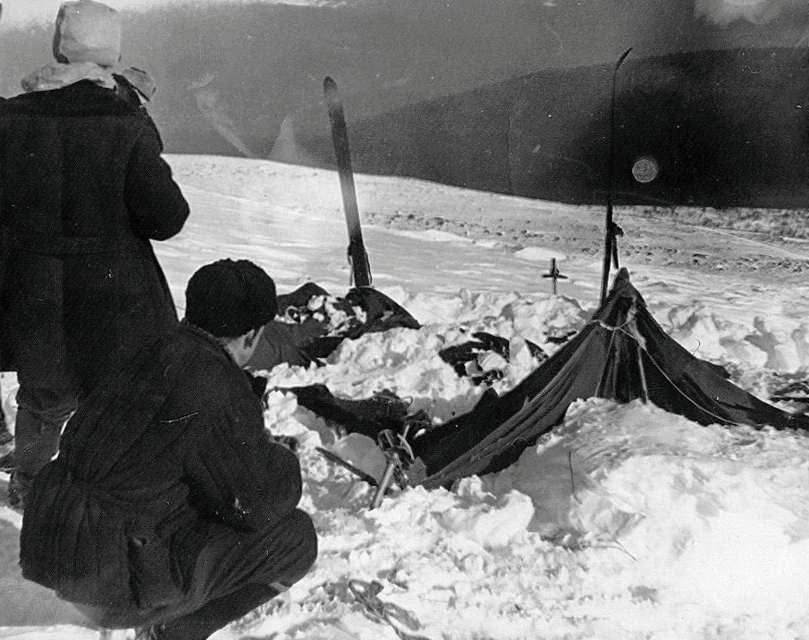
A month after the group failed to return, rescuers found their tent on the eastern slope of Kholat Syakhl — a name that translates from Mansi as “Dead Mountain.” The tent had been cut open from the inside. Most of the hikers had fled in socks or barefoot, into temperatures of -25°C or colder. Their bodies were found over the following weeks, scattered up to 1.5 kilometers from the tent. Some had only minor injuries. Others had massive internal trauma — broken ribs, fractured skulls — without any external wounds. One was missing her tongue.
The Soviet investigation closed three months later with the conclusion that the hikers had died from a “compelling natural force.” The files were classified. For the next 60 years, the Dyatlov Pass incident became one of the most enduring unsolved mysteries of the modern era — generating theories ranging from KGB assassinations to secret missile tests to attacks by the Russian Yeti.
The actual answer turned out to be a phenomenon that didn’t have a name in the avalanche literature of 1959.
What the Soviet investigators couldn’t explain
The 1959 investigation, led by prosecutor Lev Ivanov, faced four genuine puzzles that no one at the time could solve:
First, the slope angle was too low for a conventional avalanche — about 23 degrees, while textbook avalanches typically require 30 degrees or more. Second, rescuers found no avalanche debris around the tent three weeks later. Third, the injuries on three of the hikers (Lyudmila Dubinina, Nikolai Thibeaux-Brignolle, and Semyon Zolotaryov) were severe internal trauma — the kind caused by a car accident, not snowfall. Fourth, the footprints leading away from the tent showed people walking, not running in panic.
These four discrepancies are why the case stayed unsolved. They were also why every conspiracy theory imaginable filled the vacuum the official conclusion left behind.
How the case was reopened

In 2015, the Investigative Committee of the Russian Federation began a formal review of the original evidence at the request of the victims’ families. The review took four years. In February 2019, the Russian Prosecutor General’s Office launched its own parallel investigation, and on July 11, 2020, deputy head Andrey Kuryakov announced the official conclusion: the Dyatlov group had been killed by an avalanche — but a specific kind, called a slab avalanche, with a delayed trigger that didn’t match the assumptions of 1959 investigators.
“It was a heroic struggle,” Kuryakov said. “There was no panic, but they had no chance to save themselves under the circumstances.”
The Russian conclusion was based on extensive expert analysis but was widely criticized for not addressing the four core puzzles. That’s where the next stage of the investigation came from — not from prosecutors, but from physicists.
The Swiss avalanche modelers
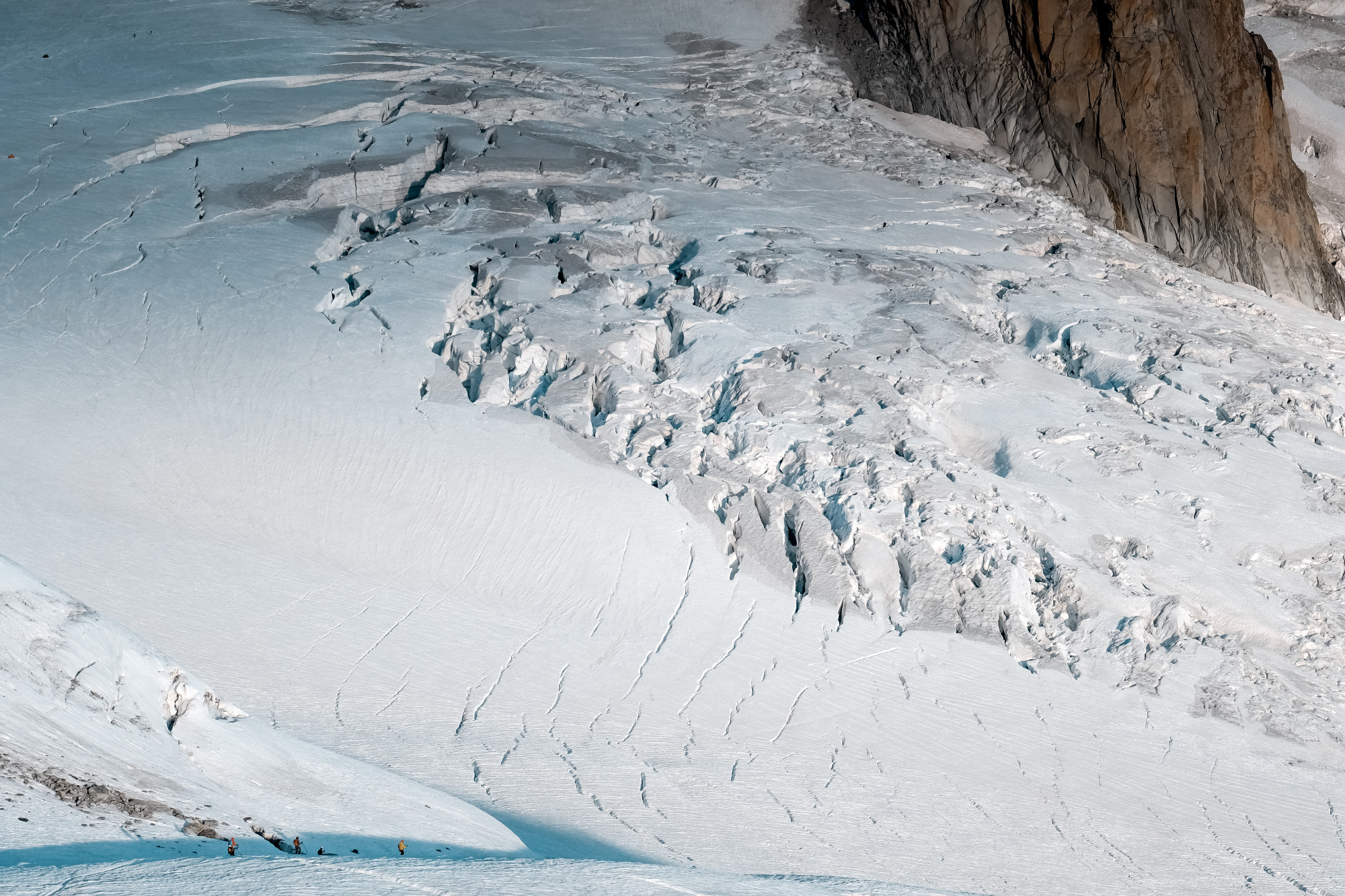
In January 2021, Communications Earth & Environment — a peer-reviewed journal published by Nature — published a paper by Alexander Puzrin of ETH Zurich and Johan Gaume, head of the Snow Avalanche Simulation Laboratory at École Polytechnique Fédérale de Lausanne. The paper presented a mathematical model of exactly how the Dyatlov tent could have been hit by a slab avalanche on a 23-degree slope, hours after the hikers cut the slope to install their tent.
The mechanism the model identified worked like this: when the hikers cut a flat platform into the slope to set up their tent, they removed the lower support of a snow slab above them. They camped, ate, and went to sleep. Through the night, strong katabatic winds (cold air flowing downhill from higher elevations) deposited additional wind-blown snow on the upper slope, gradually loading the slab beyond what the disturbed lower edge could hold. Hours after the camp was made, the slab released — not as a massive snowslide, but as a relatively small slab of dense, packed snow that hit the tent with enormous force.
The model explained all four puzzles. The slope angle worked because slab avalanches can release on lower angles than loose snow avalanches. The lack of debris worked because a small slab in those wind conditions would have been redistributed within hours. The severe internal injuries without external wounds worked because the hikers were lying horizontally inside their sleeping bags when the slab struck — a configuration that produces exactly the kind of trauma the autopsies documented. The walking footprints worked because, in a survival manual published by the Soviet Mountain Sports Federation in the 1950s, the standard response to an in-tent avalanche was to evacuate calmly downhill in single file to assess injuries — which is exactly what the Dyatlov group did.
The video that confirmed it
What followed the 2021 paper was unusual in academic publishing. Puzrin and Gaume helped organize three follow-up expeditions to Dyatlov Pass between 2021 and 2022, in dangerous winter conditions matching those of 1959. On these expeditions, the team captured the first video evidence of slab avalanches at the pass — small, rapid, hard to detect after the fact, and exactly matching the kind their model had predicted.
A follow-up paper published in 2024 in the same journal documented the field evidence. The team noted that small slab avalanches at this specific location leave traces that disappear within hours under the prevailing wind conditions, which is why the original 1959 rescue team — arriving three weeks later — found no evidence of one.
What actually happened that night
Combining the Russian Prosecutor General’s findings with the peer-reviewed Swiss research, the most complete reconstruction goes like this:
The Dyatlov group reached the eastern slope of Kholat Syakhl on the afternoon of February 1, 1959. Bad weather — winds reported up to hurricane force — prevented them from reaching the originally planned camping site at the tree line. They cut a flat platform into the snow slope and set up their tent. They went inside, took off their wet outer clothing, and prepared dinner. By 10 or 11 PM, most were asleep.
Hours later, a delayed slab avalanche — small, dense, triggered by progressive wind-loading on the destabilized slope — struck the tent. Three hikers (Dubinina, Thibeaux-Brignolle, Zolotaryov) sustained severe internal injuries, possibly fatal within hours. The group cut the tent open from inside (a documented avalanche evacuation procedure for when the entrance was buried), and walked downhill in formation toward the tree line, hoping to make a fire and assess injuries.
They reached a cedar tree about 1.5 kilometers below. The injured were placed in a snow den. A fire was started but couldn’t be sustained — the wood was too damp, hands were too frozen. The hikers without internal injuries began to die of hypothermia where they sat. Two attempted to climb back to the tent for supplies and died on the way. The four most badly injured, in the snow den, died when the den partially collapsed and buried them — explaining the unusual postmortem damage to their bodies and Dubinina’s missing tongue (which decomposes rapidly under flowing meltwater).
By morning, all nine were dead.
What changed, and what didn’t
The slab avalanche explanation has not been universally accepted. Some Russian researchers continue to argue for alternative mechanisms — katabatic winds knocking down the tent without an avalanche, infrasound-induced panic, even the delayed effects of Soviet weapons testing in the region (which is real, declassified, and unrelated to the Dyatlov deaths). The dyatlovpass.com archive maintains an active log of competing theories.
But the official Russian government conclusion is avalanche. The peer-reviewed scientific model is avalanche. The field-verified video evidence shows that the avalanches in question really do happen at that location under those conditions.
What actually killed nine experienced Russian hikers in 1959 was a combination of three things: bad luck (camping on a slope that, under those exact conditions, was about to fail), institutional failure (a 1959 investigation conducted by people who lacked the alpine expertise to recognize what they were seeing), and Soviet secrecy (classifying the files for political reasons that had nothing to do with the actual cause of death).
The Dyatlov Pass incident wasn’t supernatural. It wasn’t a cover-up. It was a category of avalanche that wasn’t well understood in 1959, hitting a group of people whose response was, ironically, exactly what Soviet mountain-sports textbooks of the era recommended for an in-tent avalanche — and who then ran out of warmth, light, and time at the bottom of the slope.
The most chilling thing about the real explanation, in some ways, is how ordinary it is. Nine people made a small navigational mistake on a hard mountain in a brutal winter. Everything that followed was physics.