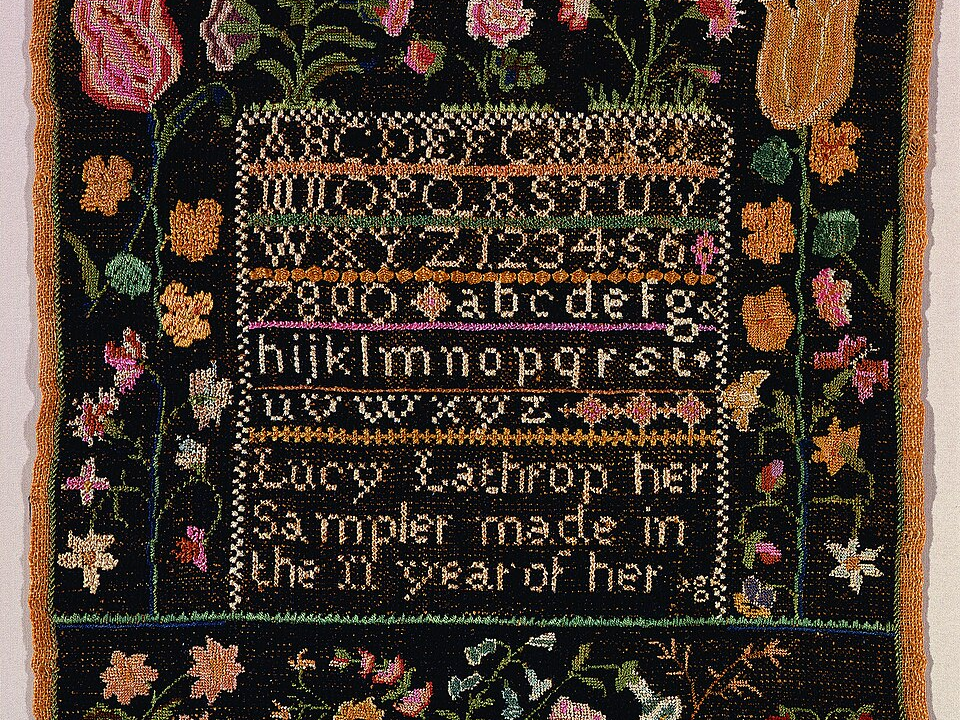
A sampler was not decoration. It was closer to a diploma.
A worked piece demonstrating a girl’s command of letters, numbers and a range of stitches was evidence of attainment, made to be kept and shown – which is why it was signed and dated. A framed alphabet in silk reads today as folk art; it was originally a durable, displayable demonstration that a particular named girl had been taught certain things and could do them.
And the alphabet was there for a practical reason. Household linen had to be marked with initials and numbered so it could be identified, counted and tracked through washing, and that marking was done in thread – which makes a sampler teaching letters and figures vocational training for running a linen cupboard. Here are fourteen things every girl knew.
1. A Sampler Was a Qualification, Not a Decoration
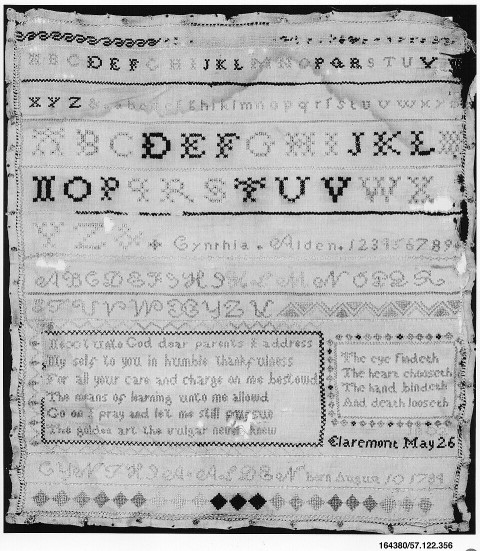
A worked piece of needlework demonstrating a girl’s command of letters, numbers and a range of stitches was evidence of attainment, made to be kept and shown.
Not applicable; schooling is certified on paper.
Start with what the object was for, because it is not what it looks like. A framed piece of stitched alphabet on a wall reads today as folk decoration, and it was originally much closer to a diploma – a durable, displayable demonstration that a particular girl had been taught certain things and could do them.
Like our content? Follow us for more.
2. The Alphabet Was There Because Marking Linen Required It
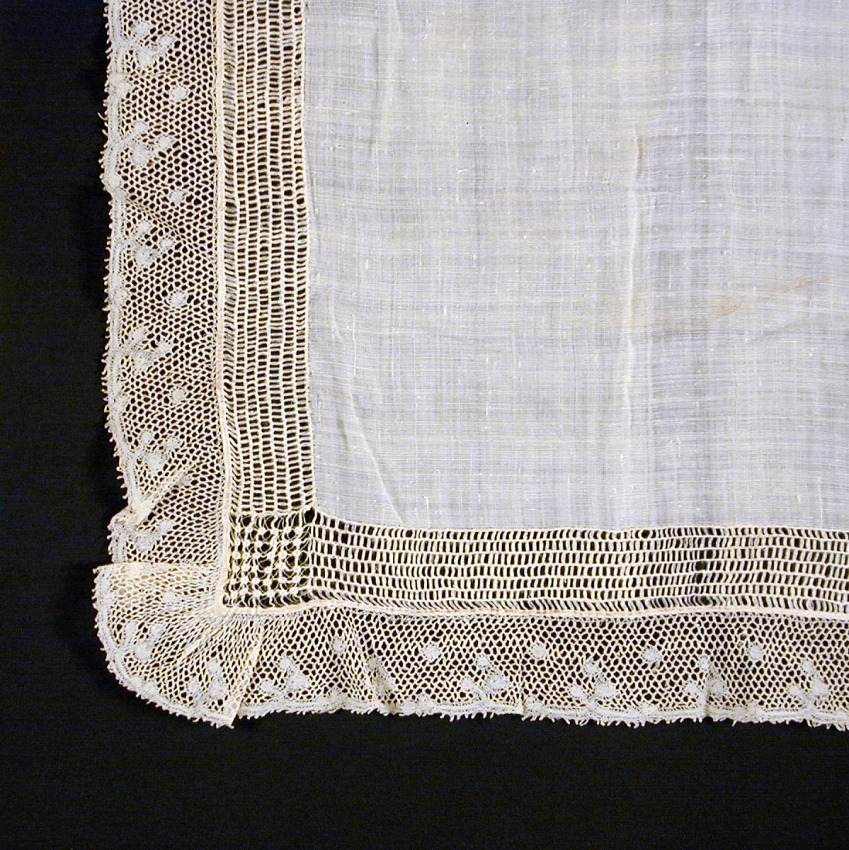
Household linen had to be marked with initials and numbers so that it could be identified, counted and tracked through washing, and that marking was done in thread.
Not applicable.
This is the practical fact that explains the whole form. Every sheet, shirt and towel in a household needed identifying marks, which means a woman had to be able to produce clean legible letters and numbers in stitching – so a sampler teaching the alphabet is vocational training for the management of a linen cupboard.
3. The Numbers Were for Inventory
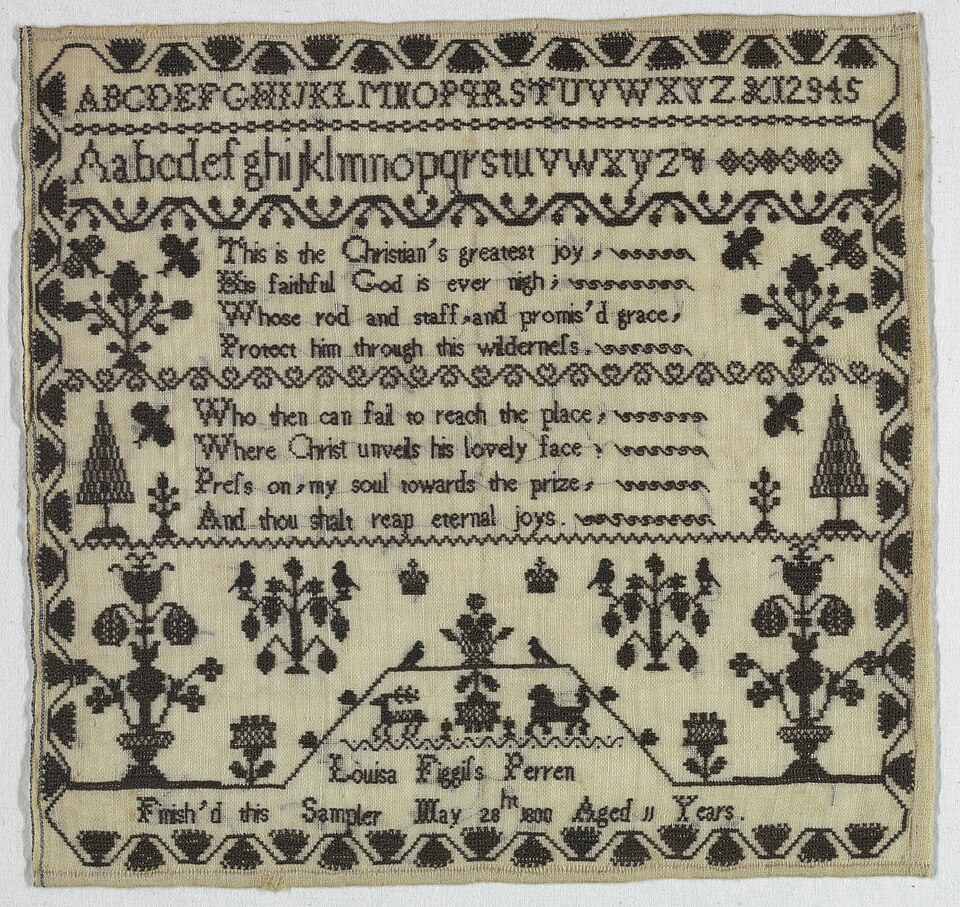
Linen was numbered as well as initialled, so that a household could tell how many of each item it had and which were in use.
Not applicable.
The numbering is the detail that reveals how much property was involved. A household’s textiles represented a substantial investment that was constantly being washed, lent, worn out and replaced, so somebody had to keep count – and the counting was recorded on the items themselves in thread.
4. Different Stitches Were Shown Off Deliberately
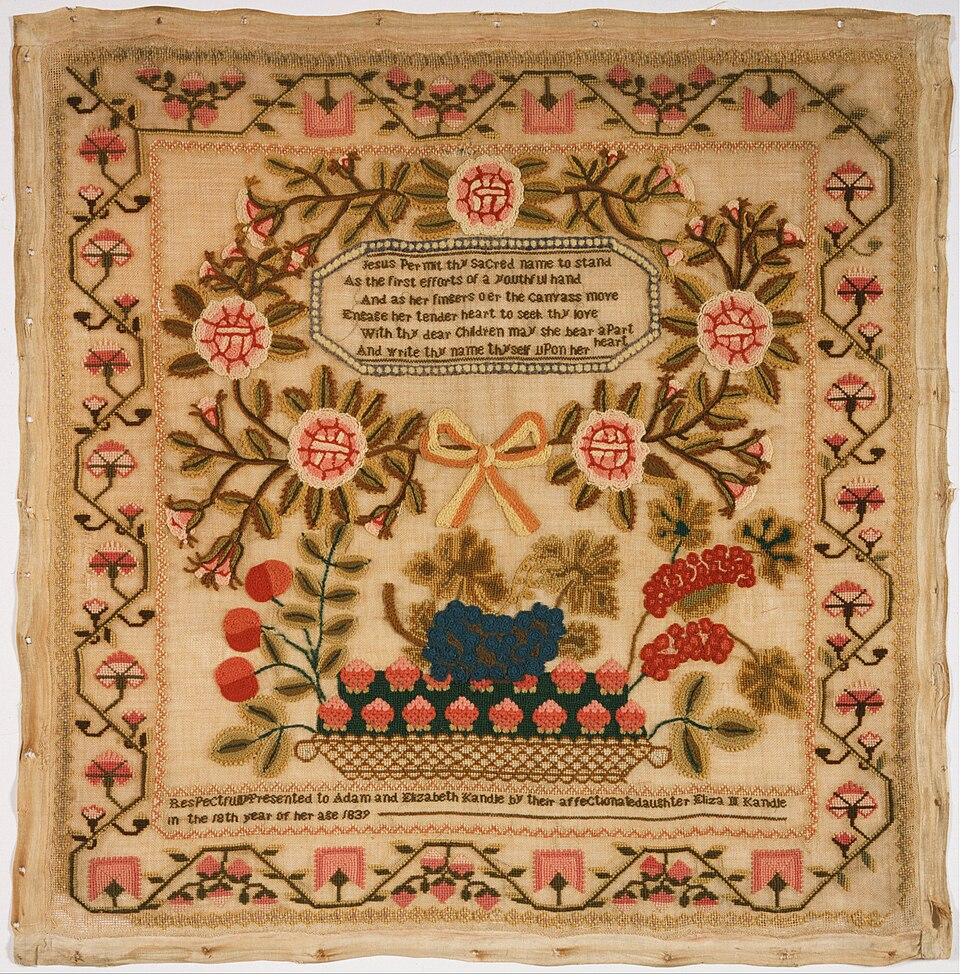
A sampler demonstrated a range of techniques in sequence, from plain cross stitch through more demanding work, precisely so that the maker’s full capability was visible.
Not applicable.
The structure of the piece is a syllabus. Each band or section shows a different technique, in rough order of difficulty, which means the finished object is a record of exactly how far a girl had got – and anybody who could read needlework could read that from across the room.
5. The Girl Signed and Dated It
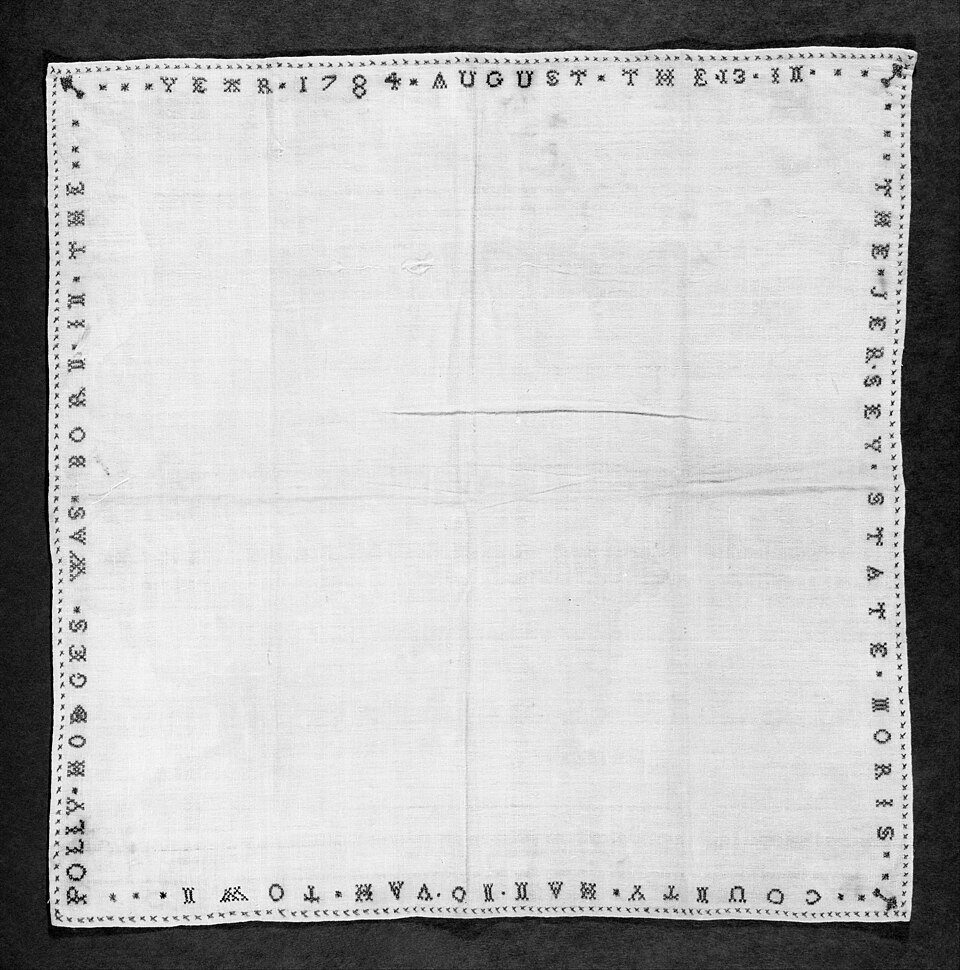
Samplers carry the maker’s name, her age and the year, which is why so many are precisely attributable.
Not applicable.
The signature is what makes these objects historically valuable and it was not sentimentality. A demonstration of attainment has to say whose attainment it is, so the name and the age are part of the document – and the result is an enormous body of dated, attributed work by named girls, which exists for almost no other category of American childhood.
6. It Was Made at a Very Young Age
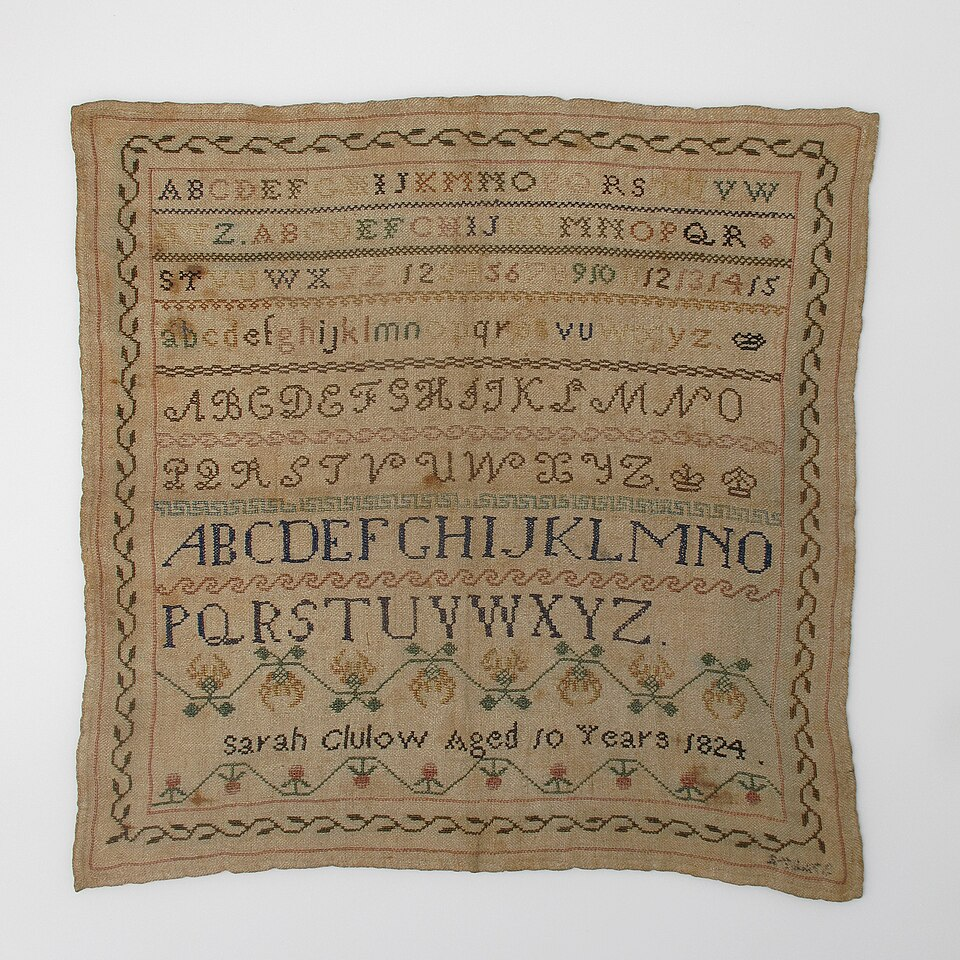
A great many surviving samplers were worked by girls under twelve, and some considerably younger than that.
Not applicable.
The ages are the thing that stops people when they see them in a museum. Fine, even, controlled stitching on a piece signed by a child of eight or nine is a level of hand skill that very few adults now possess, and it was produced by somebody who had been doing it daily for several years already.
7. Mistakes Had to Be Unpicked
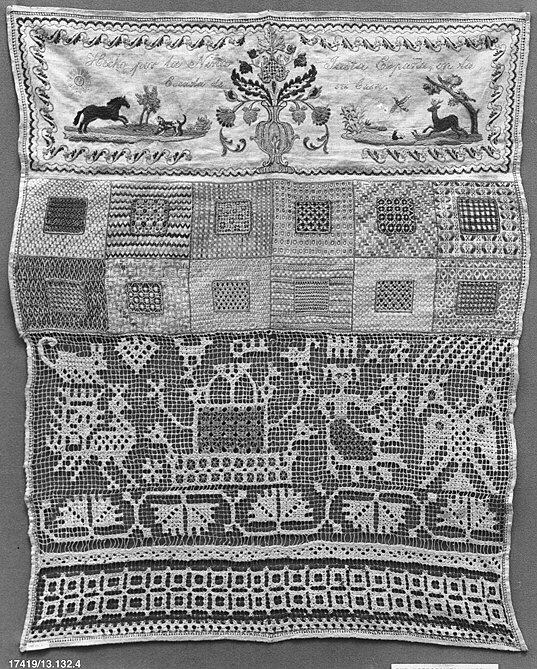
An error in a sampler could not be left or painted over – it had to be taken out, stitch by stitch, and done again.
Not applicable in the same way.
The unpicking is where the discipline actually lived. A medium in which every mistake must be removed by hand teaches a particular relationship to care, and it teaches it slowly – which is a large part of what the exercise was understood to be for, over and above the stitching itself.
8. The Verse Was Usually Somebody Else’s
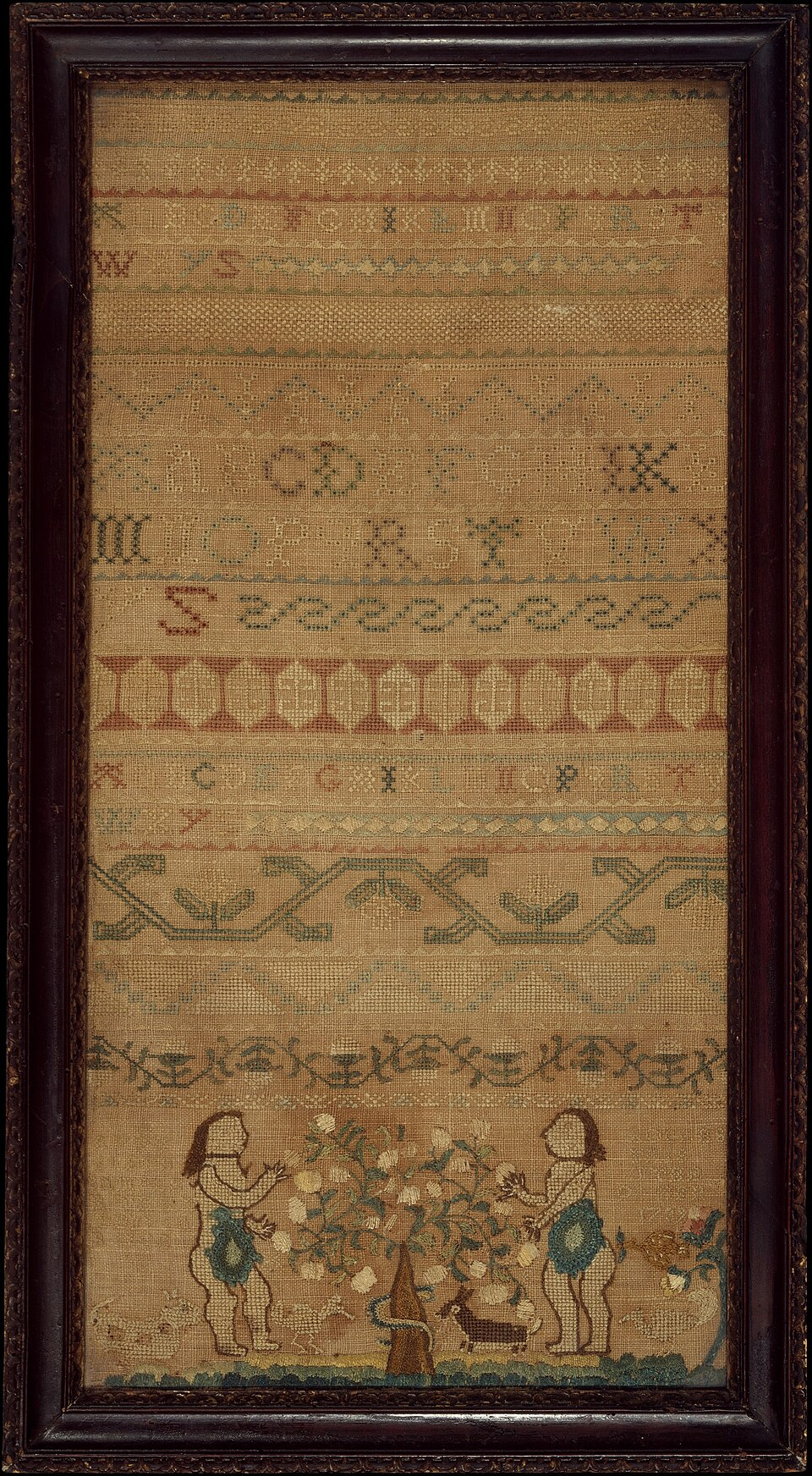
Many samplers carry a short moral, religious or sentimental verse, chosen from a stock of familiar material rather than written by the girl.
Not applicable.
Noticing that the words were supplied rather than composed is important for reading these objects honestly. The verse tells you what the girl was given to stitch, which is evidence about her teachers rather than about her – and the handwriting, so to speak, is the only part that is really hers.
9. Schools Were Built Around This Work
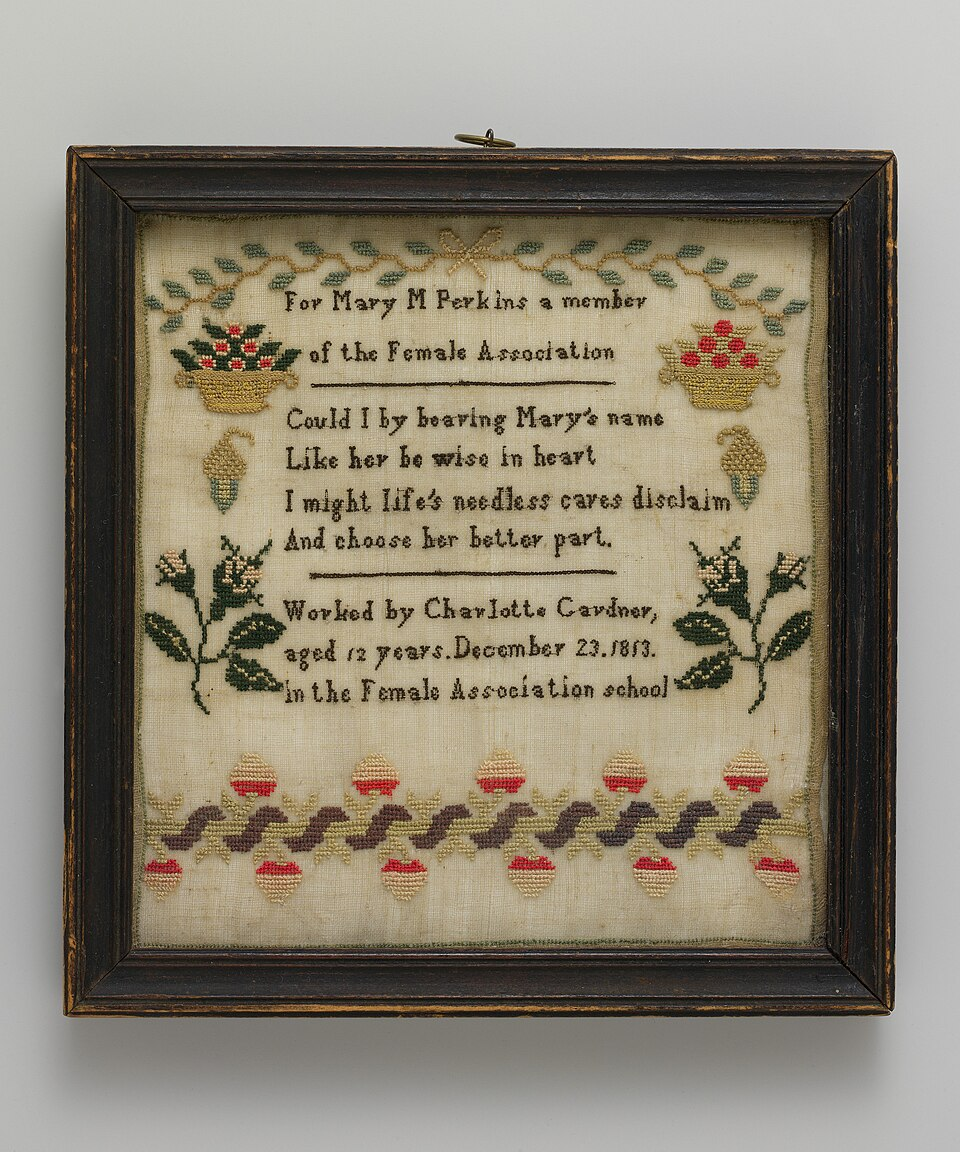
Girls’ schools and academies taught needlework as a central subject, and a finished sampler was frequently the visible product the family had paid for.
Not applicable.
The commercial dimension is worth understanding. A parent paying for a daughter’s schooling wanted something to show for it, and a framed signed sampler is exactly that – which means the object served the school as advertising at the same time as it served the girl as a credential.
10. The Materials Were Expensive
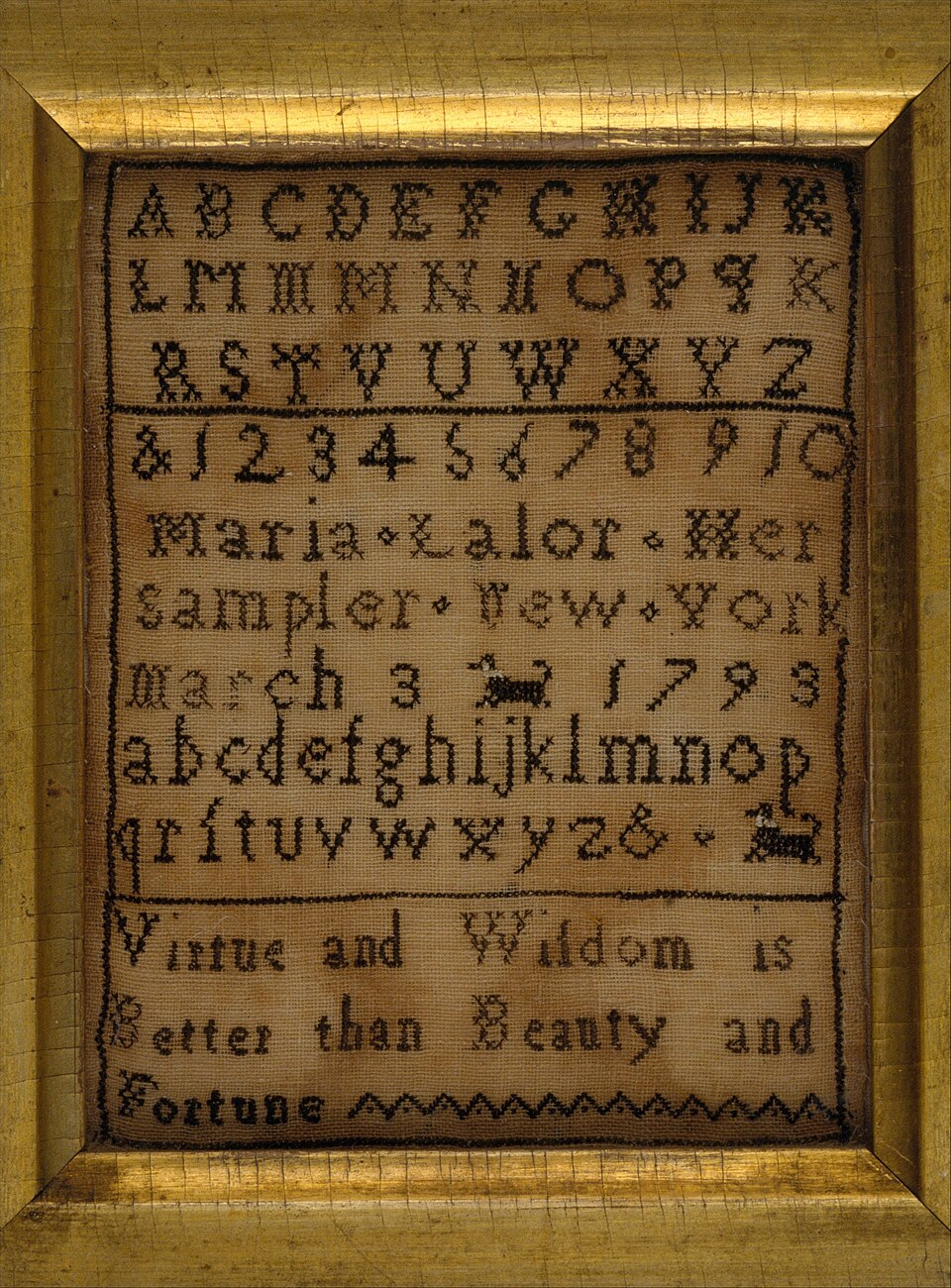
Fine linen ground and silk thread cost real money, which means a household was making a deliberate investment in a piece that would produce nothing but proof.
Not applicable.
The cost of materials settles the question of what these were for. Nobody spends that on a practice piece – the expense tells you the object was always intended to be finished, framed and kept, which makes it a planned document rather than an exercise that happened to survive.
11. Plain Sewing Mattered More and Survives Less
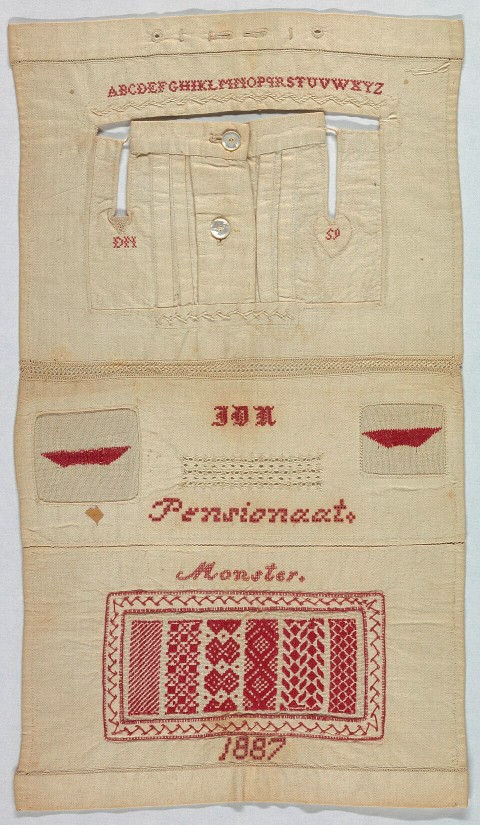
Alongside the decorative sampler, girls learned seams, hems, buttonholes, darning and patching, which was the actually useful skill and which nobody framed.
Not applicable in the same way.
This is the honest correction to the whole subject. The surviving samplers are the ornamental work, while the bulk of a girl’s needlework training was in plain mending and construction – and because nobody frames a hem, the record is heavily biased toward the decorative and away from the useful.
12. Then Printed Patterns Turned It Into a Pastime
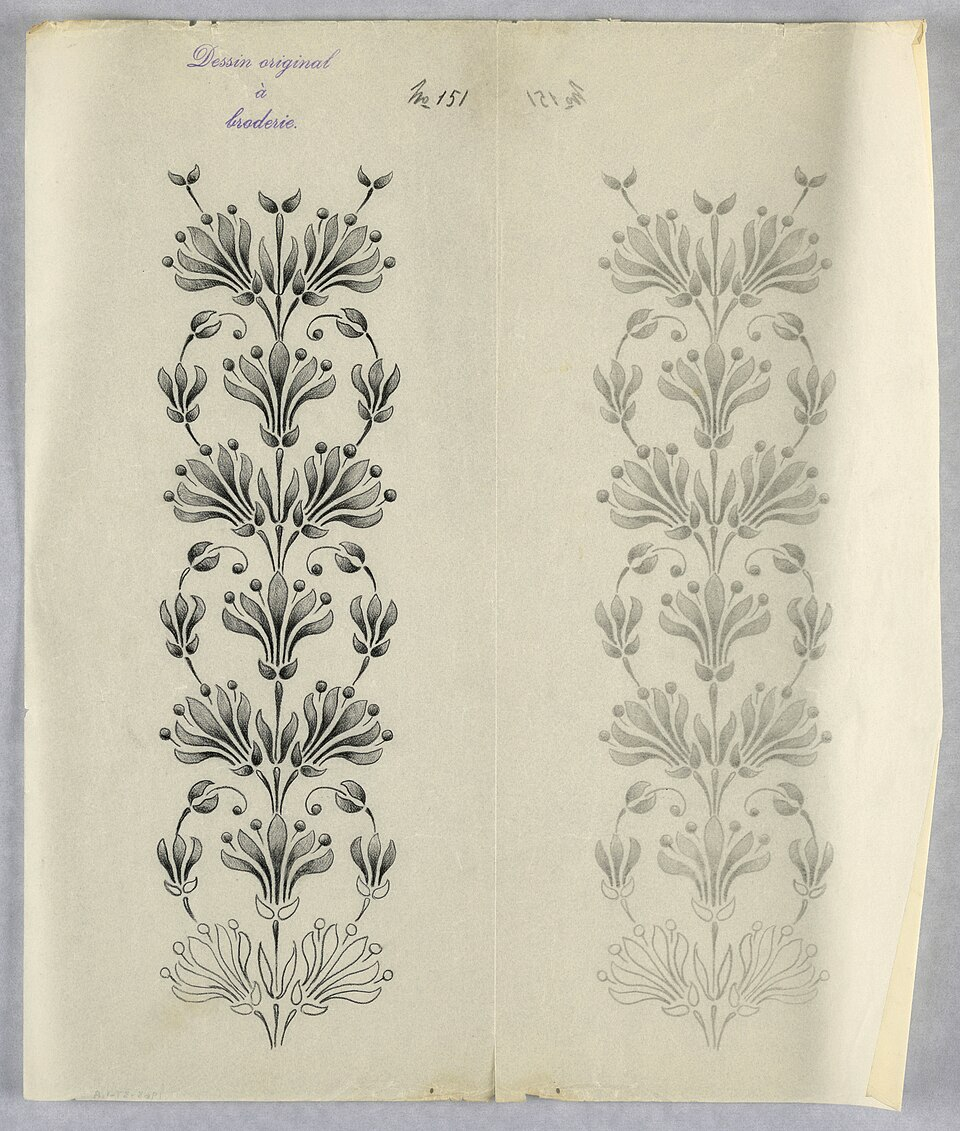
Pre-printed canvas, stamped designs and kits made decorative needlework something to be followed rather than devised, and it shifted from training to recreation.
Kits dominate the craft.
Mechanisation changed the nature of the activity rather than ending it. Working from a printed design requires care but no planning and no command of letter forms, which means the educational content was removed while the stitching remained – and what had been a demonstration became a hobby.
13. Then Schooling Was Certified on Paper
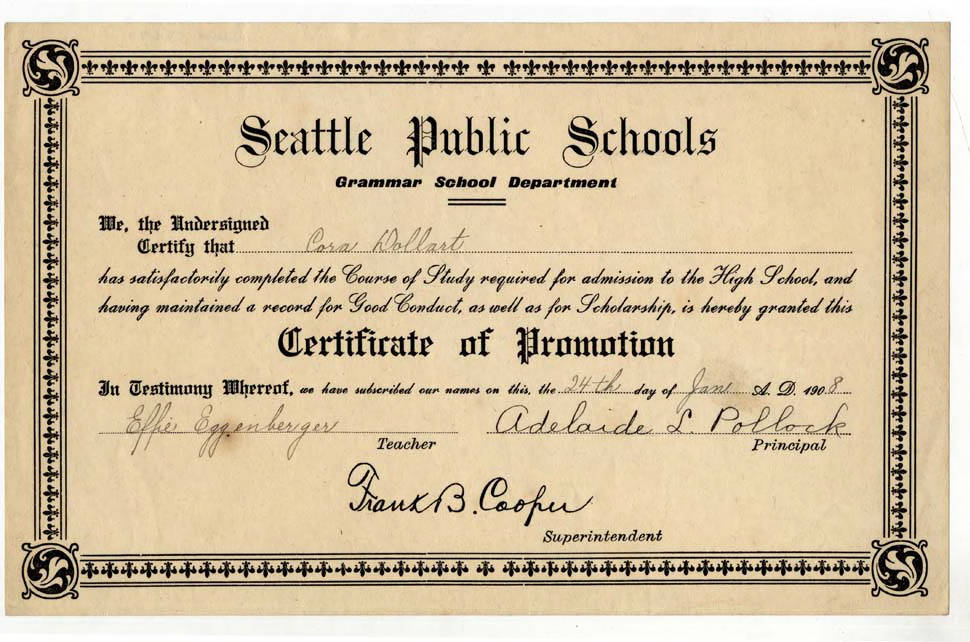
As formal education standardised, attainment was recorded in examinations, reports and certificates, and a textile demonstration had nothing left to prove.
Standard.
Paper credentials are the direct replacement and they are better at the job. A certificate is cheap, uniform, comparable between candidates and issued by an institution rather than made by the candidate – so once that system existed, a sampler was an expensive and unverifiable way of saying the same thing.
14. And by 1964 They Were Antiques on Walls
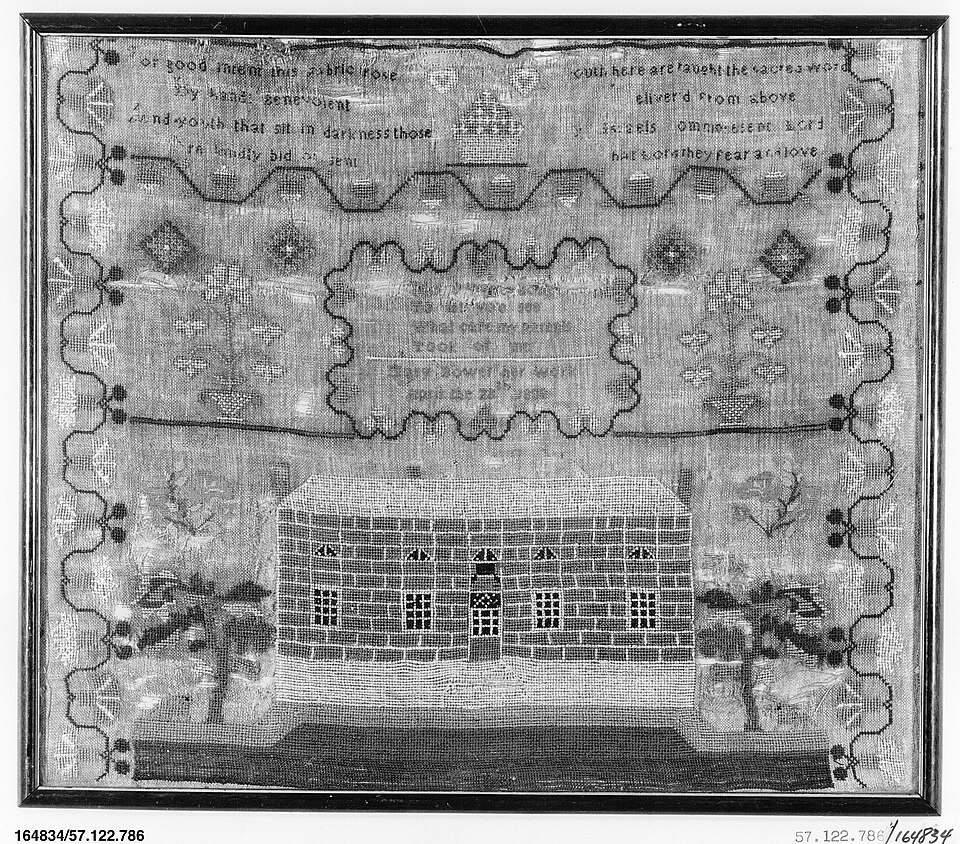
Surviving samplers hung in American houses as inherited decoration, admired for their appearance, with the purpose they were made for entirely forgotten.
Collected, studied and exhibited as both folk art and documentary evidence.
And what deserves the last word is the gap between what these objects are and what they look like. A framed alphabet worked in silk looks like a charming piece of folk decoration, and it is in fact a signed, dated, attributed credential made by a named girl frequently under the age of twelve, demonstrating a range of techniques in sequence, on expensive materials bought specifically for the purpose, proving that she could produce the legible stitched letters and numbers required to mark and inventory a household’s linen. It cost real money, every mistake in it was taken out by hand, and the verse on it was chosen by somebody else. The useful half of what she was taught – the hems, the buttonholes, the darning – was never framed and has almost entirely vanished. So the record we have is the ornamental part, hanging on walls, being admired for exactly the wrong reason.
We Kept the Ornamental Half and Lost the Useful One
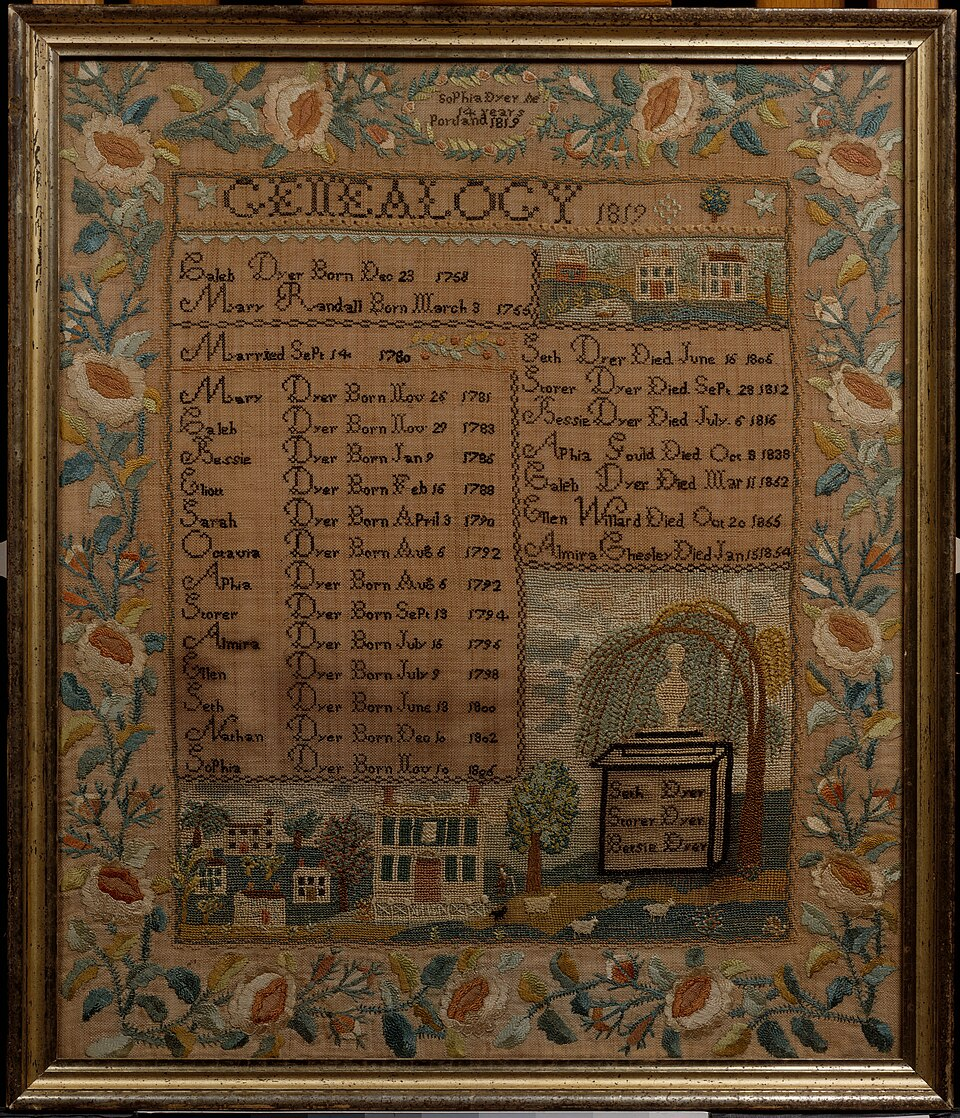
A sampler hanging in a hallway looks like charming folk decoration, and almost every assumption behind that reading is wrong.
It was a credential. A worked piece demonstrating command of letters, numbers and a sequence of stitches, signed, dated and framed, kept as evidence that a particular girl had been taught particular things and could do them. Much closer to a diploma than to an ornament.
And it had a vocational basis. Every sheet, shirt and towel in a household needed identifying marks, done in thread, so that items could be recognised, counted and tracked through washing – which means a woman needed to produce clean legible letters in stitching, and a sampler teaching the alphabet is training for the management of a linen cupboard. The numbers served inventory, because a household’s textiles were a substantial investment constantly being washed, lent, worn out and replaced, and somebody had to keep count. That count was recorded on the items themselves.
The structure of the piece is a syllabus. Each band shows a different technique, in rough order of difficulty, so the finished object records exactly how far the girl had got – and anybody who could read needlework could read that across a room.
Three facts about these objects as documents.
They are signed and dated, with the maker’s name and her age, which is not sentimentality: a demonstration of attainment has to say whose it is. The result is an enormous body of dated, attributed work by named girls, which exists for almost no other category of American childhood.
They were made very young. A great many surviving samplers were worked by girls under twelve and some considerably younger, at a level of fine even controlled stitching that very few adults now possess – produced by somebody who had already been doing it daily for years.
And mistakes had to be unpicked, stitch by stitch, because nothing in that medium can be left or covered. That is where the discipline actually lived, and it is a large part of what the exercise was understood to be for.
Two things worth noticing before admiring them.
The verse is usually somebody else’s. Most samplers carry a short moral, religious or sentimental text chosen from a stock of familiar material rather than written by the girl – so the words are evidence about her teachers, and the stitching is the only part that is really hers.
And there was money in it. Girls’ schools and academies taught needlework as a central subject, and a framed signed sampler was frequently the visible product a family had paid for – which makes the object the school’s advertising as well as the girl’s credential. The materials were expensive too: fine linen ground and silk thread cost real money, which settles what these were for. Nobody spends that on a practice piece, so the object was always intended to be finished, framed and kept.
Now the honest correction, which matters more than any of the above.
The sampler is the ornamental half of what girls were taught. The other half – seams, hems, buttonholes, darning, patching – was the actually useful skill, consumed far more of their time, and was never framed by anybody. Because nobody frames a hem, the surviving record is heavily biased toward the decorative and away from the practical.
The end of it came in two steps. Printed patterns, stamped canvas and kits turned decorative needlework into something followed rather than devised, which removed the educational content and left the stitching – a demonstration became a hobby. Then schooling was certified on paper, and a certificate is cheap, uniform, comparable between candidates and issued by an institution rather than made by the candidate. Against that, a sampler is an expensive and unverifiable way of saying the same thing.
So here is what is actually hanging on those walls.
A signed, dated, attributed credential, made by a named girl frequently under twelve, demonstrating a sequence of techniques on expensive materials bought for the purpose, proving she could produce the legible stitched letters and numbers needed to mark and inventory a household’s linen. Every mistake in it was taken out by hand. The verse on it was chosen by somebody else.
And the useful half of her training was never framed and has almost entirely vanished.
Which means the record we have is the ornamental part, admired for exactly the wrong reason.
If there is a sampler in your family, read the age next to the name.
That is usually the detail that stops people.
Like our content? Follow us for more.