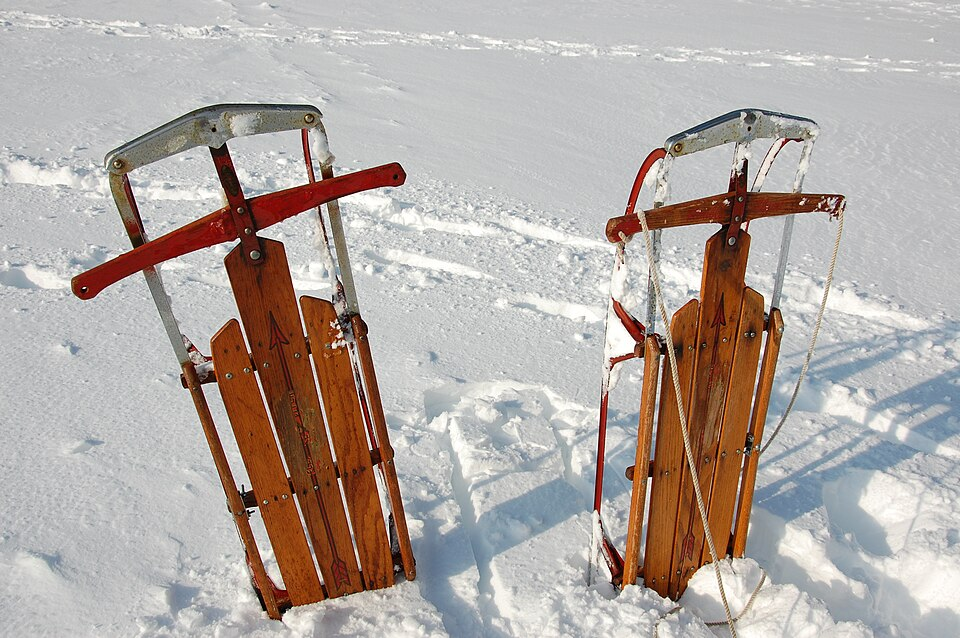
A narrow steel runner is the whole invention, and it is why a sled slides instead of ploughing.
A broad flat bottom pushes snow ahead of itself and stops. A narrow steel edge concentrates the whole weight onto a tiny contact area, presses through the surface, melts a microscopically thin film of water beneath itself and rides on that – which is the difference between a sled and a board.
And the steering is the genuinely clever part. Pushing the crossbar twists the flexible front section of the runners sideways so the sled carves a curve, which means there is no pivot, no joint to break and no play to develop: the entire steering mechanism is the spring in a piece of steel. That is why one design dominated for a century. Here are fifteen things every American kid knew.
1. The Steel Runner Was the Whole Invention
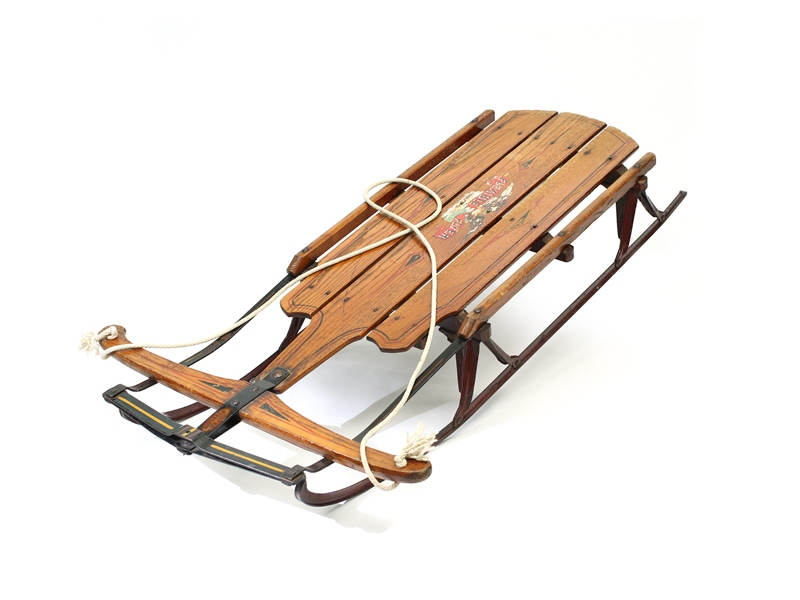
A narrow steel strip under each wooden rail concentrates the sled’s weight onto a very small contact area, which is what lets it slide instead of plough.
Unchanged in principle; modern sleds use plastic or metal to the same end.
Start with the runner because everything about a good sled follows from it. A broad flat bottom pushes snow ahead of itself and stops; a narrow steel edge presses through the surface, melts a microscopically thin film of water under itself and rides on that – which is the difference between a sled and a board.
Like our content? Follow us for more.
2. Steering Meant Bending the Runners
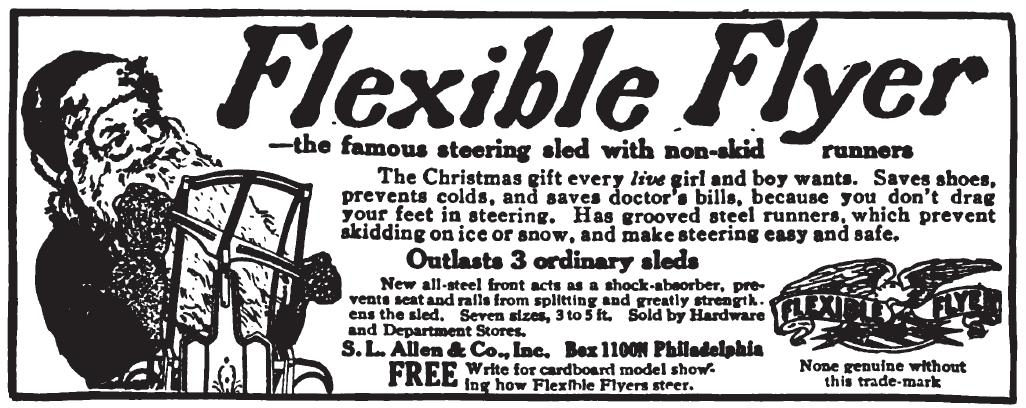
Pushing the crossbar at the front twisted the flexible front portion of the runners sideways, so the sled carved a curve instead of sliding straight.
The same mechanism, and the reason the design persisted.
The steering is the genuinely clever part and it is why one design dominated for a century. Rather than pivoting a separate front assembly, the runners themselves flex – which means there is no joint to break, no play to develop, and the whole steering mechanism is simply the spring in a piece of steel.
3. You Could Ride It Two Ways and They Felt Different
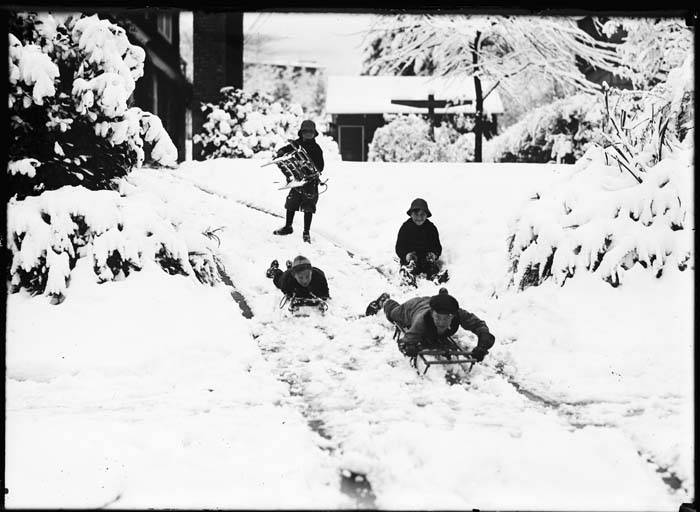
Lying flat on your stomach with hands on the bar gave speed and control; sitting up gave less of both and a better view and was easier to get off.
Unchanged.
The two positions are a genuine trade-off and children understood it precisely. Prone puts your weight low and your hands directly on the steering, which is faster and more responsive; sitting raises the centre of gravity and shortens your reach, which is slower and considerably easier to abandon in a hurry.
4. The Hill Was a Community Asset
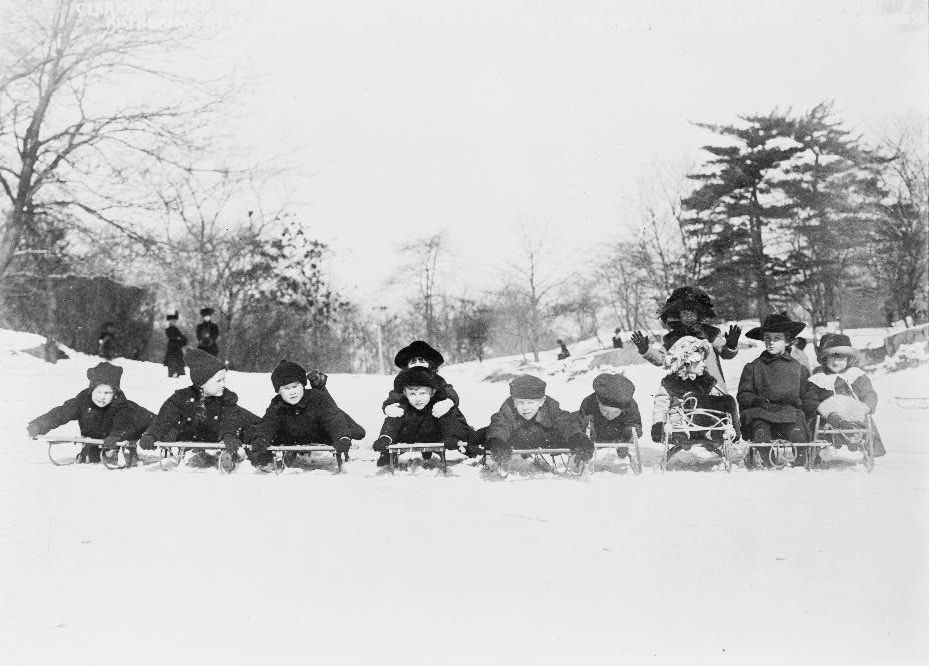
Every town and district had one particular hill that was the sledding hill, and its reputation, its hazards and its best line were common knowledge among every child in the area.
Sledding hills still exist, with far more supervision.
The shared hill is worth noting because it made this a collective rather than a solitary activity. A single slope used by every child in a district accumulates knowledge – where it is fastest, where it is dangerous, where it ends – and that knowledge was transmitted between children without any adult involvement.
5. Packing the Run Was Part of the Afternoon
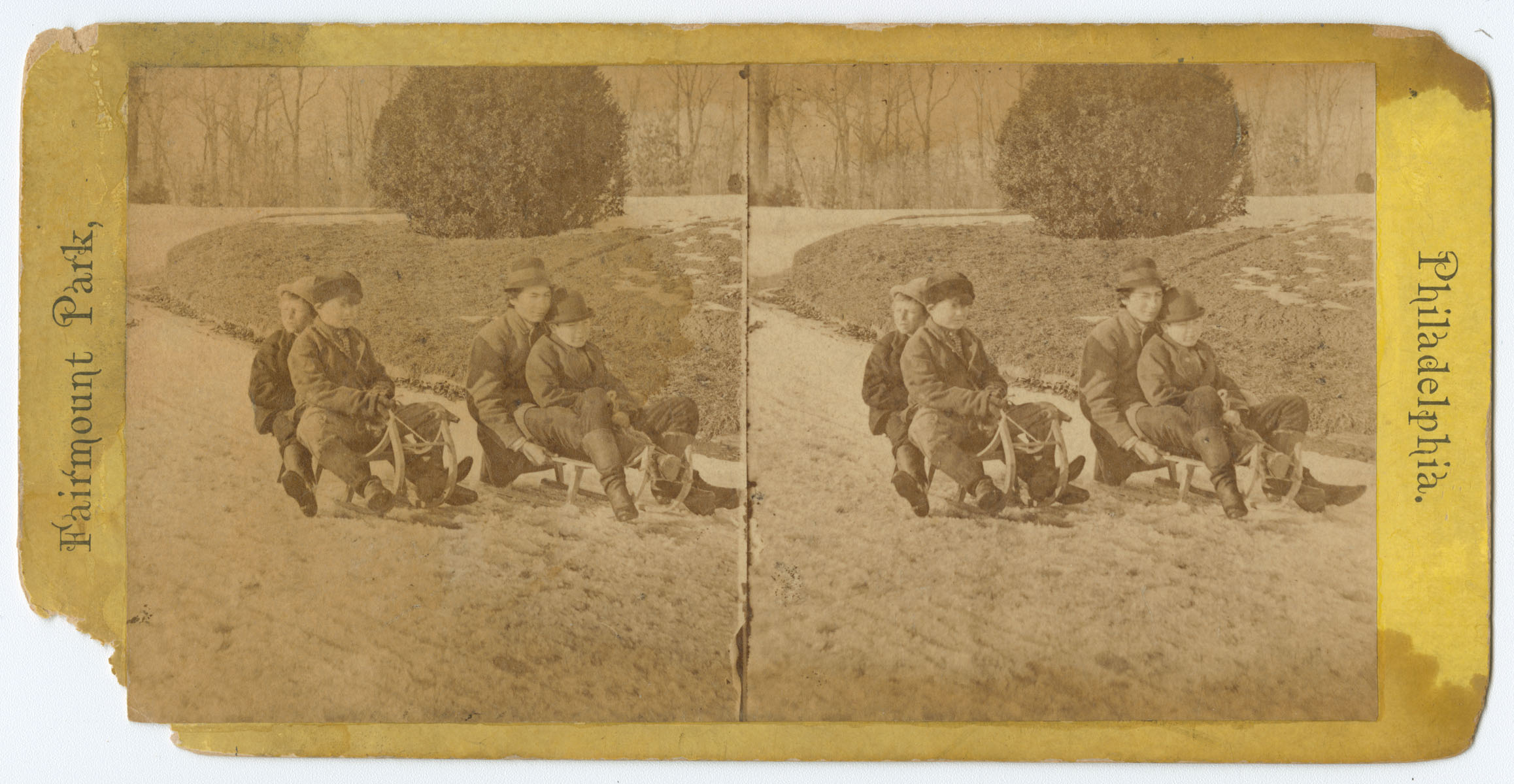
Fresh snow is slow. A run had to be trodden and ridden until it compacted into a hard polished track, which got faster every time somebody went down it.
Unchanged.
The packing explains why the best sledding was always late in the day. Compacted snow has fewer air gaps, melts into a smoother film under a runner and offers far less resistance – so the run improved continuously through the afternoon, which is both a physical fact and the reason nobody wanted to go home.
6. Water on the Track Made It Lethal
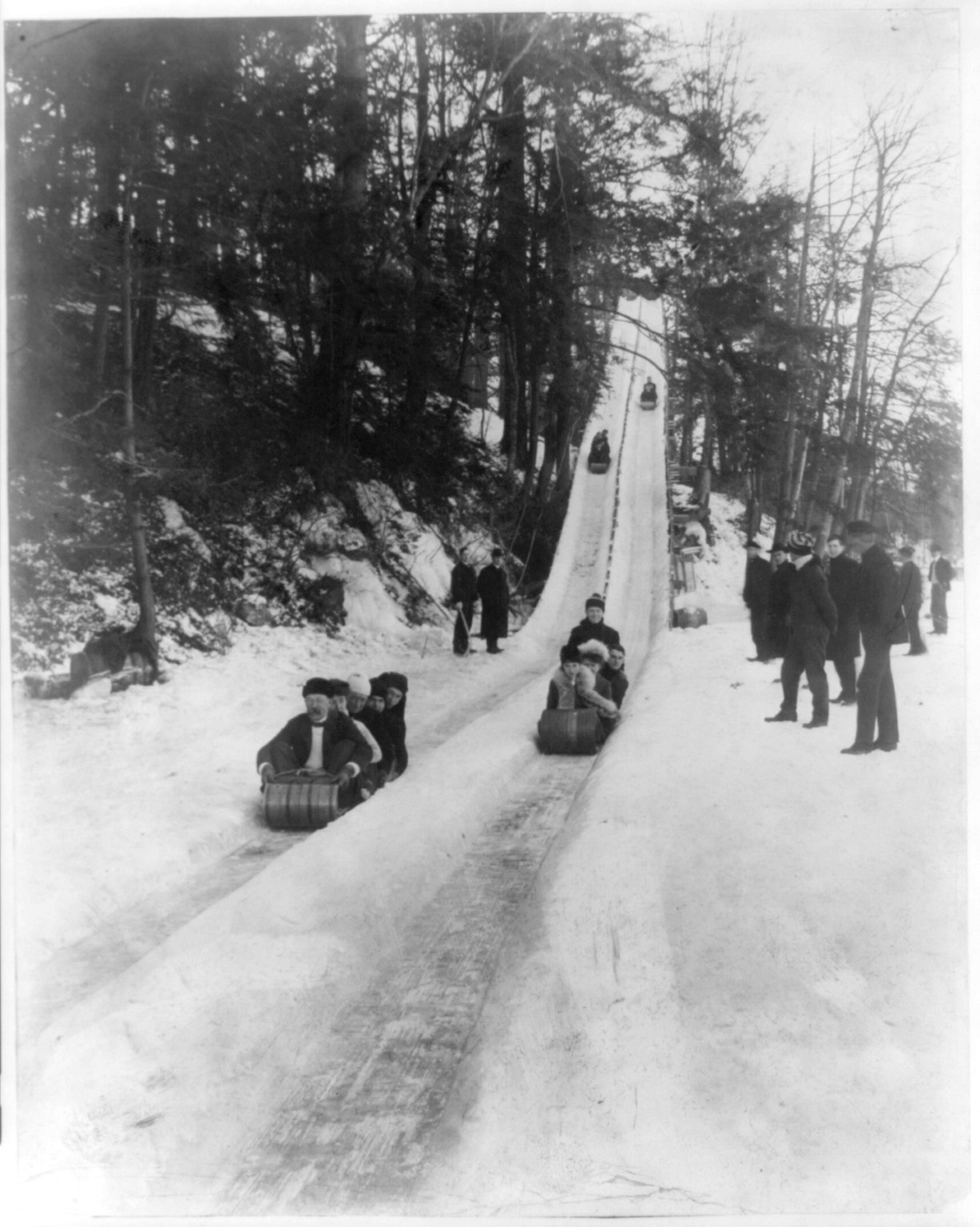
Pouring water on a packed run froze it into ice, which made it dramatically faster and removed almost all ability to steer or stop.
Not applicable; strongly discouraged.
This has to be mentioned and then left alone. Children worked out that an iced run is faster, the physics of why is straightforward, and the consequence is a surface on which a sled cannot be controlled or stopped at all. It is the single most dangerous thing anybody did with these, and this file is not describing how.
7. Stopping Was Done With Your Feet
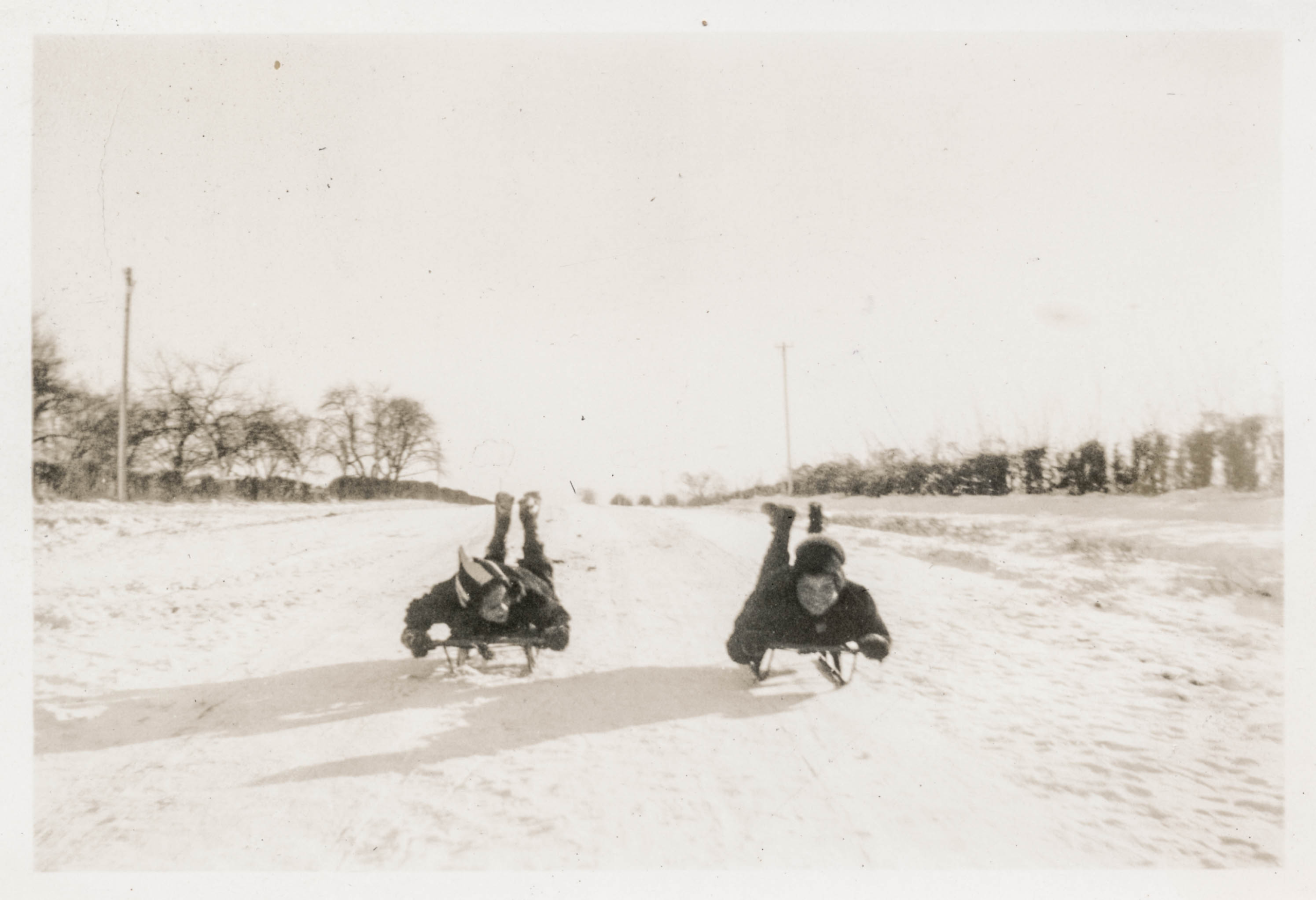
There was no brake. A rider slowed by dragging boot heels, by rolling off, or by running out of hill.
Unchanged.
The absence of a brake is the design fact that governs everything about the risk. A vehicle with steering and no stopping mechanism can only be slowed by the rider’s own body against the ground, which means every ride was committed from the top and every hazard had to be steered around rather than stopped before.
8. Two or Three Rode at Once
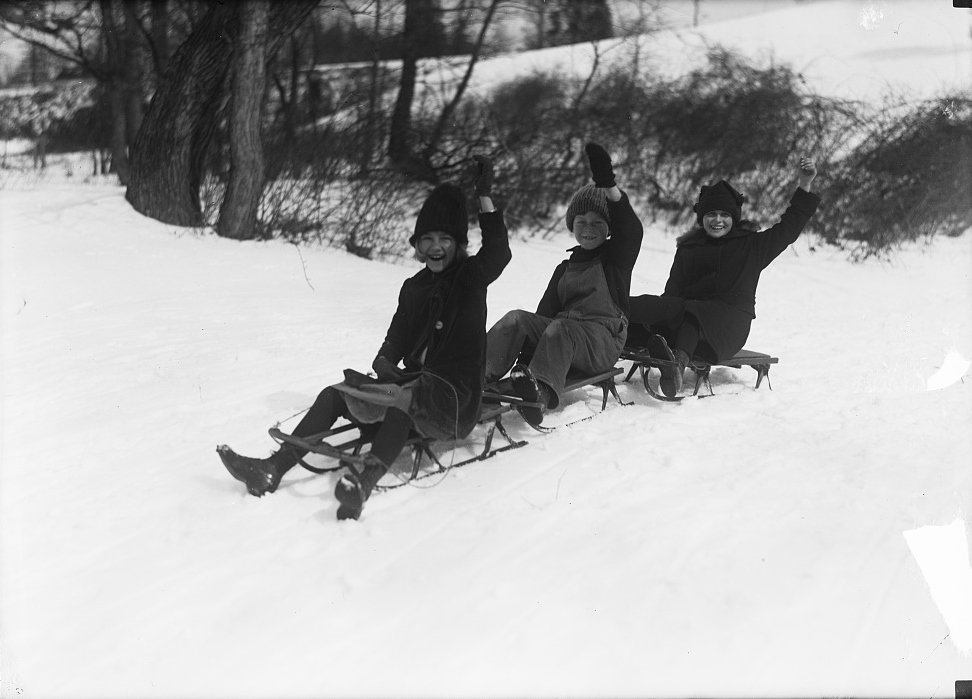
Children piled on, one lying down and others on top or behind, which went faster, steered worse and fell apart more entertainingly.
Discouraged.
Loading the sled up is near-universal in everybody’s memory and the physics is against it. More weight on the same runners goes faster, while the rider underneath can no longer shift their weight or reach properly – so the fastest rides were also the least controllable, which children regarded as a feature.
9. The Sled Had to Be Dragged Back Up
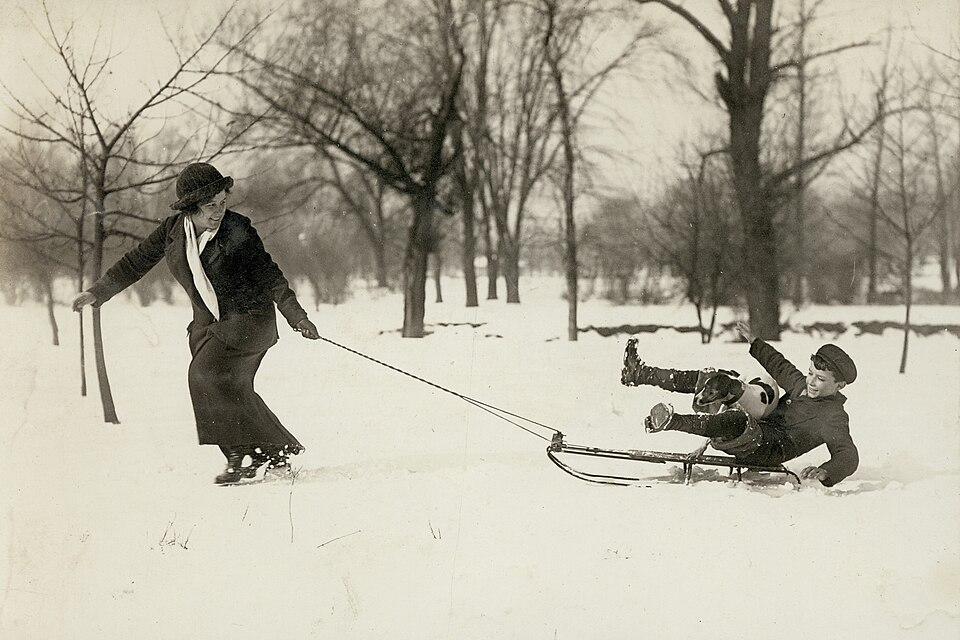
Every ride of thirty seconds cost a climb of several minutes, towing the sled behind on its rope through deep snow.
Unchanged.
The climb is the part nobody remembers and it was most of the afternoon. The ratio of walking to sliding is heavily weighted toward walking, which means sledding was a form of strenuous exercise punctuated by brief intervals of speed – and the sled, which weighs nothing going down, is awkward and heavy coming up.
10. Rust Was the Enemy
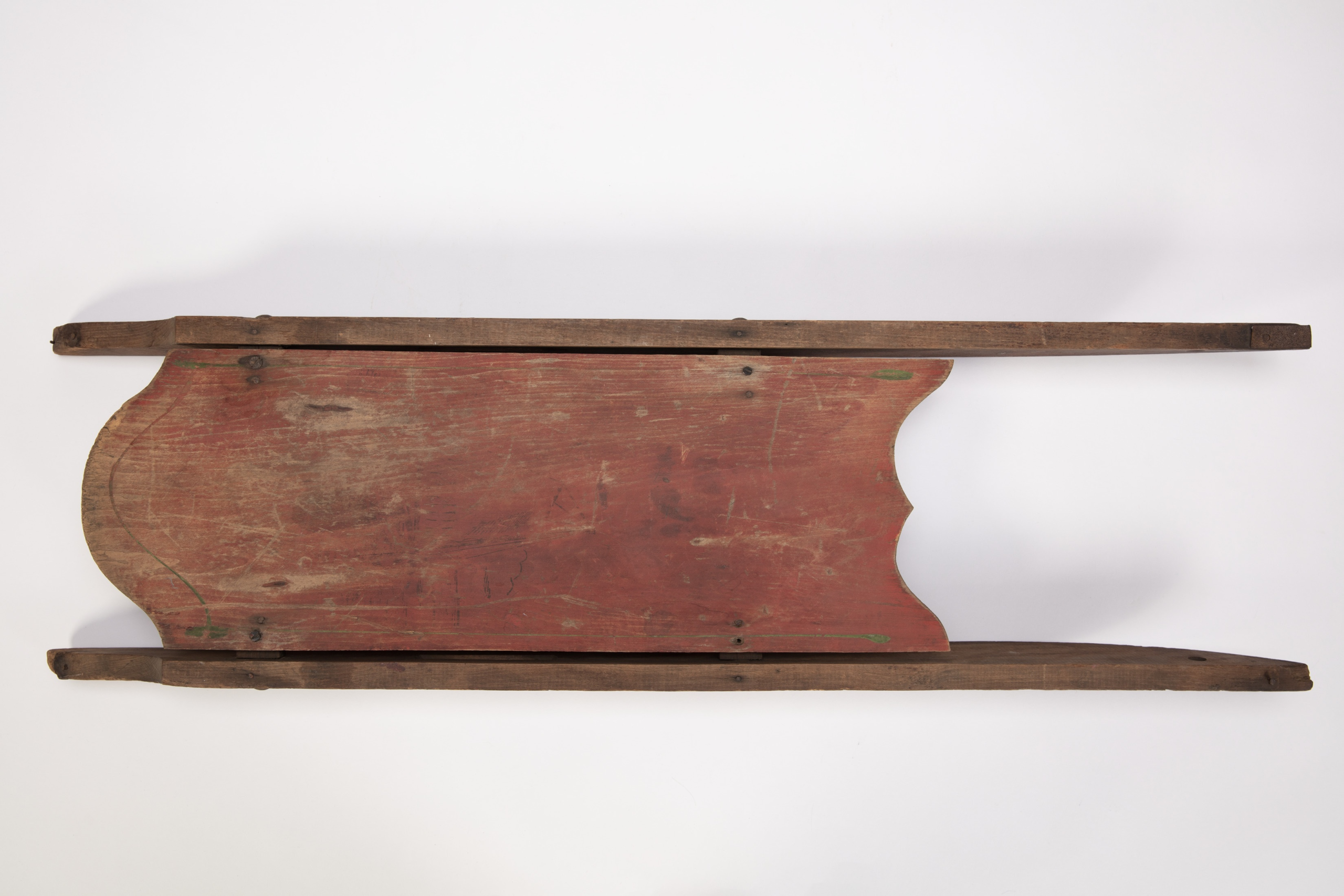
Steel runners left wet and put away rusted, and a rusty runner is slow, so a sled had to be dried, rubbed down and sometimes waxed or oiled.
Modern materials removed the problem.
Maintenance mattered more than people expect and the reason is surface finish. Rust is rough at exactly the scale that matters for sliding, so a neglected runner loses its speed permanently – which is why careful children dried and polished their runners and why the fastest sled on the hill was frequently the best-maintained one rather than the newest.
11. A Sled Was a Serious Present
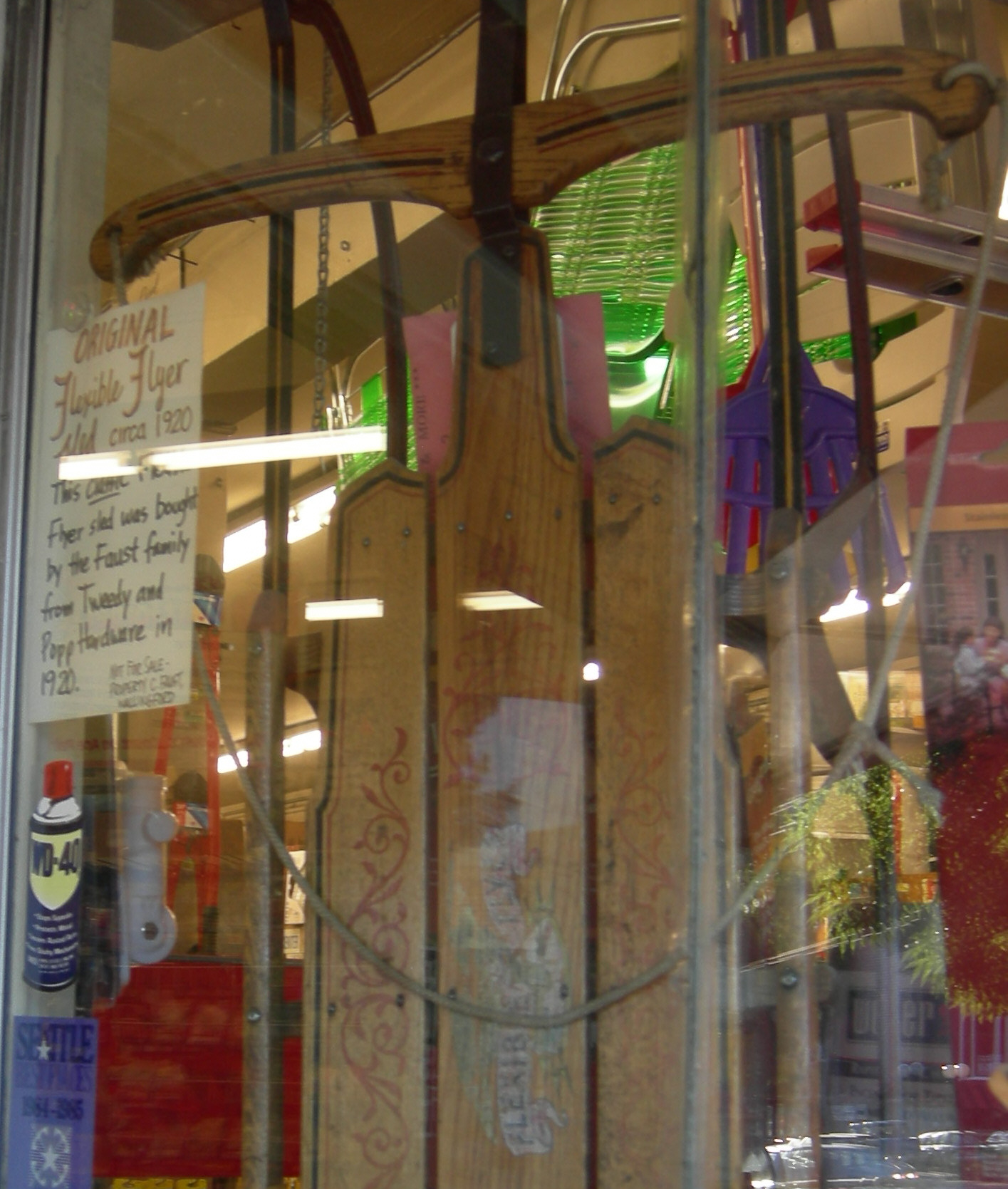
A new sled was a substantial Christmas or birthday gift, was expected to last for years, and was frequently handed down between siblings.
Not applicable in the same way.
The expense is what made the object matter. A sled was not a trivial purchase, so it was looked after, named, marked, defended and passed on – and a child with a good one occupied a particular position on the hill that had nothing to do with their own abilities.
12. Homemade Sleds Were Everywhere
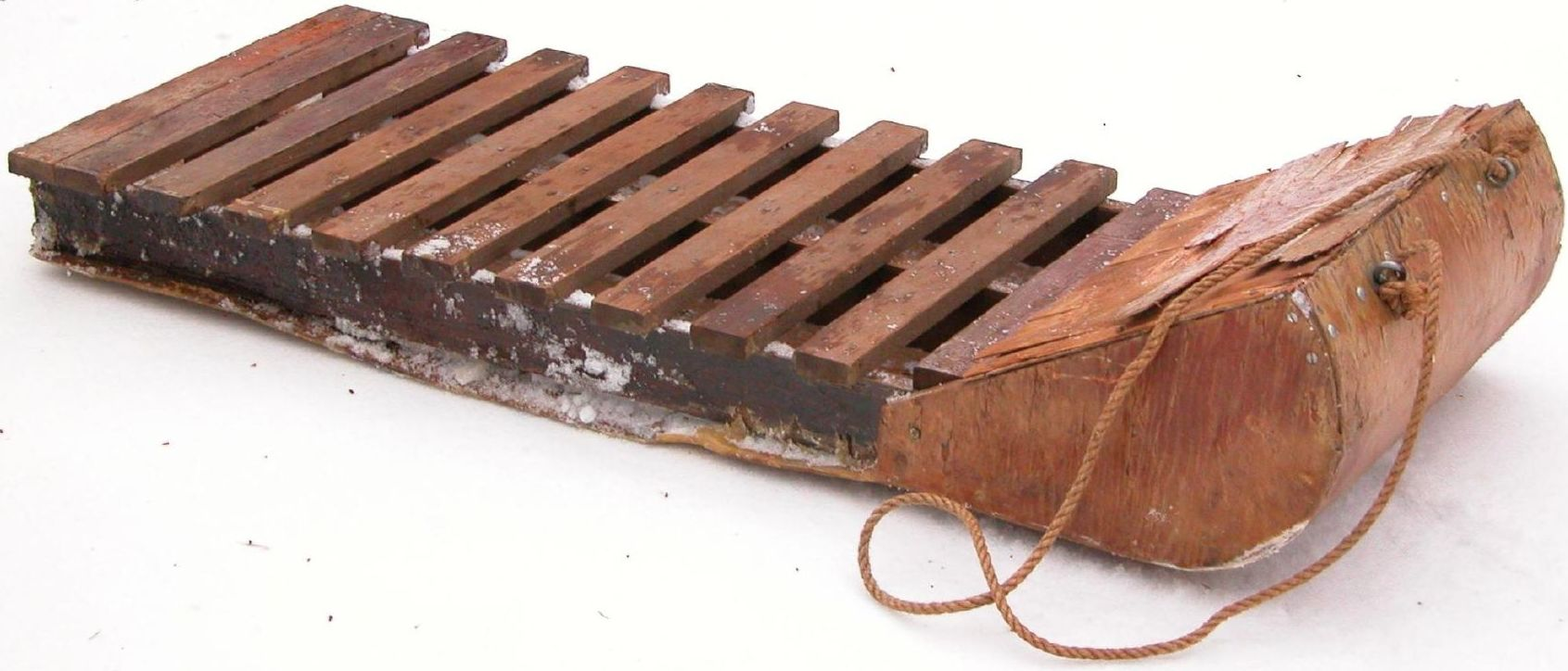
Children and fathers built sleds out of barrel staves, scrap boards, salvaged metal strip and anything else available, and some of them were very fast.
Not applicable.
The homemade version matters because it shows what the essential features were. Anybody who understood that the trick is a narrow hard runner could build something that worked out of scrap – and a well-made homemade sled on a packed run was perfectly competitive with a bought one, which is not true of most manufactured toys.
13. The Toboggan and the Bobsled Were Different Animals
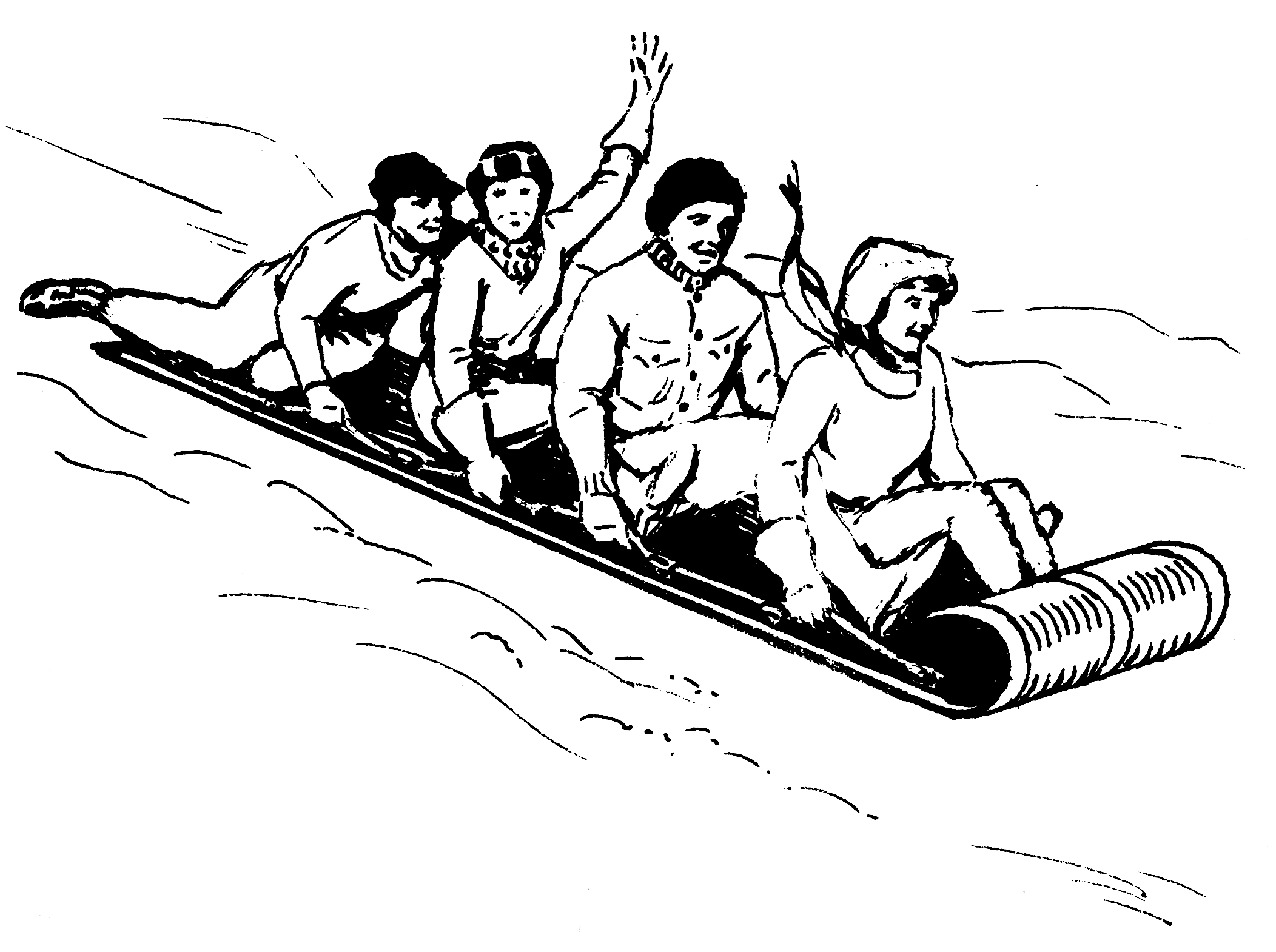
Flat-bottomed toboggans slid on a broad surface and carried several people without steering, while large homemade bobsleds joined two sleds with a plank and carried a crowd.
Both still exist.
Separating the types clarifies what the steel runner was for. A broad flat bottom works on soft snow and cannot be steered at all, while a runner works on hard snow and can – so the choice between them was a judgement about the surface rather than about preference.
14. Then Plastic Made Sleds Cheap and Disposable
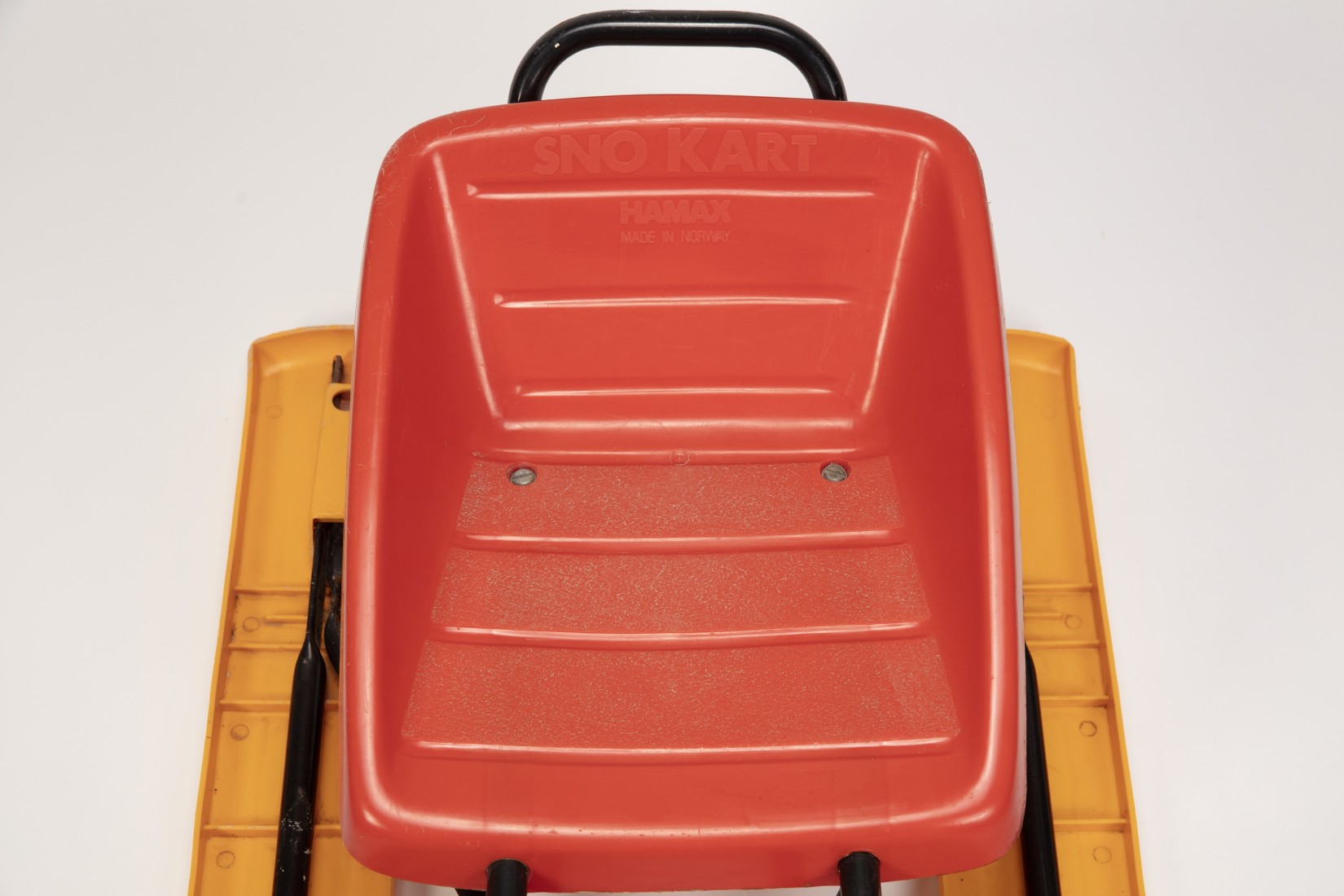
Moulded plastic sheets and shells cost almost nothing, needed no maintenance, did not rust, and went fast enough on most hills.
Standard.
Plastic beat steel on price and durability rather than on performance. A moulded shell is slower than a well-kept steel runner on a hard track and far better on soft snow, needs no care at all, and costs so little that it is not an object anybody maintains – which removed both the craft and the status from the whole business.
15. And by the 1970s the Old Steel Sleds Were in Barns
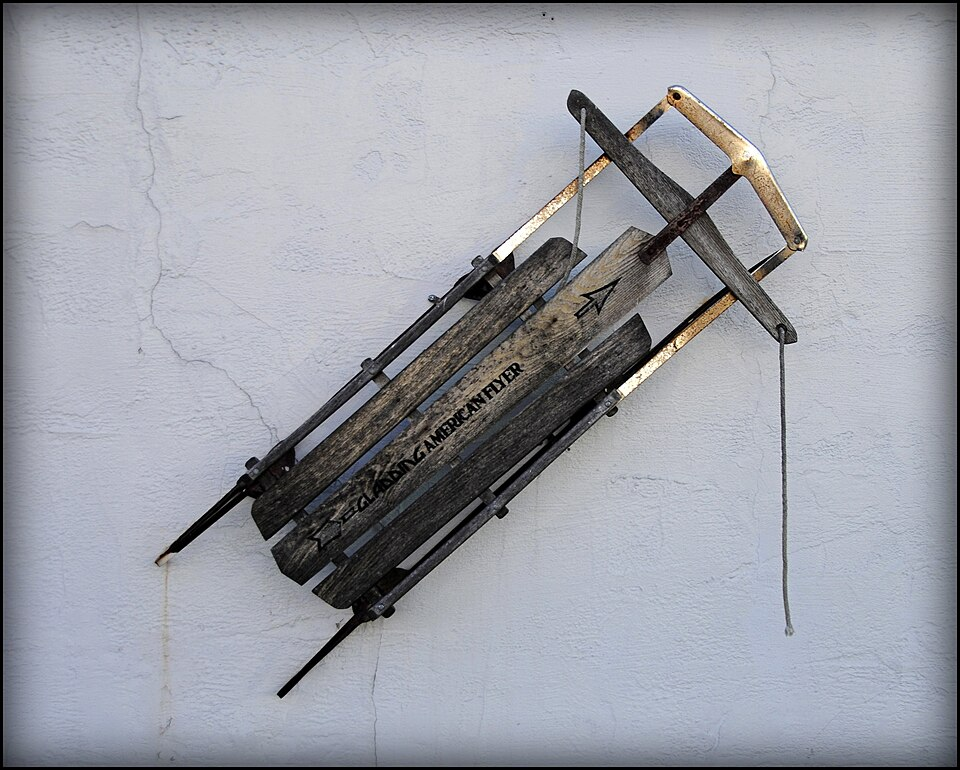
Steel-runner sleds survived in enormous numbers in sheds and attics, unused but unbroken, while children went down the same hills on plastic.
Collected and occasionally still used.
And what deserves the last word is that this was an American child’s first vehicle, and it was a real one. It had a steering mechanism that worked by flexing steel, a top speed set by its runner finish and the state of the track, no brakes whatever, a maintenance regime that genuinely affected its performance, and a weight-transfer technique that had to be learned by doing it wrong. Children packed their own track, knew their own hill, understood that the afternoon got faster as the surface compacted, and worked out for themselves that loading three people on went quicker at the cost of all control. Nobody taught any of that. And then it was replaced by a moulded plastic shell that costs less than a pair of gloves, requires nothing, lasts one winter and works perfectly well – which is a fair trade for everybody except the person who used to be the one with the fast sled.
It Was a Real Vehicle and Nobody Taught Them Any of It
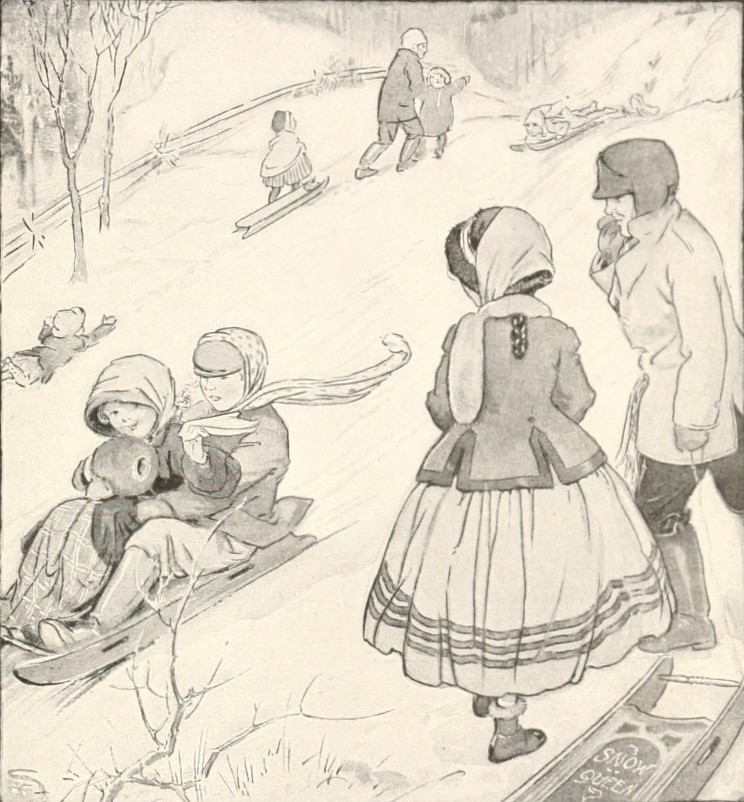
A steel-runner sled looks like the simplest toy ever made and it is actually a vehicle, with a steering system, a performance envelope, a maintenance requirement and no brakes.
Start with the runner. A narrow steel strip under each rail concentrates the whole weight onto a very small contact area, which presses through the snow surface, melts a microscopically thin film of water underneath and rides on that. A broad flat bottom just pushes snow ahead of itself and stops. That difference is the entire reason a sled works.
Then the steering, which is why one design lasted a hundred years. Pushing the crossbar twists the flexible front portion of the runners sideways so the sled carves rather than slides straight. No pivot, no separate front assembly, no joint to break and no play to develop – the steering mechanism is simply the spring in a piece of steel.
Everything else children knew about it they worked out themselves.
The two riding positions are a real trade-off: prone puts your weight low with your hands directly on the bar, which is faster and more responsive, while sitting raises your centre of gravity and shortens your reach, which is slower and much easier to abandon in a hurry.
The hill was a community asset. Every district had one particular slope, and its reputation, its hazards and its best line were common knowledge among every child in the area – accumulated knowledge transmitted between children with no adult involvement at all.
Packing the run was part of the afternoon, and it is why the best sledding was always late in the day. Compacted snow has fewer air gaps, melts into a smoother film under a runner and offers far less resistance, so the track got faster every single time somebody went down it.
Stopping was done with your feet, because there was no brake. A rider slowed by dragging boot heels, rolling off, or running out of hill – which means every ride was committed from the top and every hazard had to be steered around rather than stopped before.
Two or three rode at once, which everybody remembers and which the physics argues against. More weight on the same runners is faster, while the rider underneath can no longer shift their weight or reach properly – so the fastest rides were the least controllable, and children regarded that as a feature.
The climb back up is the part nobody remembers and it was most of the afternoon. Thirty seconds of sliding cost several minutes of towing a sled through deep snow, so this was strenuous exercise punctuated by brief intervals of speed.
Maintenance mattered more than people expect. Rust is rough at exactly the scale that matters for sliding, so steel left wet and put away loses its speed permanently – which is why careful children dried and polished their runners, and why the fastest sled on the hill was frequently the best-maintained rather than the newest.
A sled was also a serious present: a substantial gift expected to last years and frequently handed down. Which is why it was looked after, named, marked and defended, and why a child with a good one held a position on the hill that had nothing to do with their own ability.
And homemade sleds were everywhere, built from barrel staves, scrap boards and salvaged metal strip – some of them very fast. That matters because it shows what the essential feature was: anybody who understood that the trick is a narrow hard runner could build something competitive out of scrap, which is not true of most manufactured toys.
The related types clarify the principle. A flat-bottomed toboggan slides on a broad surface, carries several people and cannot be steered at all; it works on soft snow where a runner sinks. So the choice between them was a judgement about the surface rather than a preference.
One thing children worked out that they should not have: water poured on a packed run freezes it into ice, which is dramatically faster and removes almost all ability to steer or stop. It is the single most dangerous thing anybody did with these, and this file is not describing how.
Plastic ended the era on price rather than performance. A moulded shell is slower than a well-kept steel runner on a hard track and better on soft snow, needs no care whatever, and costs so little that nobody maintains it – which removed both the craft and the status from the whole business.
So the steel sleds went into barns in enormous numbers, unused and unbroken, while children went down the same hills on plastic.
And what they had been using was a real vehicle. Flexing-steel steering, a top speed set by runner finish and track condition, no brakes at all, a maintenance regime that genuinely affected performance, and a weight-transfer technique learned by getting it wrong.
Nobody taught them any of it.
If an old sled in your family still has bright runners, somebody dried them every time.
That was the difference between the fast sled and everybody else’s.
Like our content? Follow us for more.