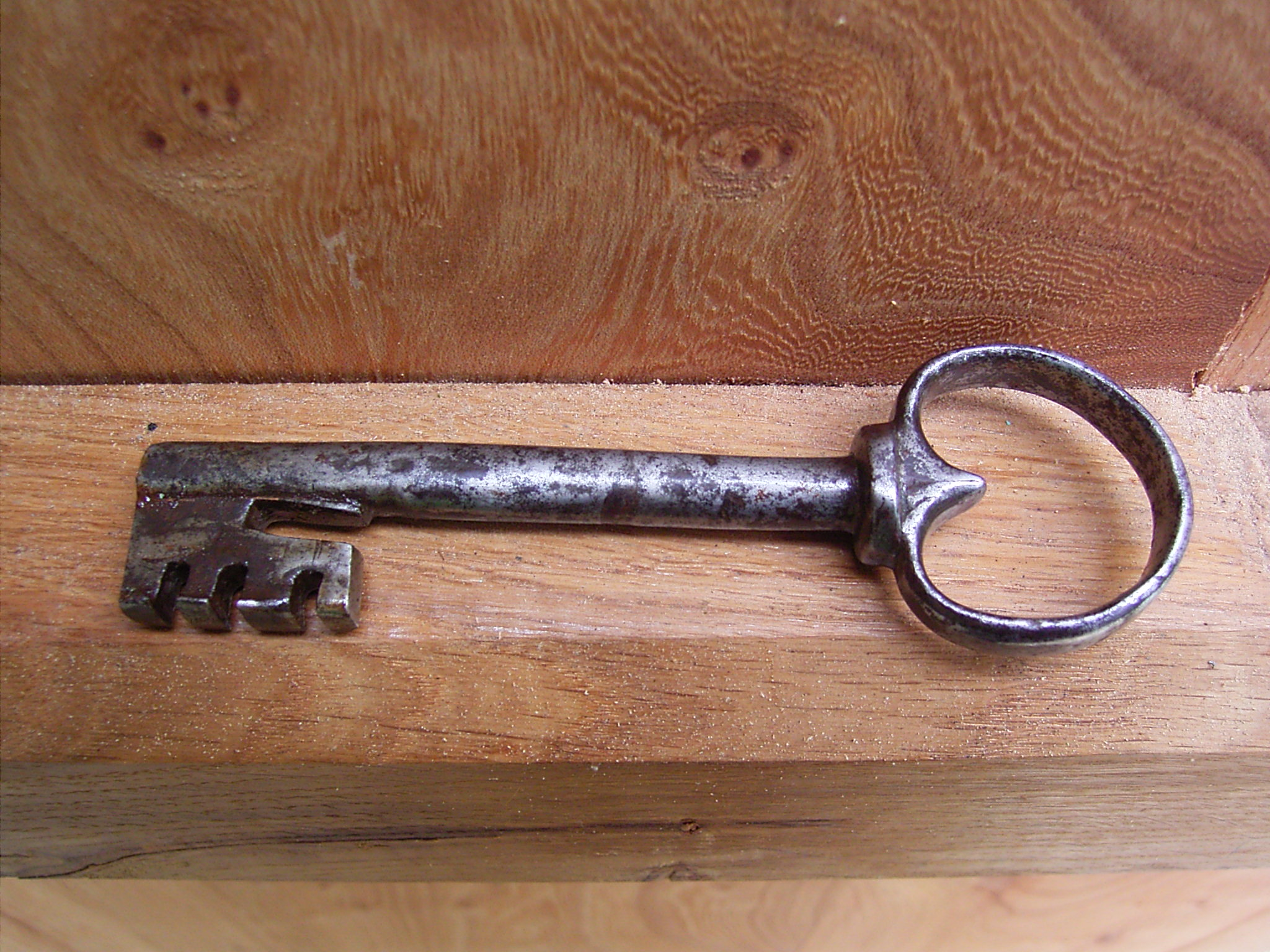
The drawer of old keys everybody’s family has is mostly useless, and the reason is not that the locks are gone. It is that those keys were never meant to be unique. Interior door keys of that period were close to interchangeable by design, one key frequently opened every door upstairs, and nobody thought this was a problem – because the lock was not there to keep people out.
The Lock Was a Latch With a Bolt
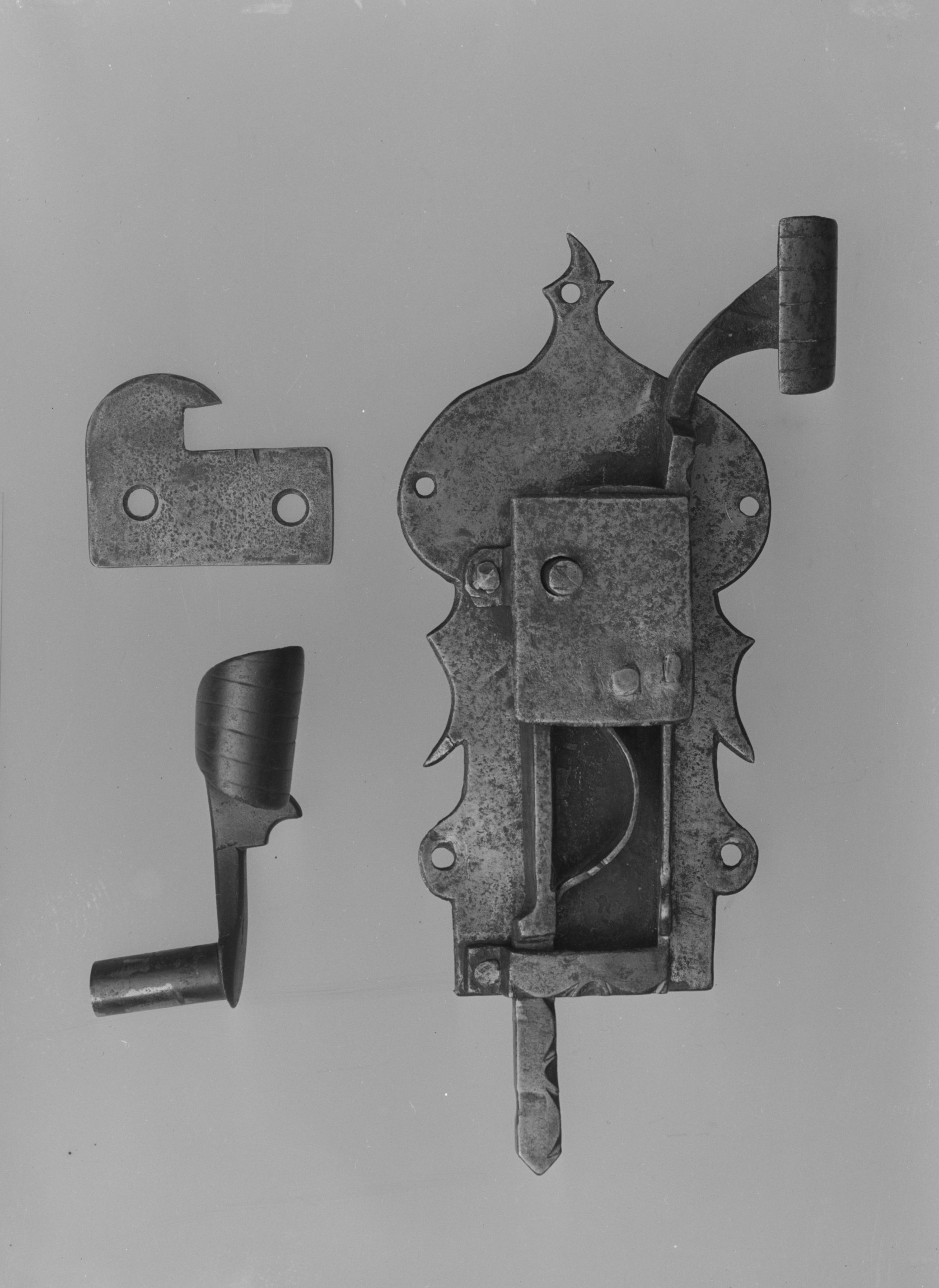
Start with what an interior lock was actually for.
A bedroom door, a parlour door, a hall door: what these needed was to stay shut, to be openable, and to be capable of being held shut when somebody wanted privacy. They were not protecting property from a determined stranger, because a determined stranger was outside the house and the outside door was a different proposition.
So the mechanism inside a interior lock is modest, and that is a design choice rather than an oversight. You do not fit a bank vault to a bedroom.
Like our content? Follow us for more.
A Warded Lock Checks the Key’s Shape and Nothing Else
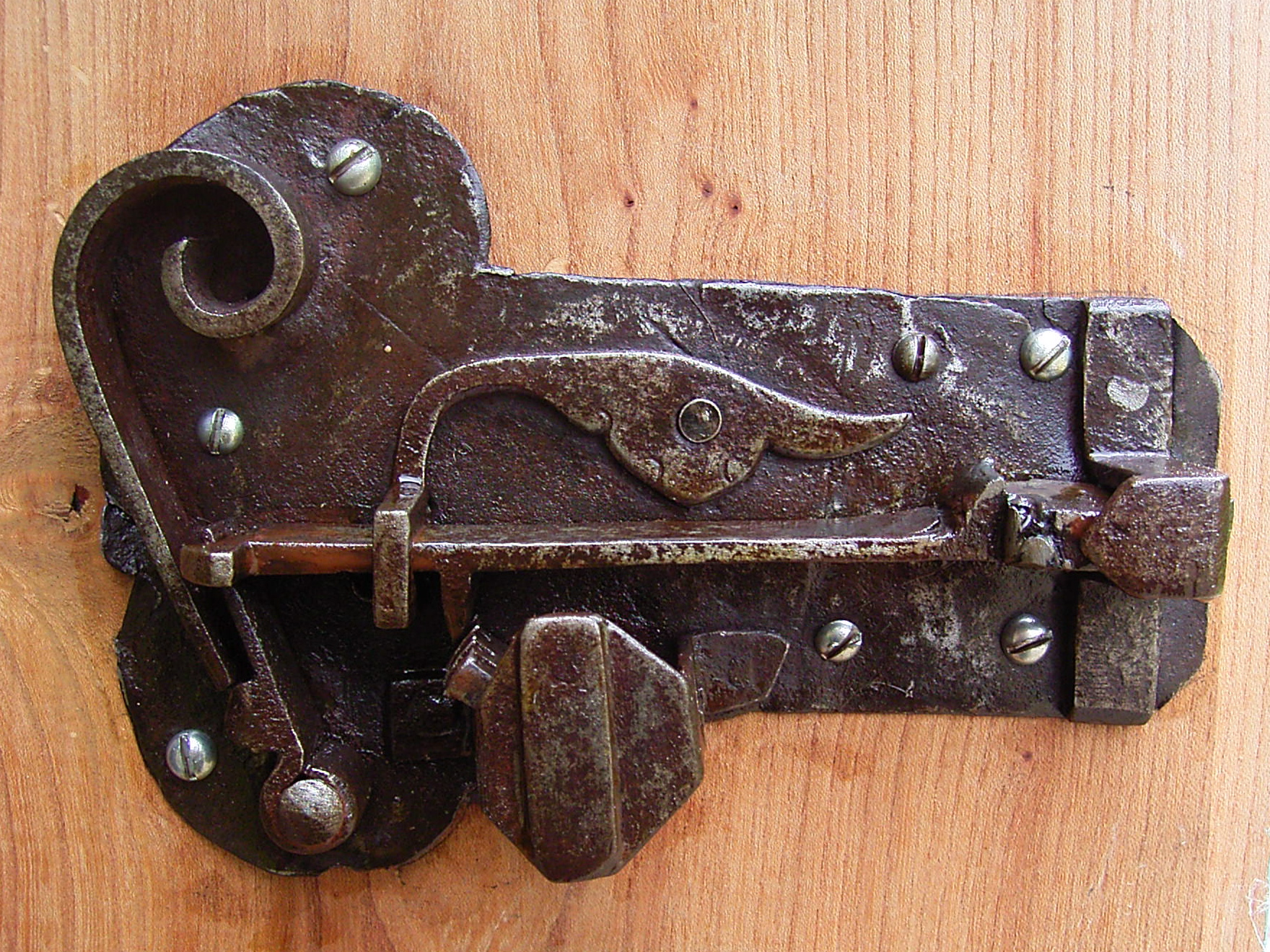
Here is the mechanism, which is genuinely simple.
Inside the lock there are fixed obstructions – wards – positioned so that the key has to have the right cuts in it to pass. A key of the wrong shape fouls the wards and will not turn. A key of the right shape passes them, reaches the bolt, and pushes it across.
That is the entire security. The lock asks one question: does this object have a profile that can get past the obstacles? If it does, it turns. There is nothing else being tested.
Which Is Why the Keys Look Like That
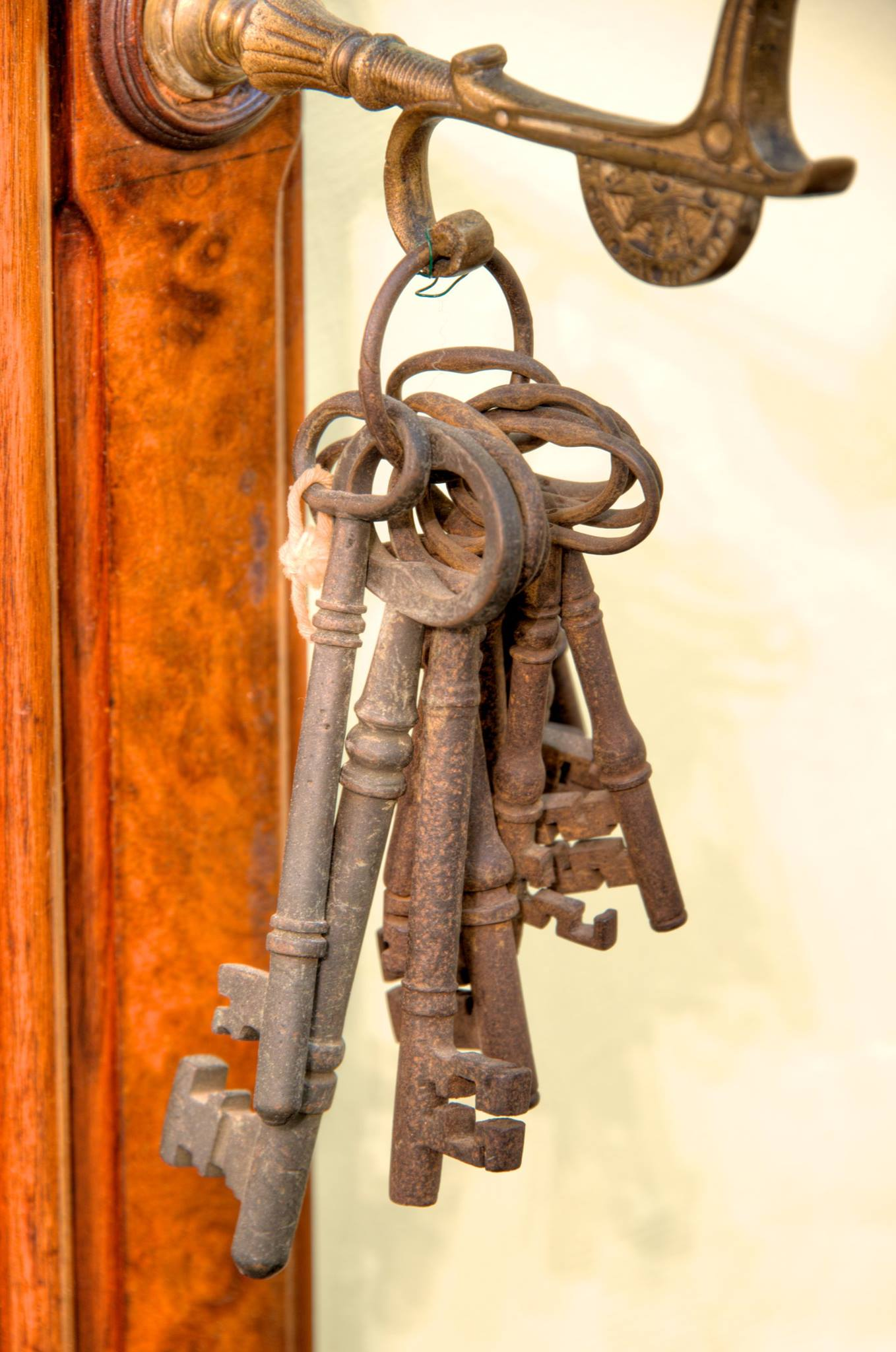
The appearance of a skeleton key is a direct consequence.
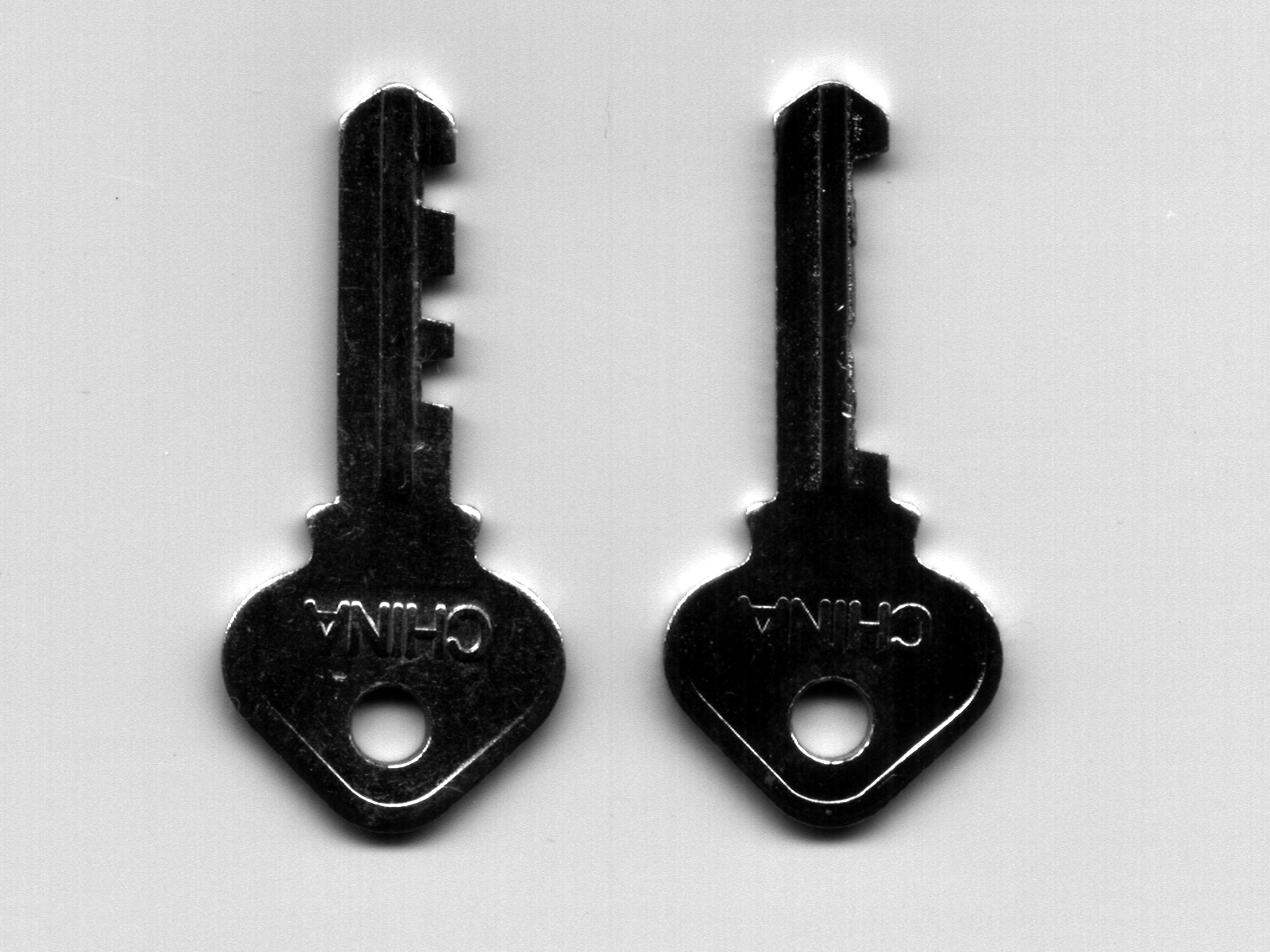
The shank is a thin tube or rod. The business end is a flat plate with a few notches cut in it. Everything about the shape is about clearing the wards and reaching the bolt, and there is very little of it – because there is very little to encode.
The name is also a description. A key cut away to the minimum shape that will still clear the wards – a skeleton of a key – will open whole families of similar locks, because all it has to do is avoid the obstructions rather than match them precisely. Reduce the plate enough and it passes almost any ward arrangement.
The Number of Possible Combinations Was Tiny
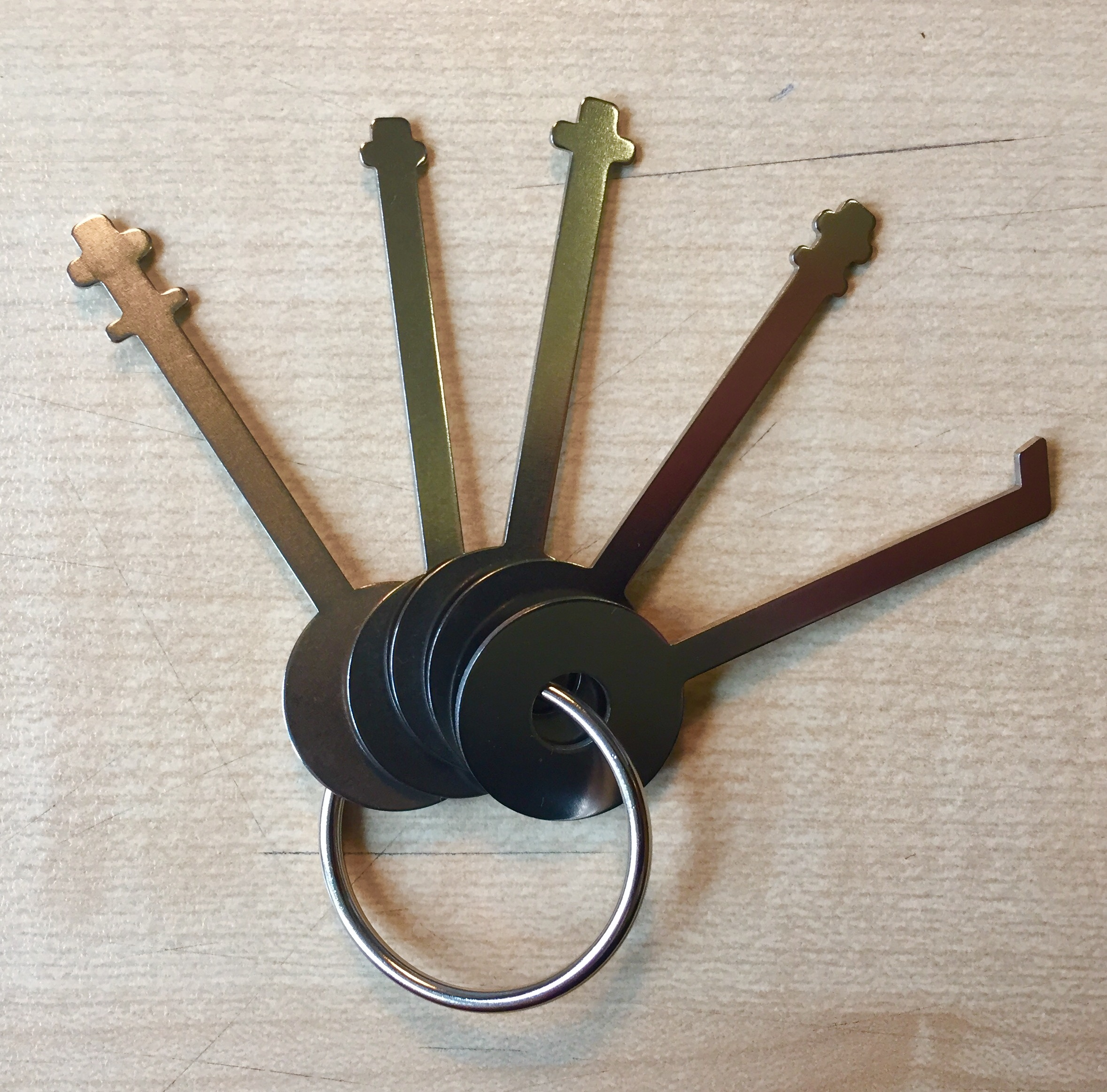
And this is the limitation that made interior keys interchangeable.
A warded lock has room for a small number of obstructions in a small number of positions, which means the total number of genuinely different keys is low. A manufacturer producing locks by the thousand simply cannot give each one a unique profile.
So the same patterns recurred constantly. A household with six interior doors frequently had two or three distinct keys among them at best, and keys from one house regularly worked in another. That is not a flaw in the manufacturing; it is the arithmetic of a mechanism with very few variables.
The Bolt Was the Part That Mattered
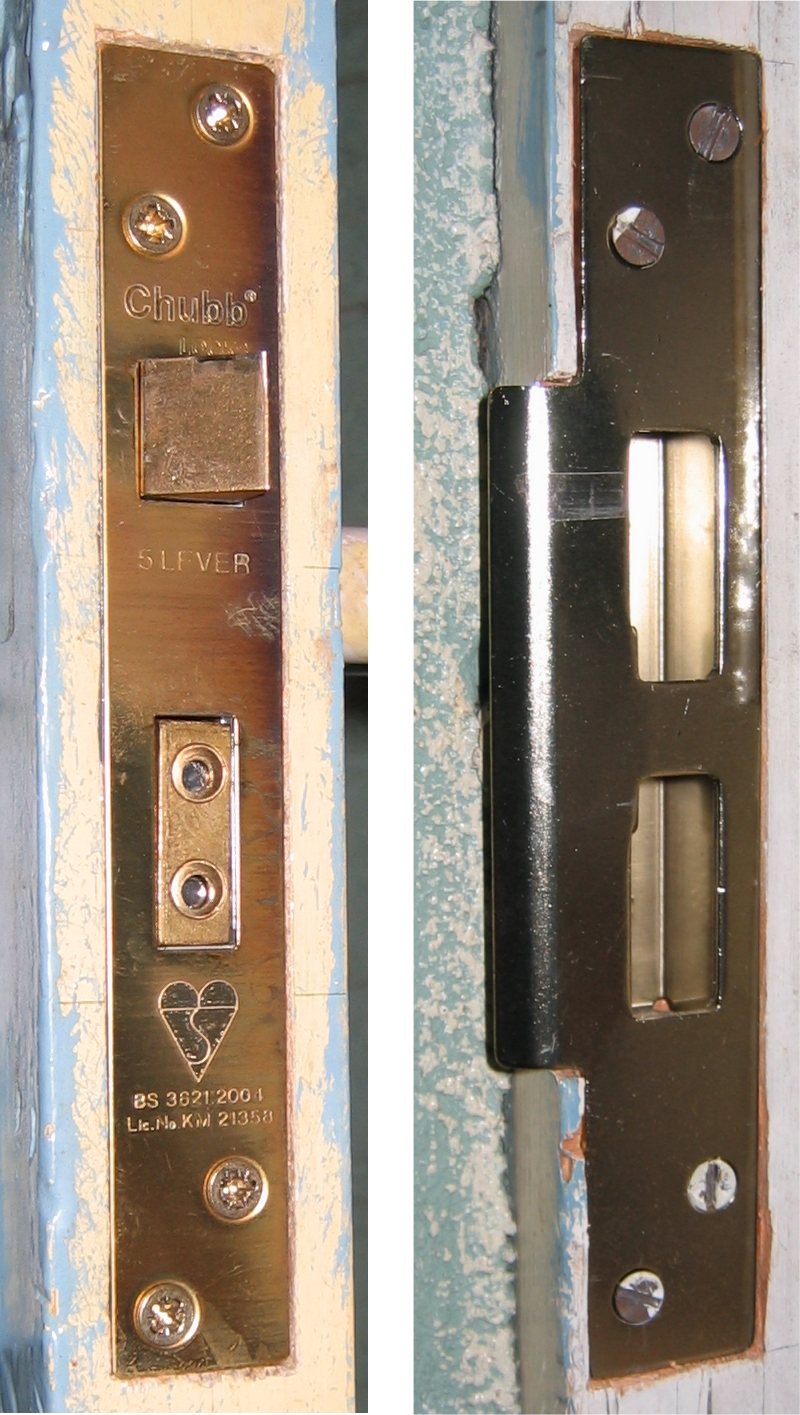
Worth separating, because the lock is doing two different things.
Most interior locks of the period combine a latch, operated by the handle, with a bolt, operated by the key. The latch holds the door closed. The bolt holds it locked.
A thrown bolt into a decent strike plate in a solid frame is genuinely difficult to force, and that is what actually resists entry. The key mechanism is merely the thing that decides when the bolt moves – so the security of such a door is substantially in the carpentry and the bolt rather than in the sophistication of the key.
Exterior Doors Got Something Better
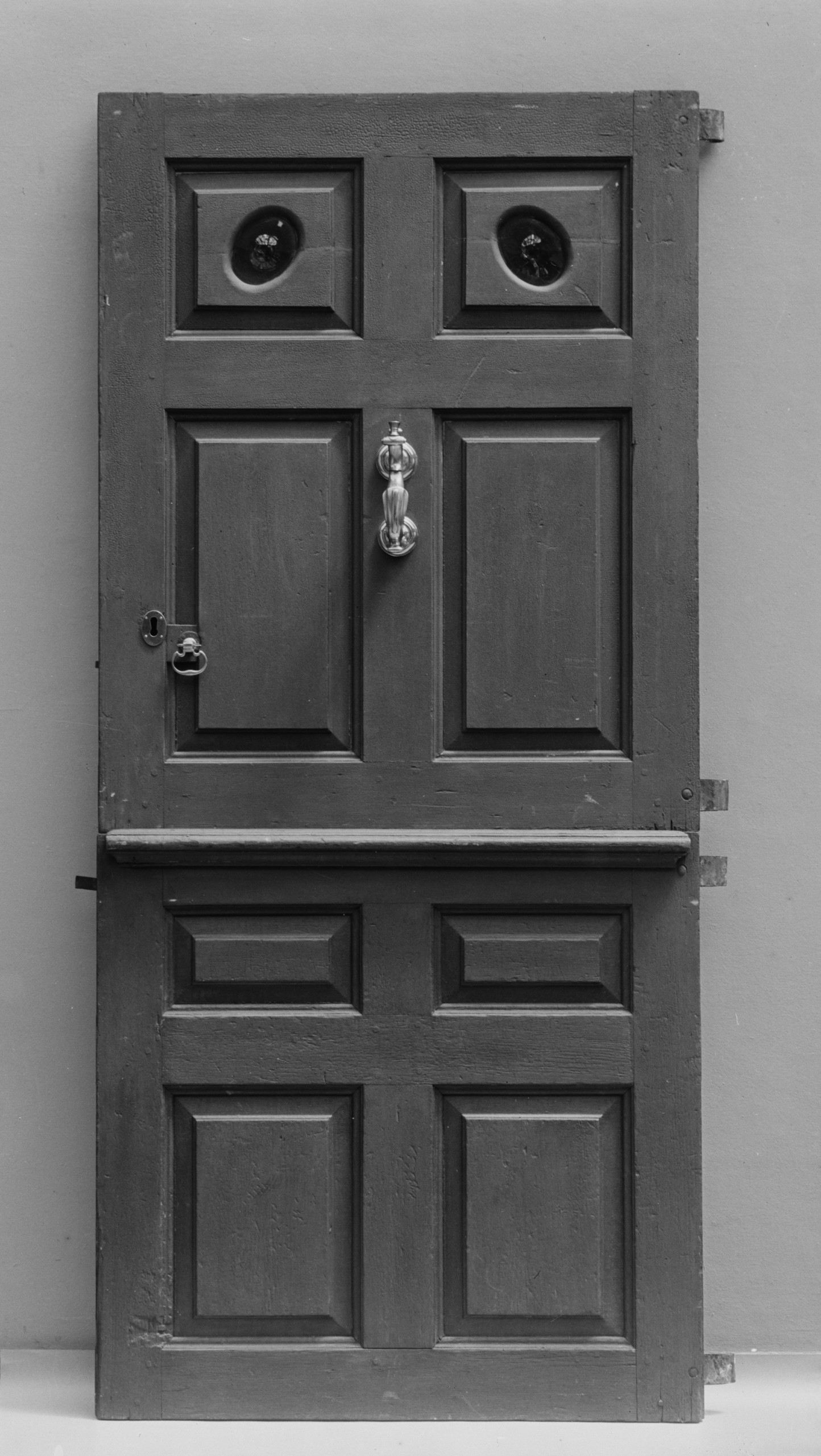
Which is the distinction that makes the whole arrangement sensible.
Front and back doors took heavier locks – bigger bolts, deeper mortises, and increasingly the pin tumbler mechanism that is still standard, which checks a series of independent heights rather than a single profile and therefore offers an enormous number of combinations.
So a house had two tiers: a serious lock on the way in, and simple warded locks on the doors inside. Which is a completely rational allocation, and it is exactly how houses are still fitted – the difference being that interior doors now mostly have a privacy catch rather than a key at all.
The Key Stayed in the Door
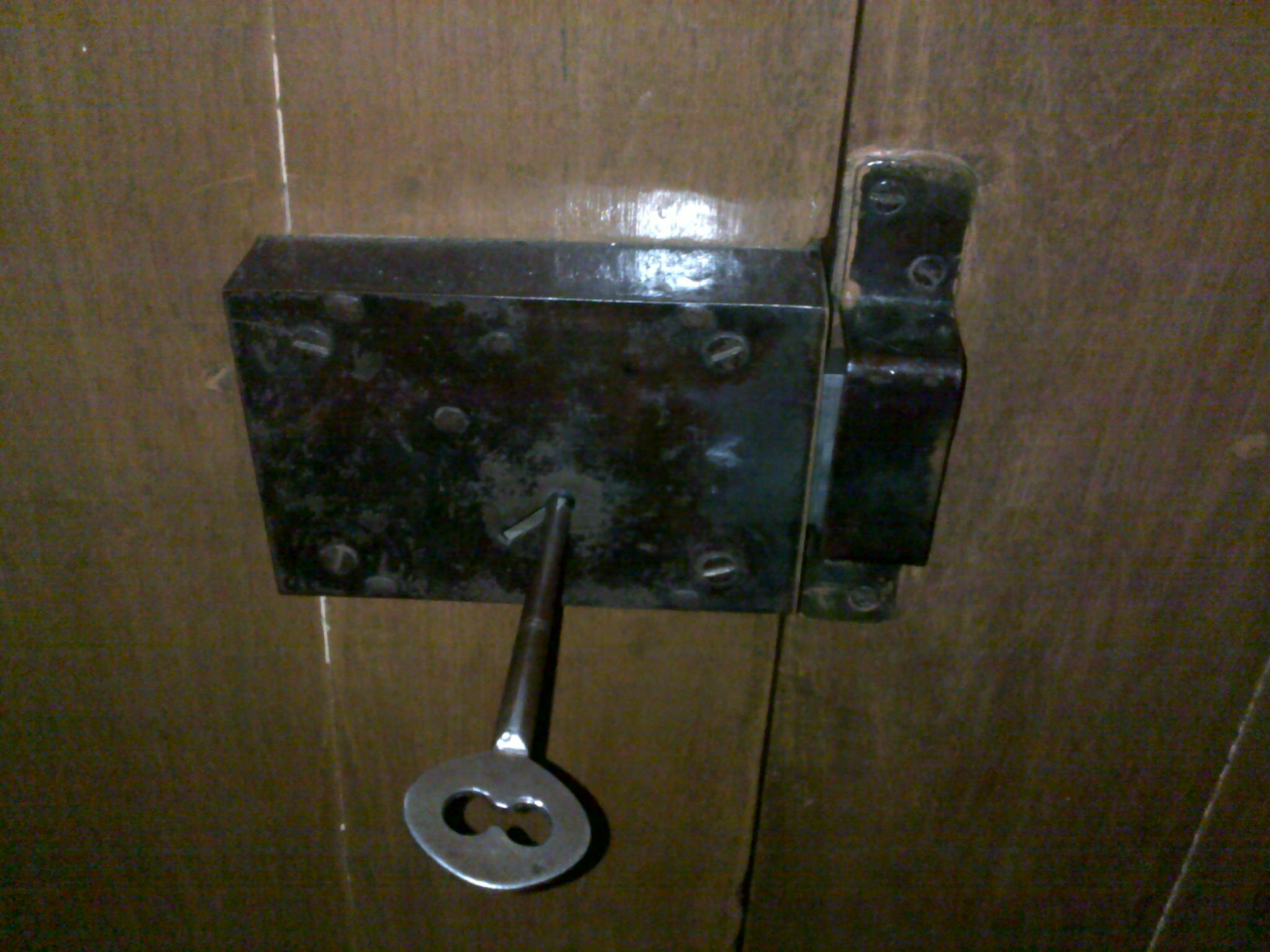
A detail that tells you how the system was understood.
Interior keys generally lived in their locks, left in place, and were turned when wanted. They were not carried, not kept on a ring and not accounted for – because the point of the key was to let somebody inside a room lock it, not to control who had access.
Which is also why so many are loose in drawers now. A key kept in a door for seventy years falls out when the door is rehung, the lock is replaced or the house is cleared, and then it joins the others in the drawer with nothing to identify which door it came from.
Locked Doors Inside a House Meant Something Specific
The social reading is worth stating.
In a crowded household, a door that could be locked was one of very few ways to be genuinely alone – which made the key a privacy instrument rather than a security one, and made the act of locking an interior door a statement that other people in the house could read.
Which cuts both ways. The same mechanism that let somebody have a private moment also let a door be locked against somebody, and both uses were available to anybody holding the key – including, in a period when keys were interchangeable, somebody who had a key from another door entirely.
Children Worked This Out Immediately
And every account of these houses confirms it.
A child who discovers that the key from one bedroom opens another bedroom has acquired a capability, and children in such houses generally knew which keys worked where long before the adults thought about it. The knowledge spread, and so did the practice of taking a key out and keeping it.
That is the practical consequence of a mechanism with few combinations: the security it provided was approximately equal to the trustworthiness of everybody in the house, which in most cases was sufficient and was never being tested by anybody serious.
The Locks Themselves Were Nearly Immortal
Which is why so many are still working.
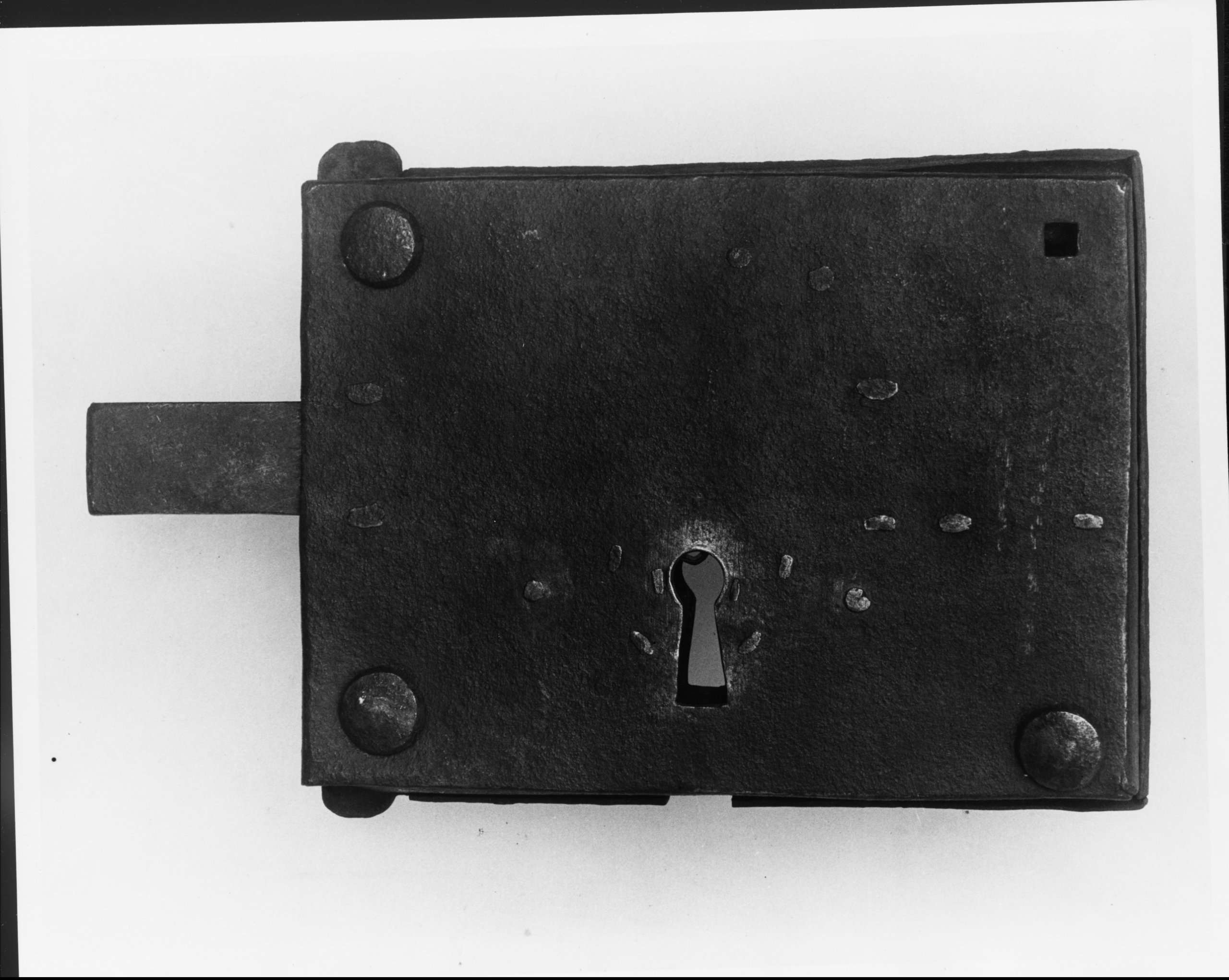
A warded lock has few parts, and they are heavy. A cast or forged case, a bolt, a spring and a couple of fixed obstructions – nothing fine, nothing precisely fitted, and nothing that stops working when it wears a little.
So these locks survive in houses by the million, still operating, still turning with the original key if anybody can find it. A modern lock with a dozen small precise components is more secure and considerably less durable, which is a trade almost everybody is happy with.
The Escutcheon Plate Was the Only Decorated Part
Worth a note, because it is the part people actually notice.
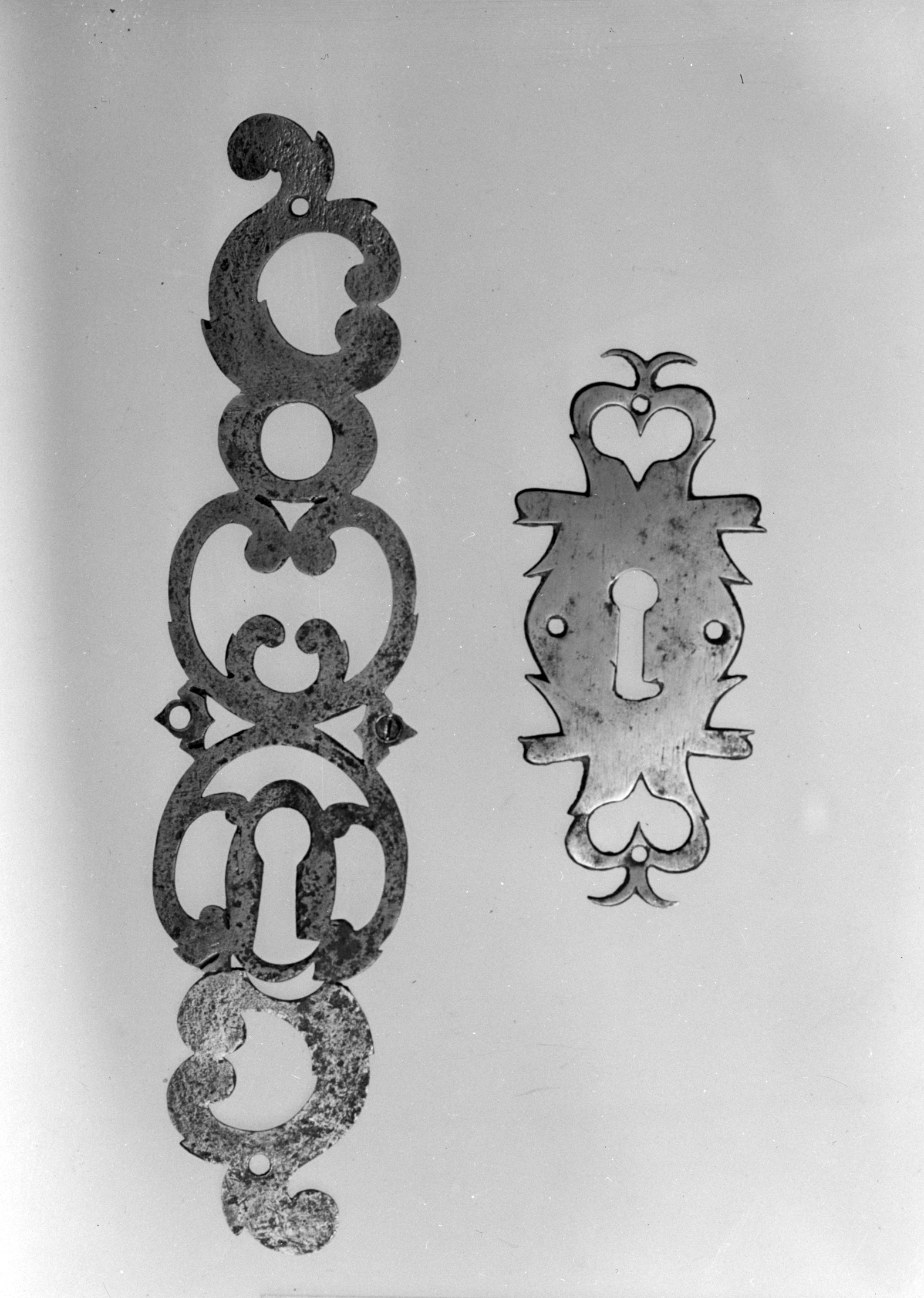
The lock itself is hidden inside the thickness of the door. What shows is a small plate around the keyhole and the handle, and that plate is where all the decoration went – cast or stamped brass, iron, porcelain inserts, pressed patterns matching the hinges and the handle.
So the visible hardware is a finish item chosen for appearance while the mechanism behind it is plain and crude, which means the quality of a house’s door furniture tells you nothing whatever about the quality of its locks. A grand pressed-brass plate frequently fronts exactly the same four-part warded mechanism as a plain iron one.
Which is also why so much of this hardware survives as salvage. A decorative plate is worth taking off a door that is being scrapped, and a lock body is worth very little – so the plates circulate in the trade while the mechanisms they belonged to mostly went for metal.
You Could See Through the Keyhole and Everybody Did
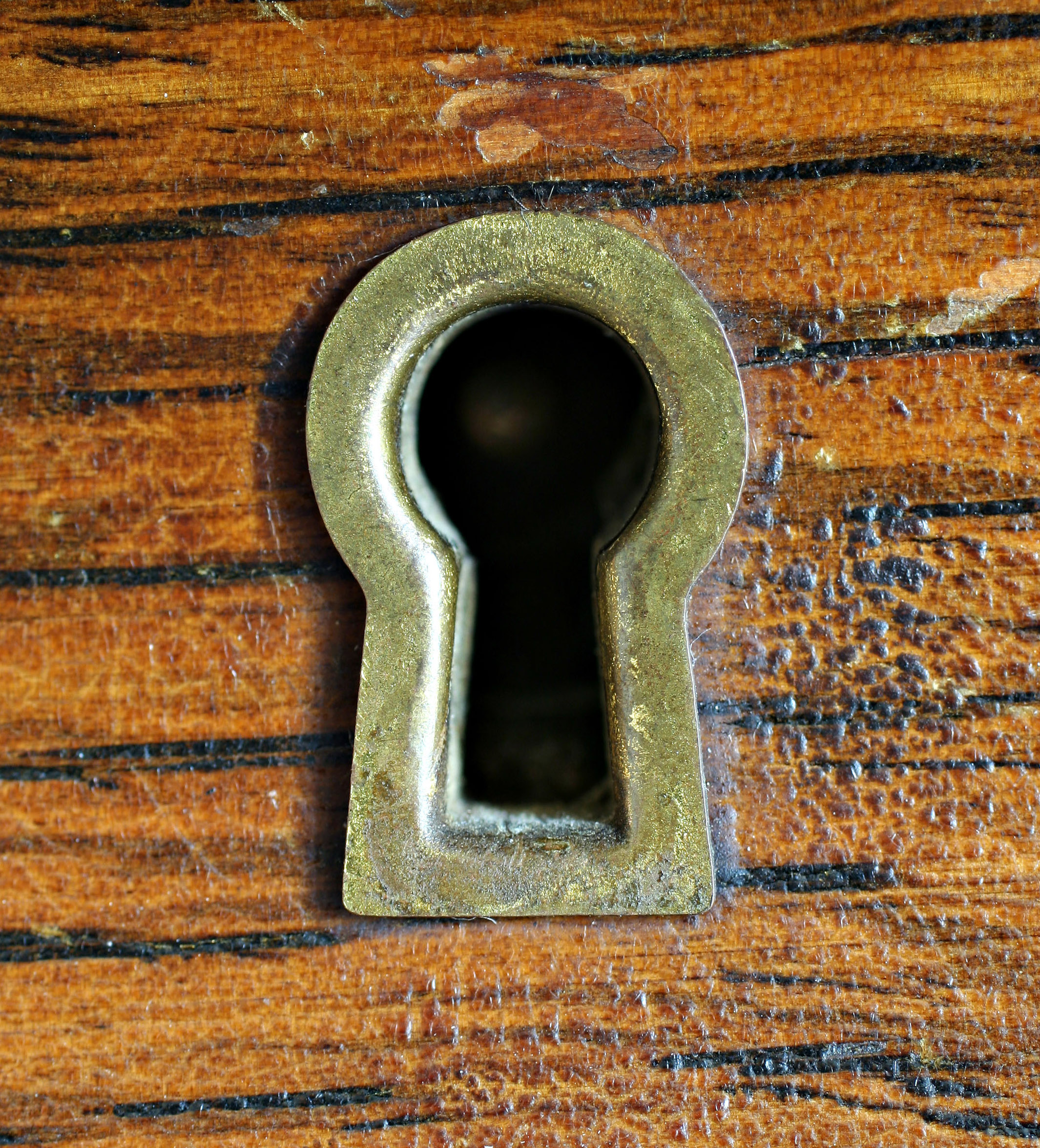
The last consequence of the mechanism, and the one that shows up in every account of these houses.
A warded lock needs an opening large enough for a flat plate on a shank to pass through, which means the keyhole is a big shaped hole going straight through a door – and if the key is not in it, it is a window.
Children looked through them, which everybody knows. Rather more to the point, so did adults, and households knew it: a key left in a lock on the inside blocks the hole, which is one of the reasons keys lived in doors. A cloth hung over a keyhole, or a key turned sideways and left in place, is a deliberate act with an obvious meaning.
So the same mechanism that made interior keys interchangeable also put a sightline through every interior door in the house, and dealing with that was part of ordinary domestic life rather than an oddity.
Then the Privacy Catch Replaced the Key
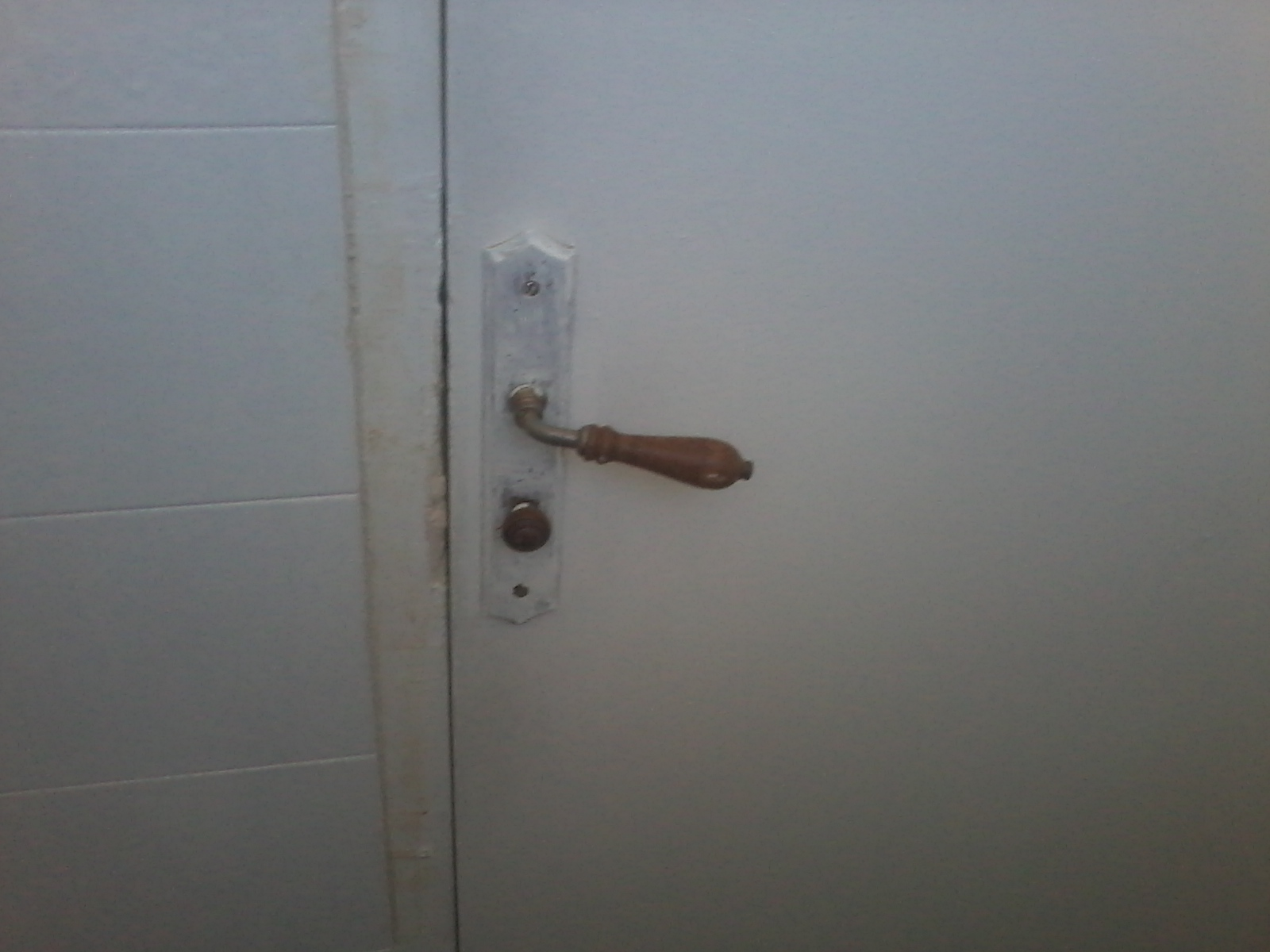
The interior lock did not get better. It got abolished.
A modern interior door has a small turn on the inside and a hole on the outside that can be opened with a coin or a nail. Which is an honest piece of design: it admits that an interior lock is for privacy, provides exactly that, and makes no pretence of security while leaving a way in for an emergency.
That is strictly more sensible than a warded lock. It costs less, it cannot be locked and then have the key lost, it works from inside without a key at all, and it can be opened from outside if a child locks themselves in – which was a genuine problem with the older arrangement.
What the Drawer of Keys Is
So the drawer in everybody’s family is a specific kind of object.
It holds the key mechanisms from a system that was never trying to be secure inside a house, built around a lock that asks only whether a shape can get past some obstructions, with so few possible shapes that the keys were effectively generic. They lived in their doors, they were not carried, they were not counted, and they opened each other’s rooms.
And the reason they are all loose in a drawer together is that none of them was ever identified with a particular door, because nobody needed to know. Which means the keys are not lost. They were never assigned to anything in the first place.
Like our content? Follow us for more.