In 1962, a dump fire in Centralia, Pennsylvania, reached a coal seam underground. It’s still burning today, and it may burn for another 250 years. Here’s the real story of how an entire American town was emptied out — and what’s left now.
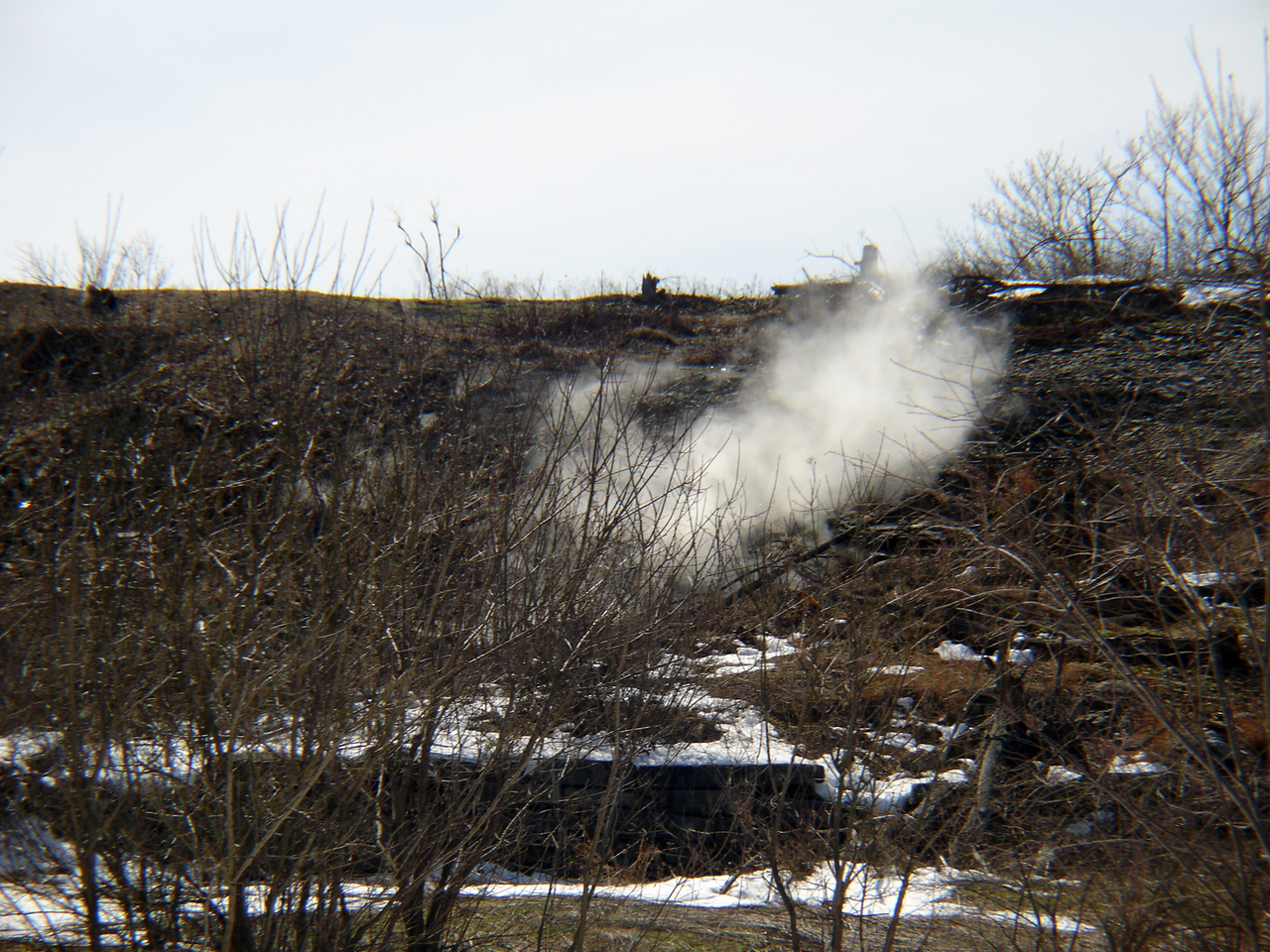
If you drive through northeastern Pennsylvania’s coal country today and look for Centralia on a map, you won’t find it. The state removed the road signs. The post office pulled the ZIP code in 2002. The houses, the churches, the school, the shops — almost all of it is gone. What’s left is a grid of empty streets cutting through overgrown grass, a few hand-painted markers where buildings used to be, and in places, faint wisps of steam rising from the ground.
Underneath it all, a fire that started in 1962 is still burning.
How a dump fire became the longest-burning disaster in American history
In May 1962, the Centralia Borough Council hired five volunteer firefighters to clean up the town landfill. The landfill sat at the bottom of an abandoned strip mine pit on the edge of town. The plan, according to historian David DeKok in his book Fire Underground, was to set the garbage on fire and let it burn down — a practice the town had used in previous years, though state law prohibited dump fires.
The cleanup happened on May 27, 1962, just before Memorial Day. The firefighters lit the dump, let it burn, and doused it with water that night. Two days later, on May 29, flames appeared again. They doused it again. A week later, on June 4, the flames came back. This time, when the firefighters dug into the remaining garbage to find the source, they discovered something they hadn’t noticed before: an unfilled 15-foot hole at the bottom of the pit leading directly into the old mine tunnels below.
The fire had reached the coal.
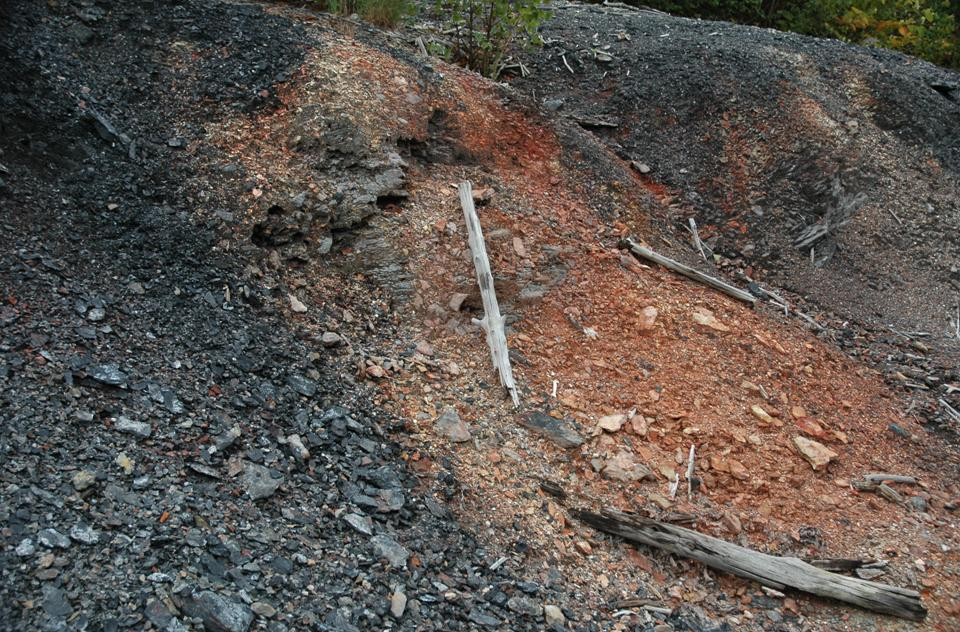
Centralia sat on top of one of the richest anthracite coal seams in the United States. The tunnels beneath the town, from more than a century of mining, formed a vast interconnected labyrinth — what one Smithsonian Magazine writer described as “a maze of bellows and conduits.” Once the fire got into the coal, it spread along the tunnels, fed by air from thousands of small cracks and openings, burning at depths of up to 300 feet.
Early attempts to put it out failed. According to the Pennsylvania Center for the Book, some historians estimate that $50,000 in 1962 might have been enough to extinguish the fire if the effort had been made immediately. It wasn’t. Over the next 20 years, state and federal agencies tried at least eight different containment strategies — digging trench barriers, flooding tunnels, injecting noncombustible fill. None worked. The fire kept spreading.
Decades of denial, then Todd Domboski
For the first two decades, most Centralia residents lived with the fire as an inconvenience rather than an emergency. Basements got warm. Tomato plants grew in winter. A local gas station owner measured the temperature inside his underground fuel tank in 1979 at 172°F — a reading that should have triggered immediate evacuation but was largely dismissed at the time.
Then came Valentine’s Day 1981.
Twelve-year-old Todd Domboski was walking across his grandmother’s backyard when the ground opened beneath him. The sinkhole was four feet wide and 150 feet deep, venting steam laced with carbon monoxide at near-lethal concentrations. Todd caught himself on the edge, hanging over the opening. His 14-year-old cousin Eric Wolfgang heard him yelling and pulled him out.
By coincidence, a group of Pennsylvania state officials — a state senator, a state representative, and a mine safety director — were touring Centralia that same day to discuss the fire with borough officials. A reporter from the Shenandoah Evening Herald was with them. Within hours, the near-tragedy had made regional news; within days, national.
The Domboski incident did what 19 years of slowly worsening conditions hadn’t: it forced the federal government to act.
The government paid everyone to leave
In 1984, Congress allocated $42 million (roughly $130 million in 2025 dollars) for resident relocation. The offer was voluntary. Most residents accepted — about 1,000 people out of the roughly 1,200 still living there — and the state demolished their homes after they left. A few hundred refused to go.
In 1992, Pennsylvania Governor Bob Casey invoked eminent domain on all remaining properties in the borough, condemning every building still standing. Lawsuits followed. Some residents fought for decades to stay. A 2013 settlement allowed a handful of holdouts to live out their lives in their homes, after which the properties would revert to the state. By the 2020 census, Centralia’s population was five.
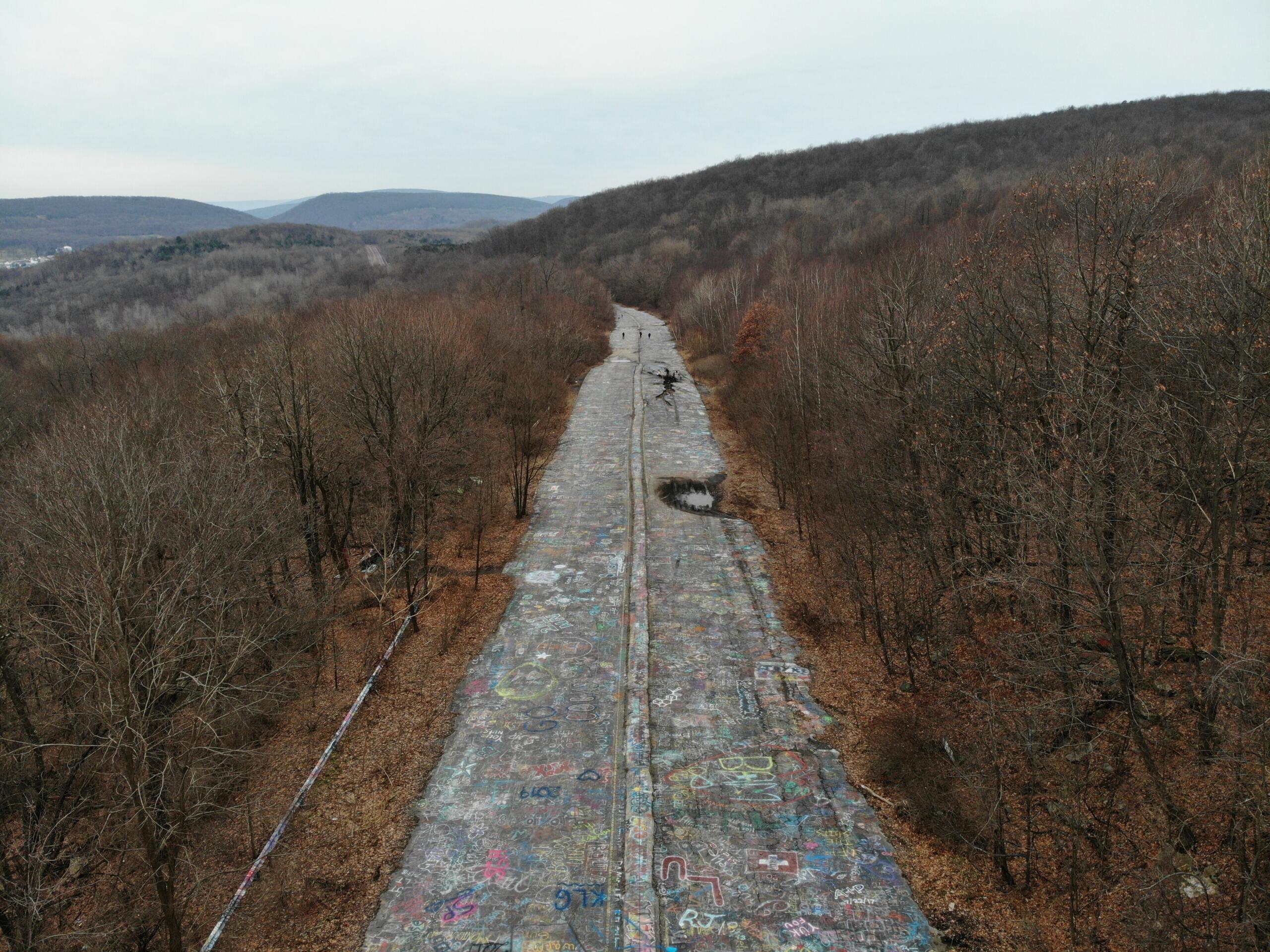
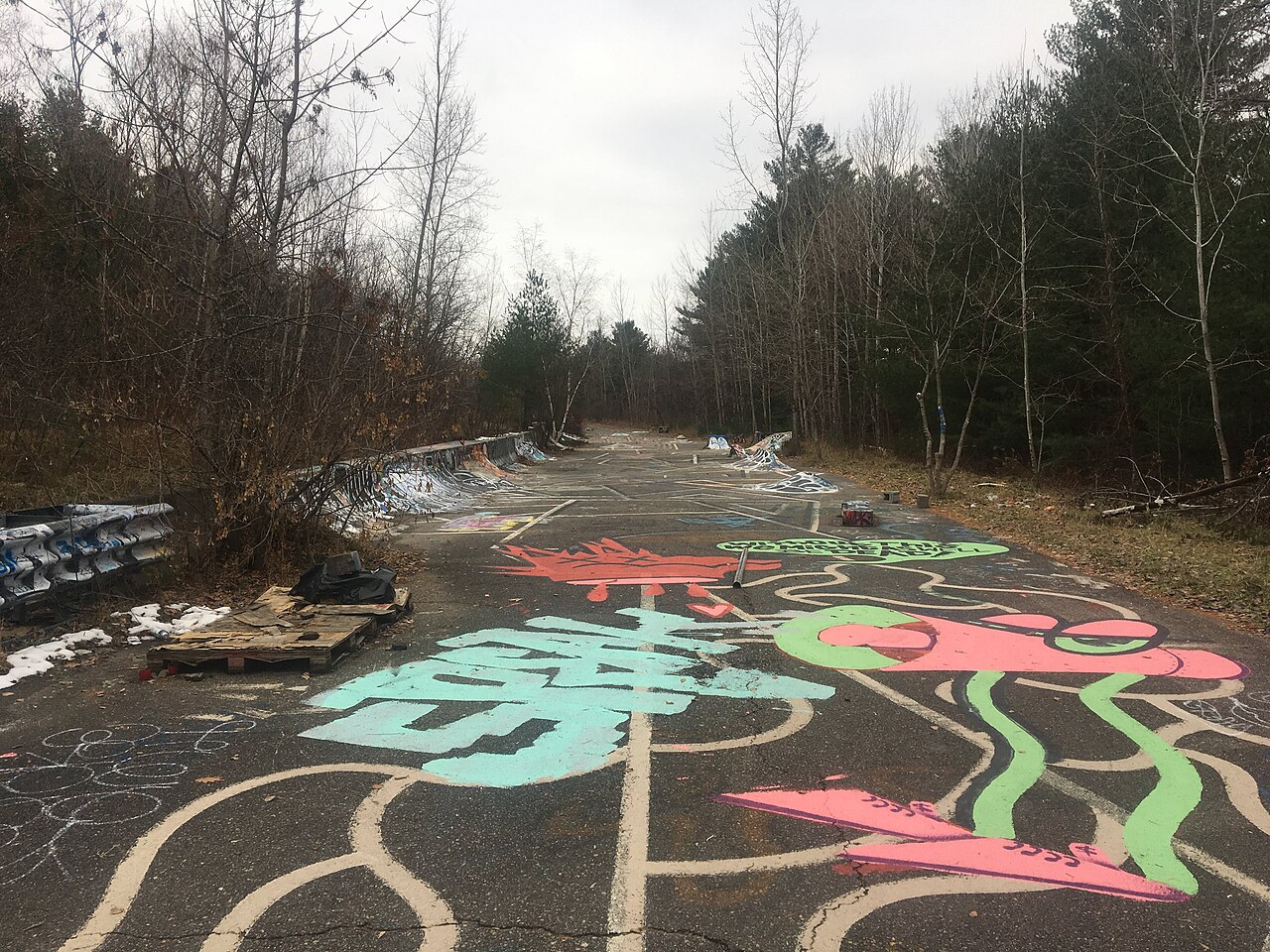
In 1994, Pennsylvania permanently closed a damaged stretch of Route 61 that ran through town. The asphalt had buckled from the heat below, splitting into long cracks. Over the following decades, urban explorers, graffiti artists, and film tourists — Centralia was a major visual inspiration for the 2006 film Silent Hill — turned the closed road into the unofficial “Graffiti Highway,” a mile of spray-painted asphalt that became a destination in its own right.
In April 2020, the private company that owned the road covered the entire stretch in dirt, ending the Graffiti Highway era after decades. The stated reason was liability — too many visitors, too many accidents, too much ATV traffic during the early pandemic lockdowns.
What’s there now
Today, the fire still burns across roughly 400 acres of underground mine tunnels. According to a 2005 Smithsonian Magazine assessment, it may continue to burn for another 250 years before it runs out of coal to consume. The ground above the fire remains unstable; sinkholes still open periodically. Carbon monoxide levels in some areas remain dangerous.
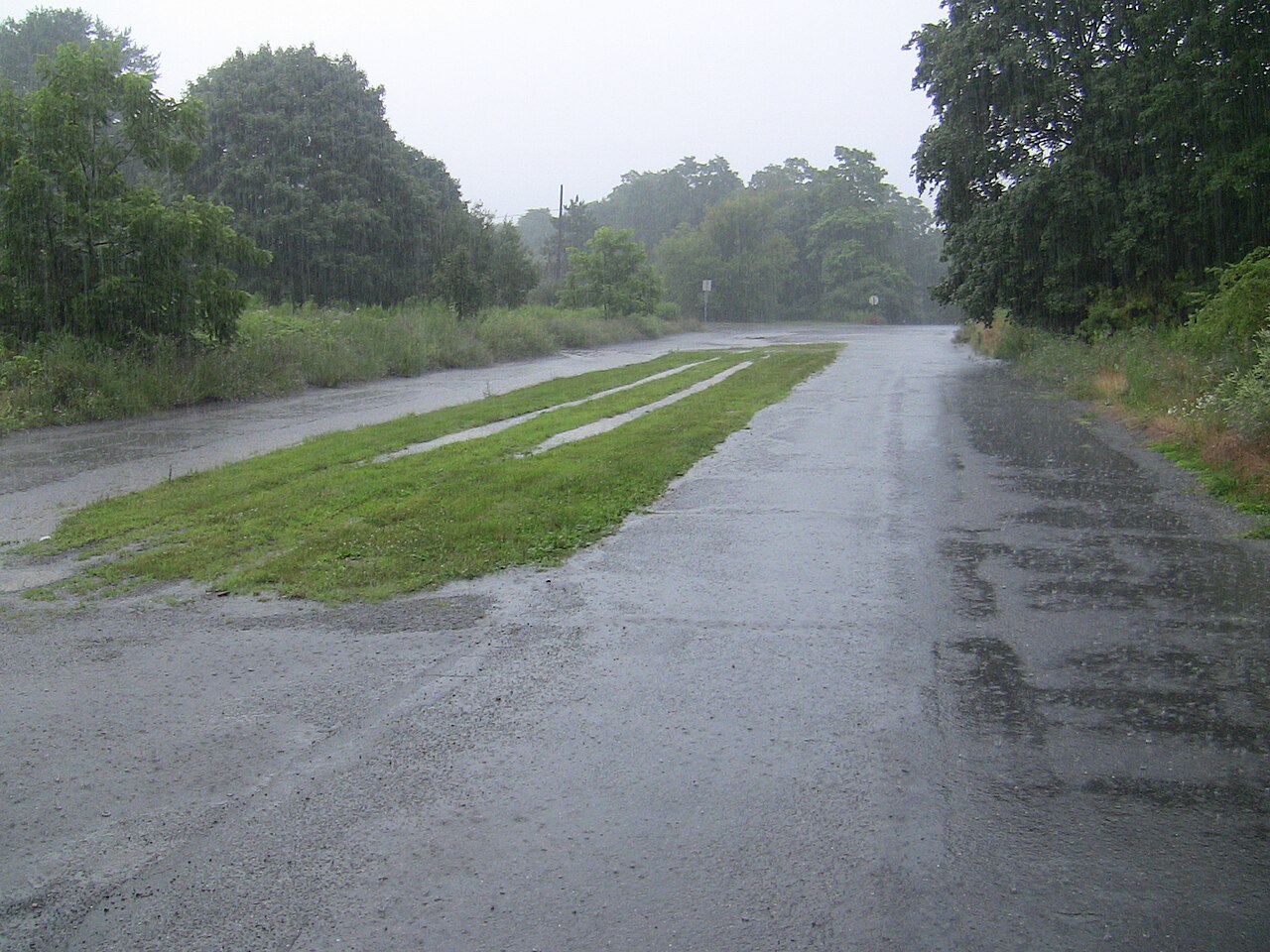
Most of the town is gone. The street grid is still there, laid out in the original pattern, but the houses, businesses, and churches are almost entirely demolished. A handful of occupied buildings remain — homes owned by the final holdouts allowed to stay under the 2013 settlement. The Assumption of the Blessed Virgin Mary Ukrainian Catholic Church, one of the few surviving landmarks, still operates, with services attended by former residents who drive in from the surrounding area.
Pennsylvania removed the town’s road signs. The 2002 ZIP code revocation effectively took Centralia off the federal mail system. The town’s Wikipedia page now describes it as a “near-ghost town,” though that undersells what it actually is: an American settlement that was systematically disassembled by its own state government because the ground underneath wouldn’t stop burning.
Visiting Centralia today
It’s not hard to find if you know where to look. Centralia sits on State Route 42 in Columbia County, about two and a half hours from Philadelphia. The town itself isn’t fenced off — there are “No Trespassing” signs on the former Graffiti Highway area and near known sinkhole zones, but the street grid is a public right-of-way and people visit regularly.
Locals ask that visitors stay on solid ground, don’t trespass on the remaining private properties, and remember that actual people still live in some of the remaining homes. The fire zone itself can be genuinely dangerous — carbon monoxide pockets, unstable ground, and hot spots are still present. Pennsylvania DEP advises visitors not to wander off paved surfaces.
The real story of Centralia isn’t a ghost story, though it gets told as one. It’s a slower, stranger American tragedy: a town killed not by disaster or decline but by a cheap landfill fire, a 15-foot hole nobody had sealed, and a government that waited too long to spend $50,000 when it might still have mattered.