From toothpaste to dinnerware to your grandfather’s watch, many of the everyday products sold as ordinary consumer goods were quietly emitting real radiation — and some of them are still sitting in antique shops today.
The early 20th century had a peculiar relationship with radioactivity. For roughly five decades between radium’s discovery in 1898 and the end of World War II, radiation was marketed as modern, energizing, even health-giving. Manufacturers added radioactive elements to products for their color, their glow, their novelty, and sometimes just for the marketing value of the word “radium” on a label. Most of these products have been off shelves for 50 to 80 years — but many of them still turn up at estate sales, antique stores, and in boxes in grandma’s attic. Here are eight of the most notable, and the real history behind each.
1. Radium watch and clock dials

The glow-in-the-dark numbers on early 20th century watches were made with radium-226 paint, producing light without any battery by exciting a zinc sulfide coating. According to a Scientific American report, more than 4 million watches and clocks with glowing features were produced during the radium dial era. The factories that made them employed primarily young women — the “Radium Girls” — who were instructed to lick their paintbrushes into a fine point before each stroke, a technique called “lip-pointing,” while being assured the material was harmless. Hundreds developed severe anemia, bone fractures, and a horrifying condition called “radium jaw,” where the jawbone deteriorated and sometimes disintegrated. The first dial painter died in 1923, and the resulting lawsuits and media coverage became foundational to US workplace safety law and eventually contributed to the creation of OSHA in 1970.
Watchmakers replaced radium with tritium — a far weaker radioactive isotope — in the 1970s, and tritium was replaced with non-radioactive photoluminescent materials in the mid-1990s. The EPA notes that intact radium-dial watches are “usually not a health risk” as long as they stay intact, but warns against taking them apart — the paint can flake and become airborne, and inhaled radium is what caused the original injuries.
2. Red and orange Fiestaware dinnerware

The vibrant orange-red color of vintage Fiestaware, introduced by the Homer Laughlin China Company in 1936, came from uranium oxide added to the glaze. Known as “Fiesta red,” this dinnerware was popular enough that the US government confiscated the company’s uranium stocks in 1943 for use in the Manhattan Project. Fiesta red production was halted during the war, then resumed in 1959 — this time using depleted uranium, which is still radioactive but at roughly 60% of natural uranium’s intensity. Production of the uranium-glazed red finally ended in 1972.
The EPA specifically advises against eating off vintage red Fiestaware. Hyperphysics at Georgia State University measured a single orange plate at 20 millirads per hour when a Geiger counter was placed directly on the surface. The ivory color from the original 1936-1951 run also contained uranium, though at much lower concentrations. Modern Fiestaware — from the 1986 revival forward — contains no uranium.
3. Uranium glass (also called Vaseline glass or canary glass)
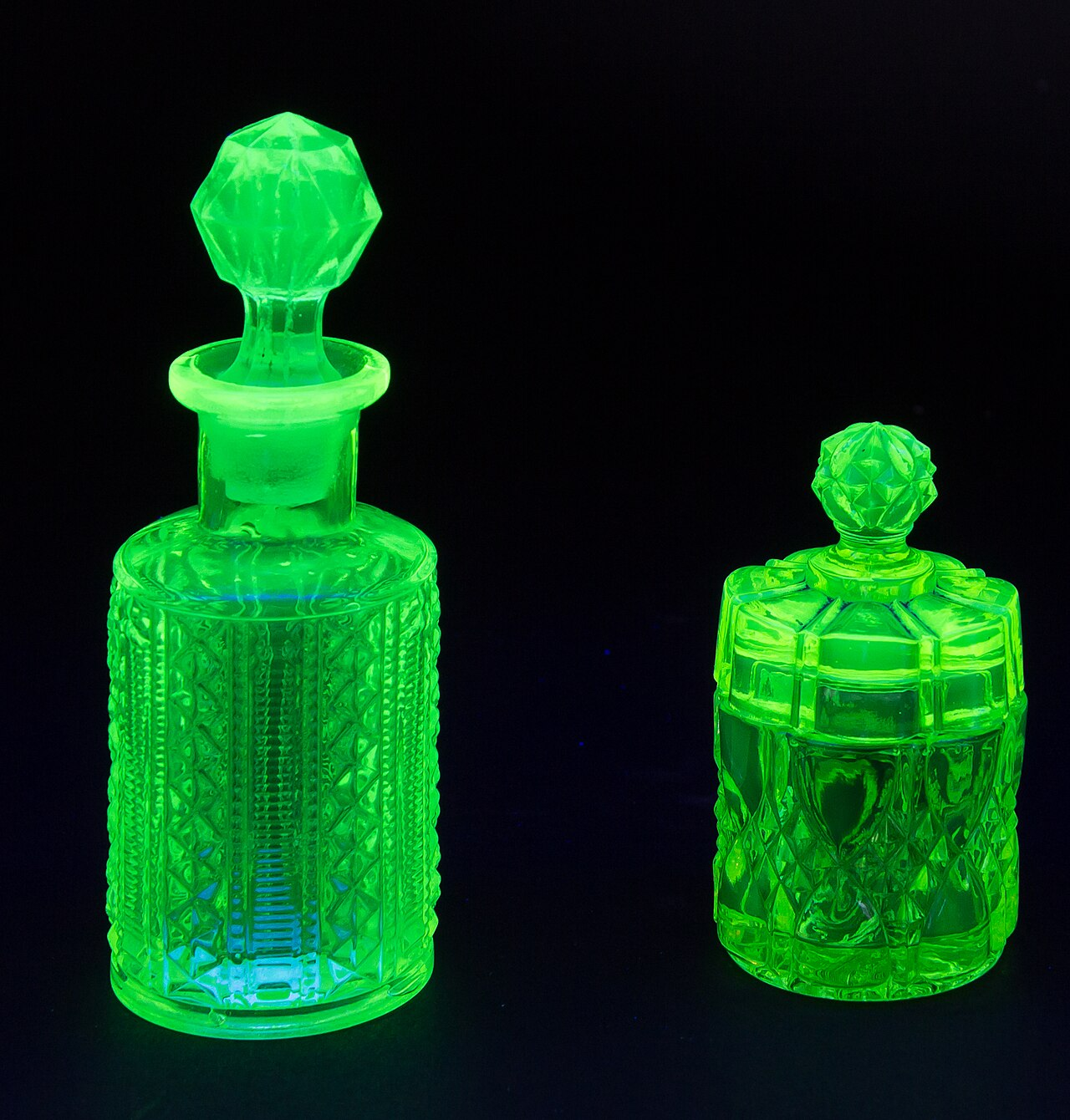
Yellow-green glassware produced from roughly the 1830s through the 1940s commonly contained uranium oxide, added to glass during melting to produce a distinctive fluorescent color. Under a standard UV blacklight, uranium glass glows a vivid green — the property that makes it immediately recognizable to collectors today. Typical uranium content was around 2% by weight, though some pieces from the early 20th century contained as much as 25%.
Major glass manufacturers that produced uranium glass included Baccarat, Steuben, Whitefriars, and Adams & Company. US production ended during World War II when the government confiscated uranium supplies for the Manhattan Project. It resumed briefly in the late 1950s with depleted uranium and was largely discontinued after 1970, when the EPA ordered manufacturers to stop using uranium as a colorant. A few small glass houses still produce it in limited quantities today.
4. Thorium-coated gas lantern mantles
The small fabric “mantles” used inside camping lanterns — including Coleman lanterns — were coated with thorium dioxide for most of the 20th century. Thorium made the mantles burn with an exceptionally bright white light when heated. At the peak of production, US factories sold roughly 40 million mantles per year, and approximately 65% of all thorium produced in the US in 1952 went into lantern mantles.
A 1981 Oak Ridge National Laboratory study calculated that using a Coleman-type lantern with thorium mantles every other weekend for a year would expose a person to roughly 0.3 to 0.6 millirems of radiation — a small fraction of the several hundred millirems of natural background radiation the average person receives annually. The bigger concerns were inhaling dust from broken mantles and occupational exposure in the factories. The Coleman Company switched to non-radioactive yttrium for most of their mantles in the mid-1990s, though some thorium mantles remained on the market into the 2000s.
5. Doramad radioactive toothpaste
This one is real, well-documented, and genuinely almost unbelievable. From the 1920s through the end of World War II, the German company Auergesellschaft — the same company founded by the inventor of the gas lantern mantle — sold a thorium-containing toothpaste called Doramad. The marketing copy printed on the packaging translated roughly to: “Special biological healing effects by radium rays. A thousand times medically prescribed and recommended.” The company claimed the radiation would “increase the defenses of teeth and gums” and that “cells are loaded with new life energy.”
The toothpaste contained small amounts of thorium hydroxide — reportedly around 0.045% by weight — derived from the same monazite sand feedstock used in the company’s gas mantle production. Production stopped after World War II as radiation’s actual health effects became publicly understood.
6. Radium-laced cosmetics

A London-based company called Radior began selling radium-containing cosmetics in 1917, including vanishing cream, face powder, rouge, and skin soap. Advertising claimed the “active properties in the formula would assist blood circulation and stimulate the skin cells to clear the complexion and refine the texture of the skin in a wonderful way.” A French brand called Tho-Radia sold radium-and-thorium face creams and powders marketed as luxury anti-aging products through the 1930s. KemOLite Radio-Active Beauty Plasma sold radium-containing mud masks advertised as volcanic material from the Carpathian Mountains.
These products were genuinely radioactive and genuinely dangerous with prolonged use, though consumer exposure was lower than the occupational exposure of factory workers. They disappeared from shelves in the late 1930s as the health effects of chronic radium exposure — including the famous case of American socialite and athlete Eben Byers, who died in 1932 from drinking a radium-water health tonic — became widely publicized.
7. Uranium-glazed ceramic tiles
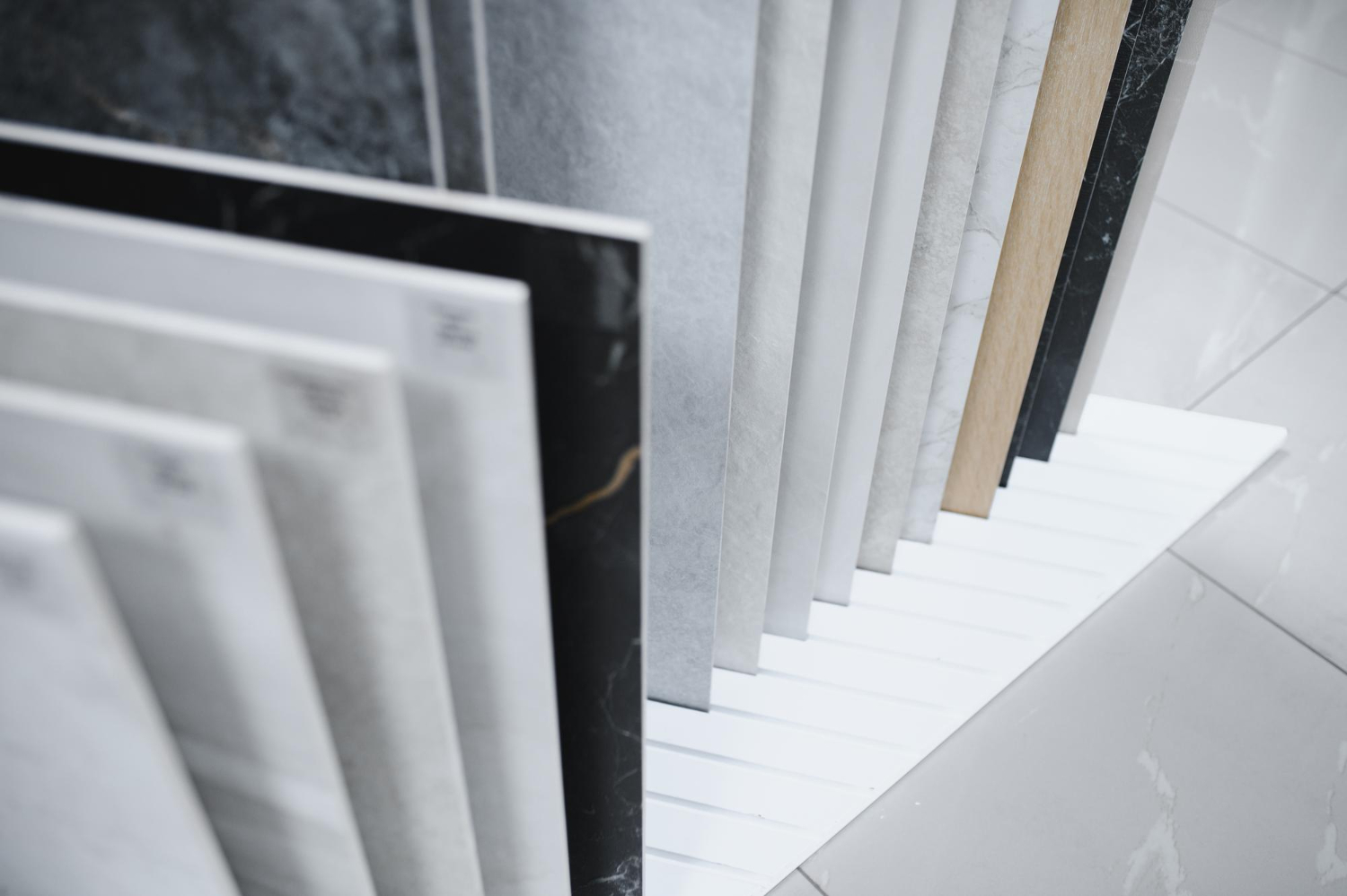
Less famous than Fiestaware but far more common in American homes, uranium-glazed ceramic tiles were used extensively in bathrooms and kitchens from roughly 1920 through the late 1950s, especially for the rich orange, red, and yellow colors that were difficult to produce any other way. The Nuclear Regulatory Commission’s 2001 report on radioactive consumer products specifically noted that “almost any antique ceramic with a deep orange/red color is likely to be radioactive,” including tiles from well-known pottery companies like Harlequin, Bauer, and Franciscan.
Uranium tile is still present in some mid-century homes, though the ceramic matrix keeps most of the radiation contained. The EPA’s general guidance is that intact ceramics pose minimal risk, but broken or chipped tiles shouldn’t be sanded, drilled, or otherwise disturbed without proper precautions.
8. Radium-infused water dispensers and “health” tonics

The “radium water” craze of the 1920s produced a remarkable range of consumer products: ceramic jars called Revigators that were lined with uranium and radium ores and sold to families to make their drinking water radioactive; bottled radium waters sold as health tonics; and radium-infused chocolates, cigarettes, and butter. The Radithor brand, a radium-water tonic, became notorious after Eben Byers — a wealthy industrialist and amateur golf champion — drank an estimated 1,400 bottles of it over several years and died in 1932 with his jaw largely disintegrated.
The Radithor case triggered significant regulatory changes in the US and effectively ended the radium health-tonic industry. The Wall Street Journal’s obituary of Byers carried the widely-quoted headline “The Radium Water Worked Fine Until His Jaw Came Off.”
What to do if you find these items today
The general guidance from the EPA and the Oak Ridge Associated Universities museum of radiation: if you inherit or find these items, intact pieces are generally not a health risk for display purposes. The problems arise when items break, when you try to restore or repair them, or when you use them for their original purpose (eating off uranium Fiestaware, wearing a damaged radium watch, etc.).
Vintage uranium glass, Fiestaware, and watch dials are legal to own, sell, and display in the US. Some state laws restrict commercial resale without disclosure, so if you’re selling to an antique dealer, mention what you have. And if you’re ever uncertain whether a piece is radioactive, the same test collectors have used for decades still works: a cheap Geiger counter or a standard UV blacklight. Uranium glass glows bright green under UV light in a way nothing else quite matches — which, depending on your perspective, is either genuinely beautiful or mildly unsettling, given what you now know is producing it.