Hotel room safes are convenient, but security professionals and former hotel staff have repeatedly pointed out that they offer less protection than most travelers assume. Here’s what to keep elsewhere.
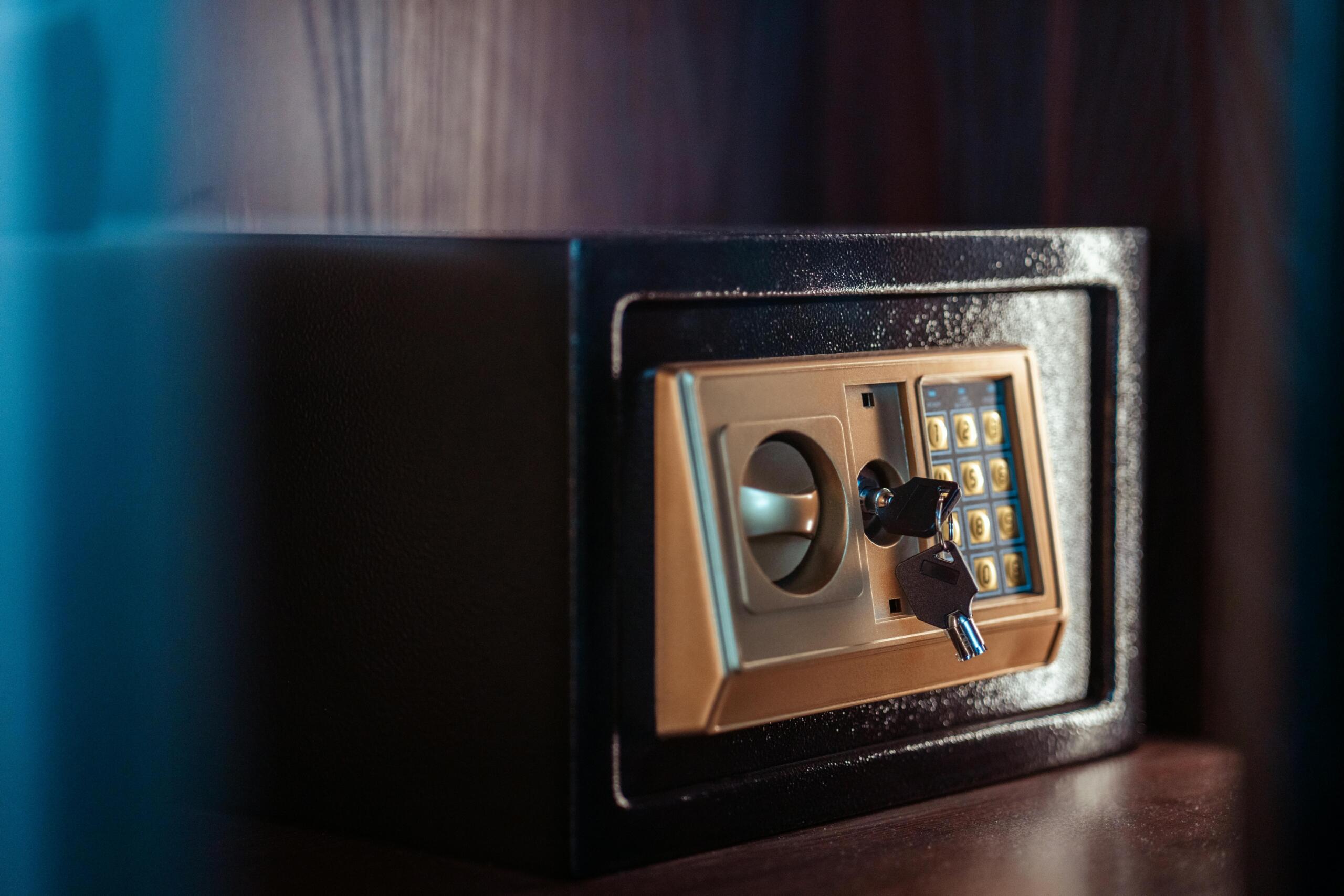
The small electronic safes in most hotel rooms feel like secure storage. They lock with a code you choose, they’re bolted to a closet wall or shelf, and they’re typically marketed as a feature of the room. What most travelers don’t realize is how easily these safes can be opened by hotel staff or anyone who knows their override mechanism. Several security researchers and former hotel employees have demonstrated, repeatedly, that the standard hotel room safe is closer to a lockable drawer than a real security device.
This doesn’t mean hotel safes are useless — they keep honest people honest, deter casual room thieves, and provide a place to store valuables out of sight. But for genuinely valuable items, security experts have specific recommendations about what should never go in one.
1. Your passport
This is the single item most travel security advisors specifically warn against keeping in a hotel safe. The reasoning is practical: if the safe malfunctions, if the override code fails, if the hotel’s master key is unavailable when you need to check out for an early flight, your passport is locked in a metal box you can’t open. Passport replacement abroad is a multi-day, expensive, US-embassy process.
The standard recommendation from State Department travel advisories and frequent travelers: photocopy your passport, store the copy in your luggage, and carry the actual passport on your person in a money belt or secured pocket. If you must leave it in the room, the bottom of a stuffed suitcase is statistically a better hiding place than the safe.
2. Large amounts of cash
Hotel safes have small interior dimensions and visible electronic locks — both of which signal “valuables inside” to anyone who breaks into them. Security researchers including those at DEF CON conferences have repeatedly demonstrated that most hotel safes can be opened in under five minutes using either factory override codes (which are widely published online), small physical attacks on the lock mechanism, or by lifting the safe entirely if it’s not properly bolted down.
For meaningful amounts of cash — anything more than walking-around money — split it between multiple locations: a portion in the safe, a portion in your luggage, a portion on your person. The single-point-of-failure of the safe is the actual risk.
3. Your laptop or expensive electronics
Hotel safes are often not large enough for a laptop, but when they are, security professionals recommend against using them. The reasoning is twofold: a laptop in a safe signals exactly where to look if a thief gets in, and laptops are uniquely vulnerable to even brief power loss or moisture changes that hotel-room safes don’t protect against.
A more practical approach for laptops: a cable lock to a fixed object in the room (most laptops have a security slot), or simply leaving the laptop powered on and signed in but with the screen locked, since most opportunistic thieves target unlocked devices.
4. Jewelry of significant value
If you wouldn’t be comfortable telling the front desk what’s in your safe, it shouldn’t be in your safe. High-value jewelry — particularly anything insured — is generally better protected by either being worn (low-key items), kept on your person, or deposited at the hotel’s actual safe at the front desk, which is typically a much larger and better-secured device than the in-room safe.
For very high-value items, many travelers use the front desk safe and obtain a written receipt — which then becomes evidence in any insurance claim if something goes missing. The in-room safe leaves no paper trail.
5. Originals of any documents you absolutely need
Beyond passports, this includes vehicle rental contracts, original receipts for items being shipped home, prescription documentation, and anything else where having only a copy would create real problems. The “safe malfunctions and you can’t get into it before checkout” scenario is more common than people realize. Hotels keep override capability, but it requires a specific staff member, sometimes during specific hours, and the process can take hours.
For documents you absolutely need access to, scanning them and storing copies in cloud storage you can access from any device is a more reliable system than locking originals in a safe.
6. Anything you’d be devastated to lose
The simplest rule: hotel safes provide modest convenience security, not real protection. They’re appropriate for items you’d be annoyed but not destroyed to lose — a backup credit card, a moderate amount of cash, a watch you don’t wear that day. Items you’d be devastated to lose belong somewhere else: on your person, in a less obvious location in the room, or in the front desk safe with a receipt.
What hotel security experts actually recommend
The Hotel and Lodging Association doesn’t publish formal guidance on safe usage, but consistent advice from security professionals and former hotel staff who’ve spoken to outlets including Travel + Leisure and Conde Nast Traveler clusters around a few principles:
Use the safe for convenience, not security. It keeps things out of sight from housekeeping and casual visitors. That’s its actual function.
Split valuable items across locations. A thief who finds your safe shouldn’t find everything important in one place.
Use the front desk safe for genuinely valuable items. It’s usually larger, harder to defeat, and creates a paper trail.
Keep your passport on your person whenever possible. This is the one item where the “what if I can’t get into the safe” scenario is most consequential.
Don’t use the same code as your room number, your birthday, or 1234. Security researchers have noted that a meaningful percentage of hotel safe codes are extremely guessable.
The general principle: think of a hotel room safe as a way to keep honest staff honest and casual thieves out, not as a vault. For anything you wouldn’t trust to a locked drawer, find another solution.