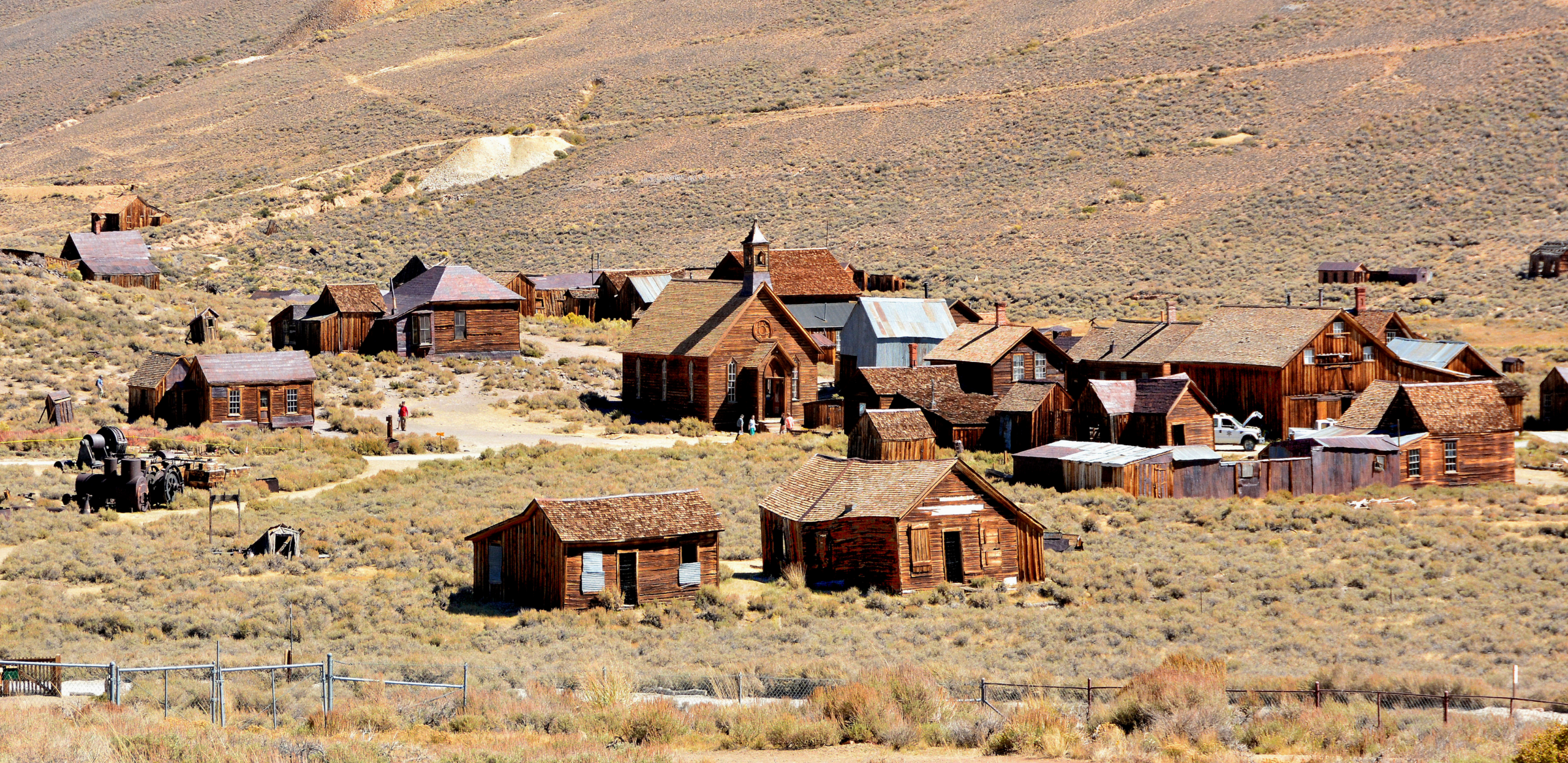
Bodie, California reached a peak population of 10,000 in 1879, with 65 saloons, a bustling Chinatown, and a homicide reputation severe enough that one child wrote in her diary “Goodbye God, I’m going to Bodie.” Today the state of California maintains the ghost town in deliberate “arrested decay” — preserving its ruins exactly as the last residents left them.
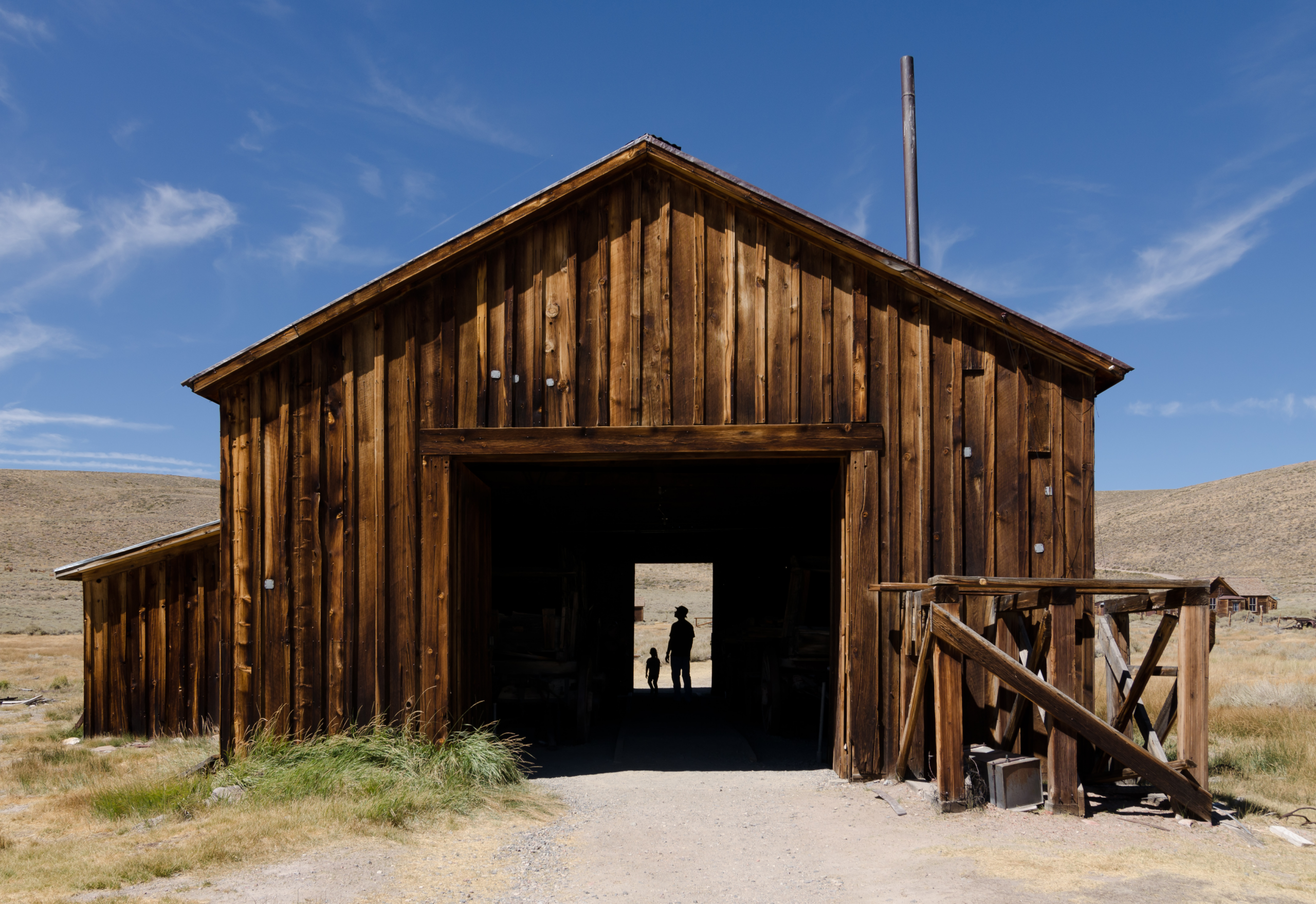
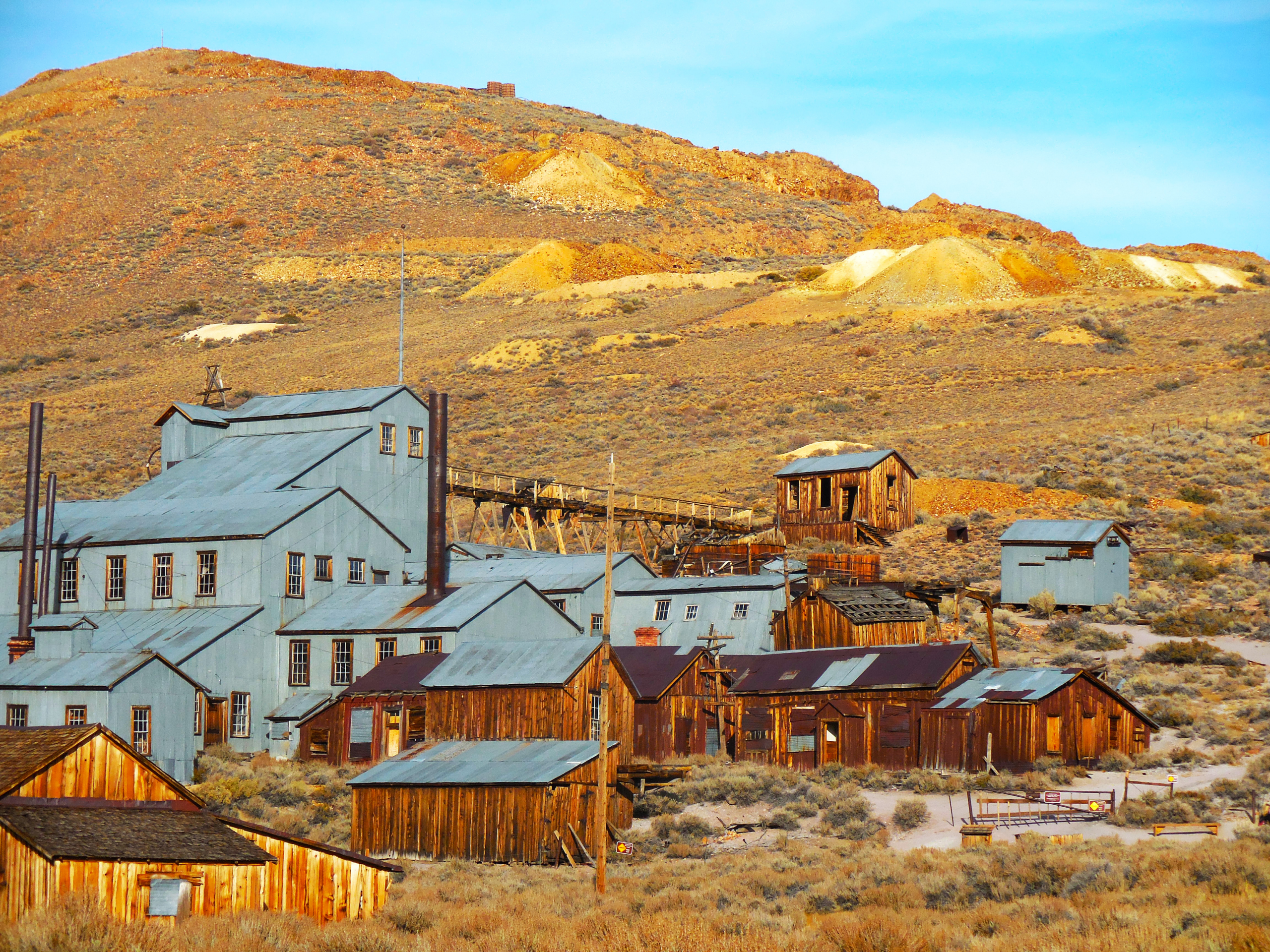
In the high desert east of the Sierra Nevada Mountains, at an elevation of 8,375 feet in California’s Mono County, sits a town that hasn’t been actively lived in for over 80 years — yet it isn’t quite a ruin. About 110 wooden buildings still stand. Their roofs are patched. Their interiors contain dishes on tables, tools on workbenches, bottles on shelves. Curtains hang in windows. Wallpaper peels in patterns that haven’t changed since 1932.
This is Bodie, the most thoroughly preserved ghost town in the United States — and it’s preserved by deliberate state policy. California maintains the town in what’s officially called “arrested decay,” meaning rangers repair what’s necessary to keep buildings standing, but they never restore anything to its original condition. Bodie is supposed to look like an abandoned town. The state’s job is to keep it abandoned-looking, forever.
1: A town the state keeps abandoned on purpose
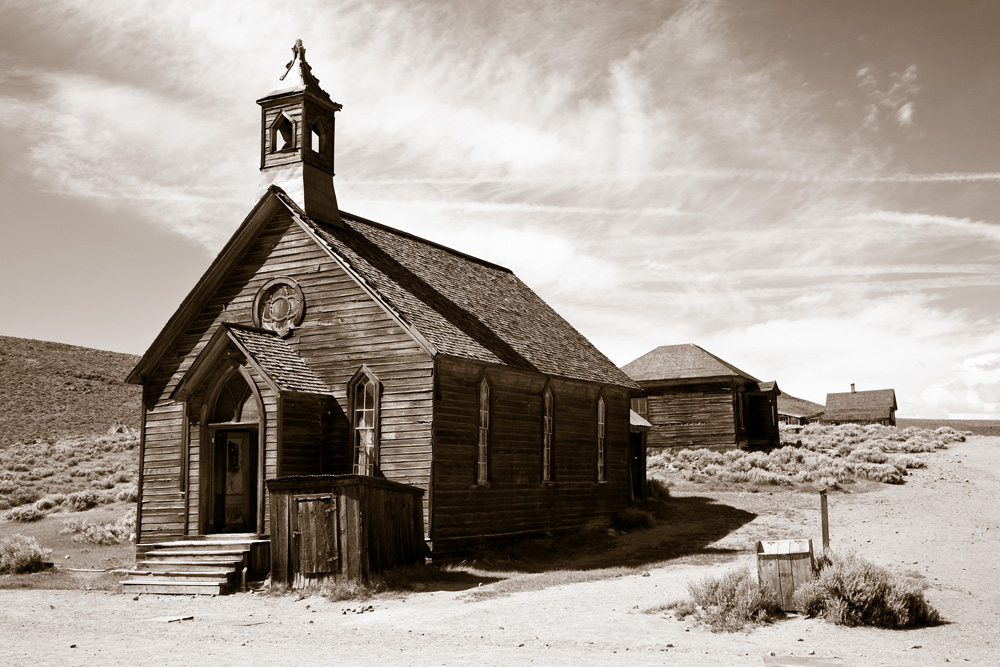
When the California Department of Parks and Recreation took over Bodie in 1962, the department initiated a plan to preserve the town in a state of “arrested decay.” That is, the town would be kept exactly as it was when the final residents moved away. The interiors remain just as they were — furniture and objects left in place. Repairs are made only to the extent that the structures remain looking as they did when they were abandoned. No improvements or alterations are made. Currently, about 110 buildings still stand in and around the town, with interiors still stocked with goods, dishes, and personal belongings.
2: The discovery of gold in 1859

In 1859, William (also called Waterman) S. Bodey discovered small amounts of gold in the hills north of California’s Mono Lake. Bodey himself died during a snowstorm in the winter of 1859-1860 on a supply trip. The Bodie Mining District organized in 1860 in his honor — though somehow the spelling of his name was changed to “Bodie” along the way. For 16 years, the town remained tiny, with fewer than 20 buildings. Most miners were focused on the more famous Comstock Lode in Nevada and the gold mines of Aurora. Bodie was an obscure backwater. Then, in 1875, a mine cave-in revealed pay dirt — a rich vein of gold-bearing ore.
3: The boom of 1876-1880
The 1875 cave-in led to the purchase of the mine by the Standard Company in 1877. People flocked to Bodie. The Bunker Hill Mine discovered large deposits of gold and silver in 1876. By 1879, Bodie had grown to over 250 buildings and somewhere between 7,000 and 10,000 residents. From 1877 to 1882, Bodie was a bustling town with close to 8,000 residents and produced more than $38 million in gold and silver. The total estimated output of the Bodie mines between 1876 and 1941 was approximately $34 million in 1986 dollars (or roughly $85 million in 2021 dollars), making it one of the richest gold strikes in California history.
4: 65 saloons and a notorious red light district
At its peak, Bodie reportedly had 65 saloons along its main street. The northern end of town came to life in the evenings, as dozens of saloons, gambling halls, taverns, brothels, and opium dens of the Red Light District and Chinatown beckoned miners with their expensive vices. To the east of town, the mighty mines and mills pumped economic lifeblood into the town. In the center and south, a vibrant business district blossomed. The well-kept homes of mine management and business owners flanked it to the west. On a daily basis, miners would emerge from the mills and head for the bars and the red light district to spend their earnings.
5: “Have we a man for breakfast?”
The mixture of money, gold, and alcohol would sometimes prove fatal. Newspapers reported that townspeople would ask in the mornings: “Have we a man for breakfast?” — meaning, “Did anyone get killed last night?” Bodie quickly gained the reputation as a “shooters town” due to the Wild West-style gunfights that often erupted. The city developed a special notoriety for its overly violent residents. By the 1880s, the city had developed a tough reputation, even spawning a popular expression “a bad man from Bodie,” which meant someone who was unusually unpleasant. One famous diary entry from a young girl, allegedly worried about moving to the town with her family, read simply: “Goodbye God, I’m going to Bodie.”
6: The Chinatown of 1878

Many Chinese immigrants came to Bodie from Southern China as contract laborers in 1878. They settled on the outskirts of the town in a Chinese community, or “Chinatown,” northwest of Main and King Streets. The Chinese residents of Bodie faced significant discrimination in the local mines, which forced them to turn to service occupations — operating laundries, peddling vegetables, supplying charcoal, and providing most of the wood used in the town. Bodie’s Chinatown was made up of two- and three-story wooden buildings and included general stores, homes, laundries, boarding houses, a restaurant, opium dens, a Taoist temple, saloons, and gambling establishments. At its peak in 1880, several hundred Chinese lived in Bodie’s Chinatown.
7: The decline begins in 1881
Bodie’s “bust” began in 1881. As the supply of mineable material became scarce, people began to leave the area. The promises of riches from newer mines started to lure Bodie’s residents away. The decline followed a typical 19th-century mining town pattern of booms and busts over several decades. The town never returned to its 1879-1880 peak population. By the 1890s, Bodie’s population had collapsed dramatically. Major mining ended in 1915, and small-scale mining efforts halted in the early 1950s. By 1942, when the U.S. War Production Board officially closed all non-essential gold mining for World War II, Bodie’s economy was already long dead.
8: The two fires that erased most of the town

Two large fires — in 1892 and 1932 — reduced the town’s structures to less than 10% of the 2,000 that once stood. A kitchen fire in the summer of 1892 destroyed much of the town to the west of Main Street. The town was rebuilt, although several residents left after the damage. Tragedy struck Bodie again in the early summer of 1932 when most of the remaining town burned to the ground. This fire was accidentally started by a young boy playing with matches. The 1932 fire sealed the fate of the once-glorious mining town. From the original 2,000 structures, only about 200 buildings remained after 1932.
9: How the state took over
After the 1932 fire and the official end of mining in 1942, Bodie’s population dwindled to almost nothing. The remaining residents either died or moved away. By the 1950s, only a handful of people lived in town. The danger was vandalism — without anyone to protect them, the abandoned buildings and their contents were vulnerable to theft and destruction. Other nearby mining camps and towns like Aurora and Masonic have very little left because of theft and vandalism that occurred after they were abandoned. Bodie was different because caretakers protected the town through the 20th century even before it became a state park. In 1961, Bodie received National Historic Landmark status. In 1962, the state legislature authorized creation of Bodie State Historic Park, with a total of 170 buildings remaining.
10: What “arrested decay” actually means
The “arrested decay” philosophy is more nuanced than just letting buildings fall apart. State park rangers actively maintain the town, but with a specific goal: keeping it looking exactly as it did in 1962. New roofs appear from time to time, replacing ones that would have collapsed. Foundations are reinforced when necessary. Windows are repaired only enough to keep weather out, not to make them look new. Interiors are kept dust-free without removing or rearranging the original objects. Some houses are still occupied — by the rangers and support staff who live in Bodie year-round, in some of the old houses, to maintain the town. It’s part-museum, part-residence, part-time-capsule.
11: The infamous “curse”
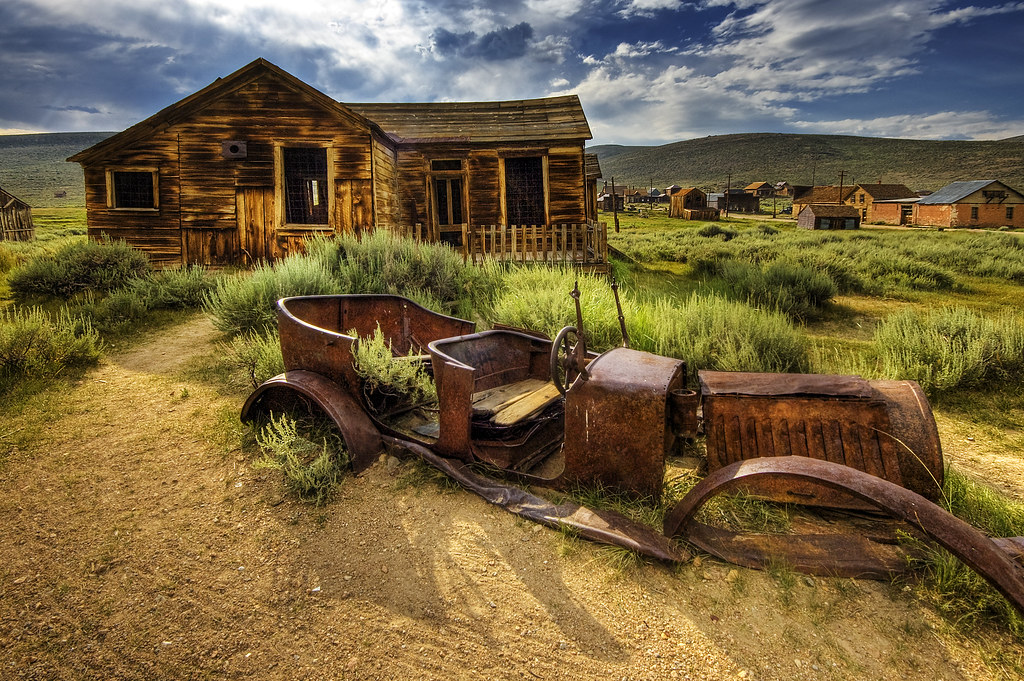
A curious legend has built up around Bodie: visitors who steal artifacts from the town reportedly suffer bad luck, illness, or worse — until they return what they took. The state park receives packages year-round from former visitors, often containing nails, old bottles, broken glass, or rusted tools, with apologetic letters explaining the run of misfortune the senders have experienced since their visit. Some letters are sincere; others may be partially in jest. Park rangers maintain a “Bodie Curse” file containing thousands of such returns. Whether the curse is real, or a useful myth that helps preserve the town from souvenir-hunters, the practical effect is the same: people are reluctant to take anything from Bodie.
12: How to actually visit
Bodie is open to the public year-round, though access in winter is limited. The park is located in California’s Eastern Sierra, 13 miles east of Highway 395 on Bodie Road (Highway 270), seven miles south of Bridgeport. The last three miles are on an unsurfaced road. Driving precautions are necessary — many four-wheel-drive vehicles get stuck in winter snow. Spring mud can be a problem. The park is open all year, but accessible only by snowmobile, cross-country skis, or snowshoes when snowbound (approximately November through May). Sub-zero temperatures, strong winds, and white-out conditions are common at 8,375 feet elevation. Bodie receives about 200,000 visitors annually.
13: What Bodie represents
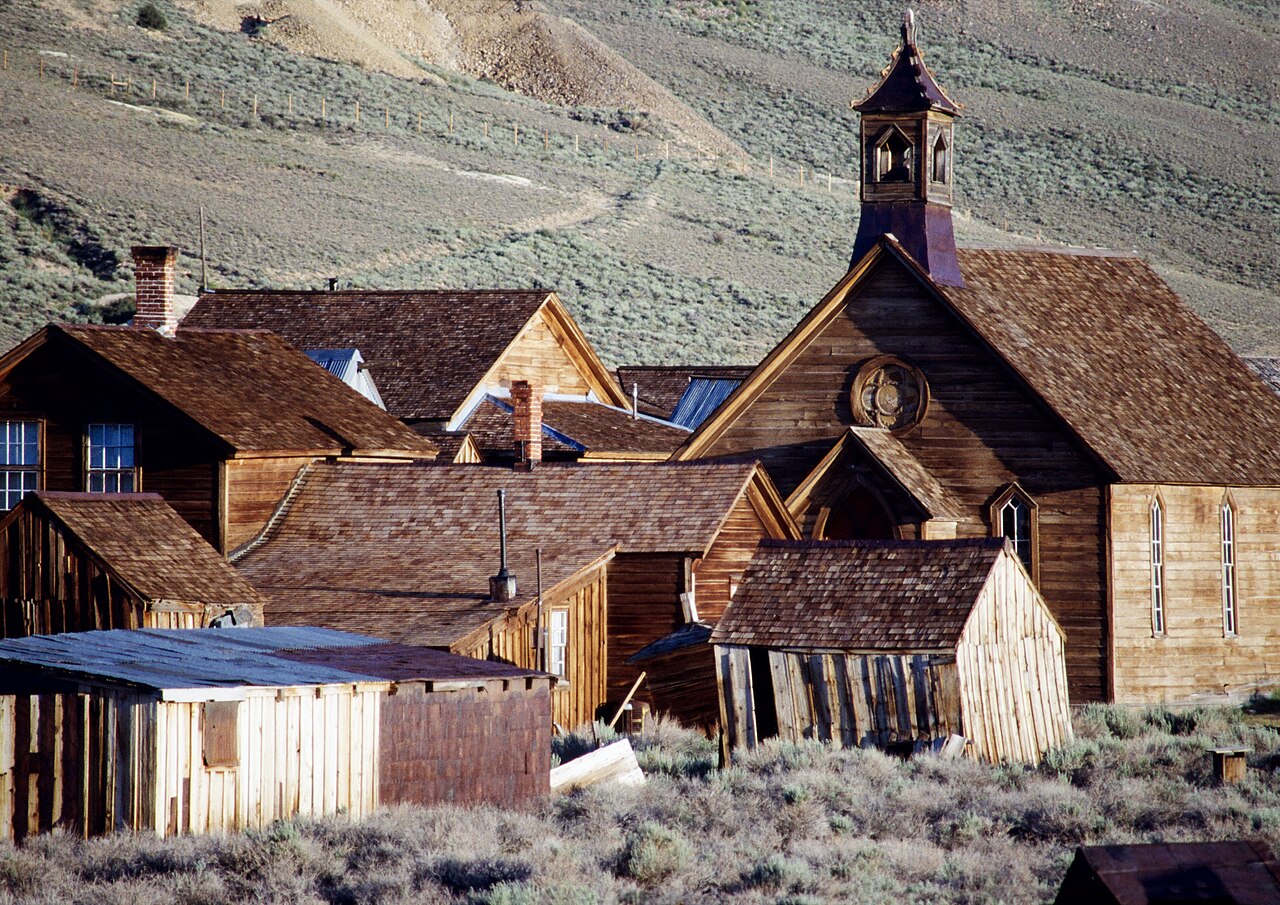
Bodie is unusual among preserved historic sites because it specifically preserves a particular moment of decline rather than a moment of glory. Most historic preservation efforts try to restore buildings to their original state — what they looked like when they were new and impressive. The “arrested decay” philosophy at Bodie does the opposite. It preserves the town as it appeared in 1962, when the last residents had already departed and the buildings had been weathering for several decades. The result is a kind of historical site that’s relatively rare: a place where the visible aging of the buildings is part of the historical record, not damage to be repaired. For visitors, walking through Bodie’s streets produces a peculiar effect — the town feels both impossibly old and surprisingly recent. The personal items still in the houses belonged to people whose grandchildren are still alive. The buildings look like they could have been abandoned five years ago, or fifty, or a hundred. That ambiguity is part of why Bodie is so memorable. It’s not a ruin from antiquity. It’s a relatively recent American town, deliberately suspended at the moment its life ended.