


The strange “no hook” hotel hangers — with little balls or pegs that lock into special closet rods — aren’t a design quirk. They’re an explicit anti-theft measure responding to one of the hospitality industry’s most persistent and overlooked problems. Some hotels lose tens of thousands of hangers per year to guests taking them home, and the cumulative cost runs into millions globally. Here’s the actual economics of hotel hanger theft and the engineering response that explains why every hotel closet you’ve ever used had those weird hangers.
If you’ve stayed in any hotel built or renovated in the past 30 years, you’ve encountered the strange hotel hanger phenomenon. The hangers don’t have normal hooks. Instead, they have small balls, pegs, or rings on top that fit into specially-designed closet rods. You can lift them off easily enough to put a shirt on or take it off. But you can’t just grab the hanger and use it on a regular closet rod at home — the design specifically prevents that.
Most hotel guests assume this is some kind of design choice. Maybe it’s about looking modern, or saving space, or some space-age feature you don’t quite understand. The actual reason is much more practical: hotel hangers are designed to be unstealable.
Hotel hanger theft is a real, persistent, and surprisingly expensive industry problem. Major hotel chains lose hundreds to thousands of hangers per property per year to guests who take them home. Multiplied across thousands of hotel rooms globally, the cumulative loss runs into millions of dollars annually. The “no hook” anti-theft hanger design — which has become standard in the hospitality industry over the past three decades — represents the engineering response to this specific problem.
Here’s what’s actually going on with hotel hangers, the surprising scale of hanger theft as an industry problem, and the various design solutions hotels have tried over the years.
The scale of the hanger theft problem
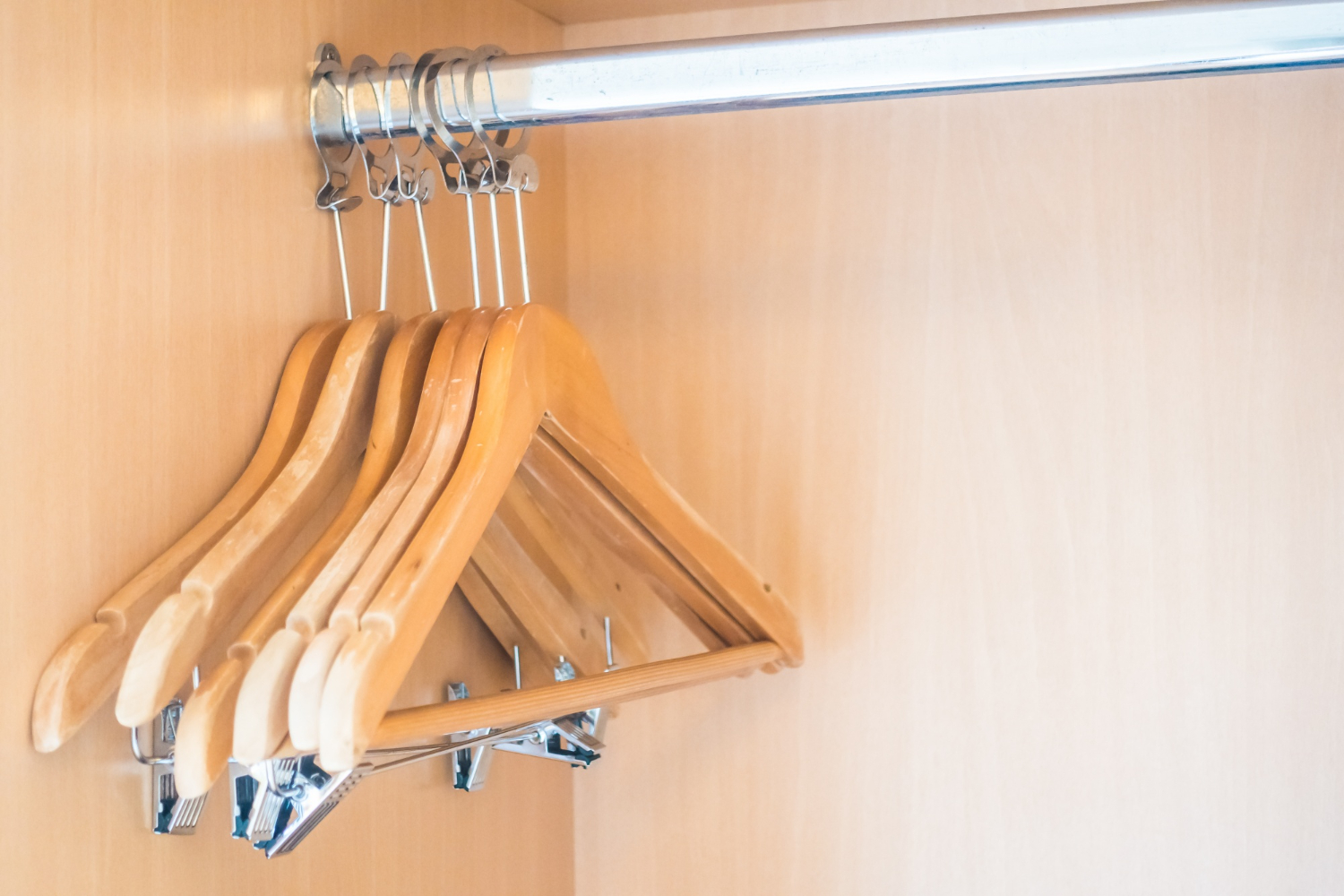
Hotel hanger theft is more substantial than most travelers realize. According to industry sources from hotel supply companies including Quality Hangers, LaxRee Amenities, and EISHO Display, hanger loss represents a meaningful operational cost for hospitality businesses.
The pattern that hotels see:
Some guests deliberately take hangers home. This represents the most direct theft pattern. Guests who like the hanger style, need hangers at home, or just want a souvenir simply pack them in their luggage. The hangers themselves are valuable enough to keep ($2-15 each at retail) but not valuable enough that guests feel they’re committing serious theft.
Some guests take hangers accidentally. Particularly during checkouts where guests are rushing, hangers occasionally end up packed with clothes. Most travelers have probably done this at least once without thinking about it.
Hangers walk during cleaning. Housekeeping staff sometimes accidentally remove hangers when stripping rooms for laundry processing. Without security measures, lost hangers accumulate.
Hangers get damaged or broken. Beyond direct theft, hangers wear out from regular use. Plastic breaks, wood splits, fabric gets dirty, paint chips. Periodic replacement is necessary.
The cumulative numbers across major chains:
- Marriott International — operates approximately 8,500+ properties worldwide. Even at a few hundred hangers lost per property annually, the chain-wide loss runs into hundreds of thousands of hangers per year
- Hilton — similar scale, similar losses
- Hyatt, IHG, Choice Hotels, and other major chains — collectively lose millions of hangers globally per year
At wholesale prices (typically $1.50-5.00 per anti-theft hanger), the chain-wide annual loss represents tens of millions of dollars in replacement costs across the global hospitality industry.
For individual hotels, the numbers are still significant. A 200-room hotel with 8 hangers per room (average) has 1,600 hangers in active use. Even a 10% annual loss rate (which is conservative for hotels without anti-theft measures) means 160 hangers per year requiring replacement — at roughly $400-800 in replacement costs per hotel per year, before considering the labor costs of the housekeeping staff who must check and replace hangers.
These numbers explain why hotel chains have invested substantially in anti-theft hanger technology over the past 30 years.
How anti-theft hangers actually work

The anti-theft hanger design has several variations, but most modern hotel hangers use one of three approaches:
1. Ball-top with slotted rail
The most common design. The hanger has a small wooden or metal ball mounted on top of a stem (instead of a regular hook). The closet rod has corresponding slots cut at intervals. The hanger ball fits into a slot — pivots to lock — and can be lifted out vertically but cannot be moved sideways or removed without specific manipulation.
To use the hanger:
- Lift the ball straight up to remove from the slot
- Use the hanger normally (put a shirt or jacket on it)
- Place the ball back into a slot on the rod
- Twist or release to lock in place
To attempt to steal the hanger:
- The hanger lifts off easily
- But it cannot be hung on a normal closet rod at home — the ball doesn’t fit standard rods
- Without the special slotted rail, the hanger is functionally useless
- Theft is technically possible but the hanger has no value
2. Closed-loop ring with permanently-installed rail ring
A variation that uses a metal ring rather than a slot. The hanger has a closed loop on top instead of a hook. A separate metal ring is permanently installed on the closet rod (typically requiring rod removal during installation). The hanger’s loop slides over the rod ring, and the rod ring can rotate freely.
To use the hanger:
- Slide the hanger along the rod normally
- Lift off the rod by sliding past the end (which is blocked by end caps)
- Or detach the hanger pin from the locking ring (more complex operation)
Stealing this design requires either dismantling the closet rod or breaking the locking mechanism — both substantially more difficult than simply taking a regular hanger.
3. Direct-mount with concealed connection
Some high-end hotels use hangers that are essentially permanently attached to the closet rod — they slide along but cannot be removed without specific tools. These provide maximum theft prevention but at the cost of guest convenience.
For guests who want to remove their clothing easily without manipulating the hanger:
- Some designs allow the hanger to swing outward while staying attached
- Others require unhooking the clothing while the hanger remains in place
- This approach is less common because of guest experience tradeoffs
The engineering tradeoffs
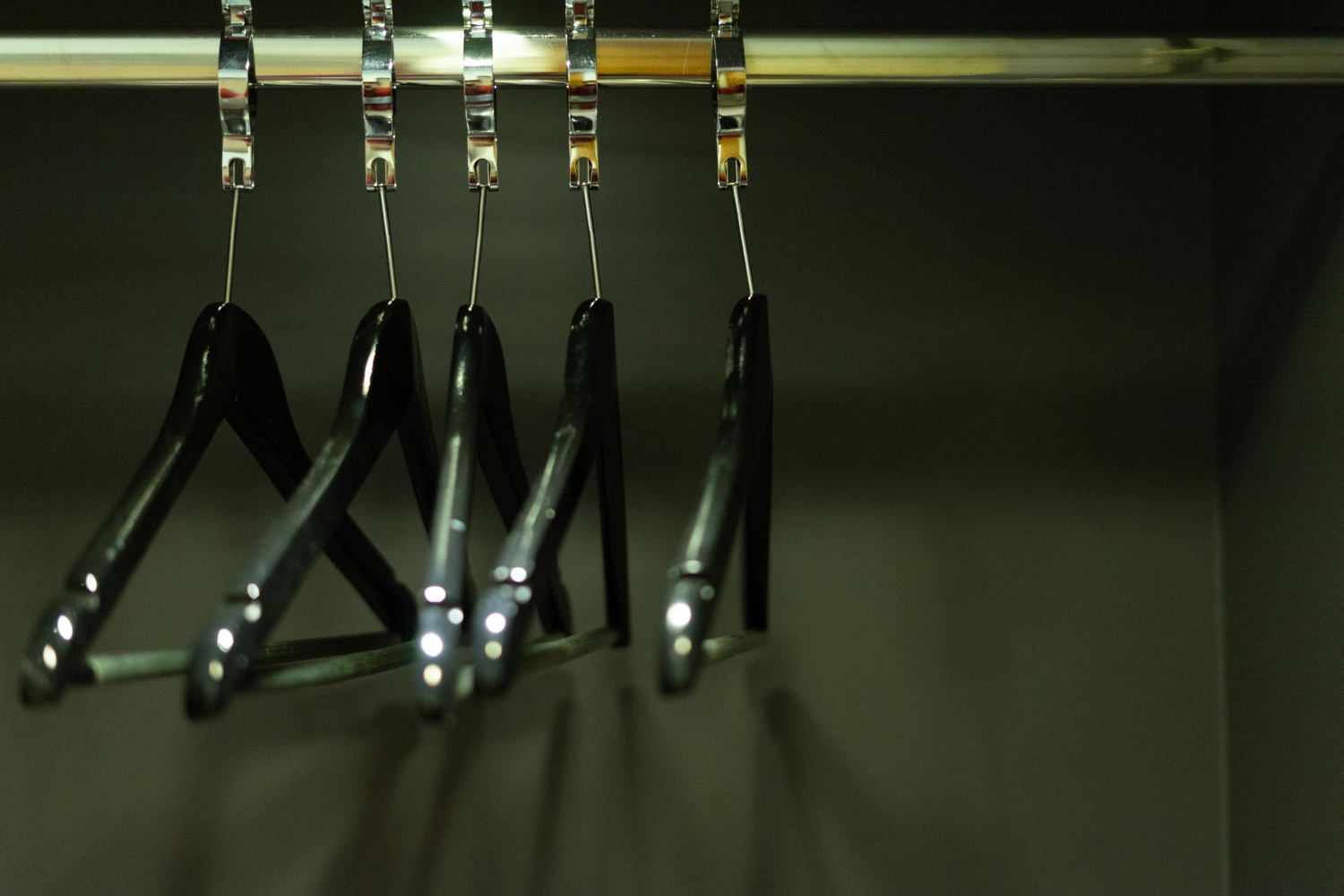
Designing an effective anti-theft hanger requires balancing several competing requirements:
Guest convenience. The hanger must be easy enough to use that guests don’t get frustrated. Difficult hangers produce negative reviews and guest complaints.
Theft resistance. The design must make the hangers genuinely unstealable, not just inconvenient to steal. A determined thief should be unable to remove the hanger without obvious damage.
Manufacturing cost. Anti-theft features add to the cost of each hanger. A standard wooden hanger might cost $0.50-1.00 wholesale; an anti-theft equivalent might cost $1.50-5.00. The cost difference must be justified by reduced theft losses.
Aesthetic quality. Hotels want their closets to look attractive. Industrial-looking anti-theft hardware can detract from the room’s design aesthetic. The best anti-theft designs are essentially invisible until the user attempts to remove them.
Compatibility with industrial laundry. Hotel hangers are typically used to hold wet/dry-cleaned items returned from in-house or contracted laundry services. They must withstand the weight, moisture, and chemical exposure of professional cleaning operations.
Serviceability and replacement. When hangers do need replacing (due to wear or actual damage), the replacement process should be straightforward for housekeeping staff.
The major hotel hanger manufacturers — including Quality Hangers, EISHO, LaxRee Amenities, Weber Hangers, Hangerworld, and others — have spent decades refining their designs to optimize this tradeoff space. Modern anti-theft hangers represent the cumulative result of these design iterations.
What guests don’t realize about hotel hangers

Several aspects of hotel hangers that travelers typically don’t notice:
Different brands’ hangers don’t interchange. Each hotel chain typically uses a specific anti-theft system. Marriott hangers don’t work in Hilton closets. This means hotels can’t share hangers across brands or use generic replacement hangers.
Replacements require ordering through specific suppliers. When hotels need to replace anti-theft hangers, they typically need to order from the original manufacturer to ensure compatibility with installed closet rod systems.
Conversion products exist for traveling sales staff. Companies like ConvertAHanger sell adapter products that travelers can attach to anti-theft hangers to convert them temporarily for use elsewhere in the hotel room (like on the back of doors, on clothing racks, or for temporary clothing storage).
Some hotels still don’t use anti-theft hangers. Independent hotels, smaller boutique properties, and budget chains often use regular hooked hangers. This is typically a cost decision — anti-theft systems require both special hangers and special rails, both of which add to construction or renovation costs.
The anti-theft system requires installation during construction or renovation. Standard closet rods cannot easily accommodate anti-theft hangers. Installing them after construction requires removing existing rods, installing new rods with appropriate hardware, and replacing all hangers simultaneously.
Some properties intentionally use removable hangers. A few high-end hotels and resorts deliberately use beautiful hangers that guests are essentially welcome to take, treating them as a soft amenity rather than fighting over their potential theft. This is uncommon and requires the hangers to be cheap enough that loss is acceptable.
Other hotel anti-theft measures travelers don’t notice
The hanger anti-theft system is part of a broader pattern of design choices in hotels intended to prevent guest theft. Other examples include:
Hairdryers attached to walls. Modern hotel hairdryers are typically permanently mounted to bathroom walls. The cord is short and the dryer cannot be easily detached without tools. This explicitly prevents guests from taking hairdryers home.
Bathrobes labeled with security tags. Many hotels include RFID-style security tags or specific markings on bathrobes that allow them to be detected if guests try to remove them. Some upscale hotels offer to sell guests the bathrobes to formalize the transaction rather than treating it as theft.
Towel monitoring systems. Some hotels use systems to track towel inventory in real-time. If towel counts are short after a guest checks out, the cost may be charged to the guest’s credit card.
Coat hangers hooked to fixed dispensers. A variation on hanger anti-theft. Hangers in some hotels are attached to fixed dispensers that allow them to swing freely but prevent removal without tools.
Bolted-down furniture and electronics. TV stands, lamp cords, and various electronic devices are often physically bolted to furniture or walls.
Branded items intended for theft. Some hotels intentionally provide branded items (pens, notepads, small toiletries) that guests are explicitly welcome to take. This serves as marketing while satisfying the impulse to bring something home from a hotel stay.
Mini-bar inventory tracking. Modern hotel mini-bars often use weight sensors to detect when items have been removed. Mini-bar charges are automatically applied to the room.
Bathroom amenity dispensers. Many hotels have moved away from individual shampoo and conditioner bottles (which guests could take) toward fixed-mount dispensers that cannot be easily removed.
The cumulative effect: modern hotels are extensively designed to prevent guest theft of various items, with anti-theft hangers being just one visible example of broader engineering choices.
What this means for travelers

For hotel guests, the practical implications of all this anti-theft engineering:
Don’t take the hangers home. Even if you think they look nice or you need hangers, the design specifically prevents you from using them at home. They’re useless on standard closet rods.
Don’t damage anti-theft hardware. Some guests, frustrated by anti-theft hangers, occasionally damage them while attempting to remove them. This may result in damage charges and is generally counterproductive.
Use the convertible workaround if available. ConvertAHanger and similar products can adapt anti-theft hotel hangers for temporary use elsewhere in the hotel room (over doors, on chair backs, etc.) if the limited closet space isn’t sufficient.
Bring your own hangers if needed. For travelers who pack lots of clothes, bringing 2-4 lightweight travel hangers can supplement hotel-provided hangers. Several brands make collapsible travel hangers specifically for this purpose ($10-25 for a set of multiple).
Don’t assume hotel hangers are stealable. Even if a particular hotel uses regular hangers, taking them is technically theft. Hotels include hanger inventory in their operational costs and replacement costs are real expenses for the property.
Note the hanger style as you check in. If you see anti-theft hangers, you’ll know not to bother trying to take them. If you see regular hangers, leave them alone anyway as a matter of basic guest etiquette.
What this represents about hospitality economics

The anti-theft hanger phenomenon illustrates something specific about how the modern hospitality industry actually operates. Hotels run on extremely thin margins relative to their gross revenue. A typical full-service hotel might have:
- Gross revenue of $100,000-1,000,000 per month depending on size and rates
- Operating costs of 70-85% of gross revenue including staff, utilities, supplies, marketing, etc.
- Net margins of 15-30% before debt service, capital improvements, and franchise fees
In this margin structure, individually small expenses accumulate into significant operating costs. Hangers are one example, but similar logic applies to:
- Towels and bedding (substantial replacement costs from theft and wear)
- Toiletries and amenities (the tens of thousands of small bottles per year for major properties)
- Utility costs (energy, water, internet) where guest behavior affects costs
- Maintenance for guest-damaged or guest-removed items
- Cleaning supplies and equipment that disappear or break
The anti-theft hanger system represents one of the more visible examples of hotels engineering their physical environment to control these costs. Other examples are less visible but equally important to hotel operations.
For guests, the takeaway is appreciation rather than annoyance. The anti-theft hangers exist because hotels would otherwise lose substantial money to hanger theft, which would either be reflected in higher room rates or in reduced quality elsewhere. The compromise — slightly less convenient hangers in exchange for stable hanger inventory and reasonable room rates — is generally a reasonable engineering response to a real economic problem.
The next time you stay in a hotel and notice the strange hanger design, you can recognize it for what it actually is: not a quirk or a design choice, but a deliberate engineering response to one of the hospitality industry’s most persistent operational challenges. Hotel guests have been taking hangers home for as long as hotels have provided them. Anti-theft hangers represent the industry’s eventual response to a problem that, in aggregate, was costing millions of dollars annually.
You can’t take them home. They wouldn’t work in your closet anyway. The hotel knows this — it’s why the hangers are designed the way they are. The system is doing exactly what it was designed to do, even if you’ve spent years using these hangers without ever wondering why they look so different from the ones in your closet at home.
