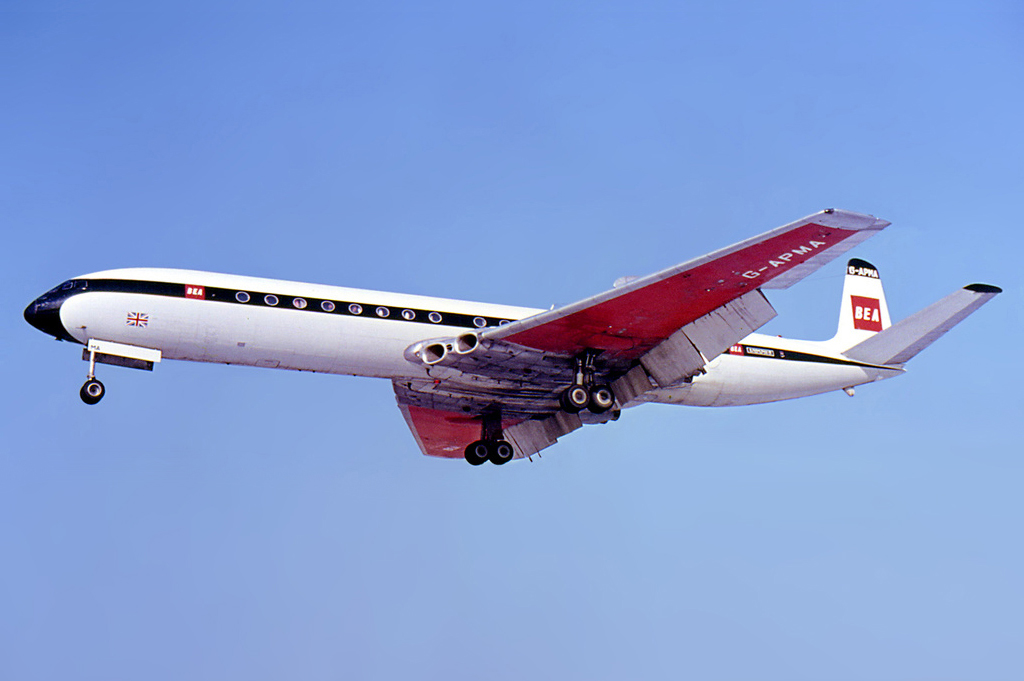
The de Havilland Comet was the world’s first commercial jet airliner — a 1949 British marvel that promised faster, higher, more comfortable air travel. Then in early 1954, two of them broke apart in mid-air over the Mediterranean within three months of each other. The investigation that followed introduced “water tank testing” to aviation, killed off the Comet’s commercial future, and gave us the rounded window design every modern airliner still uses today. Here’s what actually happened — and why the popular “square windows” version of the story is partially a myth.
If you’ve ever sat in a window seat on a commercial flight and wondered why the windows are oval rather than square, the answer involves one of the most consequential aviation disasters of the 20th century — a series of crashes in 1953 and 1954 that killed 56 people, ended the commercial future of Britain’s pioneering jetliner, and permanently changed how aircraft are designed.
The popular version of the story, which has spread widely through travel blogs and aviation enthusiast content, frames it simply: “the Comet had square windows, the corners concentrated stress, the planes broke apart, so engineers switched to round windows.” This version is partially correct but oversimplifies what actually happened. The technical reality involves multiple failure points across the fuselage, decades of subsequent fatigue testing innovation, and a court of inquiry that — somewhat surprisingly — never specifically blamed the passenger window shape for the crashes.
Here’s what actually happened, what investigators actually found, and why every commercial aircraft built since 1958 has used the rounded window geometry that emerged from those investigations.
The de Havilland Comet — Britain’s pioneering jetliner
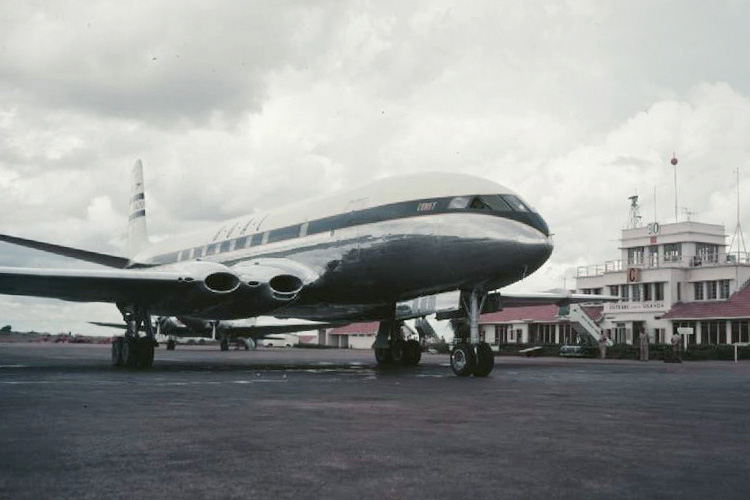
The de Havilland Comet was the world’s first commercial jet airliner. Designed by famed British aircraft designer Geoffrey de Havilland and his team, the Comet’s prototype first flew on July 27, 1949 — just four years after the end of World War II.
The Comet was, by the standards of its era, genuinely revolutionary. It promised:
- Substantially faster travel. Top speed of approximately 460 mph, compared to the 300 mph of contemporary piston-engine airliners
- Higher cruising altitude. Up to 40,000 feet, well above weather and turbulence that affected piston aircraft
- More comfortable cabins. Pressurized at altitude, with quieter engines and smoother flight characteristics
- Quieter operation. Jet engines produced less vibration than the piston radial engines of competitors
- Longer range. Capable of trans-continental and trans-oceanic flights
The Comet entered scheduled passenger service on May 2, 1952, with British Overseas Airways Corporation (BOAC) flying the route from London to Johannesburg. International press coverage was breathlessly enthusiastic. Britain had beaten the United States to commercial jet service. The Comet seemed to represent the future of aviation.
Then the future started crashing.
The first warnings (1952-1953)
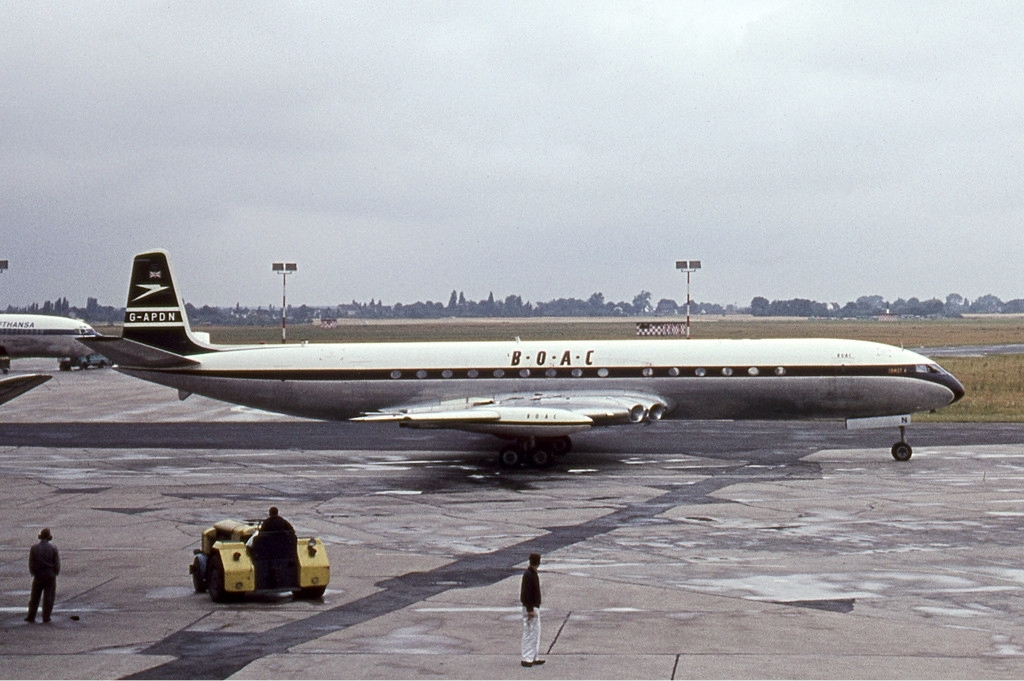
Problems began appearing within months of the Comet’s commercial debut, though they weren’t initially recognized as fatal flaws:
October 26, 1952. A Comet operated by BOAC suffered a failed takeoff in Rome and slid off the edge of the runway. No fatalities, but the incident raised concerns about the aircraft’s takeoff handling.
March 3, 1953. A Canadian Pacific Airlines Comet crashed during a takeoff attempt in Karachi, Pakistan. All 11 people on board were killed. Investigation found that the pilot had over-rotated the aircraft during takeoff, causing aerodynamic stall.
May 2, 1953. A BOAC Comet (Flight 783) experienced an in-flight breakup while ascending in stormy weather near Calcutta, India. All 43 people on board were killed. Investigators initially concluded that the airframe had failed due to overstress from severe wind gusts or pilot over-control during the storm. The investigation didn’t identify metal fatigue.
These early incidents, while concerning, were each attributed to specific pilot or weather factors rather than fundamental design flaws. The Comet continued in commercial service.
The disasters that grounded the fleet (1954)
Two crashes in early 1954 changed everything.
January 10, 1954 — BOAC Flight 781. The Comet G-ALYP took off from Rome’s Ciampino Airport, bound for London. Twenty minutes later, climbing through approximately 27,000 feet near the island of Elba in the Mediterranean Sea, the aircraft suffered catastrophic structural failure. All 35 people on board were killed.
The wreckage fell into deep Mediterranean waters. Recovery operations eventually retrieved approximately 70% of the aircraft. The fragments showed evidence of explosive decompression — the cabin had ruptured violently while the aircraft was at altitude.
Investigators initially considered multiple possible causes: lightning strike, engine failure, pilot error. Without conclusive evidence, the Comet fleet remained in service while investigations continued.
April 8, 1954 — South African Airways Flight 201. Less than three months after the Elba crash, another Comet (G-ALYY) departed Rome — also Ciampino Airport — bound for Cairo as part of a longer South African Airways route. The aircraft was operated under a charter arrangement with BOAC. Approximately 30 minutes after takeoff, climbing through cruising altitude, the aircraft broke apart over the Mediterranean. All 21 people on board were killed.
The pattern was now unmistakable. Two essentially identical aircraft, departing from the same airport, suffering essentially identical catastrophic structural failures while climbing to cruising altitude. The Comet fleet was immediately grounded, and the British government ordered a comprehensive investigation.
The water tank tests that solved the mystery

The investigation, led by Sir Arnold Hall at the Royal Aircraft Establishment at Farnborough, took an approach that was unprecedented at the time: building a giant water tank specifically designed to hold an entire Comet fuselage and subjecting it to repeated pressurization cycles.
The reasoning: if metal fatigue from repeated pressurization was causing the failures, simulation could reproduce the conditions in controlled circumstances. BOAC donated an existing Comet (G-ALYU) for the testing.
The tank was built at Farnborough specifically for the Comet investigation. Engineers subjected G-ALYU to simulated pressurization cycles — filling the cabin with pressurized water (which has similar mechanical effects to pressurized air but is safer for testing) and then releasing the pressure, repeatedly, to simulate years of flight cycles compressed into weeks of testing.
On June 24, 1954, after 3,057 flight cycles (1,221 actual flights plus 1,836 simulated cycles), G-ALYU’s fuselage burst open in the water tank. The investigators were immediately called to inspect the failed fuselage.
Sir Arnold Hall, Geoffrey de Havilland, and aircraft designer Ronald Bishop were present when the water was drained from the tank. What they found revealed the actual cause of the disasters.
What investigators actually found (the technical reality)
The G-ALYU failure occurred at a specific location: the fuselage had ripped open at a bolt hole, forward of the forward left escape hatch cut-out. This is an important detail that most popular accounts miss.
The cause of failure was metal fatigue. Repeated pressurization cycles had created stress concentrations at corners and cutouts in the fuselage. Microscopic cracks had developed at these stress points. Over thousands of cycles, the cracks had propagated through the aluminum alloy until catastrophic failure occurred.
The square shape of certain cutouts in the fuselage was indeed a contributing factor — sharp corners concentrate stress more than rounded shapes. But the failure point in G-ALYU was specifically at the escape hatch and an ADF (Automatic Direction Finder) antenna mounting, not at the passenger windows that the popular story emphasizes.
The Cohen Inquiry, which closed on November 24, 1954, found that:
- The basic design of the Comet was sound
- The cause of the crashes was structural failure due to metal fatigue
- The fatigue cracks had originated at points of stress concentration
- The investigation made no specific recommendation about the passenger window shape
This is a crucial distinction that most popular accounts miss. The famous “rounded windows” redesign that emerged from the Comet investigation was part of a broader fuselage strengthening program — not a specific response to a determination that the passenger windows were the failure point.
De Havilland’s subsequent redesign of the Comet (which became the Comet 2, 3, and 4) included:
- Thicker fuselage skin gauge throughout the aircraft
- Reinforced bolt holes and cutouts at all major structural joints
- Rounded passenger windows to reduce general stress concentration
- Enhanced inspection protocols to detect fatigue cracks before they propagated to failure
The escape hatch cutouts on the redesigned Comet retained their rectangular shape — strong evidence that the popular “square windows = crashes” framing oversimplifies what actually happened.
Why aircraft windows are oval today
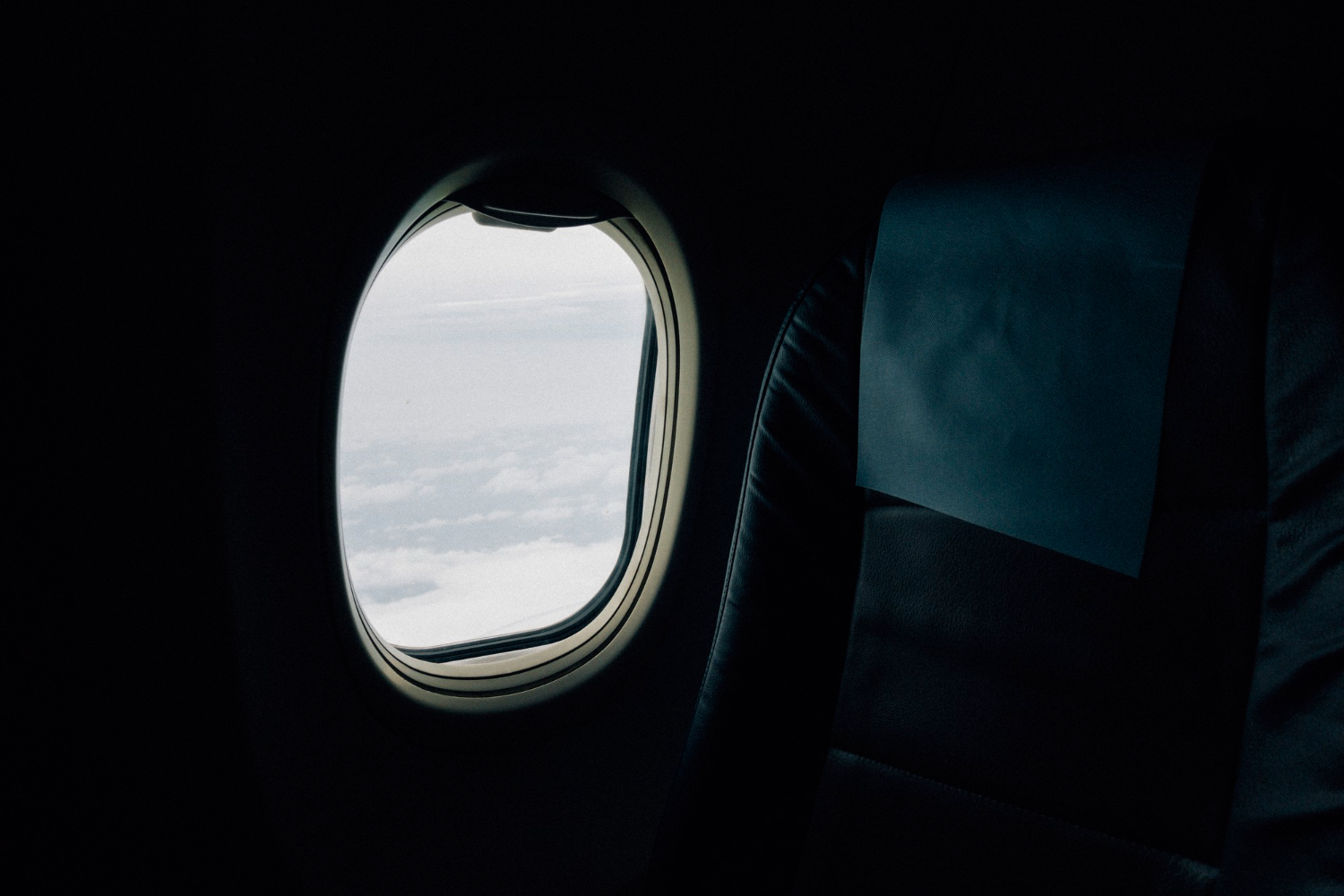
Despite the technical nuance about what specifically caused the Comet crashes, the practical outcome for modern aviation is clear: every commercial airliner since the late 1950s has used oval rather than rectangular passenger windows, and the principle behind this design choice is the same physics the Comet investigation revealed.
The technical principle: when an aircraft cabin is pressurized at altitude, the pressure differential between the inside and outside of the fuselage stretches the airframe. This stress is distributed across the fuselage skin and structural members. At any cutout (a window, door, or panel opening), the stress flows around the cutout edges.
At sharp corners, stress lines bunch together. The local stress at a corner can be 3-5 times higher than the average stress elsewhere in the fuselage. Each pressurization cycle causes microscopic deformation at these high-stress points. Over thousands of cycles, this fatigue creates microscopic cracks. Eventually, the cracks propagate to failure.
At rounded edges, stress lines flow smoothly around the curve without the same bunching effect. The peak stress at any point is closer to the average stress elsewhere in the fuselage. Fatigue accumulation occurs much more slowly.
The mathematics: if you draw stress lines flowing around a square cutout, they bend sharply at the corners. If you draw stress lines flowing around an oval cutout, they curve smoothly without sharp transitions. The smooth curves of an oval window mean that no single point experiences dramatically higher stress than its neighbors.
This principle applies whether the cutout is a passenger window, an escape hatch, an antenna mounting, or any other opening in the pressurized fuselage. Modern airliners use rounded shapes for all of these openings, even though the most visible application is the passenger windows that millions of travelers look through daily.
What modern airliners do differently
Beyond just the rounded window shape, modern commercial aircraft incorporate dozens of design improvements that the Comet investigation directly inspired:
Mandatory fatigue testing. Every commercial aircraft type undergoes water tank or pressure chamber testing equivalent to far more than its expected service life before being certified for passenger service. The Comet investigation established this practice as standard.
Fail-safe design philosophy. Modern aircraft are designed so that failure of any single structural component cannot cause catastrophic failure of the aircraft. Multiple redundant load paths ensure that cracks must propagate through several independent structures before producing failure.
Damage tolerance certification. Aircraft must demonstrate the ability to fly safely with specific levels of fatigue damage present. Testing simulates the discovery of cracks and verifies that they propagate slowly enough to be detected during routine inspections.
Comprehensive inspection programs. Commercial aircraft undergo detailed inspections at regular intervals (called A, B, C, and D checks). Inspection programs target known stress concentration points where fatigue cracks are most likely to develop.
Pressure cycle limits. Aircraft fuselages have specified pressure cycle limits — typically 50,000 to 100,000 cycles depending on design. Beyond these limits, fuselages must be retired or extensively rebuilt.
Material improvements. Modern aluminum alloys (including 2024, 7075, and various proprietary formulations) are substantially more fatigue-resistant than the alloys available in the early 1950s.
Composite materials. The Boeing 787 Dreamliner uses carbon fiber composite construction that has different fatigue characteristics than aluminum. Even composites, however, still use rounded window shapes — the underlying physics doesn’t depend on material choice.
The aircraft that almost prevented the disasters

A poignant historical note: investigators found that the Comet’s design had actually included extensive testing before initial certification. De Havilland engineers had subjected components to various fatigue tests using methods that were standard for the era.
The problem wasn’t lack of testing. The problem was that the testing methods of the era didn’t accurately replicate the specific stress conditions that occurred at altitude. Component-level testing didn’t capture the fuselage-wide stress patterns that pressurization produces. Static load testing didn’t capture the cyclic effects that drive fatigue.
The water tank testing approach that emerged from the Comet investigation captured these effects accurately for the first time. Subsequent commercial aircraft have benefited from this testing methodology — meaning, in a sense, that the lives of the 56 people who died on Comet flights in 1954 contributed directly to the safety of the billions of passenger flights that have followed.
What this means for your next flight

For travelers, the practical implications of this history are reassuring rather than alarming:
Modern airliners are extraordinarily safe. Commercial aviation fatality rates have dropped by roughly 95% between 1960 and 2024. The methodology that emerged from the Comet investigation is a substantial part of that improvement.
Window shape isn’t a safety question on modern aircraft. Every commercial airliner you’ll ever fly on uses appropriate fuselage geometry. The window shape question was solved 70+ years ago.
Aircraft inspection programs are extensive and effective. The combination of mandatory inspections, modern non-destructive testing techniques, and careful tracking of pressure cycles means that fatigue cracks are typically detected and repaired long before they could cause failure.
Aircraft retirement schedules are real. Commercial aircraft are retired when they reach their pressure cycle limits, even if they’re still mechanically sound. This conservative approach prevents aging aircraft from approaching the failure modes that destroyed the early Comets.
Modern testing exceeds historical standards substantially. Boeing, Airbus, Embraer, and other aircraft manufacturers test their aircraft far more extensively than the de Havilland team tested the Comet. The modern requirements represent more than 70 years of accumulated lessons from the Comet investigation and subsequent incidents.
Even the famous Aloha Airlines Flight 243 incident (1988) — when the upper fuselage of a Boeing 737 partially separated in flight — confirmed the post-Comet design philosophy. The aircraft’s fail-safe design allowed it to land safely despite catastrophic structural damage. One flight attendant was killed when she was swept out during the initial decompression, but the 94 passengers and 4 other crew members survived. The same incident on a Comet would likely have killed everyone aboard.
The Comet’s legacy
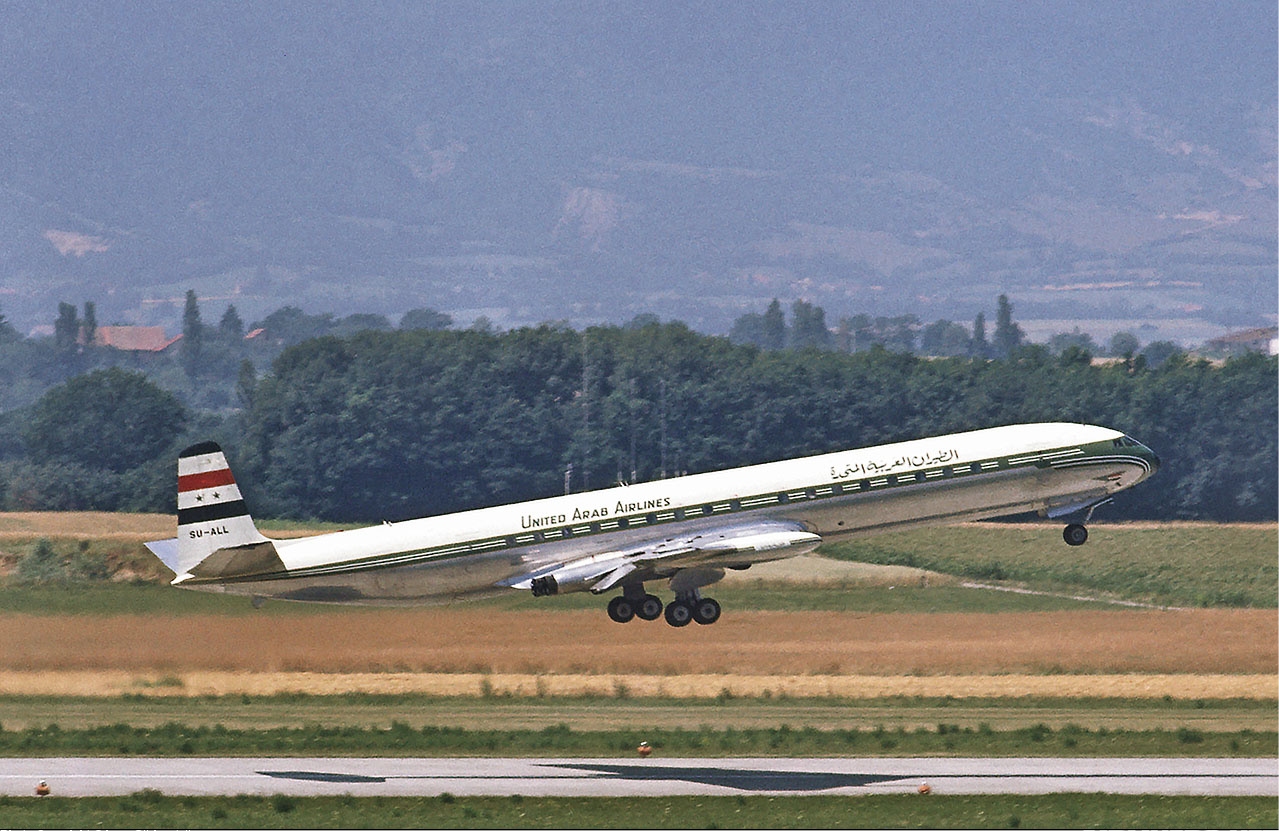
The de Havilland Comet’s commercial career was essentially over after 1954. Although a redesigned Comet 2 entered service in 1958 and Comet 4 variants flew through the 1960s and 1970s, the aircraft never recovered the commercial momentum it had lost. Boeing’s 707 and Douglas’s DC-8 — designed with the benefit of the Comet investigation’s findings — became the dominant commercial jets of the era.
A total of 114 Comets of all variants were eventually built. The Comet 4 served with various airlines through the 1970s, with the last commercial passenger service ending in 1981. Some military variants (the Hawker Siddeley Nimrod, derived from the Comet) continued flying maritime patrol duties until 2011.
But the Comet’s most lasting legacy isn’t about the aircraft itself — it’s about the safety methodology it forced into existence. Every modern airliner is the descendant, in design philosophy, of the lessons learned from the deaths of the 56 people who died on Comet flights in 1953 and 1954.
When you board a commercial flight today, the rounded windows you look through are the visible evidence of those lessons. The invisible evidence is more comprehensive: extensive pressure cycle testing, fail-safe design philosophy, mandatory inspection programs, conservative retirement schedules, and continual material improvements that have made commercial aviation the safest form of long-distance transportation in human history.
The history is sobering but ultimately reassuring. Aircraft don’t have rounded windows because designers thought they looked nicer. They have rounded windows because rectangular ones, in combination with various other 1950s-era design choices, contributed to the deaths of dozens of passengers on a pioneering British jetliner. The price for the lesson was paid in lives. The safety record of modern aviation represents the dividend.
The next time you settle into a window seat and watch the world unfold below at 35,000 feet, you can appreciate the small piece of aviation history sitting in the fuselage around you. The oval shape isn’t decorative. It’s the inheritance from the early jet age — a design choice that, in combination with thousands of other invisible safety practices, lets you cruise safely through the same altitudes where the world’s first commercial jetliner once broke apart in the sky.