


Lift the boot floor of a car built in the last fifteen years and there is a reasonable chance there is no spare wheel under it. In its place is a small canister of sealant and an electric compressor, or sometimes nothing at all.
The change happened gradually, it was not announced to anybody, and the overwhelming majority of owners discover it at the roadside with a flat tyre, which is the worst possible moment to find out.
Why It Was Taken Out

Three pressures, all commercial rather than technical.
Weight. A full-size steel wheel with a tyre on it weighs a substantial amount, and that weight is carried on every journey for the small proportion of journeys on which it is needed. Removing it improves fuel consumption and emissions figures measurably, and those figures are regulated and are used in advertising.
Space. The wheel well is a deep recess in the floor of the boot. Fill it in and the car gains usable luggage volume, which is a number that appears in reviews and brochures and is directly comparable between models.
Cost. A wheel, a tyre, a jack, a brace and the tooling for the well cost more than a canister of sealant and a compressor.
Each of those is a real benefit and none of them is a benefit to the person standing beside a punctured tyre on a dual carriageway.
Like our content? Follow us for more.
What the Sealant Kit Can and Cannot Do
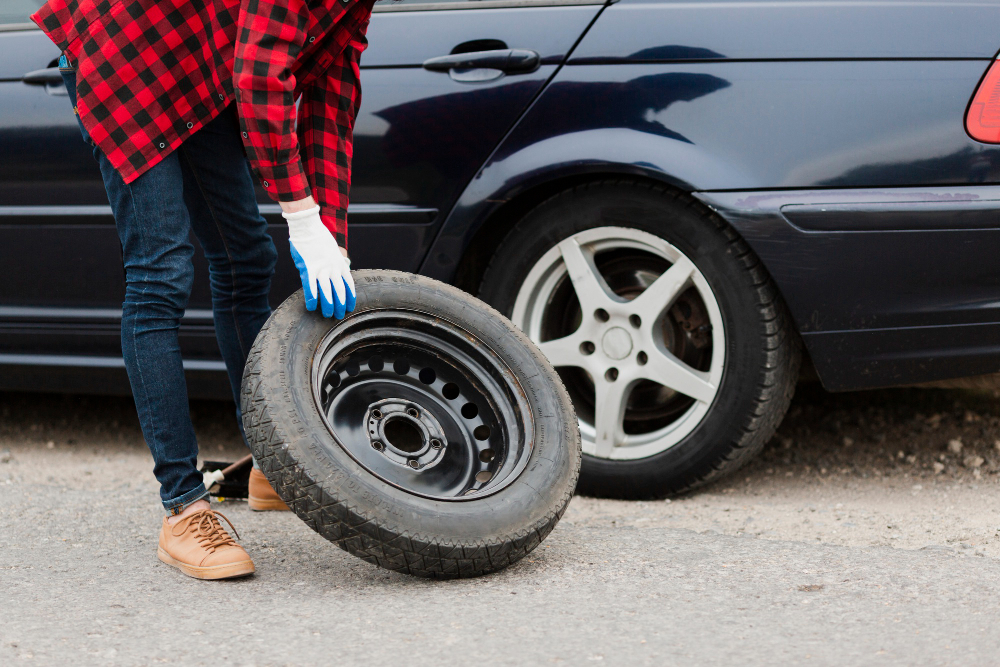
This is the part worth knowing before you need it, because the kit is genuinely useful within a narrow range and useless outside it.
It can handle a small puncture in the tread – a nail, a screw, a thorn – where the object has made a clean hole of a few millimetres. The sealant is injected through the valve, the compressor inflates the tyre, the car is driven slowly so the sealant distributes and plugs the hole, and the tyre holds enough pressure to reach a garage.
It cannot handle a sidewall cut or tear, because the sidewall flexes constantly and no sealant will stay in it. It cannot handle a blowout or a tyre that has come off the rim. It cannot handle a split, a large gash, or damage from driving on a flat. It cannot handle a puncture in a tyre that has already been driven on and destroyed, which is the common case because most people do not notice immediately.
It is also single use, it has an expiry date that almost nobody checks, and a tyre treated with sealant frequently cannot be repaired afterwards and has to be replaced – and some garages will charge for cleaning the sealant out of the valve and sensor.
The Space Saver Is a Different Compromise
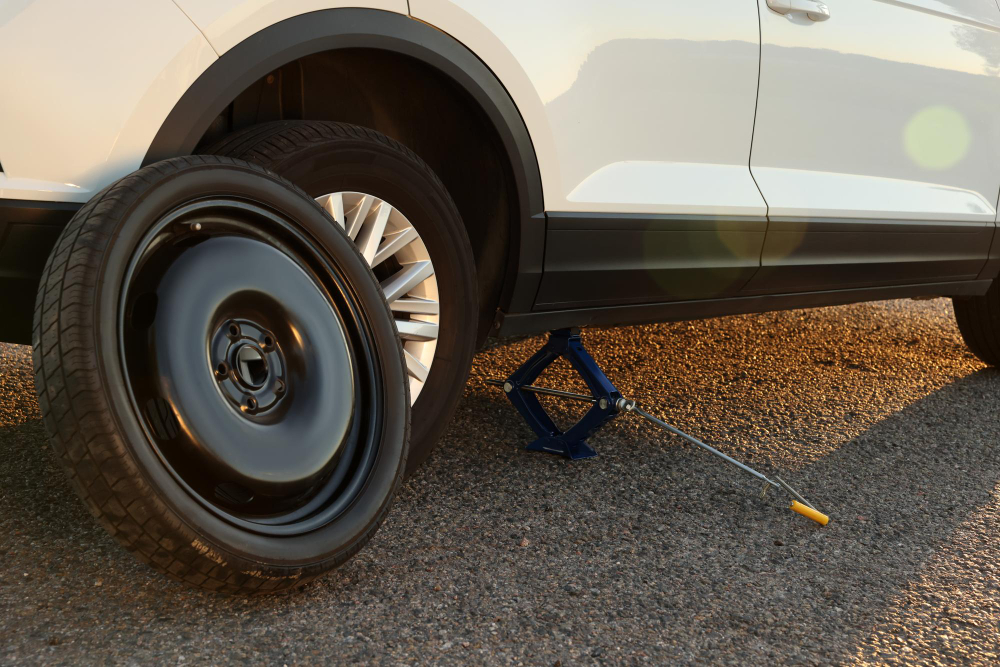
Many cars carry a narrow temporary wheel rather than a full-size spare, usually with a bright coloured rim and a label on it.
It is a genuine wheel and it will get you off the road, which is its whole advantage over a sealant kit. The restrictions are real and are printed on it: a reduced maximum speed, typically around fifty miles an hour, and a limited distance, because the tyre is narrow, has a shallow tread and is not built for sustained use.
A narrow wheel on one corner also changes the car’s handling and affects the electronic systems that compare wheel speeds, which is why driving within the stated limits matters rather than being advisory.
It fits in a smaller well and weighs considerably less than a full-size wheel, which is why it exists. For most people it is the better of the two compromises, because it works regardless of what is wrong with the original tyre.
Run-Flat Tyres Are the Third Approach
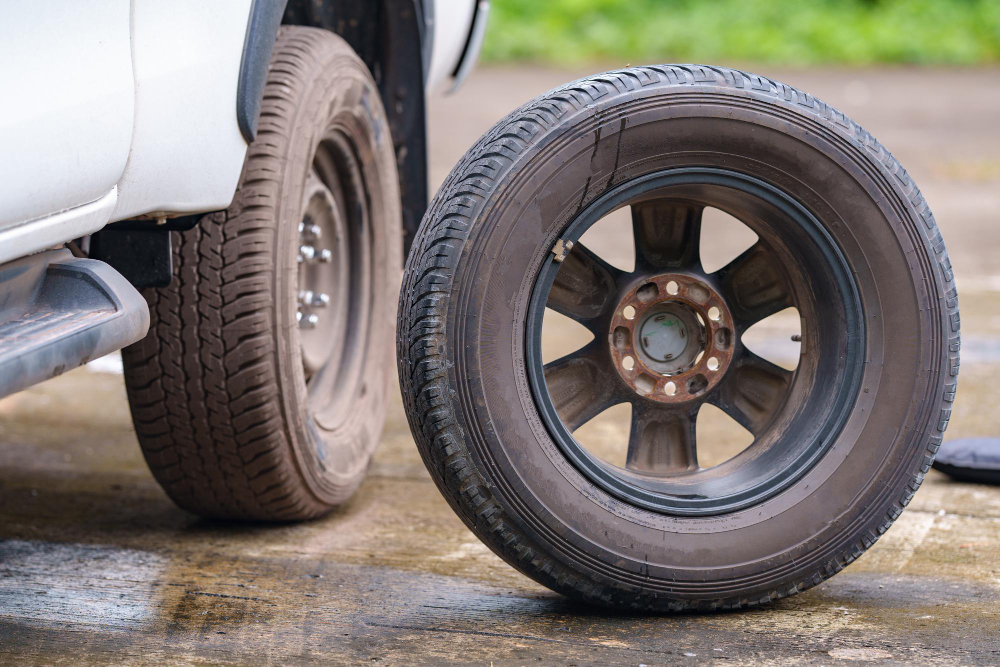
Some cars have no spare because the tyres are designed to be driven on when deflated.
A run-flat has a reinforced sidewall stiff enough to carry the car’s weight without air, for a limited distance at a limited speed – typically a few dozen miles at reduced speed, which is enough to reach a garage.
They work, and they come with costs that owners discover later. They are more expensive to buy and to replace. The stiff sidewall gives a harsher ride. They are frequently not repairable. They must be matched, so a single failure can mean replacing more than one. And they can only be fitted to a car with a tyre pressure monitoring system, because a run-flat does not look or feel flat and a driver would otherwise destroy it without noticing.
Find Out What You Have Before You Need To
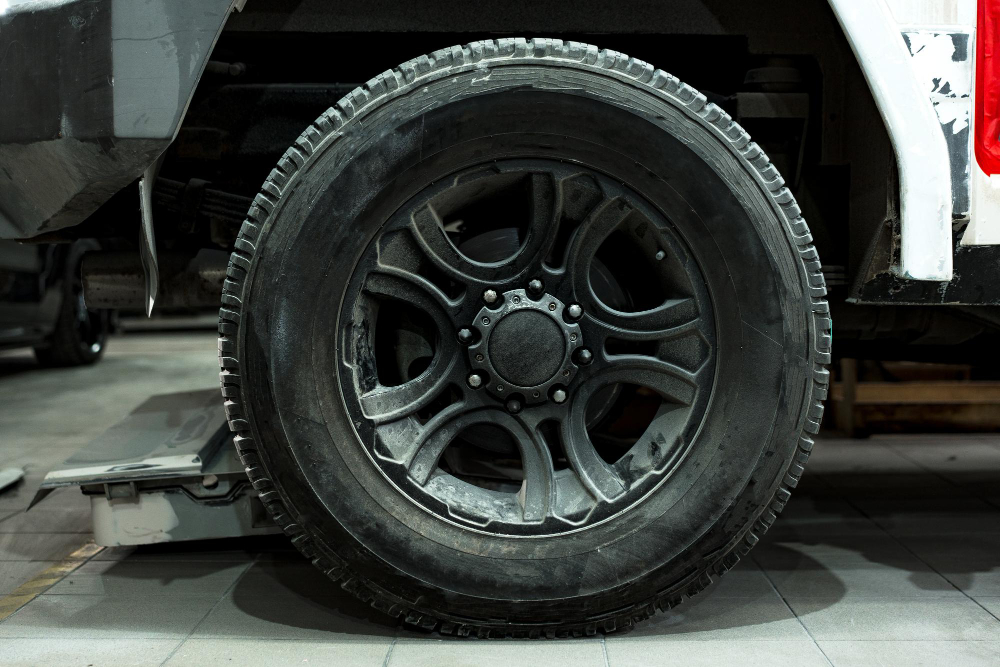
This is the entire practical point of the article and it takes two minutes in the driveway.
Open the boot, lift the floor, and look. Establish whether there is a full-size wheel, a space saver, a sealant kit or nothing.
If there is a wheel, check that the jack, the brace and the locking wheel nut key are all present and that you can find them. A locking wheel nut with no key is the single most common reason a roadside assistance vehicle cannot change a wheel, and the key is frequently in the glovebox, the handbook wallet, or missing since the car was last serviced.
Check the spare’s pressure. A spare that has sat for five years is probably soft, and a soft spare is no use at all. It should be checked when the other tyres are.
If there is a sealant kit, check the expiry date on the canister.
And if there is nothing at all, know that now and decide what you want to do about it – which for a great many people means buying a space saver wheel kit for the model, since they are widely available and fit the well the manufacturer filled in.
The Pressure Monitoring System Is Doing More Than It Looks
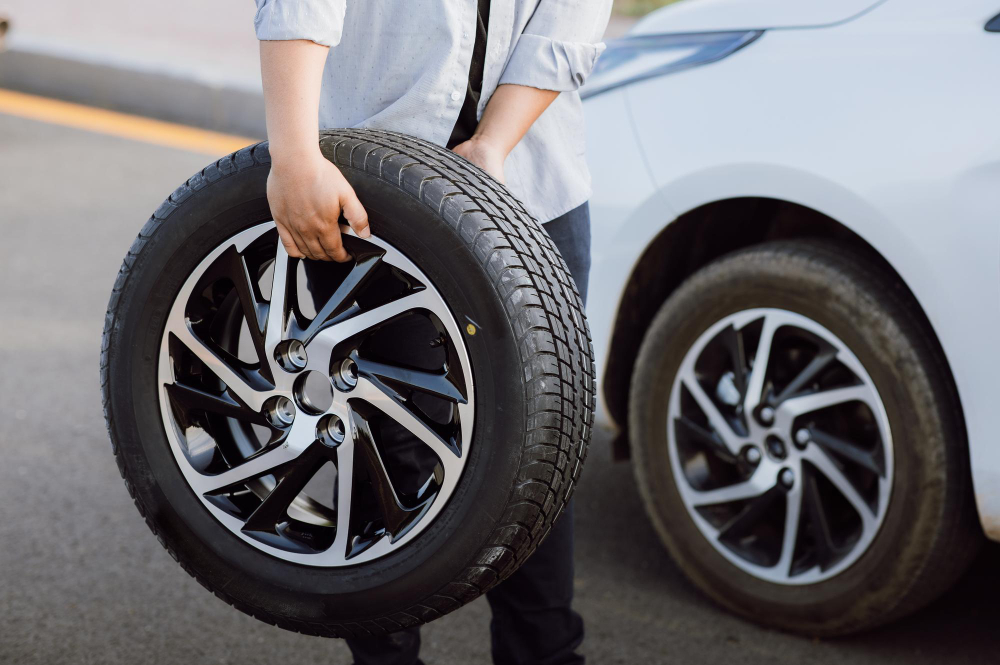
The warning light that comes on when a tyre is soft is now fitted to almost every new car, and it was made mandatory in major markets at roughly the same time spare wheels were being deleted. The two changes are related.
There are two kinds of system. The direct type has a sensor inside each wheel measuring actual pressure and transmitting it, which is accurate and tells you which tyre and by how much. The indirect type infers a soft tyre from wheel speed – a deflating tyre has a smaller rolling radius and therefore turns slightly faster – which needs no sensors, costs nothing, and is less precise.
The indirect type explains two things owners find baffling. It has to be reset after inflating tyres or changing a wheel, because it works from a learned baseline. And it can be confused by a space saver, which genuinely does rotate at a different rate.
The reason any of it matters is that a tyre losing pressure slowly used to be found by somebody noticing, and most people did not notice. An underinflated tyre wears unevenly, handles worse, uses more fuel and is far more likely to fail at speed – and a slow puncture caught by a warning light is a tyre repaired at a garage rather than a sidewall destroyed on a motorway.
Which is the quiet half of the trade. The spare came out, and something went in that reduces how often you need one.
Whether You Can Change One Is a Separate Question
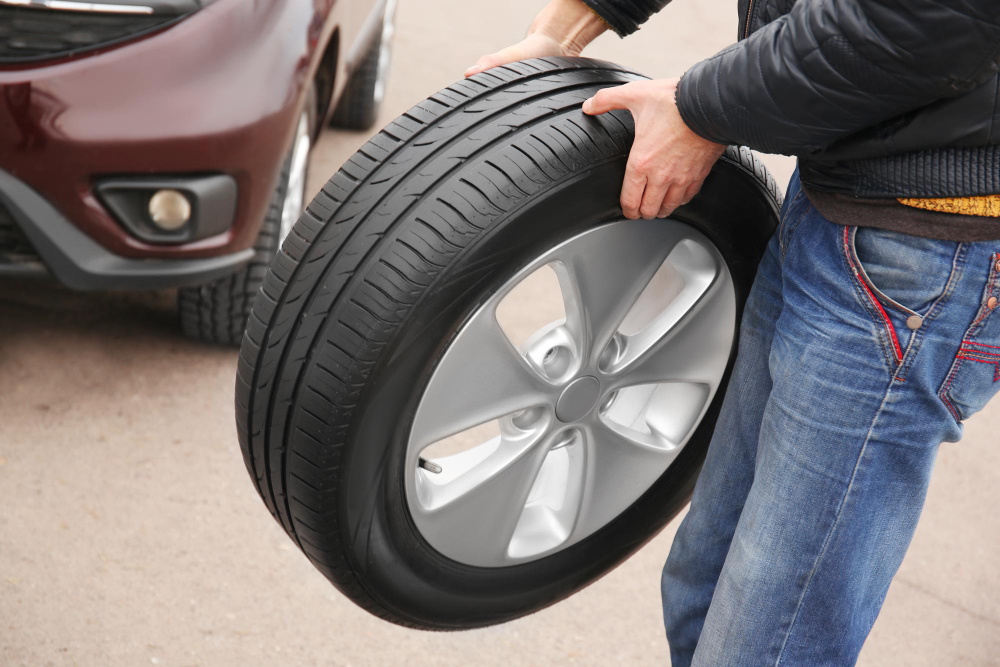
Having a spare is not the same as being able to fit it, and the honest position is that a great many drivers cannot.
Wheel nuts are tightened to a high torque by machine and can be extremely difficult to shift with the supplied brace, particularly if they have corroded. The supplied jack is minimal and has one correct jacking point per corner, which is in the handbook and is not obvious. A car has to be on level firm ground with the handbrake on and ideally a wheel chocked.
And doing any of it at the edge of a fast road is genuinely dangerous. The published advice from roadside assistance organisations and highway authorities is consistent: on a motorway or a fast dual carriageway, do not attempt to change a wheel. Get the vehicle as far left as possible, get the occupants out and behind a barrier where one exists, and call for assistance.
That is not timidity. Being struck while working at the roadside is a recurring cause of death, and a wheel change takes long enough to be exposed for a meaningful period. On a quiet road in daylight with a firm verge it is a reasonable job. On a motorway it is not, whatever is in the boot.
The Quiet Shift Nobody Agreed To
What makes this worth writing about is not the engineering, which is defensible, but the way the change happened.
A feature that every car had carried for a century was removed over about two decades, model by model, without any announcement, because the benefits accrued to numbers the manufacturer is measured on and the cost fell on an event that happens rarely to any individual owner.
That is a rational commercial decision and it is also a transfer. The weight saving is real and continuous; the cost is concentrated and occasional and lands on somebody at the roadside. Spread across a fleet it is probably the right trade. Standing on a hard shoulder with a torn sidewall and a can of sealant, it is not.
Which is why the two minutes with the boot floor up is worth spending. Not because the decision was wrong, but because it was made on your behalf and nobody told you.
Like our content? Follow us for more.
