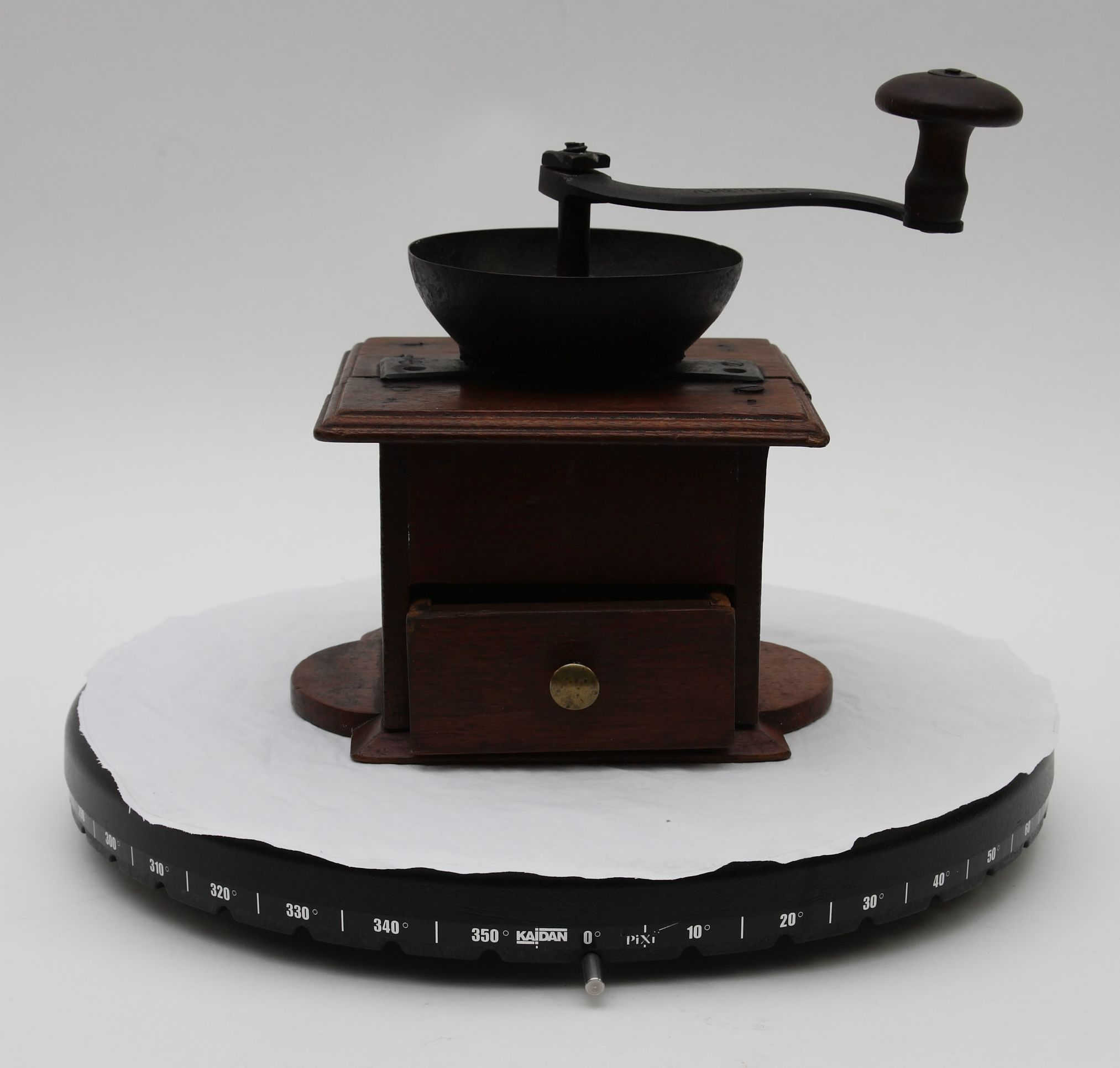
There is a wooden box with a crank on top and a little drawer at the bottom in antique shops all over the country, usually priced as decoration. People buy them for shelves. Most of the ones sold have not ground anything in sixty years.
It is a coffee mill, and the reason every American kitchen had one is not that people were charmingly committed to craft. It is that ground coffee does not keep, and for most of the country’s history there was no way to sell it ground without selling something that had already gone off.
So the grinding happened at the point of use, which meant in the kitchen, by hand, every single morning.
Why a Bean Keeps and a Grind Does Not
The chemistry here is straightforward and it explains the entire object.
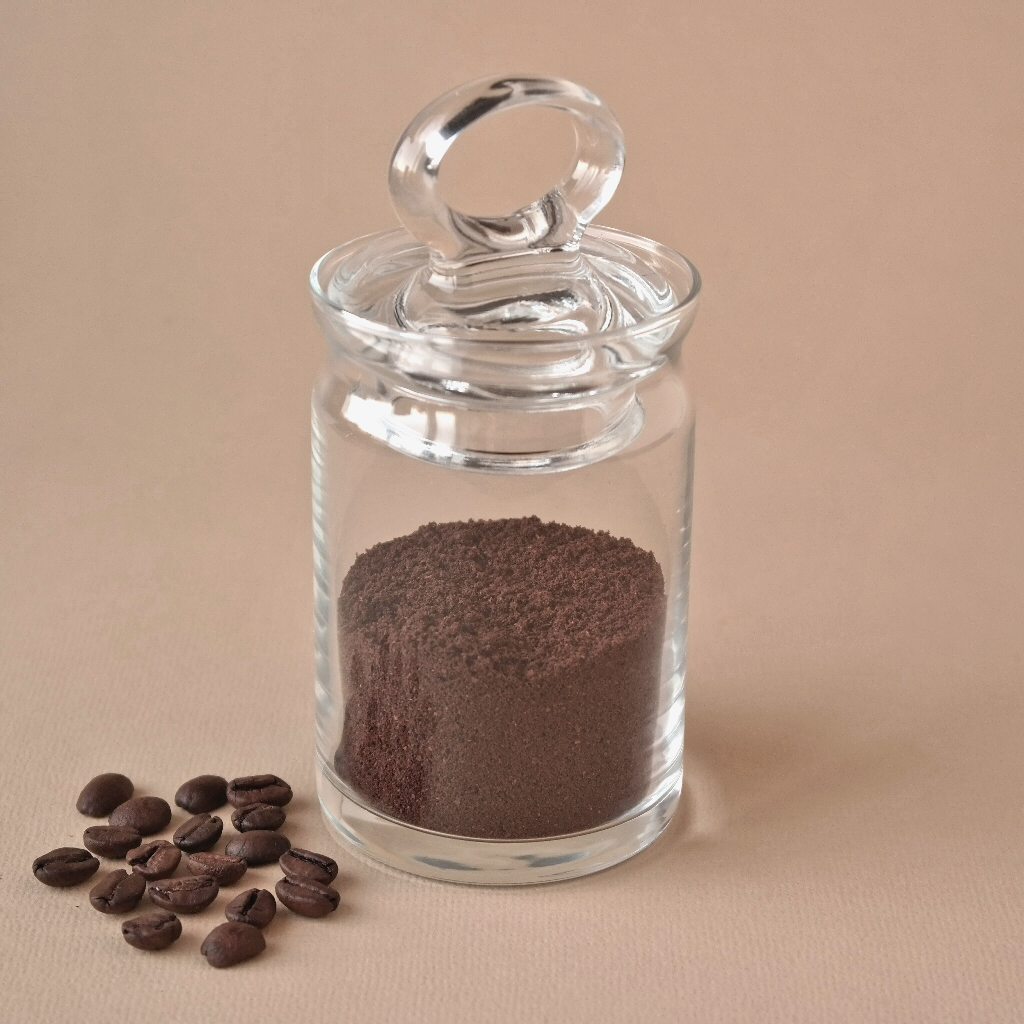
A roasted coffee bean is a sealed package. Its flavour lives in volatile aromatic compounds and in oils, and both are protected by the bean’s own structure – there is very little exposed surface, and what is inside stays inside.
Grinding destroys that protection completely. A bean broken into grounds has its surface area multiplied enormously, and every particle of that new surface is in contact with air. The volatile compounds, which are volatile by definition, start leaving. The oils begin to oxidise. Moisture gets in, and so does whatever else the container smells of.
The result is that whole beans hold their character for weeks or months in a closed tin, and grounds lose the best of it in hours and are noticeably flat within days. This is not a marginal difference that only an enthusiast would detect. It is the difference between coffee that tastes of something and coffee that tastes brown.
Which means that before the technology existed to seal a package properly, selling pre-ground coffee meant selling a product that was already past its best by the time it reached a shelf, let alone a kitchen four miles further on.
Like our content? Follow us for more.
The Mill Was a Burr Grinder, Which Matters
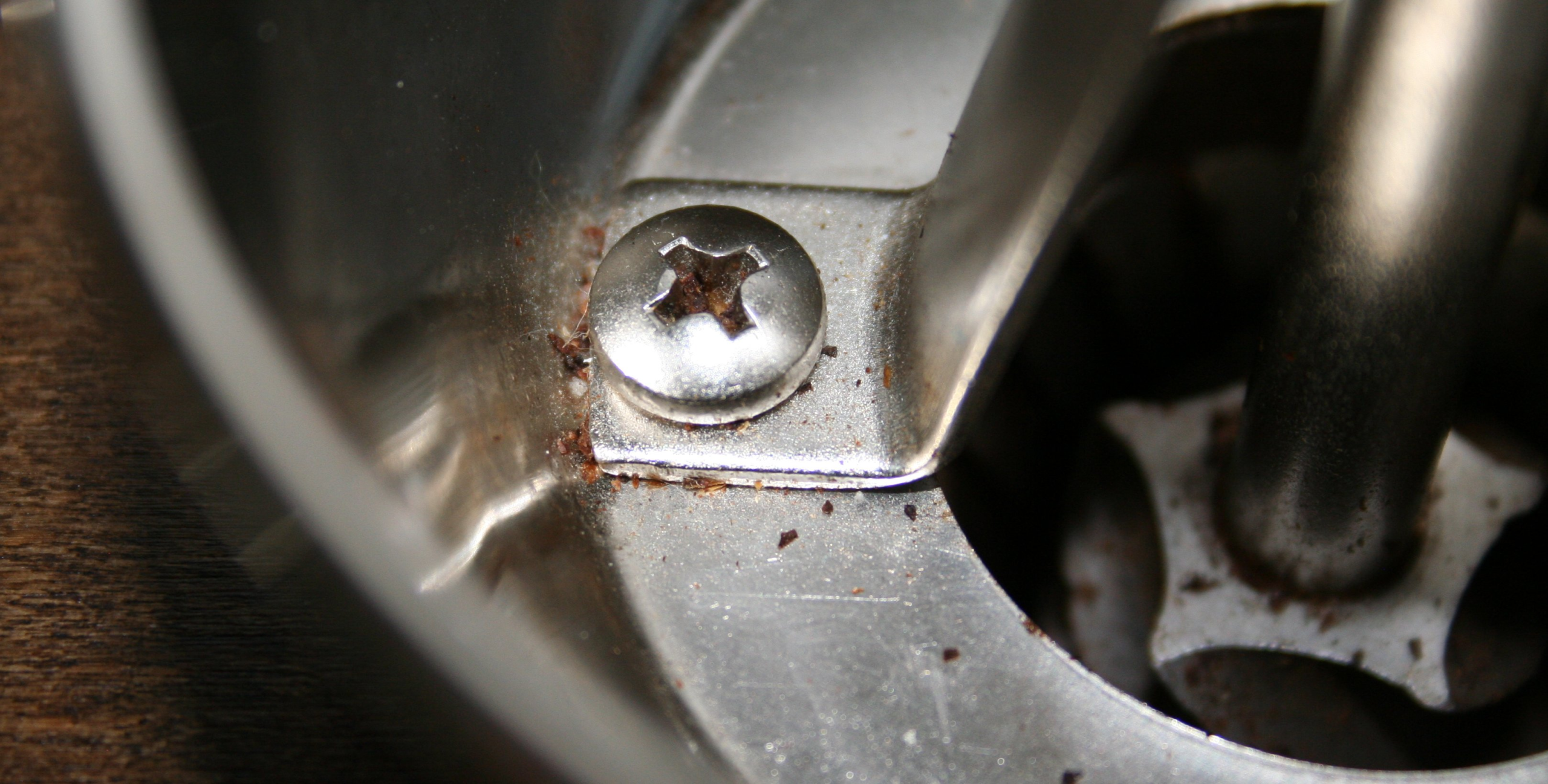
Open one up and the mechanism is simple and rather good.
Inside is a pair of hard surfaces – a cone or a disc with cutting ridges, set against a matching fixed surface – with a gap between them. The crank turns one against the other. Beans fall into the gap, get caught, get cracked and then get progressively reduced as they work their way through, falling out of the bottom when they are small enough to pass.
That is a burr mill, and the important property is that the gap determines the particle size. Everything that comes out has been through the same gap, so the grind is reasonably uniform, and a screw adjustment on most mills let the household set it coarse or fine depending on how the coffee was going to be made.
This is why the old hand mills are not a quaint inferior ancestor of modern equipment. A burr mill is the same principle that good grinders still use today. The cheap electric grinders that replaced them in most American kitchens are a completely different machine – a spinning blade in a chamber, smashing beans into whatever sizes happen to result, which produces dust and boulders in the same batch.
The hand mill on your grandmother’s wall was, mechanically, the better instrument. It was simply slower and it required an arm.
Where It Lived and Who Turned It
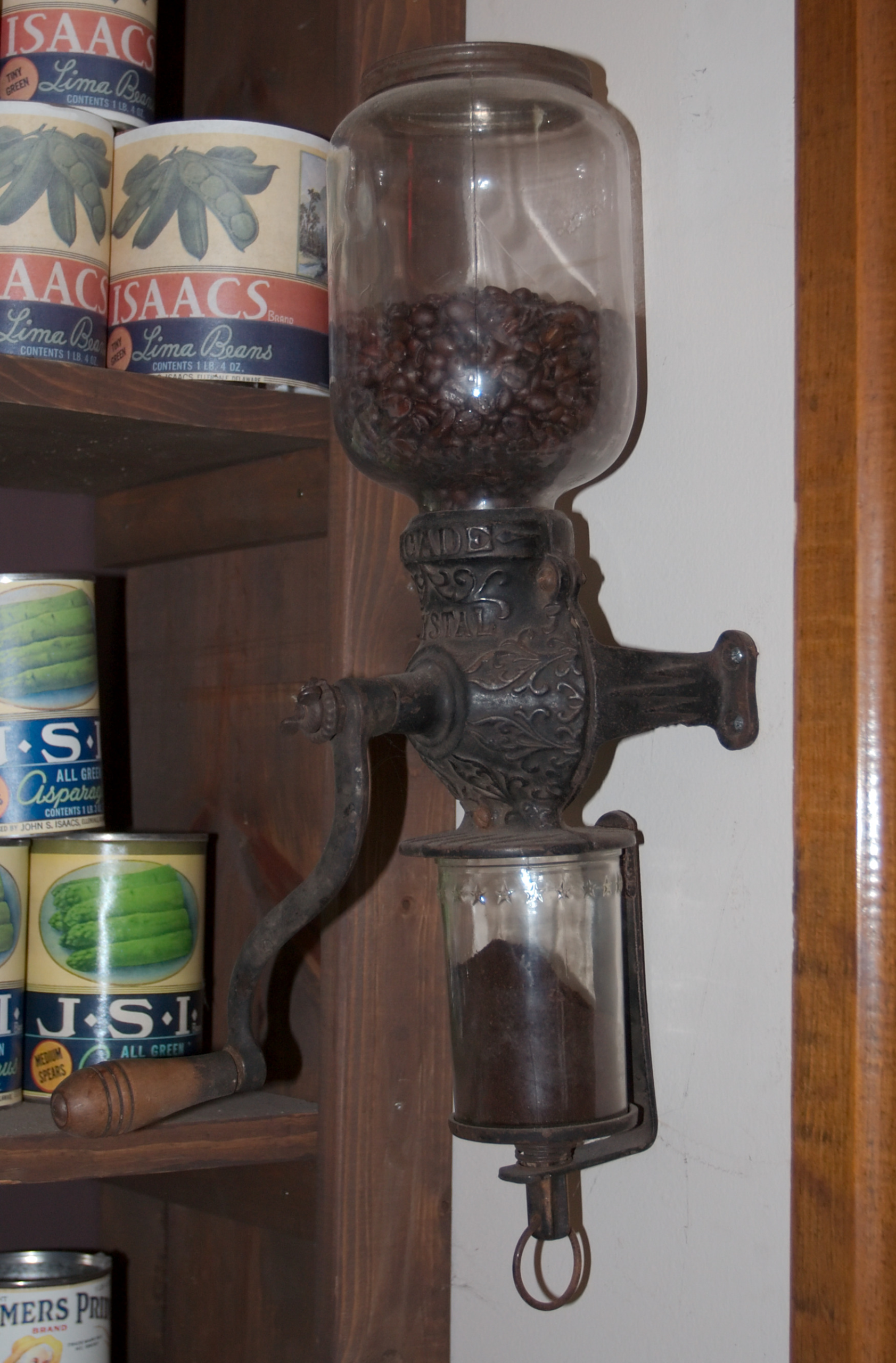
Three forms turn up and each tells you something.
The box mill sat on a table or a shelf – a square wooden case with an iron hopper on top, a crank, and a drawer underneath that caught the grounds. The drawer is the part everybody remembers, because pulling it out and smelling it was the best part of the job.
The wall mill was screwed to the wall or the side of a cupboard, with a glass or iron hopper and a cup underneath. Fixing it to the wall solved the real problem with a hand mill, which is that grinding takes force and an unanchored box slides around the table.
And the lap mill, held between the knees, which is the oldest form and the most awkward, and which is why the other two exist.
The grinding was frequently a child’s job. It takes several minutes, it requires nothing but persistence, and it had to happen before breakfast – which is a combination that in any household with children has exactly one solution.
Green Beans, and Roasting at Home
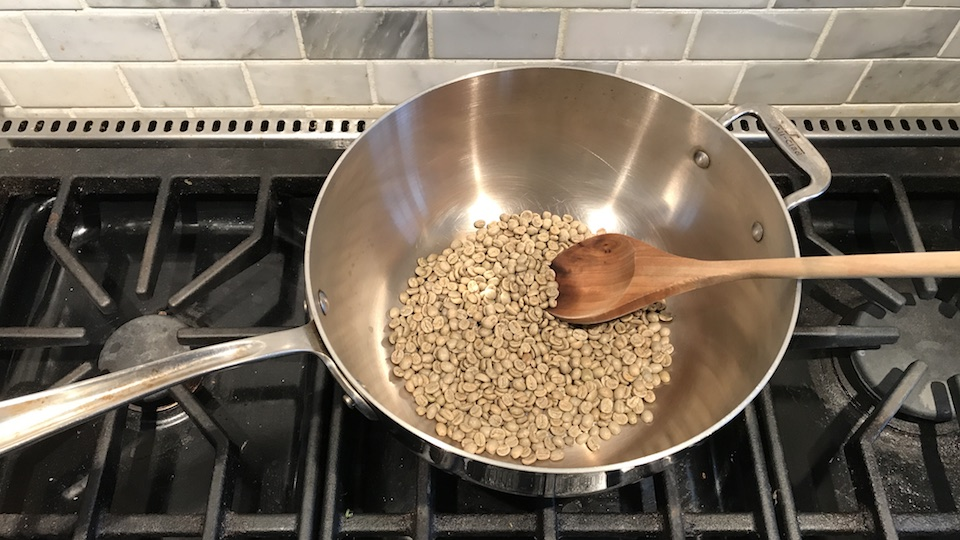
Go back far enough and the household did not just grind. It roasted.
Coffee was sold green – unroasted – because green beans keep for a very long time indeed, far longer than roasted ones. The household bought green coffee and roasted small batches as needed, in a pan on the stove or in a closed drum with a crank, which required constant attention and a good nose, because the window between properly roasted and ruined is not wide.
That practice faded earlier than hand grinding did, because commercial roasting scaled up and roasted beans in a sealed tin keep well enough to ship. But it is worth knowing about, because it means the full original arrangement put two manufacturing steps inside the kitchen, and a household’s coffee tasted like whatever that household was good at.
People had opinions about other people’s coffee for reasons that were entirely real.
The Smell Was the Point for Everybody Else
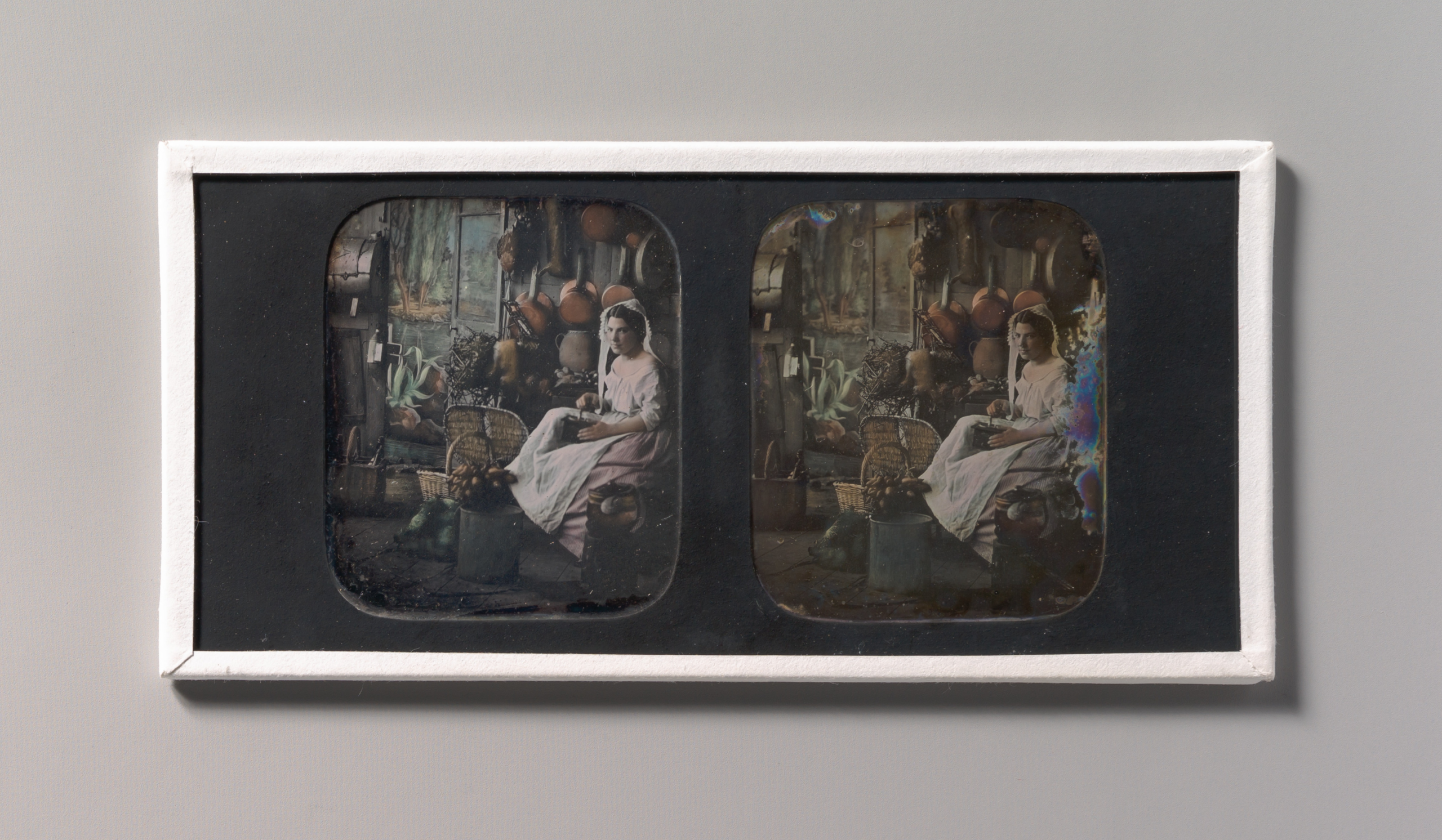
The thing people remember is not the taste. It is that the house smelled of coffee before anybody drank any.
Grinding releases aromatics by definition – that is precisely what is being lost from the grounds – and the loss happens into the room. Which means the whole house got the best part of the coffee as a side effect of someone making it, and that the smell of a morning was tied to a sound, the crank turning, from a particular corner of a particular kitchen.
Both halves of that went at once. Pre-ground coffee in a sealed can removed the grinding, which removed the sound and the smell, and the aromatics that used to fill a kitchen now escape when a factory opens a hopper somewhere else entirely.
That is a genuine loss and it is also completely trivial, which is the usual shape of this kind of thing.
What Actually Killed It: The Can
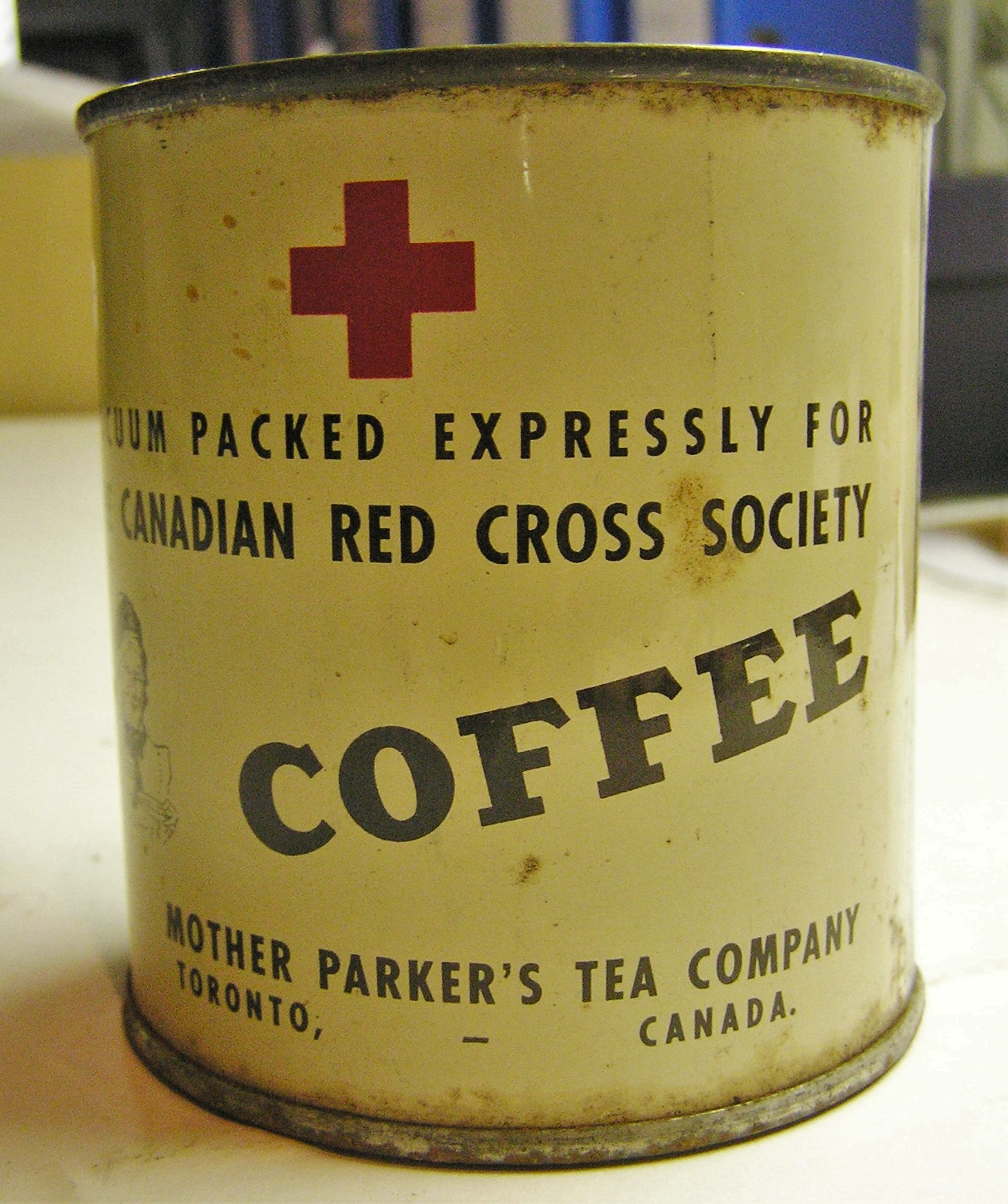
Not electricity. Packaging.
The problem with selling ground coffee was never grinding it at scale – that was easy. It was keeping it fresh between the grinder and the customer, and that is a container problem.
The solution was the sealed metal can, and specifically the vacuum can – a tin with the air pulled out of it before sealing. Remove the air and you remove the oxidation, and ground coffee in a vacuum can keeps for a long time on a shelf. Add the characteristic hiss when the lid came off, which was both a product of the vacuum and an extremely effective advertisement for it, and the case for grinding at home collapses.
Because the household was never grinding for pleasure. It was grinding because there was no alternative. Offer the same product, pre-ground, in a container that actually holds it, requiring no arm and no five minutes before breakfast, and the mill goes in a cupboard inside a year.
The electric grinder arrived later and mostly served the minority who had decided the can was not good enough – which is a small number of people until quite recently.
And Then It Came Back Round
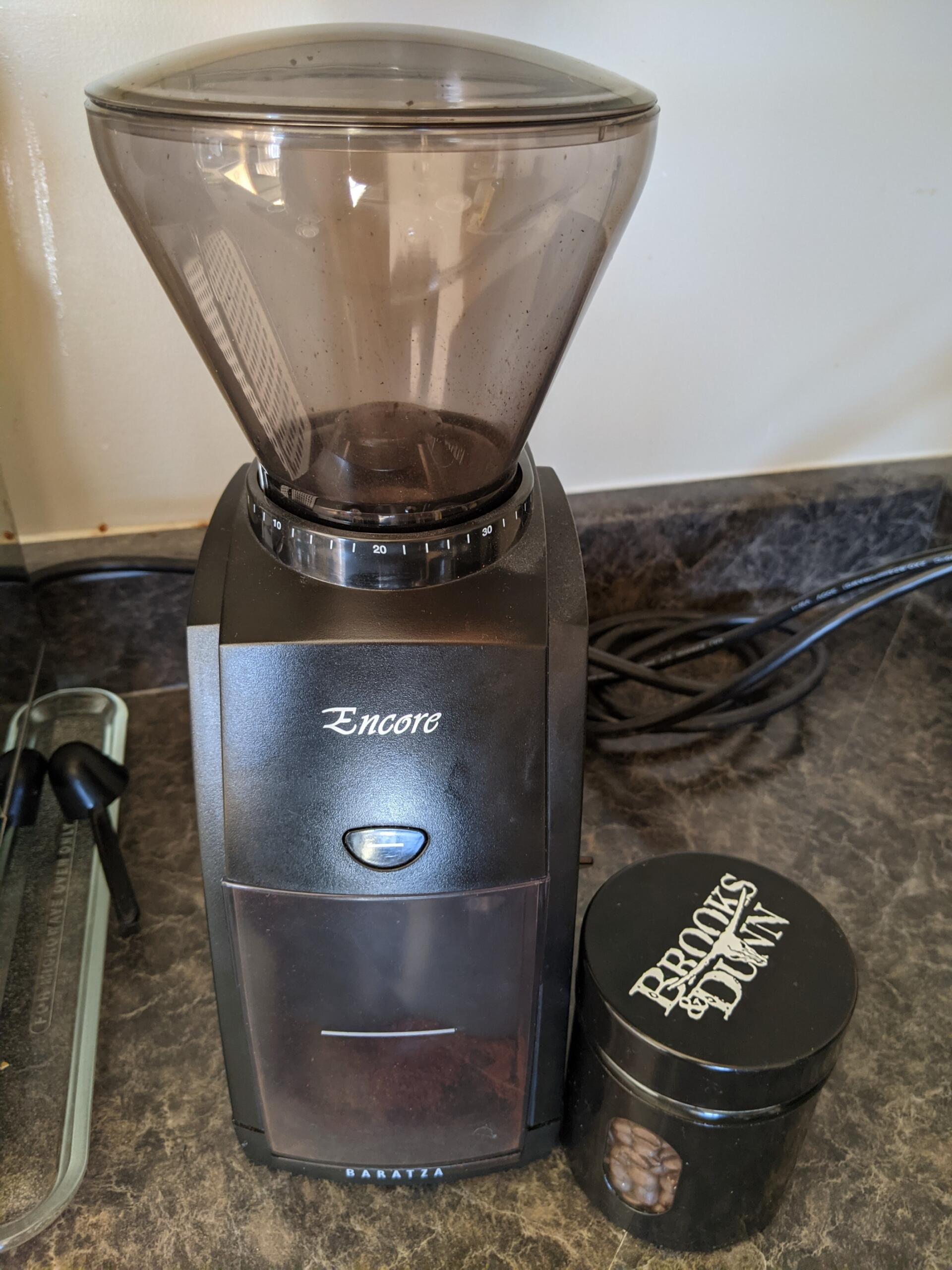
Here is the part that would have amused anybody who ever ground coffee by hand before breakfast.
Whole beans and home grinding are now a premium proposition. People buy burr grinders – the same mechanism, electrified – specifically to get the result that every household in the country used to get because it had no choice. The argument made for it is exactly the chemistry above, which was common knowledge in 1890 and had to be rediscovered as a selling point.
Home roasting has come back too, in small numbers, done with better equipment and considerably more precision than a pan on a wood stove allowed.
So the practice did not die of being wrong. It died of being inconvenient, and it returned the moment somebody was prepared to pay for the inconvenience to be handled by a machine.
The Drawer
If you have one of these on a shelf, open the drawer. There is a good chance it still smells faintly of coffee, decades after the last bean went through, because the wood absorbed the oils and the oils are still in there.
That is the same chemistry that made the whole thing necessary, running in slow motion in a piece of furniture.
The mill was never decorative. It was the last manufacturing step in a supply chain, performed in a kitchen, by whoever was up first – and it existed for one reason only, which is that nobody had yet worked out how to put air-free coffee in a box.
Like our content? Follow us for more.