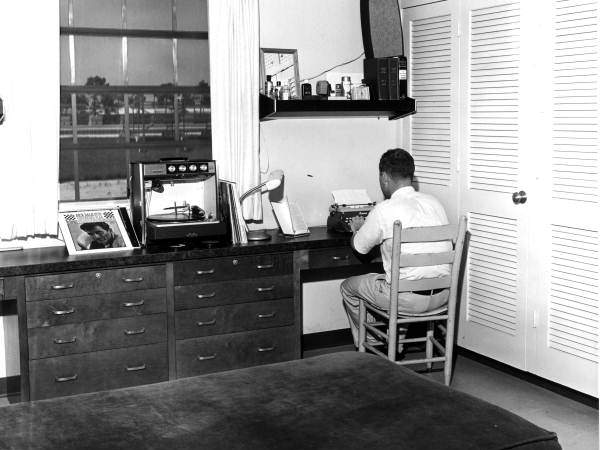
A millwright did not grind anything. He built and maintained the machine that did, and the distinction mattered enough that the two trades had separate names, separate skills and frequently a difficult working relationship. The miller ran the mill; the millwright was sent for when it stopped.
What made the trade unusual is that one man had to be competent in two materials at once. A mill is a timber structure carrying iron machinery, and a millwright worked wood like a carpenter and metal like a fitter, and had to understand how the two behaved differently as loads and seasons changed.
In 1960 a small number of men were still doing this on working water and wind mills, and on the line-shafted machinery of older factories, which is the same trade applied to a different building. The continuity is real rather than sentimental: a line-shafted factory and a water mill are the same machine problem at different scales, and the men who understood one could read the other on sight.
The gear teeth were made of wood on purpose
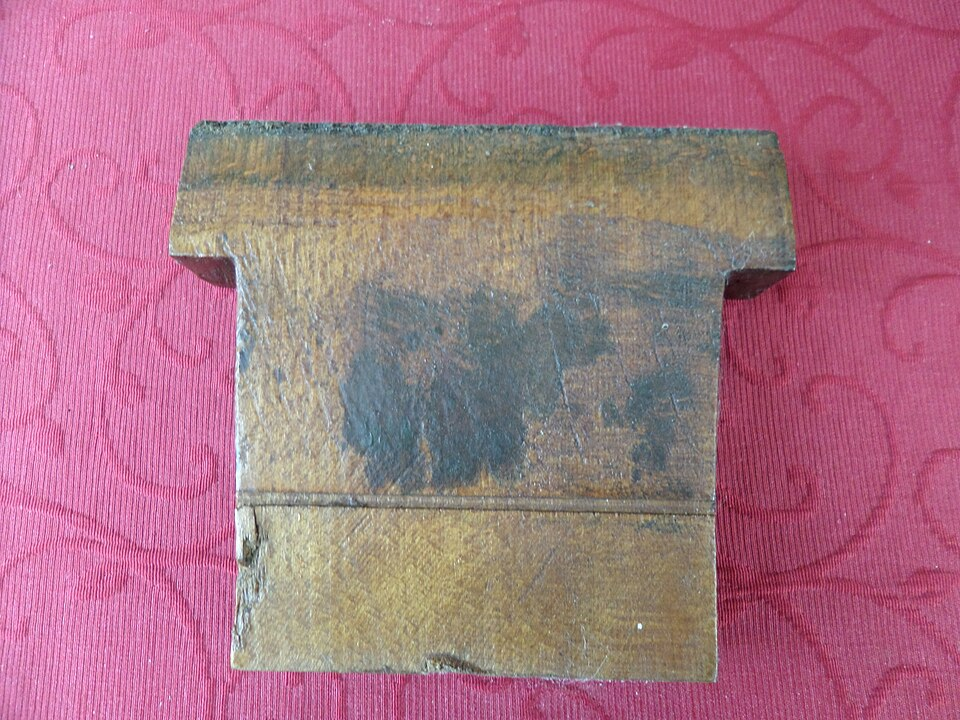
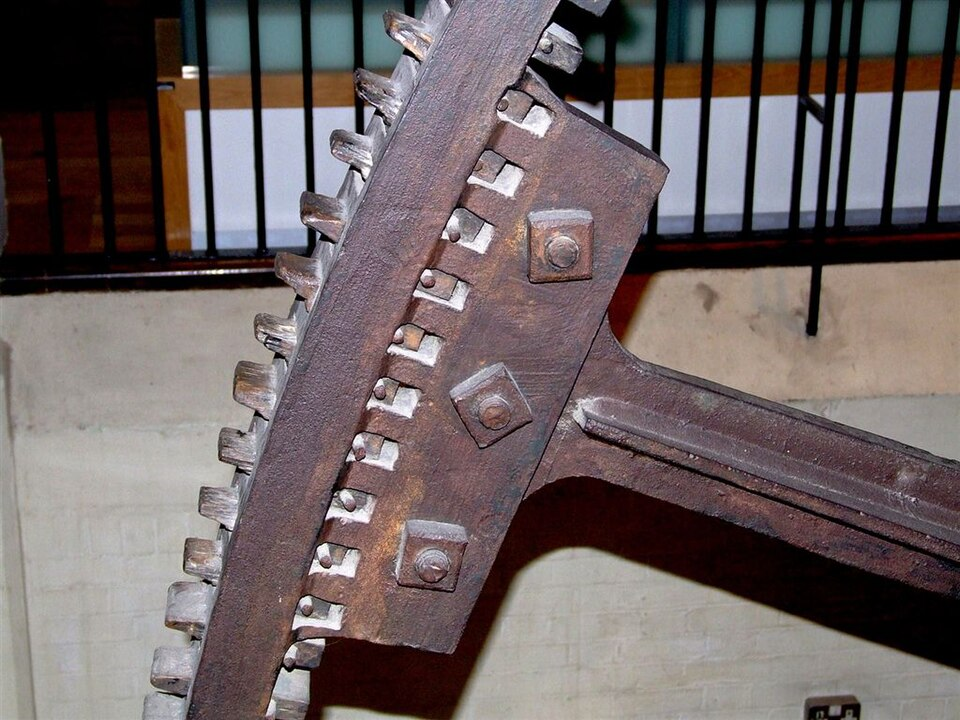
The large gears in a traditional mill have wooden teeth, called cogs, set into an iron or wooden wheel, and that is an engineering decision rather than a survival from an earlier age.
A wooden cog running against an iron gear is quiet, tolerates dust and misalignment, needs no lubrication worth the name, and wears in rather than seizing. Critically, when something jams, the cog breaks and the gear does not.
So the cogs are a deliberate weak point, a sacrificial component chosen to fail first and cheaply, and replacing them was routine work. A millwright kept seasoned blanks of apple, hornbeam or beech and could drive out a broken cog and fit a new one without stripping the wheel.
That principle is now called a mechanical fuse and is designed into modern machinery as a shear pin or a torque limiter. The mills had it two centuries earlier in a form a man could whittle. The choice of timber mattered as much as the shape. Apple and hornbeam were preferred because they are dense, close-grained and wear smooth rather than splintering, and a cog of the wrong wood would last a season instead of a decade.
Like our content? Follow us for more.
Why American millwrighting became its own tradition
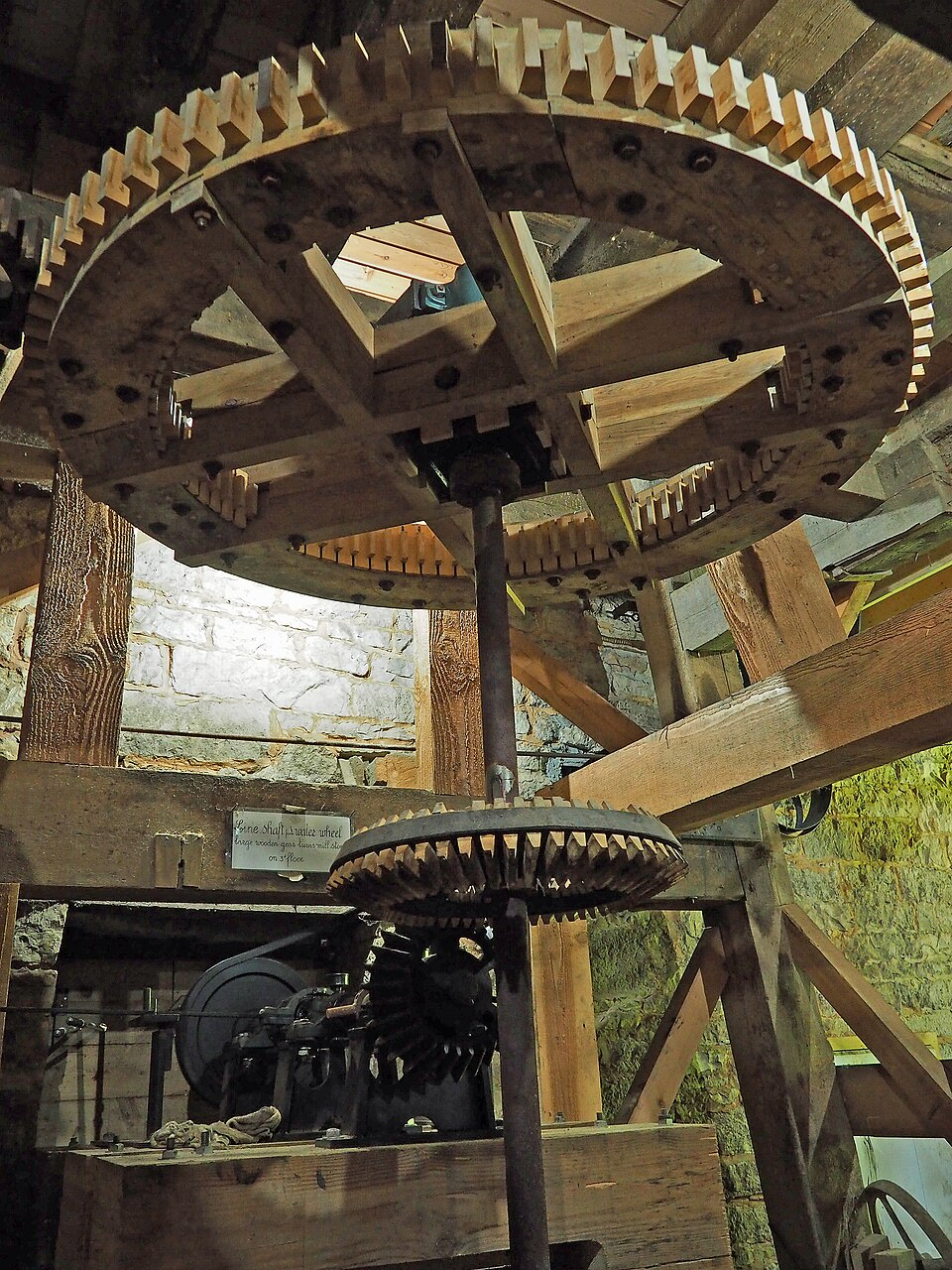
America had an enormous number of small water-powered mills, built fast, across a continent, by people who could not send for a specialist, and the result was a body of practical millwrighting knowledge that circulated in print far earlier and more widely than in Europe.
That produced standardisation. American mills converged on repeatable layouts and components, and the millwright’s trade shifted sooner from one-off construction towards fitting and assembling parts that could be ordered.
It also produced an early move to iron. American mills adopted iron gearing, iron shafts and eventually the turbine ahead of much of Europe, which changed the millwright’s work from timber engineering to machine fitting.
By 1960 the word millwright in American industry meant something broader: the man who installs, aligns and maintains heavy machinery of any kind. The mill had gone out of the job title while the skills stayed in it. That is a rare outcome for a trade name. Most of them either vanish or stay attached to the original object; millwright is one of the few that kept the word and changed the work entirely.
Setting a shaft was done with string, light and feel
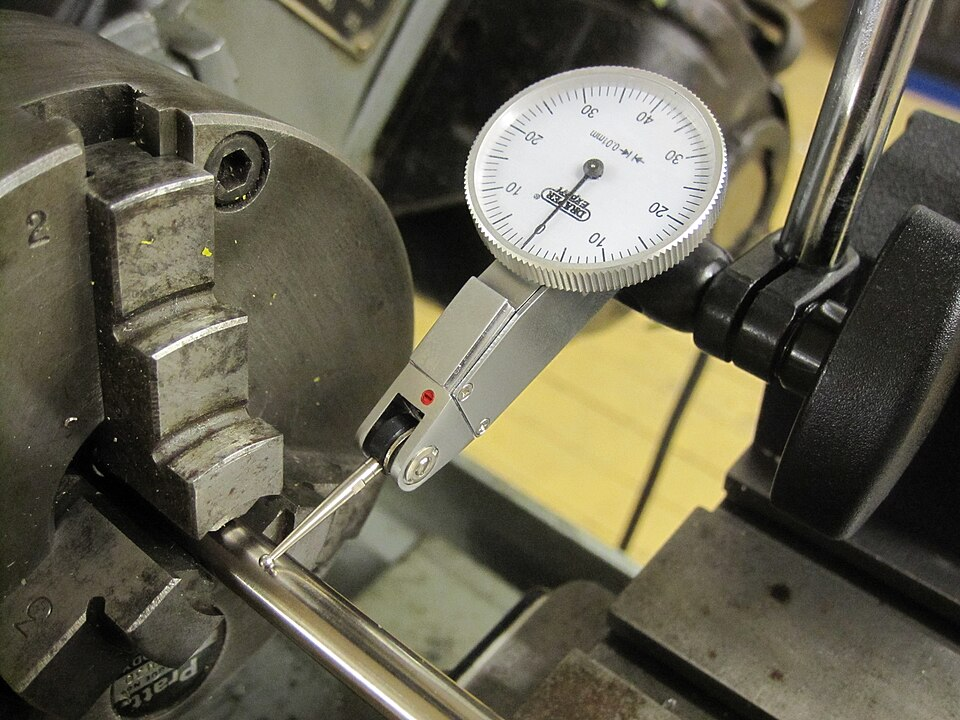
Everything in a mill hangs off the alignment of its shafts, and a shaft out of true will destroy bearings, throw belts and shake a timber building apart.
Alignment was established with a taut line, a plumb bob, straight edges, and the practice of turning a shaft slowly by hand while watching and listening to it. A millwright could hear a bearing running warm before he could feel it.
There was no dial gauge on most jobs and certainly no laser. The tolerance achieved was nevertheless good, because the test was whether the machine ran quietly, and quietness is an extremely sensitive instrument.
Modern alignment uses dial indicators and laser systems that state a number, which is faster, repeatable and teachable. What has gone is the man who could stand in a building and tell you which bearing was about to give. Modern condition monitoring does exactly that job with vibration sensors and trend data, and does it better, which is the honest comparison rather than a lament.
The bearings were poured in place
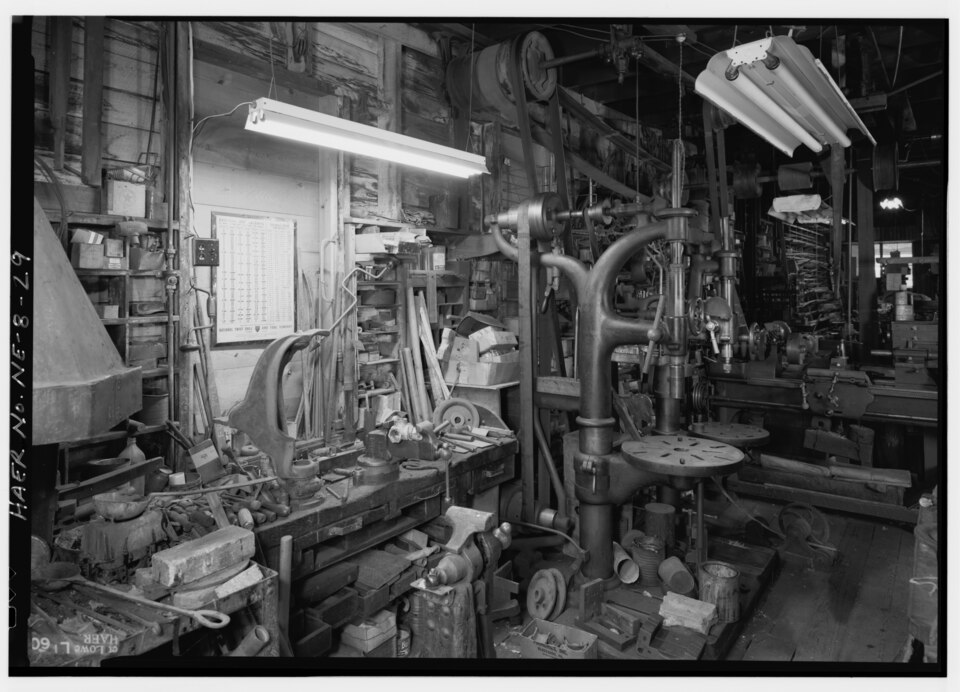
Plain bearings in this period were frequently white metal, poured molten into a housing around the shaft itself so that the bearing formed to the exact shaft it would carry.
That is a remarkable idea: rather than machining a bearing to fit a shaft, you cast the bearing against the shaft and let the shaft define it. A worn bearing was melted out and poured again.
It also means the bearing is a consumable and the shaft is not, which is the right way round economically, and the skill lay in the preparation and the scraping afterwards rather than in the pour.
Sealed rolling-element bearings replaced the whole practice, bringing longer life, no fitting skill and no capacity for in-place renewal. A modern bearing is exchanged; a poured bearing was made. It is worth noticing which way the economics ran. A poured bearing cost almost nothing in material and a great deal in skilled time, and a modern one is the reverse, which is the shape of almost every change in this series.
Timber was treated as a structural material with moods
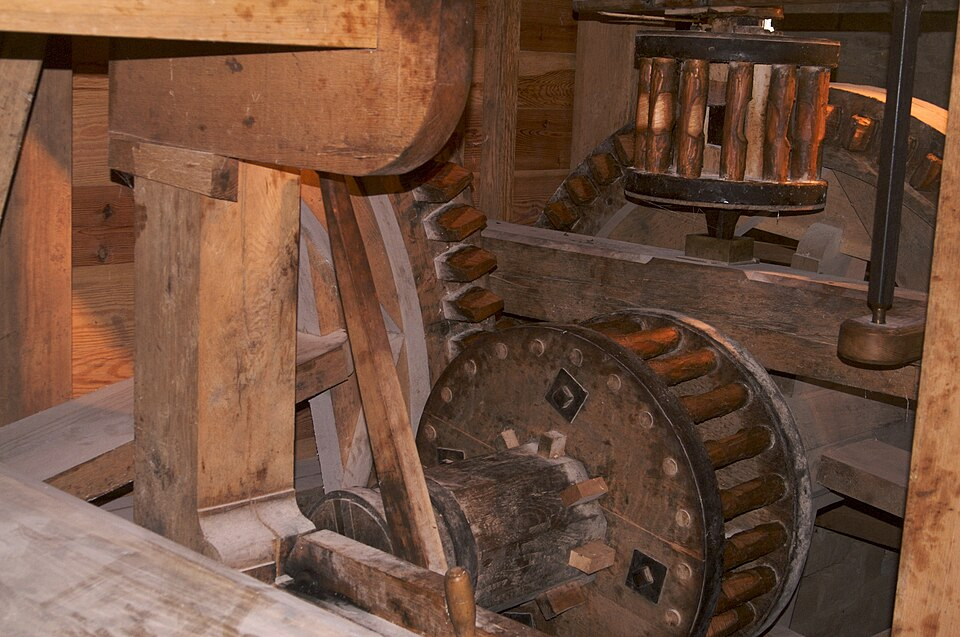
A mill’s frame moves. Timber shrinks across the grain as it dries, swells in wet weather, creeps under sustained load and shifts with the seasons, and all the machinery bolted to it moves with it.
A millwright therefore expected to re-align things periodically and designed joints and fixings that could be adjusted rather than ones that assumed permanence. Wedges, keys, folding wedges and adjustable bearing housings are everywhere in a mill for this reason.
He also read the timber. A beam checked along its length was usually fine; one checked across the grain at a bearing point was not, and knowing which was which is the difference between a repair and a replacement.
Steel and concrete removed the problem and the judgement with it. A modern machine base does not move seasonally and nobody has to anticipate that it will.
The water wheel was a tuning problem, not just a wheel
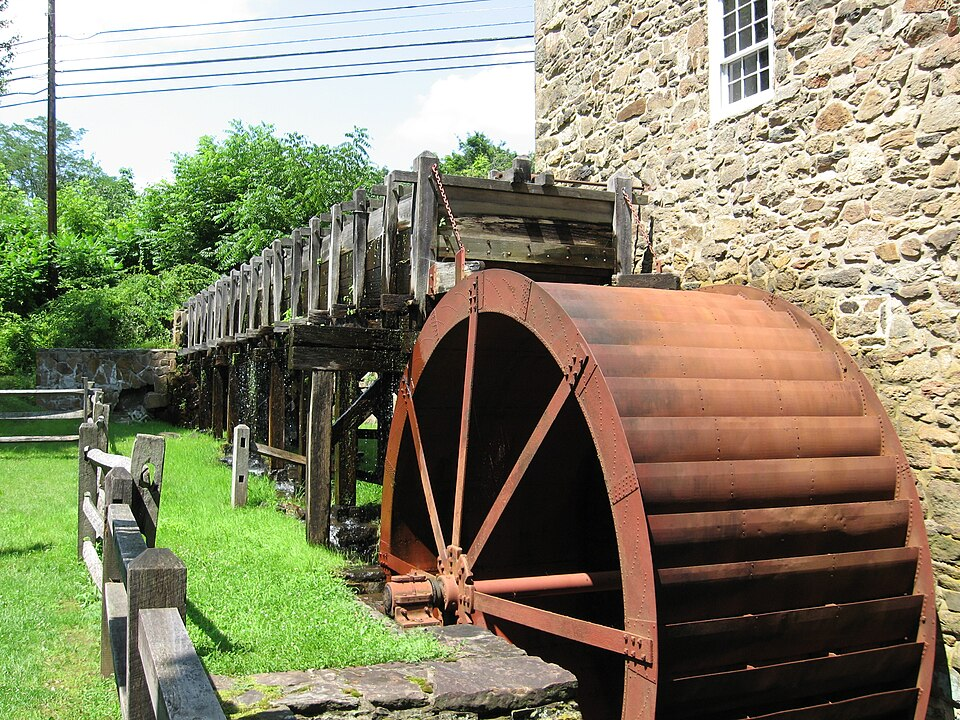
A water wheel is matched to its site: the available head, the available flow, the load it has to drive and the speed the machinery wants. Change any of those and the wheel is wrong.
A millwright adjusted by altering the number and shape of the buckets or paddles, the depth of the shrouding, the sluice arrangements and the gearing between the wheel and the machinery, working towards the combination that got the most work out of the water.
He did that empirically. The hydraulic theory existed and was not generally used in a mill; what was used was a succession of informed changes and careful observation of what happened.
Turbines, and later electric drive, replaced the wheel with something whose performance is calculated in advance and stated on a plate. The site became a number rather than a problem to be felt out.
Line shafting was the factory’s nervous system
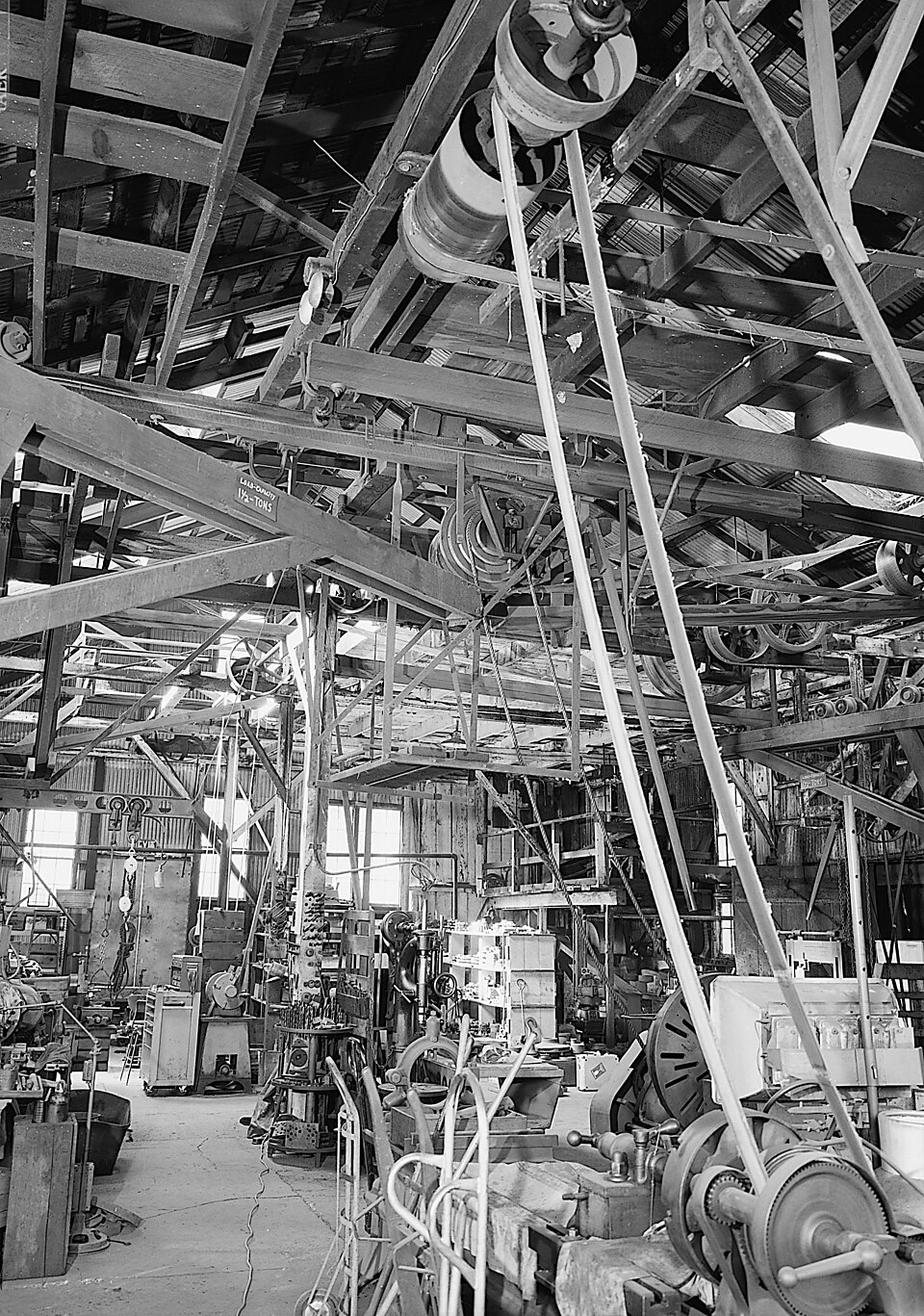
An older factory in 1960 might still be driven by line shafting: one prime mover turning long shafts along the ceiling, with belts dropping to individual machines through pulleys and clutches.
That is the mill principle applied to manufacturing, and the millwright maintained it — hanging shafts, aligning bearings, lacing belts and working out what could be driven from where without overloading a shaft.
It was also a system in which the whole shop stopped when one bearing failed, and in which guarding was minimal because the moving parts were the building’s own structure.
Individual electric motors on each machine ended line shafting entirely through the middle of the century, which is why so few people now have any idea what the pulleys in an old factory ceiling were for. It also removed the single most dangerous feature of an industrial building.
What the trade became
It split. The traditional branch survives as a conservation specialism, with a small number of millwrights maintaining working water and wind mills, now supported by formal guidance, documented practice and a body of recorded knowledge that did not exist in 1960.
The industrial branch became the modern millwright of heavy industry: machinery installation, alignment, precision fitting and maintenance, a well-paid, formally qualified trade that has nothing to do with grinding anything.
Both branches kept the thing that defined the original: a millwright is the person who makes a machine run true, and who is judged on whether it runs quietly afterwards.
The honest summary: a millwright built and maintained the machine rather than operating it, working timber like a carpenter and iron like a fitter and understanding how differently the two behave; the large gears carried wooden cogs chosen deliberately as a sacrificial component that breaks before the gear does, which is the mechanical fuse principle two centuries before the shear pin; alignment was established with a taut line, a plumb bob and the sound of a shaft turned by hand, because quietness is an extremely sensitive instrument; plain bearings were white metal poured molten around the shaft so the bearing formed to the shaft that would carry it; a timber mill frame moves seasonally, so fixings were made adjustable with wedges and keys rather than assumed permanent; and the American trade standardised early, moved to iron sooner and had by 1960 become the installation and alignment of heavy machinery of any kind.
Like our content? Follow us for more.