

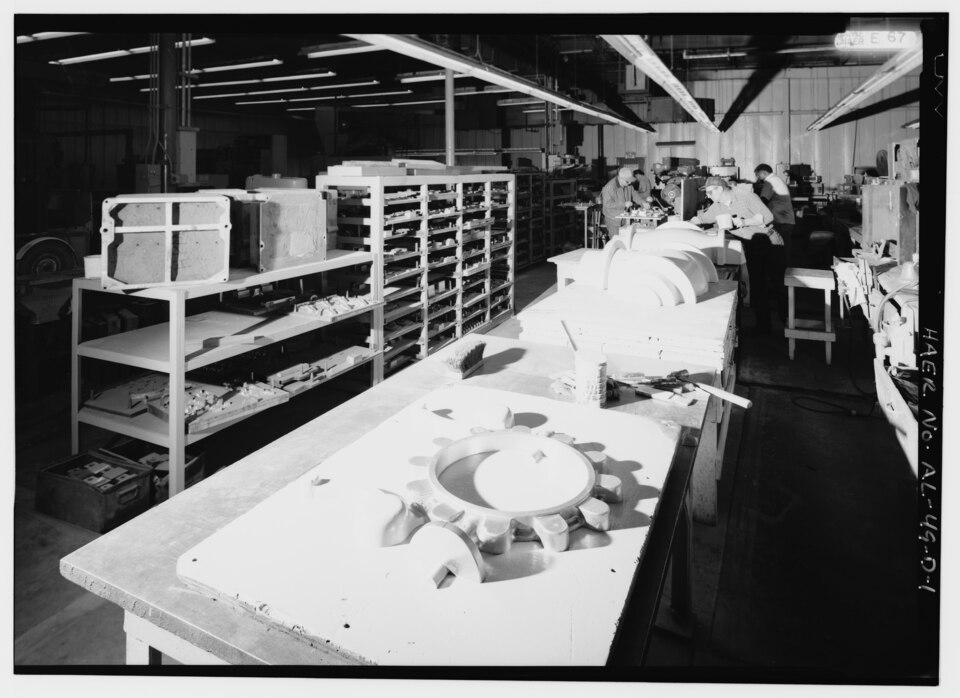
A pattern maker in 1960 built a wooden model of an object that would never exist at the size he made it. Metal contracts as it cools, so a pattern has to be made deliberately too large by an amount that depends on the metal, and the finished casting shrinks down onto the dimension the drawing asked for.
He did not calculate that each time. He worked with a shrink rule, a measuring rule on which every division is slightly longer than it should be, so that a pattern measured as twelve inches on a cast-iron shrink rule is physically longer than twelve inches. The allowance is built into the instrument and the pattern maker reads a normal drawing with an abnormal ruler.
There was a different rule for each metal, because each contracts by a different amount, and picking up the wrong one ruined a week’s work in a way nobody noticed until the castings came out. Shops kept the rules separate and marked for exactly that reason, and a pattern maker’s own rules were personal property he did not lend.
The pattern has to be able to leave the sand
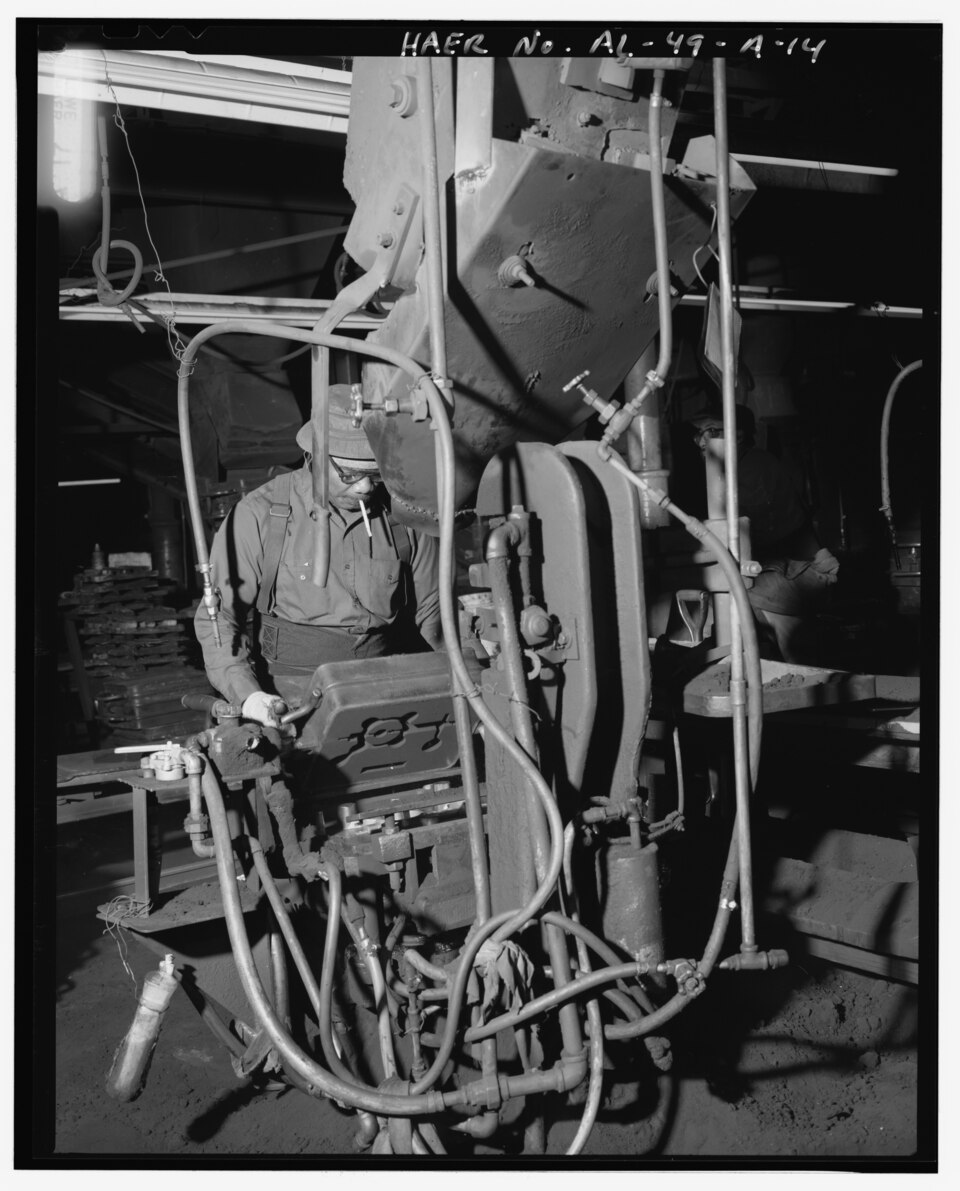
A moulder buries the pattern, packs material around it and then has to get the pattern out again without damaging the cavity it has made. Everything about a pattern’s shape follows from that.
So every vertical face is tapered very slightly in the direction of withdrawal, which is called draft, and a face without draft will drag and tear the mould as the pattern comes away. A pattern maker put draft on surfaces the drawing showed as parallel, because the drawing described the finished part and he was making the thing that formed it.
He also chose where the pattern would split: the parting line, the plane along which the mould separates. That decision determines whether the shape can be withdrawn at all, and getting it wrong means a pattern that cannot be used.
That whole body of judgement is now embedded in software, which checks draft and parting lines against the geometry automatically. The constraints are identical and nobody has to hold them in their head. What the software cannot do is decide where a parting line should go on an awkward shape, which remains a judgement about how the thing will actually be made.
Like our content? Follow us for more.
Internal spaces needed their own patterns
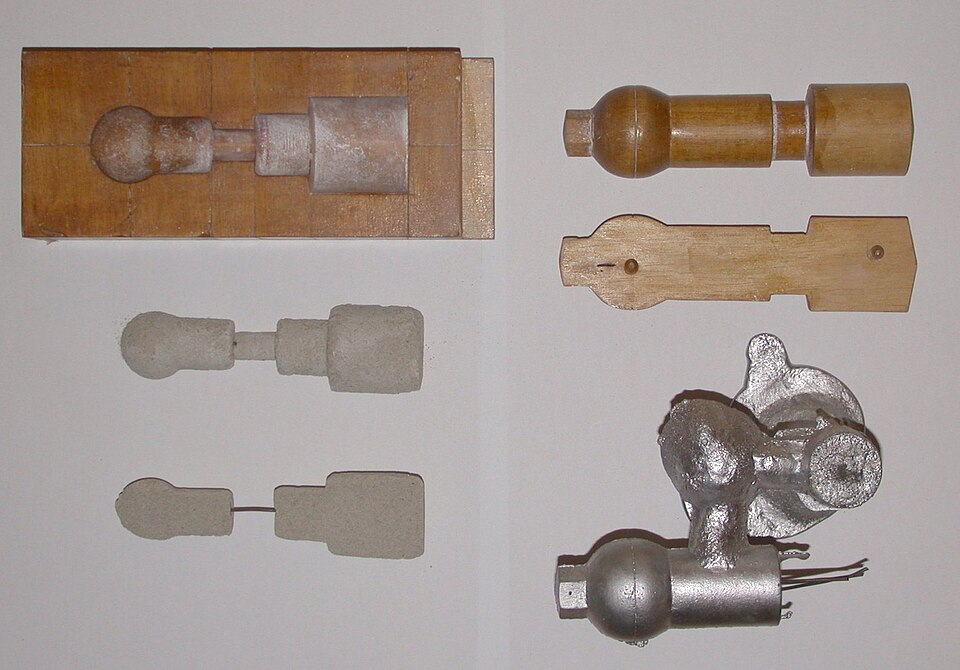
A casting with a hollow inside it — a pipe, a cylinder, a valve body — cannot be formed by a solid pattern, because the inside is where the metal must not go.
The answer is a core: a separate shaped piece placed into the mould to occupy the space the metal must avoid. Cores are made in core boxes, which are themselves patterns, made in halves, and the pattern maker made those too.
He also had to provide somewhere for the core to sit and be located accurately, which means adding features to the pattern that appear nowhere on the finished part and exist only to hold a core in place.
So a single hollow component might require a pattern, two core box halves and a set of locating features, and all of it had to agree with everything else to within the accuracy the casting demanded. This is the part of the trade that takes longest to learn. It is also where the errors are most expensive, because a core that will not locate correctly produces castings whose walls are thick on one side and thin on the other, and nobody finds out until one is machined.
Why American pattern shops industrialised early
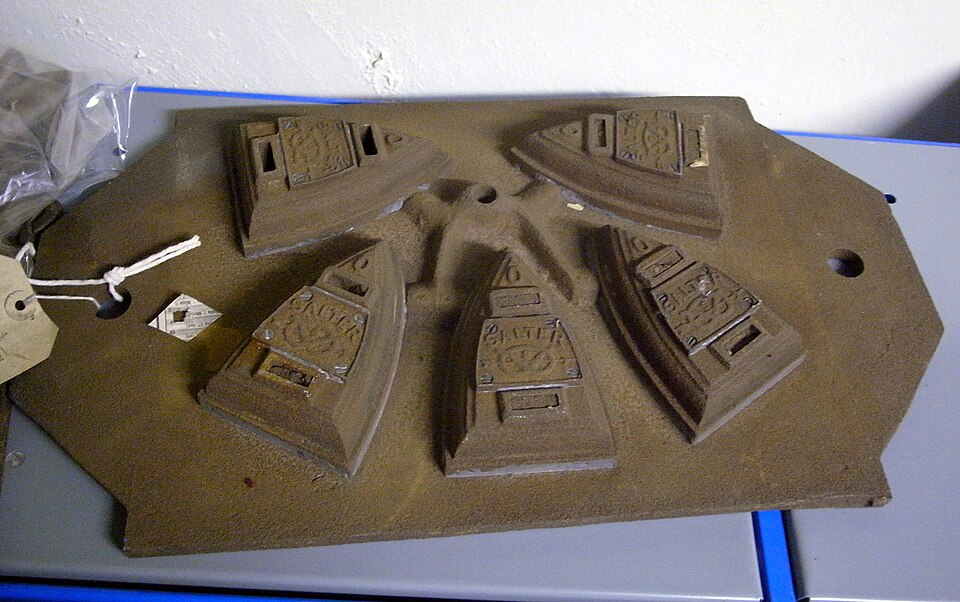
American foundry practice ran at higher volumes earlier, which changed what a pattern had to be. A pattern used a handful of times can be wood; a pattern used thousands of times has to be metal, and the American trade moved to metal patterns and to pattern plates sooner and more completely.
That shifted the work. Making a metal pattern means first making a wooden master, casting from it, then machining and fitting the metal result, which is a longer chain with more opportunities to accumulate error.
American shops also mounted several patterns together on a single plate so a moulder could make many castings in one operation, and laying out such a plate is an engineering exercise in its own right about how the metal will flow and where it will shrink.
By 1960 the American pattern shop was a precision engineering department attached to a foundry rather than a woodworking shop beside one, which is a different trade with the same name.
Timber was selected and built up, not simply cut
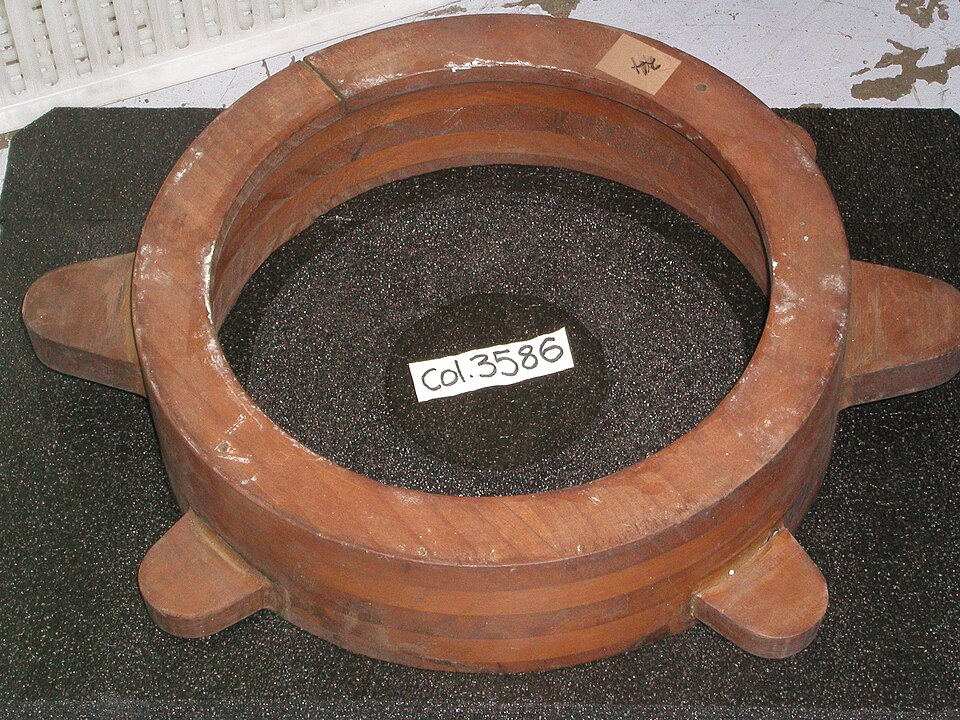
Pattern timber has to be stable above everything else. A pattern that moves between being made and being used is worthless, and it may sit in a store for years between runs.
So patterns were built up from laminations with the grain alternated, in well-seasoned stock, with the whole assembly designed so that seasonal movement cancels rather than accumulates. Mahogany and yellow pine were favoured for stability rather than for strength or appearance.
The surfaces were then filled, sealed and finished smooth, because a rough pattern makes a rough mould and every imperfection reproduces in metal.
Stable engineered materials, resin boards and additive manufacturing have replaced much of that, and the specific knowledge of how a given timber moves has become less critical. It has not become irrelevant, because wooden patterns are still made for low volumes and for repairs.
Patterns were numbered, stored and treated as assets
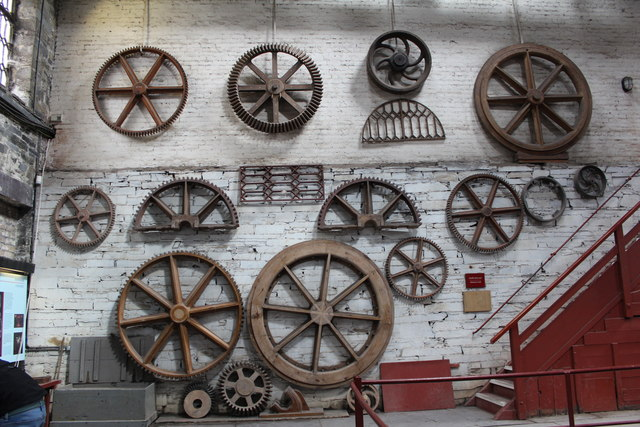
A pattern represents days or weeks of skilled work and may be the only record of how a part is made, particularly for a component no longer drawn or documented.
Foundries therefore kept pattern stores: racked, numbered, catalogued, sometimes for generations, and the store was a genuine commercial asset. A customer ordering a spare for a thirty-year-old machine was relying entirely on it.
Pattern stores were also where a foundry’s history physically lived, and when foundries closed the patterns were frequently scrapped, taking the ability to make those parts with them.
Digital models have replaced that for anything recent, and reverse engineering from a surviving part has replaced it for anything old. The loss of pattern stores is nevertheless one of the quieter industrial heritage losses of the period.
The tolerance came from understanding what the process would do
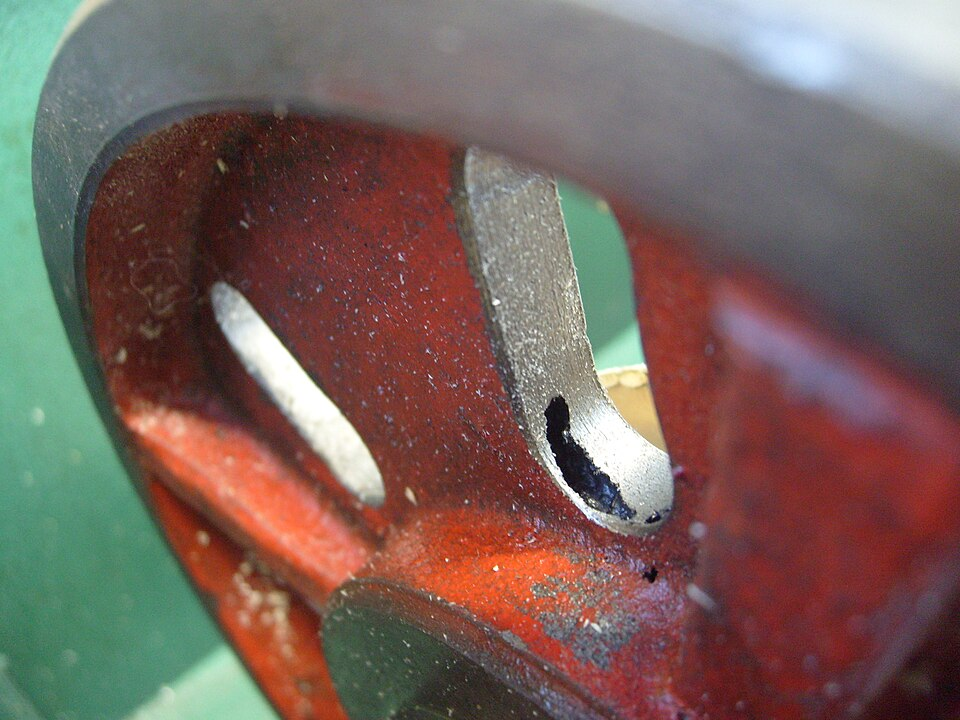
A casting is not accurate. It shrinks, it distorts, its surface is rough, and the mould itself moves slightly, so a pattern maker had to know which dimensions would come out close and which would not.
He therefore added machining allowance — extra metal on the surfaces that would be machined later — and left the rest to come out as cast. Too little and the machinist runs out of metal; too much and the casting is heavy, expensive and slow to machine.
That judgement was specific to the foundry, the metal, the size of the part and the moulding method used, which is why pattern makers and foundrymen had to talk to each other constantly.
Modern practice simulates the whole thing: solidification, shrinkage and distortion are modelled before anything is made, and allowances are set from the model. The conversation still happens and it now starts from a prediction rather than from experience.
The trade had an unusually long apprenticeship for a reason
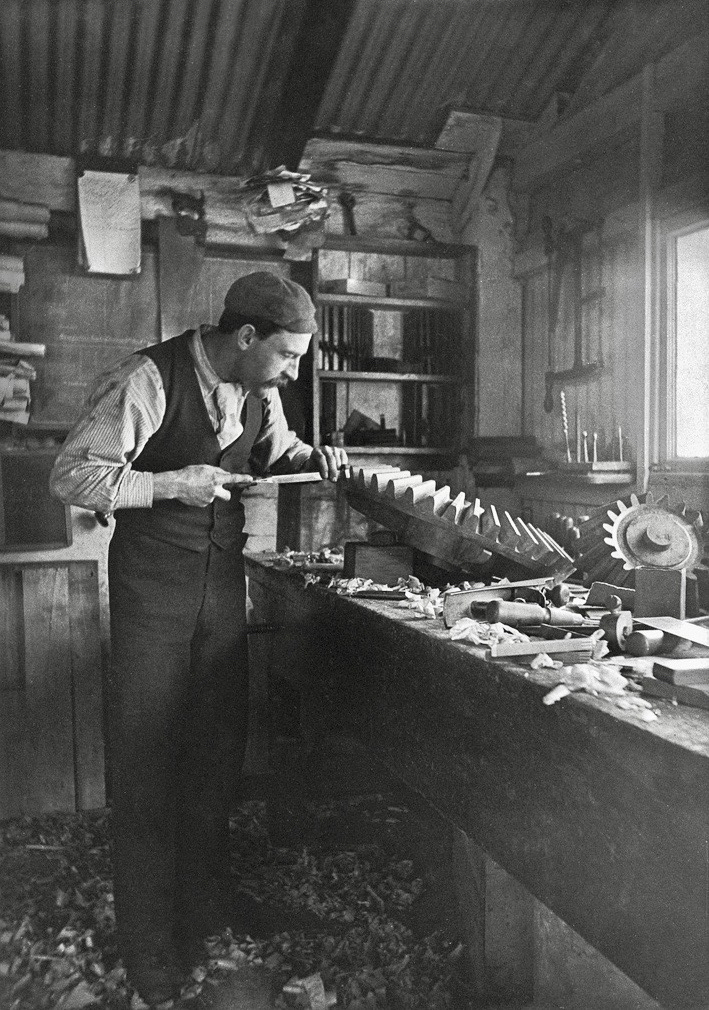
Pattern making required woodworking at a high standard, the ability to read engineering drawings, an understanding of how metal behaves as it solidifies, and enough knowledge of moulding and machining to anticipate what two other trades would do with the work.
That is four bodies of knowledge, and the apprenticeship was correspondingly long, frequently the longest in a foundry.
It also made pattern makers the people in a foundry most likely to spot that a drawing was wrong, because they were the first to build the shape in three dimensions and the first to discover that it could not be made.
That function has not disappeared; it has moved upstream into design engineering, where a model is checked for manufacturability before anybody builds anything. The pattern maker was doing design-for-manufacture before the phrase existed.
What remains
A small, highly skilled trade in prototype work, conservation, repair castings and low-volume production, with formal qualification and a close relationship to modern digital manufacturing rather than an opposition to it.
A great many pattern makers moved into tool and die work, into model making and into the early computer-aided design departments, which valued exactly the ability to hold a three-dimensional shape and its constraints in mind.
The wooden pattern itself survives wherever a one-off casting is needed, and heritage engineering is one of its steadiest customers.
The honest summary: a pattern is a deliberately oversized model, read with a shrink rule whose divisions are longer than they should be so the pattern maker can work from a normal drawing; every vertical face carries draft so the pattern can be withdrawn without tearing the mould, and the parting line decides whether the shape can be withdrawn at all; hollow components require cores, core boxes and locating features that appear nowhere on the finished part; patterns were laminated from stable, well-seasoned timber with the grain alternated so seasonal movement cancels; machining allowance had to be judged against what a particular foundry, metal and method would actually produce; and the American trade moved to metal patterns and multi-pattern plates early, turning the pattern shop into a precision engineering department.
Like our content? Follow us for more.
