

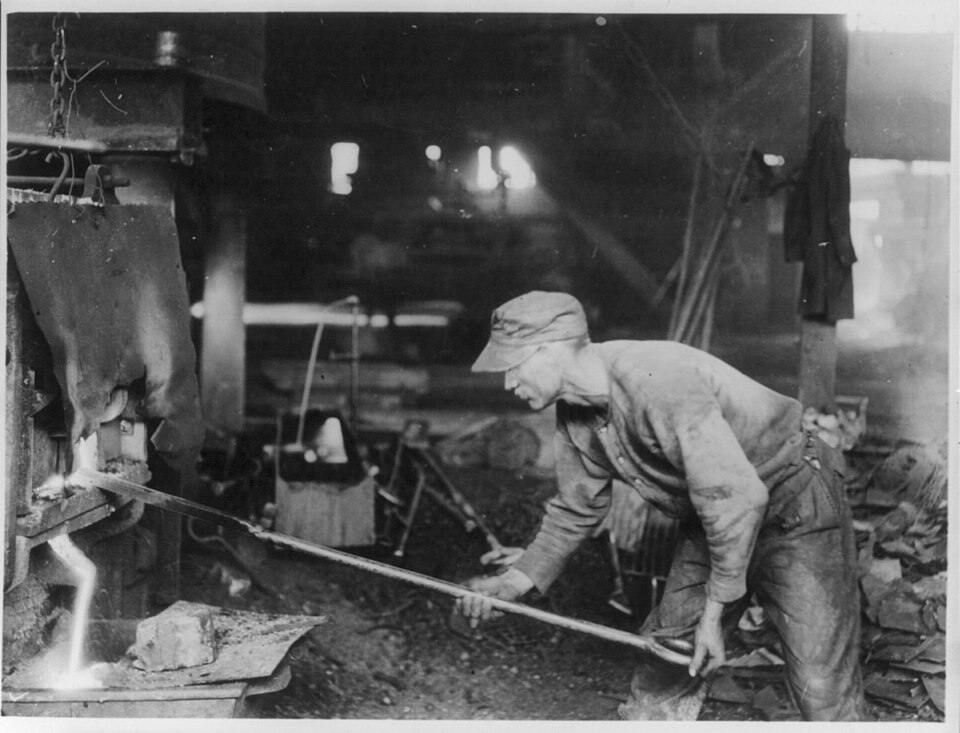
By 1960 the puddler was almost gone. A handful of furnaces were still working in a few places, mostly making wrought iron for specialist purposes, and the men operating them were the last practitioners of a trade that had built the industrial world and then been made obsolete by a cheaper process.
That is worth stating first, because the puddler is usually written about as a Victorian figure. He was, and a small number of them were still doing the work within living memory, which makes the trade one of the very few in this series that can be described as having genuinely ended rather than changed.
What he did was convert pig iron into wrought iron by stirring it, by hand, in a furnace, until the carbon burned out of it. Described that baldly it sounds like a description of cooking, and the comparison is not entirely wrong: the furnace supplies heat, the operator supplies the stirring and the judgement, and the thing in the pot changes character as he works it.
The process works because the metal gets thicker as it improves
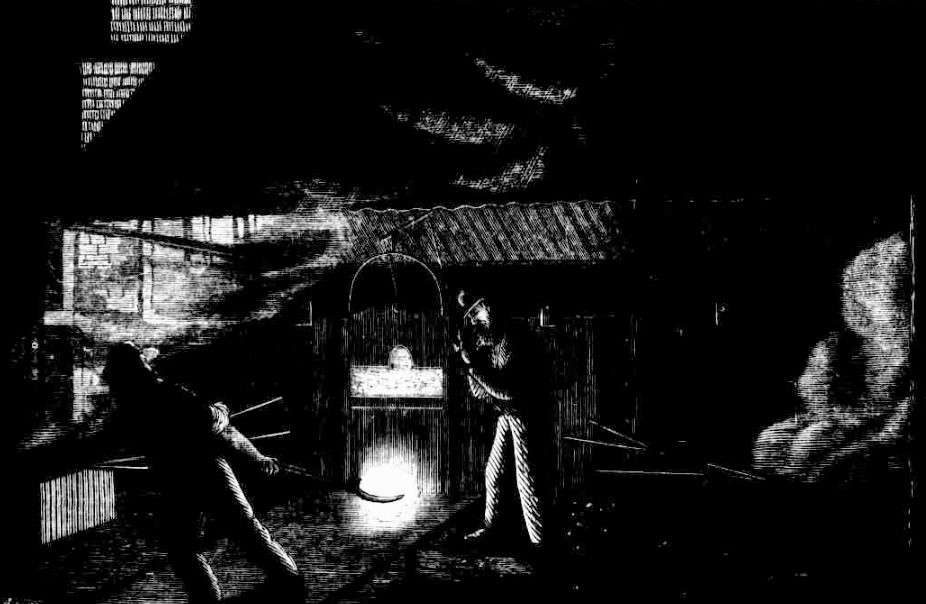
Pig iron from a blast furnace contains enough carbon to melt at a relatively low temperature and to be brittle. Wrought iron has almost none, which makes it tough, fibrous and forgeable, and raises its melting point considerably.
So as the carbon burns out of the charge, the metal’s melting point rises above the temperature of the furnace, and the liquid charge gradually becomes a pasty, then a semi-solid mass. The process announces its own completion by stiffening.
That is the whole elegance of puddling and also the whole brutality of it, because the stirring has to continue as the material thickens, and the hardest work comes at the end.
It also means the product never melts. Wrought iron is gathered as a solid mass and worked solid, which is why it has a grain like timber and why it behaves so differently from cast iron or steel. That grain is visible to the naked eye on a broken or corroded piece, which is the quickest way to identify the material in a building and the reason conservators look at fracture faces.
Like our content? Follow us for more.
The ball was made by hand, inside the furnace
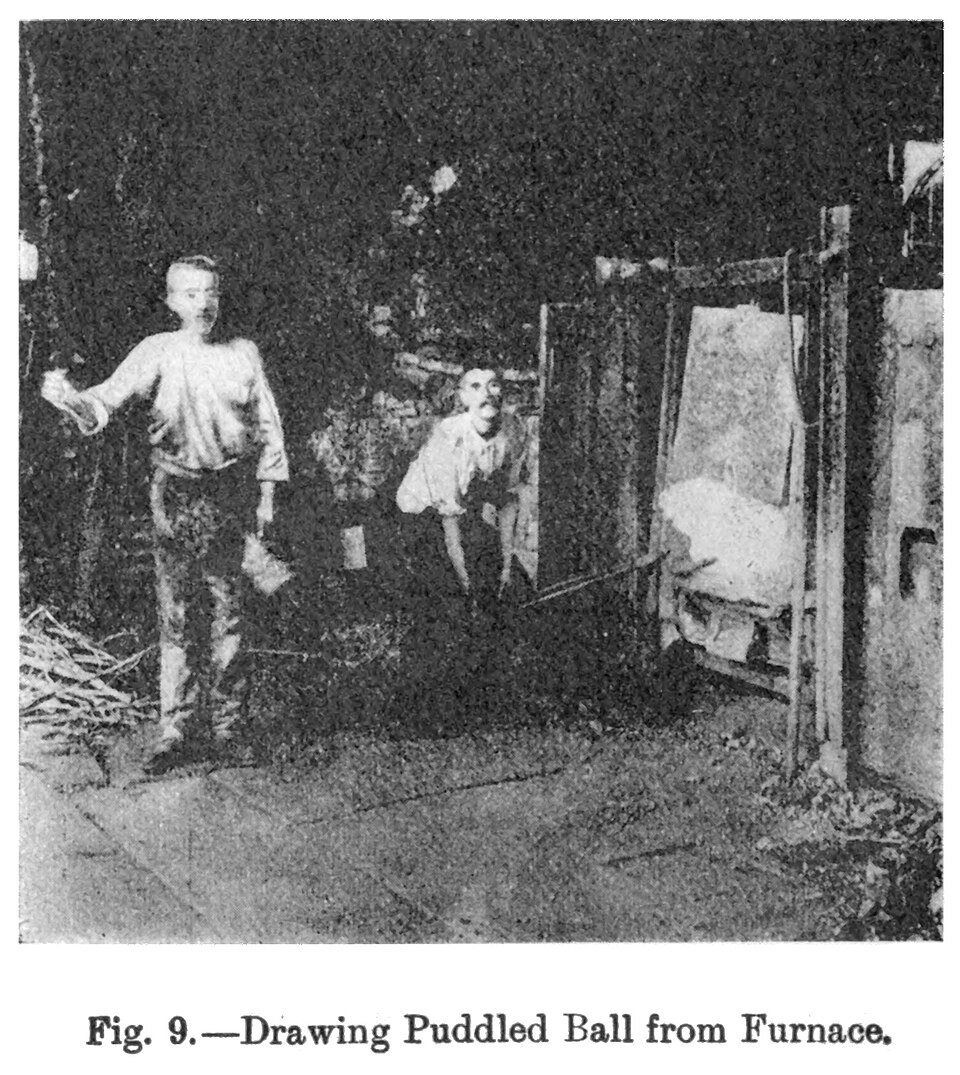
As the charge stiffened, the puddler worked it into lumps — balls — each one a workable quantity, rolling and consolidating them against the furnace bottom with a long iron bar.
Each ball then had to be lifted out and taken to be squeezed or hammered to force out the slag trapped in it, which is called shingling, and then rolled into bar.
The size of a ball was set by what a man could handle and what the hammer could take, which means the unit of production in the whole wrought iron industry was determined by human physiology.
Nothing about that survives. Modern wrought iron, where it is made at all, is produced by entirely different methods, and almost all the wrought iron in existence is historic material being conserved, repaired and reused. The word has also drifted. A great deal of what is sold today as wrought ironwork is mild steel bent cold, which is a different material entirely and is not what the term originally meant.
Why the American trade was the trade at its peak
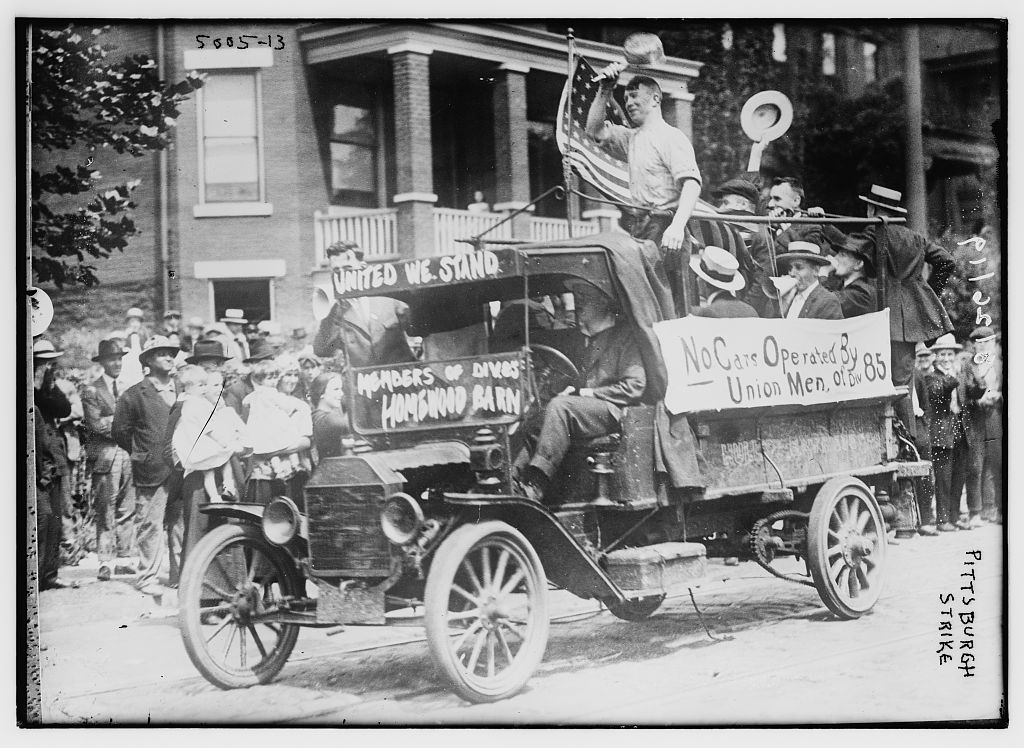
American iron production grew enormously through the second half of the nineteenth century and puddling grew with it, and the American puddler became both an industrial figure and a political one.
The work was skilled, exhausting and impossible to supervise meaningfully, because only the man at the furnace door could tell what the charge was doing. That gave puddlers unusual bargaining power and they organised early and effectively around it.
They were also paid by the ton of finished iron, which tied earnings directly to physical output and produced a working culture that was competitive to a degree that is difficult to convey.
When cheap bulk steel arrived, that whole structure disappeared within a generation, and the American puddler is one of the clearest cases in industrial history of a highly skilled and well-organised trade being eliminated by a process that simply did not need it. Steel was not better at everything. It was cheaper, available in far greater quantity and consistent, and those three things together settled the question without any argument about quality being necessary.
The shift was short because it had to be
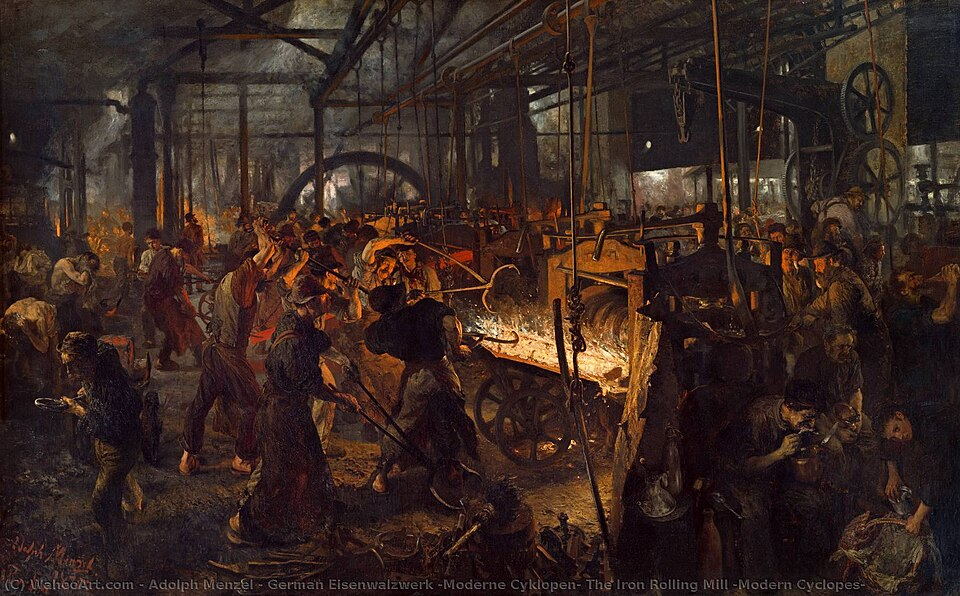
Puddling was done in bursts. A charge took a relatively short time and the work at the end of it was as hard as any work in industry, in front of an open furnace, so the pattern was a small number of charges and then a stop.
That was not a concession. It was the maximum anybody could do, and the trade’s own accounts are consistent about it being the limiting factor on output rather than any feature of the furnace.
Men did this for a working life and the physical cost was taken for granted by everybody including them.
Heat exposure is now a managed occupational matter with assessed limits, work-rest scheduling, hydration arrangements, cooling and health surveillance for people working near hot processes. The 1960 arrangement was none of that, and the comparison needs no comment.
Everything depended on judging a change you could barely see
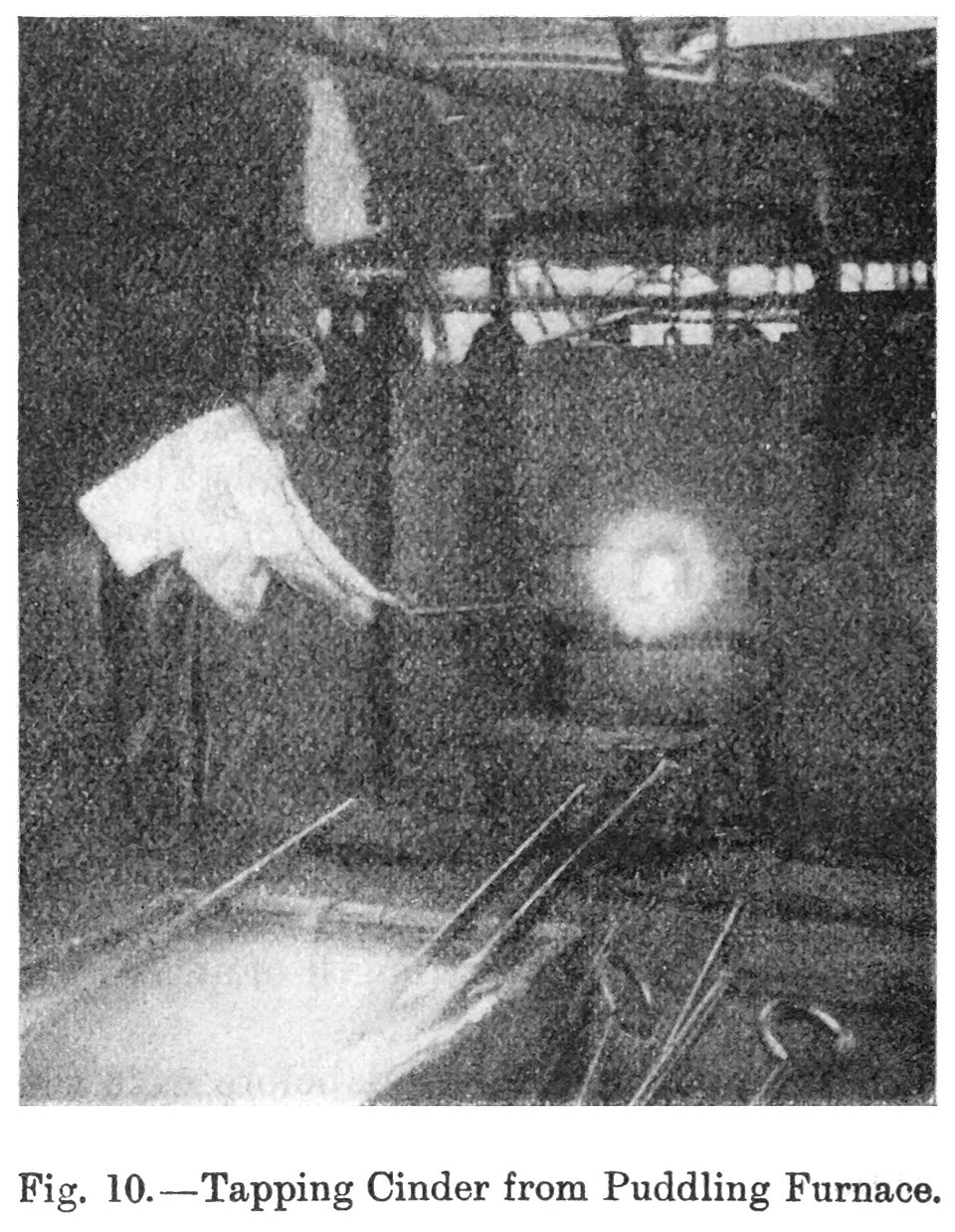
The puddler’s entire skill was knowing where the charge was in the process, and the only available information was how it looked and how it felt through the bar.
Too early and the iron still contains carbon and will not weld or forge properly; too late and the charge is overworked, oxidised and wasteful. The window is real and is not marked.
He read it by colour, by the behaviour of the slag on the surface, by the way the mass resisted the bar and by the sparks coming off it, and he was right often enough that the whole industry rested on it.
There is no modern equivalent because there is no modern process that requires the judgement. The nearest analogue is the continuous analysis that governs modern steelmaking, which answers the same question with instruments and answers it continuously. A modern furnace operator knows the carbon content of the charge while it is changing. The puddler knew it from how hard the bar was to push.
The hazards were heat, fume and the furnace itself
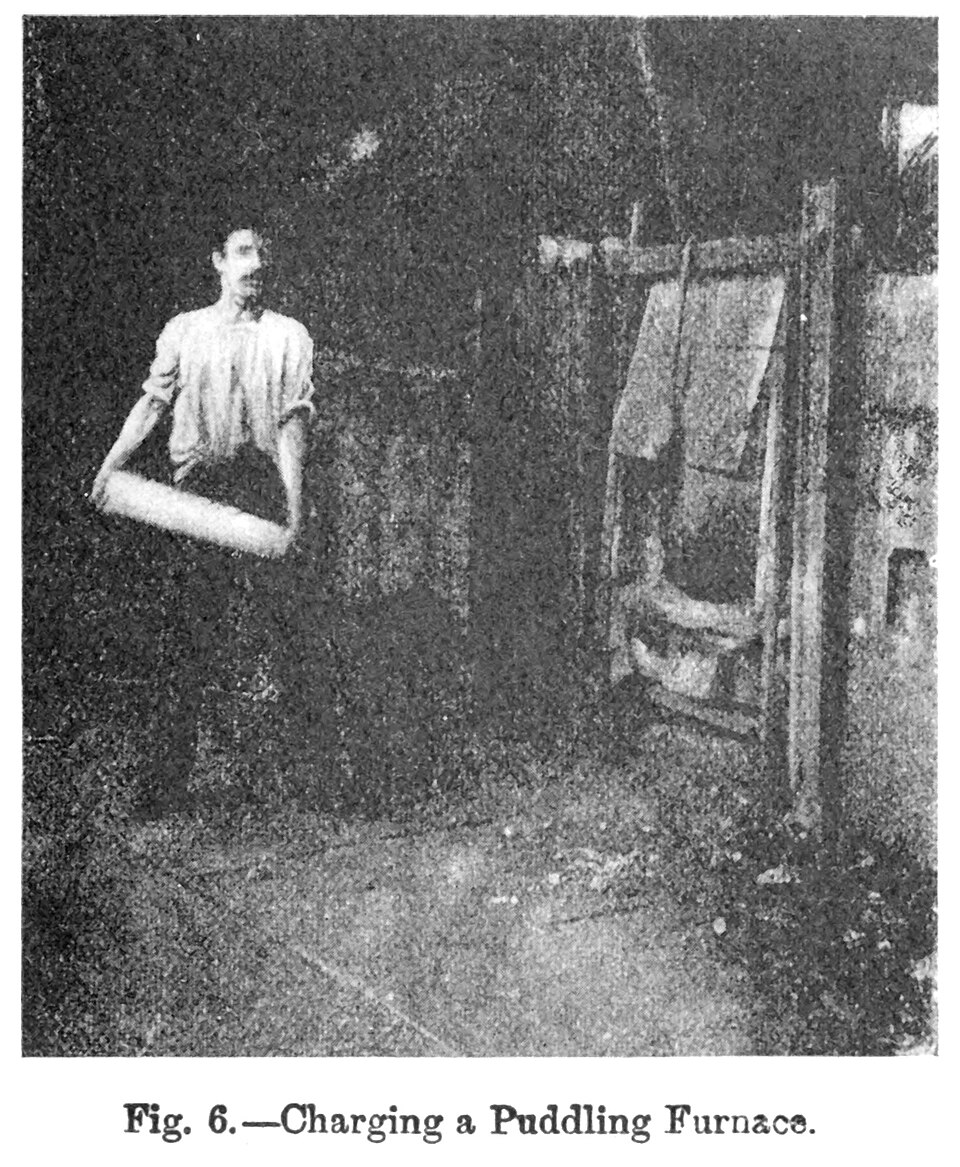
Working at an open furnace door means radiant heat, bright light requiring eye protection, and exposure to the fume and dust coming off a hot metallurgical process.
In 1960 the protection was heavy clothing, a hat, and the practice of standing where you could stand. There was no respiratory protection, no fume extraction at the furnace and no measurement of anything.
All of those are now controlled. Heat, metal fume, dust and radiant exposure each have their own regime, with ventilation, protective equipment, monitoring and health surveillance specified, and the handling of hot material is governed by a safety case rather than by custom.
This file gives no temperature, no exposure figure, no protective specification and no procedure. The process it describes is not practised and nothing here should be read as describing how to do anything.
The product is the reason anybody still cares
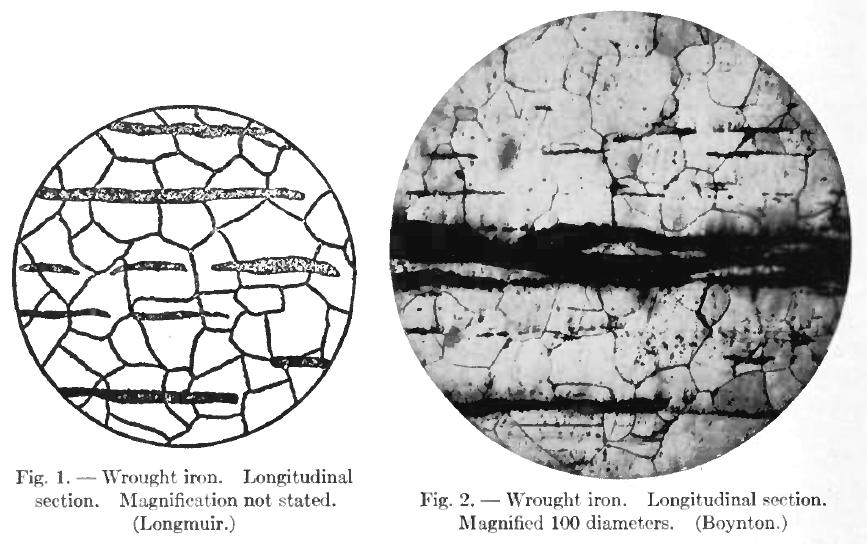
Wrought iron is not old steel. It is a different material: low in carbon, containing threads of slag running through it in the direction it was worked, and that fibrous structure makes it tough, corrosion-resistant in a particular way and recognisable under a microscope.
That matters practically, because conserving a wrought iron structure or gate or bridge requires wrought iron, and welding or repairing it as though it were steel produces a poor result.
So there is a small, real demand for genuine wrought iron, met largely by reclaimed material recovered from demolished structures and carefully stored by specialists.
It is a strange afterlife for the trade. The men are gone, the furnaces are gone, and the material they made is still being sought out, catalogued and reused because nothing made since behaves quite the same way.
What it leaves behind
Most of the ironwork people admire in nineteenth-century buildings, bridges, railings, ships and machinery is puddled wrought iron, made one ball at a time by somebody stirring a furnace.
That is an enormous quantity of material produced by an enormous amount of individual human effort, and almost none of it is attributed to anybody.
The trade’s other legacy is industrial: the puddlers’ bargaining position, built on knowledge nobody could supervise, is one of the clearest early demonstrations that skill is bargaining power, and the way that power evaporated when the process changed is a lesson the whole of industry has repeated since.
The honest summary: by 1960 puddling was almost extinct, with a handful of furnaces still making wrought iron for specialist purposes; the process converts pig iron to wrought iron by burning out carbon, which raises the melting point so the charge stiffens from liquid to pasty to semi-solid and announces its own completion, with the hardest stirring coming at the end; the product never melts and is gathered as a solid mass, which is why wrought iron has a grain; the charge was worked into balls whose size was set by what a man could lift, so human physiology determined the industry’s unit of production; the window for completion was read by colour, slag behaviour, resistance through the bar and sparks; and wrought iron is a distinct material containing slag threads in the direction of working, which is why conservation needs genuine reclaimed wrought iron rather than steel.
Like our content? Follow us for more.
