


There is a thing in old barns and basements that defeats everybody: a set of four long wooden strips, adjustable, with small sharp pins or tacks sticking out along one edge of each, and a set of corner fittings for assembling them into a rectangle.
It looks like a torture device or a picture frame somebody made badly. Buyers assume it is a quilting frame.
It is a curtain stretcher, and it existed because of a specific and genuinely annoying property of lace: washed lace does not go back to the shape it was. Getting it to do so required stretching it out on spikes and letting it dry under tension – once or twice a year, outdoors, for every curtain in the house.
Lace Curtains Were a Status Marker, Not a Luxury

Start with why every house had them, because the ambition is the reason the labour was accepted.
Machine-made lace became cheap in the second half of the nineteenth century, and lace curtains became the standard thing to put in the front windows of an American house. They were not a wealthy affectation – they were the respectable minimum, available to a household of very modest means, and the front window was where a family’s standards were on display to the street.
Which is the whole point. A lace curtain is visible from outside. It tells anybody walking past that this household has them, keeps them, and keeps them white – and the phrase about lace curtain respectability exists because the connection between those curtains and social standing was understood perfectly well by everybody involved.
So they went up in the parlour and the front bedroom, and they had to be kept looking right.
Like our content? Follow us for more.
Washing Them Ruined Their Shape
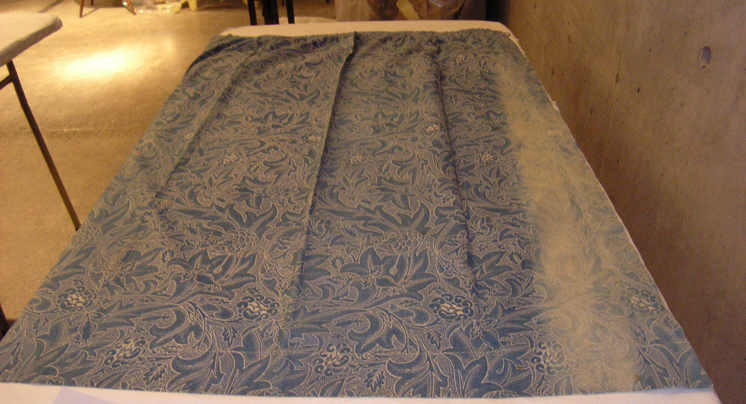
Here is the mechanical problem, and it is worth understanding because it dictates everything else.
Lace is an open structure – threads held in a pattern with large gaps between them – and it holds its shape partly because of how it was made and partly because of finishes applied in manufacture. It has almost no inherent stiffness.
Wash it and three things happen. The finish comes out, so the fabric goes limp. The threads relax and the structure draws in, so the piece comes out smaller than it went in. And because it is open and flexible, it dries in whatever crumpled arrangement it happens to be lying in, with the pattern distorted.
Hang that up at a window and it is immediately obvious: short, saggy, wavy at the edges, with the pattern pulled out of true. Which in a front window is worse than not washing it at all.
So the washing is the easy part. Recovering the shape afterwards is the job, and it cannot be done by ironing – an iron flattens an open structure and does nothing about the size.
The Frame Pulls It Back to Dimension
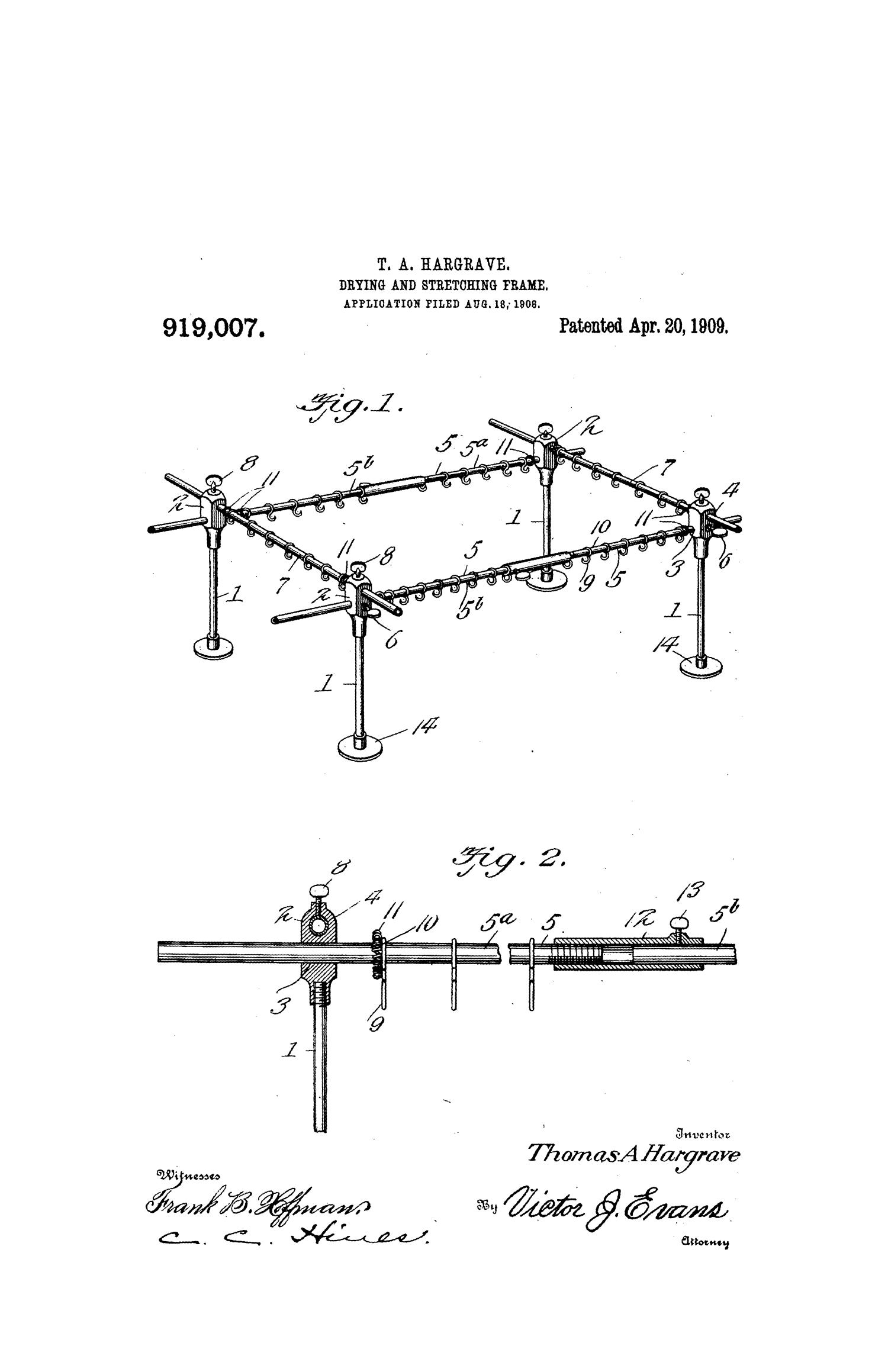
The solution is simple once stated: dry it under tension at the size it is supposed to be.
A curtain stretcher is a rectangular frame, adjustable in both directions, with pins along the inside edges. The frame is set to the finished dimensions of the curtain. The washed, wet curtain is then pinned out onto the spikes all the way round – stretched to meet the frame rather than draped on it – and left to dry.
As it dries, the threads set in the position the pins are holding them in. The piece comes off the frame the correct size, flat, square, with the pattern even and the edges straight.
And because the frame is adjustable, one stretcher handles every curtain in the house. The household set it to each size in turn and worked through them.
That is a proper solution to a real problem, and it is why these were manufactured and sold in quantity rather than being somebody’s improvisation.
Starch Was the Other Half
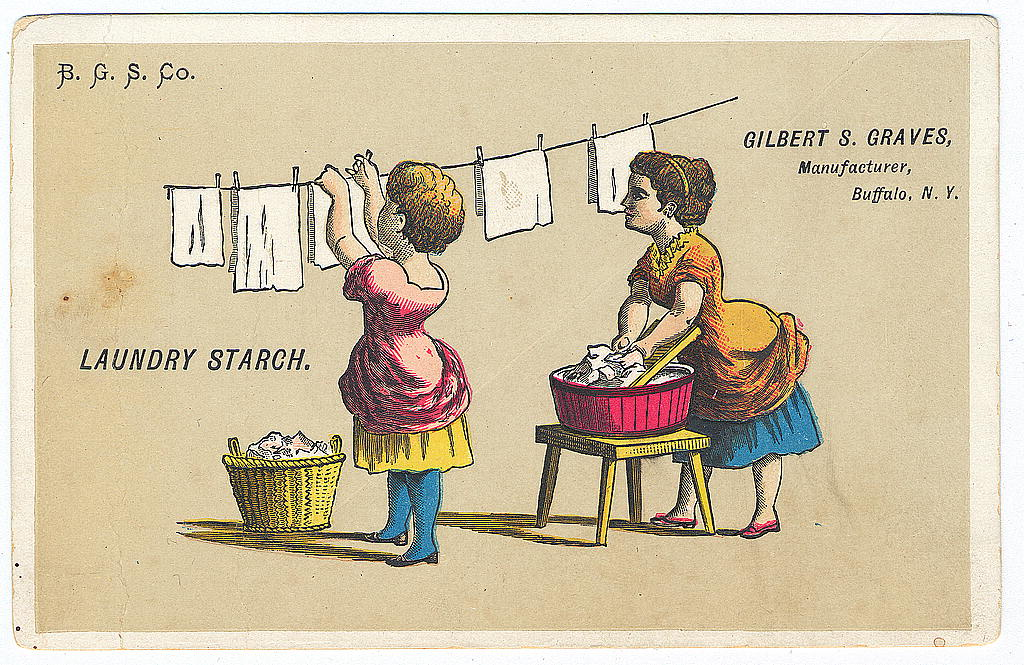
The frame restores the dimensions. It does not restore the stiffness, and a limp lace curtain hangs badly even at the right size.
So lace was starched, which puts a stiffening back into the structure and makes the piece hold a crisp line at a window. Blueing was frequently used as well, because white cotton yellows with age and washing and a trace of blue makes it read as white again to the eye.
Both of those are applied wet, which means the sequence was wash, rinse, blue, starch, then pin out on the frame and dry – and the starch sets at the same time as the threads do.
Which is why a properly done lace curtain from this period looks the way it does in photographs: not soft, but holding its shape with visible structure, hanging straight and pale.
It is also why they had to be done again. Starch washes out, dust accumulates in an open fabric remarkably fast, and a curtain in a coal-heated town got dirty quickly.
It Was a Spring Job and It Was Outdoors
The practical arrangements are worth setting out.
Stretchers were used outside, in a yard, leaning against a wall or a fence, or laid flat on sawhorses, because a frame the size of a window curtain does not fit comfortably in a room and because drying wants air and sun.
So this was weather-dependent work, done on a fine day, and it belonged to the general spring cleaning rather than to the weekly wash. Curtains came down, were done in a batch over a day or two, and went back up – which is the same seasonal pattern as taking up carpets and changing over bedding.
The pins are the part people remember. They are sharp, there are a great many of them, and handling wet fabric onto them means working your fingers right up against the points. Everybody who did it has an opinion about that, and the opinion is unanimous.
The Curtains Themselves Were Fragile
Worth noting, because it compounds the labour.
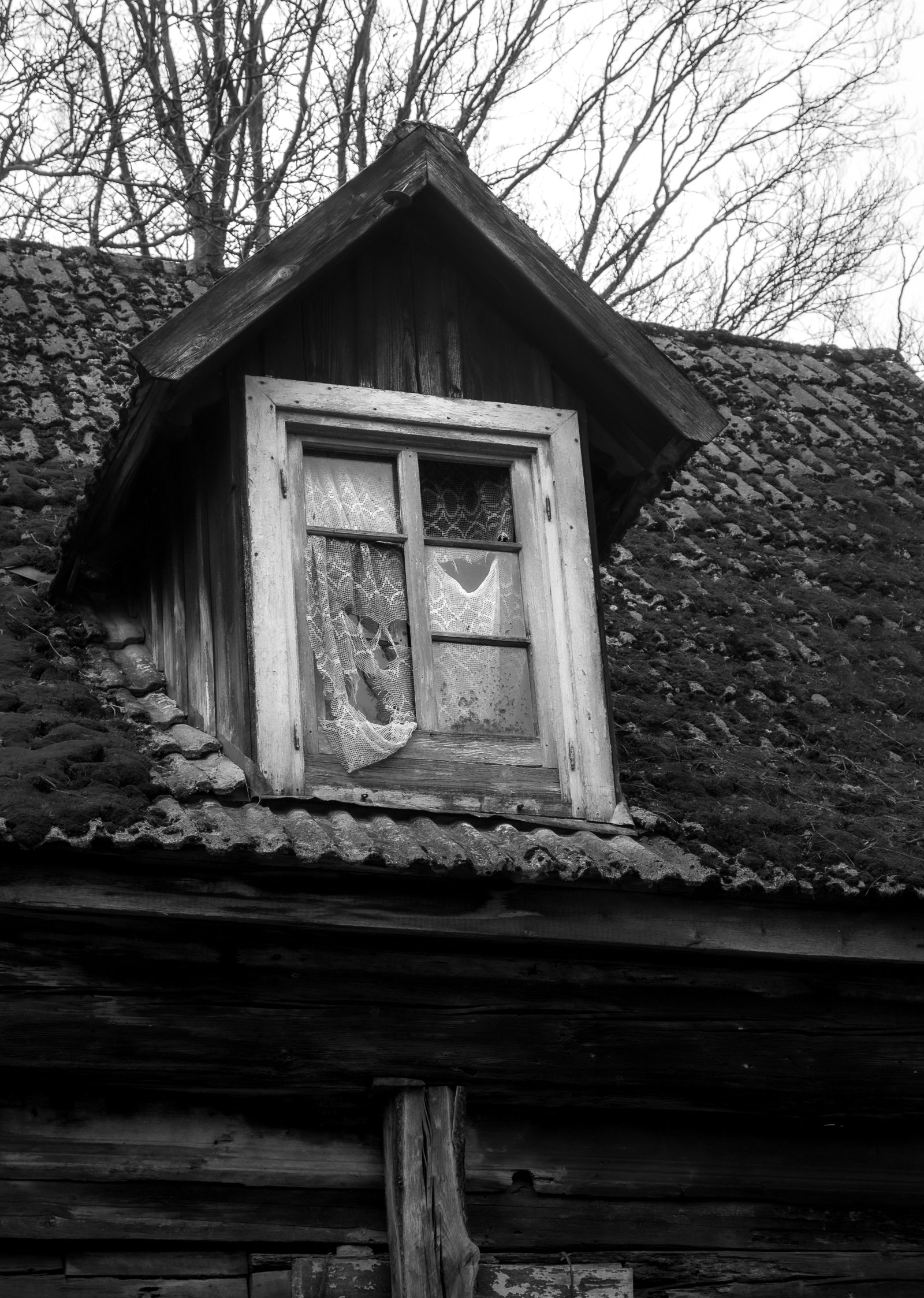
Lace is weak. The threads are fine, the structure is open, and repeated washing, stretching and sun exposure all degrade it. Pinning a curtain out puts the entire tension of the drying piece onto a row of small holes in the outermost threads, which is exactly where a lace curtain fails.
So curtains tore at the edges, were mended, and eventually went into the rag bag or became something else. A household got a few years out of a set rather than decades.
Which means the whole enterprise was a recurring expense as well as a recurring labour: buy the lace, wash and stretch it twice a year, mend the edges, and replace the set when it was past saving – all to keep the front windows looking correct from the street.
Then Synthetic Fibre Removed the Problem Entirely
The decline has one principal cause and it is material rather than social.
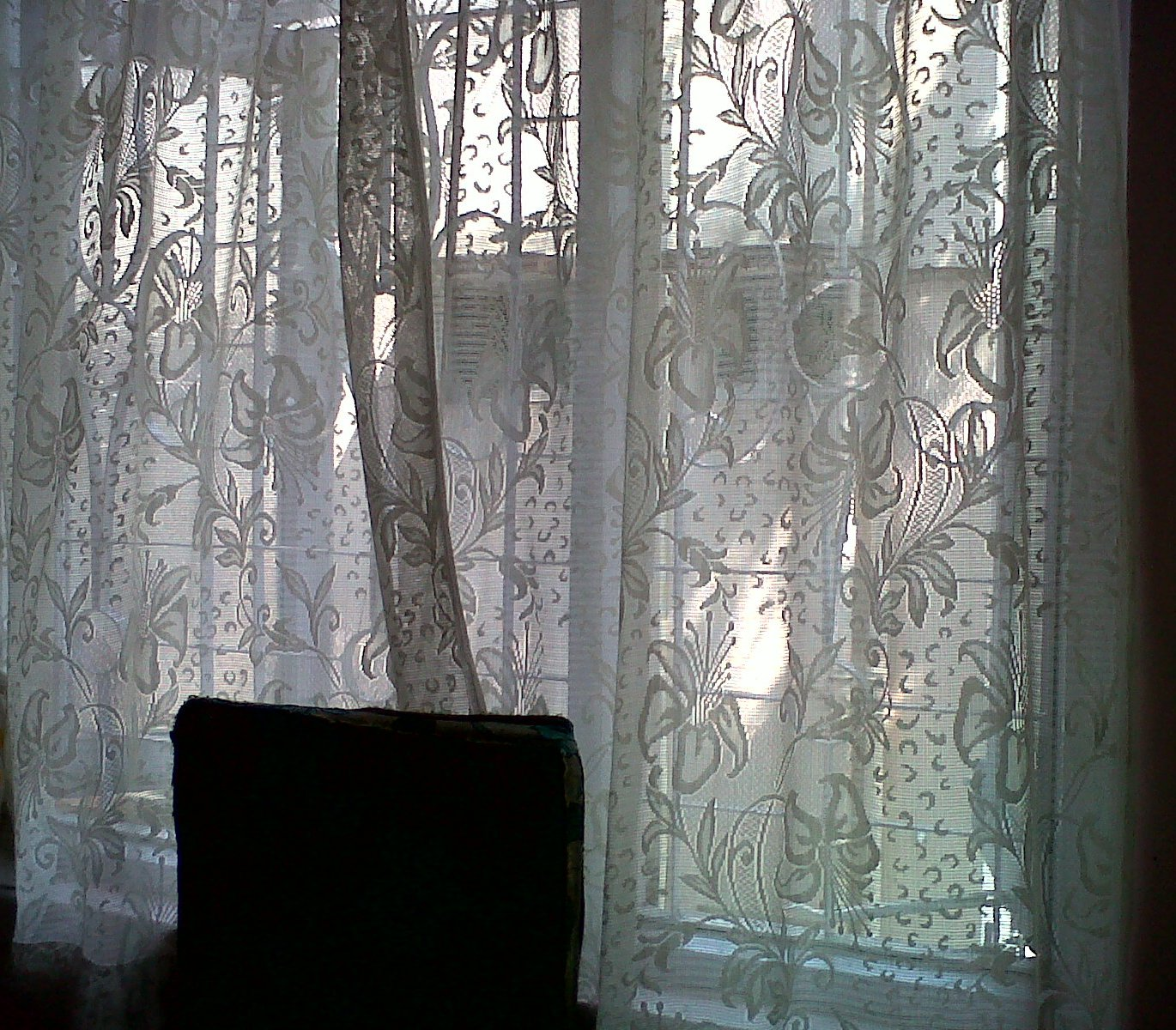
Synthetic net and sheer curtaining does not behave like cotton lace. It does not shrink appreciably, it does not go limp because its stiffness is a property of the fibre rather than a finish, it does not need starch, it does not yellow in the same way, it is far stronger, and it dries in minutes.
So the entire sequence collapses to: take it down, wash it, hang it back up. No frame, no pins, no starch, no blueing, no fine day, no batch, no mending.
Against that, the stretcher has nothing to offer. It was not outcompeted on quality – it simply had no remaining function, because the fabric it existed to rescue had been replaced by one that did not need rescuing.
Then the Washing Machine and the Front Window Both Changed
Two further changes finished it.
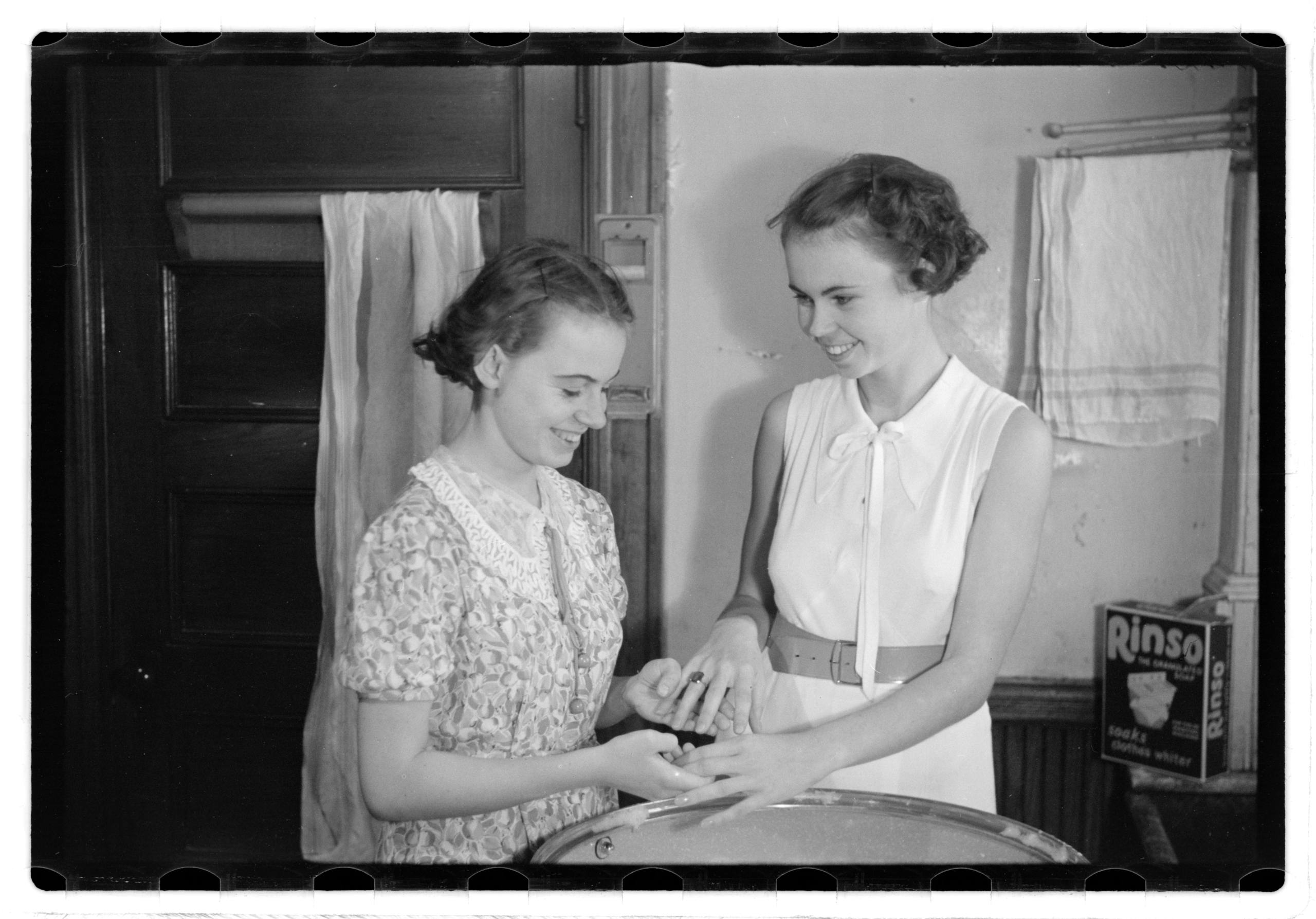
Mechanical laundry removed the context. A household that washes everything in a machine on any day of the week does not organise a seasonal batch operation around a frame in the yard, and the whole category of twice-yearly textile labour thinned out along with carpet beating and bedding changeover.
And the front window stopped being a display. Houses moved back from the street, lots got bigger, people arrived and left by car from a driveway, and the pedestrian passing the parlour window on foot – who was the entire audience for a lace curtain – largely stopped existing.
Once nobody is walking past, the reason to keep something white and crisp specifically on the street side of the house goes with them.
The Frame in the Barn
Which is why the object survives and the practice does not. A curtain stretcher is four wooden strips and some corner brackets, it takes up no room leaning against a wall, and nobody throws out something that looks as though it might be useful.
So they sit in barns and basements, defeating their finders, and occasionally get sold as quilting frames to people who are then puzzled by the pins.
If you find one, the giveaway is the pins themselves. A quilting frame holds fabric with clamps or stitching and has no spikes on it, because you do not want holes in a quilt. A row of small sharp points along an inside edge is for one purpose only: holding something open, under tension, while it dries to a size.
Somebody set that frame to the measurement of a particular window, in a yard, on a fine day in spring, and pinned a wet curtain to it inch by inch – so the front of the house would look right to people walking past.
Like our content? Follow us for more.
