There is a category of human variation that is essentially invisible, because it concerns something nobody can observe in anybody else and nobody has reason to compare.
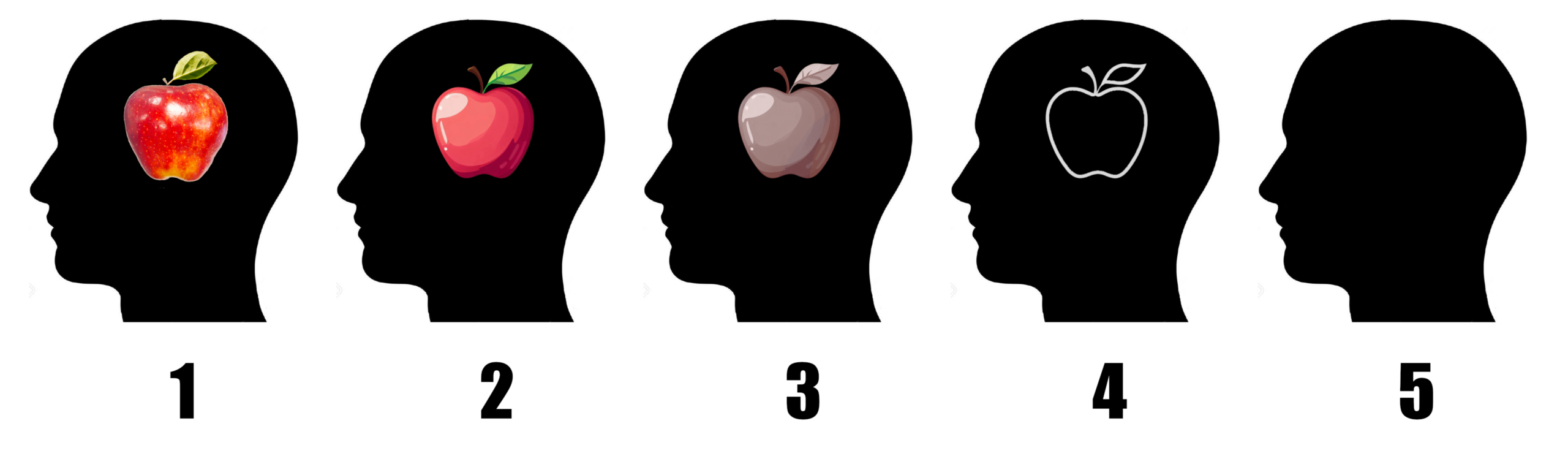
Ask two people whether they see colours the same way and the conversation runs into an old philosophical problem quickly. Ask whether they form mental images and something more tractable emerges: some people report vivid pictures, some report vague impressions, and a small proportion report nothing at all.
That last group is the interesting case. The inability to form voluntary mental images was described in the nineteenth century, largely forgotten, and named as a distinct phenomenon only in 2015 — after which very large numbers of people discovered that a phrase they had understood as metaphorical was literal for almost everybody else.
Here is what is understood about it, and what is not.
The Ordinary Discovery
The way people find out is consistent enough to be worth describing.
Somebody encounters a discussion of mental imagery, realises that “picture a beach” is meant literally, and asks people around them whether they actually see something.
They discover that most do. The realisation is frequently reported as disorienting — not because anything has changed, but because a fact about their own experience that had been invisible for decades suddenly becomes visible.
The reverse also occurs. People with unusually vivid imagery discover that not everybody has it, which is equally surprising in the other direction.
That both discoveries are common tells you something important: internal experience is not compared, because there is no occasion to compare it and no vocabulary that distinguishes the possibilities clearly.
Phrases like “picture this” or “see it in your mind” are understood by everybody and mean different things to different people, and nothing in ordinary conversation ever exposes the difference.
Like our content? Follow us for more.
What It Is Not

Several misunderstandings are worth clearing immediately.
It is not an absence of memory. People without mental imagery remember events, faces, places and facts perfectly well; they retrieve information without an accompanying picture.
It is not an absence of imagination or creativity. People in this group work across creative fields, including visual ones, and describe conceiving of things without visualising them.
It is not blindness of any kind, and has nothing to do with vision. Visual perception is unaffected; what is absent is the voluntary generation of imagery in the absence of a stimulus.
It is not necessarily total. It appears to sit on a spectrum, with people reporting varying degrees of faintness, and some reporting imagery in dreams while having none voluntarily — a dissociation that is itself informative.
And it is generally not a medical problem. For most people it is a variation rather than a deficit, and the substantial majority reporting it have no complaint about it.
It is worth stating why self-report is a weaker instrument here than in most areas. When people rate a public quantity – how loud a sound was, how bright a light – their ratings can be checked against a measurement.
There is no external measurement of a mental image. Everybody is describing something only they can access, using words learned from people who may have been describing something different, and nothing in the process ever exposes a mismatch.
How It Is Measured

The methodological difficulty is severe and worth understanding.
The only evidence available is self-report about something private, described using vocabulary that people may interpret differently. Somebody rating their imagery as vivid and somebody rating it faint may be having identical experiences and describing them differently.
Questionnaires asking people to rate the vividness of imagined scenes are the standard instrument, and they inherit that problem entirely.
More promising approaches look for objective correlates. One measures pupil response — the pupil constricts when looking at bright things, and in people who report vivid imagery it also constricts somewhat when imagining bright things. In people reporting no imagery, that response is reduced or absent.
That is a physiological measure of something a person cannot fake in either direction, which makes it substantially stronger evidence than a rating scale.
Other work has looked at performance on tasks that would be easier with imagery, and at brain activity during attempted visualisation, with results broadly consistent with the self-reports.
What It Suggests About Everybody Else

The wider implication is the reason this matters beyond the group concerned.
If a proportion of people perform ordinary cognitive tasks without imagery, then imagery is not necessary for those tasks, which means the rest of the population may be using a mechanism that is available rather than required.
That reframes a great deal. Visualisation is frequently treated in teaching, in memory technique and in various practices as fundamental to thinking, and the existence of people who think effectively without it indicates otherwise.
It also raises the question of what else varies invisibly. If something as basic as whether you see pictures when you think differs substantially between people and went essentially unnoticed until recently, the assumption that other people’s inner experience resembles your own is on weaker ground than it feels.
There are reports of comparable variation in inner speech — some people report a constant internal monologue and others little or none — which is at an earlier stage of investigation and points the same way.
There is a historical footnote worth including. The nineteenth-century work that first documented the variation asked a large number of people to describe their breakfast table and rate how vividly they saw it.
The answers ranged from photographic detail to nothing at all, and the finding was published and then largely ignored for over a century – which is itself a small illustration of how easily a result about private experience can fail to take hold when nobody has a framework for it.
The Things That Are Not Settled
Considerable uncertainty remains and should be stated plainly.
Prevalence figures vary between studies depending on definition and instrument, and the commonly quoted small percentage should be treated as approximate.
Whether it is lifelong in most cases, and to what extent it can arise later, is not fully established.
Whether it involves the absence of imagery or the absence of conscious access to imagery that is still being generated is truly open, and the dream reports complicate it substantially.
And the relationship between imagery and memory is unclear. Some studies report differences in autobiographical recall, and interpreting those is difficult given that the measure is again self-report.
What Happens Instead

The natural question is what people without imagery experience when asked to imagine something, and the reports are informative.
Descriptions commonly involve knowing rather than seeing. Asked to imagine a room, somebody may be able to state its layout, list its contents, describe the colours and answer questions about spatial relationships — while reporting no visual experience accompanying any of it.
That indicates the information is present and accessible, and that visual experience is a separate matter from having the information.
Some people describe thinking in words, some in something spatial without visual content, and some report finding the question difficult to answer because they have no basis for comparison.
There are also reports of the same variation applying across other senses. Some people report an inability to imagine sounds, or smells, or physical sensations, sometimes alongside the visual version and sometimes independently.
That pattern suggests imagery is not one faculty but several, which can vary separately — and it raises the possibility that a person might have vivid imagery in one modality and none in another without ever noticing, since nobody asks about any of them.
Which returns to the central point. The reason all of this went unexamined for so long is not that it is hard to investigate. It is that nobody had occasion to ask.
A Difference Nobody Could See
What makes this case worth understanding is not the phenomenon but the discovery.
A substantial variation in how human minds work, present throughout history, affecting a meaningful proportion of the population, went essentially unremarked because there was no occasion on which anybody would notice.
Nothing about ordinary life exposes it. The words used to describe the experience work equally well for people having entirely different experiences. Nobody is asked, so nobody finds out.
It took a name and a public discussion for people to compare notes, and when they did, a great many discovered something about themselves at forty that had been true since childhood.
Which is a reasonable argument for asking people what things are actually like for them, rather than assuming — since the evidence here is that the assumption is wrong more often than anybody expected, and that nothing in normal conversation would ever have revealed it.
Like our content? Follow us for more.