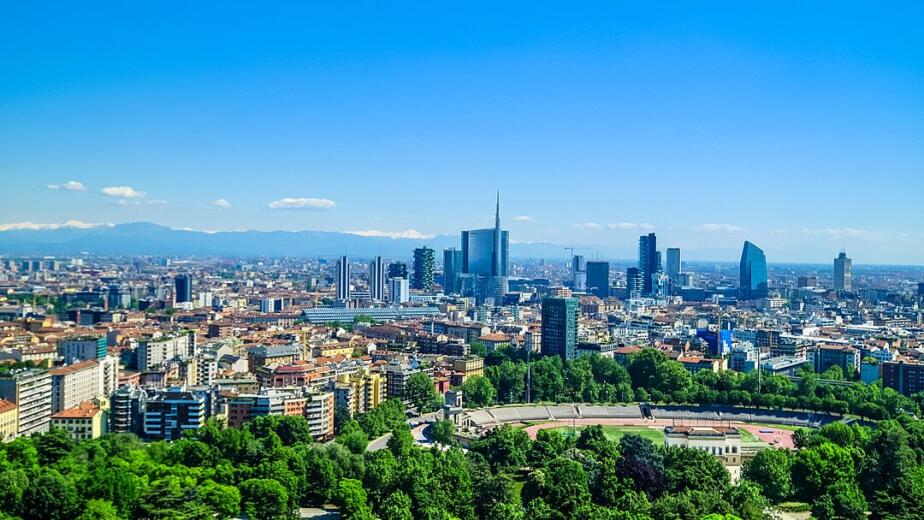
Most descriptions of the ocean concern its surface, which is understandable, since that is the part anybody sees.
The surface is a thin film on top of something much larger. Water covers most of the planet and averages several kilometres in depth, which makes the ocean by an enormous margin the largest habitable space there is — and almost none of it resembles the part people picture.
The organising variable is light. It determines what can photosynthesise, what can see, what colours are worth being, how food arrives and how deep any of it can go.
Follow light downward and the ocean divides into layers that are as distinct as the ecosystems of a mountainside, and substantially stranger.
Where the Light Stops
The physics of the descent is precise and counterintuitive.
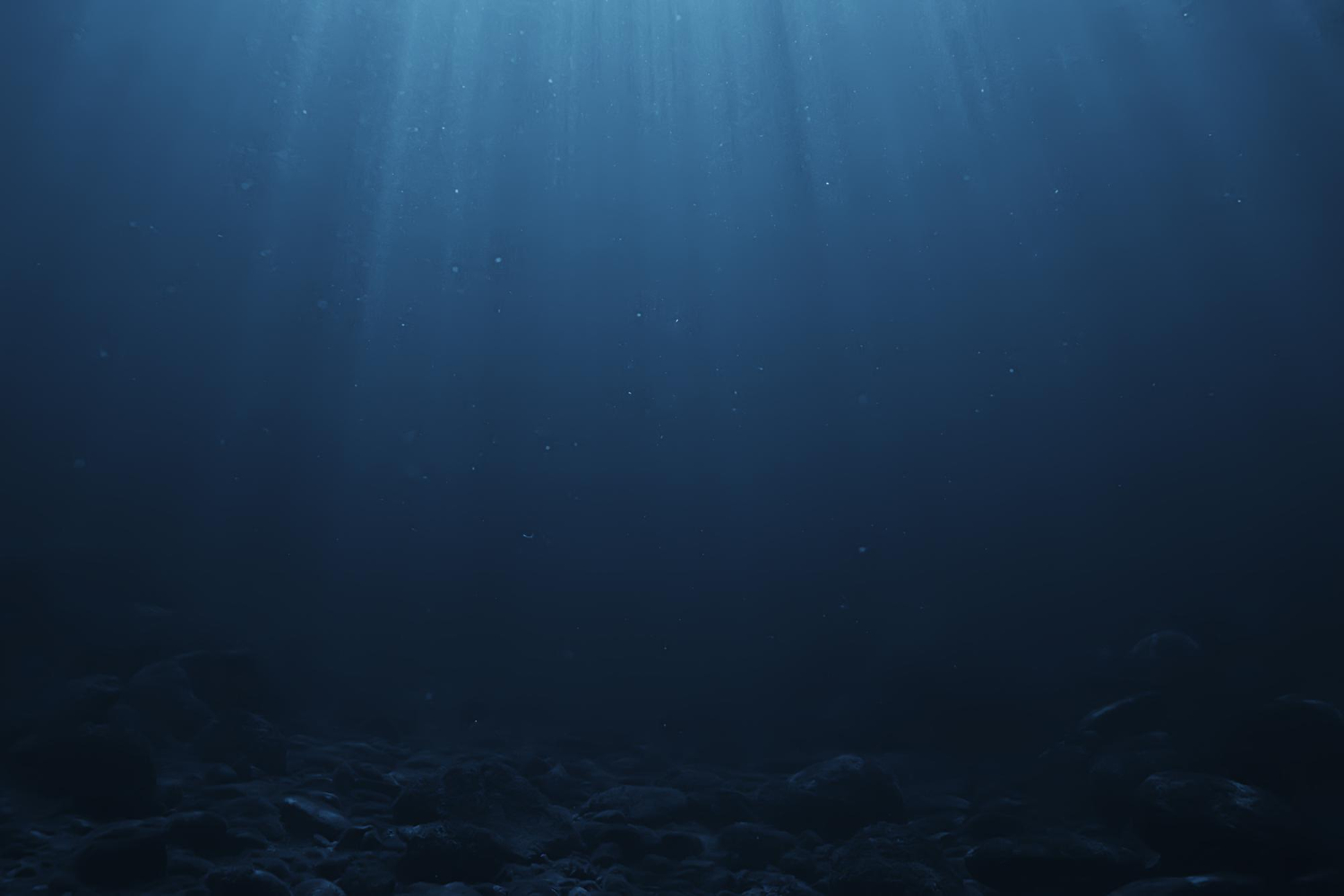
Water absorbs light, and it absorbs different colours at different rates. Red goes first, within the top few metres. Orange and yellow follow. Green and blue penetrate furthest, which is why deeper water appears blue and why photographs taken at depth without artificial light are monochrome.
Enough light for photosynthesis persists to roughly two hundred metres in clear open water, which defines the sunlit layer. That is the entire zone in which plants and algae can generate energy from light.
Below that is a band where some light remains — insufficient for photosynthesis, sufficient for eyes adapted to it — extending to around a thousand metres.
Below a thousand metres, no sunlight reaches at all. The remaining depth, which is most of the ocean, is in absolute permanent darkness.
The proportions are worth stating. The productive sunlit layer is a few per cent of the total volume. Everything else depends on it and cannot use it directly.
Like our content? Follow us for more.
The Layer Where Half the Animals Are
The dim band immediately below the sunlit layer is the most active and least appreciated part of the ocean.
It contains an enormous quantity of life — by some estimates a very substantial proportion of all fish biomass — and it performs the largest movement of animals on the planet every single day.
Enormous numbers of organisms rise toward the surface at nightfall to feed under cover of darkness, and descend before dawn to avoid being seen. This happens across the world’s oceans, every night, involving an amount of biomass that appears on sonar as a false seafloor.
That migration is the mechanism by which energy from the sunlit layer reaches the depths. Animals feed at the surface, descend, and are eaten, excrete or die at depth, transporting carbon and energy downward in a continuous biological conveyor.
Adaptations in this zone are shaped by the dim light. Animals are frequently silvered, transparent or countershaded, because the problem is being seen from below against a faintly lit surface. Many produce their own light, and the eyes are frequently enormous relative to the body.
Living Where Food Falls From Above
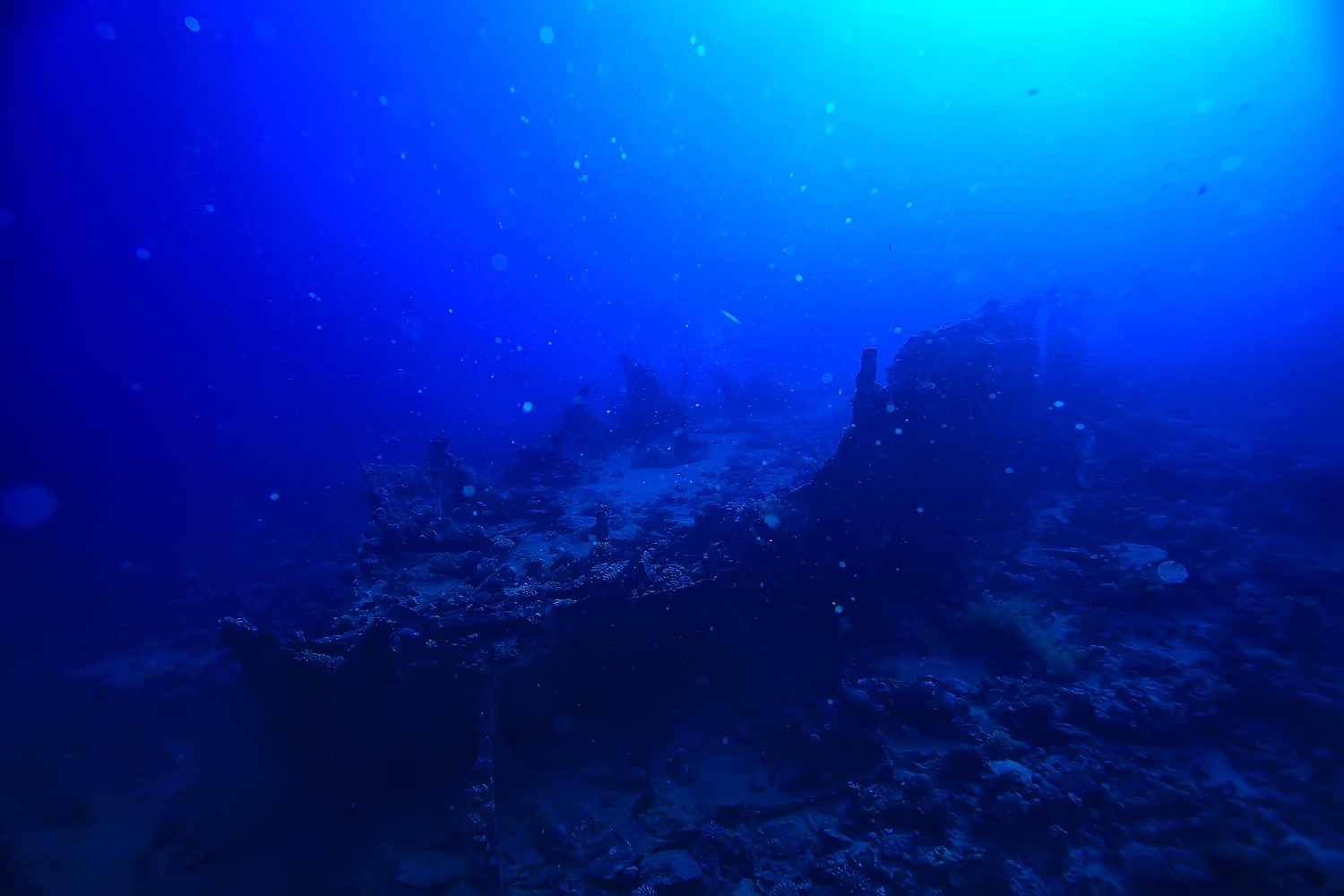
Below the light entirely, the constraint becomes energy supply.
Nothing photosynthesises. Everything depends on material sinking from above — a slow drizzle of fragments, faeces and remains — and the quantity arriving falls sharply with depth.
The consequences are consistent and severe. Animals grow slowly, reproduce slowly, live long and are sparsely distributed. Metabolic rates are low. Movement is economical.
Many species are adapted to eat whatever arrives, rarely, and to survive long intervals with nothing at all. That produces the features that make deep-sea animals look alarming in photographs: large mouths, distensible stomachs, hinged jaws — all solutions to the problem of being unable to be selective when a meal appears at unpredictable intervals.
Most of them are also small. The images that circulate are close-ups of animals that would fit in a hand.
There is a further consequence of the light gradient worth noting. Because red light disappears within the first few metres, red pigment is effectively black below that depth – which means a red animal is invisible in deep water without any specialised camouflage at all.
A number of deep-sea organisms are red for exactly that reason. It is the cheapest possible way to be unseen, and it works only because the light that would reveal it is not there.
Making Your Own Light
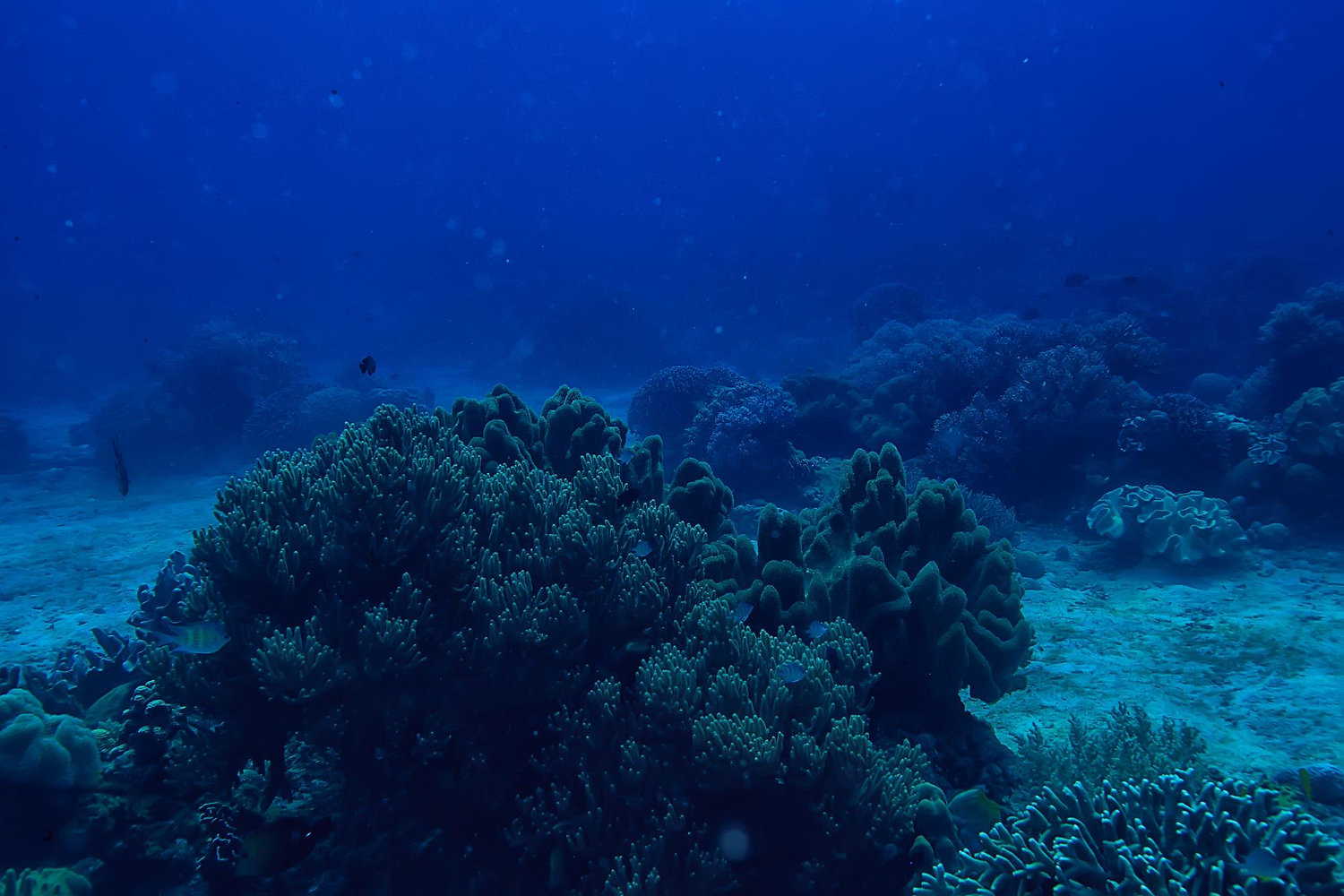
In permanent darkness, the ability to produce light is not exotic but standard.
Bioluminescence is extraordinarily widespread in the deep ocean, present across an enormous range of unrelated groups, and it is used for several completely different purposes.
It is used to attract prey, with a lure positioned near the mouth. It is used to find mates in an environment where encountering another individual is rare. It is used defensively, either to startle or to release a glowing cloud that occupies a predator while the animal leaves.
And it is used for camouflage, which is the counterintuitive application. An animal in the dim upper layers appears as a silhouette from below, so producing light on the underside that matches the intensity above erases the outline entirely.
Most of it is blue, because blue travels furthest in water and because most deep-sea eyes are tuned to blue. A small number of species produce and detect red, which functions as a private channel invisible to almost everything else.
There is a further consequence of depending entirely on sinking material. Because the supply falls with depth, the deepest parts receive the least – which means the very bottom of the ocean is not the most extreme environment biologically so much as the poorest.
That produces a counterintuitive distribution. Life is more abundant at intermediate depths, where some material still arrives, than on the abyssal plain far below, where almost nothing does.
The Places That Do Not Need the Sun
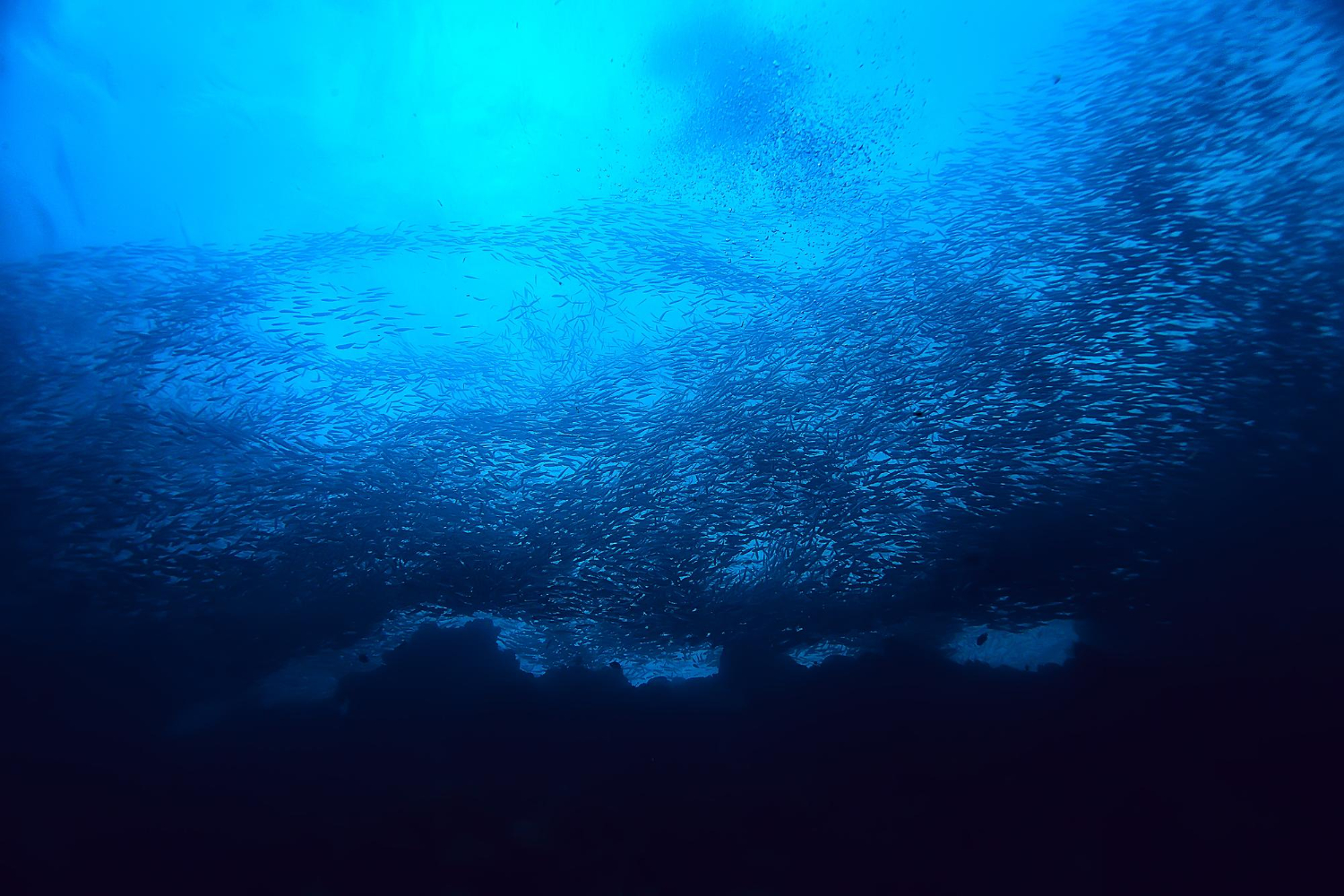
There is an exception to the everything-depends-on-the-surface rule, and it changed how life is understood.
At certain points on the seafloor, mineral-rich water emerges from within the crust. Bacteria there obtain energy from chemical compounds in that water rather than from light, and they support dense communities of animals in places that receive nothing from above.
That is a complete ecosystem running on chemistry rather than sunlight, and its discovery established that photosynthesis is not a requirement for life at scale.
Those communities are also isolated. Each site is a small island of abundance separated by vast stretches of sparse seafloor, which raises questions about how organisms disperse between them that remain partly open.
What the Pressure Does
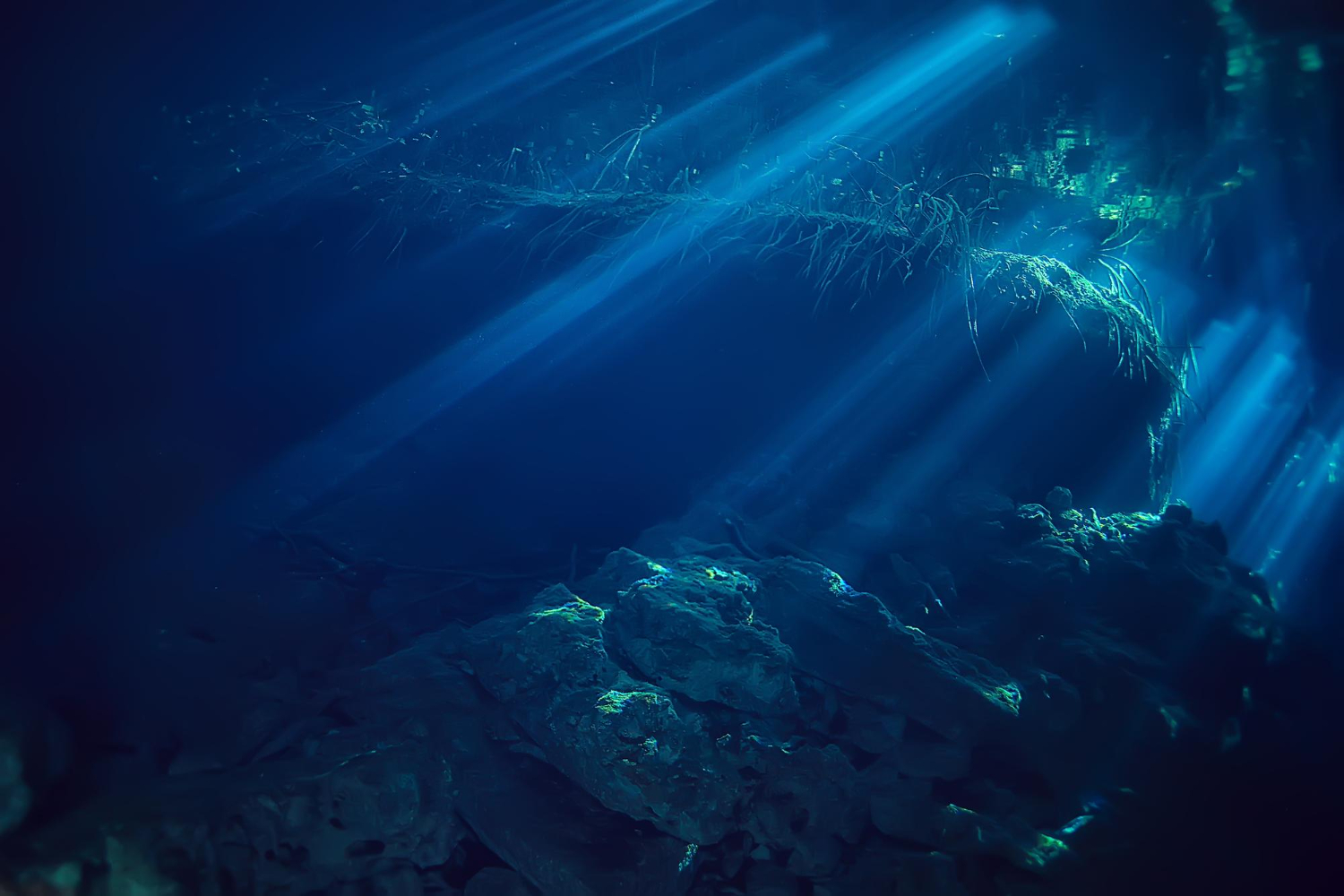
The physical conditions at depth shape the biology as much as the darkness does, and pressure is the more extreme variable.
Pressure increases by roughly one atmosphere for every ten metres, which means an animal at four thousand metres is experiencing several hundred times the pressure at the surface.
That is survivable for organisms without gas-filled spaces, because water and tissue are nearly incompressible — pressure acts equally in all directions and nothing is being crushed in the way the word suggests.
What it does affect is chemistry. Proteins and cell membranes behave differently under extreme pressure, and deep-sea organisms have adaptations in their biochemistry to keep those functioning. Some accumulate specific compounds that stabilise proteins, in concentrations that increase with depth.
That has consequences for what can live where. An animal adapted to great depth cannot survive at the surface, and the reverse holds too — which makes the ocean vertically partitioned in a way that is not obvious from the outside.
Temperature reinforces it. Below the sunlit layer the water is cold nearly everywhere, close to a few degrees regardless of latitude, so the deep ocean is a single vast cold environment underneath enormously varied surface conditions.
Which means the depth zones are not merely darker versions of each other. They are different habitats in pressure, temperature and chemistry, and an organism belongs to one of them.
How Little Anybody Has Seen
The exploration position deserves stating carefully, because it is frequently exaggerated.
Claims that the ocean floor is less mapped than the surface of other worlds require unpacking. Most of the seafloor has been mapped at low resolution from satellite measurements of the sea surface, which reveals large features. Only a small proportion has been surveyed at high resolution by ships.
Direct observation is rarer still. The volume that has been seen by a camera or a person is a very small fraction, because the ocean is enormous and observing it requires equipment that can survive pressure increasing by about one atmosphere every ten metres.
Consequently new species are described routinely from deep-sea sampling, and the ordinary state of the field is that most expeditions return material nobody has recorded.
Which is a truly unusual situation. The largest habitat on the planet, in permanent darkness, containing most of its living space, is being described gradually — and the reason is simply that going there is difficult and everything up here is easier to reach.
Like our content? Follow us for more.