

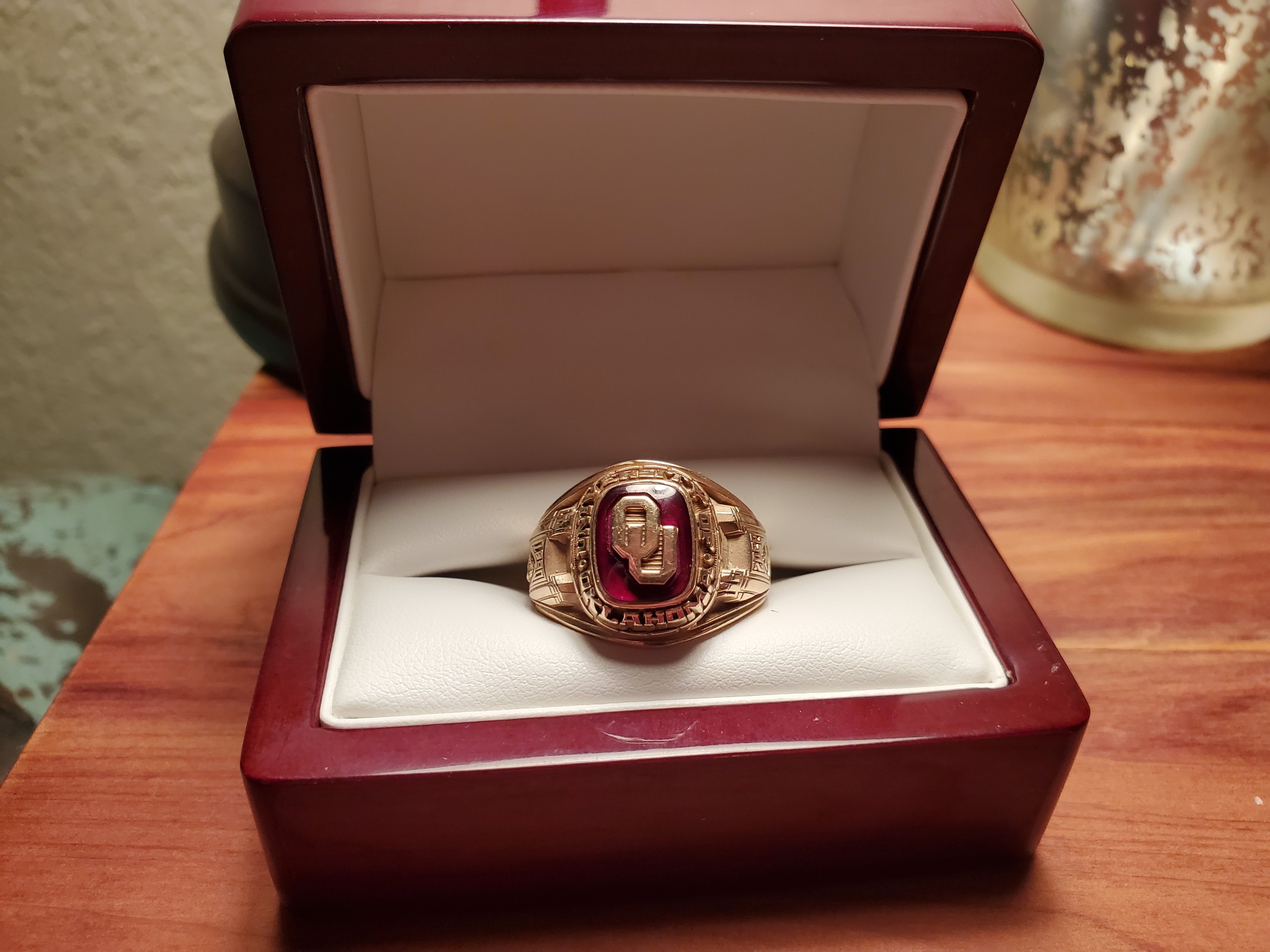
It Was Sold to You at School
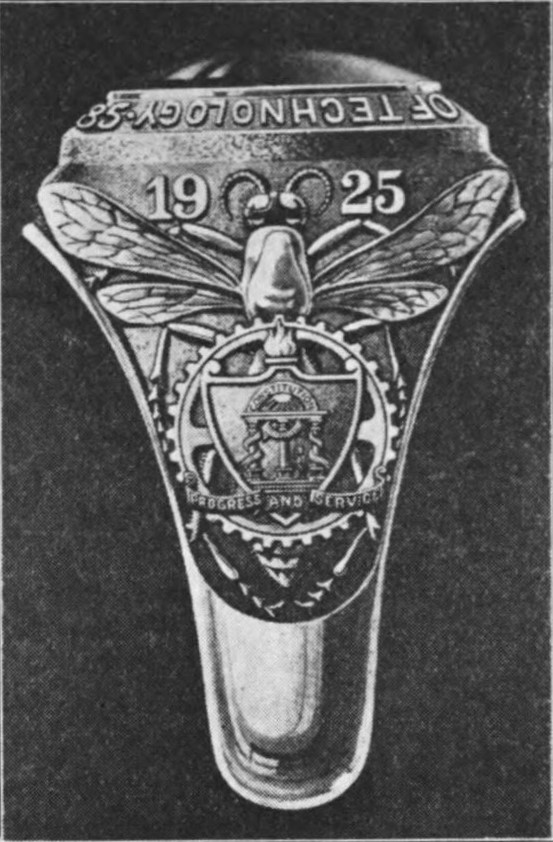
The class ring arrived as a sales process, and the process was part of the object.
A representative came to the school – usually in the junior year, usually into an assembly or a homeroom session – with sample boards, catalogues and order forms. Students were walked through the options: the metal, the stone, the cut of the shoulders, the school name around the bezel, the year, the mascot, the activity symbols for the sides, an engraving inside the band.
The order form was taken home for a parent to sign because of the money, a deposit was paid, and the balance came in instalments over the following months.
Then nothing happened for a long time, because the rings were manufactured to order in batches and the wait could run to a whole term. Delivery day was an event: a box of rings arriving at the school office, names called, and a queue of people trying theirs on in a corridor.
That was the first piece of jewellery a great many of those students had ever chosen, bought and owned – and for a lot of them it would be the only one until a wedding ring.
Like our content? Follow us for more.
The Price Was the Point and Everybody Knew It
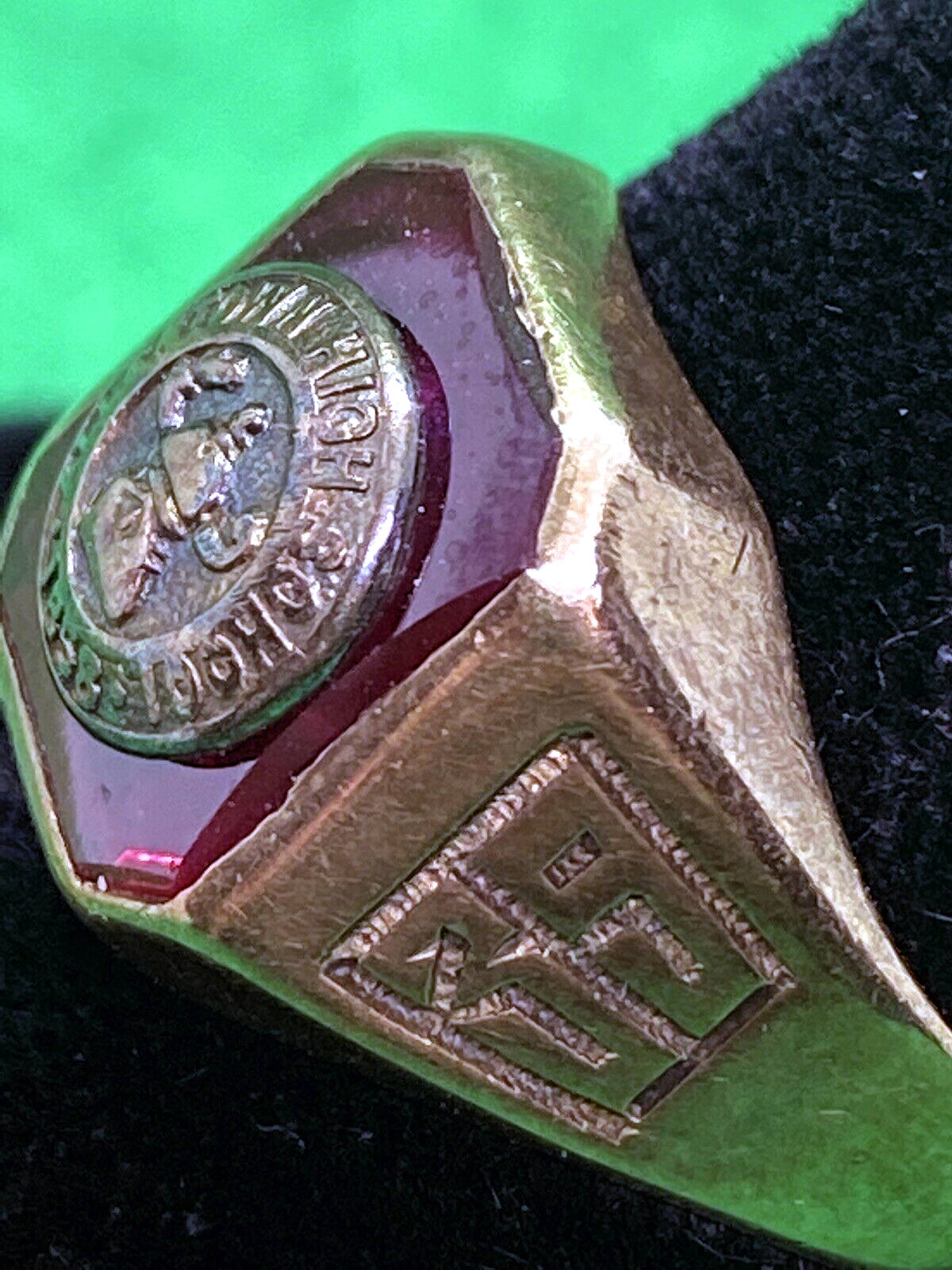
A class ring was expensive relative to a teenager’s world. It cost more than a bicycle, more than most coats, considerably more than a record collection, and it was frequently the largest single purchase a person had been involved in.
That expense was not incidental to the product. It was what made the object mean something. A cheap ring handed out to everybody would have signified nothing; a ring that had to be chosen, saved for, part-paid by a parent and waited months for carried the weight of all of that.
The instalment plan was central to the business and was pitched directly at households where the full sum was not available at once. That made the ring accessible, and it also meant a fourteen-dollar-a-month commitment sitting in a family budget for a school ornament, which in some households was a real decision and in others was simply not possible.
Which is the part of the nostalgia that deserves a note: the students who did not get one generally did not get one for that reason, and in a corridor full of rings that was perfectly visible.
Every Element on It Was a Choice You Had to Defend
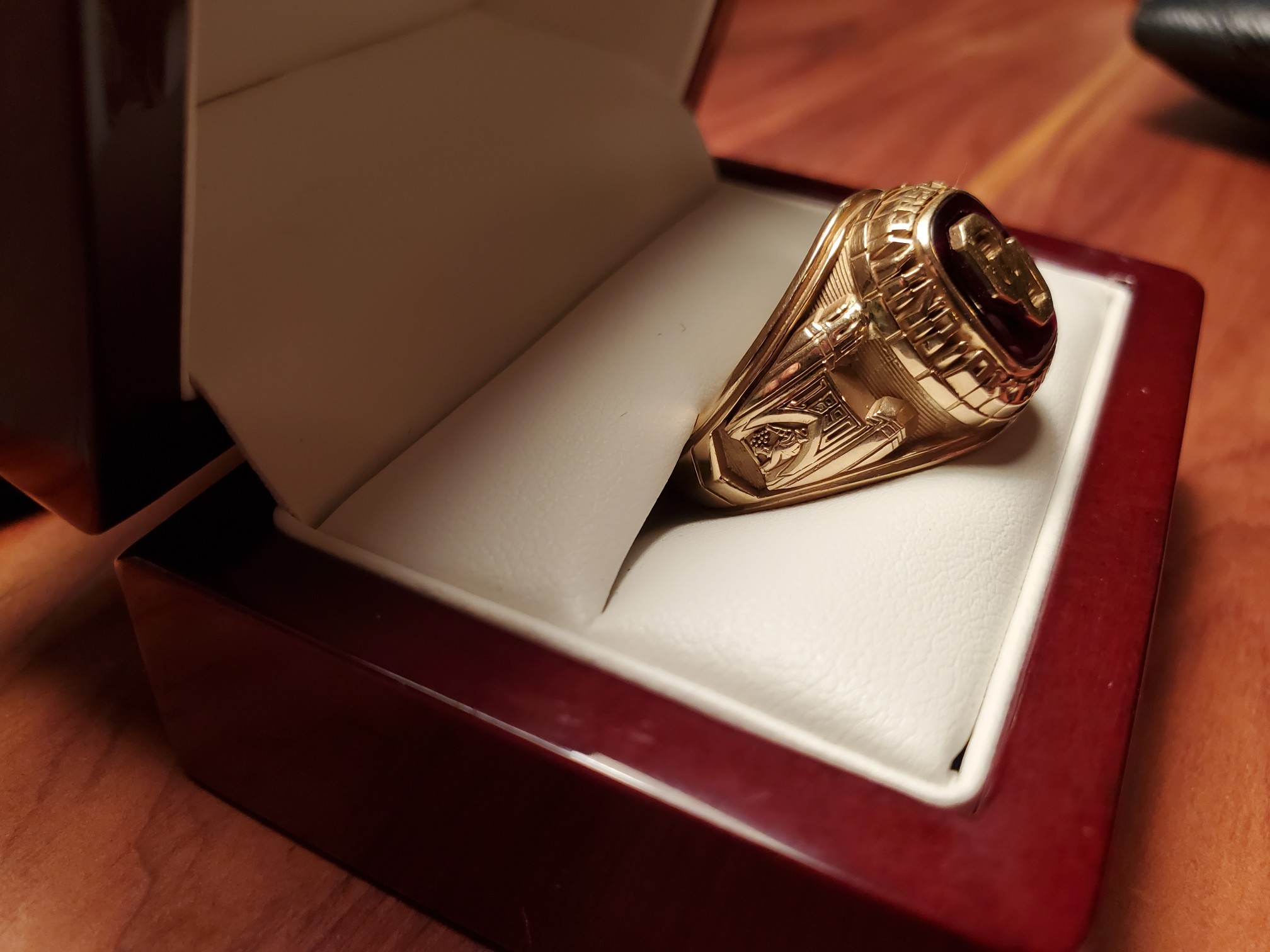
The customisation is what makes surviving rings so specific, and the options were genuinely numerous.
The stone, in a colour that was supposed to be the school’s, or your birthstone, or simply the one you liked – faceted, cabochon, or with the school crest cut into it.
The sides, where you selected symbols for what you did: a sport, an instrument, a club, a subject, a role. Two sides, two choices, which meant declaring at sixteen what you were.
The band, engraved inside with your name or initials, and sometimes a date or a phrase.
The metal, with the price rising steeply through the options, and the family conversation that went with that.
Those side symbols are the reason an old class ring tells a complete small story about a person. It records what a particular teenager, in a particular year, decided were the two most important things about themselves – which is a remarkably revealing thing to have committed to metal, and a decision a great many of them would make differently now.
Wearing It Was a Whole Set of Rules Nobody Wrote Down
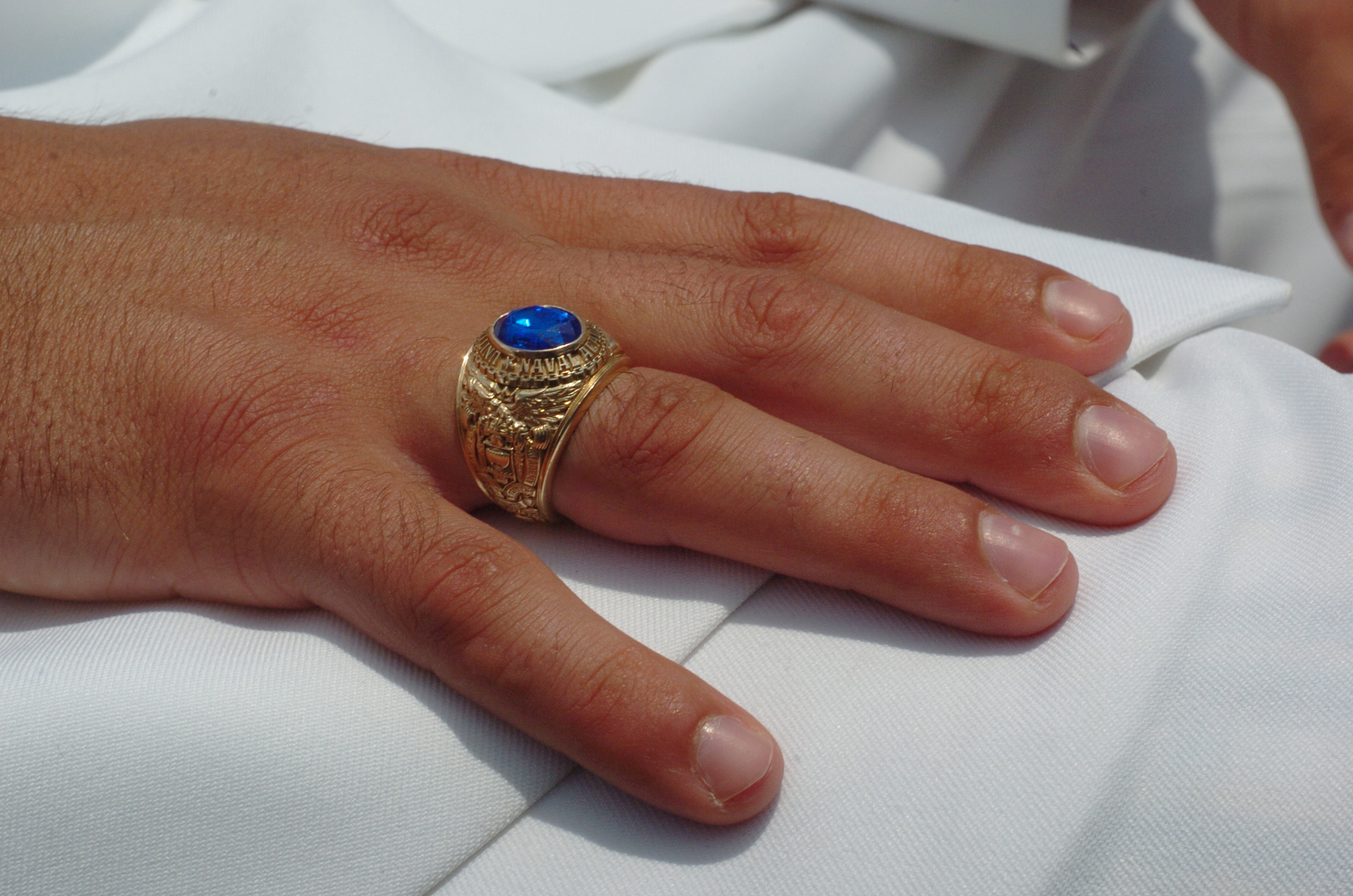
The ring came with conventions, and they varied by school and region but were followed carefully within each.
Which way round you wore it was the main one. A student wore the ring facing inwards, towards themselves, so they could read the crest; on graduating, it was turned to face outwards so the world could read it. That single gesture is remembered by almost everybody who had one.
Lending it was the other convention, and it was serious. Giving your ring to somebody to wear was a public statement about a relationship, and a ring worn on a chain around a neck, or wound with tape or thread to fit a smaller finger, was understood by everybody in the building to mean something specific.
Getting it back was equally public and considerably less pleasant.
There were also the small superstitions: the number of turns to make on graduation day, rules about who could touch it before then, and a set of beliefs about what happened if you lost it. None of this was in the catalogue and all of it was enforced by other teenagers, which is the most effective enforcement there is.
The Stone Was Almost Never a Real Gemstone
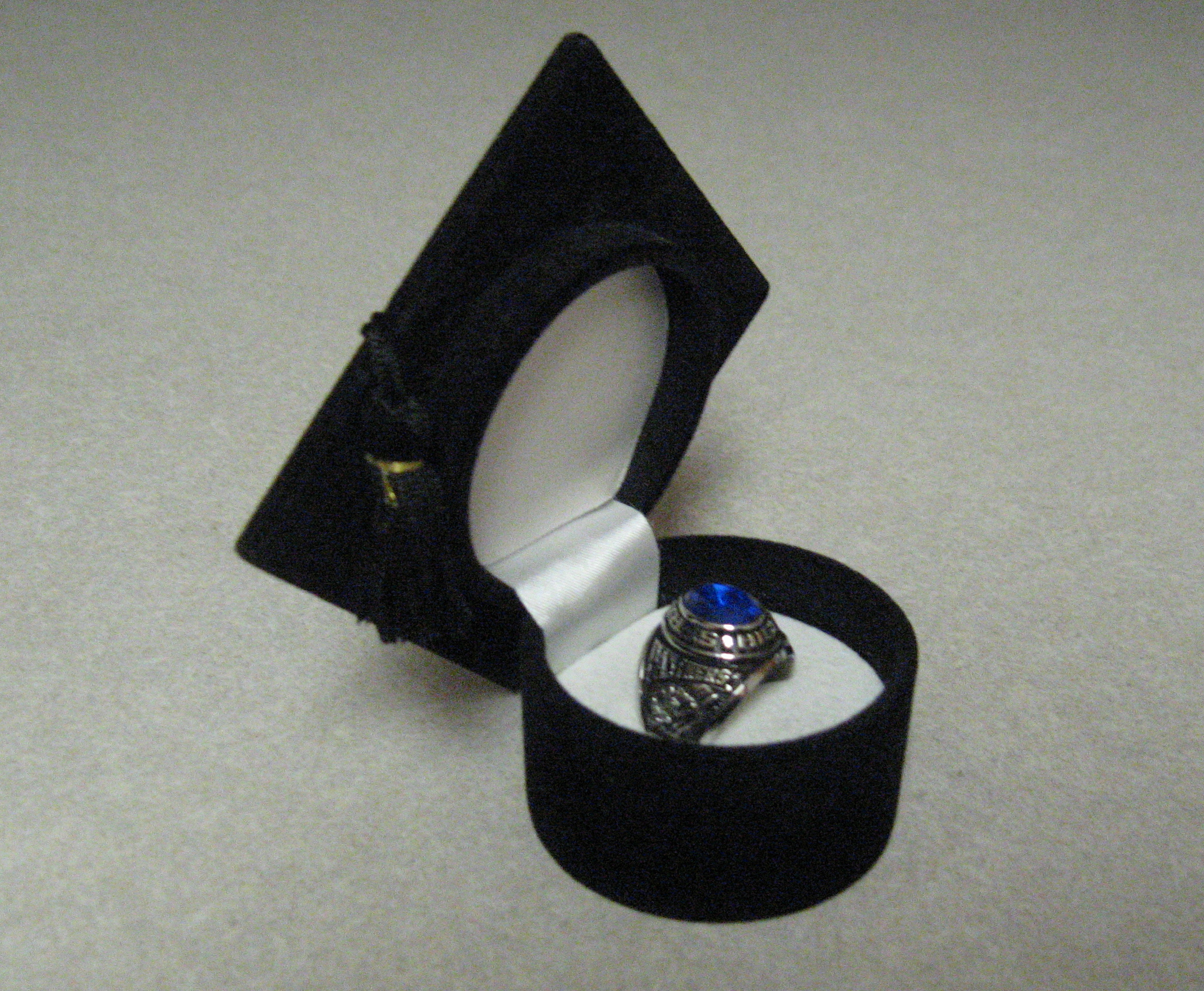
Worth knowing, because it changes how people value the one in their drawer.
The coloured stones in class rings were overwhelmingly synthetic – lab-grown spinel and corundum in a range of colours chosen to match school colours and birthstone conventions. That is not a defect and it was not concealed: synthetic stones of that type have been manufactured in quantity since early in the twentieth century, they are chemically and optically close to their natural equivalents, and for a ring that is going to be knocked against lockers and desks for two years they are the sensible choice.
What it means is that the stone is generally not where the value is. The metal is. A ring described as gold in the catalogue could be solid gold of a stated fineness, or a gold-filled or gold-plated base, and the price steps between those options were steep – which is exactly why the family conversation about the order form happened.
So somebody holding an inherited ring and wondering what it is worth is usually asking the wrong question about the wrong part. The answer is in the hallmark or the maker’s mark inside the band, not in the stone.
And in almost every case the sentimental value is the only value that is interesting, because the engraved initials make it unsellable as anything other than what it is.
Then the Whole Thing Quietly Stopped Mattering
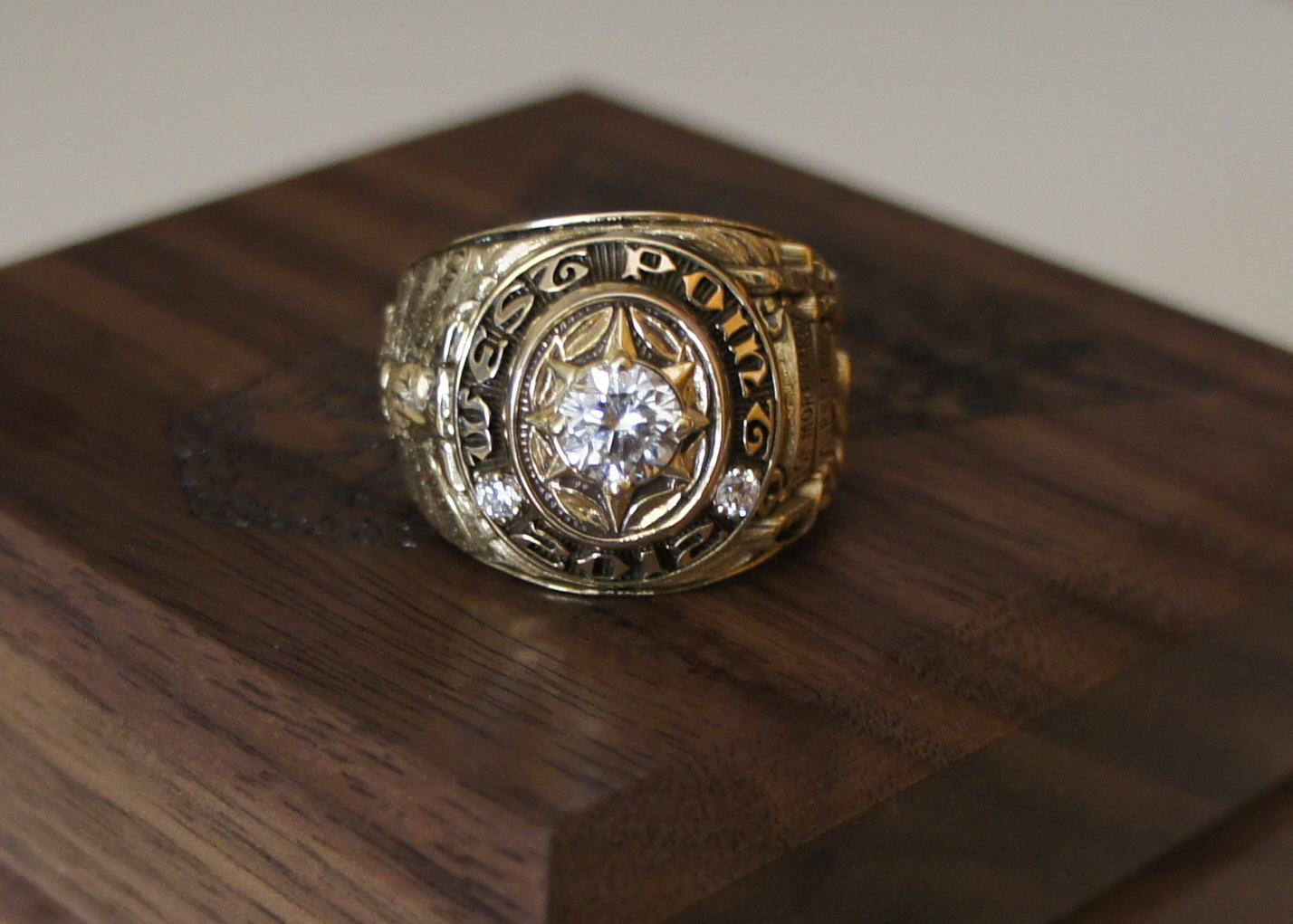
Class rings are still sold and still manufactured, but the near-universality has gone, and the reasons are a reasonable summary of what changed about adolescence.
The cost comparison moved. A teenager in 1974 had almost nothing to spend significant money on. A teenager now has a phone, a laptop, headphones, a games console and a subscription list, each of which costs real money and each of which is worn, used or displayed daily. A gold ring competes badly against that for both the budget and the attention.
Jewellery habits changed, particularly for young men, for whom a heavy gold signet-style ring moved from unremarkable to conspicuous.
School identification weakened as an organising idea. A ring broadcasting your school, your year and your activities assumes those are the primary facts about you, and for a great many students they no longer are.
And the sales channel narrowed. Schools became less willing to hand assembly time to a commercial representative, which removed the mechanism by which the product reached essentially everybody at once.
The Girls’ Rings Were a Different Product
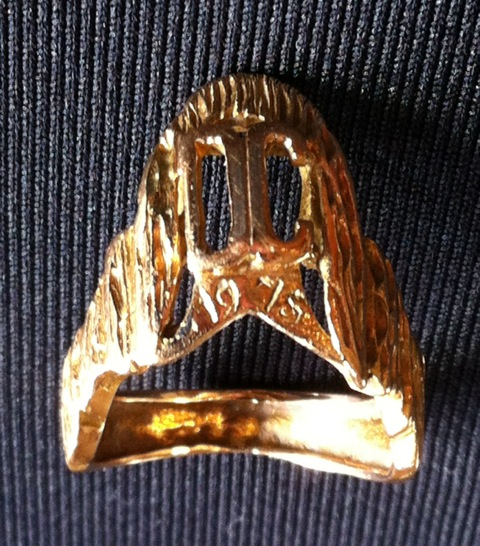
One detail that is almost always left out of the nostalgia: the rings were made in two ranges, and the difference was substantial.
The standard ring – heavy, broad-shouldered, with a large stone and deep side panels – was designed for a male hand and is the one that appears in every photograph of the period. The women’s version was narrower, lighter, with a smaller stone, shallower sides and less room for the activity symbols that were the whole point of the customisation.
That meant a girl ordering a ring was choosing from a reduced set of options, on a smaller object, that said less about her. Several of the symbols simply would not fit. And because the ring was lighter it contained less metal, which made it cheaper – a saving that was presented as a benefit and had the side effect of making the object less substantial in a corridor where substance was the signal.
A fair number of girls ordered the standard ring instead and wore it on a chain or on a different finger, which is one reason so many surviving rings are the large pattern with a woman’s initials inside.
It is a small thing and it is a clear illustration of how the period’s assumptions were built into the objects themselves rather than only into the rules.
They Are Nearly All in a Drawer Now
The afterlife of the class ring is unusually well documented, because the objects are durable, individually identifiable and almost never thrown away.
Most are in a drawer, a jewellery box or a safe deposit box, unworn for decades. A lot were resized, worn thin, lost and replaced, or passed to a child who wore it once. A substantial number were sold for the metal during periods when gold prices were high, which is why surviving rings from some years are scarcer than the class sizes would suggest.
And a genuine small industry exists in returning lost ones. Because a class ring carries a school, a year and frequently a name or initials inside the band, a ring found in a field, a river, a sofa or a house clearance can be traced, and there are people who do nothing else but reunite them with their owners or their owners’ families. Rings lost in the 1970s are still being returned.
That is a fitting end for the object. It was designed, by a sales representative with a catalogue, to be a permanent record of a particular person in a particular year at a particular school – and it turns out to be so good at that job that strangers can read it off a ring pulled out of a drain fifty years later and find out whose it was.
Like our content? Follow us for more.


