Pick up a nineteenth or early twentieth century American family Bible and the first thing you notice is that it is enormous – heavy, thick, frequently with a tooled leather cover and a metal clasp.
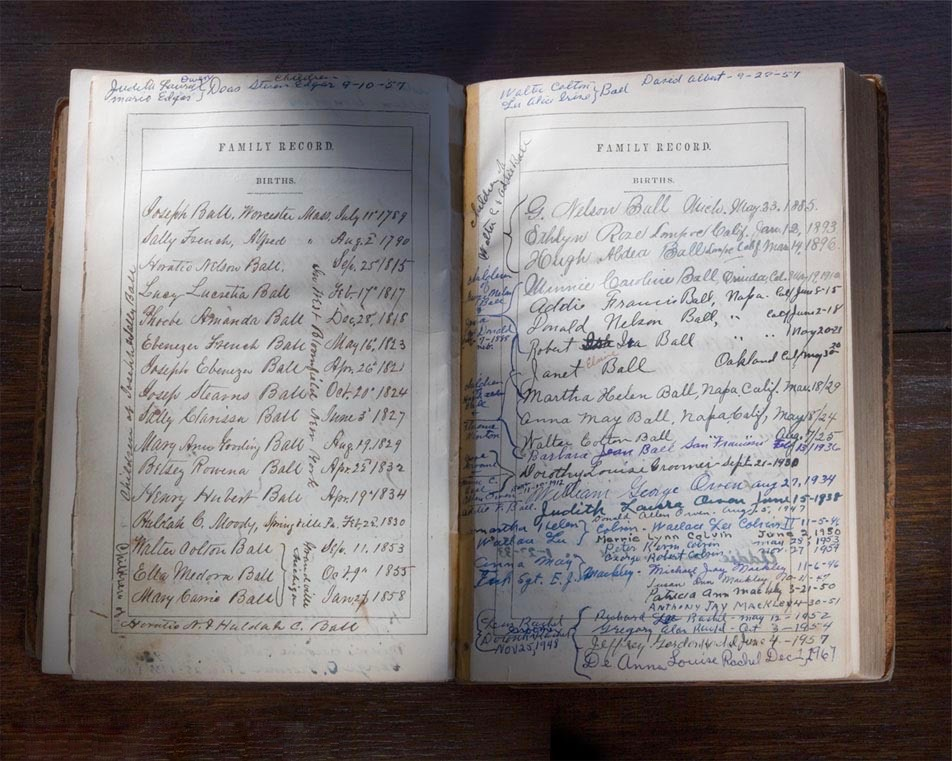
The second thing you notice is the pages in the middle. Between the two testaments, bound in as part of the book, there are printed pages with ruled lines and engraved headings: Births. Marriages. Deaths. Sometimes Baptisms, sometimes Memoranda.
Those pages are filled in by hand, in several different inks, in several different hands, across a span of decades. Somebody’s mother started it. A daughter continued it. A grandson added the last entries in ballpoint in about 1968 and then nobody wrote in it again.
That is not a sentimental keepsake. It is a record of vital events, and in the United States it has genuine evidentiary standing – because for a very large number of Americans it is the only documentation that exists of when they were born, who their parents were and whom they married.
Civil Registration Was Late and Patchy
Here is the fact that explains everything else, and it surprises almost everybody.
The United States has no national system of birth registration from the founding. Recording births, marriages and deaths was left to the states, and the states got to it at wildly different times – some beginning in the nineteenth century, many not achieving anything like complete coverage until well into the twentieth.
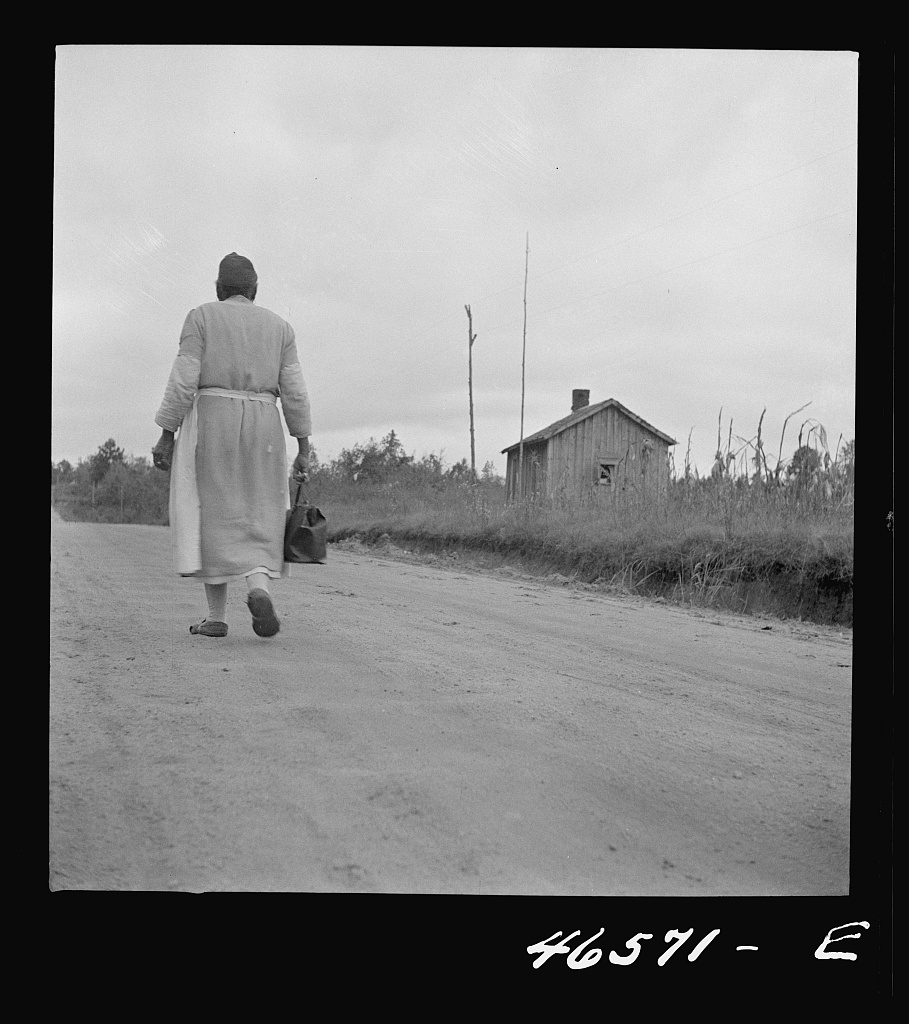
Even where a law existed, compliance was another matter. Registration depended on somebody reporting the event, which in rural areas meant a doctor who might not have attended, a midwife who had no obligation, or a family that had no particular reason to make a trip to a county seat. Births at home, which was most births for a long time, were the ones most likely to go unrecorded.
So there is a very large population of Americans, born across a long period, for whom no official birth record was ever created. Not lost – never made.
Which means that when those people needed to prove their age or their parentage, there was nothing in any government office to produce. And the thing they produced instead was the Bible.
Like our content? Follow us for more.
It Was Used as Proof in Practice
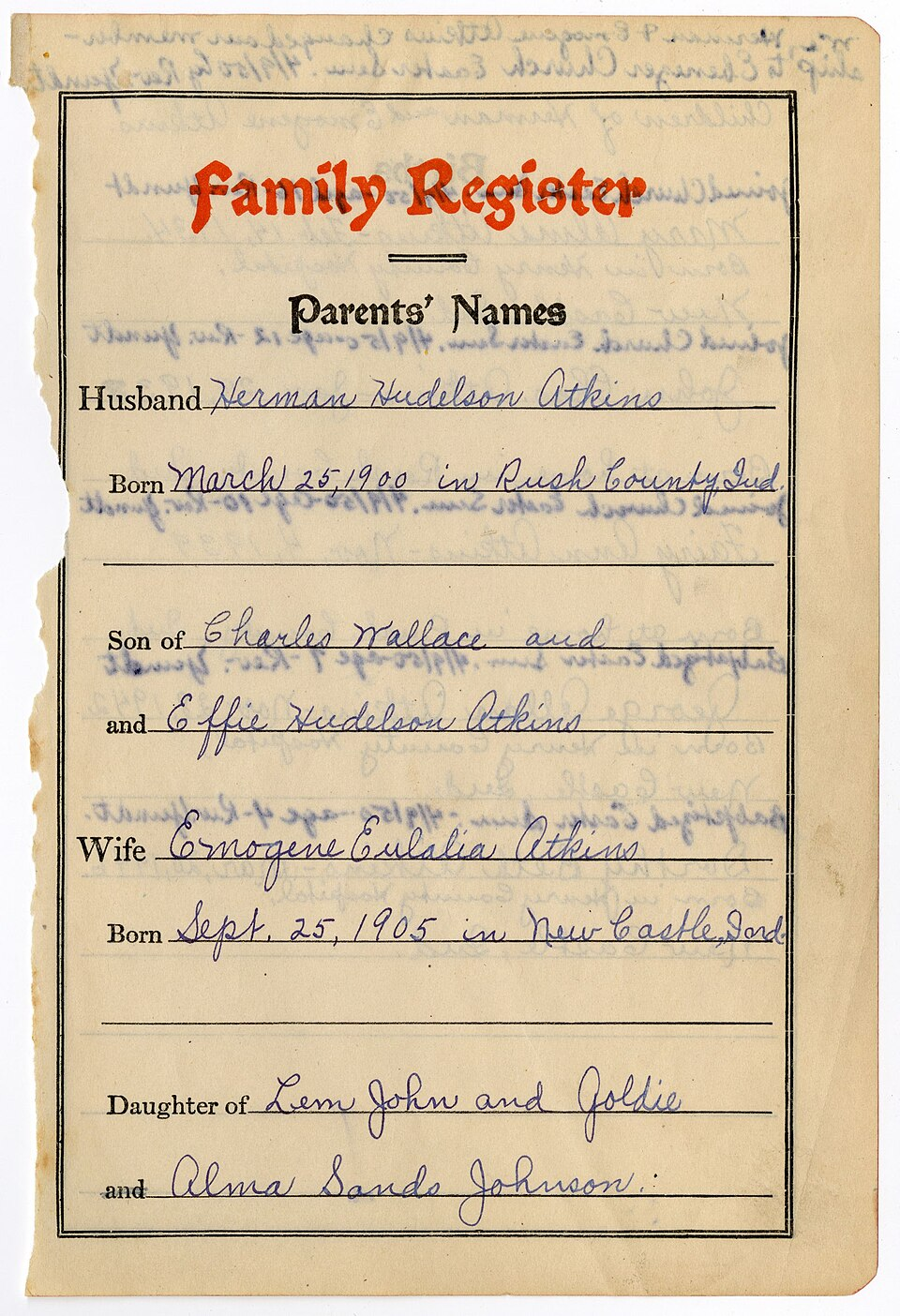
This was not a theoretical function. The family register page was used, repeatedly, for serious purposes.
Pension claims required proof of age and of relationship, and applicants submitted Bible records – sometimes the page itself, sometimes a sworn transcription, sometimes the entire book, carried into an office and handed over.
The same applied to establishing age for employment and for school, to marriage, to inheritance and probate, to military service and to insurance. And when retirement and social insurance programmes arrived in the twentieth century, an enormous number of people needed to prove a date of birth for which no certificate had ever existed – and the Bible was one of the accepted alternatives.
It still is, in a general sense. Church and family records of this kind continue to be recognised as a category of acceptable secondary evidence of age and relationship in the United States when primary records are unavailable, and professional genealogical standards treat an original family register entry as a serious source rather than a curiosity.
This piece names no agency, programme, statute or requirement and gives no procedure, because the rules about what documents are accepted for what purpose vary by jurisdiction and change, and anybody with an actual need should work from the current requirements of the relevant authority.
Why the Bible Specifically
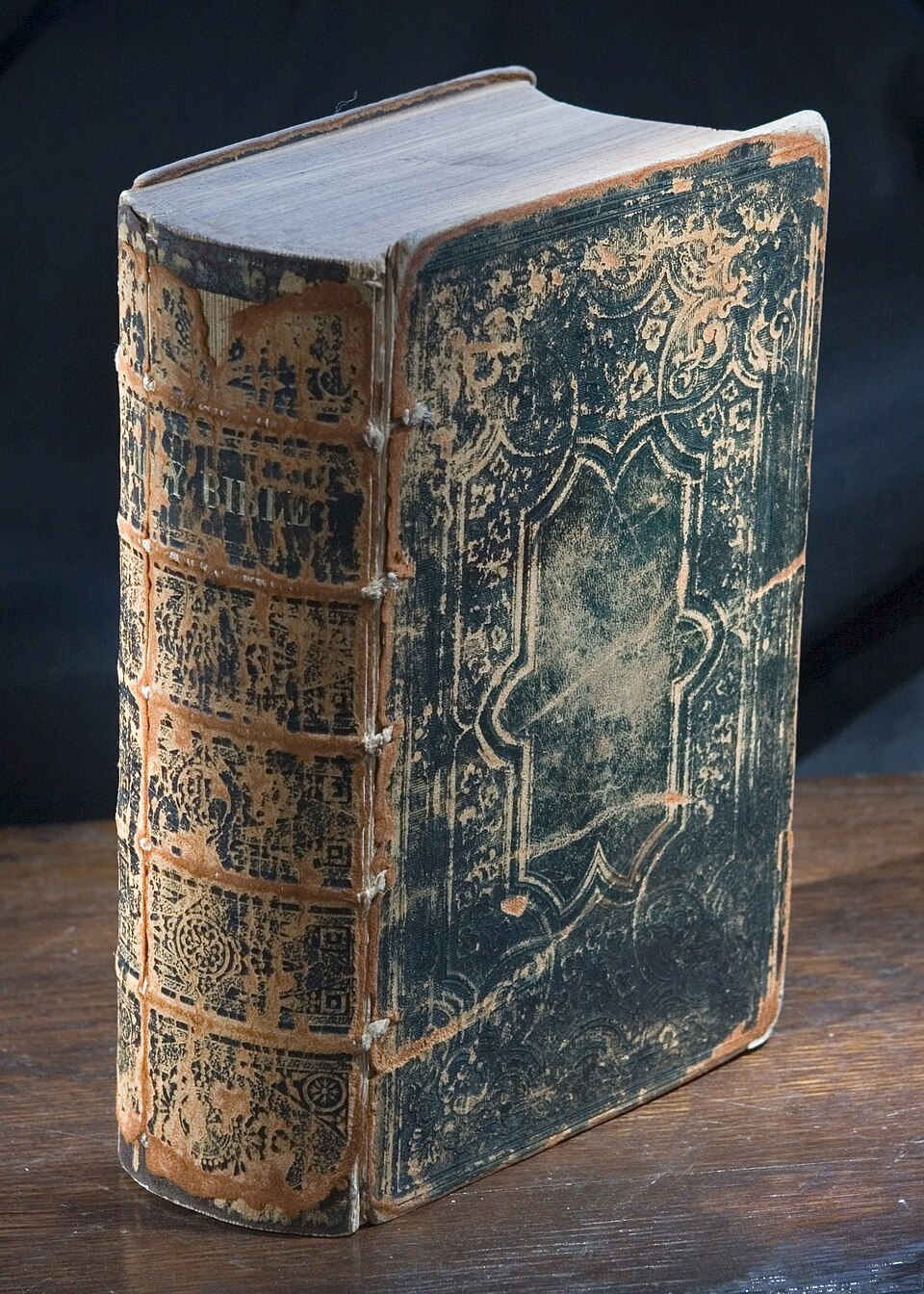
Of all the objects in a household, why did the records go in that one? There are three practical reasons and they are all about the book rather than the religion.
It was the one book almost every household owned, which made it the only universally available place to write something down.
It was the most durable and best-made object in the house, frequently the most expensive single possession, bound to last and treated accordingly. A ledger or a notebook gets damaged, used up, mislaid or thrown out; a family Bible gets kept.
And it was the object guaranteed never to be discarded. In a household move, a fire, a sale or a death, the Bible was among the first things carried out and the last things disposed of – which gives a record written in it a far better survival probability than the same record on any loose paper.
Publishers understood all of this perfectly well, which is why the register pages were printed and bound in by the manufacturer rather than being improvised by families. The pages are a product feature, deliberately included, because a Bible that doubles as a family archive is a Bible worth buying.
The Handwriting Is the Evidence
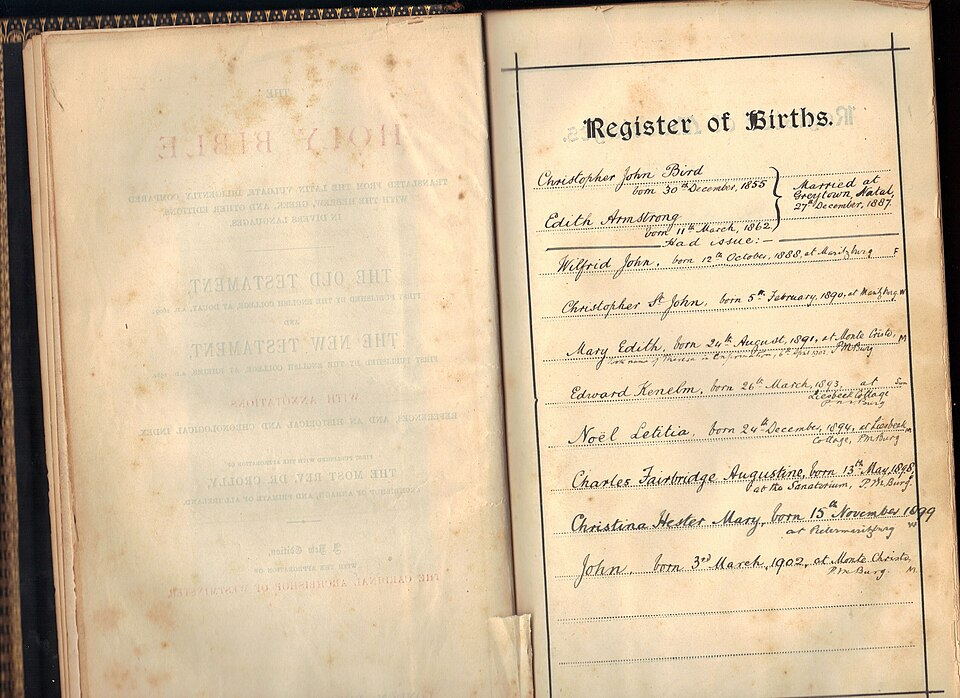
What makes these records trustworthy or not is a question of when they were written, and the answer is visible on the page.
An entry made at the time of the event, by somebody present, in that period’s ink, is a strong record. A set of entries all written at once in one hand decades later – somebody copying from memory or from an older book – is considerably weaker, because memory is unreliable about dates and copying introduces errors.
So anybody assessing one of these pages looks at exactly that: how many different hands, how many different inks, whether the entries run in chronological order or were clearly filled in as a block, and whether the dates recorded predate the publication of the book itself. A Bible printed in 1878 containing a birth entry from 1851 was obviously written retrospectively, which does not make it wrong but does change what it is.
That is also why the genuinely valuable registers are the messy ones. A page in four inks and three hands, with a correction and a crossing-out and somebody’s shaky late addition, is a much better historical document than a page of neat uniform entries – because the mess is the evidence that it was kept as events happened.
The Pages Hold Things No Certificate Would
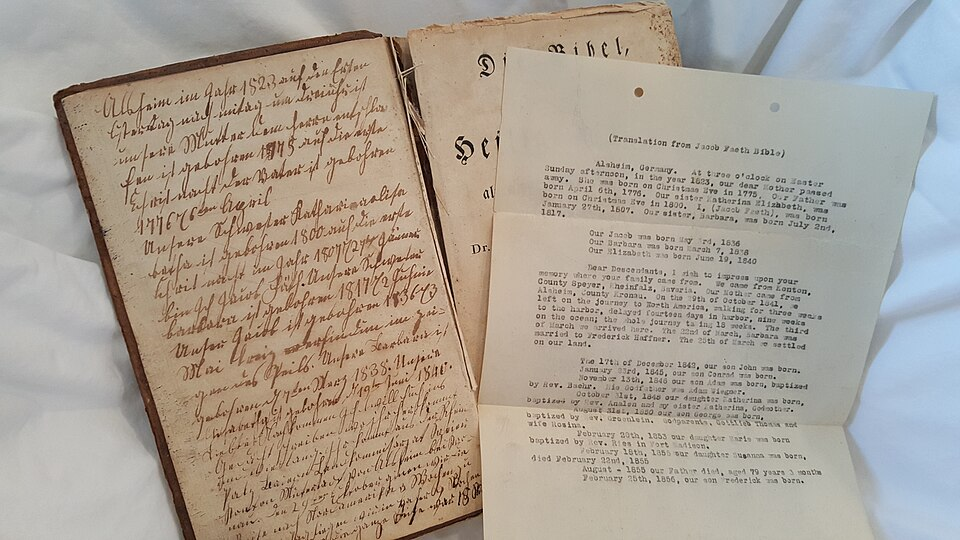
The other reason these records matter is that they contain information no official system collected.
The margins and the memoranda pages carry what the family thought was worth recording: pressed flowers from a funeral, a lock of hair, a newspaper clipping, the date somebody left for the west, a note about a child who died unnamed, the name of a ship, a list of who was present at a wedding, an address, a debt, a prayer.
Births and deaths that no authority ever knew about appear in these pages – infants who lived days, people who died away from home, relationships that were never formalised. A civil register records what the state required; a family register records what the family could not bear to leave unwritten, which is a different and in some respects larger set.
For anybody tracing an American family, that is frequently the only route past a wall. The official record stops, and the Bible page continues.
Then Everybody Got a Certificate
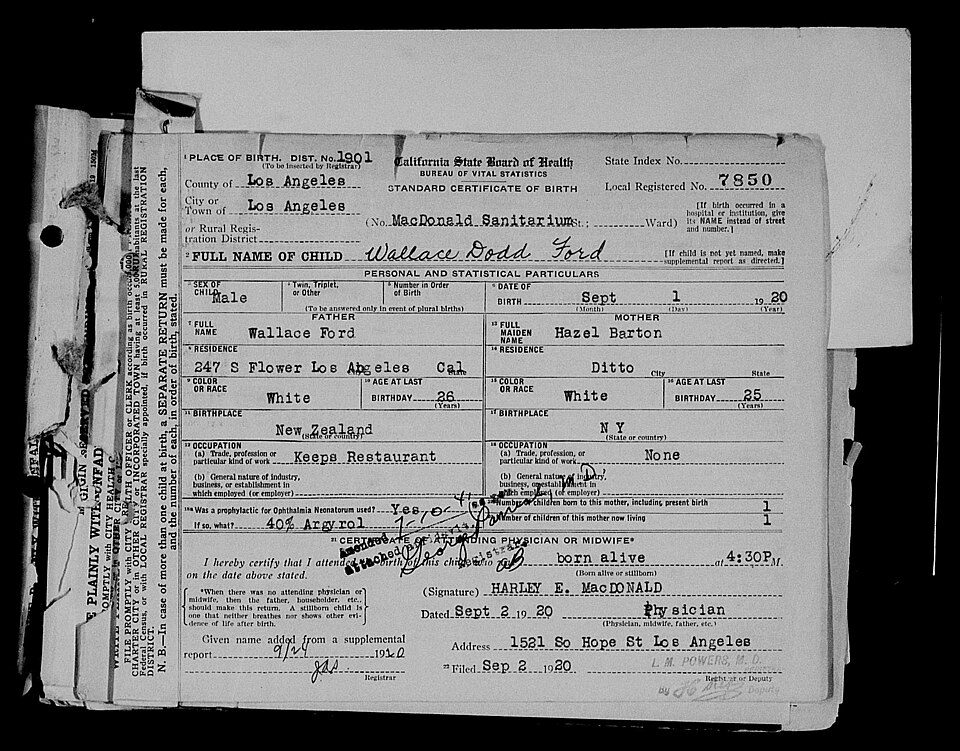
The practice ended for a straightforward reason, and it is a good one.
Complete civil registration arrived. Hospital birth became the norm, which meant a trained attendant with a legal reporting obligation was present at essentially every birth and a certificate was generated automatically. Social insurance required a verified date of birth for nearly everybody, which created both a universal need for documentation and a system that supplied it.
Once every American had a birth certificate in a government file, a handwritten page in a book stopped being the primary record and became a supplementary one. There was no decision and no moment; the function simply transferred.
Two other things finished it off. Households stopped owning a single enormous Bible as a central object, so the physical repository disappeared from a great many homes. And family record-keeping moved onto loose photographs, albums, and eventually files on devices – all of which are easier to create and dramatically worse at surviving, which is a problem nobody has solved.
The Page Outlived the People and the Paperwork
So the object deserves a more serious look than it usually gets.
Those bound-in register pages are, collectively, one of the largest bodies of American vital records in existence, created by ordinary people for their own purposes, accepted as evidence when the state had nothing, and surviving in enormous numbers precisely because of the book they were printed in.
They are also the reason a great many American families can trace themselves at all. The certificates begin at a certain point and stop; before that, for millions of people, the only writing that says a person was born on a particular day to particular parents is a line of ink on a printed page between the testaments, entered by somebody who was in the room.
And the last entry in almost every one of them is in a different pen from all the others, written by whoever was the last person in the family to think of it – which is the point at which the record became an heirloom and stopped being a document.
Like our content? Follow us for more.