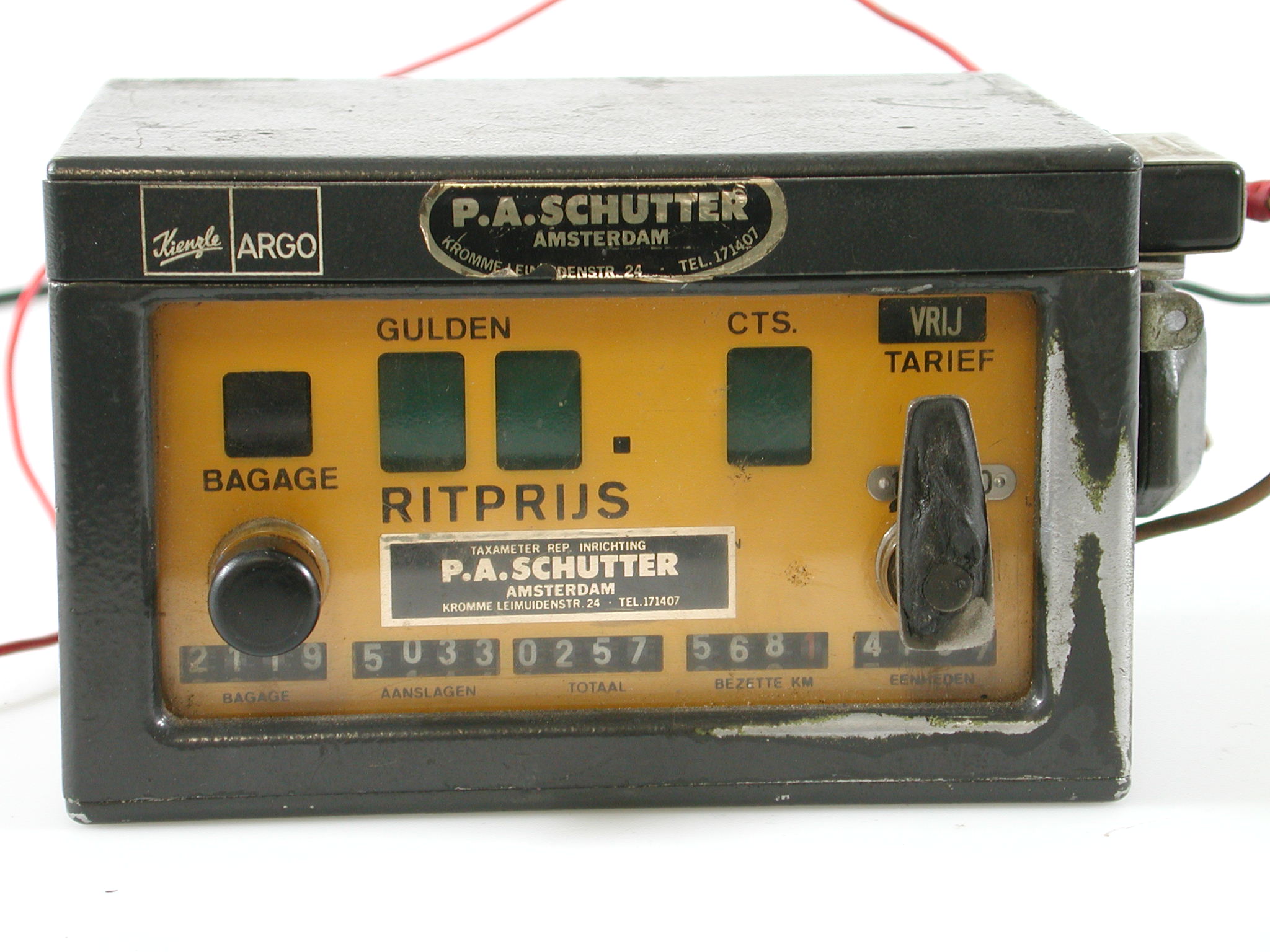
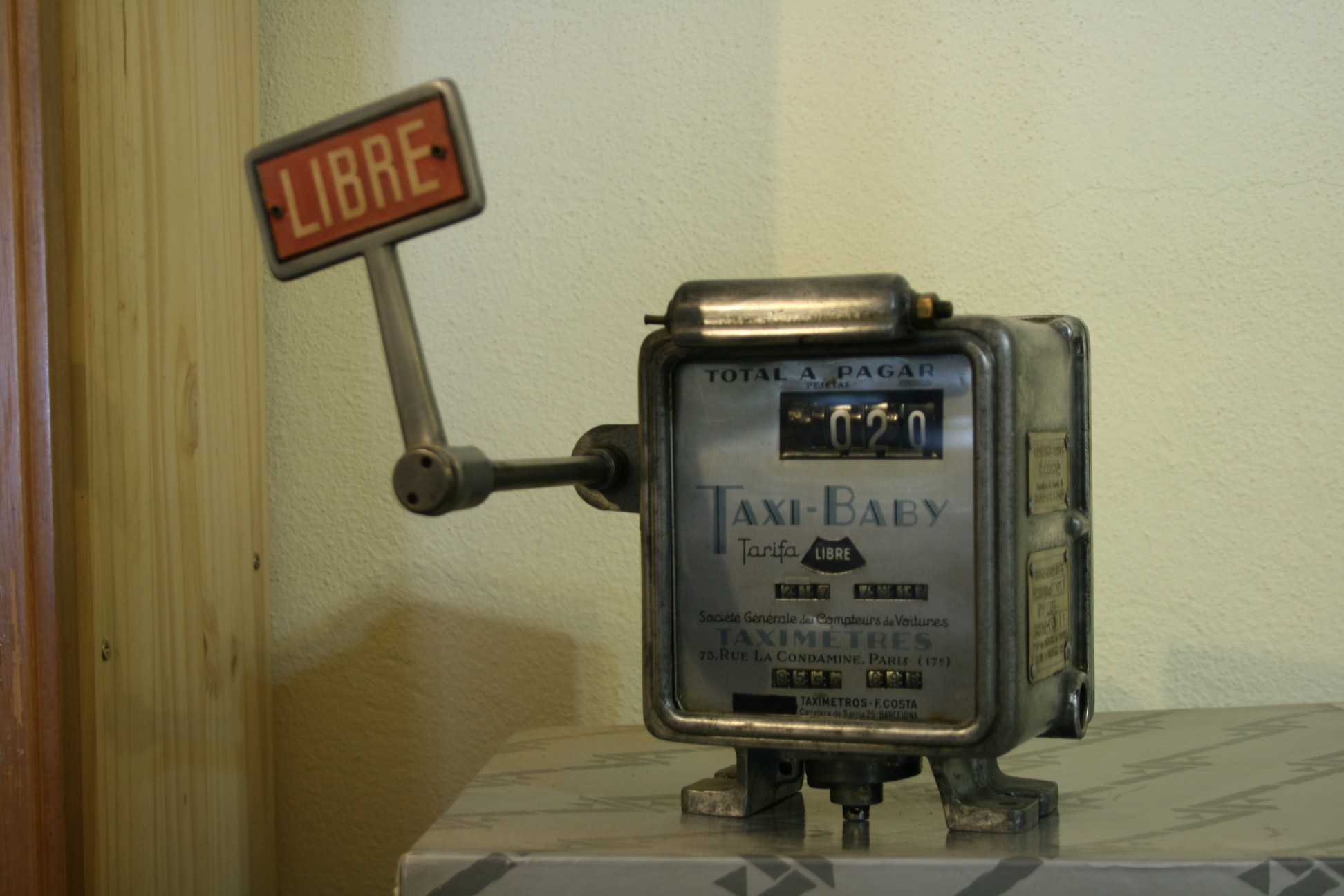
It sat on the dashboard or on the steering column, a chromed box with numbers on little drums behind a glass window, and a lever on the side with a metal flag attached to it.
The flag said something like VACANT, and it stood up where the street could see it. You got in, the driver reached over and pulled the lever down, the flag folded away, a number appeared, and from that moment the thing clicked.
One Movement Did Two Separate Jobs
This is the detail that makes the old meter a better piece of design than anything that replaced it, and it is almost never pointed out.
The flag lever controlled two things at once, mechanically linked. Pulling it down started the fare register. It also folded the flag out of sight, which told everybody outside the cab that it was occupied.
Raising it did the reverse: it stopped the register, computed nothing further, and put the sign back up.
So the driver could not start charging you without simultaneously telling the street he was busy, and he could not advertise himself as free while a meter was running. The two states – earning and available – were made physically exclusive by a single piece of linkage, which means a whole category of possible dishonesty was designed out rather than policed.
That is also where the language comes from. Flagging down a cab is a reference to that metal flag. In a number of countries the initial charge is still called the flag fall, decades after the last flag came off a dashboard.
Like our content? Follow us for more.
It Charged for Distance or Time, Whichever Was Winning
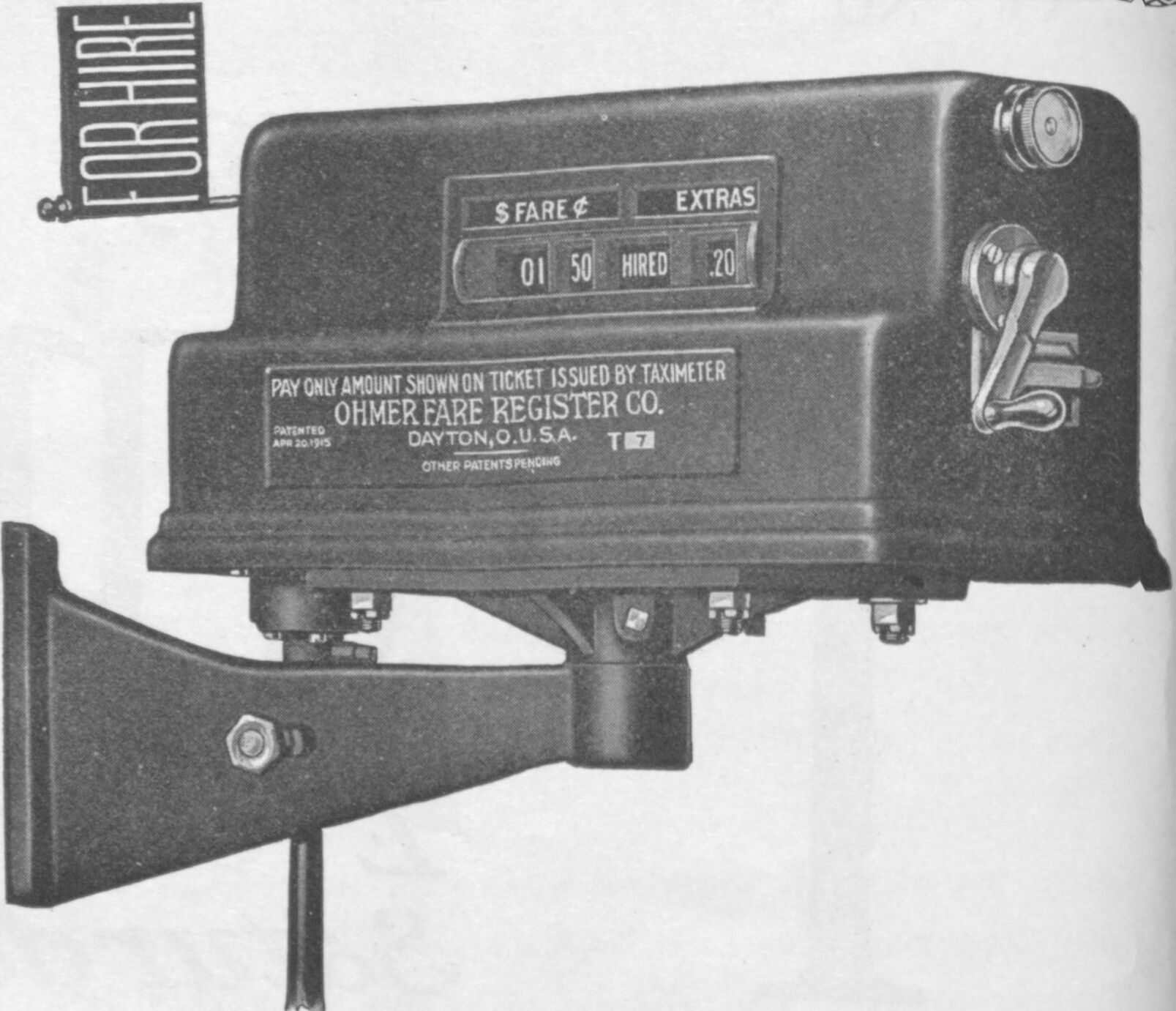
The mechanism underneath had to solve a genuine problem: a taxi is sometimes moving and sometimes stuck, and the driver’s cost is real in both cases.
So the meter had two inputs. Distance came from a flexible drive cable, geared off the transmission or a wheel, turning a shaft in proportion to the ground covered. Time came from a clockwork or motor-driven timer inside the case.
Both fed the same register, and the register advanced on whichever was accumulating faster. Above a certain speed the distance drive was winning and you were charged by the mile. Below it – in traffic, at a light, waiting outside a building – the timer took over and you were charged by the minute. The crossover speed was set by the gearing, and it was typically somewhere around ten or twelve miles an hour.
That is why the meter kept clicking when the cab was not moving, which generated a great deal of complaint and was entirely correct. A stationary taxi is still occupying a driver’s working time, and a fare structure that charged only for distance would have made traffic unpayable for the driver.
The clicking itself was the register stepping. Each increment was a discrete mechanical event with a sound, which meant the passenger could hear the fare accruing, and in heavy traffic the sound of the meter stepping while the car stood still is one of the most specific anxieties of urban life in that period.
It Was a Sealed, Inspected, Legally Regulated Instrument
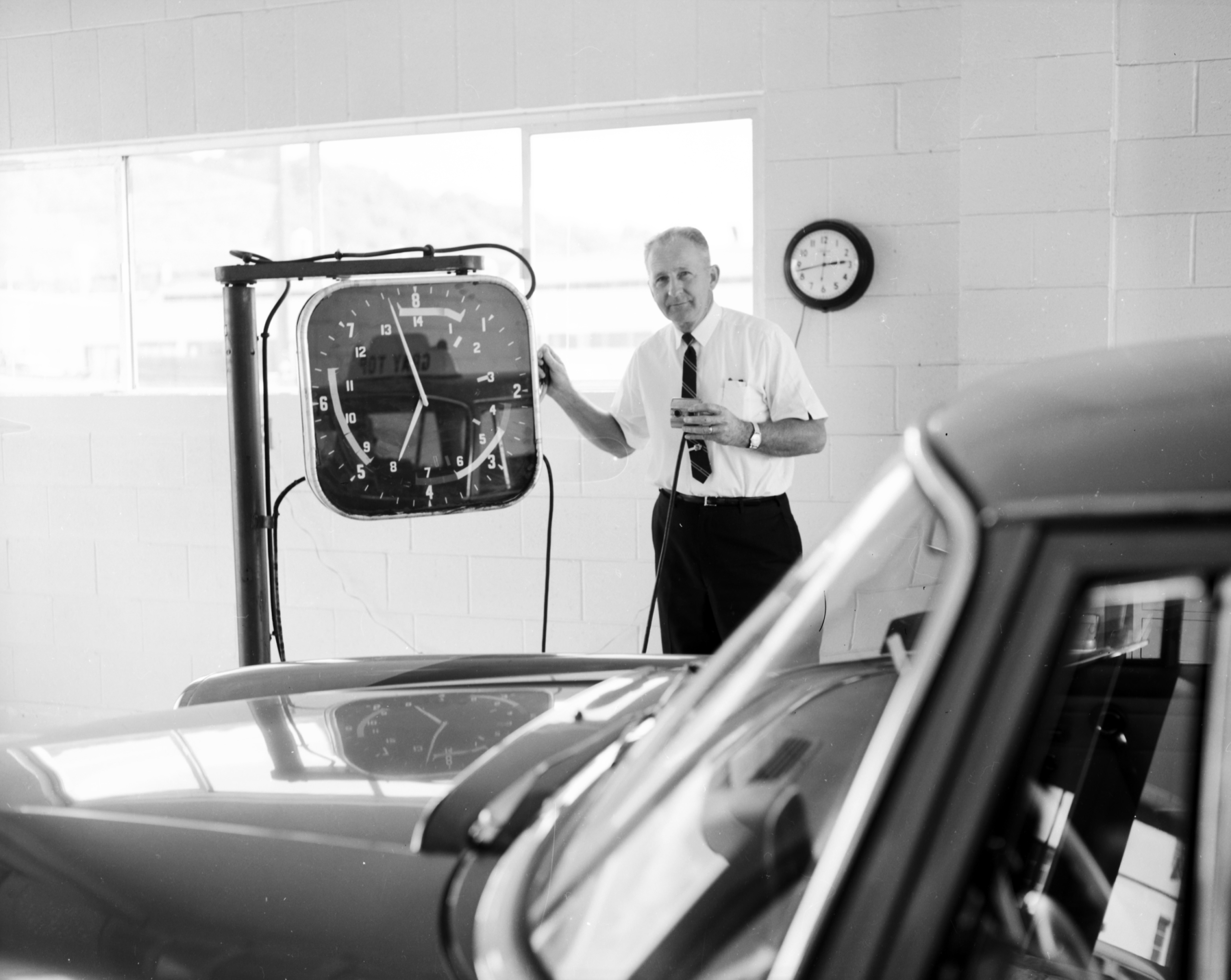
The meter was not simply equipment. It was a measuring device in a commercial transaction, in the same legal category as a shop’s scales or a fuel pump, and it was treated accordingly.
Meters were calibrated against a measured course, then sealed. The seal was usually a lead or soft metal disc crimped onto a wire that passed through the case, so that opening the mechanism necessarily destroyed it. An inspector’s mark went on the seal or on a plate, with a date.
Tampering was a serious offence, and the methods were known and watched for – altering the gearing so the meter over-registered, fitting incorrect tyre sizes to change the effective wheel revolutions, or running a wire to advance the register. Enforcement involved test courses, inspections and, in the larger cities, inspectors riding as passengers.
And the whole arrangement was visible to the customer. The seal was there to be looked at. The rate card was posted in the cab. The register faced the passenger. The design assumption was that a passenger should be able to audit the transaction in real time with their own eyes, and that is why the figures were large and mechanical.
The Extras Were a Second, Smaller Set of Numbers
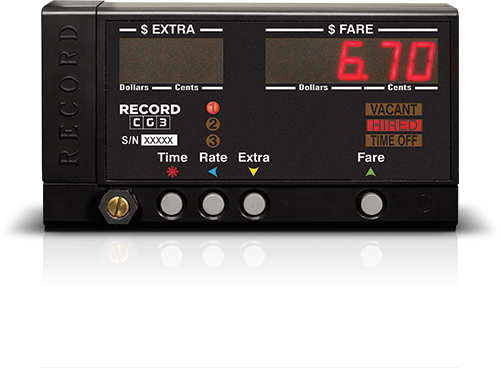
Beside the fare register there was usually a separate small window, and that one was for additions.
Charges for luggage, for extra passengers beyond the first, for night or holiday hours, for a journey leaving the licensed area, and in some cities for an airport pickup. These were not computed by the mechanism – the driver entered them, by a lever or a dial, and they appeared as a separate total.
Which meant the extras were the arguable part. The distance and time were measured by a sealed instrument and effectively beyond dispute. The surcharges were the driver’s assertion about what applied, and whether a suitcase counted as luggage or whether a particular street was inside the zone was a conversation that took place at the kerb, frequently with the rate card being pointed at.
The Roof Light Was the Flag’s Replacement and It Was Worse
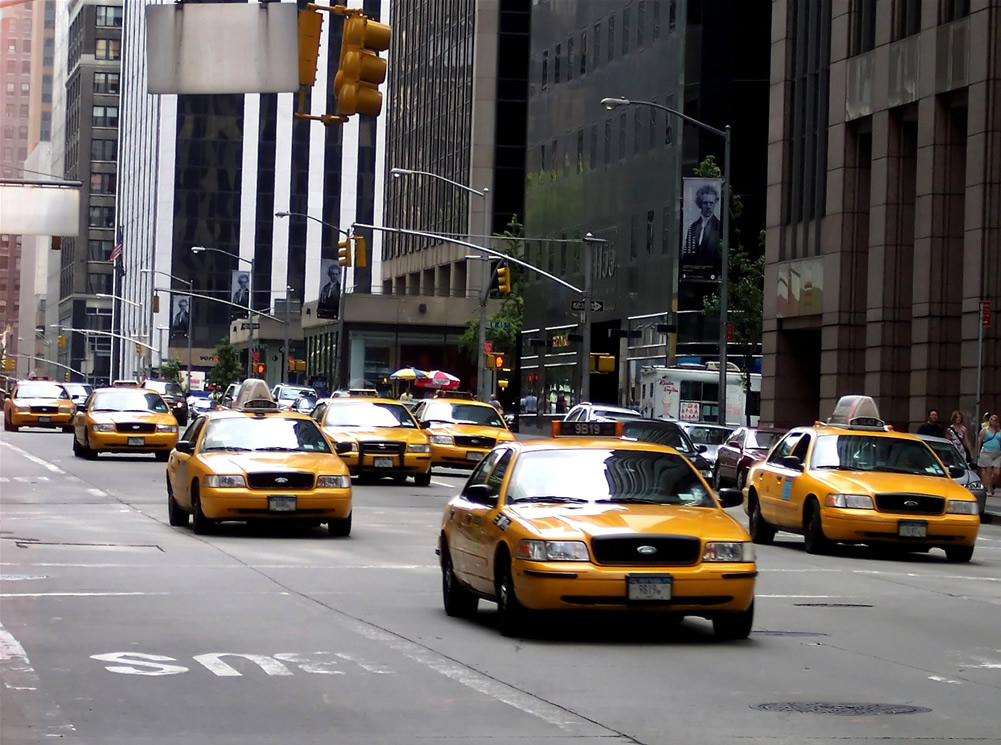
When the flag went, the availability signal moved to a lamp on the roof, and that substitution is worth examining because something was lost in it.
A flag is mechanically linked to the meter. A roof lamp is a switch. The lamp and the register became two independent things, controlled separately, which means the physical guarantee disappeared – a driver could have a lamp showing one state and a meter in another, and the only thing preventing it was a rule rather than a linkage.
In practice that mattered less than it sounds, because drivers had no incentive to advertise themselves as free while carrying a passenger. But it mattered in the other direction, which is the familiar urban complaint: a cab with its light off, driving past, not stopping, with no way to tell whether it is occupied, off duty, heading for a shift change or simply declining to pick you up.
The flag could not do that. A flag that was up meant free, because it was connected to the thing that charged you, and there was no third state for it to be in.
The Rate Card Was a Public Document and People Read It
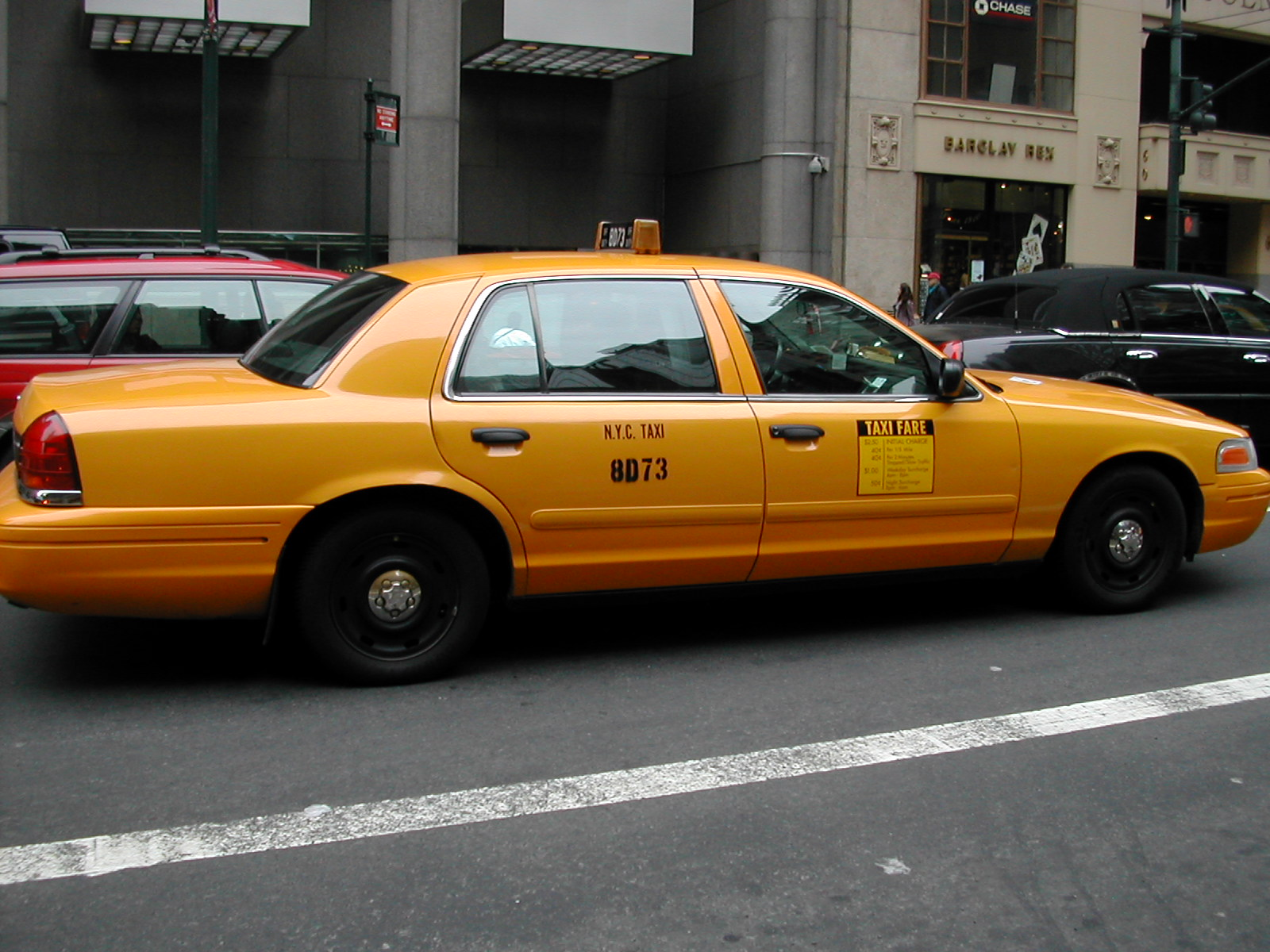
One small piece of apparatus that has gone entirely is the posted tariff, and it was doing more work than it looks.
Every licensed cab carried a printed rate card in a holder where the passenger could see it: the initial charge, the distance increment, the waiting rate, every permitted surcharge and the authority that had set them. It was a public document, identical in every cab in the city, and it was there specifically so that a passenger could check an assertion against a published rule.
People used it. A passenger who thought a surcharge was wrong pointed at the card, and the argument was settled by reading rather than by relative confidence – which is a meaningfully different kind of dispute from one in which neither party has a document.
That card, the sealed meter and the visible register were three parts of one arrangement, and all three have gone together.
What Replaced It, in Two Steps
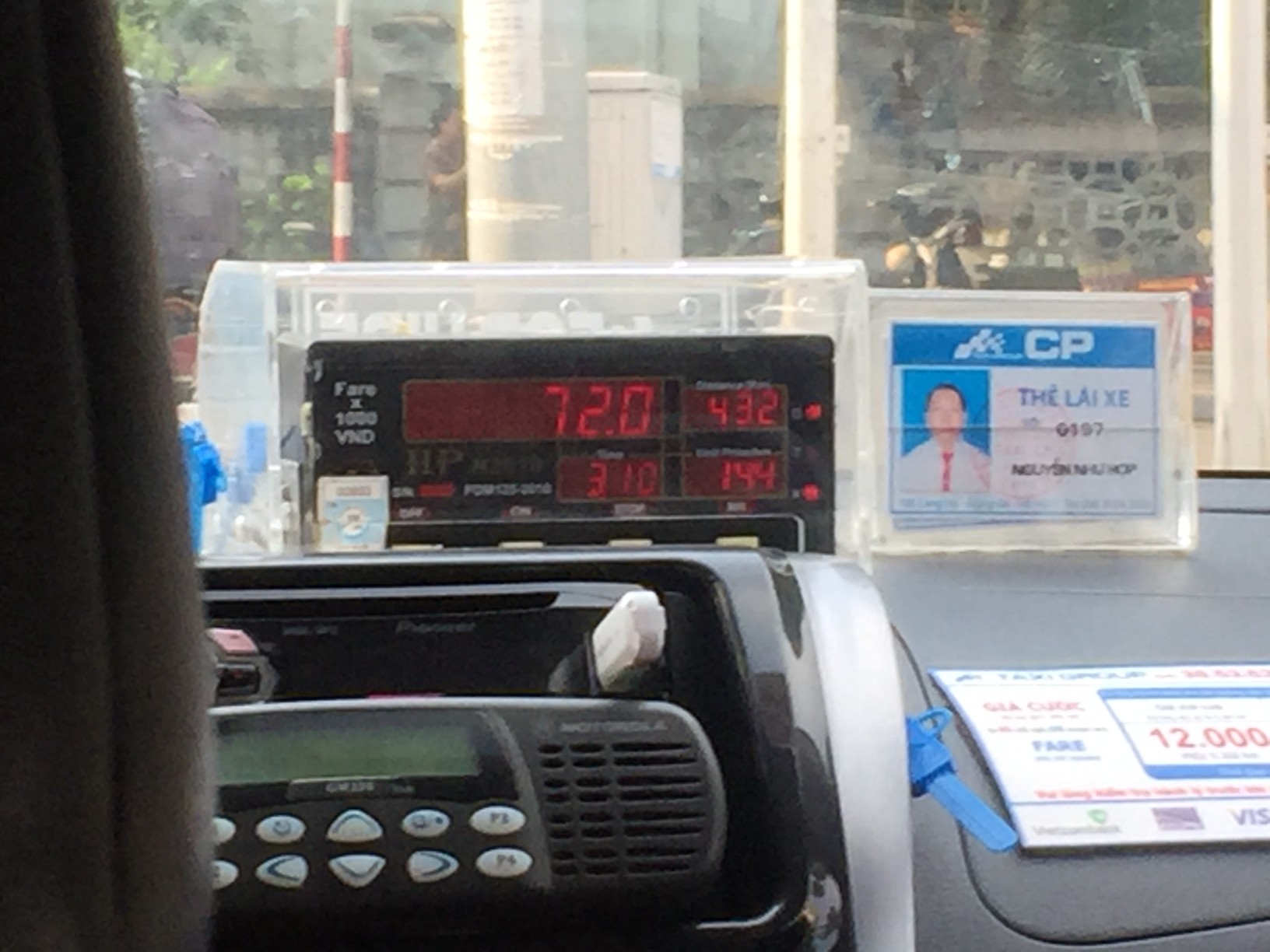
First came electronic meters, from the later 1970s and through the 1980s. These removed the mechanical drive cable and took distance from a pulse signal off the transmission or from the vehicle’s existing speed sensor, computed the fare in a microprocessor, and displayed it on a digital readout.
They were more accurate, cheaper to make, easier to reprogramme when rates changed – which previously meant physically regearing a mechanism – and they could print a receipt. The flag went, replaced by a switch and then by a button, and the availability signal moved to a lamp on the roof.
Then came the application, which did something different in kind. A fare is now calculated by software from satellite positioning, frequently quoted before the journey begins, with no instrument in the vehicle, no seal, no inspector’s mark, no visible register and no mechanical relationship to anything happening on the road.
The Twist: It Existed Because Nobody Trusted Anybody
The mechanical meter is easy to read as a quaint piece of engineering, and it is more interesting than that. It was a solution to a trust problem, and the trust problem was mutual.
A passenger getting into a stranger’s car in a strange city has no way to know what the journey should cost, and is in an extremely weak bargaining position once it is underway. A driver has no way to prove that a long route was necessary rather than padded. Before the meter, fares in most cities were haggled or set by a published table of zones, and both arrangements produced constant disputes.
The meter answered that by putting a sealed, independently calibrated, legally regulated instrument between the two parties, facing the passenger, with its figures large enough to read and its seal visible. Neither side had to trust the other. They both had to trust the instrument, and the instrument was inspected by somebody who had no stake in the ride.
That is a genuinely elegant piece of institutional design, and it is the thing that has quietly gone.
A modern quoted fare removes the dispute entirely, which is a real improvement – you know the price before you get in, nobody argues about a suitcase at the kerb, and the route taken no longer changes what you pay. Every one of those is better.
But it removes the dispute by removing the measurement. There is no instrument to look at, no seal to check, no rate card to point at, and no way for a passenger to work out from anything observable whether the number they were given is the number the rules produce. The price arrives as an assertion from a system, and the only available response is to accept it or not take the ride.
The old meter assumed the passenger was entitled to verify the charge and built the hardware to let them. The new arrangement assumes the passenger does not need to, because the price was agreed in advance.
Both of those are reasonable positions. Only one of them put a lead seal on the dashboard where you could see it.
Like our content? Follow us for more.