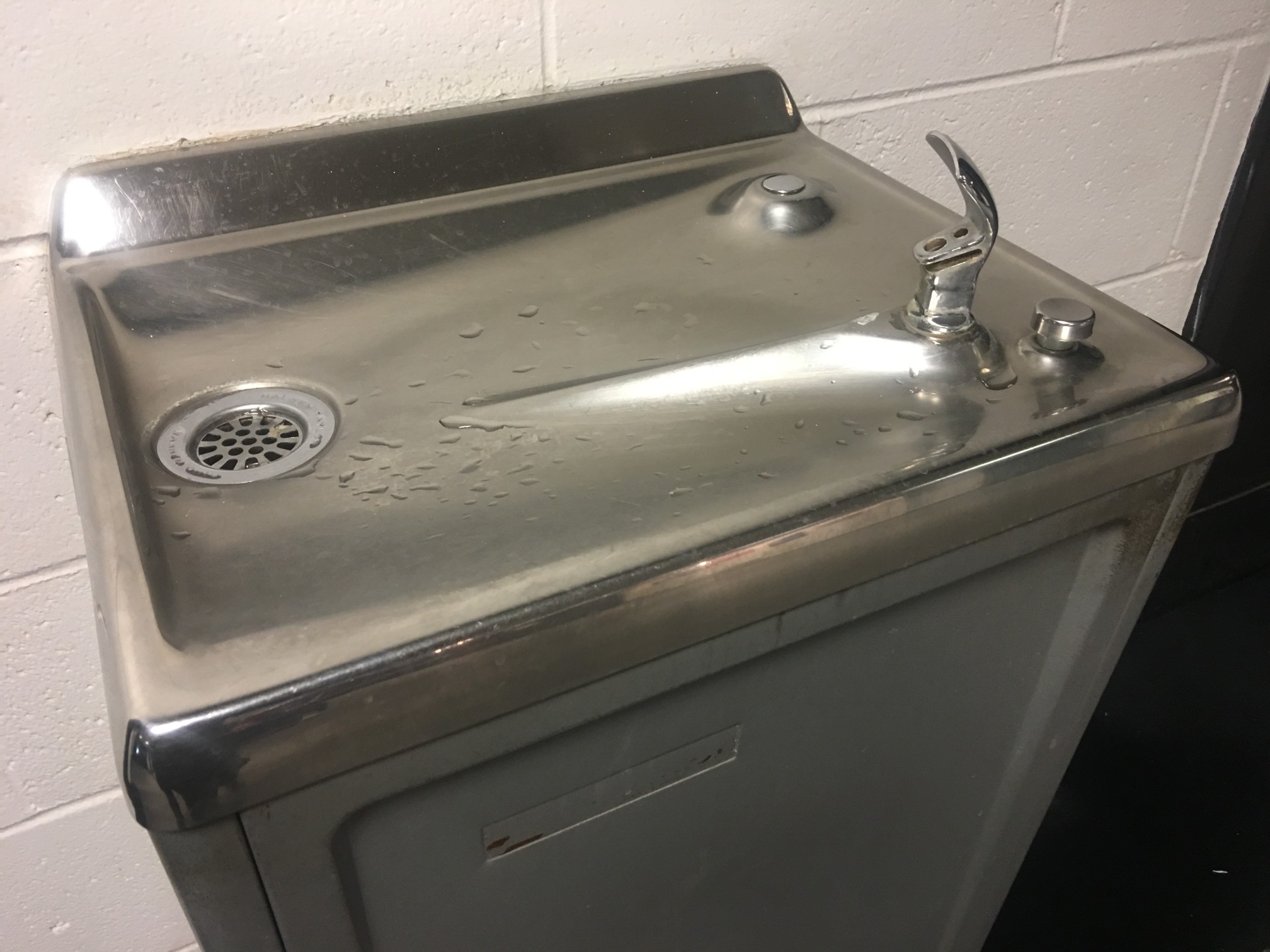
It was set into the wall at the height of a child, stainless steel or white porcelain, with a bowl, a drain, a chrome guard over the spout and a push bar on the front.
You pressed the bar and an arc of water came up, and the arc was never the height you wanted. Too low and you had to put your face almost into the bowl. Too high and it went up your nose. Everybody knew which fountain in the building had the good arc.
It Was Designed Around One Specific Problem
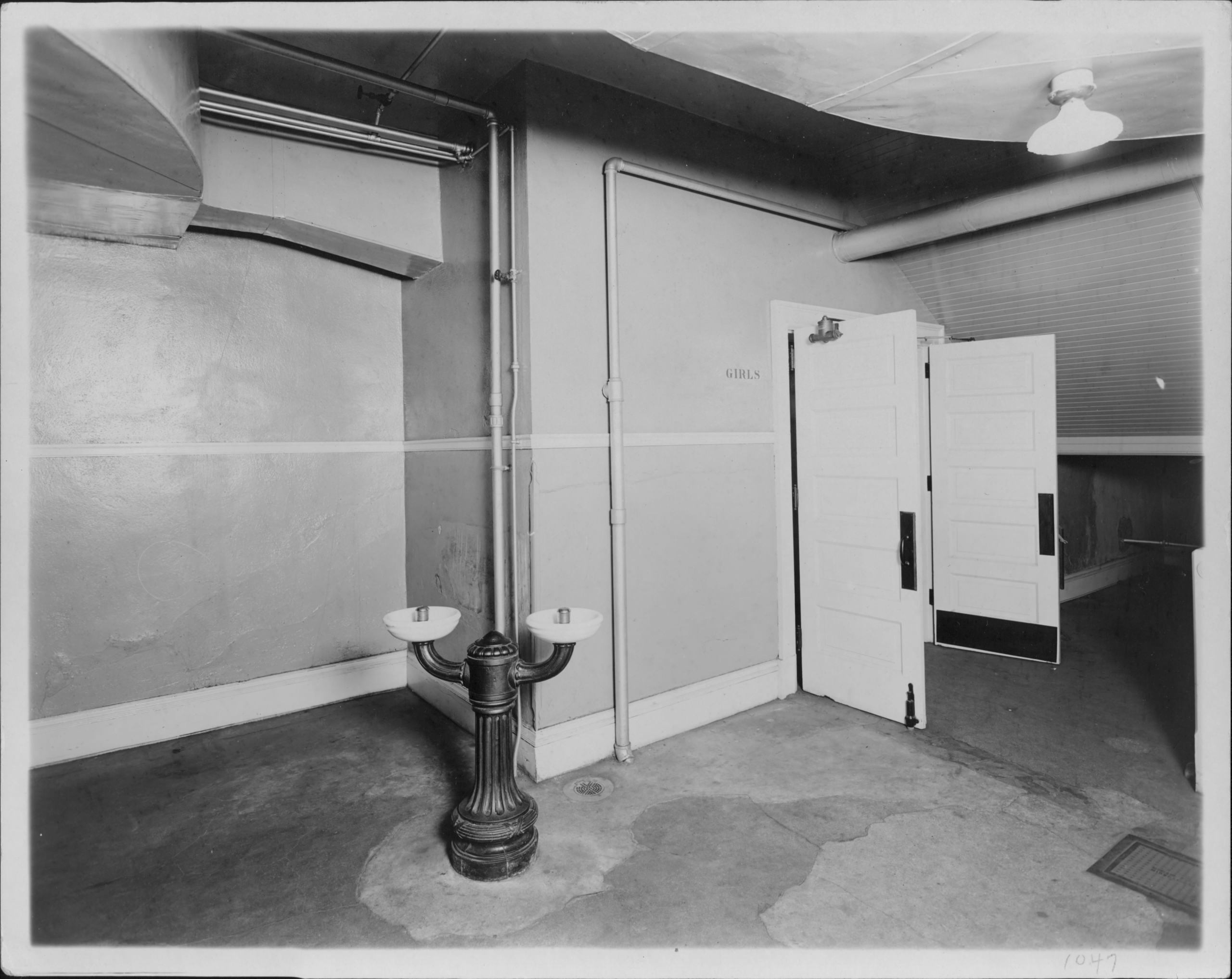
The fountain as we recognise it is a solution to a public health question, and the question was shared cups.
Into the early twentieth century, public water was dispensed from a tank or a tap with a communal cup or dipper on a chain, and the understanding of how infectious disease travels made that arrangement untenable. The cup was identified as a transmission route, bans on the common drinking cup followed, and something had to replace it.
What replaced it was a fountain that projected water upward in an arc, so that the drinker’s mouth took water from the stream without touching anything. That is the entire design brief, and every feature follows from it.
The arc is angled rather than vertical, so that water falling back lands in the bowl rather than on the spout. The spout sits above the rim, so the bowl can never back up into it. And there is a guard over the nozzle, which exists for exactly one reason: to stop a mouth making contact with the opening. The instruction every child was given – do not put your lips on it – was the whole operating principle of the machine, stated as a rule.
Like our content? Follow us for more.
Some of Them Were Refrigerated and Those Were Famous
The plain version was simply a tap and a bowl plumbed into the building’s cold supply, and in summer it delivered water at whatever temperature the pipes were, which in a hot building was unpleasantly warm.
The better version had a compressor and a small chilled reservoir behind the wall, and it delivered cold water continuously. Those units cost more, used power, and needed servicing, so a building typically had one or two among a dozen plain ones.
Which created a precise local geography that everybody in the building carried in their head. There was a cold one by the gym and a warm one by the library, and children walked past three fountains to get to the cold one, and a new pupil learned the map within a week. The same was true in offices and factories, and knowing where the cold water was counted as useful knowledge about a building.
They Were Also, for Decades, Segregated
This has to be in any honest account of the American drinking fountain, because for a long period it was one of the most visible pieces of segregation in public life.
Across the segregated South, and in other places under local practice, public drinking fountains were designated by race, labelled, and frequently differed in quality – a chilled unit alongside a plain one, or a fountain alongside a tap. Because a fountain sits in a corridor or a square where everybody passes, the labelling was unavoidable and public in a way that other arrangements were not, which is why photographs of those signs became among the most widely reproduced images of the period.
The legal basis for it was dismantled through the civil rights legislation and court decisions of the 1950s and 1960s, and the signs came down. Some of the fountains themselves stayed in place for decades afterwards, relabelled or unlabelled, and a number have been preserved deliberately as historical objects in museums and at civil rights sites.
The reason to state this plainly is that the object is otherwise easy to remember as simply a piece of plumbing, and for a great many Americans it was not.
Two Heights and a Pedal
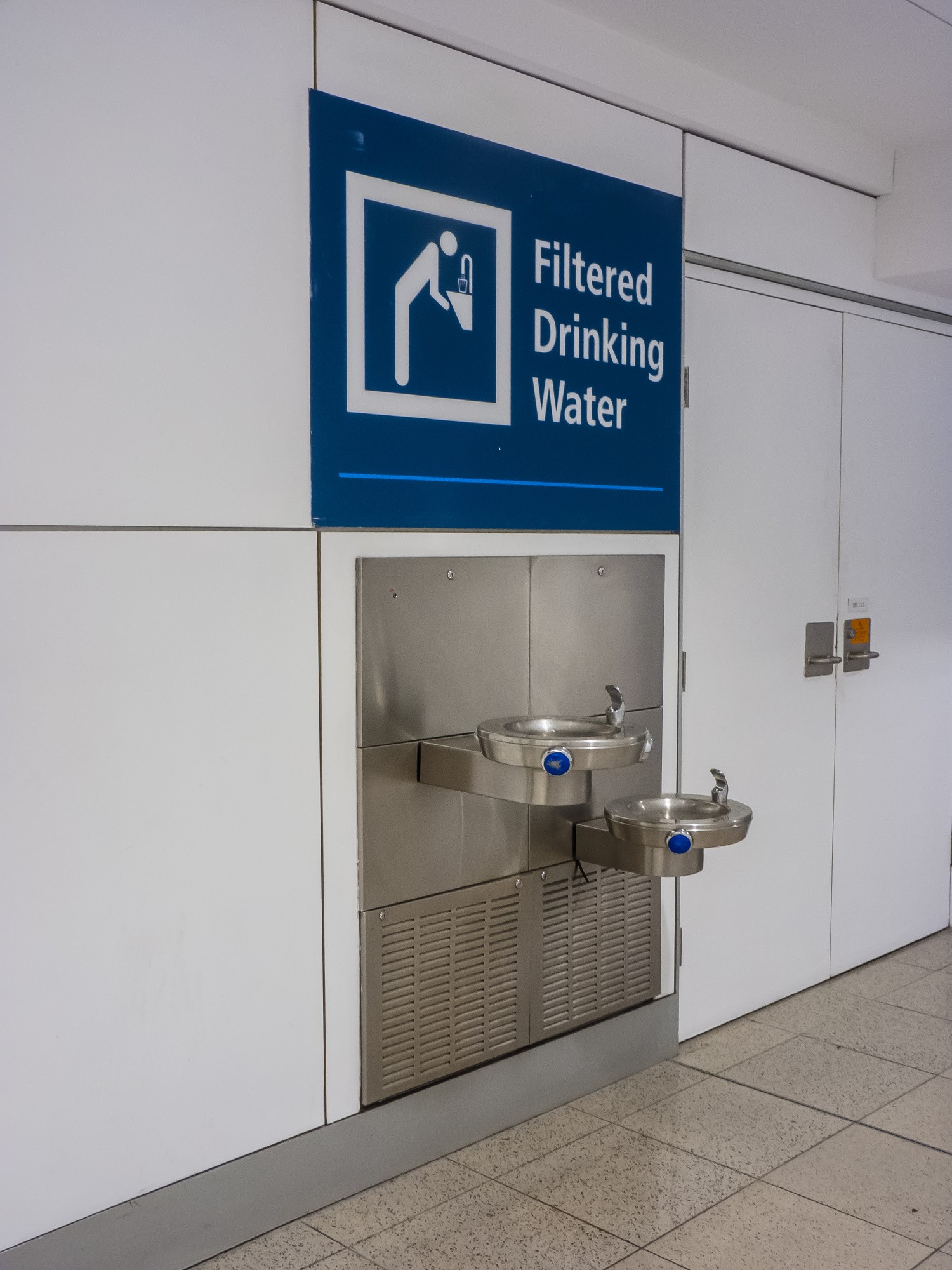
By the 1970s the standard installation was increasingly a pair – a higher unit and a lower one on the same wall, or a single unit with two bowls at different heights.
That was partly for children and partly the beginning of accessibility provision, which developed substantially over the following decades into requirements about reach, clearance, approach and operating force. A fountain you can only use by bending over a bowl is unusable to somebody in a wheelchair, and the modern specification exists to address that.
The operating hardware varied more than people remember. A front push bar was the common type, but there were also side levers, push buttons, and – in a lot of school and institutional buildings – a foot pedal at floor level, which let you operate it without using your hands at all. The foot pedal is the one that has disappeared most completely, and it was arguably the most hygienic arrangement of the lot.
Why They Started Disappearing
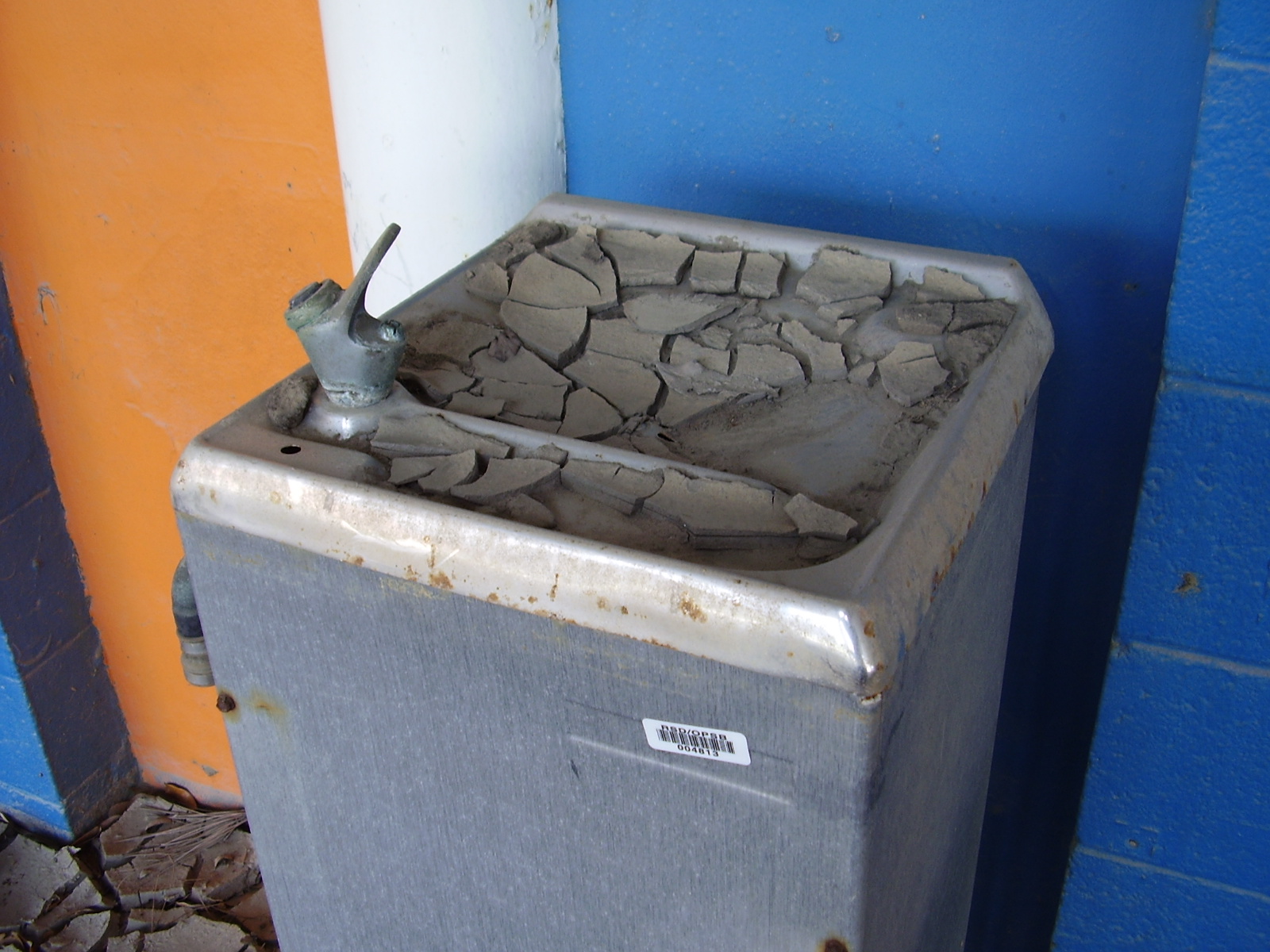
Several things happened at once, and the hygiene argument is the one that is cited most and explains least.
Fountains acquired a reputation as dirty, which is partly fair – the bowl and the surrounding surfaces are touched constantly, the push bar is a shared contact point, and a neglected fountain looks exactly as bad as it sounds. Water quality concerns in some buildings, particularly around old plumbing and fixtures, gave schools and employers a specific reason to shut units off rather than test and maintain them.
At the same time bottled water went from a niche product to an enormous consumer category, and a generation grew up carrying a personal bottle. Once most people in a building arrive with their own water, a fountain gets used less, and a fixture that is used less gets maintained less, and a fixture that is maintained less confirms everybody’s suspicion about it.
And the facilities arithmetic was never in the fountain’s favour. It is a plumbed, drained, sometimes refrigerated fixture requiring cleaning and periodic repair, provided free, generating no revenue. In a building looking for savings it is an obvious candidate, and in a building with a vending machine selling bottled water it is actively competing with something that pays.
Every Building Had One Fountain Everybody Used and One Nobody Did
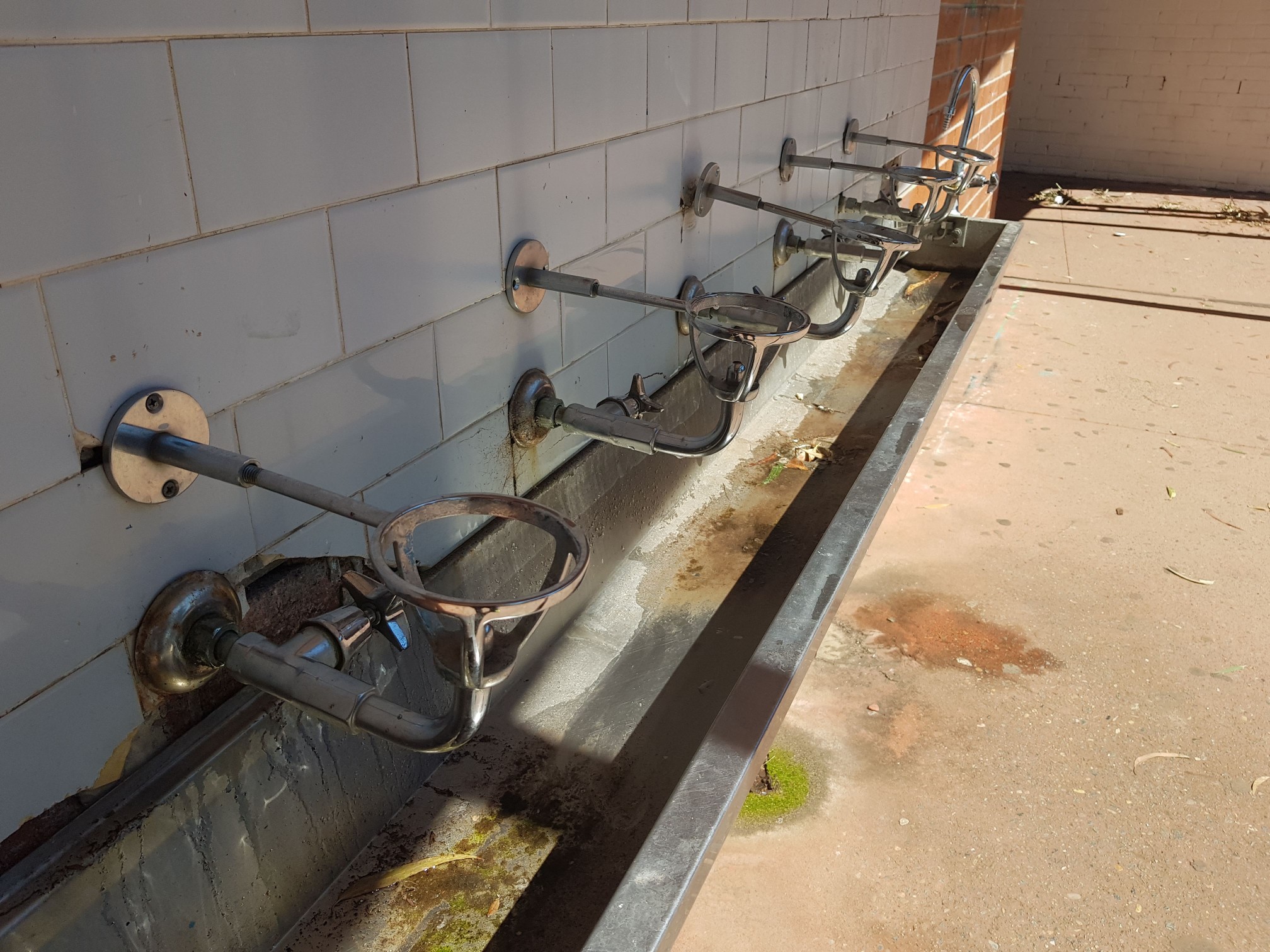
Fountains developed reputations, and the reputations were durable and specific.
The good one had pressure. A fountain’s arc is set by a small adjusting screw behind the escutcheon, and nobody ever adjusted it after installation, so each unit in a building had its own permanent character – a confident arc, a dribble you had to lean into, or the one that fired over the bowl and onto the floor and the wall behind.
The bad ones had identifiable faults. A worn washer gave a trickle. A partly blocked nozzle split the arc into two divergent jets, which was briefly funny and then simply annoying. A slow drain left standing water in the bowl, and a bowl with standing water in it is the single thing most likely to make a person decide not to drink. And an unchilled fountain on an exterior south wall in August delivered water that was genuinely hot.
So children and workers built a hierarchy and shared it. You drank at the one by the gym and you did not drink at the one outside the auditorium, and nobody could tell you when that had been decided or by whom.
The Twist: What Replaced It Is the Same Pipe
Walk down a school or airport corridor now and there is very often a fixture in the same recess, at the same height, on the same supply.
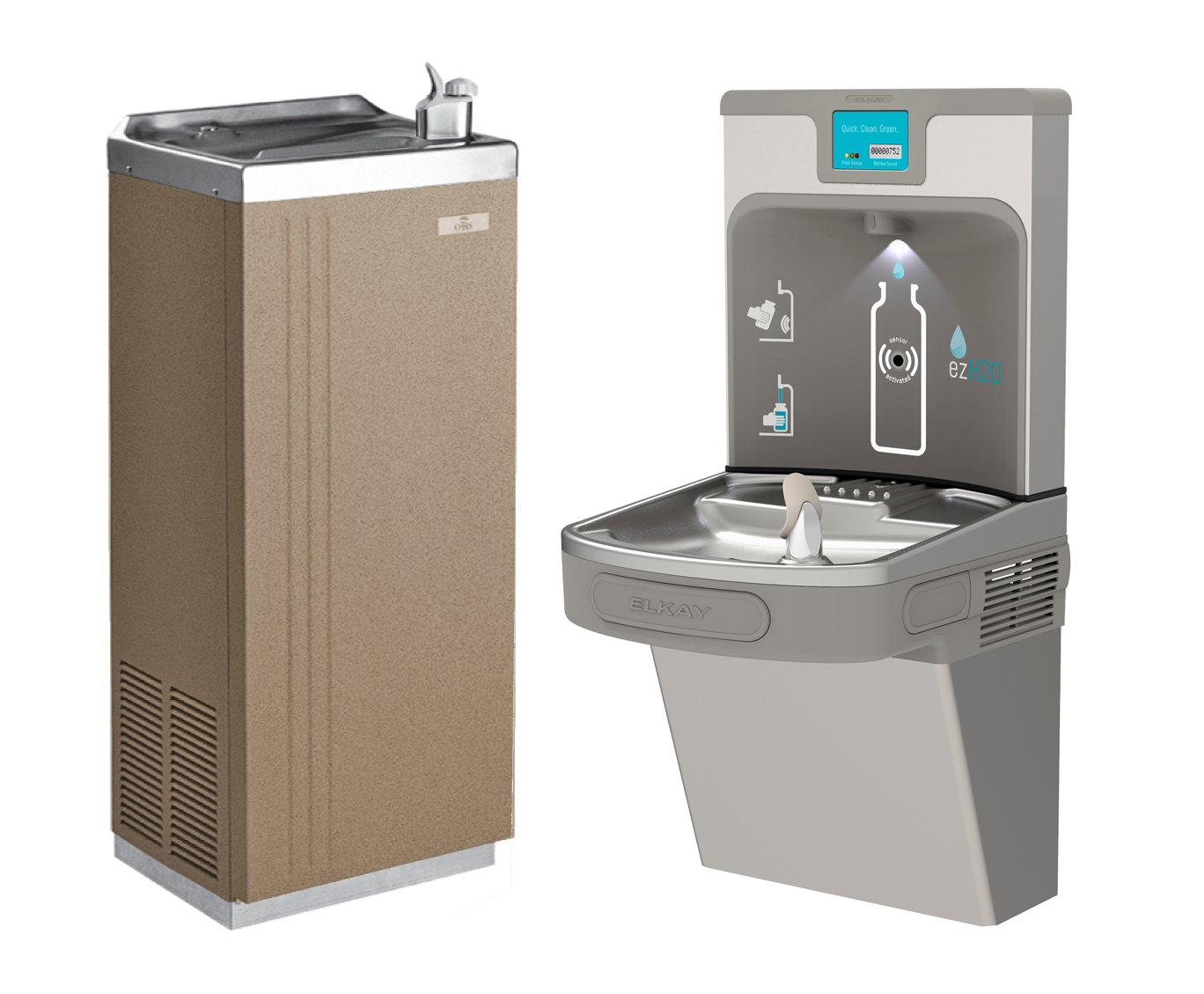
It is a bottle-filling station: a vertical alcove with a sensor, a gooseneck spout and frequently a counter showing how many plastic bottles have notionally been saved. Many of them have a conventional fountain bowl underneath as well.
Which is worth looking at carefully, because it is the same plumbing, in the same wall, delivering the same municipal water, filtered to a similar standard. The engineering change is small: a different nozzle geometry, a sensor instead of a bar, and sometimes a filter cartridge with an indicator light.
The real change is not technical at all. It is that the building has stopped offering you a drink and started offering to fill a container you brought.
Both arrangements are defensible and the new one has genuine advantages – no shared contact point, you can take water away with you, and it displaces bottled-water purchases, which the counter is there to advertise. But it is a quiet shift in who is responsible for what. The old fountain assumed that a person walking through a public building would at some point need water, and provided it, at the wall, to anybody, with nothing required.
The new one assumes you came prepared.
And the people for whom that distinction matters are the ones who did not – a person with no bottle, no money and no particular business being in the building, which is precisely the person the drinking fountain served best and the counter on the wall does not count.
Like our content? Follow us for more.