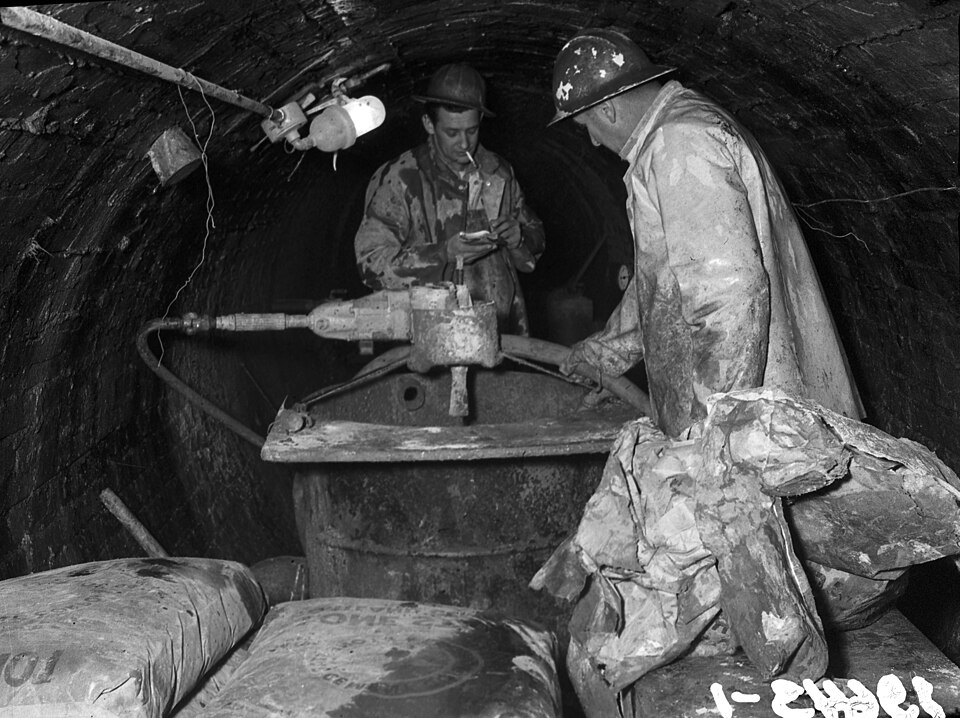
Man-entry sewers are large enough to walk or stoop in, they run under every old city, and in 1960 they were maintained by men who climbed down a ladder with a shovel, a rod, a lamp and a rope. The trade was called flushing in some cities and sewer maintenance in others, the men were usually long-serving, and the knowledge of which section ran where was held in their heads and in a ledger.
The work itself has not changed much in principle. What has changed completely is everything around it, because a sewer is the textbook confined space and almost every element of the modern confined space regime was written against the way this job used to be done.
What the work actually was
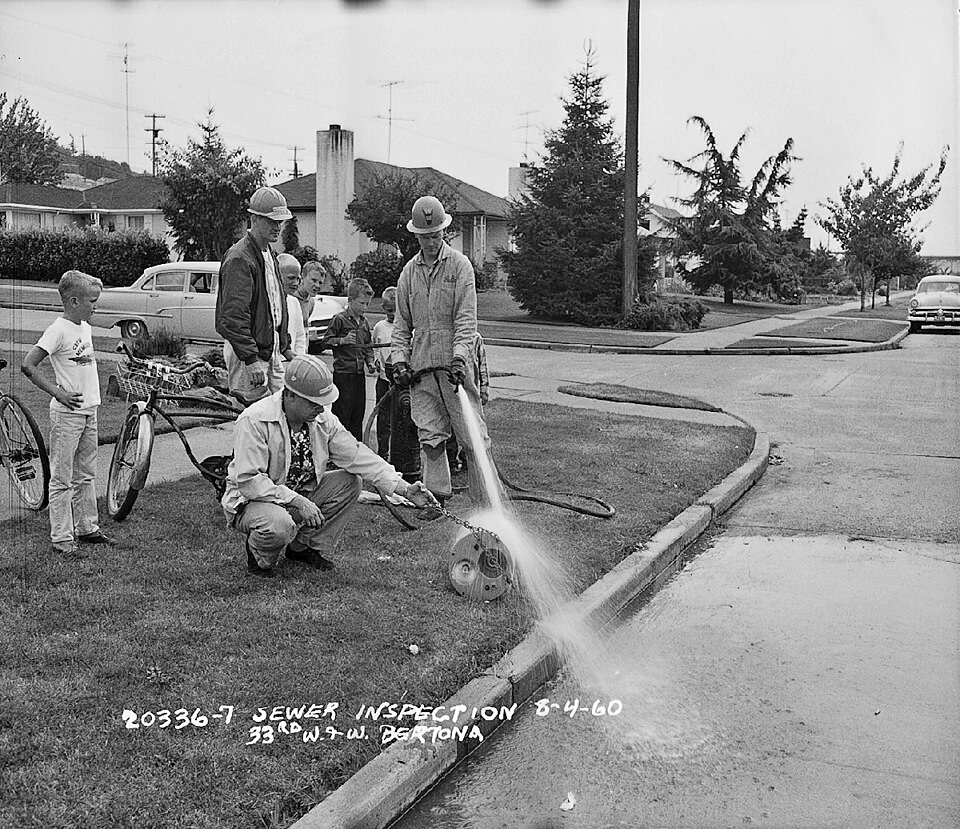
A combined sewer carries foul drainage and surface water in the same pipe and silts up, and clearing it was physical. Gangs shovelled grit and debris at the bottom of shafts, rodded blockages, raked silt into skips hauled up by rope, repaired brickwork and mortar in Victorian-built sections, and worked ahead of flushing water released from upstream to move material along.
The craft content was real. Older brick sewers are built in shapes — egg-shaped, horseshoe, circular — chosen so that a low flow stays deep and fast enough to keep itself scoured, and a bricklayer repairing one had to understand that and work in it wet. Men knew the gradients, the junctions, the places that silted and the sections that flooded first.
It was also a trade with a certain pride attached, in the way that unseen essential work often is. The men were not ashamed of it and the cities depended on them absolutely.
Like our content? Follow us for more.
The gas, and the specific way it fools you
Sewers generate hydrogen sulphide from the bacterial breakdown of organic material in the absence of oxygen, and it is the gas the whole subject turns on. At low concentrations it smells strongly of rotten eggs, which is the smell everybody associates with drains. At higher concentrations it rapidly deadens the sense of smell, so the warning disappears while the hazard increases.
That single property is why no sewer atmosphere can be assessed by a person standing in it, and it is the reason the modern regime exists. A 1960 gang going by smell had a detector that worked in the range where the gas was unpleasant and stopped working in the range where it was dangerous.
Three other atmospheric hazards sit alongside it. Methane is generated by the same process and is flammable. Oxygen can be depleted by decomposition or displaced by other gases. And carbon monoxide can enter from connected spaces or from equipment running nearby. None of the three can be detected by a person either: methane and carbon monoxide have no smell, and oxygen deficiency gives no warning at all.
What they had to detect it with
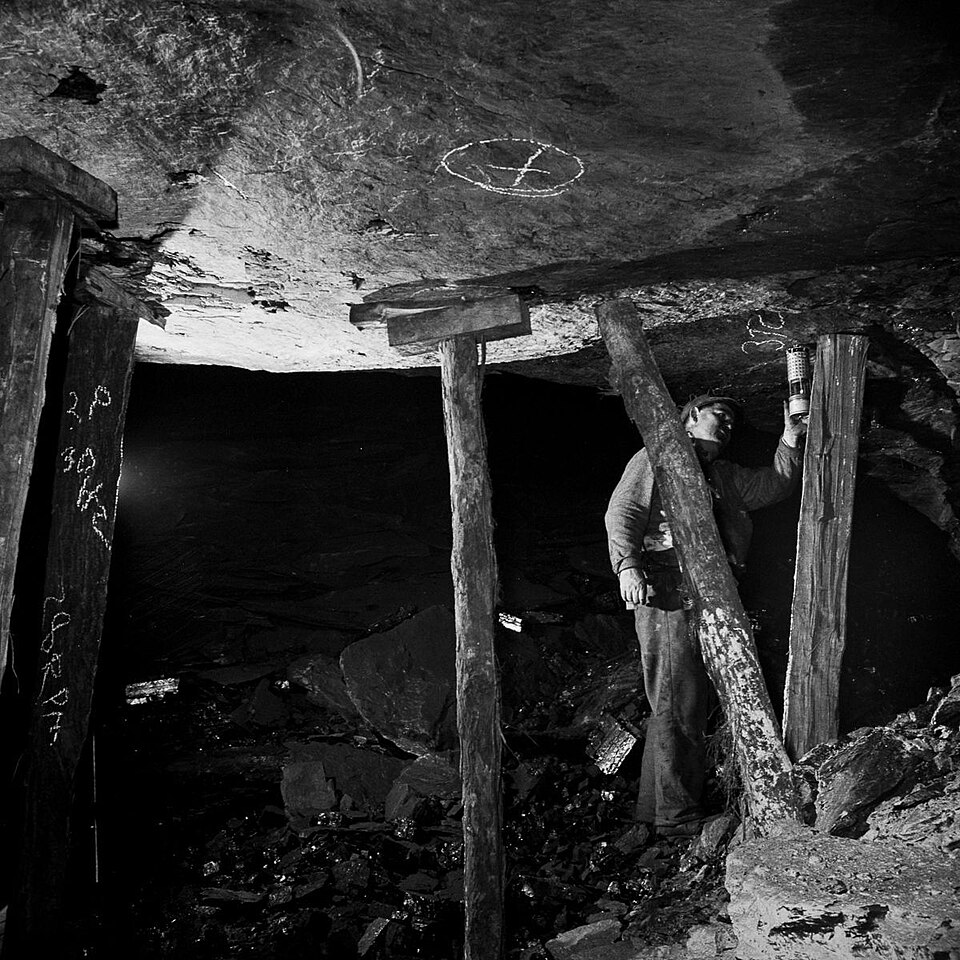
The flame safety lamp, borrowed from mining, was the main instrument where one was used. A flame in a protected enclosure behaves differently in a methane atmosphere and goes out in a depleted one, which gives a crude indication of two of the four hazards and nothing on the other two.
Beyond that, practice was the smell, the look of the water, experience of the particular section, and the willingness of the man at the top to keep an eye on the man at the bottom. None of that is a measurement, and the two hazards that give no warning were exactly the ones it could not address.
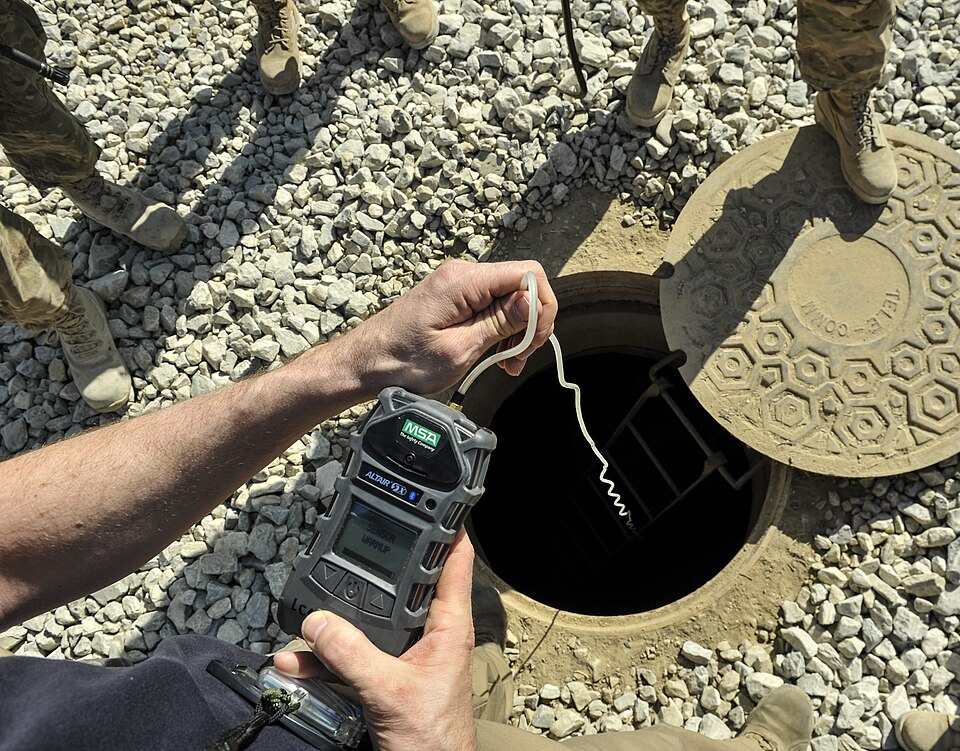
The modern answer is a calibrated multi-gas detector, tested and bump-checked before use, used to test the atmosphere before entry and then worn and monitored continuously throughout, because an atmosphere that was safe on entry can change while somebody is in it. That continuous element is the part most often missed in accounts of this work: the test before going in is necessary and is not sufficient.
Entering a confined space, then and now
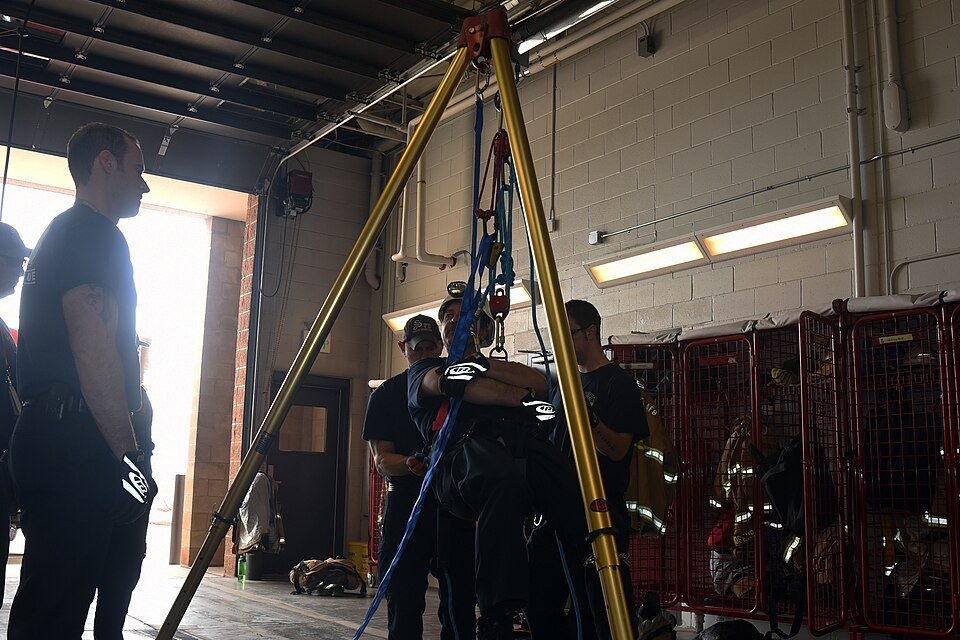
In 1960 entry meant lifting the cover, putting a ladder down and climbing in, frequently alone, frequently with nothing more than a colleague at the surface, sometimes with a rope around the waist and sometimes not.
The modern requirements are prescriptive and every one of them addresses something in that sentence. The atmosphere is tested before entry and monitored throughout. The space is ventilated mechanically, with the intake positioned away from any exhaust. An attendant remains outside and does not enter under any circumstances. A full-body harness and a retrieval system are rigged so that a casualty can be recovered without anybody going in after them. A permit records the hazards, the controls and the people involved. And a rescue arrangement is established and available before entry begins, rather than improvised afterwards.
That last requirement is the one with the hardest history behind it. The pattern in confined space incidents is that the first casualty is followed by would-be rescuers entering the same atmosphere, and the whole structure of the modern regime — the attendant who never enters, the retrieval system, the pre-arranged rescue — exists to break that sequence.
The disease that belonged to the trade
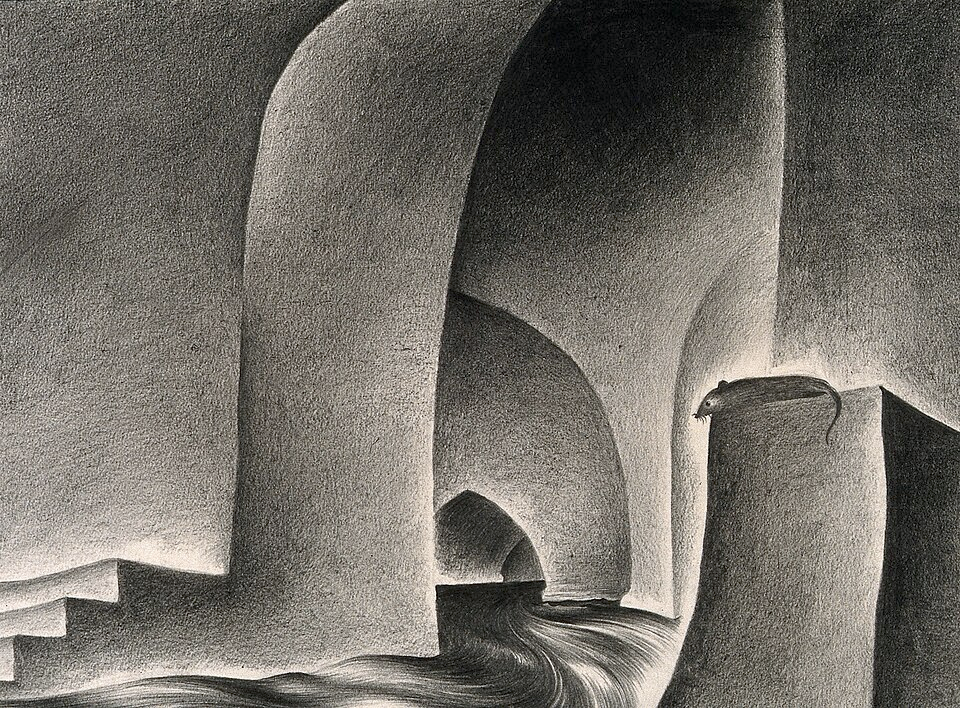
Leptospirosis is the occupational disease of sewer work and has been recognised as such for a very long time. It is a bacterial infection associated with rodent urine, it enters through broken skin and through the mouth, eyes and nose, and sewer workers, along with farm workers and others working in contaminated water, are the classically affected group.
The modern controls are unremarkable and effective: covering cuts, waterproof gloves and boots, not eating, drinking or smoking in or near the space, washing facilities provided at the site rather than at the depot, and awareness among workers and their doctors that the exposure exists, which matters because the illness is otherwise easily mistaken for something ordinary.
No symptom is described here and nothing in this file is medical advice. Tetanus and hepatitis vaccination for workers in this environment, and the provision of washing facilities as a requirement rather than a courtesy, are the other changes, and a 1960 gang had a bucket and whatever they brought in a tin.
Water, which is the hazard people do not expect
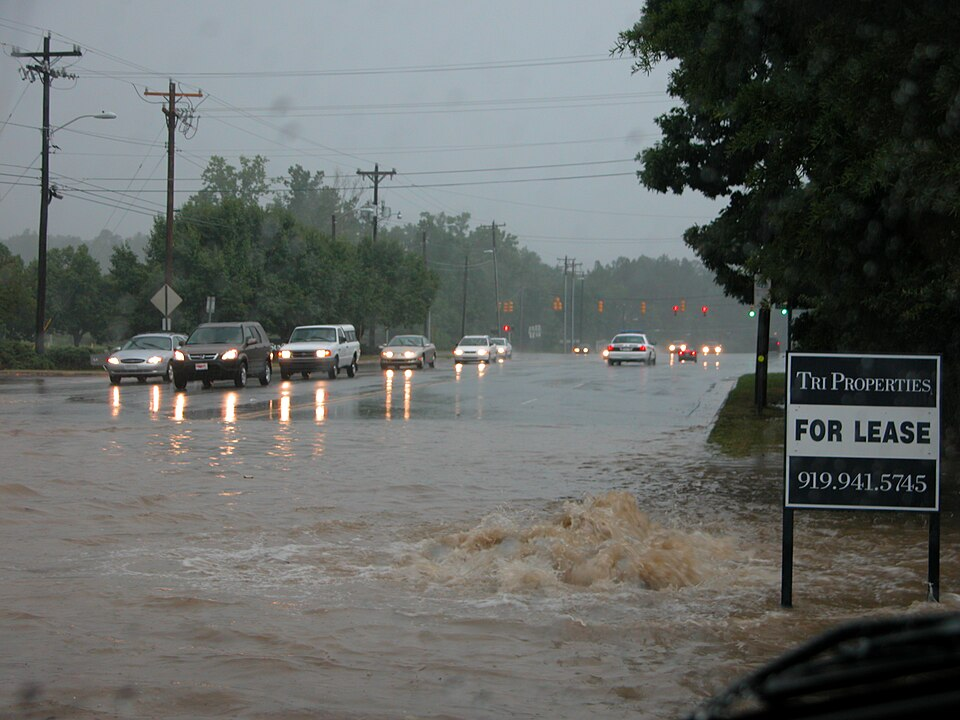
A combined sewer responds to rainfall, and a storm several miles upstream arrives as a surge with no warning to anybody standing in the pipe. Men have been caught by water from weather they could not see.
This is now managed as a planning matter rather than a judgement: the forecast is checked, upstream conditions are monitored, the system is isolated or diverted where that is possible, and work is not undertaken in a combined system when rain is expected. The decision sits with a supervisor before entry rather than with the gang on the day.
The 1960 version of this control was somebody looking at the sky. In a city with a combined system and a catchment extending for miles in several directions, that is not a control at all.
What replaced the work
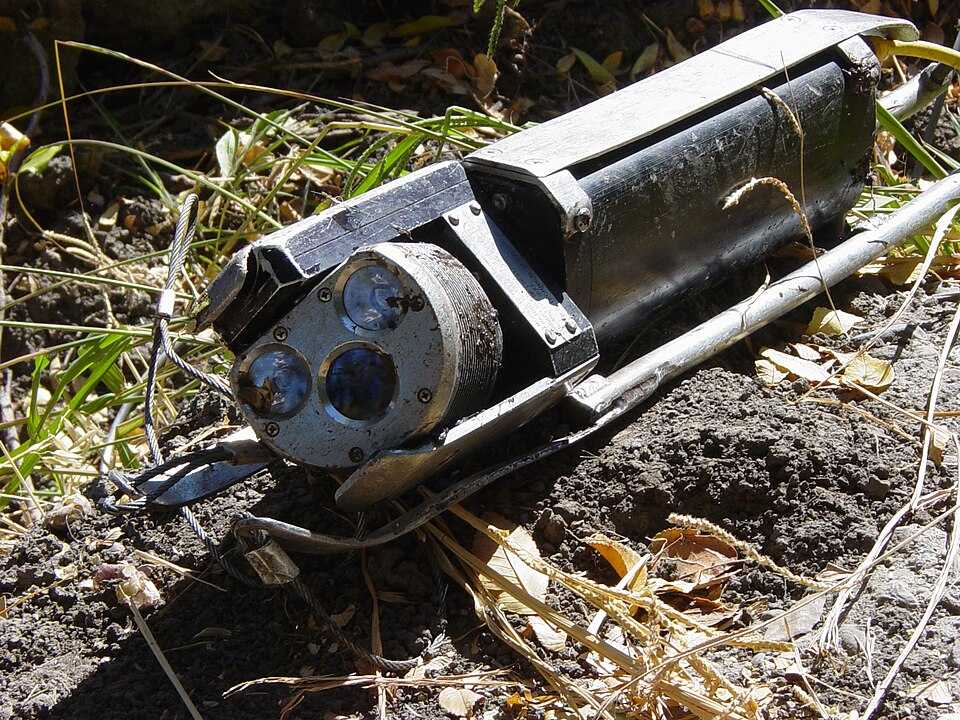
Most man entry has been engineered away, which is the single largest change. Sewers are now surveyed by closed-circuit television crawlers and by sonar, cleaned by high-pressure water jetting from the surface, and repaired without excavation by relining — a resin-impregnated liner inserted and cured in place — or by patch repairs placed remotely.
The people who used to go in now operate equipment from a van at the kerb, and the entries that still happen are planned operations with a permit, a team, detection, ventilation, retrieval and a rescue arrangement rather than a routine part of a working day.
That is an unambiguous improvement and it has also removed a body of knowledge. A gang that walked a city’s sewers knew the system in a way that a camera survey does not reproduce, and several utilities have found that out the hard way when they needed somebody who understood why a particular junction behaved oddly.
What is worth saying about it
This is one of the few trades in this series where nothing about the old practice deserves defending and the men deserve a great deal. The job was essential, it was invisible, it was done in conditions nobody would now permit, with an atmosphere that could not be assessed by any means they had, and the public it served never thought about it at all.
The modern regime is not bureaucratic caution. Every element of it — the detector worn continuously, the attendant who does not enter, the retrieval rig, the permit, the pre-arranged rescue, the forecast check — corresponds to a specific way the old arrangement failed, and confined spaces remain one of the most dangerous categories of work there is precisely because the hazards are undetectable to the person exposed to them.
This is a history and not a guide. Confined space entry is regulated work requiring training, equipment and a plan, and nothing in this article should be read as describing how to do any of it.
Like our content? Follow us for more.