

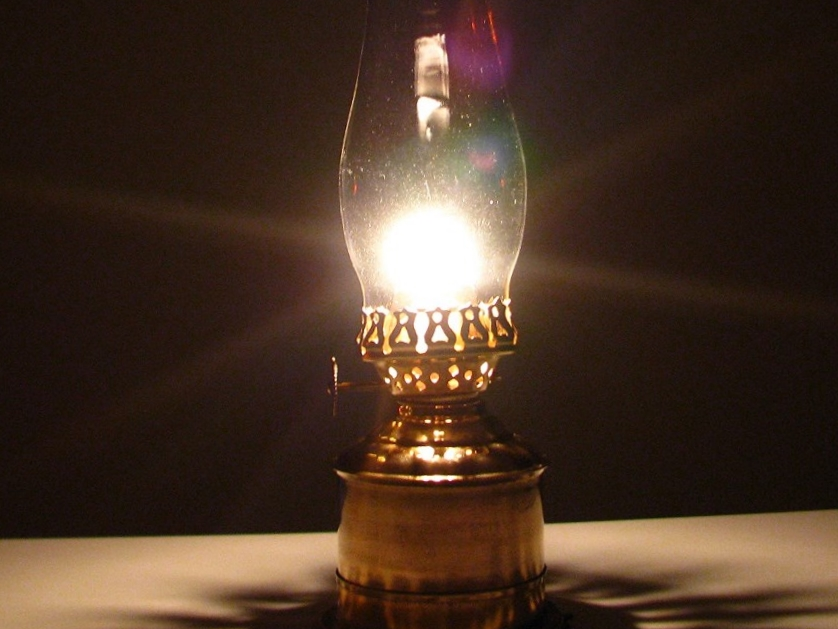
The lamp is a simple-looking object and almost every part of it is doing precise work.
A reservoir of fuel. A flat woven wick running down into it. A small knurled wheel that raises and lowers the wick. A brass collar holding a flame spreader with a slot in it. And a tall glass chimney, waisted in the middle, flaring at the top.
It burned a petroleum distillate that most Americans called coal oil long after it had stopped coming from coal, and for about half a century it was how a very large portion of the world saw after dark.
Here is the thing that gets forgotten. The entire petroleum industry – the drilling, the refining, the pipelines, the fortunes, the geopolitics that followed – began in order to fill that reservoir. Oil was pursued because people needed to light their houses.
And in the course of refining it for that purpose, the refiners produced a lighter, more volatile fraction they had no use for. It was dangerous to store, it would not burn properly in a lamp, and there was no market for it.
That fraction was gasoline. They ran it into pits and creeks and burned it off, because it was waste.
What Came Before Was Worse
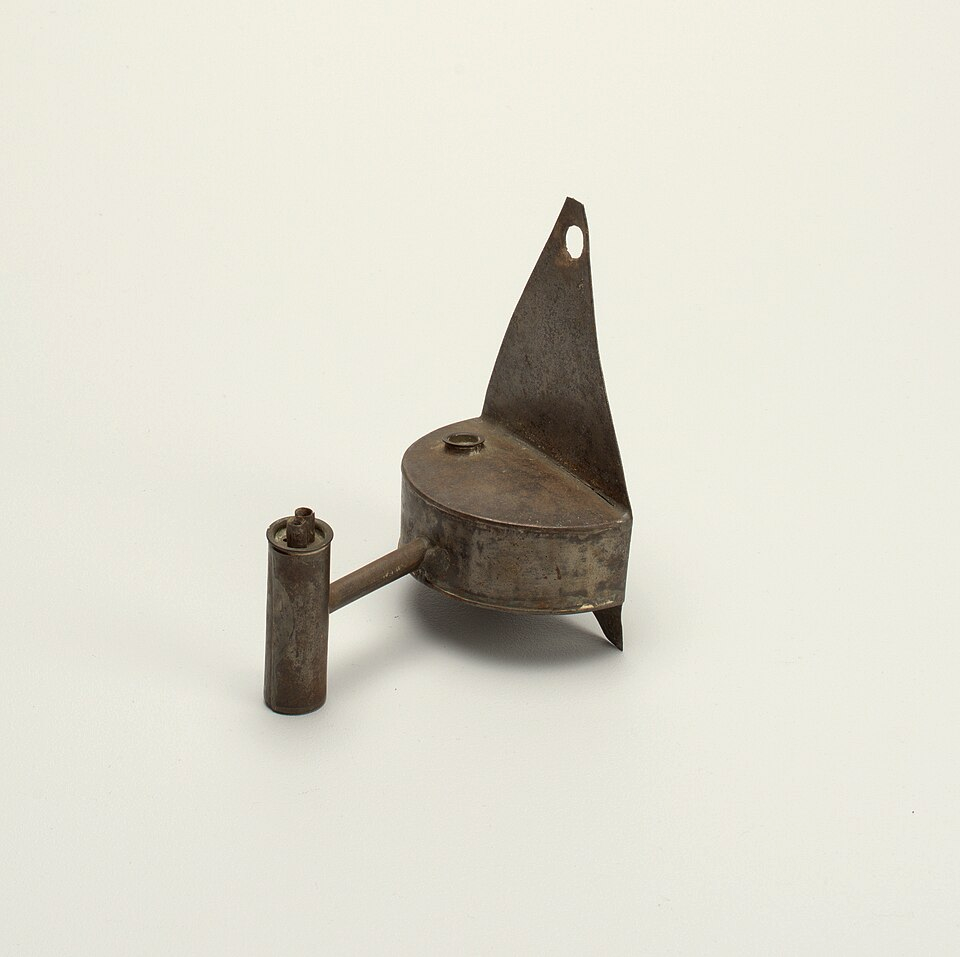
To understand why kerosene mattered you have to know what it replaced, and the answer is unsatisfactory in every direction.
Candles were expensive per hour of light, dim, and had to be tended. Tallow candles smoked and smelled. Better candles cost more than a working household wanted to spend on light.
Vegetable and animal oils burned in open lamps – poorly, dimly, with smoke and odour, in devices that had barely changed in centuries.
The best light available was whale oil, and specifically the oil from one kind of whale, which burned brightly and cleanly. It was also expensive, it got steadily more expensive, and obtaining it required voyages of years into distant oceans to kill very large animals – an industry that was dangerous, brutal and, as it turned out, unsustainable in the straightforward sense that the animals were being removed faster than they were replaced.
So by the middle of the nineteenth century the lighting situation was genuinely bad. Good light was a luxury. Ordinary households went to bed when it got dark, worked by firelight, or spent a disproportionate share of their income on illumination.
That is the market kerosene walked into: enormous, universal, and desperate.
Like our content? Follow us for more.
Coal Oil, Then Rock Oil
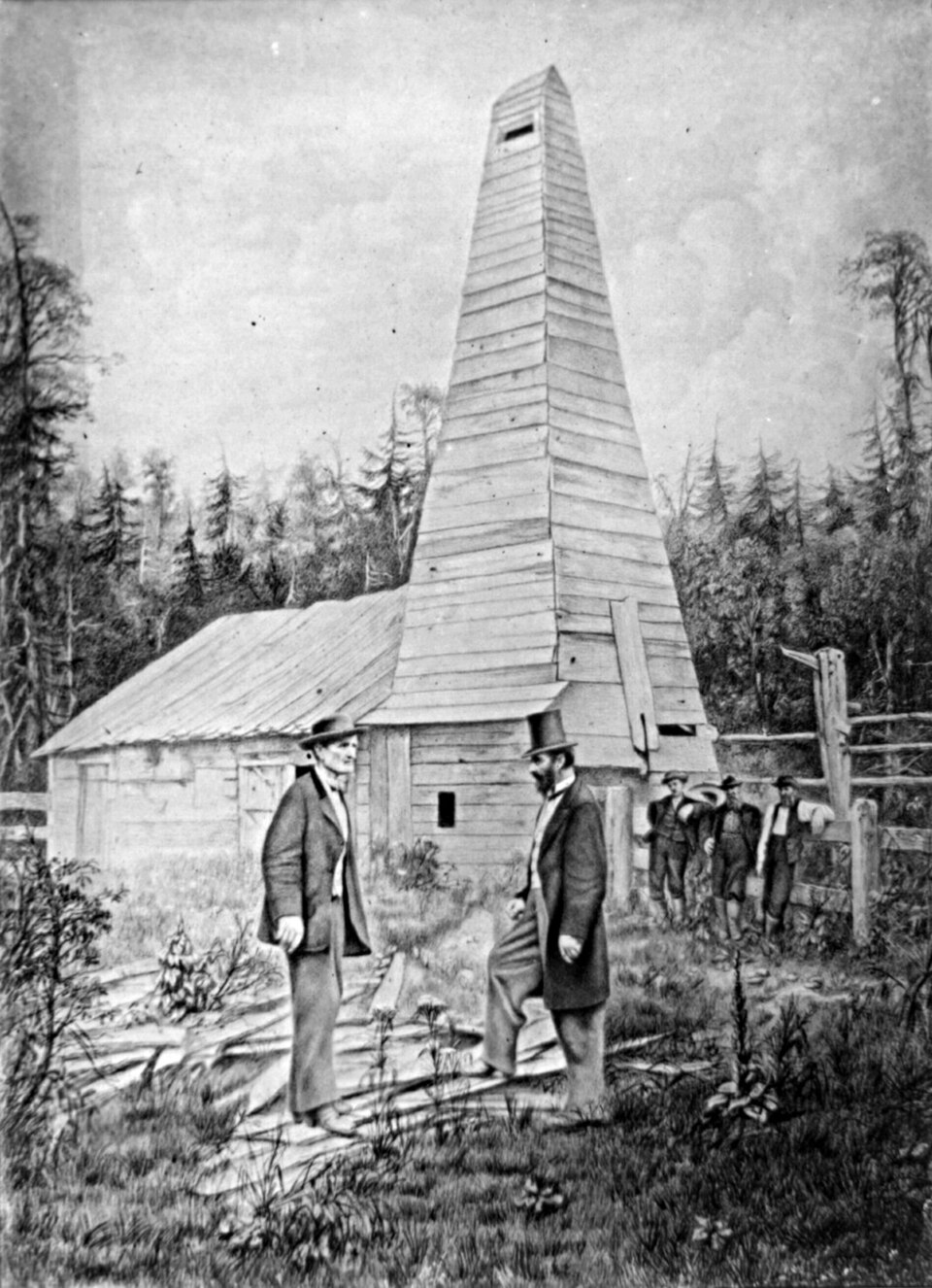
The first solution was not petroleum at all, which is why the American name for the fuel is the name of a different substance.
Chemists worked out how to distil a good lamp fuel out of coal and out of oil shale, and a coal-oil industry got going. It produced a fuel that burned far better than anything a household had previously been able to afford, and the name coal oil attached itself to the product and stuck.
Then came the realisation that the same kind of fuel could be distilled from the oil that seeped naturally out of the ground in certain places – rock oil, as it was sometimes called – and that if you could get enough of it, it would be cheaper than making the equivalent from coal.
The entire logic of drilling for oil follows from that. Not fuel for engines, which did not meaningfully exist. Not plastics or chemicals, which came much later. The reason to sink a well into the ground and pump out petroleum was that a refinery could turn it into lamp fuel, and lamp fuel had a market of every household on earth.
The first oil rush in the United States was a lighting rush.
The Refinery Had a Waste Problem
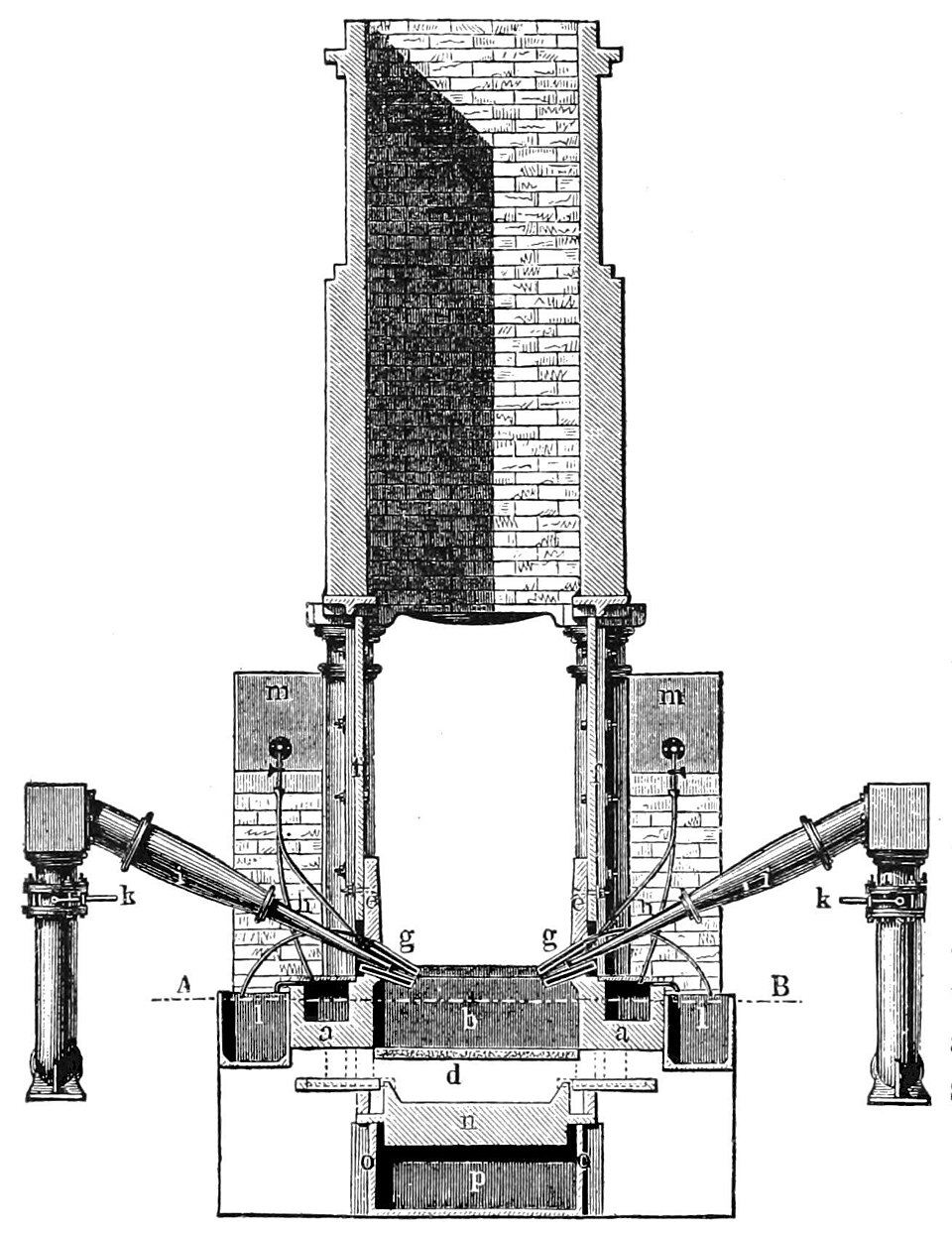
Crude petroleum is not one substance. It is a mixture, and refining means separating it by boiling point into fractions.
The fraction the refiner wanted was in the middle – heavy enough not to be dangerously volatile, light enough to climb a wick and burn cleanly. That was the product. Everything else was a problem to be dealt with.
The heavy ends at the bottom could be used for lubricants, greases, waxes and road material, and markets for those developed reasonably quickly.
The light ends at the top were the difficulty. Highly volatile, easily ignited, with vapour that would travel along the ground and find a flame – genuinely hazardous to store in quantity, useless in a lamp because it burned too fast and too hot and wrecked the wick, and in demand by nobody.
So it was disposed of. Dumped, run into watercourses, allowed to evaporate, burned off in the open. In the early decades of the industry this was routine practice and nobody considered it remarkable, because the substance had no value and getting rid of it was simply a cost of making the thing people wanted.
The internal combustion engine then arrived and turned the waste product into the most valuable commodity on the planet, which is the single most dramatic reversal in the history of any industry. The refineries were already built. The wells were already drilled. The pipelines were already laid. All of it existed to light lamps, and all of it was immediately repurposed to move vehicles.
The Chimney Is the Clever Part
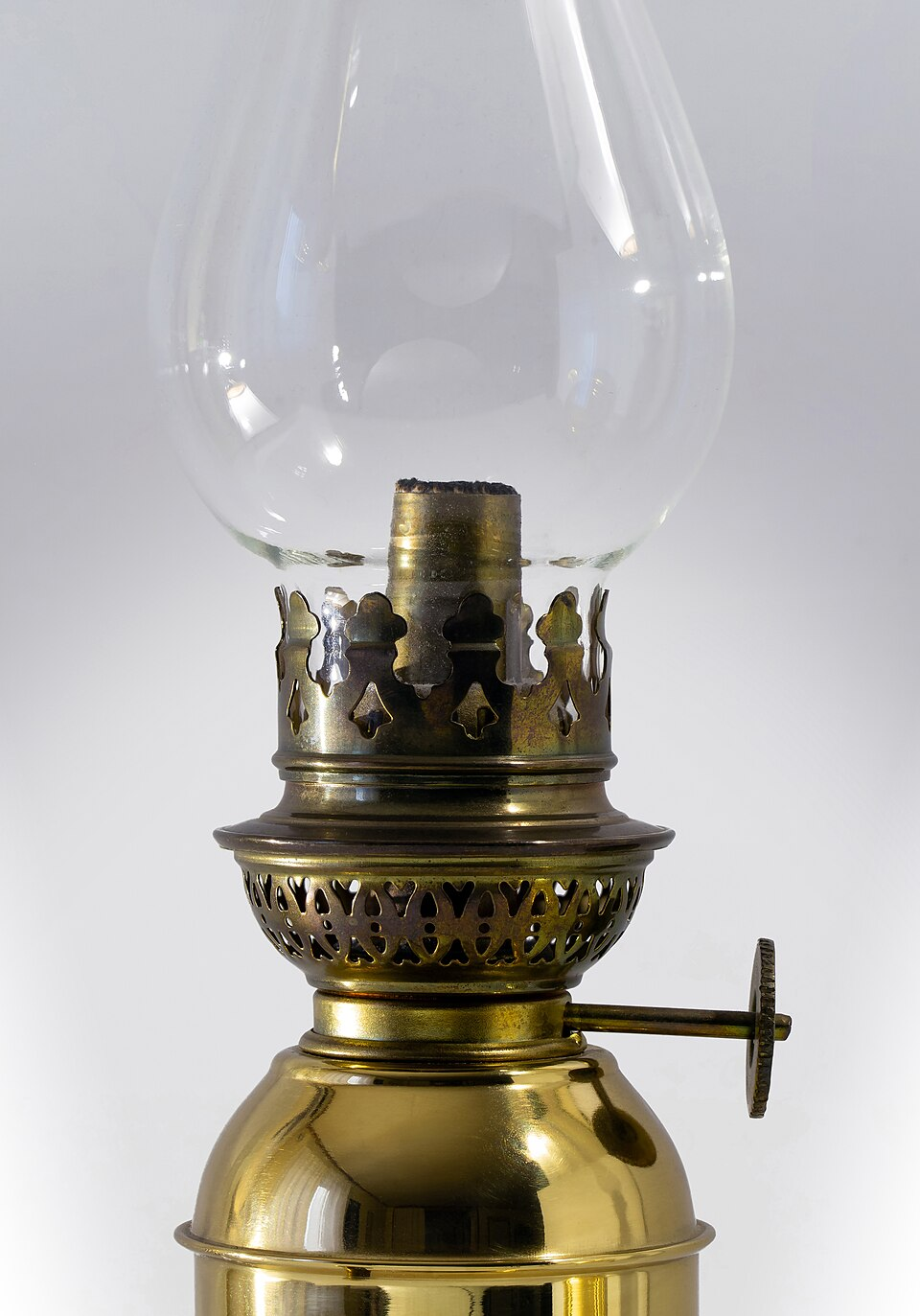
Back to the lamp, because the glass chimney everybody breaks and replaces is not a windshield.
A flame needs air, specifically a steady supply drawn past the burning zone at the right rate. Too little and the flame smokes and goes yellow and sooty. Too much and it flickers and blows about.
The chimney is a chimney in the literal sense. Hot gas rising inside it creates a draught, and that draught pulls air up past the wick from below through holes in the burner. The narrowing at the waist speeds the flow at exactly the point where the flame sits, and the flare at the top lets the exhaust out without choking the stack.
Get the dimensions right and the result is a steady, bright, smokeless flame that you can read by. Get them wrong – use the wrong chimney, or a cracked one, or none – and the same lamp with the same fuel and the same wick produces a smoky yellow mess.
The flat wick and the slotted flame spreader are doing related work, flattening the flame into a sheet so that more of its surface is exposed to air. Every piece of a lamp burner is an answer to the question of how to get enough oxygen into a flame fed by capillary action.
It Was Also the Most Dangerous Thing in the House
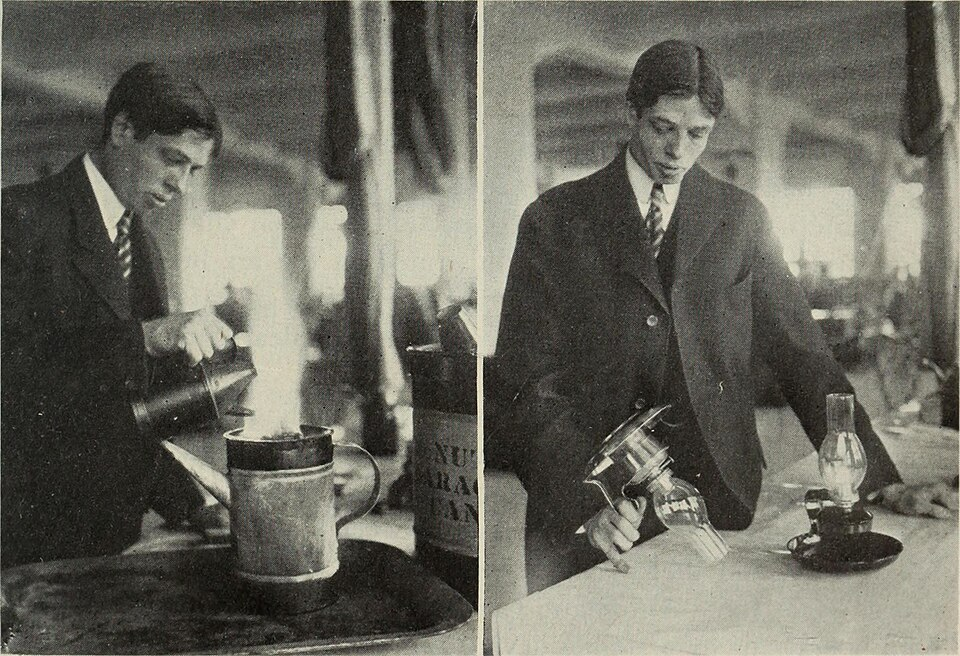
This has to be said plainly because the nostalgia tends to leave it out.
An open flame on a glass reservoir of flammable liquid, in a wooden house, carried from room to room by hand, including by children, was a serious and constant hazard. Lamps were knocked over. Chimneys cracked and fell out. Fuel was topped up carelessly. And in a period when a great many American refiners were unregulated, the fuel itself varied in quality, with some batches contaminated by the lighter fraction that should have been separated out – which lowered the temperature at which the liquid gave off ignitable vapour and made the lamp genuinely liable to explode.
That was a recognised, widely reported category of domestic disaster, and it was one of the early drivers of standards for what could be sold as lamp oil – a flash point requirement, enforced by state inspection, being among the first consumer product safety regulations of their kind in the United States.
This piece gives no procedure for filling, lighting, trimming or using any lamp, and anybody with an operable one should work from current guidance. The historical point is that the convenience was real and so was the risk, and that the regulation which followed was a response to households being hurt.
Electricity Took the House and Left the Lamp in the Closet
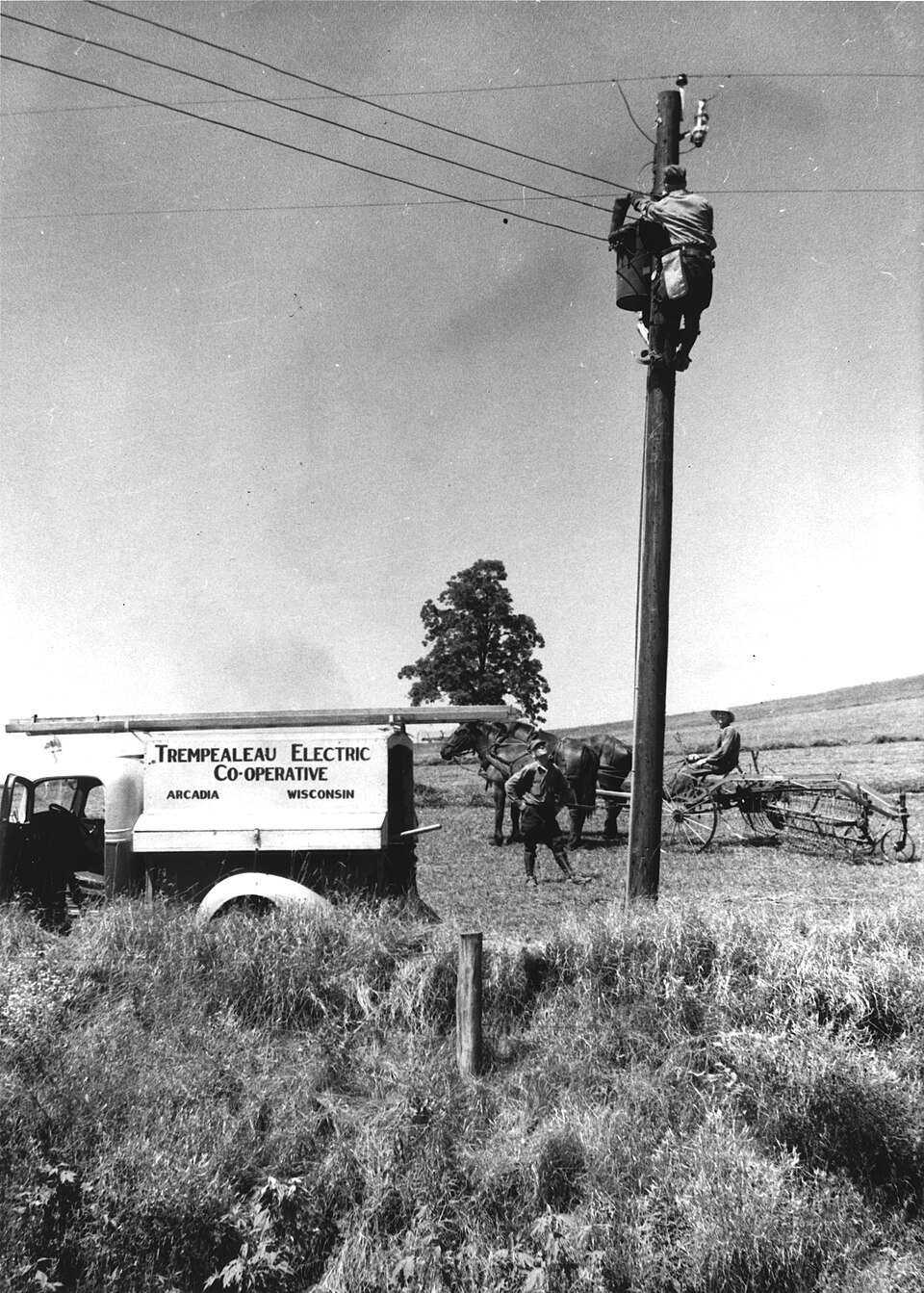
Electric lighting displaced kerosene in American homes unevenly and over a long period – cities and towns first, then suburbs, then rural areas much later as electrification spread outward across the middle decades of the twentieth century.
So the lamp had two lives. First as the primary light source in a house, filled and trimmed and cleaned as a daily chore by somebody who was good at it. Then, for decades afterwards, as the thing in the closet that came out when the power failed, which is how most Americans alive today encountered one.
That second life is why so many survive in working order. A lamp that was in daily use for twenty years got worn out and thrown out; a lamp that sat on a shelf against emergencies got used perhaps twice a year and is still fine.
And kerosene itself never went away. It remains a major refined product, used for heating, for aviation turbine fuel in a closely related form, and for lighting in large parts of the world that still do not have reliable electricity – where the same basic lamp, in a cheaper form, is still doing the same job tonight.
The Lamp Built the Industry That Buried It
The sequence is worth laying out in order, because each step only makes sense in the light of the one before.
Households needed light and could not afford it. Chemists learned to make a good lamp fuel, first from coal, then more cheaply from petroleum. That created a reason to drill for oil, which created the refining industry, which created a volatile waste fraction nobody wanted and which was thrown away. The engine arrived and made that waste fraction the basis of transport, which made petroleum the most important commodity in the world, which funded everything that followed. And electricity – generated, increasingly, by burning fuels including petroleum products – then made the lamp that started all of it obsolete.
So the glass object on somebody’s shelf is not a quaint survivor of a simpler age. It is the reason the oil industry exists. Everything about modern energy traces back through that wick.
Which is a lot of weight for a lamp, and almost nobody mentions it when they put a new chimney on one.
Like our content? Follow us for more.
