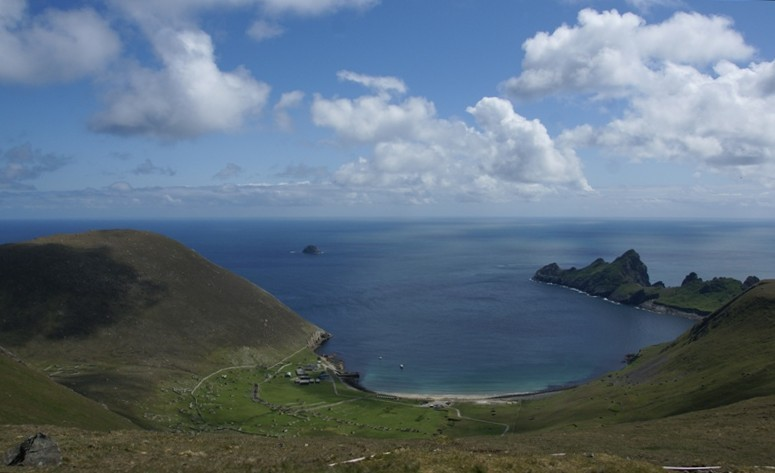
More than 100 miles from the Scottish mainland and some 40 miles west of the Outer Hebrides, battered by some of the fiercest seas in Europe, sits the lonely archipelago of St. Kilda. For roughly two thousand years, against extraordinary odds, a small community made its home here, on the main island of Hirta, beneath towering cliffs at the edge of the ocean. Cut off from the world for most of its history, the St. Kildans built a remarkable, self-reliant way of life, until isolation and hardship finally became too much. In 1930, the island was abandoned, its people carried to the mainland, leaving behind one of the most haunting deserted places in Britain. Here is the story of St. Kilda.
The Edge of the World
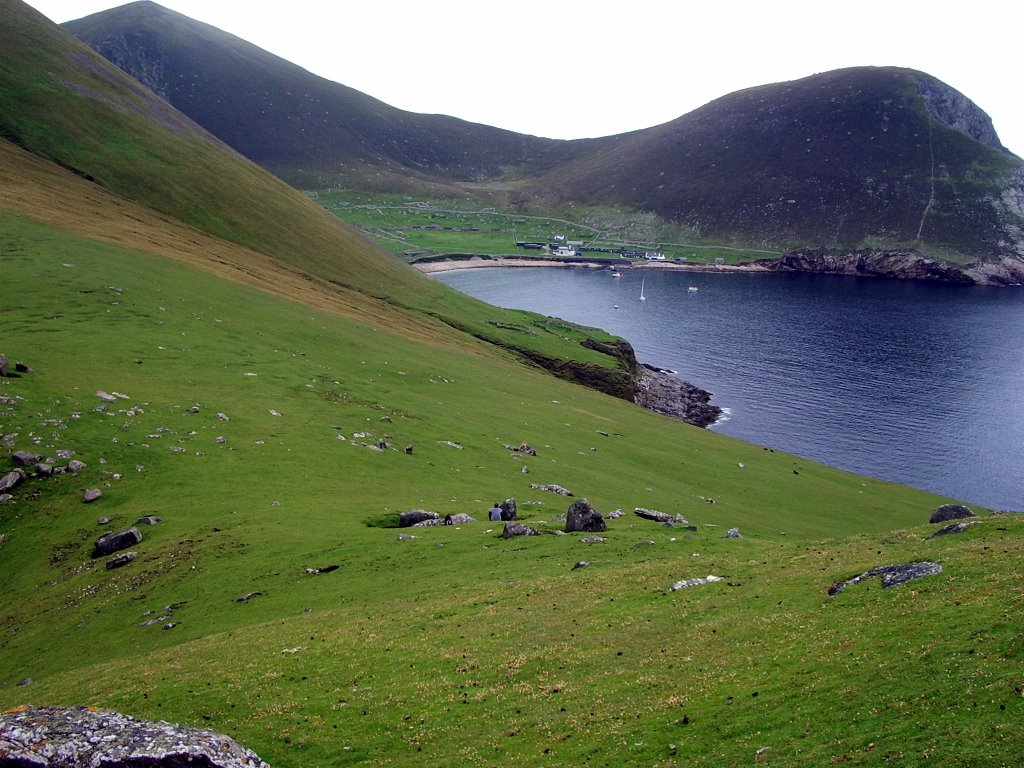
St. Kilda is remote by any measure. The archipelago lies far out in the Atlantic, the remotest part of the United Kingdom, with the main island of Hirta sheltering a horseshoe-shaped bay beneath cliffs that rise hundreds of feet above the sea. Permanent habitation here possibly stretched back some two thousand years, though the population was always tiny, probably never exceeding around 180 people, with a peak in the late 17th century.
The St. Kildans lived in a world apart. They raised hardy Soay sheep and small cattle, grew what crops they could, and, most remarkably, harvested seabirds, climbing the islands’ sheer cliffs and towering sea stacks by hand to catch gannets, fulmars, and puffins for meat, oil, eggs, and feathers. It was a precarious existence, shaped entirely by the sea, the cliffs, and the birds, and lived in near-total isolation from the rest of Scotland.
Like our content? Follow us for more.
A Singular Way of Life
Centuries of isolation produced a community unlike any other. The St. Kildans were famous for their self-governing spirit: each morning, the island’s men gathered in what visitors dubbed the “Parliament,” a daily open-air meeting where the day’s work was decided by discussion and consensus, with no formal leader. There was no money changing hands between neighbors, and doors went unlocked.
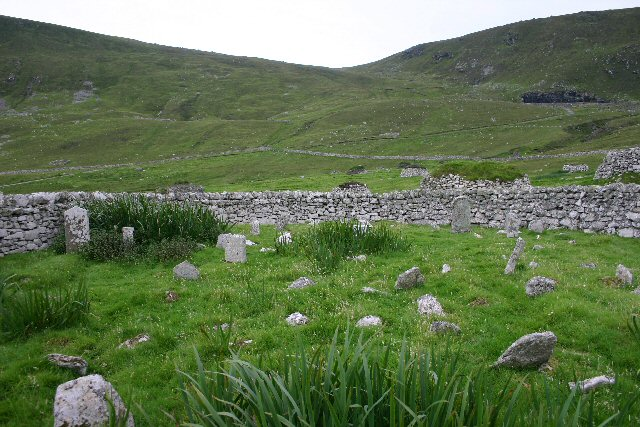
The islanders developed unique structures to survive their environment, most notably the cleitean, hundreds of small dry-stone storage huts with turf roofs, designed so the wind could pass through while keeping the contents dry. More than a thousand of these still dot the archipelago. The St. Kildans also famously sent out “mailboats,” messages sealed in wooden containers with a float attached and cast into the sea, trusting the currents to carry word to the outside world. It was an ingenious, hardy culture, finely adapted to one of the most challenging places to live in Europe.
The Beginning of the End
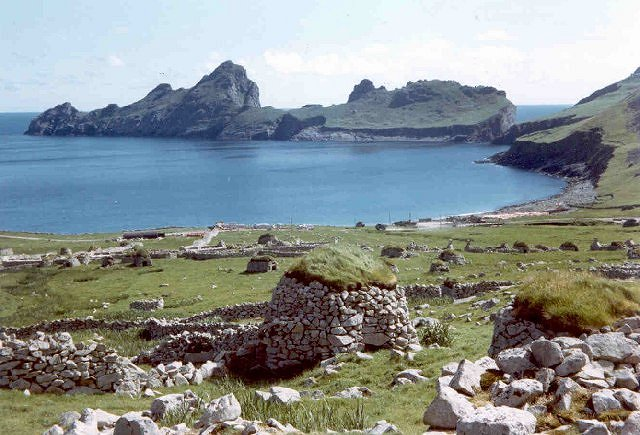
For most of its history, St. Kilda’s isolation sustained its distinct way of life. But from the mid-19th century, increasing contact with the outside world began to unravel it. Tourist steamships started calling in the summer months from the 1870s, and the islanders began trading with visitors and relying more on imported food, fuel, and goods. As self-sufficiency faded, the community grew more dependent on a world it could not control.
Emigration thinned the population, illnesses brought by outside contact took their toll, and the isolation that had once been a way of life increasingly felt like a trap, especially in the long winters when storms could cut off supplies and mail for months. By 1930, only 36 islanders remained. After a hard winter and the loss of young members of the community, life on St. Kilda had become unsustainable. In the spring of 1930, the islanders made a collective, painful decision and petitioned the government to evacuate them.
The Last Day
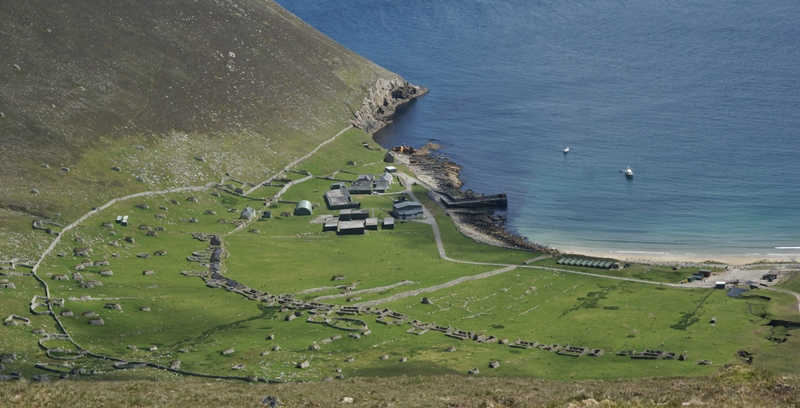
On the morning of August 29, 1930, the evacuation took place. In keeping with an old island tradition marking a permanent departure, the St. Kildans left an open Bible and a small pile of oats in each house, then locked their doors for the last time. The ship HMS Harebell carried the final 36 islanders, along with their belongings and their sheep, away from Hirta to a new life on the Scottish mainland, most of them resettled at Morvern.
The departure was deeply emotional. These were people whose families had lived on St. Kilda for countless generations, and as the familiar outline of their island faded behind them, the severing of such an ancient tie brought many to tears. Adjusting to mainland life, with its forests, traffic, and unfamiliar ways, proved difficult for a people who had known only the open ocean and the cliffs. Some struggled for the rest of their lives, longing for the home they had left behind.
A Haunting Legacy
Today, no one lives permanently on St. Kilda. The stone cottages of Village Bay still stand along the old main street, weathered and roofless in places, maintained by the National Trust for Scotland. A small military radar station operates on the island, and each summer researchers, conservationists, and volunteers arrive to study and care for the site, but the community that once thrived here is gone for good.
The archipelago has earned rare recognition: St. Kilda is a UNESCO World Heritage Site honored for both its natural and its cultural significance, one of only a small number of places on Earth to hold that dual status. Its towering cliffs host vast seabird colonies and unique wildlife found nowhere else, while its silent village stands as a moving monument to a vanished way of life. Reaching St. Kilda still requires a long boat journey of several hours from the Outer Hebrides, in calm enough weather, and those who make it find a place of extraordinary beauty and profound stillness. The story of St. Kilda, of an ancient community connected to one patch of ocean for two thousand years, then gone in a single afternoon, is one that stays with everyone who hears it.
Like our content? Follow us for more.