There are not many places on Earth where humans are simply forbidden to go, but a small, unassuming island off the coast of Brazil is one of them. Ilha da Queimada Grande, known around the world as “Snake Island,” looks from a distance like just another lush, rocky island rising from the Atlantic. Yet beneath its green canopy lurks one of the most extraordinary and dangerous concentrations of venomous snakes anywhere on the planet, a population so deadly that the Brazilian authorities have closed the island to the public for decades. It is a place of genuine scientific wonder, chilling local legend, and strict prohibition, an island that belongs entirely to the serpents. This is the strange true story of Snake Island, why it is so feared, and why almost no one is allowed to set foot on it.
A Forbidden Island Off the Brazilian Coast
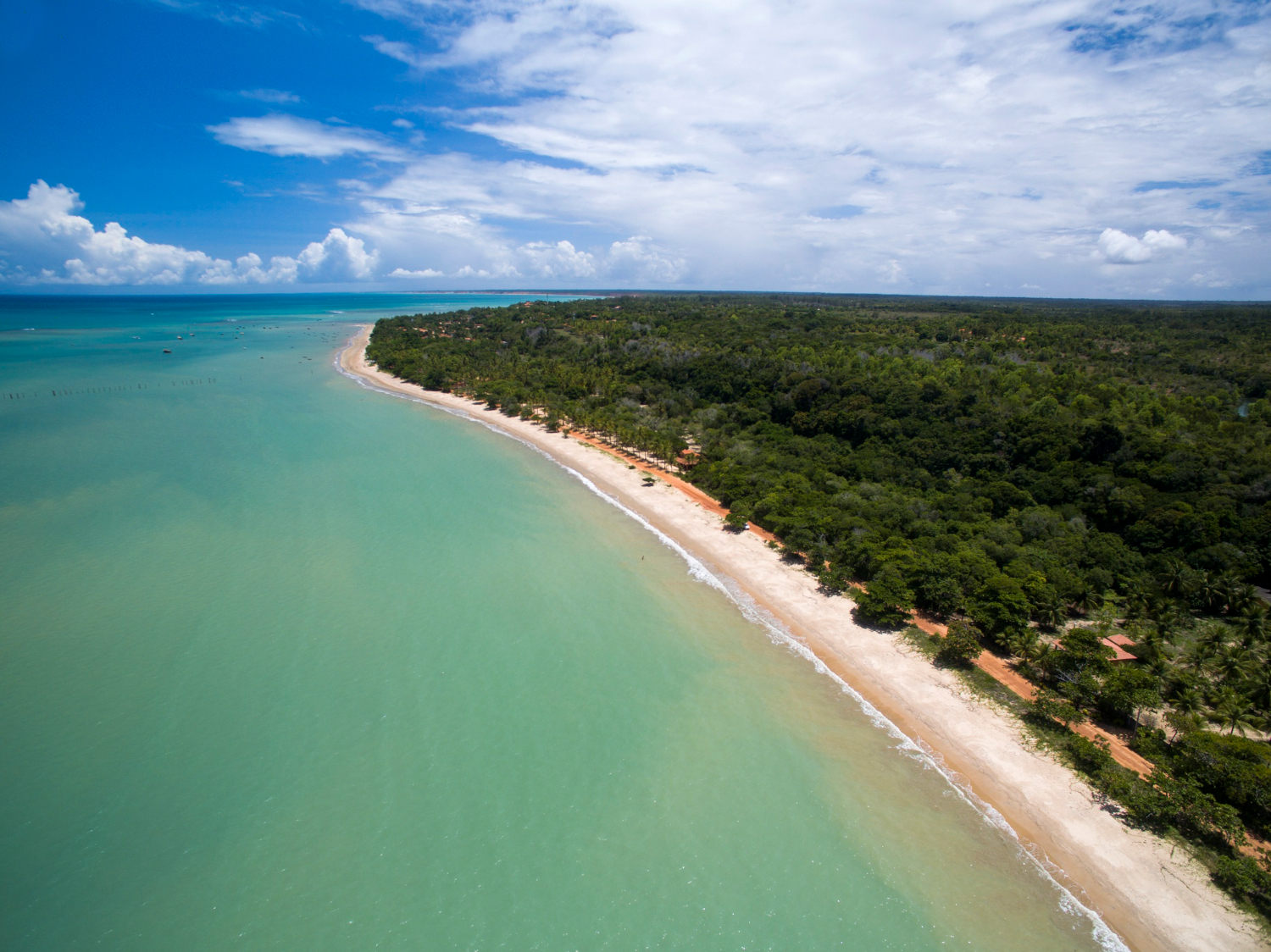
Ilha da Queimada Grande sits off the coast of São Paulo state in southern Brazil, a relatively small island covering roughly 43 hectares, about a hundred acres, of rocky terrain and lowland rainforest. Administered as part of a mainland municipality, it appears at first glance to be an unremarkable, even beautiful, tropical island of the kind that dots the Brazilian coastline.
But Queimada Grande is unlike any other island in the world. It is the only natural home of a unique and highly venomous snake, and that distinction has made it one of the most tightly restricted places on Earth. The Brazilian Navy has controlled access to the island for decades, forbidding the general public from landing there. Only a small number of authorized people, chiefly scientists with special government permits, are ever allowed to visit, and even then under strict conditions. For everyone else, Snake Island is entirely off-limits, a forbidden place hiding in plain sight just off a populous stretch of coast.
The Golden Lancehead, a Snake Found Nowhere Else
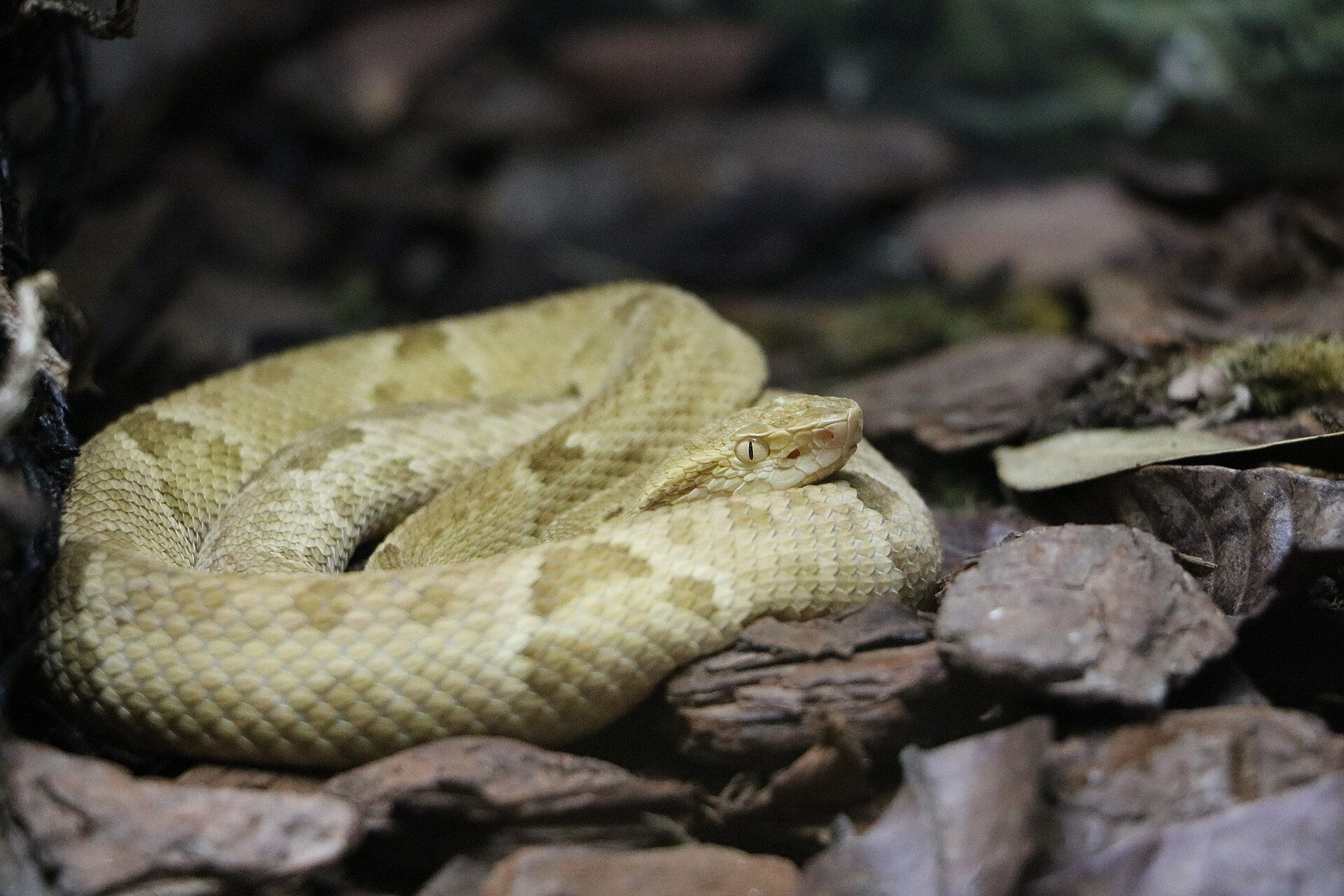
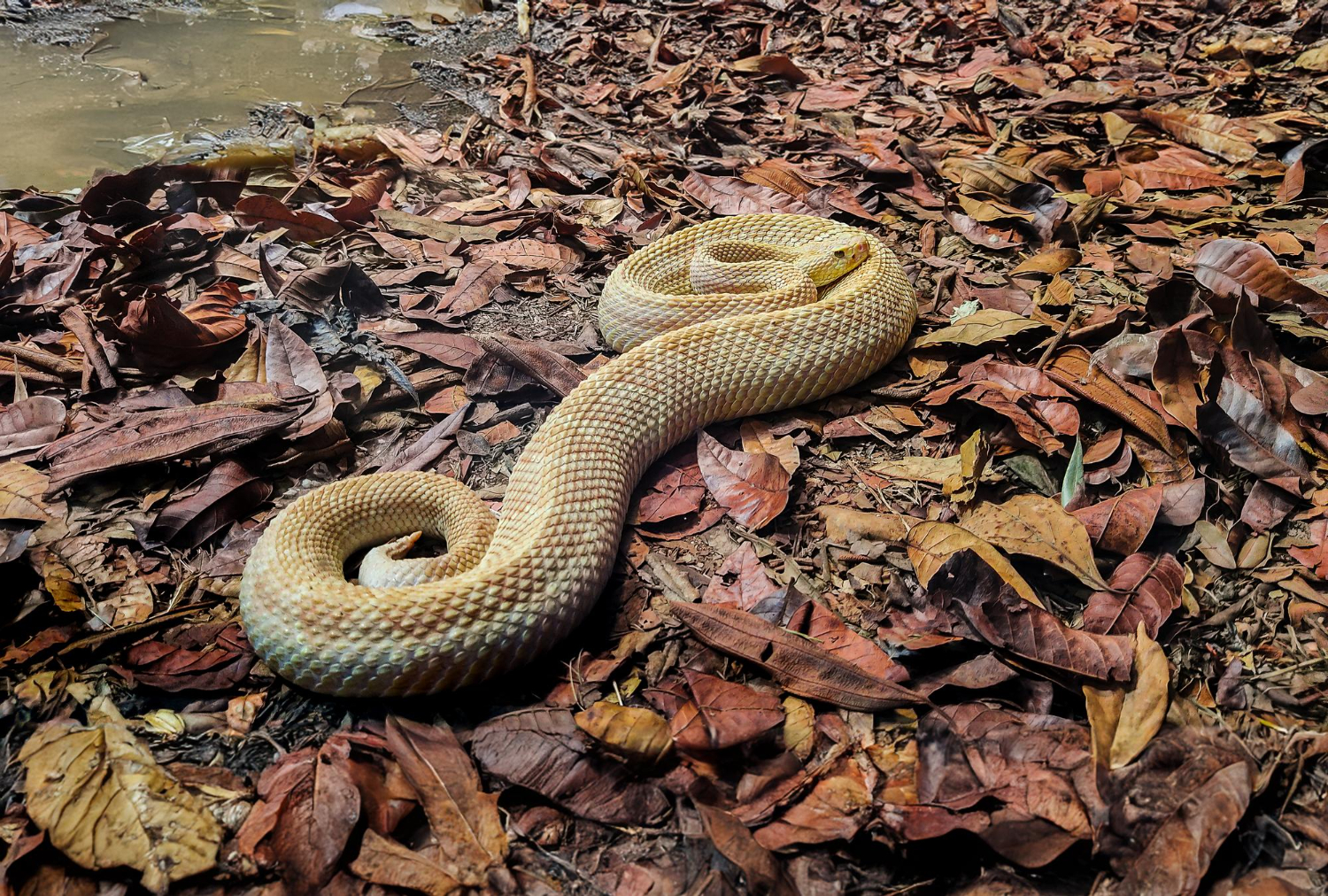
The reason for the island’s fearsome reputation is the golden lancehead pit viper, a snake that exists nowhere else on the planet. Estimates of the population vary, but researchers believe somewhere between two thousand and four thousand of these vipers live on the island, concentrated in its forested areas. With the island’s modest size, that adds up to a startling density of venomous snakes packed into a small space.
The golden lancehead takes its name from its yellowish-tan coloring and the lance-like shape of its head. It can grow to well over half a meter in length, and it possesses a remarkably potent, fast-acting venom. The lancehead family of snakes is responsible for the overwhelming majority of serious snakebite cases on the Brazilian mainland, and the island species is considered especially dangerous. Its venom is estimated to be several times more potent than that of its mainland relatives, capable of causing severe tissue damage and internal bleeding, a genuinely formidable adaptation in such a small creature.
How the Snakes Became Trapped in Time
The story of how this unique snake came to be marooned on a single island reaches back thousands of years, to the end of the last ice age. Around eleven thousand years ago, as the ice age ended and the planet warmed, sea levels rose significantly, flooding low-lying land and separating what is now Queimada Grande from the mainland of Brazil.
A population of pit vipers was left stranded on the newly formed island, cut off from the mainland and from other members of their kind. Isolated in this way, the snakes embarked on a separate evolutionary path, gradually becoming a distinct species adapted to their unusual home. With no large mammals on the island to hunt as prey, the snakes came to rely heavily on the migratory birds that stop to rest on the island during their long journeys. Because a bitten bird could easily fly away before dying, the vipers evolved exceptionally strong, fast-acting venom to subdue their winged prey quickly, an adaptation that also makes them so dangerous. This isolation produced the singular, deadly creature found there today.
The Legends of Snake Island
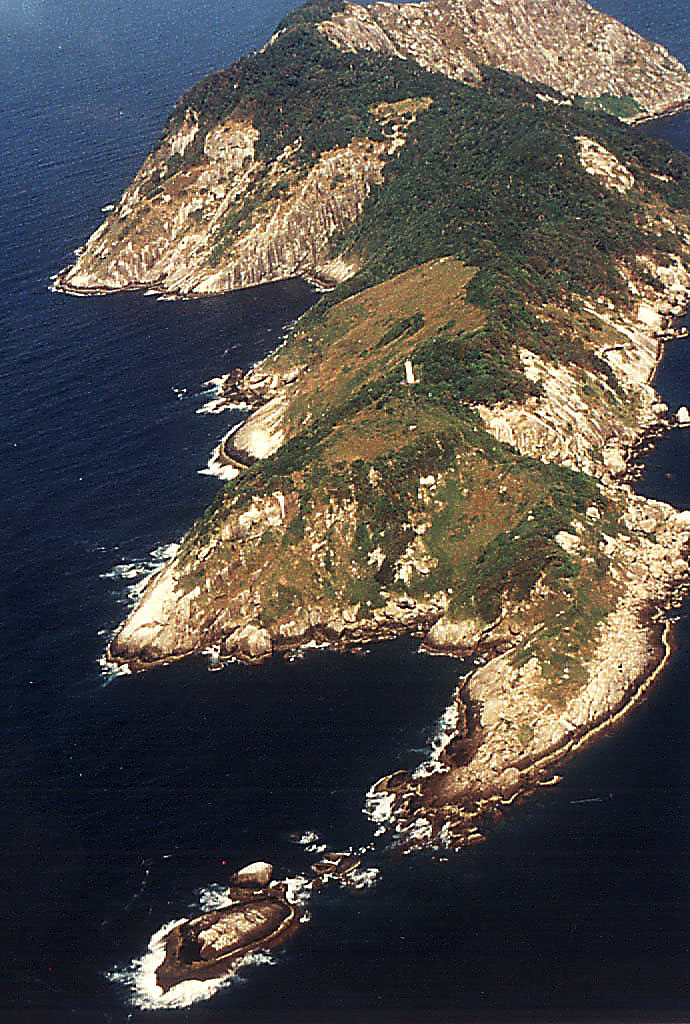
Like many forbidden and frightening places, Snake Island has accumulated its share of chilling legends, stories that are told and retold in the coastal towns nearby. These tales are best understood as local folklore rather than documented fact, but they capture the dread the island inspires. One popular legend tells of a fisherman who unwittingly came ashore to gather fruit, only to be bitten by the snakes, managing to return to his boat before succumbing, where he was later found.
Another enduring story concerns the keeper of the lighthouse that was built on the island long ago to warn ships away from its dangerous waters. As the tale goes, snakes entered the lighthouse keeper’s home one night, and he and his family were bitten as they tried to flee toward their boat. Whatever the truth behind these stories, the lighthouse on the island was eventually automated, removing the need for any human to live there. These legends, passed down over generations, have cemented Snake Island’s reputation as a place of danger and mystery, adding a layer of dark folklore to the very real hazards the island poses.
Why the Island Is Closed to the Public

The Brazilian Navy closed Snake Island to civilians back in the 1920s and has maintained that closure ever since. The prohibition serves two purposes, protecting people from the obvious dangers of the island, and protecting the rare and fragile snake population from people. It is one of the very few places on Earth where humans are kept out in large part to protect a venomous animal.
Access is granted only to a small number of authorized visitors, primarily researchers studying the golden lancehead and its unique ecosystem, who must obtain federal permits to land. Even sanctioned scientific expeditions operate under strict safety requirements, and the Brazilian authorities have required that a doctor accompany legally sanctioned visits, given the grave danger a bite would pose so far from a hospital. The Navy itself makes occasional visits for maintenance of the island’s facilities. For the general public, however, the island remains firmly closed, a rule enforced to safeguard both human life and a species that exists nowhere else.
A Fragile and Endangered Species
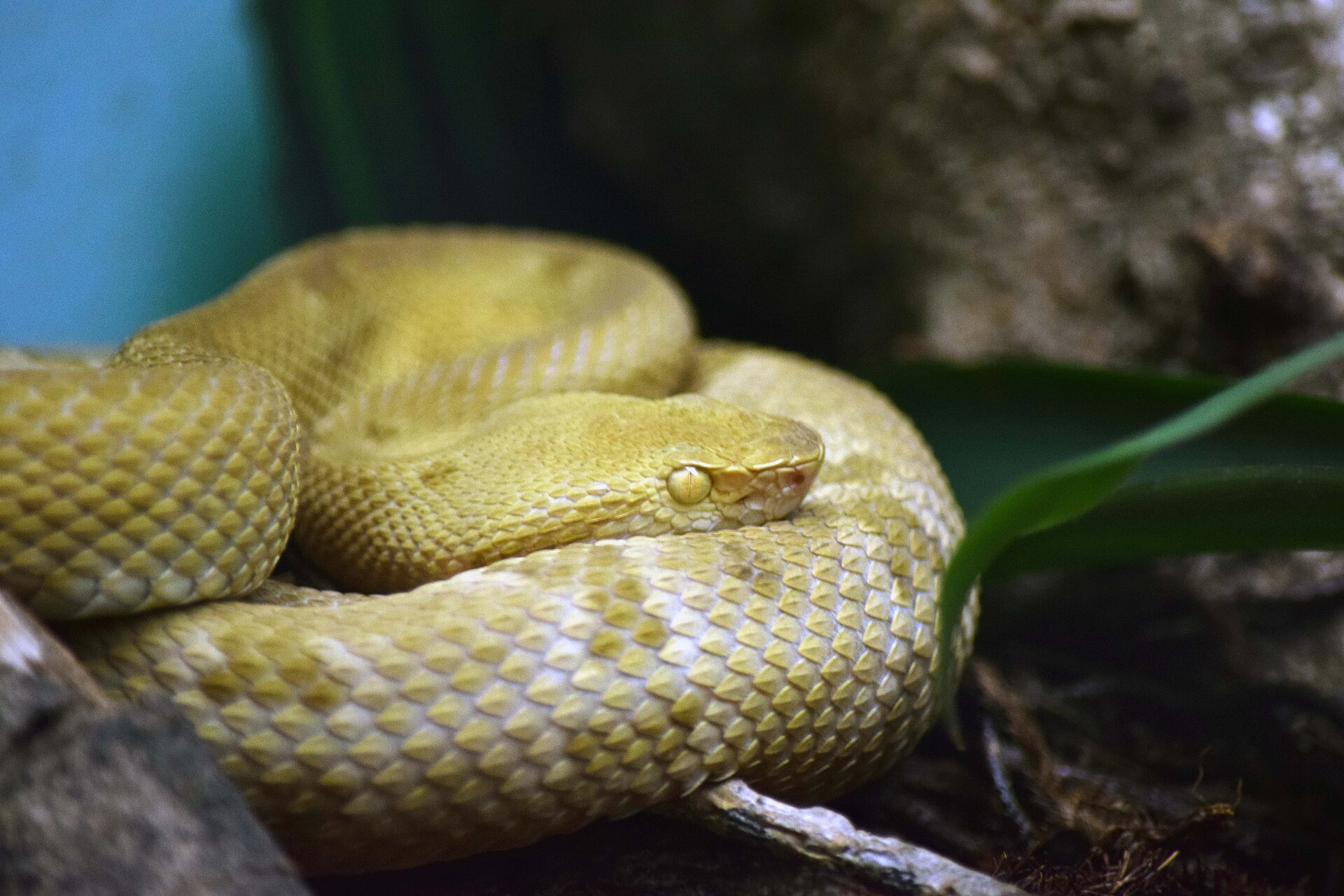
For all its fearsome reputation, the golden lancehead is itself under threat, and the species is considered endangered. Confined to a single small island, the entire global population is vulnerable to disease, habitat disturbance, and environmental changes. With nowhere else to go, the snakes’ survival depends entirely on the health of their isolated island home.
Adding to the threat, the rarity of the golden lancehead has made it a target for illegal wildlife traffickers, sometimes called biopirates, who have reportedly attempted to smuggle the valuable snakes off the island to sell on the black market. This poaching pressure is one more reason authorities restrict and monitor access so carefully. The same isolation that created this unique creature also leaves it precariously dependent on a single fragile habitat. Conservation of the golden lancehead and its island ecosystem is a genuine concern, and the strict protections around Snake Island play an important role in safeguarding the species from human interference.
An Island That Belongs to the Serpents
Snake Island stands as one of the world’s most remarkable and forbidding natural places, a small patch of land where an extraordinary quirk of geology and evolution produced a creature found nowhere else, in numbers and with a potency that make the island genuinely off-limits. It is a place that seems to belong more to legend than to reality, yet it sits steadily off a populous coast, closed and watched over, home only to its serpents.
For the curious, Snake Island is best appreciated from a safe distance, through the work of the scientists permitted to study it and the wealth of documented research and footage they have produced. The island’s combination of natural wonder, real danger, dark folklore, and strict prohibition gives it an enduring fascination. It is a vivid reminder that even in our thoroughly mapped and explored world, there remain places where nature reigns so completely that humans are simply not welcome. Ilha da Queimada Grande belongs to the golden lancehead, and by the wise decision of the authorities, it will remain that way, a forbidden island where one of evolution’s most singular and dangerous creations lives on, undisturbed.