

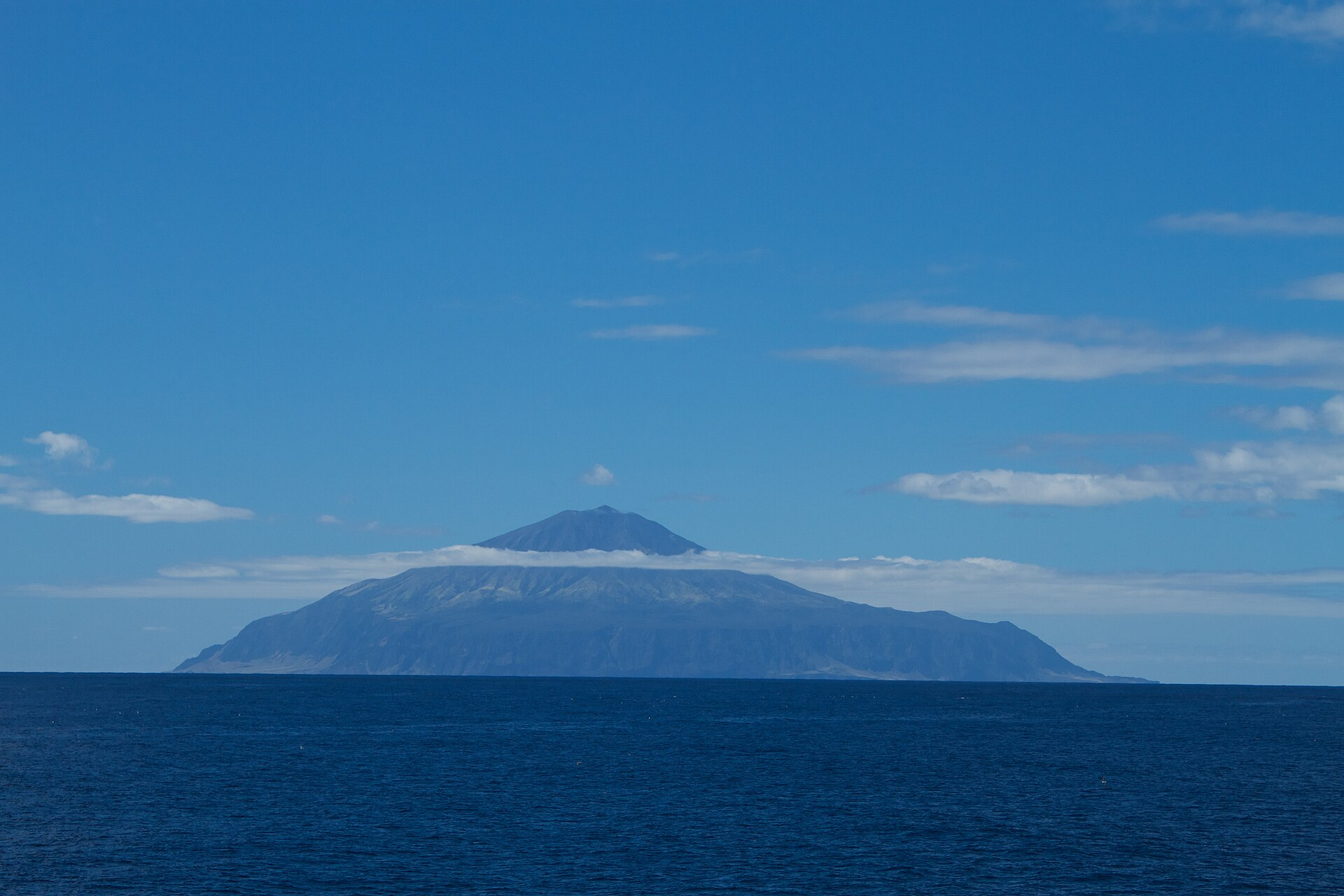
Imagine living somewhere so isolated that the nearest other people are over 1,500 miles away across open ocean, that there’s no airport, and that reaching the outside world means a six-day voyage by boat. This is daily life on Tristan da Cunha, a tiny volcanic island in the South Atlantic widely recognized as the most remote inhabited place on the planet. Home to around 250 hardy residents, this British Overseas Territory is a world unto itself, a self-reliant community living amid towering cliffs, fierce winds, and a profound sense of distance from everywhere else. This is the story of the loneliest island on Earth and the remarkable people who call it home.
A Speck in the South Atlantic
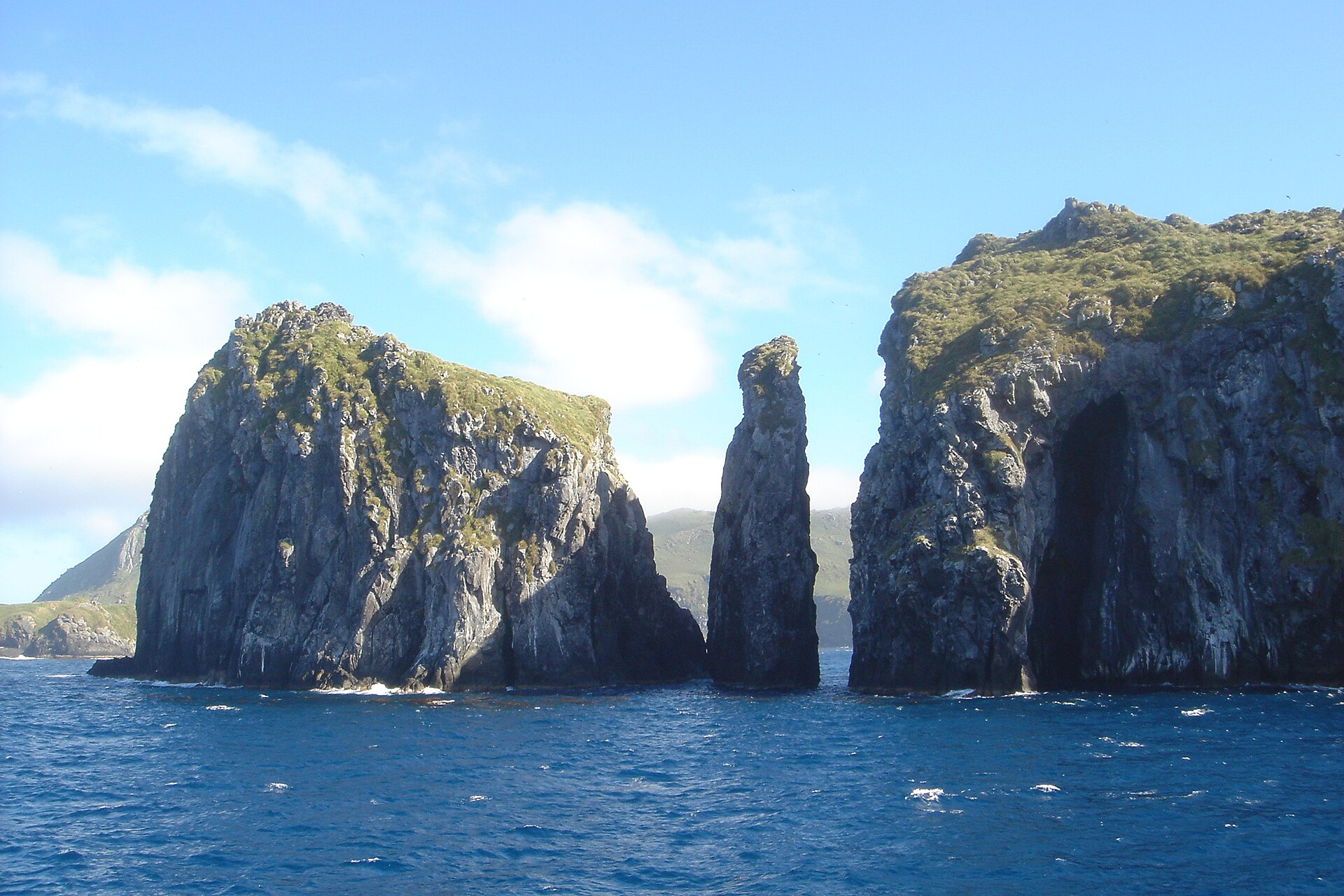
Tristan da Cunha sits in the South Atlantic Ocean, roughly midway between southern Africa and South America, about 1,500 to 1,600 miles from South Africa and some 2,300 miles from South America. Its nearest inhabited neighbor, the island of St. Helena, lies around 1,500 miles away. To put that in perspective, the distance to the nearest other people is greater than the span of many countries.
The island is the largest in a small group that also includes the uninhabited Inaccessible, Nightingale, and Gough islands. Tristan itself is volcanic and mountainous, dominated by a central peak, Queen Mary’s Peak, that rises more than 6,700 feet and is often wrapped in cloud, occasionally dusted with snow in winter. The climate is wet and windy, and the island is so isolated that it often seems to generate its own weather, with fog and squalls rolling in off the sea without warning. The only flat land, on the northwest coast, is where the island’s tiny community has made its home.
Like our content? Follow us for more.
Edinburgh of the Seven Seas
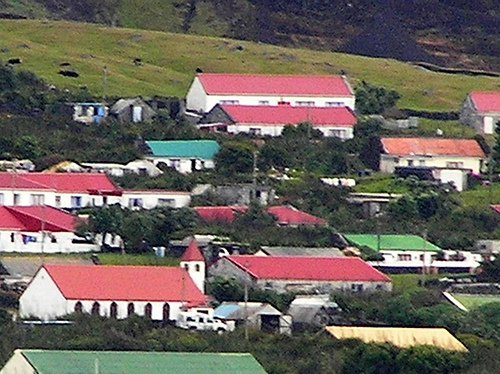
The island has a single settlement, officially named Edinburgh of the Seven Seas, though residents simply call it “the Settlement.” It was given its grand name in 1867, after a visiting British prince, the Duke of Edinburgh. Today around 250 people live there, in a close-knit community whose roots stretch back more than two centuries.
The story of settlement began in 1816, when the United Kingdom annexed the island and stationed a garrison there. When the garrison withdrew in 1817, a handful of men chose to stay, and they signed a remarkable founding agreement: that all stock and supplies would be shared equally, and that no member of the community would consider himself superior to any other. Over the following decades, they were joined by shipwreck survivors, settlers, and women from St. Helena. Today’s residents are thought to descend from roughly fifteen ancestors who arrived between 1816 and 1908, and there are just seven surnames among the entire population.
A Self-Reliant Way of Life
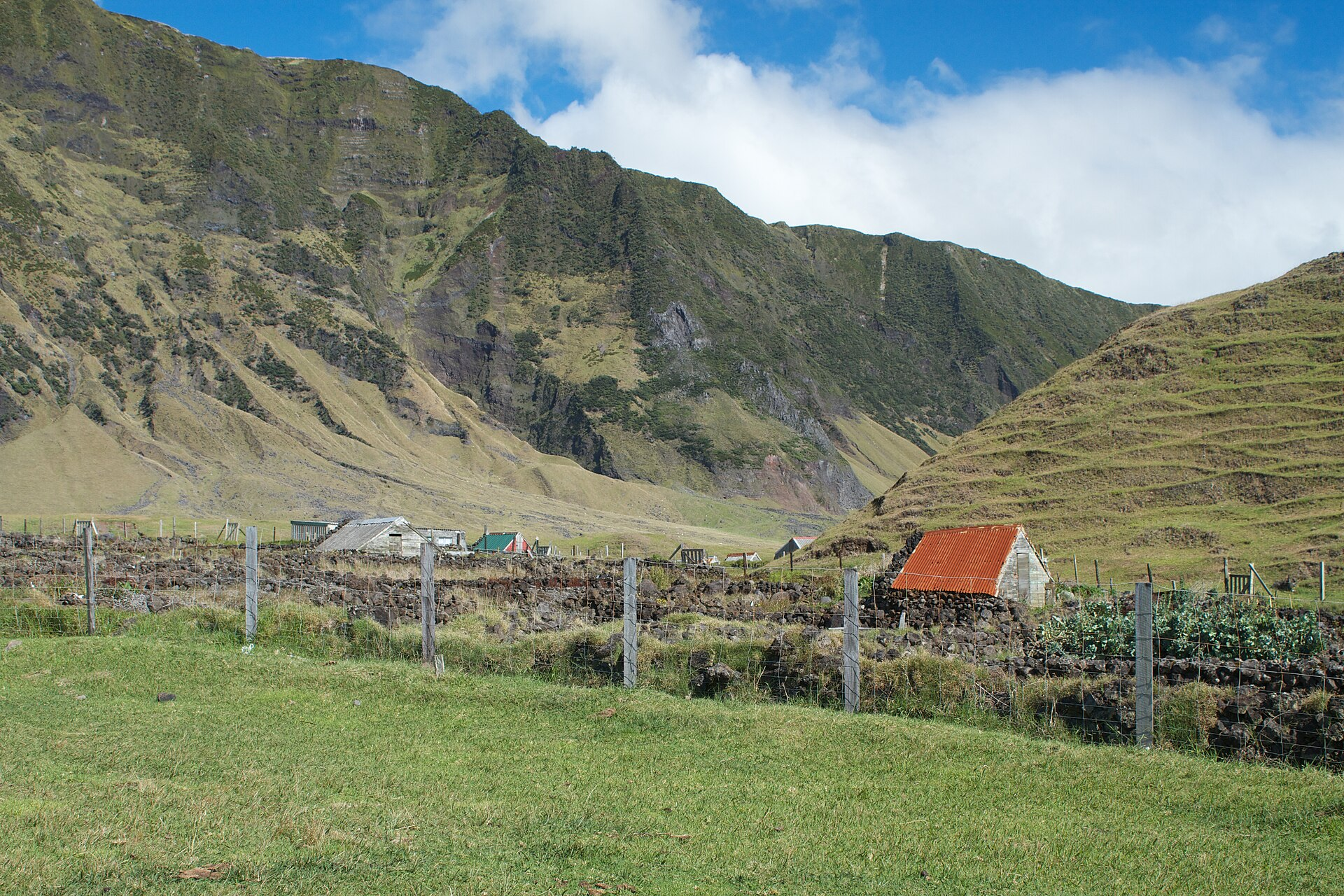
Extreme isolation has shaped every aspect of life on Tristan da Cunha. With no airport and only a handful of ships visiting each year, residents rely largely on themselves and on each other. The community’s economy rests on two pillars: fishing, especially for the prized rock lobster, or crawfish, which is the island’s main export, and farming, including the famous “Potato Patches” where families grow their staple crop.
The island’s founding spirit of equality endures. Land is communally owned, and outsiders are not permitted to buy property or settle there. Livestock numbers are carefully controlled, both to protect the limited pasture and to ensure that no one accumulates too much wealth. Many residents hold steady jobs within the local government. This blend of self-sufficiency, shared resources, and tight community has led some to describe Tristan as a kind of utopia, a place where everyone looks out for everyone else because they have to. On an island this remote, the community is the safety net.
Cut Off From the World
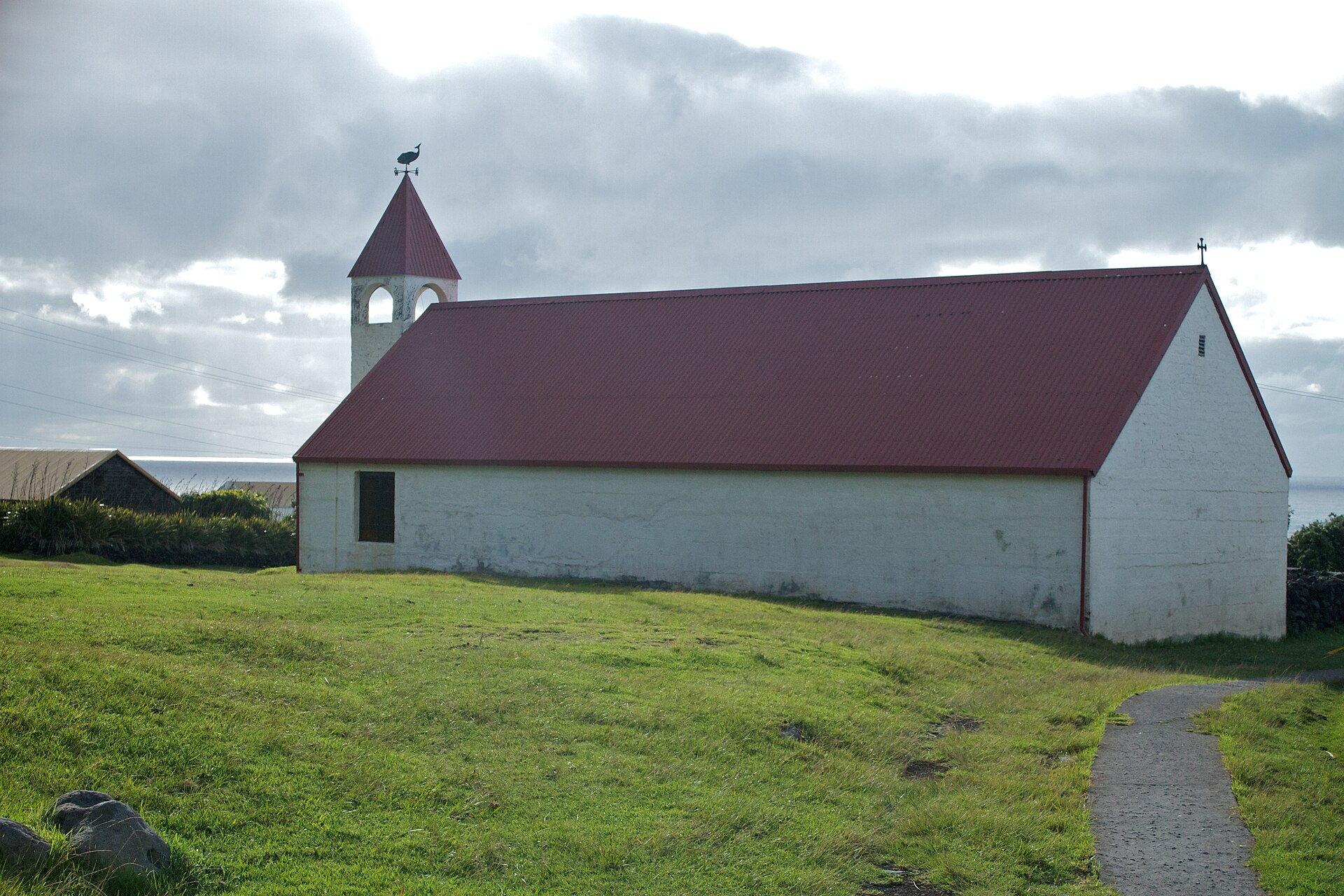
The island’s isolation has produced some extraordinary moments in its history. During the First World War, Tristan was so cut off that its residents reportedly didn’t learn the war had even begun until 1919, when they were told it had already ended. In 1961, a volcanic eruption near the settlement forced the entire population to be evacuated all the way to England; most of the islanders chose to return home in 1963, drawn back to their remote outpost.
Even today, reaching Tristan da Cunha is a serious undertaking. There is no airstrip, so the only way in is by sea, a voyage of roughly six days from Cape Town, South Africa, on one of the few vessels that service the island, typically fewer than a dozen visits a year. The island has only a very small tourism industry, and prospective visitors must have their trip approved by the Island Council, often arranged months in advance. The community continues to govern itself through an elected Island Council and a Chief Islander chosen by the residents.
A World Apart
Tristan da Cunha stands as a tribute to human resilience and community, a place where a few hundred people have built a thriving, self-reliant society in one of the most isolated spots on the planet. Far from the rush of the modern world, life on the island moves to its own rhythm, shaped by the sea, the seasons, and the unbreakable bonds of a community that has depended on itself for over two hundred years.
The surrounding waters and neighboring islands teem with wildlife, including rockhopper penguins, albatrosses, and elephant seals, and Gough and Inaccessible islands together form a protected nature reserve recognized for their global importance. For the outside world, Tristan da Cunha is a fascinating curiosity, the answer to the question of where the most remote inhabited place on Earth might be. For its residents, it is simply home: a small, windswept island at the edge of the map, where neighbors are family, the ocean is everywhere, and life, against all odds, goes on.
Like our content? Follow us for more.
