


There is a pointed roof on the top of a milk carton, and most people have assumed for their entire lives that it is a spout.
It is not. The spout is a consequence. The roof is there because of how the carton has to be manufactured, and once you know what problem it solves, the shape stops looking like a design choice and starts looking like the only possible answer.
The Whole Carton Starts as One Flat Piece
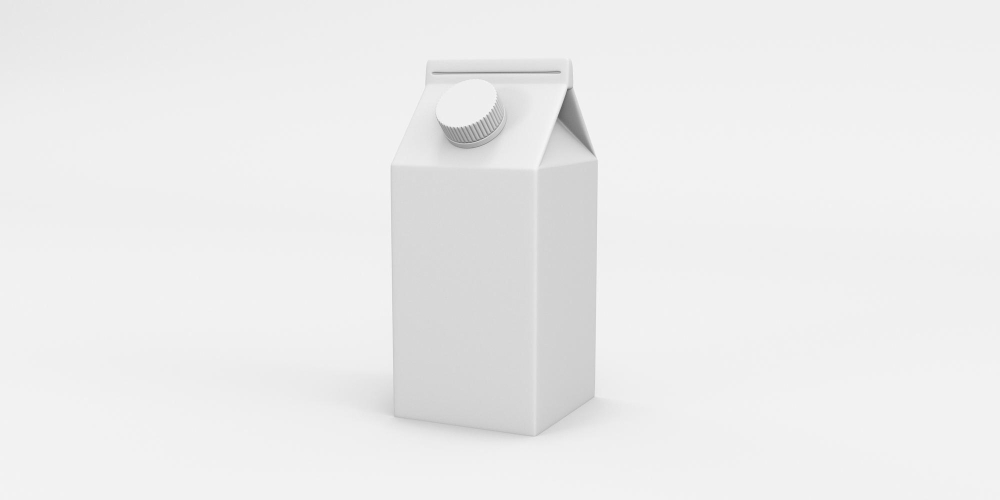
A gable-top carton is cut and creased from a single flat blank of paperboard. That blank is printed, scored along every fold line, and glued along one seam to make an open-ended tube. It arrives at the dairy flat, in stacks, which is the entire economic point – a flat blank ships in a fraction of the space a formed container would.
At the filling machine the tube is opened out, the bottom is folded and sealed, the carton is filled with milk, and then the top is folded and sealed. The container is made, filled and closed in one continuous operation, and at no stage is a separate component added.
That constraint – everything from one flat sheet, no separate lid – is what produces the roof. A flat top would need either a separate piece or a fold pattern that leaves a weak point in the middle. The gable fold takes the four walls of the tube and brings them together into a ridge that can be pressed and sealed along a single straight line, with the surplus material folded neatly into two triangular ears on the sides.
A straight seal is easy to make reliably. A straight seal is also easy to tear open along part of its length, which is where the spout comes from. The pour spout is a by-product of a sealing geometry chosen for manufacturing reasons.
Like our content? Follow us for more.
It Is Not Cardboard, and It Is Not Plastic
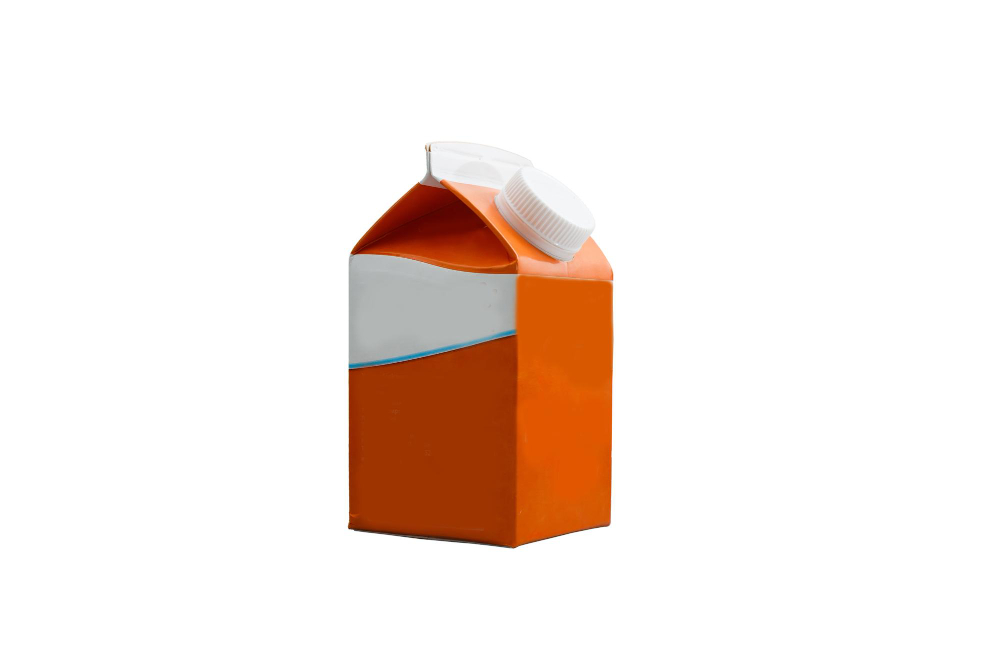
The material is usually described as cardboard, which is wrong in a way that matters.
A gable-top carton is paperboard with a thin layer of polyethylene on both faces. The paperboard provides stiffness and takes the print. The inner polyethylene layer stops the milk reaching the paper, because wet paper has no strength at all. The outer polyethylene layer stops condensation and handling moisture doing the same thing from the other side, and it is also what makes the seal possible: heat the two inner faces where they meet, press them together, and the polyethylene melts and fuses into a continuous weld.
That is why a carton can be sealed without glue or a mechanical closure. The container is effectively welded shut by its own lining.
Cartons intended to sit on a shelf without refrigeration add a layer of aluminium foil, usually with another polyethylene layer to bond it, because paper and plastic alone will not keep oxygen and light out for months. That is the difference between the carton in the chilled cabinet and the one on the ambient shelf, and it is also why the two behave so differently once opened.
The multi-layer construction is the carton’s great strength and its great problem. Three materials bonded into a single laminate is excellent packaging and awkward recycling, because recovering the fibre means separating it from the plastic – which is entirely possible, is done at scale in dedicated plants, and requires that the cartons reach one of those plants rather than a standard paper mill.
Why Not a Round Bottle
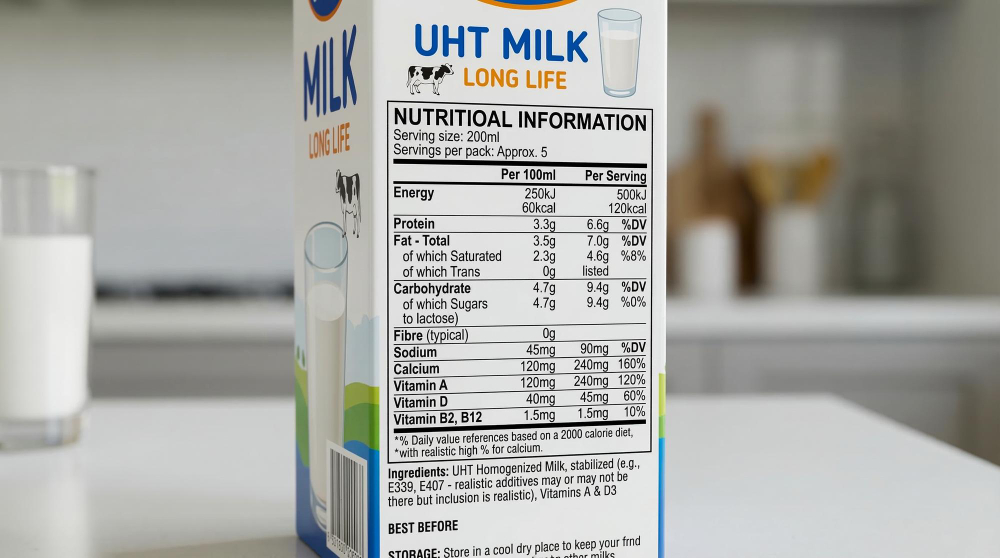
Round containers waste space. Four cartons with flat sides occupy a rectangle with no gaps; four cylinders of the same volume leave air between them, and that air is shipped, refrigerated and stored at the same cost as the milk.
A rectangular cross-section also means a carton can be stacked on a shelf and in a delivery crate with no wasted depth, and it gives four flat faces for printing, which is worth a great deal to whoever is selling the milk.
What a carton gives up is strength under internal pressure and strength when handled hard. A cylinder resists pressure far better than a box, which is why fizzy drinks are not sold in gable-top cartons – the shape would deform. Milk is not carbonated, so the trade is available to take.
The glass bottle that cartons replaced was better in almost every way except the ones that turned out to decide the question. It was reusable, inert, kept the milk cold, and could be put back on the doorstep. It was also heavy, breakable, and required an entire collection, washing and redistribution system to exist. The carton needed none of that infrastructure, cost a fraction to transport, and could be sold in a shop by somebody who never saw the customer again.
The infrastructure is what died, not the bottle.
The Fold Is Harder Than It Looks
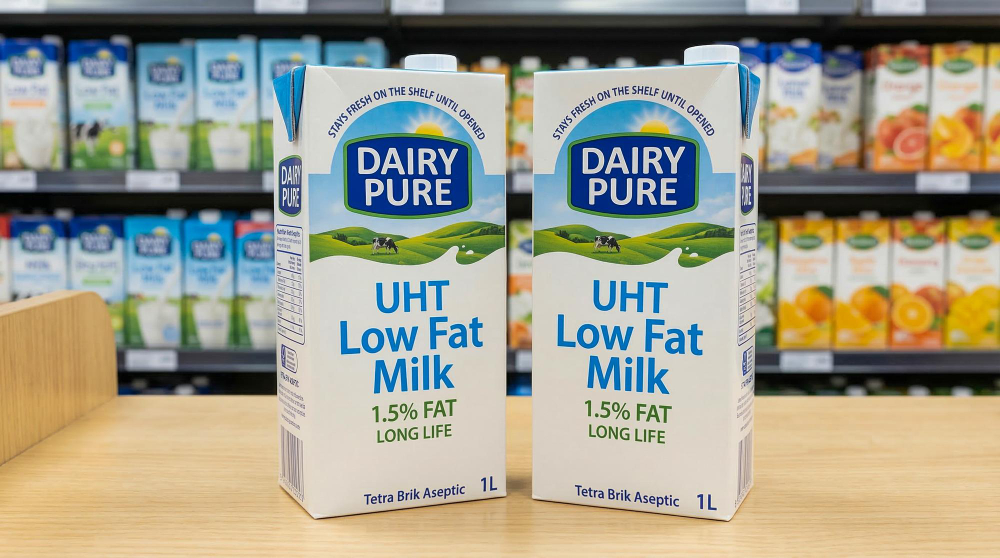
Opening a gable-top carton is a two-stage operation that almost nobody performs correctly, and the instructions printed on the side are routinely ignored.
The intended sequence is to push the two triangular ears outwards and away from the ridge first, which releases the folded material, and only then to grip the loosened spout panel at its outer edges and pull it apart. Done in that order the seal parts along its length and the spout opens into a clean channel.
Done in the usual order – gripping the ridge and wrenching – the seal tears unevenly, the paperboard delaminates where it was creased, and the resulting spout dribbles down the side of the carton for the rest of its life.
This is not a moral failing. It is a design that requires a learned sequence and provides almost no feedback about what that sequence is, which is why the screw-cap fitment appeared: a separate moulded spout welded into the carton face, operated by a motion everybody already understands. It adds cost, adds a component, adds a second material in a different place, and sells extremely well, because the gable fold was always the carton’s weakest point as a user-facing object even while it was its cleverest feature as a manufactured one.
What the Shape Says About Everything Else in the Fridge
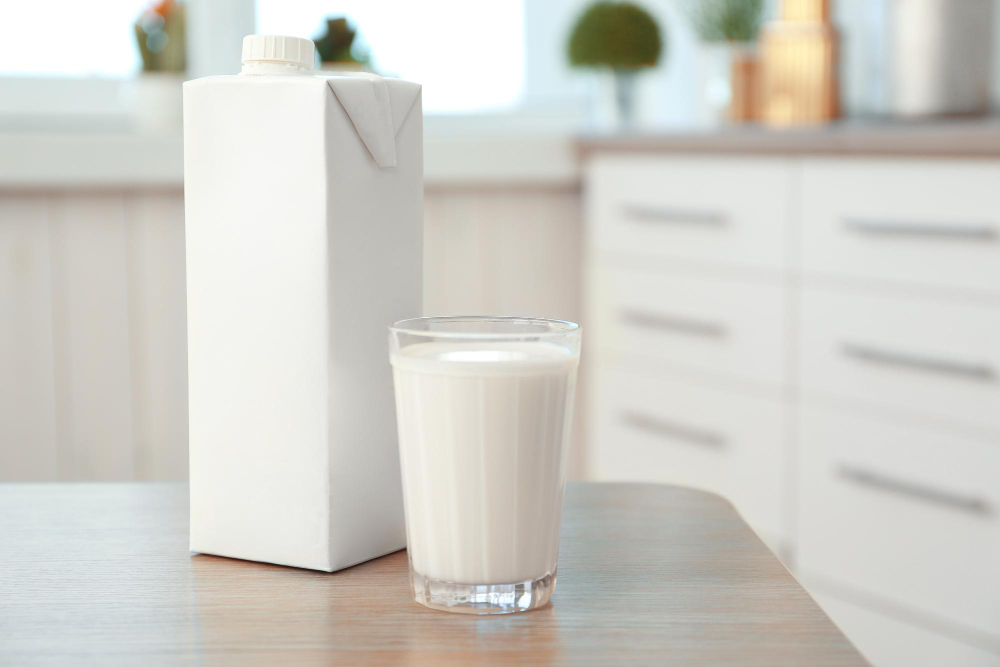
The useful thing about the carton is that it is a clear case of a shape that looks like a decision about the user and is actually a decision about the machine.
Nobody sat down and decided that milk should be poured from a pointed roof. Somebody decided that the container had to be formed, filled and sealed from a flat blank in a single pass, and the pointed roof is what that requirement produces when you work it through. The pouring behaviour was then accepted, lived with, and eventually patched with a plastic cap.
Most of the containers in a fridge are like this. The shape of a yoghurt pot follows from how it is thermoformed and how it stacks in a mould. The ridges round the base of a plastic bottle are there to control how it deforms when the contents cool and contract. The flat panel on the side of a juice bottle is a deliberate weak point that moves when pressure changes so the rest of the bottle does not.
None of those features are about the person holding them. They are about the machine that made them, the lorry that moved them and the shelf that held them – and the person holding them gets whatever the solution to those problems happens to feel like.
The Bottom Is the Part Nobody Looks At
The base of a gable-top carton is folded from the same tube by the same logic, and it is a harder problem than the top.
The bottom has to be liquid-tight under the full weight of the contents, it has to be flat enough to stand on a shelf without rocking, and it has to be sealed before the carton is filled rather than after – which means it is the only part of the container that has to hold without ever having been tested by the contents it is about to receive.
The fold used is a variant of the same four-corner tuck, pressed and heat-sealed into a flat pad with the surplus material laid inwards rather than outwards. The result is a base that is slightly thicker than the walls, is stiffened by its own folded layers, and is the strongest part of the carton.
It is also why a carton that has been dropped tends to fail at the top rather than the bottom. The bottom was engineered to hold a column of liquid. The top was engineered to be opened, which is a direct trade against being strong.
Which is a reasonable summary of the whole object. Every feature of it is the resolution of a conflict between what the machine needs, what the lorry needs, what the shelf needs and what the person needs – and the person is reliably last in that queue.
So the next time you fight with one, it is worth remembering that the fight is the price of a container that cost almost nothing to ship flat and could be made and filled in one continuous motion.
Push the ears out first. It genuinely works.
Like our content? Follow us for more.
