

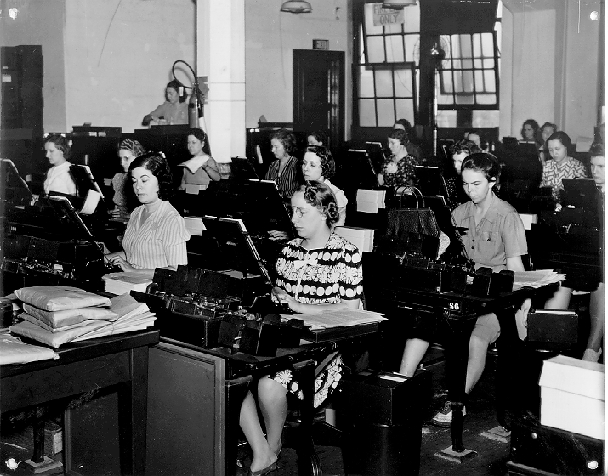
There is a particular kind of American administrative object that works by accident, and this is the purest example of it.
The Social Security number was created in the nineteen-thirties for one narrow purpose: to keep track of how much each worker had contributed to a specific government programme, so that the right benefit could be paid to the right person later. It was an accounting reference for one agency’s ledger.
It is now the number a person is asked for by a bank opening an account, an employer running a check, a hospital admitting a patient, a landlord screening a tenant, a university enrolling a student and a credit bureau assembling a file. It has become, functionally, a national identity number in a country that has spent ninety years explicitly refusing to create one.
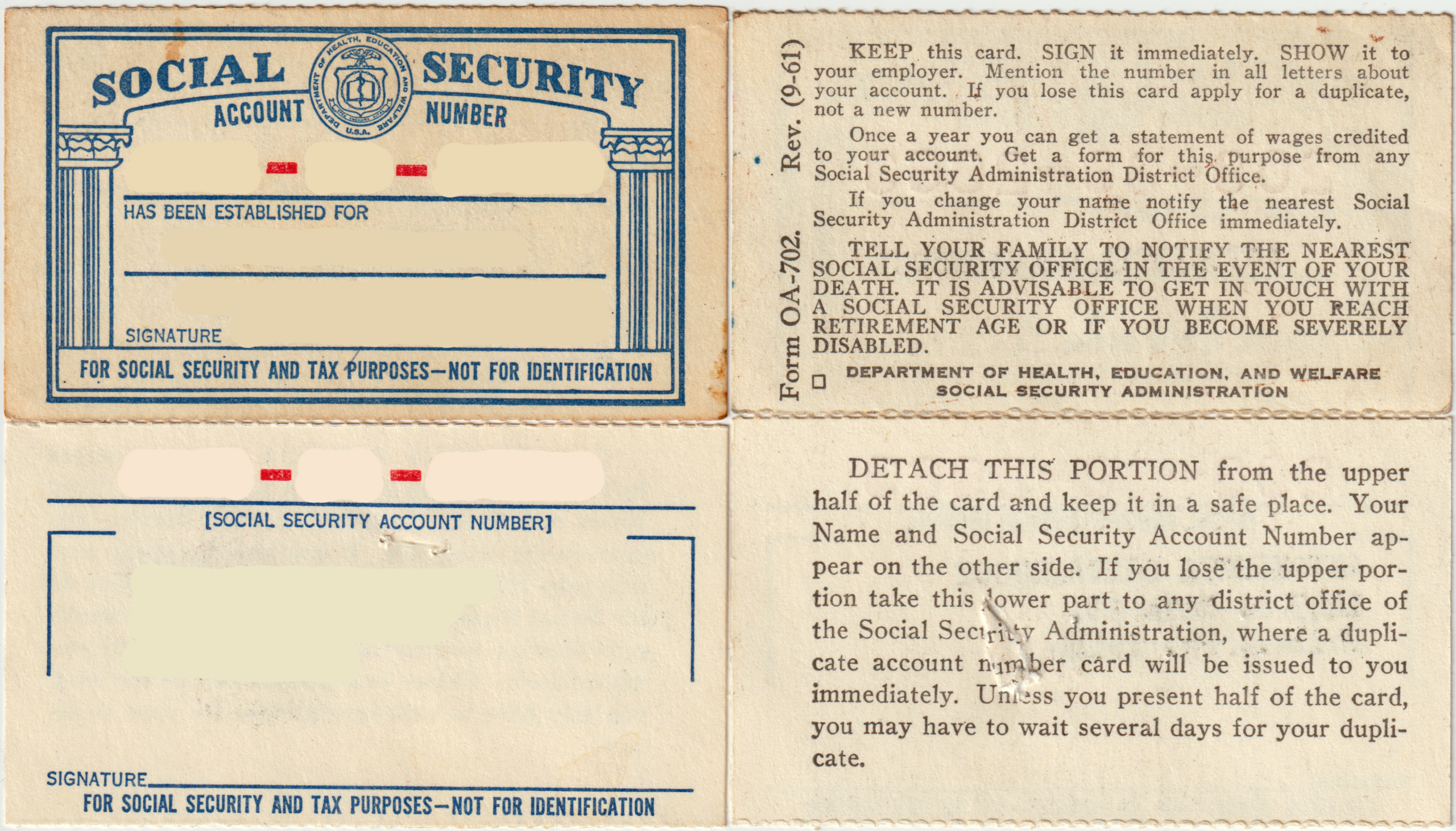
And for a large part of that period, the card itself carried a printed warning that this was not what it was for.
What It Was Actually Built To Do
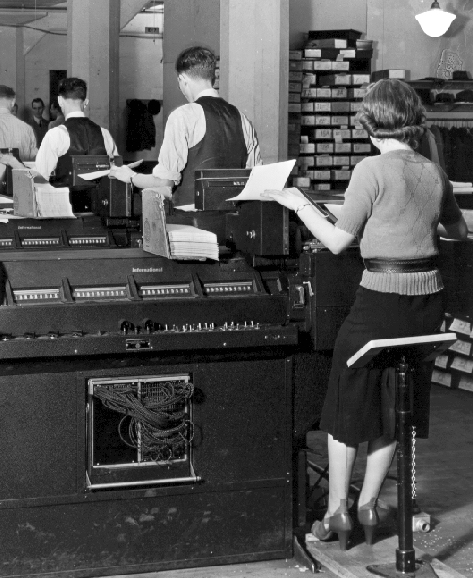
The original problem was straightforward bookkeeping at a scale nobody had attempted.
A contributory pension system has to record, for every working person in the country, how much they have paid in over a working life of forty years or more, through multiple employers, across changes of address and changes of name. Names are hopeless for this – they are duplicated, misspelled, transliterated inconsistently and changed on marriage. A unique number assigned once and never reused solves the matching problem.
So the number was issued to workers covered by the programme, recorded against their contributions, and that was the entire design. It was not issued to everybody, because not everybody was covered. It had no verification mechanism, because it did not need one – the agency was not trying to confirm that you were you, it was trying to add your contributions to the correct ledger line.
That last point is the one that matters for everything that followed. The number was designed to be a filing reference, not a credential. Nothing about it was built to prove anything.
Like our content? Follow us for more.
The Warning on the Card
The agency saw the problem coming almost immediately, because other organisations started asking for the number as soon as it existed.
A unique number already assigned to a large part of the adult population is enormously convenient to anybody who needs to keep records, and it cost them nothing to adopt. Employers, then other government programmes, then private institutions began using it as a file key.
For roughly forty years, from the mid-nineteen-forties onward, cards were printed with language stating that they were not for identification purposes. The warning was eventually dropped, not because the position changed but because it had plainly failed – the number was being used for identification everywhere, the printed line was not stopping anybody, and continuing to print it served no purpose.
That is the whole shape of the story. An agency stated clearly what its number was not for, was ignored for four decades, and then stopped saying it.
America Kept Deciding Not to Have an Identity Card
What matters here is that the alternative was available and was repeatedly rejected.
A national identity card or number is unremarkable in a great many democracies. It is issued to everybody, it is designed from the start to be verified, and it is governed by rules about who may demand it and what may be done with the data.
American proposals along those lines have surfaced periodically for decades and have consistently failed. The objections come from several directions at once and have never been confined to one part of the political spectrum: concerns about federal power and surveillance, concerns about internal checks and the demanding of papers, concerns about state authority against federal, and a general and durable suspicion of centralised registries.
The result is the outcome nobody chose. By declining to build an identity number deliberately, the United States ended up with one that emerged by default – and because it emerged rather than being designed, it has none of the protections a designed one would have had.
Why This Is Actively Dangerous
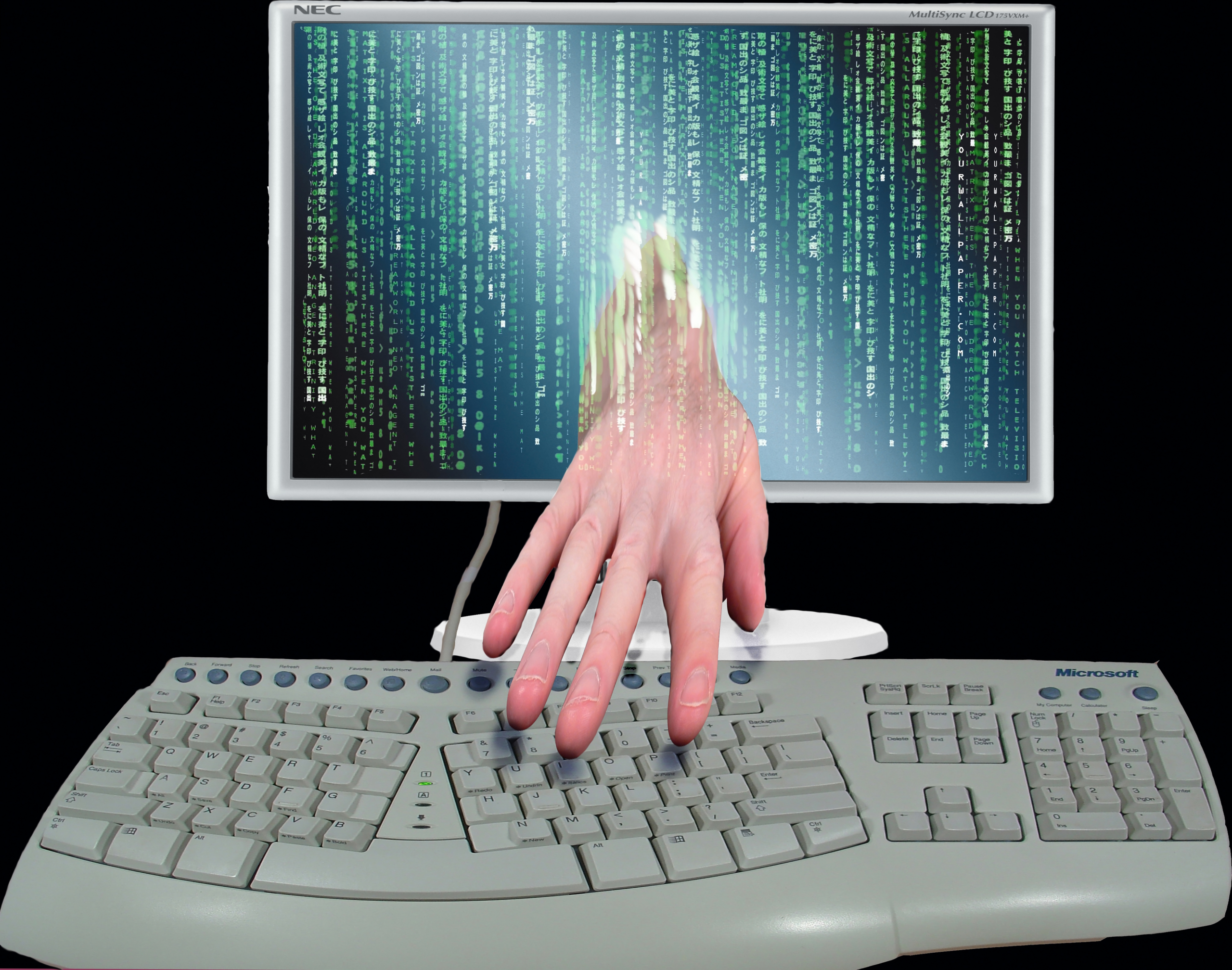
The practical consequence follows directly from the design, and it is worth stating plainly.
A number that functions as an identifier and as a credential at the same time is structurally unsafe. The Social Security number is used both to say which record is yours and to prove that you are the person entitled to it – which means that anybody who learns the number can, in a great many contexts, assert that they are you.
A well-designed identity system separates those functions. The identifier can be public, because knowing it proves nothing; proof comes from something else entirely – a document, a device, a biometric, a credential that can be checked. The American arrangement collapsed both roles into one static number that is shared constantly, cannot be changed in ordinary circumstances, and is held in an enormous number of databases of wildly varying security.
The identity theft problem that follows is not an unfortunate side effect. It is the predictable result of using a 1930s filing reference as a credential.
The Slow Retreat
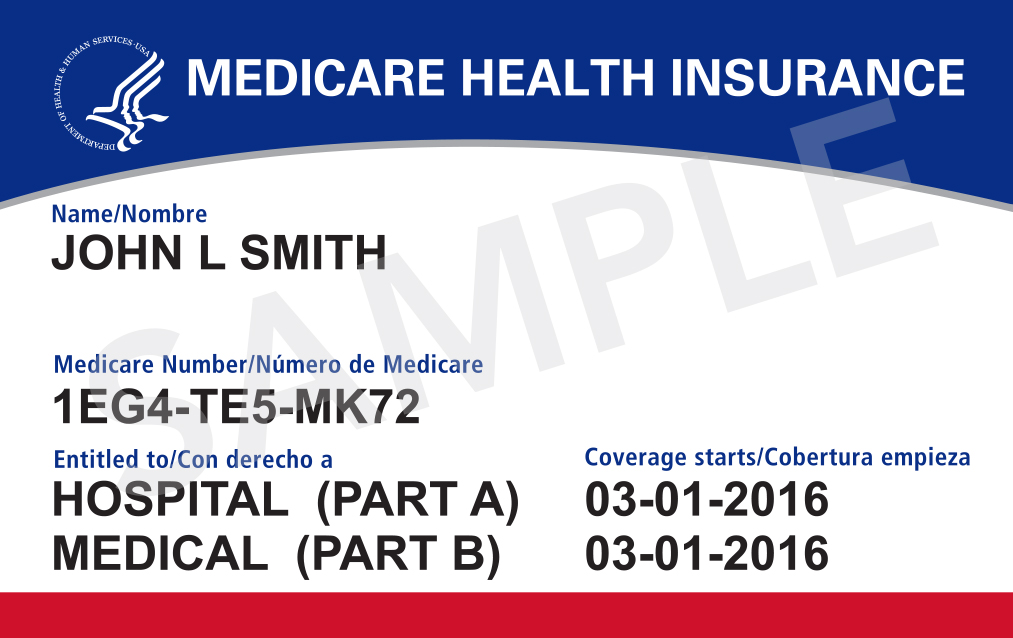
There has been substantial movement away from the worst of it, and the direction is consistent even though it has no central plan.
The number has been removed from a great many places it used to appear. It was once routinely used as a student identifier, printed on insurance cards, used on driving licences in some states and visible on various official documents. Most of those uses have been eliminated by state and federal action over the last two decades.
A truncated display convention has become standard, where only the last digits are shown. Various restrictions now limit who may require the number and for what purpose. And a significant recent change removed the number from a major federal programme’s cards, which is a meaningful step given how many people carry them.
What has not happened is a replacement. The number remains the default key in a great many systems, and the alternatives – a redesigned federal credential, a distributed verification system, anything that separates identifier from proof – run straight back into the objections that have blocked a national identity scheme for ninety years.
What Other Countries Did With the Same Problem
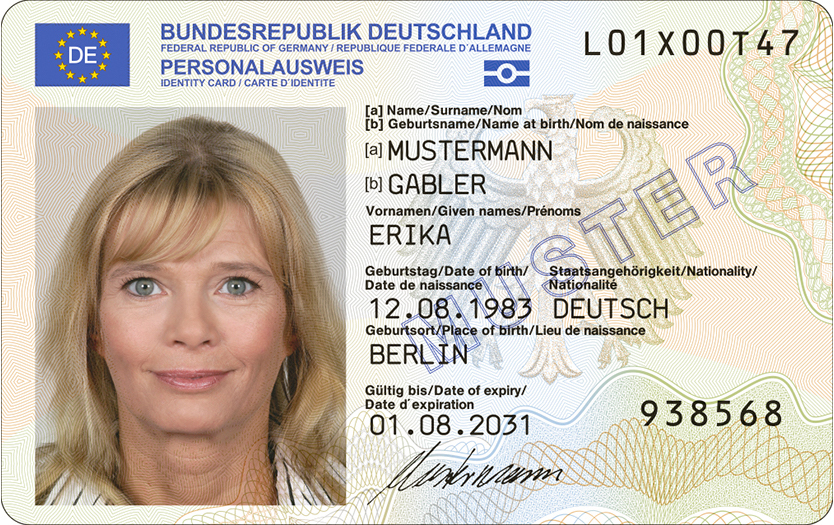
The comparison is instructive, and it is not a simple case of other countries getting it right.
Many national systems do separate the roles properly. A national number is used openly as a reference, and proving identity requires presenting a document or credential that can be verified against a register – so learning somebody’s number gives an impostor nothing useful.
Several also restrict use by law. Rules specify which bodies may require the number, prohibit private organisations from demanding it for unrelated purposes, and impose data protection obligations on anybody holding it.
But the trade is real and should be stated. A verified national identity register is exactly the instrument that American objectors have always been worried about. It makes a person legible to the state continuously, it concentrates enormously sensitive data, and the protections depend entirely on the government maintaining them.
So the honest summary of the comparison is not that America chose badly between two options. It is that America declined to choose, and the thing that grew in the absence of a decision has the disadvantages of a national identity number with none of the safeguards.
The Honest Summary
The Social Security number was created in the nineteen-thirties as an accounting reference, so that one agency could match a worker’s contributions to the correct ledger line across a working life. It was issued only to covered workers, had no verification mechanism, and was never designed to prove anything about anybody.
Other organisations adopted it immediately because a unique number already assigned to most adults is free and convenient. The agency printed a warning on the card stating that it was not for identification, kept printing it for roughly forty years, and eventually stopped because it had been comprehensively ignored.
Underneath all of this, the United States repeatedly declined to create a deliberate national identity number, for reasons about federal power, surveillance and state authority that have never belonged to one political faction.
So the country acquired one anyway, by accident, without any of the design that would have made it safe – most importantly without separating the identifier from the proof, which is why knowing the number is so often enough to impersonate its owner.
The retreat has been real but partial. The number has been removed from many documents and its display truncated, and nothing has replaced it, because replacing it means answering the question the country has spent ninety years avoiding.
Like our content? Follow us for more.
