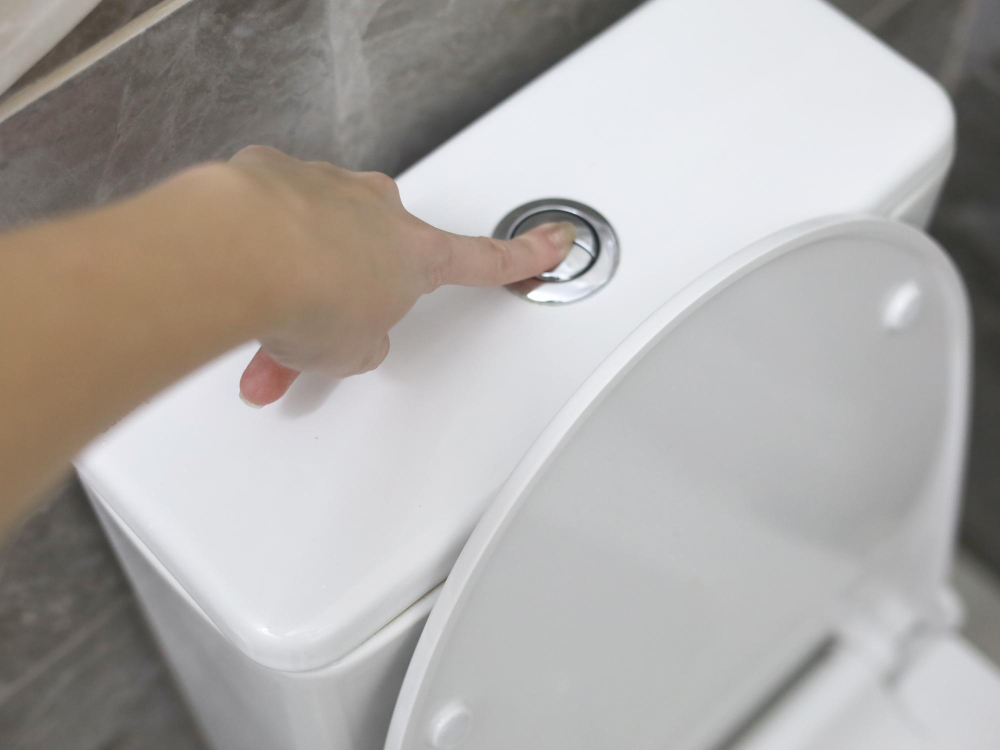
The two-button flush plate is now standard on new installations across most of the world, and a surprising number of people have no idea which button does what, or press the big one every time on the assumption that more is better.
The small button is the one you are supposed to be using most of the time. The whole device exists because somebody worked out that the overwhelming majority of flushes do not need a full cistern, and that a country running out of water could not afford to keep using one.
It Came From a Drought
The dual flush was developed in Australia in the early 1980s, in a country where water restriction is a recurring and serious matter rather than an occasional inconvenience.
The design is usually credited to Bruce Thompson, working for an Australian sanitaryware manufacturer, and the first widely sold version offered two volumes – a full flush and a reduced one at roughly half.
Early versions had a problem that is worth knowing about, because it explains why the mechanism was redesigned: the original two-button arrangement did not always empty the pan properly on the reduced setting, which meant a second flush, which used more water than one full flush would have. The saving existed on paper and sometimes not in the bathroom.
Redesigns of the bowl itself solved it. A modern low-volume pan has a different internal geometry, a larger trapway and a flush that is engineered to move waste with momentum rather than with volume, and it clears reliably on the reduced setting. The button was the visible half of the invention; the bowl was the half that made it work.
Like our content? Follow us for more.
The Numbers Are Larger Than They Look
A cistern from the 1960s or 1970s commonly held somewhere in the region of nine to thirteen litres and emptied all of it every time.
A modern full flush is typically around six litres, and the reduced flush around three. A household making most of its flushes on the reduced setting is therefore using a fraction of what the same household used fifty years ago, for the same number of uses.
Across a water utility’s service area that is not a marginal saving. Lavatory flushing is one of the largest single uses of water inside a home – commonly the largest or second largest – and reducing it by half changes the demand curve for an entire city. This is why water authorities subsidised replacement, why building codes mandated maximum flush volumes, and why the old high-volume cistern is now effectively unavailable new in most markets.
None of which works if everybody presses the big button.
Which Button Is Which Is Not Always Obvious
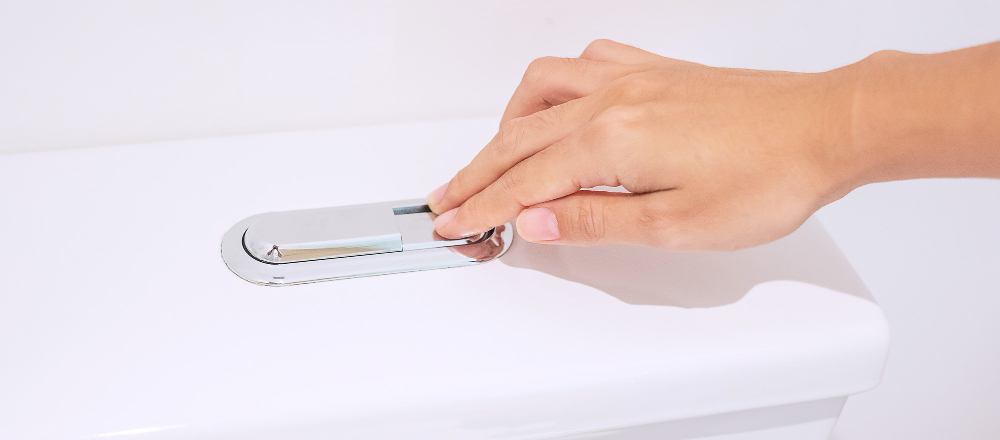
The convention is that the larger button, or the larger section of a split plate, is the full flush and the smaller is the reduced one. On most plates the two are different sizes for exactly that reason.
It is not universal and it is not always legible. Some plates use two buttons of identical size distinguished only by a subtle marking. Some use a single bar that gives a full flush when held and a reduced one when released, or the reverse. Some have the markings printed in a finish that becomes invisible within a year. On plenty of installations the smaller button is positioned where a hand naturally lands and the larger where it does not, or the other way round.
This is a genuine design failure and it is widely acknowledged as one. A control used several times a day by every person in a building, including visitors who have never seen that model, should not require interpretation – and a great many flush plates fail that test badly enough that people simply press whichever is nearest.
If you are unsure about the one in your house, the test takes one flush each: listen to the length of the refill.
The Argument That the Saving Is Overstated
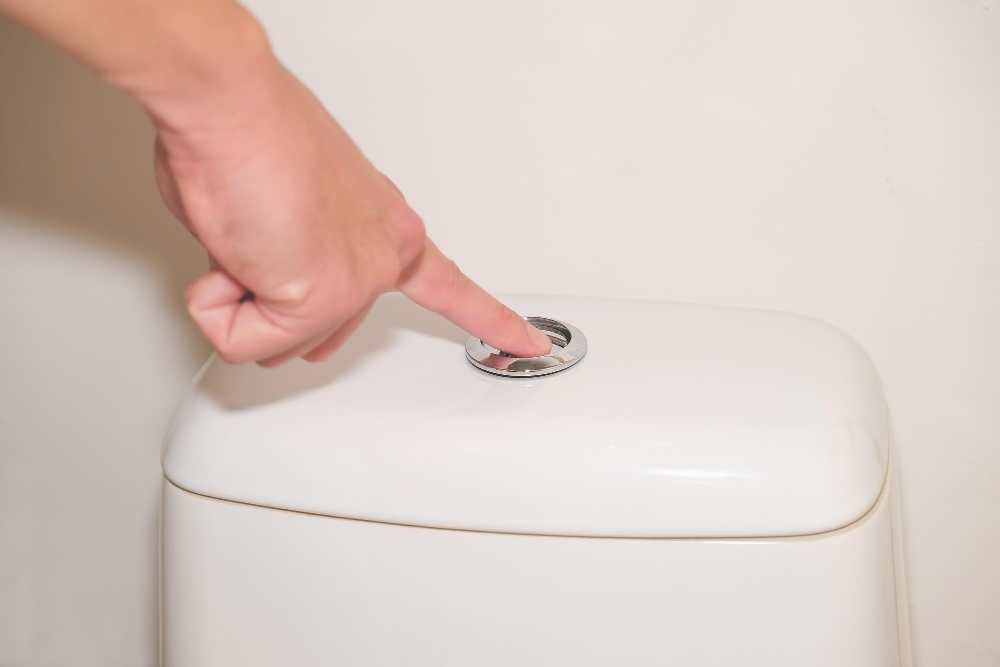
There is a real counter-argument and it deserves stating rather than ignoring.
Reduced flush volumes move less water through the drain, and some of the older sewerage networks they discharge into were designed on the assumption of higher flows. Where a drain run is long, shallow or badly laid, lower flows can mean solids are not carried away and blockages occur further down the system. Water authorities in several places have had to flush sewers deliberately to compensate, which uses water.
Leaks are the larger issue. A dual-flush valve is mechanically more complex than a simple siphon, it has a seal that degrades, and a failed valve leaks continuously into the pan without anybody noticing, because the water is clear and moving slowly. A single leaking dual-flush toilet can waste more water than the fitting saves in years, and studies of housing stock have repeatedly found a meaningful proportion of installed dual-flush toilets leaking at any given time.
That is the honest position: the technology saves a great deal of water when it works and is maintained, and a neglected one can erase its own benefit. The response has been better valve design and, in some markets, a return to siphon-based mechanisms that cannot leak by design.
The Cistern Itself Is an Old and Clever Machine
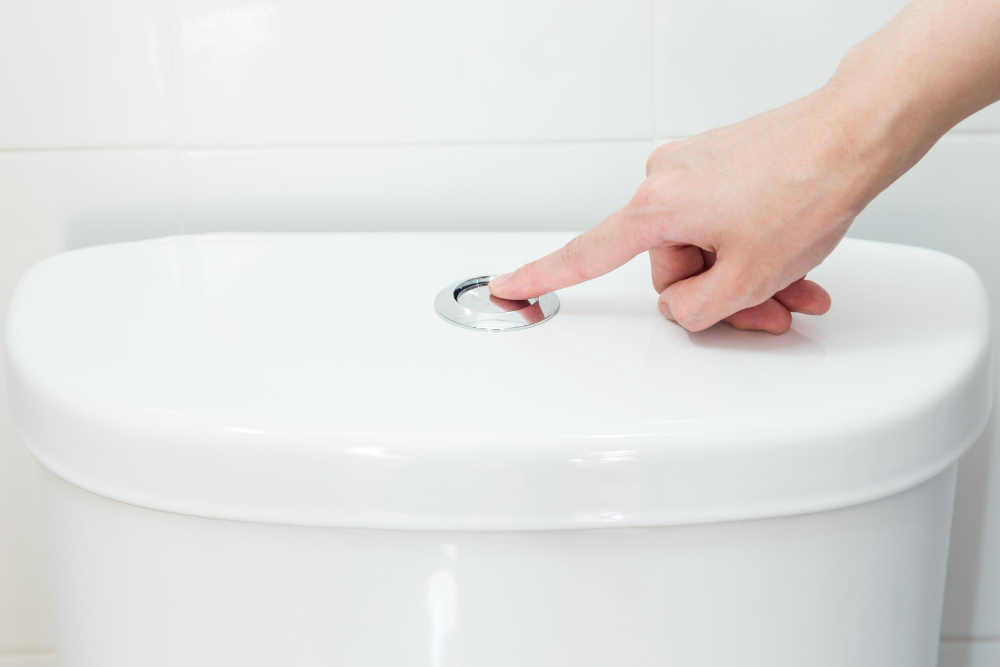
Whichever buttons are on the front, what sits behind them has barely changed in principle since the nineteenth century, and it is worth understanding because it explains every fault anybody has with one.
A cistern does two jobs in sequence and both are automatic. It releases a fixed volume quickly, because a flush works by delivering water fast enough to move the contents of the pan rather than by delivering a lot of it. Then it refills itself to a set level and stops, with no power, no electronics and nothing for the user to do.
The refill is controlled by a float valve – a float on an arm that rises with the water and shuts the inlet when it reaches the set height. It is a mechanical feedback loop, it was worked out in the eighteenth and nineteenth centuries, and it is the same principle used in a header tank, a livestock trough and a carburettor float chamber.
The release is where the two traditions diverge. A siphon has to be primed by lifting water over a bend, after which it runs until the cistern empties and then breaks. It cannot leak when idle, because there is nothing holding water back – which is why siphons were mandatory in some countries for decades. A flush valve simply lifts a seal and drops it again, which is simpler, allows a variable volume, and therefore allows dual flush – and which can leak, because a seal is all that stands between the cistern and the pan.
That trade is the whole story. Dual flush exists because the valve replaced the siphon, and the leak problem exists for exactly the same reason.
How to Tell if Yours Is Leaking
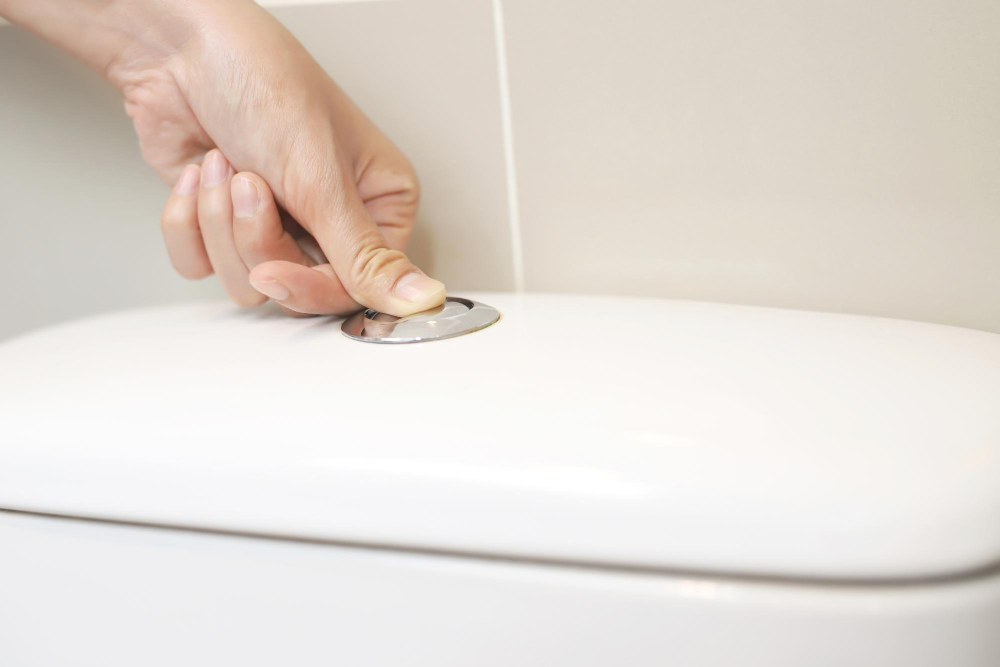
This is the one genuinely useful thing to take from the subject, because it is cheap to check and expensive to ignore.
Look at the back of the pan, just below the rim, and watch for a few seconds without touching anything. A faint continuous trickle down the porcelain, or a ripple in the standing water in the pan when nothing has been flushed for several minutes, means the valve is passing.
The more reliable version is the dye test. Put a few drops of food colouring in the cistern, leave it for half an hour without flushing, and look in the pan. If there is colour in the bowl, water is moving from the cistern to the pan continuously.
A leaking valve is usually a worn seal or a flush valve that is not seating, and it is a cheap part. The reason it matters is that it runs twenty-four hours a day, in silence, and on a metered supply it appears as a bill nobody can explain.
The Rest of the Bathroom Went the Same Way
The dual flush is one part of a general redesign of domestic water use that happened over roughly the same period and is largely invisible.
Tap aerators mix air into the stream so a tap feels like full flow at a fraction of the volume. Low-flow showerheads do the same with smaller apertures and better spray patterns. Washing machines and dishwashers use a fraction of the water they did, mostly through recirculating rather than discarding, and modern dishwashers use considerably less water than washing the same load by hand.
Each of those was resisted at introduction on the grounds that it would feel worse, and in the first generation of products that was frequently true. The early low-flow showerhead was genuinely unpleasant, and it set the argument back years. The current ones are not, because the engineering caught up with the regulation.
That pattern – a mandate arrives, the first products are poor, the technology improves, and within a decade nobody can tell the difference – is the standard shape of this kind of change, and it is worth remembering whenever a new efficiency requirement is announced and the first reaction is that it will be awful.
As for the buttons: the small one. Most of the time, the small one.
Like our content? Follow us for more.