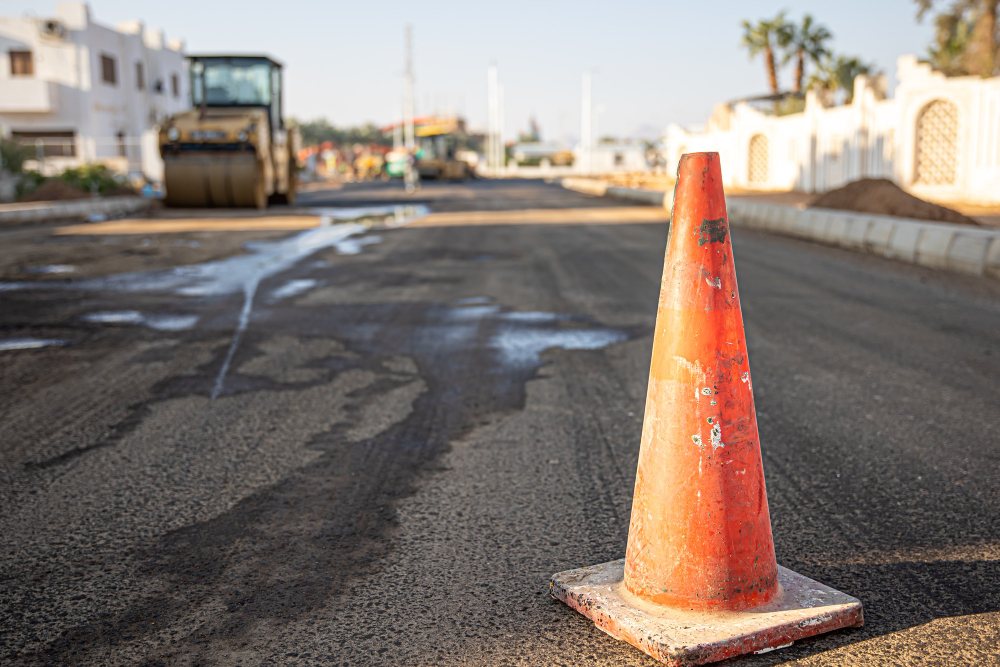
There are an enormous number of traffic cones in the world. They are among the most-produced objects on any road, they are stolen more than almost anything else of comparable value, and they are so familiar that nobody looks at one.
The cone is a considered piece of design, it is younger than the motor car by several decades, and it was invented by somebody who was being driven at.
What Came Before Was Worse
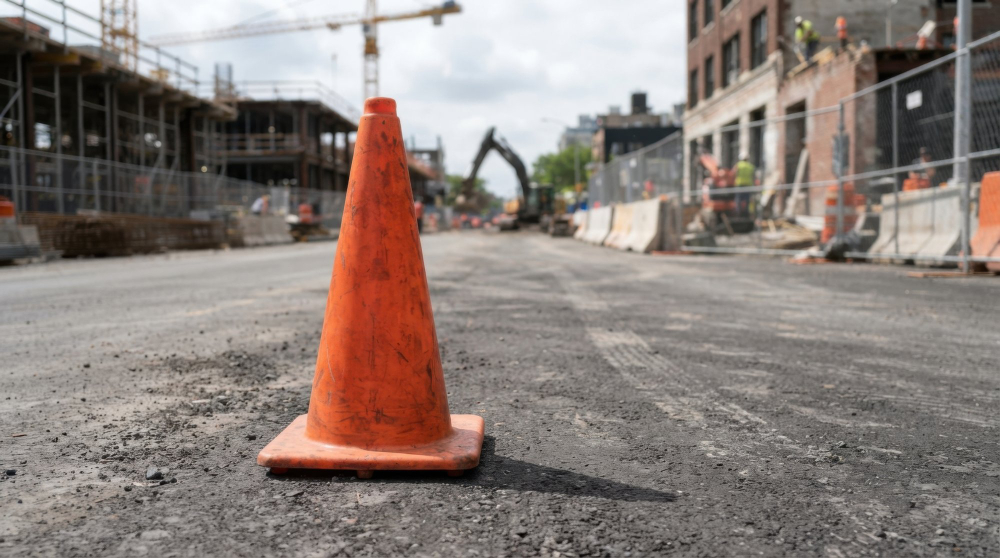
Before the cone, road works were marked with whatever was available: wooden tripods, trestles, barrels, oil lamps at night, and in a great many places nothing at all beyond a man with a flag.
Every one of those had the same fundamental problem. They were rigid, heavy and made of material that did damage. A car striking a wooden tripod at speed destroyed the tripod, threw splintered timber across the carriageway, and could be seriously damaged itself – and the next vehicle then drove into the debris and the now-unmarked hole.
They also blew over. A trestle in a crosswind on an exposed road goes down and stays down, and a marker lying flat marks nothing.
The person with the strongest interest in solving this is the one standing in the road beside it, which is exactly who solved it.
Like our content? Follow us for more.
The Man Painting the Lines
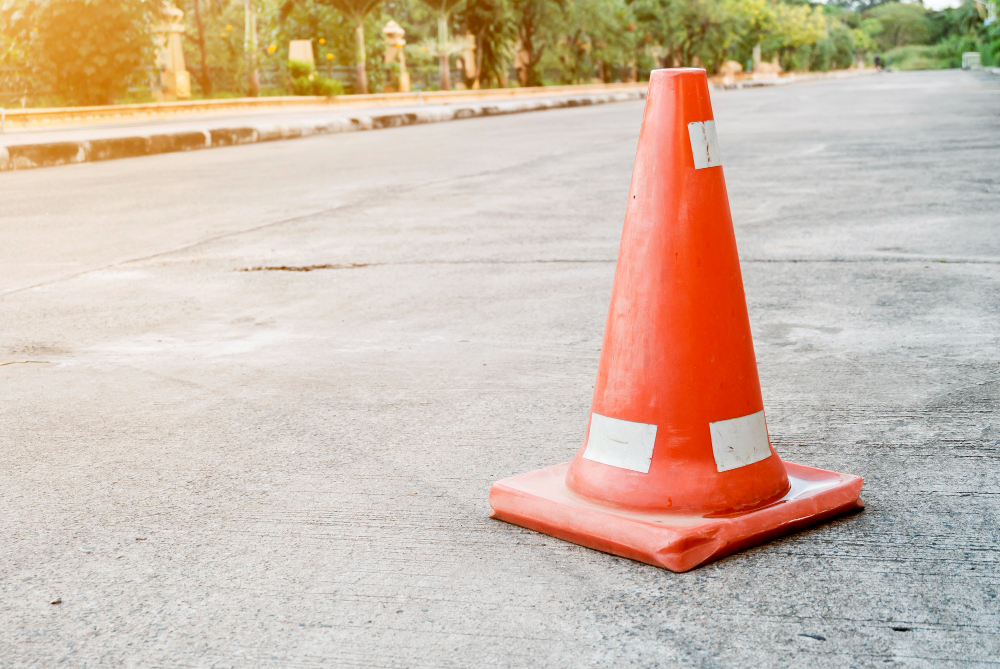
The traffic cone in something like its modern form is generally credited to Charles Scanlon, who worked painting road markings in Los Angeles in the 1940s and was repeatedly endangered by drivers who did not see the barriers around his work.
His insight was the shape. A cone has a wide base and tapers to a point, which means three things at once: it is extremely stable against wind, it presents a tall visible profile from every direction without needing to be aimed, and when a vehicle does hit it, it goes over and – because the mass is concentrated at the bottom – rights itself.
That last property is the one that matters most and is the hardest to appreciate until you have watched it. A cone knocked flat by a wing mirror pops back up and carries on marking the lane. Nothing before it did that.
Hollow construction added two more advantages that were probably not the original point. Cones stack, so a lorry can carry hundreds in the space a dozen trestles would occupy. And a stack can be deployed by one person walking along dropping them.
The Material Changed Everything
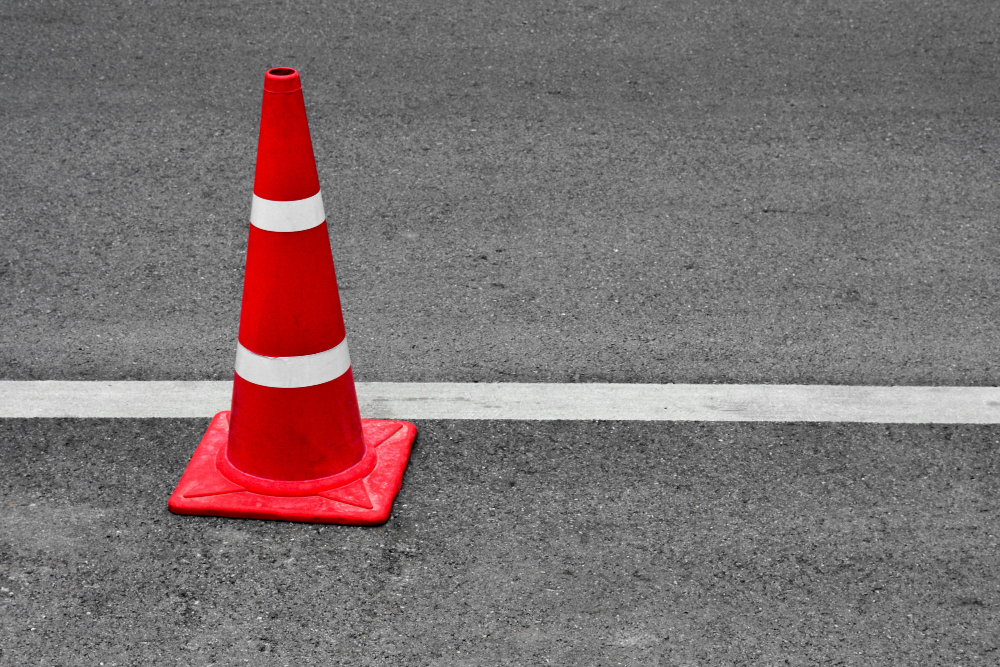
Early cones were made of concrete and later rubber, both of which are heavy and both of which hurt. The move to moulded thermoplastic through the 1960s and after is what produced the object now in use.
A plastic cone is light enough to throw, cheap enough to lose, flexible enough to deform and recover instead of shattering, and – critically – soft enough that hitting one does little damage to a vehicle and very little to a person. That last point is the whole safety argument: a road marker should fail by being knocked over rather than by being struck.
The base is frequently a separate heavier moulding, or the cone is weighted at the bottom, which is what gives the self-righting behaviour while keeping the body light.
Colour went with the material. The orange is specified rather than chosen – a high-visibility fluorescent orange that is unusual in the natural and built environment, so it reads as a warning and nothing else, and that performs well in daylight and at dusk.
The White Band Is Not Decoration
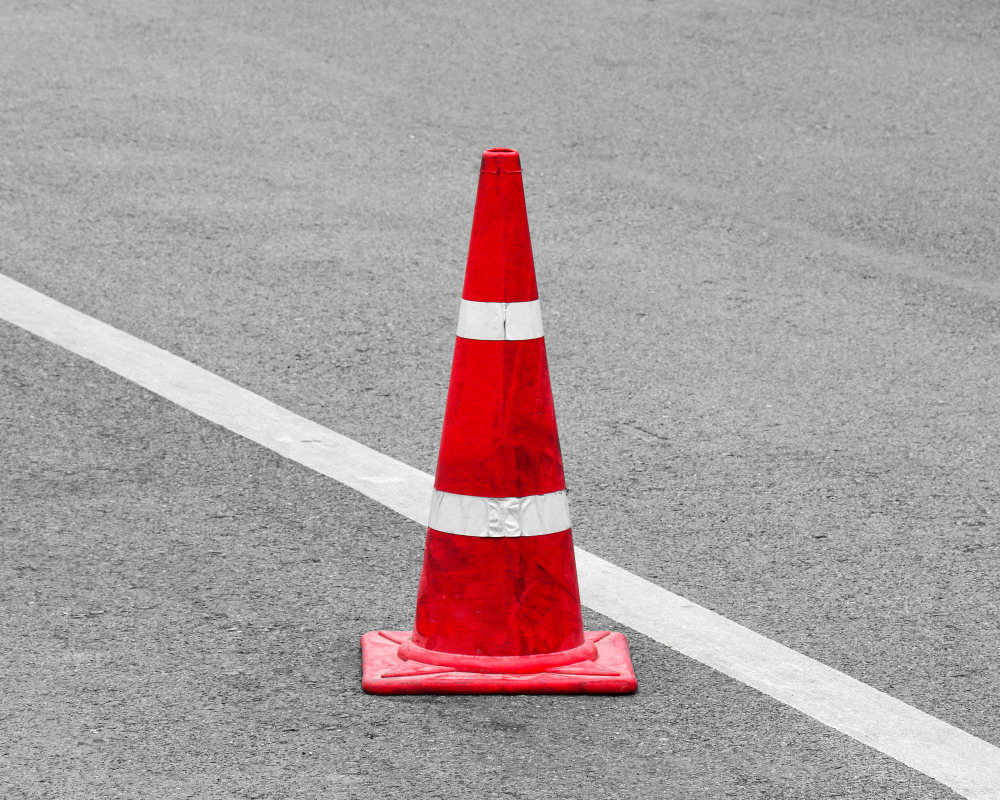
The reflective collar is the part that does the work at night, and it is doing something cleverer than being white.
Retroreflective sheeting is covered in microscopic glass beads or prismatic structures that return light back towards its source rather than scattering it. A headlight beam hitting it comes back to the driver’s eyes rather than bouncing off at an angle. That is why a cone at night appears to glow and why the effect disappears if you look at one from outside a vehicle.
The number and position of the bands is specified by road authority, as is the height of the cone for different road types – small cones for urban work, much taller ones for high-speed roads, because a driver at speed needs a larger target recognised further away.
Degradation is a real problem and is why cones are replaced rather than repaired. Sheeting dulls with ultraviolet exposure, dirt and abrasion, and a faded cone looks fine in daylight while performing badly at night, which is precisely when it is needed.
The Taper Is Doing Something Specific at Speed
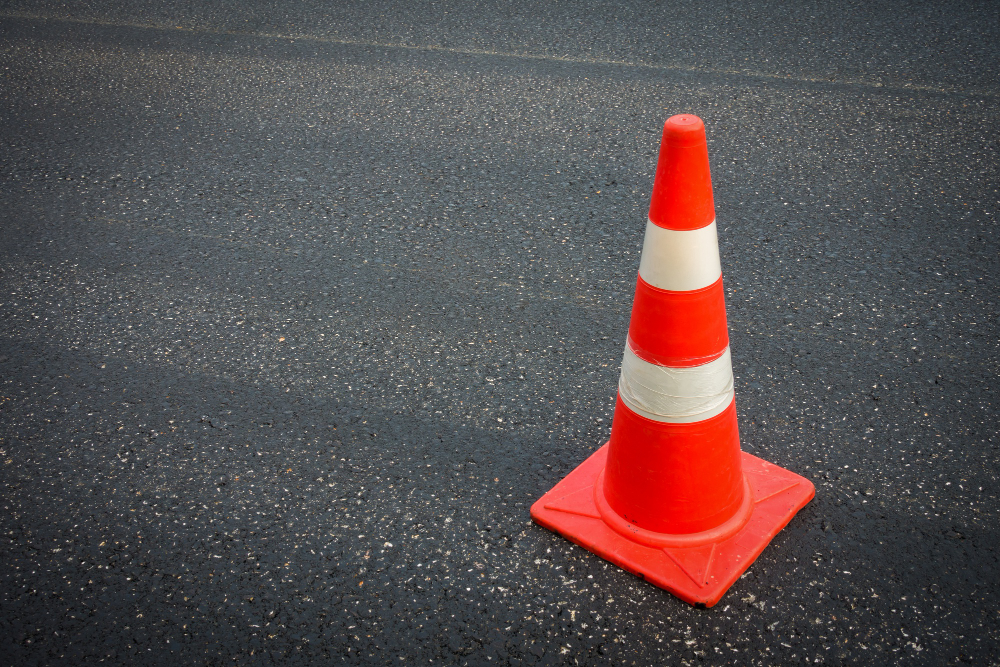
The shape is usually explained as stability, and that is half of it. The other half is about how a driver reads a line of them.
A row of cones along a lane edge presents, from a moving vehicle, a repeating element at a regular interval. The eye picks up the rhythm rather than the individual objects, and the spacing of that rhythm is specified – closer together at a lane shift or a hazard, further apart along a straight run, and progressively closer as a taper narrows.
That taper is a piece of information design in itself. A lane closure does not simply end: it is announced over a distance, with a sequence of signs, then a long angled run of cones that moves traffic across gradually. The length of that run is calculated from the speed limit, because a driver at a higher speed needs more distance and a gentler angle to change lane without braking hard.
Get the taper too short and you create exactly what it was meant to prevent – late braking, a lane change at the last moment, and a vehicle entering the work area. The cones are not marking the edge of the works. They are steering several thousand vehicles an hour along a path somebody calculated.
Which is why a line of cones with no works visible behind it still works. The driver is responding to the pattern, not to what is being protected.
Cones Are Stolen Constantly and That Is a Safety Problem
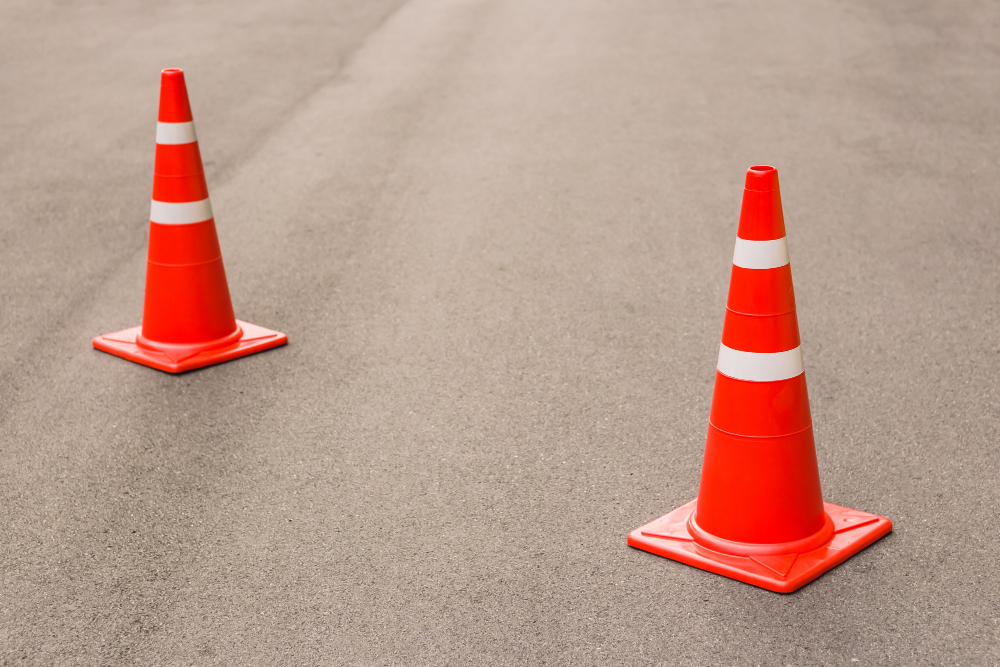
The cone’s one genuine design flaw is that it is portable, recognisable, slightly comic and apparently free, which makes it the most taken piece of public infrastructure there is.
Road authorities treat this as a safety issue rather than a property one, and the reason is the obvious one: a taken cone is a lane that is no longer marked, a hole that is no longer guarded, or a closure that no longer closes. Where a line of cones is interrupted, drivers read the gap as a route.
It is also an offence in most jurisdictions – interfering with traffic management equipment is generally treated more seriously than the value of the object suggests, for exactly that reason.
The cone’s cultural afterlife is nonetheless substantial. Certain statues in certain cities are reliably found wearing one, to the point where attempts to prevent it have been abandoned as futile and the cone has effectively become part of the monument.
What Replaced the Cone Where the Cone Was Not Enough
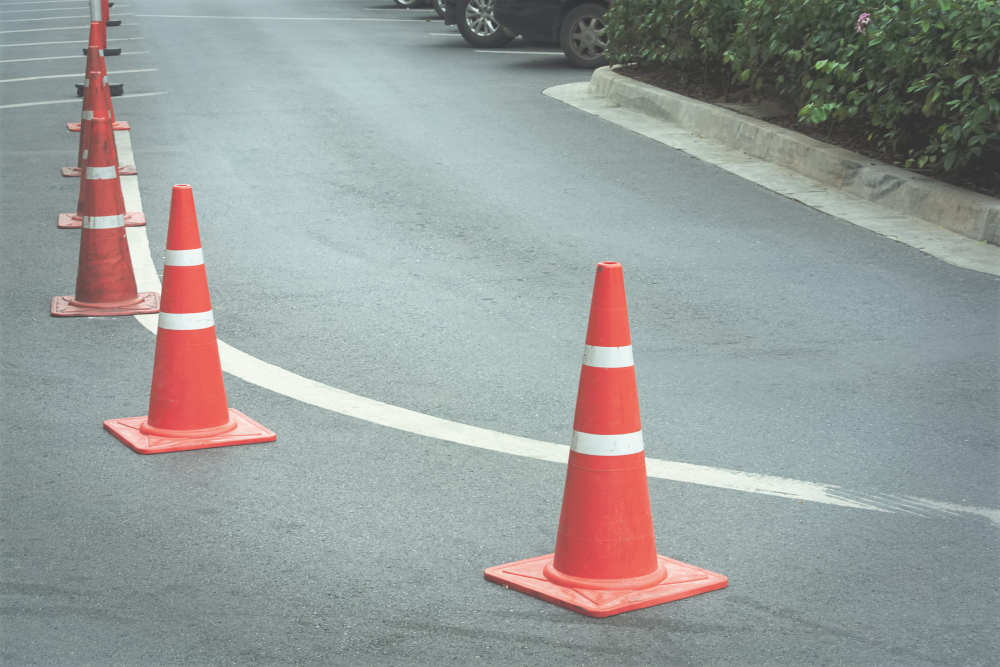
The cone is excellent at marking and useless at stopping, and the distinction matters.
A cone tells a driver where not to go. It does not physically prevent anything, and a vehicle that is going to enter a work zone will enter it through a line of cones without noticing. Where there is a genuine need to stop a vehicle, the equipment is entirely different: water-filled barriers that can be positioned empty and then filled, concrete blocks, and crash cushions designed to absorb the energy of an impact over a distance.
The decision between them is made on speed and exposure. Short duration work at low speed gets cones. A long-term closure on a fast road gets barriers, because the consequence of a vehicle entering the work area is a person being killed rather than a marker being knocked over.
Mobile operations – line painting, sweeping, inspection – now frequently use a truck-mounted attenuator, which is a crash cushion on the back of a vehicle that drives behind the work. It exists because the people doing exactly the job Scanlon was doing are still the most exposed workers on any road.
A Small Object That Solved Four Problems
It is worth listing what the cone actually does, because it is more than it looks.
It is visible from every direction without being aimed. It is stable in wind. It rights itself when struck. It does minimal damage to a vehicle or a person. It stacks for transport. It can be deployed and recovered by one person at walking pace. It needs no power, no fixing, no assembly and no maintenance beyond replacement. It costs almost nothing. And it is recognised instantly by every road user in the world without any text on it.
Very few manufactured objects do that many things adequately, and almost none does them for the price. Which is why, eighty-odd years after a man painting lines in Los Angeles got tired of being driven at, the thing is unchanged in principle and present in enormous numbers on every road network there is.
And it is still the single most stolen object on any of them.
Like our content? Follow us for more.