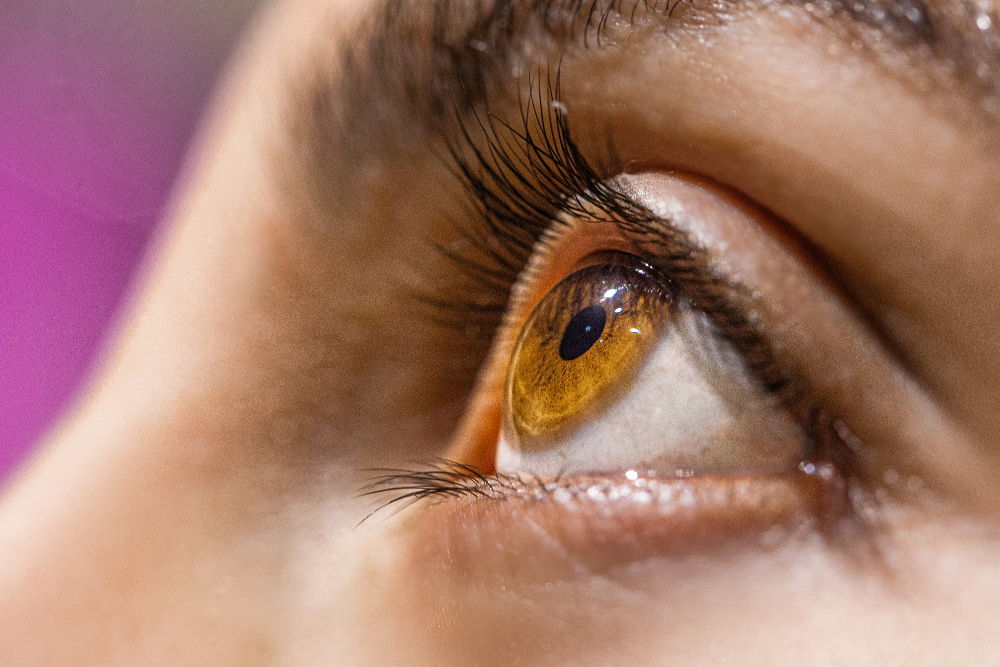
The pupil is not a part. It is a hole, and the only reason it looks like a black disc is that almost nothing comes back out of it.
Light that goes in is absorbed by the layers at the back of the eye. Very little is reflected, so the opening appears black for the same reason a window into an unlit room appears black from outside on a bright day. There is nothing dark there; there is simply an absence of anything coming back.
Which means that when you look at somebody’s pupil you are looking through an aperture directly into an internal cavity of their body, at tissue that is working, under an opening whose size is being continuously adjusted by muscle you can watch moving. No other organ is on display like this. Everything else requires an instrument, an incision or an imaging machine.
The tissue immediately around it, the iris, is the muscle doing the adjusting, and its colour is a side effect of how much pigment it contains and how light scatters within it rather than a functional property. The hole is the point; the coloured ring is the mechanism.
Like our content? Follow us for more.
Two Muscles Pulling Different Ways
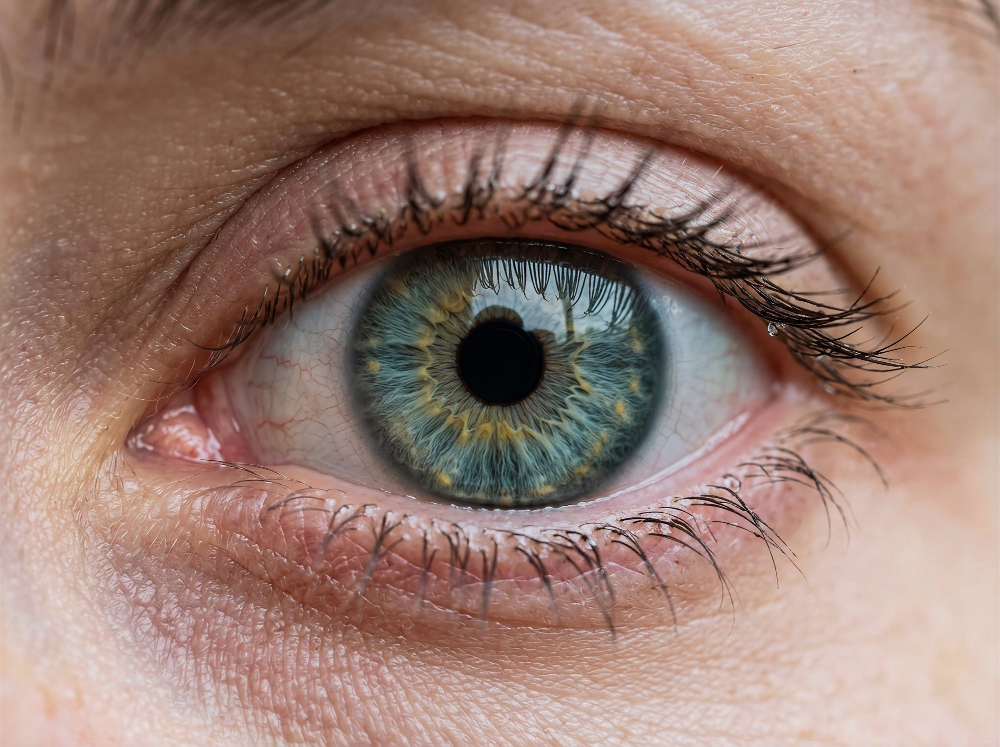
The iris contains two sets of muscle arranged completely differently, and they are controlled by different branches of the nervous system, which is why the pupil reports on more than one thing.
One set is a ring of circular fibres around the opening. When those contract, the ring tightens and the hole gets smaller, in the way a drawstring closes a bag. These are driven by the branch of the autonomic nervous system associated with rest, digestion and ordinary unstressed functioning.
The other set radiates outward from the opening like the spokes of a wheel. When those contract, they pull the edge of the hole outward and it gets larger. These are driven by the branch associated with alertness, exertion and alarm.
So the size of a pupil at any moment is the resting position of a tug of war between two systems, one of which is reporting on how much light there is and the other on what else is going on. That architecture is the whole explanation for everything that follows. A single muscle that merely responded to brightness would tell you nothing except how bright it was.
The Light Response Is the Boring One
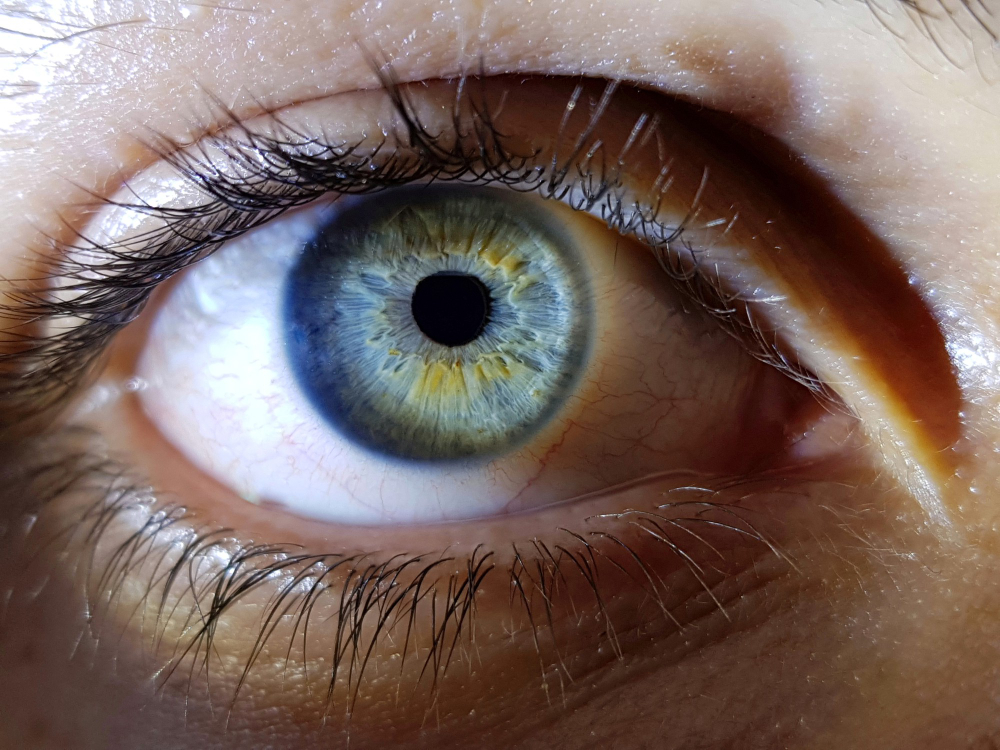
The function everybody knows about is the obvious one. In bright conditions the pupil constricts, and in dim conditions it dilates, and the range between the two is roughly a factor of four in diameter, which is around sixteen in area.
Sixteen-fold sounds impressive and is modest in context. The range of brightness the eye copes with between a dark night and a sunlit day is many millions to one, so the pupil accounts for a tiny fraction of the adjustment. The great majority is done chemically in the light-sensitive cells themselves, which is why walking into a dark cinema takes minutes to adapt to while the pupil has finished opening in a second or two.
The pupil’s real contribution is not light control but speed and image quality. It responds fast, which protects against sudden changes, and a smaller aperture gives a sharper image with greater depth of field, for exactly the reasons it does in a camera. In good light the eye closes down and sees more sharply; in poor light it opens up and accepts a blurrier image in exchange for catching more photons.
It is the same trade any photographer makes, performed automatically, with the same consequences.
It Also Tracks Where You Are Looking
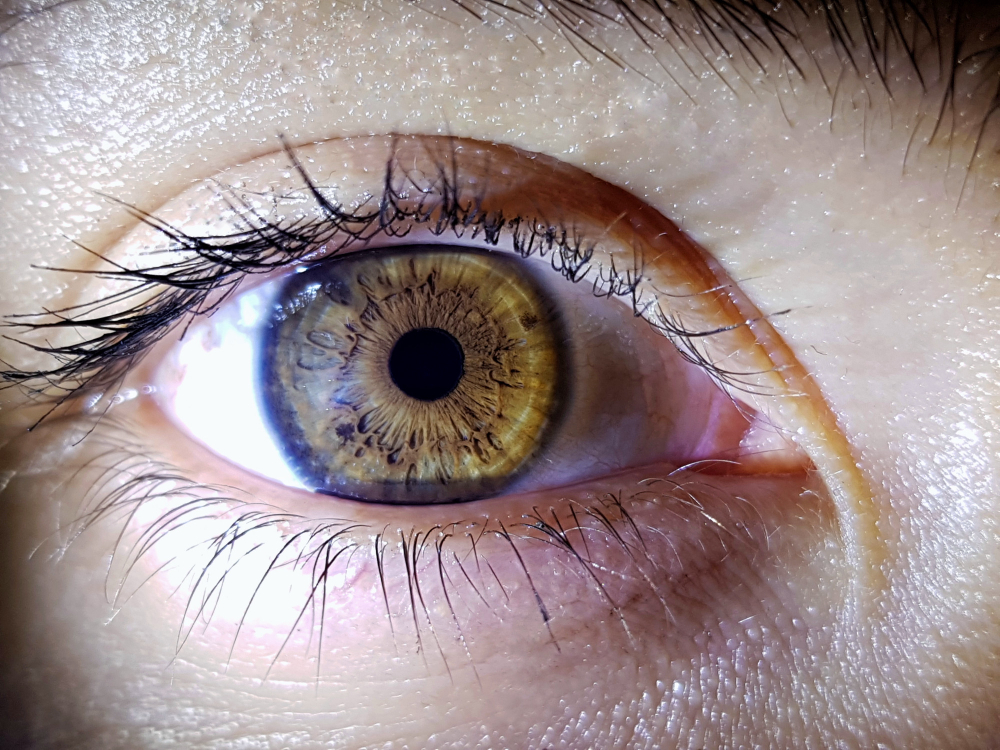
Here is the second response, which almost nobody is taught. The pupil constricts when you focus on something close, regardless of the lighting.
Look at something distant and then at your own finger held near your face, and three things happen together as one linked reaction: the eyes turn inward toward each other, the lens inside each eye changes shape to focus nearer, and the pupils constrict.
The constriction is doing exactly what it does in a camera. Focusing close reduces the depth of field, so errors in focus matter more, and closing the aperture compensates by increasing it. A smaller hole makes the near-focus task easier and more forgiving.
Those three movements are wired together and normally cannot be performed separately, which makes the combination clinically useful: if they come apart, something specific has happened. It also means the pupil size you observe in somebody depends on what they are looking at as well as how much light is falling on them, which is a considerable nuisance for anybody trying to interpret it.
Shine a Light in One Eye and Both Respond
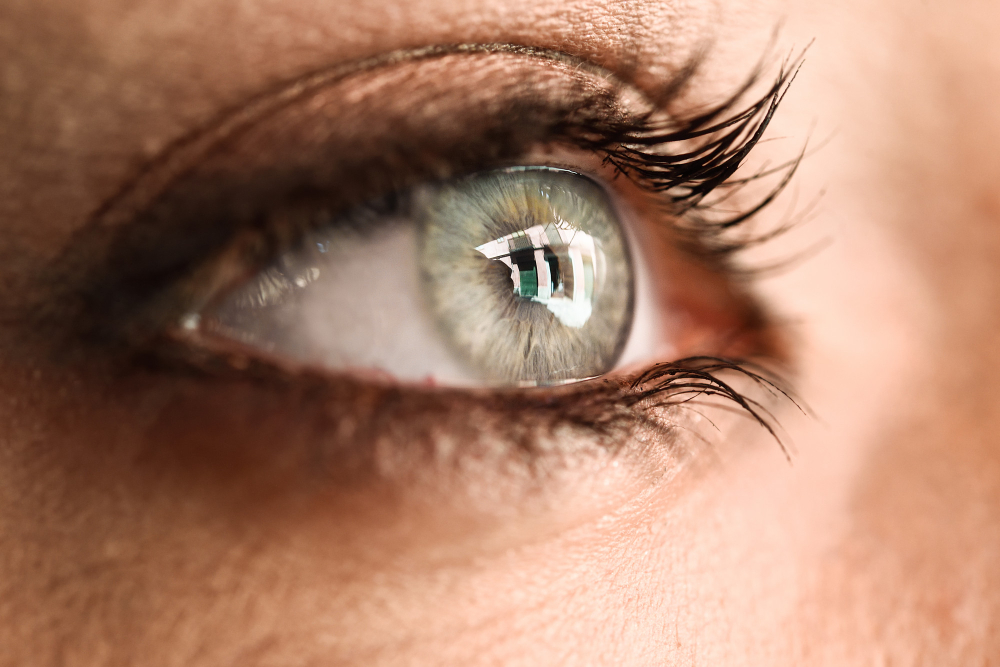
This one is easy to test on somebody and very surprising. Light entering one eye causes both pupils to constrict, by essentially the same amount, even if the other eye is in darkness.
The reason is that the signal from each eye is distributed to the control centres for both before anything is sent back out. The system treats the two eyes as a pair and sets them together, which keeps them matched and keeps the two images comparable.
The diagnostic power of that arrangement is considerable, and it is why a light is shone into the eyes as a routine part of examining anybody who is unwell. The response involves a long path: in through one eye, back through the brainstem, out to both irises. Comparing the response in the illuminated eye with the response in the other one, and comparing both eyes in turn, isolates where along that path a problem lies, because different faults produce different patterns.
Nothing here is advice and no reader should test or interpret anything on anybody. It is included because it explains why such a simple observation is taken so seriously, which otherwise looks like excessive attention to a very small part of the body.
Mental Effort Makes Them Wider
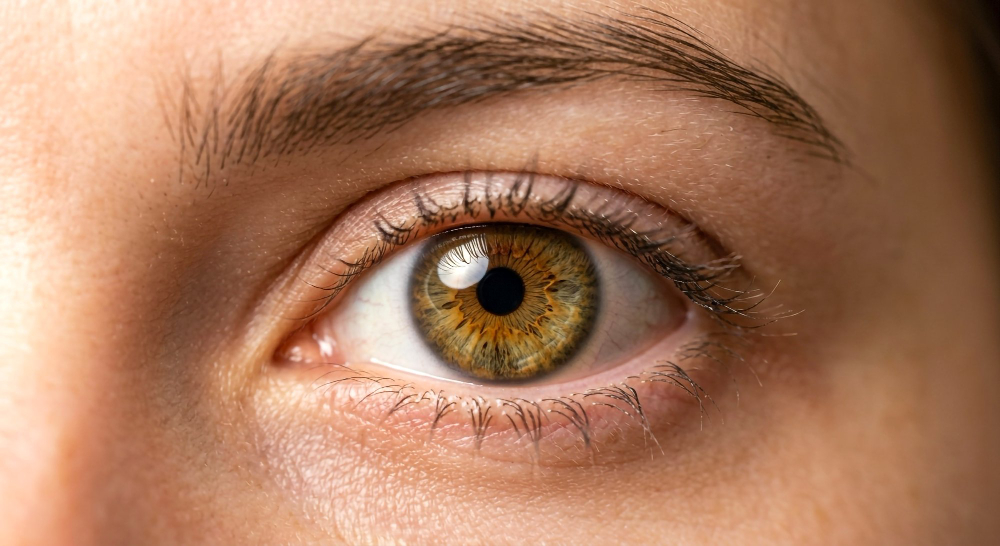
The finding that makes the pupil interesting beyond the eye is that it dilates in response to cognitive load, and does so reliably enough to be used as a measurement.
Give somebody a string of digits to hold in mind, or arithmetic to perform, or a difficult perceptual judgement, and their pupils widen as they work. The amount of widening scales with how demanding the task is. It increases as a sequence to be remembered gets longer and drops sharply at the moment the answer is given.
The effect is small, a fraction of a millimetre, and it requires equipment to measure properly. It is also entirely involuntary and cannot be suppressed, which is what makes it useful: it is a window onto effort that does not depend on anybody reporting it.
The mechanism is thought to involve the alerting branch of the nervous system and a small brainstem region associated with arousal and attention, which is active during effortful tasks and which influences pupil size as part of a broader state change. On that account the pupil is not reporting on thinking as such; it is reporting on the general mobilisation that accompanies effort, and thinking hard is one of the things that mobilises.
The same system responds to surprise, to startling sounds, to pain, to emotional arousal of several kinds, and to being interested in something, all of which produce dilation, and all of which are therefore confounded with each other.
Which Is Why the Attraction Claim Is Half True
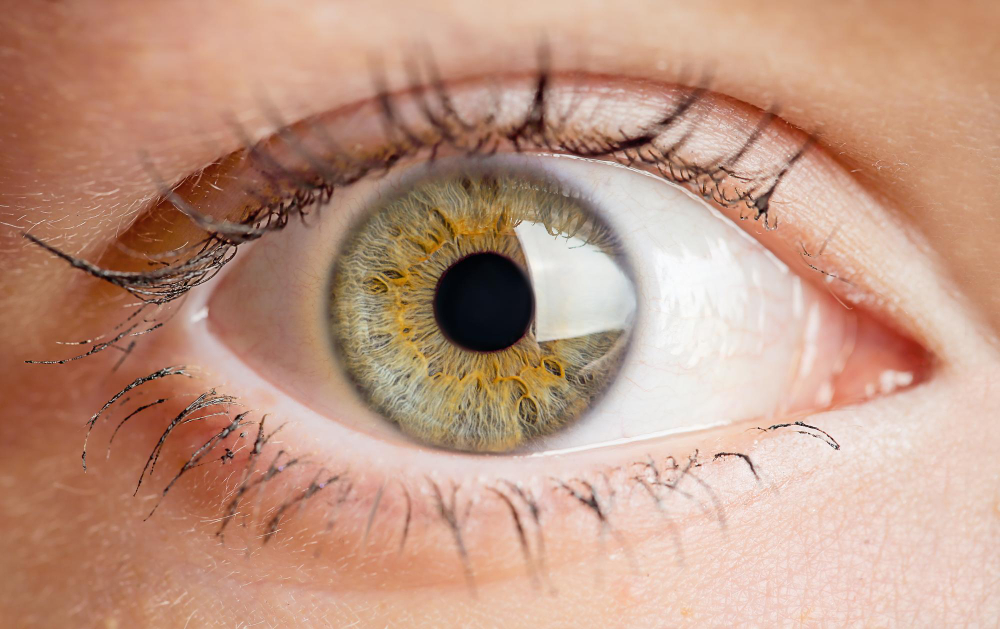
The popular version of all this is that dilated pupils signal attraction, and that people find dilated pupils attractive in return.
The first half has something behind it. Pupils do dilate in response to arousal and interest of various kinds, and studies have found larger dilation when people look at images they find appealing. The second half has some support too, with observers rating faces with larger pupils more favourably in some experiments.
The difficulty is everything else on the list. Pupils also dilate for mental effort, for surprise, for fear, for pain, for loud noises and, overwhelmingly, for reduced light. A dilated pupil observed in ordinary circumstances is far more likely to be reporting on the lighting or on concentration than on anything else, and the magnitude of the emotional effect is small compared with the magnitude of the light response.
So it is not a myth and it is not a reliable signal. It is a real but weak effect sitting underneath a much larger one, which is a common shape for claims of this kind and a reasonable reason to be cautious about reading anything off anybody’s eyes in a dimly lit room.
They Are Never Still
One last detail that almost nobody notices. A pupil held under constant illumination, looking at a fixed distance, does not settle at a size. It oscillates continuously, slowly, by a small amount, and this has a name and no agreed function.
The oscillation is normal, present in everybody, and is thought to reflect the ongoing competition between the two muscle systems and the fact that the control loop is constantly correcting rather than resting. It becomes more pronounced when somebody is tired, which has been investigated as a possible measure of drowsiness.
And the resting size changes across a lifetime. Pupils are largest in adolescence and young adulthood and become steadily smaller with age, which is one of several reasons older eyes need more light to read by: less of what is available is being let in.
All of which means the pupil is doing a great deal more than letting light in. It is an aperture for exposure and depth of field, part of the mechanism for focusing on something near, a paired system that keeps two eyes matched, a readout of autonomic state, a measurable index of mental effort, and a continuously oscillating control loop that never quite arrives. And it is visible from a couple of feet away, in daylight, with no equipment, in the only part of the inside of a person that anybody can simply look at.
Like our content? Follow us for more.