The usual assumption is that phantom sensations are an unusual complication affecting a minority. The figures run the other way. The great majority of people who lose a limb as an adult experience it, with estimates commonly placing it well above four in five, and in many series close to universal.
It is not vague either. People report the limb’s position, its posture, whether the fingers are curled, the feeling of a ring on a finger, an itch in a particular spot, warmth, cold, wetness and pressure. They report wanting to use it, and the sense that they could if they tried. Somebody who has lost a hand may feel it hanging at their side or held across their chest, and can say which.
The sensations typically appear immediately, within hours or days, and in many cases persist for decades. They can be present in a limb lost in childhood and still be reported in old age.
So the question is not why this unusual thing happens to some people. It is why anybody expected removing a limb to remove the experience of it, and the answer to that is a mistaken assumption about where the experience was in the first place.
Like our content? Follow us for more.
The Limb Was Always in the Brain
The sensation of having a body is not located in the body. It is constructed in the brain, from signals arriving from the body, and the construction is a thing in its own right.
There are regions of the cortex devoted to receiving sensation from the body surface and to directing movement, and in both of them the body is laid out as a map: adjacent areas of cortex handle adjacent parts of the body, in a recognisable sequence. There is a strip of cortex for the hand, next to a strip for the arm, next to a strip for the shoulder.
That map is not merely a wiring diagram. It is the substrate of the experience. When you feel your hand, what is happening is activity in the part of the map that corresponds to a hand.
And the map is not removed along with the limb. The cortex is intact, the neurons are intact, and the region that handled the hand is still there and still capable of generating the experience of a hand. What has changed is that it no longer receives its normal input.
Which reframes the whole subject. A phantom limb is not a false sensation of something absent. It is the ordinary sensation of having a limb, which is what everybody has all the time, continuing in the absence of the limb that used to supply it. The person is experiencing their body the way they always did; it is the body that has changed, not the experience.
Why the Phantom Has a Posture
Because the map includes position as well as sensation, the phantom arrives with a posture, and that posture is frequently the problem.
Many people report the phantom frozen in the position the limb was in shortly before it was lost, which can mean a clenched fist, a bent wrist or an awkwardly turned foot. Where the loss followed an injury, the posture can be the one the limb was in during the injury, and it can be held for years.
This is distressing in a specific way that is hard to convey. A real limb held in a cramped position can be moved. A phantom cannot, because there is nothing to move, and the uncomfortable position is therefore permanent and unalterable by any action.
The brain is also continuing to issue motor commands to it. People report trying to move the phantom and sometimes succeeding, in the sense that the felt position changes. Over time that ability frequently diminishes, and the phantom becomes fixed, which corresponds to the motor side of the loop receiving no confirmation that anything it asks for has happened.
The absence of confirmation turns out to be central to everything that follows, including why the condition can be painful and why the most elegant intervention in the field consists of a mirror.
Telescoping
Over months and years the phantom frequently changes shape, and it does so in a consistent and strange way. It shortens.
The usual pattern is that the intermediate parts fade while the extremity remains. Somebody with a phantom arm may find that the forearm is no longer felt while the hand still is, so that the hand feels attached directly to the stump. Eventually the hand may be felt as being inside the stump, or as a small hand at the end of it.
The word used for this is telescoping, and the consistency of the direction is the interesting part. The parts that disappear are the ones with the smallest cortical representation, and the parts that persist are the ones with the largest. The hand, the lips and the foot occupy disproportionate areas of the body map relative to their size, because they need fine sensory discrimination, and the forearm occupies very little.
So the phantom does not fade evenly. It fades in proportion to how much of the map was allocated to each part, which is further evidence that the thing being experienced is the map rather than the limb.
Touching the Face and Feeling the Hand
Here is the finding that made the subject impossible to explain any other way. In many people with a phantom hand, touching the face produces a sensation in the phantom.
Not a vague association, but a specific and repeatable correspondence: touching a particular point on the cheek is felt at a particular finger, consistently, with a stable map between the two.
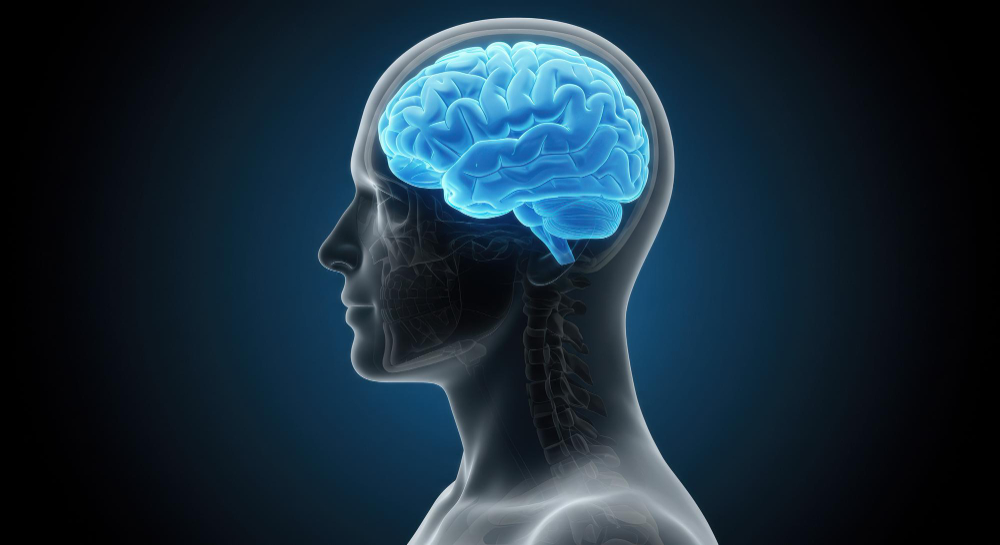
The explanation lies in the layout of the cortex. The region representing the face lies immediately next to the region representing the hand. When the hand’s region stops receiving input, the neighbouring regions’ inputs begin to be registered there as well, and activity originating from the face is read by the hand’s territory as coming from a hand.
Something similar is reported with the shoulder and upper arm, which also border the hand’s territory, and in people with a lost leg the corresponding neighbour is the genital region, which produces its own well-documented and initially baffling reports.
The arrangement is not random and the correspondences are predictable from the layout of the map, which is why this finding is usually treated as the strongest available demonstration that an adult brain reorganises itself in response to changed input, rather than being fixed after development.
Why It So Often Hurts
A substantial proportion of people with a phantom limb experience pain in it, and for some that pain is severe and long-lasting. It is a serious clinical problem and it has proved extremely difficult to treat.
There is no single accepted explanation and several mechanisms are thought to contribute. Nerve endings at the site of the injury can become abnormally active, generating signals that the brain can only interpret as coming from the limb’s territory. The spinal cord’s handling of those signals can change in ways that amplify them. And the cortical reorganisation described above appears to correlate with pain in some studies, with greater reorganisation associated with worse pain.
One proposal that has shaped a good deal of thinking concerns the mismatch between instruction and confirmation. The brain issues a command to the limb, receives no feedback that anything happened, issues it again more forcefully, and still receives nothing. A control system repeatedly failing to achieve an outcome and increasing its effort has no way to resolve the loop, and on this account the unresolvable conflict is itself registered as pain.
That proposal is contested and the evidence is mixed. It is worth mentioning because it is the reasoning behind the next section, and because it illustrates how an idea about mechanism can produce an intervention long before the mechanism is settled.
A Mirror
If the problem is a motor command with no confirmation, then supplying false confirmation should help. The way that was tested is almost absurdly simple.
A mirror is placed vertically so that the remaining limb is reflected in it and the reflection appears in the position where the missing limb would be. The person looks at the reflection and moves the intact limb. What they see is both limbs moving together.
The visual system supplies exactly the confirmation the motor system was not getting: the command was issued, and there is the limb, doing it. For some people the effect is immediate and striking. A phantom frozen in a clenched position has been reported to open. Some report lasting relief.
The honest account is that results are mixed. Some people benefit substantially, some get temporary relief, and in controlled studies the effect has been harder to demonstrate than the early reports suggested. It is not a cure and it does not work for everybody.
What it does do, unambiguously, is demonstrate the central claim of the whole subject. A sensation in a limb that does not exist can be altered by showing somebody a reflection. Nothing was done to the body. Something was done to the information arriving about the body, and the experience changed. That is only possible if the experience was in the information all along.
The Finding That Breaks the Simple Story
There is one observation that prevents the subject being tidied up, and it deserves to be stated rather than skipped.
Some people born without a limb, who have therefore never had sensory input from one, nevertheless report a phantom. The figures are lower than for acquired loss but they are not negligible, and the reports include position, movement and in some cases pain.
This cannot be explained by a map built from experience and then deprived of input, because the input was never there. The leading interpretation is that the body map is to a significant degree innate, laid down during development as a template rather than learned from use, so that a brain can hold a representation of a limb it has never received anything from.
If that is right, then the experience of having a body is partly built in before the body is consulted, which is a stranger conclusion than the original puzzle. And it fits with the fact that the map’s basic layout is so consistent between people and so similar between related species.
So the final position is not a tidy one. Nearly everybody who loses a limb continues to feel it, because what they were feeling was a representation rather than the limb. Some people who never had a limb feel one too, which suggests the representation does not require the limb even to get started. And the rest of us, walking around confident that we can feel our own hands, are in exactly the same position: experiencing a model, and never having had any way to tell the difference.
Like our content? Follow us for more.