

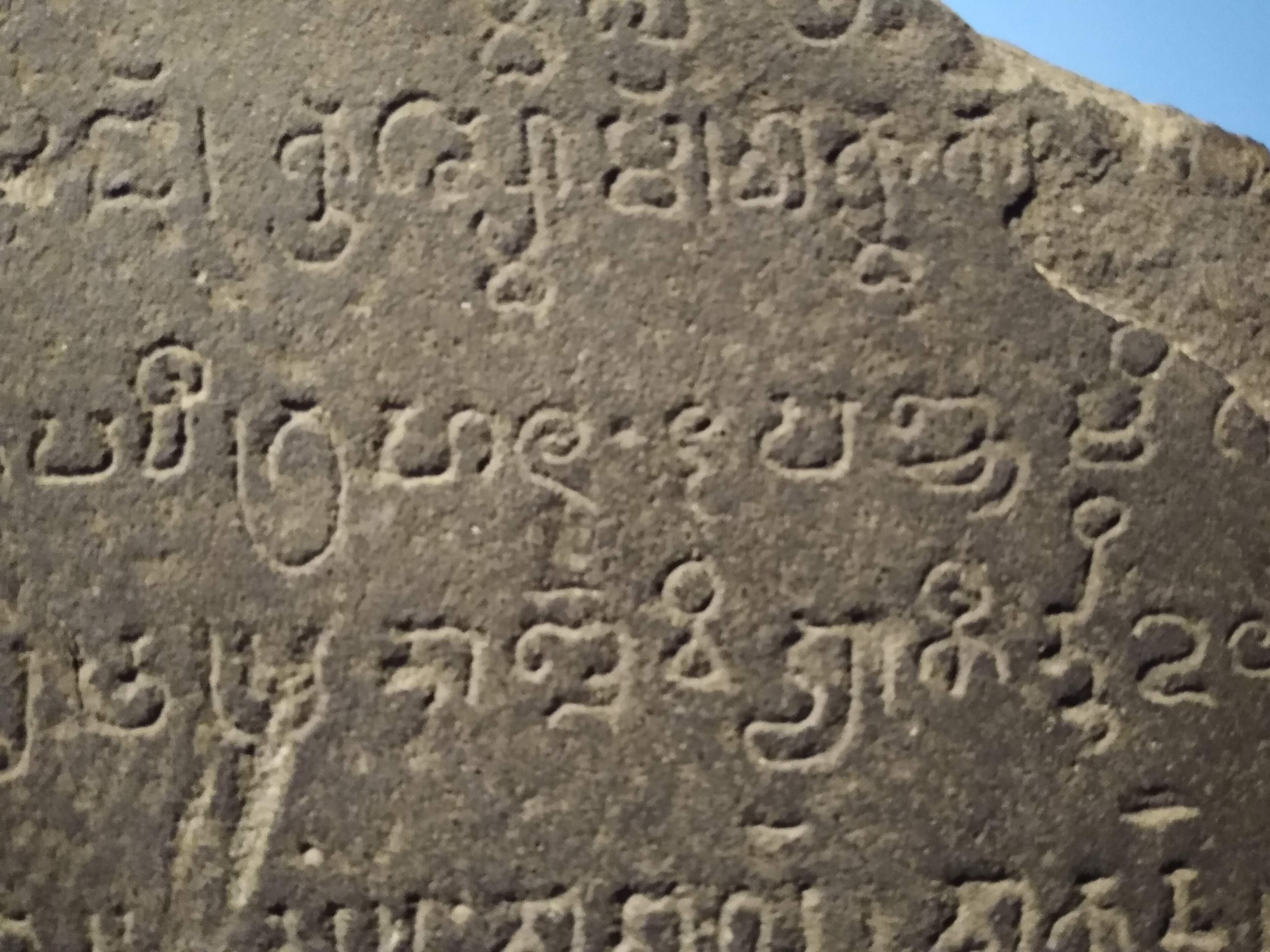
There is a habit of treating zero as obvious, on the reasoning that nothing is a perfectly ordinary thing to have none of.
The difficulty is not the concept of absence. Every culture has words for none, empty and gone, and no society has ever struggled with the idea that a person might have no sheep.
The difficulty is treating that absence as a quantity — something with a place in the number system, that can be written, operated on and reasoned about like any other number.
Those are truly different ideas, and the gap between them is a very long period of history in which the first was available and the second was not.
What a Placeholder Does
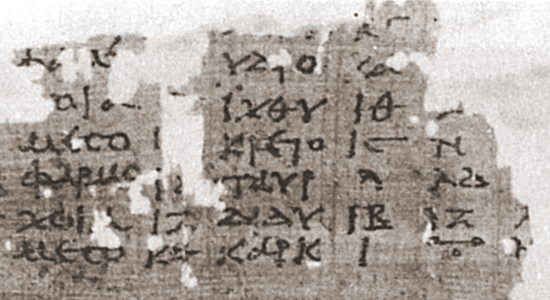
The first version solves a specific and narrow problem, and it is worth understanding why it is not enough.
In a positional number system, the meaning of a digit depends on its position. A symbol in one column means units, in the next it means a larger unit, and so on.
That creates an immediate difficulty when a column is empty. Without something to mark the gap, a number with nothing in the middle column is indistinguishable from one without that column at all.
Several systems solved this. Marks were used to indicate an empty position, and they worked adequately for recording numbers.
But a placeholder is a piece of notation rather than a number. It says this column is empty; it does not participate in arithmetic, it does not appear at the end of a number, and nobody would think to subtract it from something.
That distinction is the whole subject. A placeholder makes writing numbers unambiguous. A number makes calculation possible.
Like our content? Follow us for more.
The Second Invention
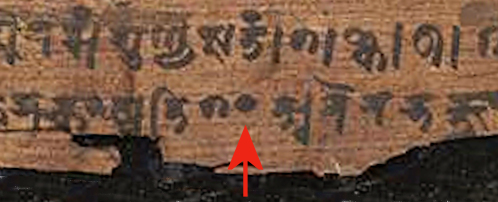
The step that mattered was treating zero as a quantity in its own right, subject to the same operations as everything else.
That required saying what happens when you add it, subtract it, multiply by it — questions that only arise once you have decided it belongs in the system rather than beside it.
Rules for those operations were set out in mathematical writing in India, and they included the correct answers for addition, subtraction and multiplication.
Division is where it gets interesting. Dividing by zero was addressed and the treatment of it varied and remained unsatisfactory for a long period, which is unsurprising given that it has no answer within the ordinary rules and required substantially later mathematics to handle properly.
The important point is that these are the sort of questions you can only ask once zero is a number. Nobody asks what happens when you multiply by a punctuation mark.
Why It Took So Long
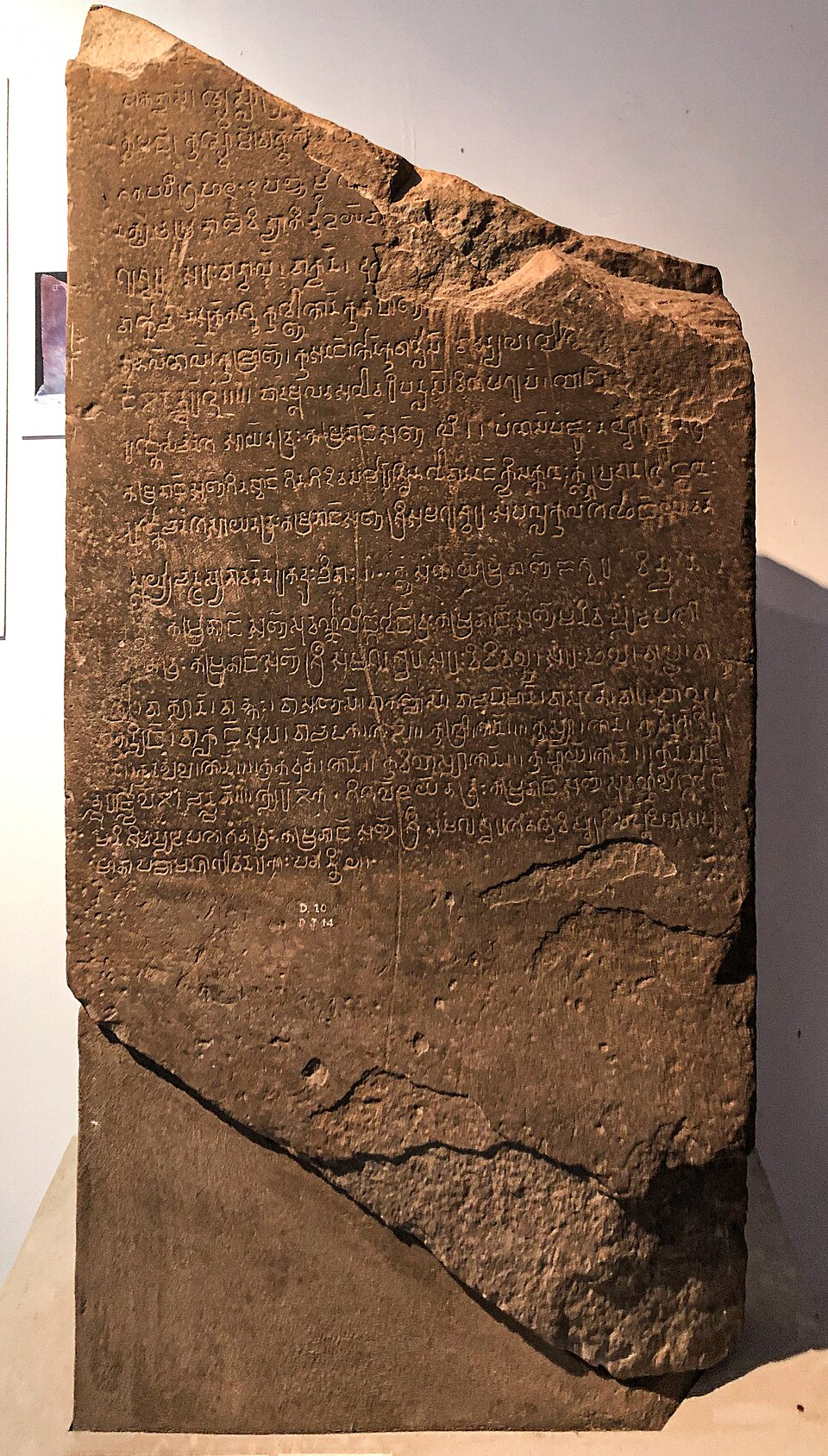
The obstacles were conceptual rather than technical, and they are worth taking seriously rather than treating as a failure.
Numbers had been understood for a very long time as quantities of things — counts of objects, measures of amounts. A number was fundamentally an answer to how many, and none is not an answer of that kind.
There was also a practical point. For counting and for commerce, a placeholder is sufficient, and the pressure to go further comes from wanting to calculate rather than to record.
And some traditions had philosophical difficulties with the idea of nothing as a thing, which is a real intellectual objection rather than a superstition — treating an absence as an entity is a substantial move.
The absence of a need is probably the largest factor. Systems that calculated with counting boards and physical tokens did not require a written zero, because an empty position on a board is simply an empty position and needs no symbol at all.
There is a further consequence worth noting. Once zero exists as a number, the number line becomes continuous through it rather than stopping at one – which means counting can proceed in both directions from a point rather than only upward from a unit.
That is the structural change. A system that starts at one has a floor; a system with zero has an origin, and an origin can be passed.
How It Travelled
The transmission is a documented sequence and is worth stating without embellishment.
The system of numerals including zero developed in India and was transmitted westward through the Arabic-speaking world, where it was adopted, developed and written about extensively.
From there it reached Europe, where it spread slowly over several centuries against considerable resistance.
That resistance was partly institutional. Existing methods worked, existing practitioners were trained in them, and a new system requires everybody to relearn. There were also concerns about the ease with which the new numerals could be altered fraudulently, which is a legitimate objection to a notation being adopted for accounts.
The eventual adoption was driven by commerce. Written calculation using the new system is dramatically faster than the alternatives for the arithmetic that trade requires, and once merchants adopted it the rest followed.
The English name for the numerals credits the route rather than the origin, which is a common pattern in the naming of transmitted ideas.
There is a further practical point about the numerals themselves. A system with ten symbols and positional value allows any number to be written in a space proportional to its size, which is not true of systems using repeated or additive symbols.
That compactness matters for calculation as much as for recording, since arithmetic performed on paper requires the numbers to be written in aligned columns – which only works if each digit occupies one position.
What It Made Possible
The consequences are difficult to overstate and worth being specific about.
Written arithmetic becomes possible. Calculation on paper, with a procedure that can be taught, checked and repeated, replaces manipulation of physical objects — which means arithmetic can be done anywhere by anybody who has learned the method.
Negative numbers become thinkable. Zero provides a point to count downward from, without which the idea of a quantity less than none has nothing to attach to.
Algebra becomes tractable, because equations are generally arranged to equal zero, and that convention requires zero to be a legitimate value.
Coordinates require an origin, which is zero in two or three directions at once.
And positional notation with zero is what makes place-value arithmetic mechanisable, which is the foundation of every calculating device from an abacus with a zero position through to any machine that computes.
The Other Kind of Nothing
There is a distinction worth drawing that clarifies why the concept was so slow to settle.
Zero as a quantity — none of something — is one idea. Zero as a position on a scale, marking a point rather than an absence, is another.
A temperature of zero does not mean an absence of temperature. It marks a chosen point on a scale, and the scale continues below it. The same is true of a zero on a map coordinate, or a zero point in time.
Those two uses coexist and are frequently confused, which is why questions like whether zero is a number, whether it is even, and whether it is positive or negative produce hesitation in people who use it competently every day.
The answers are settled — it is a number, it is even, and it is neither positive nor negative — and the hesitation is not ignorance. It is a residue of the two distinct ideas sharing one symbol.
There is a third use again in notation, where a zero holds a place without asserting a quantity, which is the original placeholder function surviving inside a system that has long since promoted zero to full membership.
So a single character is doing three jobs: marking an empty position, denoting a quantity of none, and locating an origin on a scale. That it does all three without much difficulty is the achievement, and the occasional confusion is the seam showing.
Why It Is Still Awkward
There is a residue of the original difficulty that survives in ordinary usage.
Counting from one rather than zero is the natural human habit, which is why the first year of a century is numbered one and the arithmetic of centuries confuses everybody periodically.
Dividing by zero remains undefined, and every explanation of why is really an explanation that the question is malformed rather than that the answer is difficult.
Zero as a starting point rather than a quantity still causes trouble — floors of buildings, numbering of years, indexing in various systems, all of which produce recurring off-by-one confusions.
Those are not failures of understanding. They are the marks of a concept that was truly difficult to arrive at, retro-fitted into systems built before it existed, and still slightly awkward in the places where the join shows.
Which is a reasonable description of most foundational ideas. They look obvious once you have them, they were extremely hard to reach, and the evidence of the difficulty survives in the small inconsistencies nobody bothered to tidy up.
Like our content? Follow us for more.

